-
-
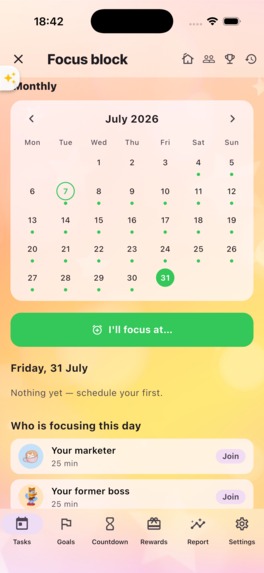
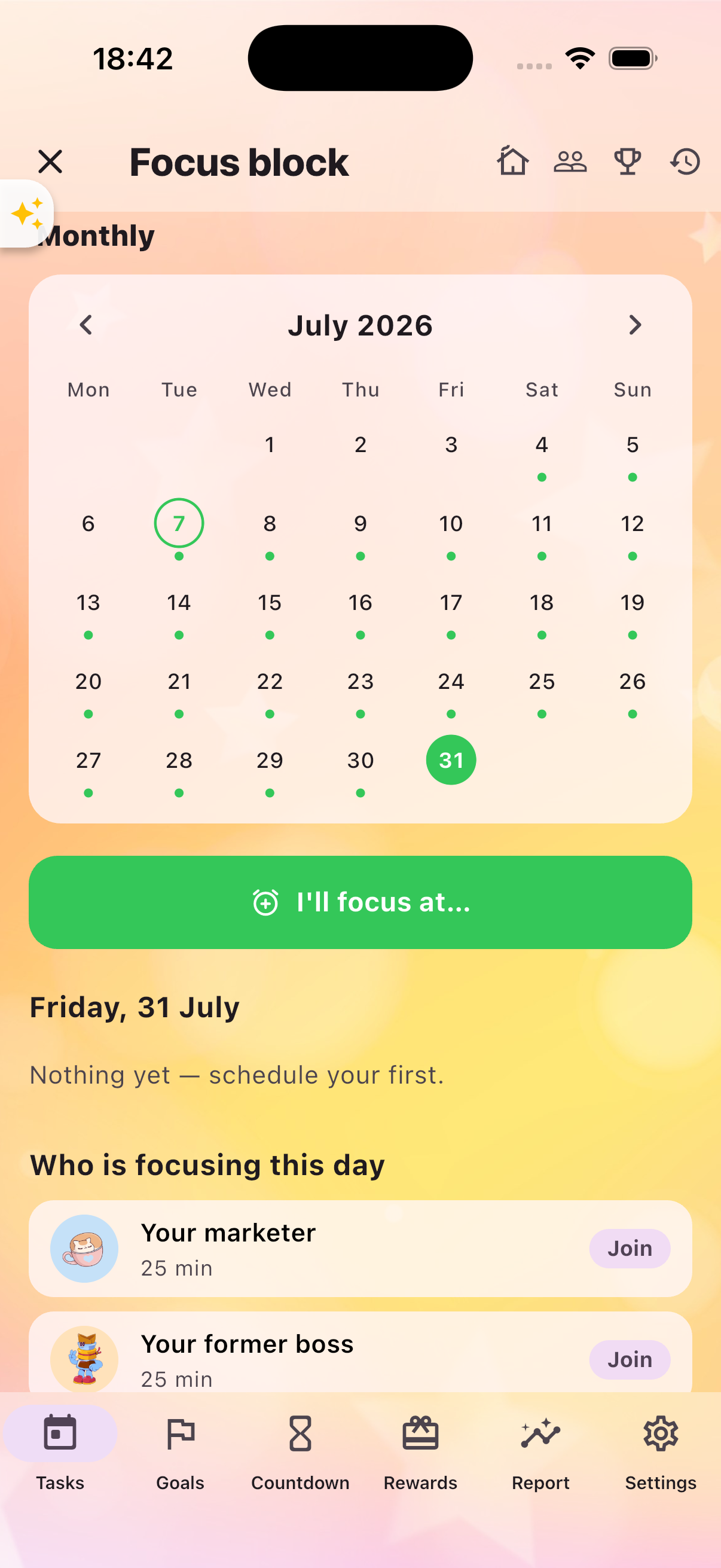
focus time block
-
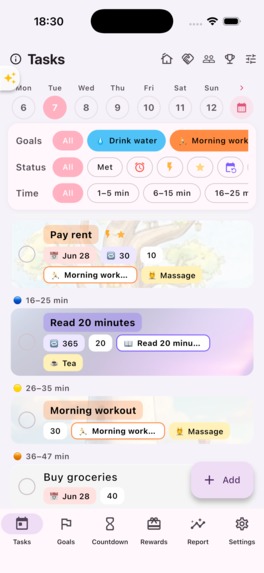
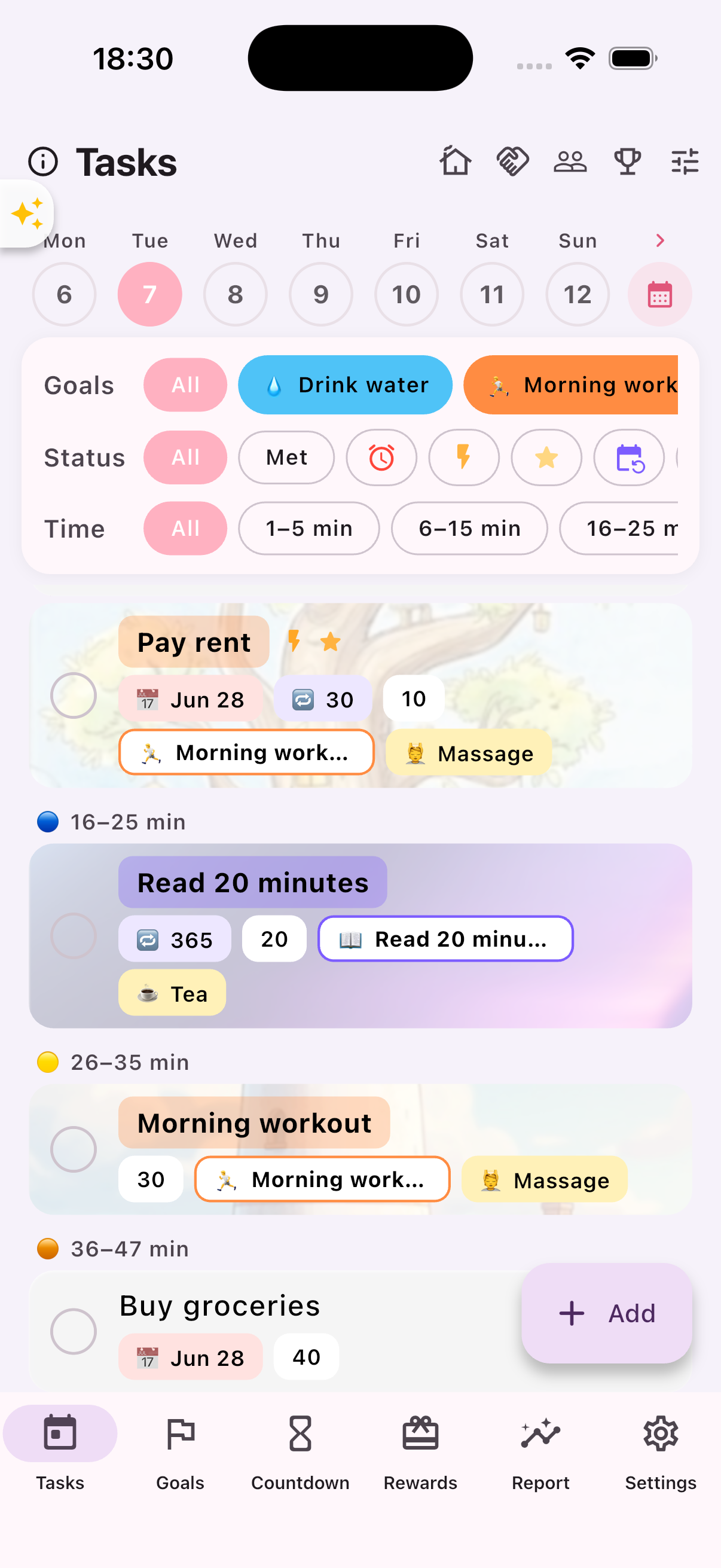
task screen
-
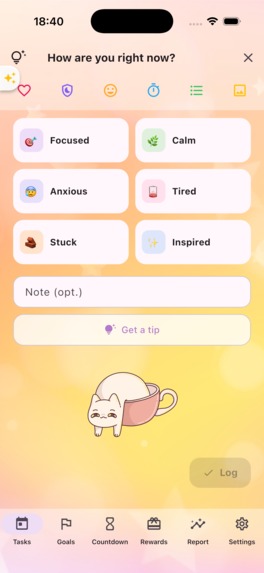
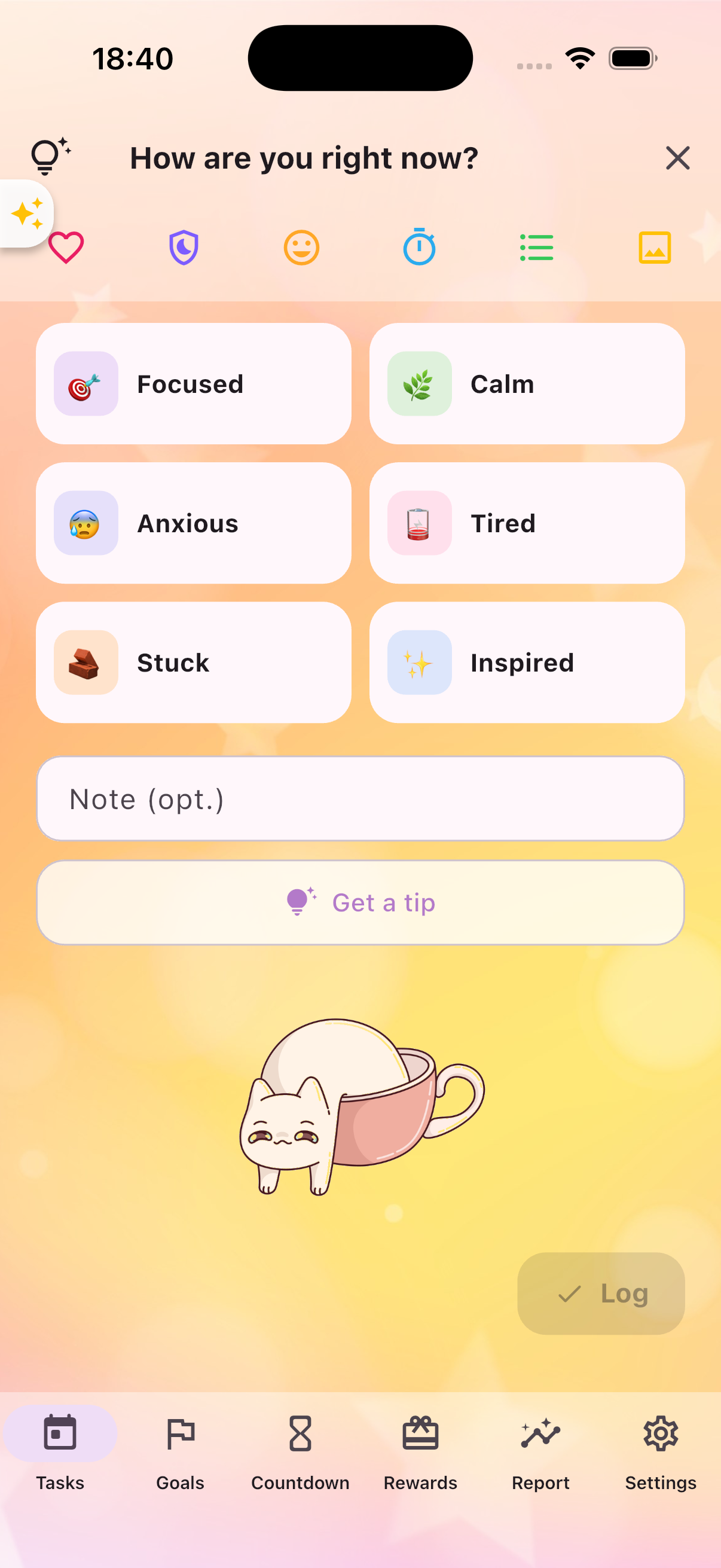
how are you
-
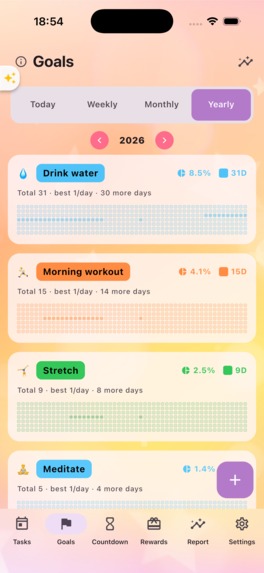
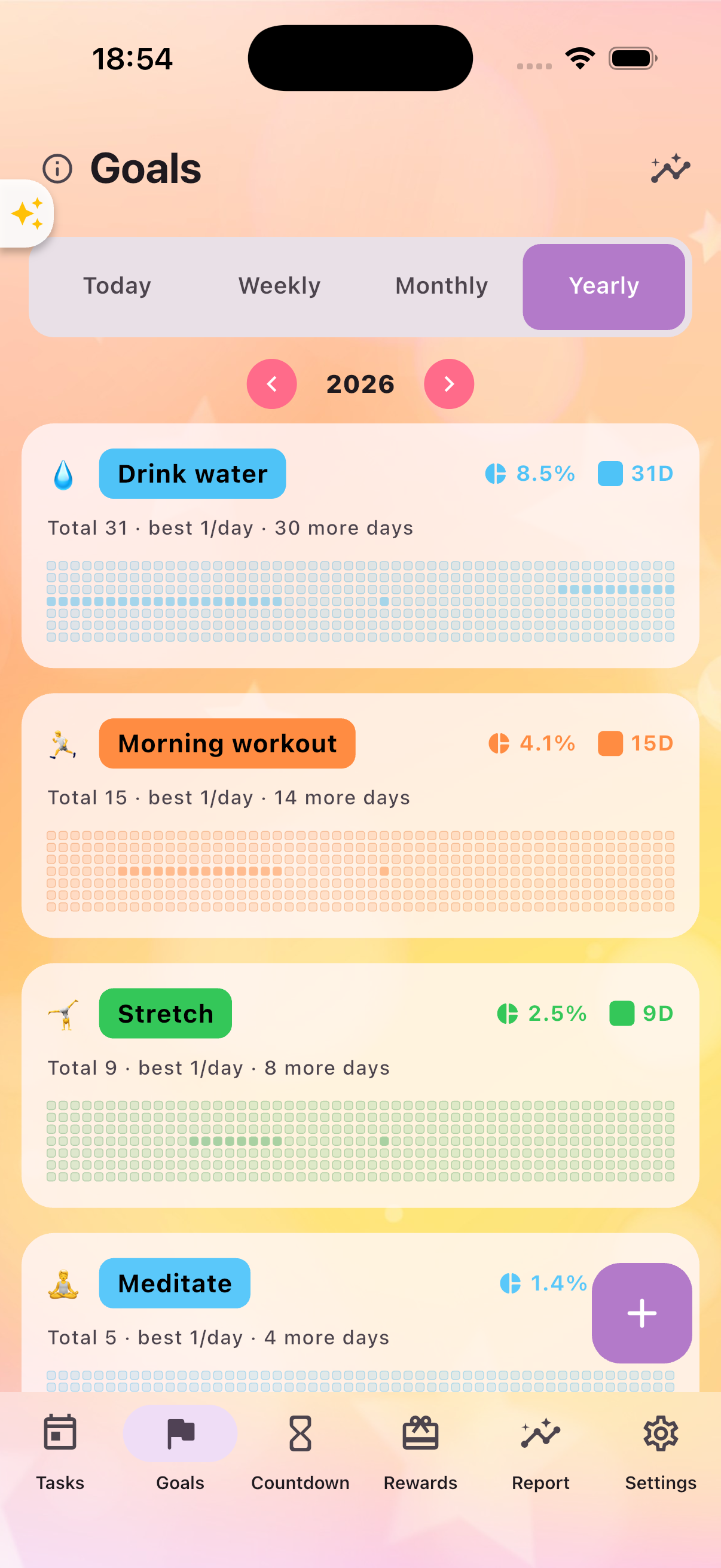
year goals track
-
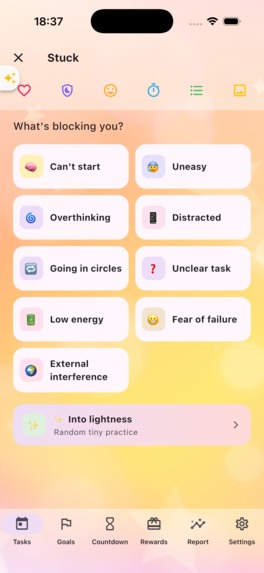
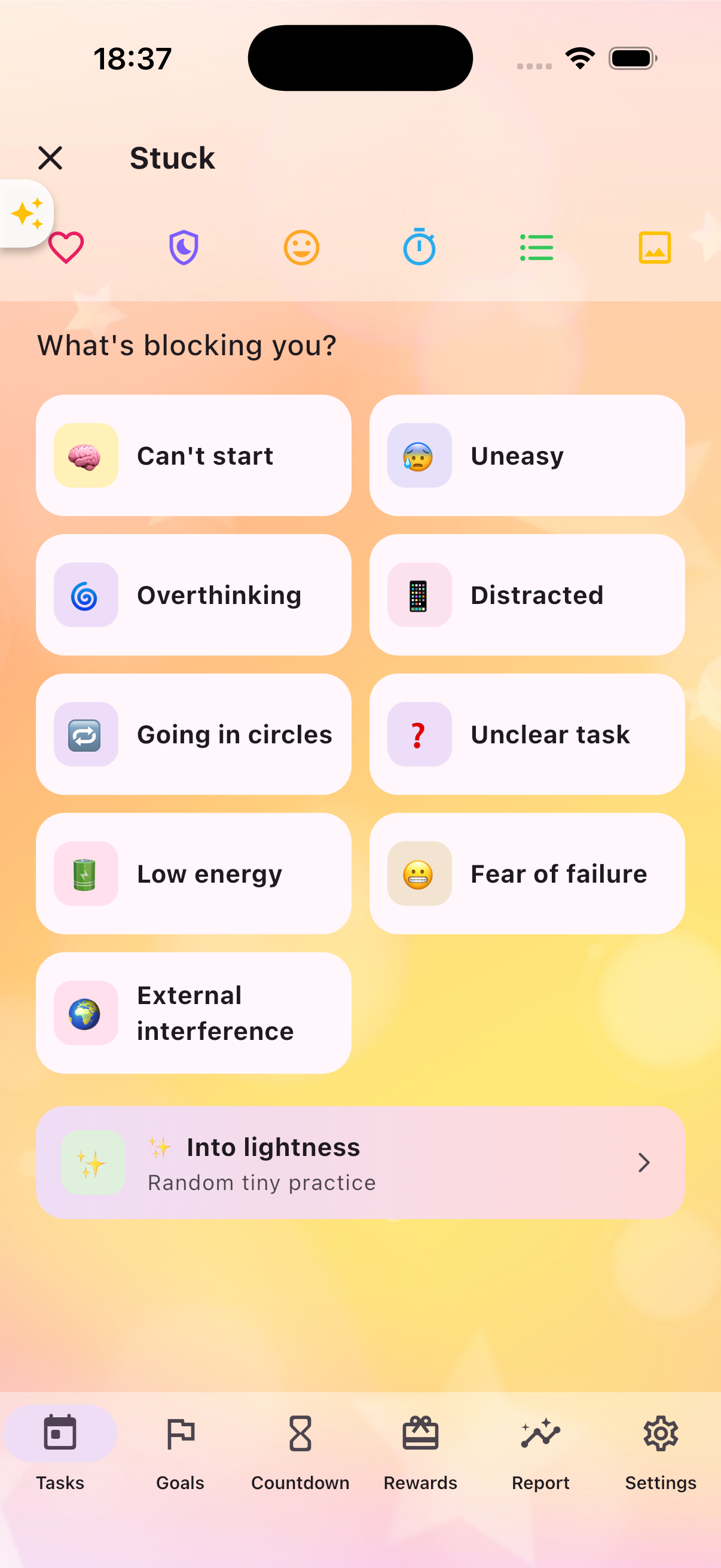
help with stuck
-
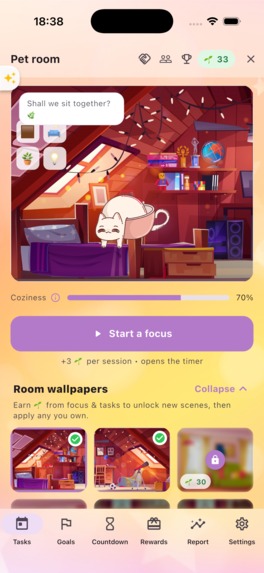
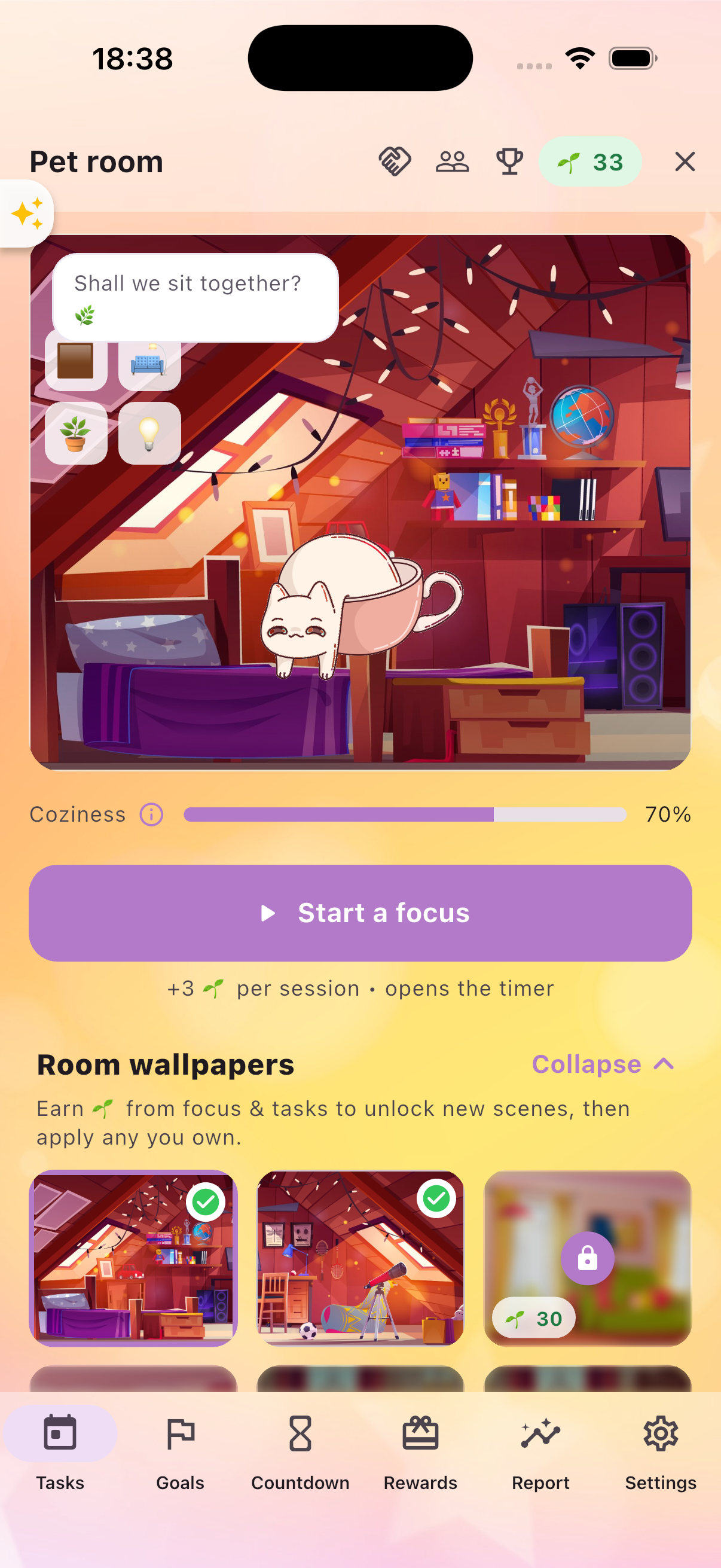
pet room
-
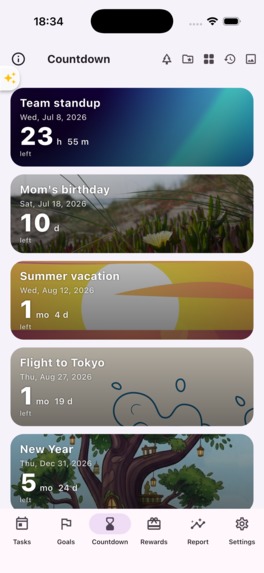
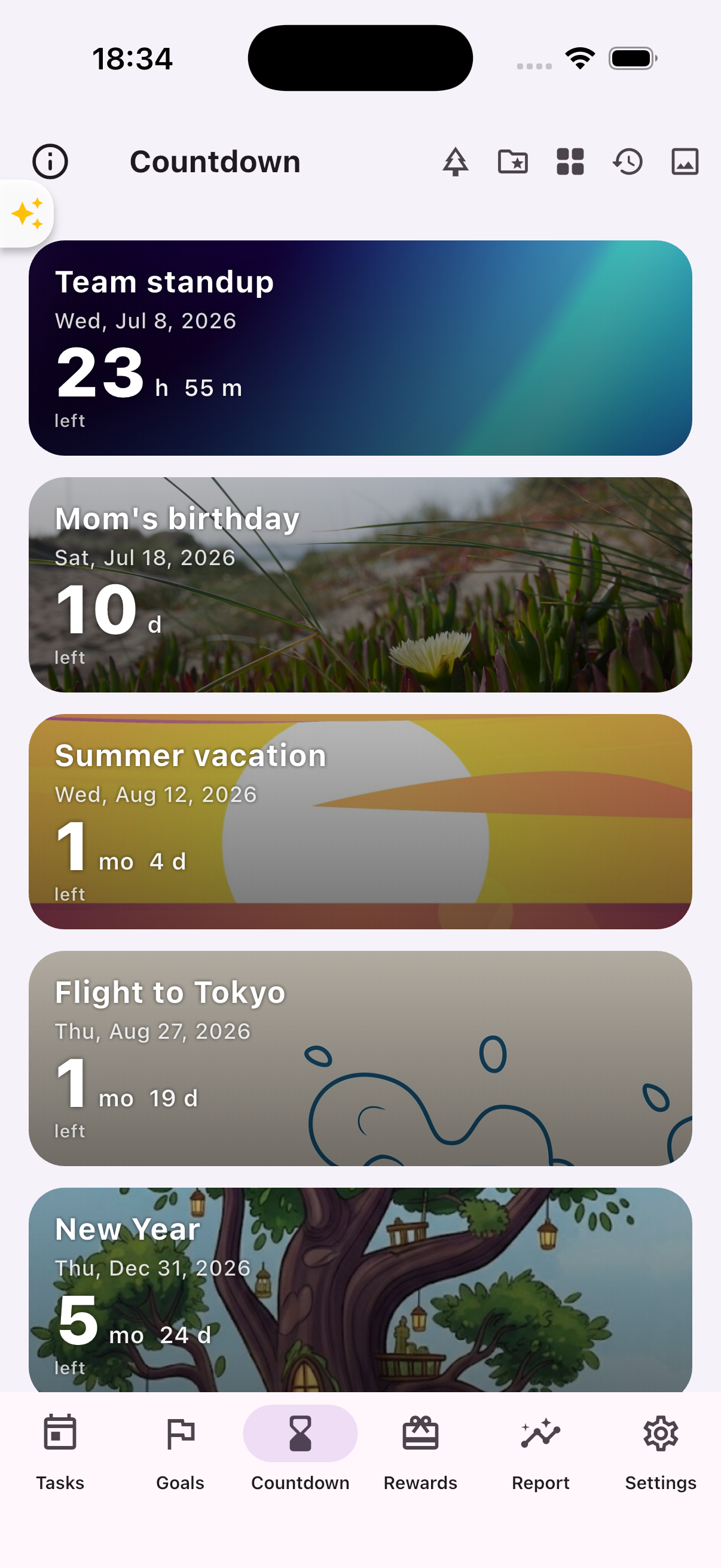
tasks/events countdown
-
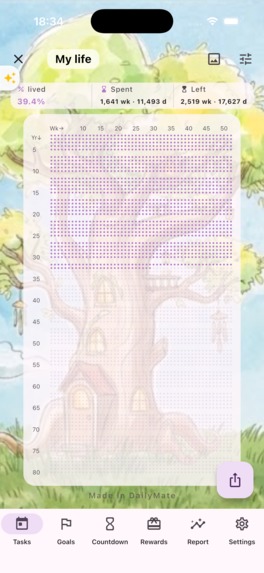
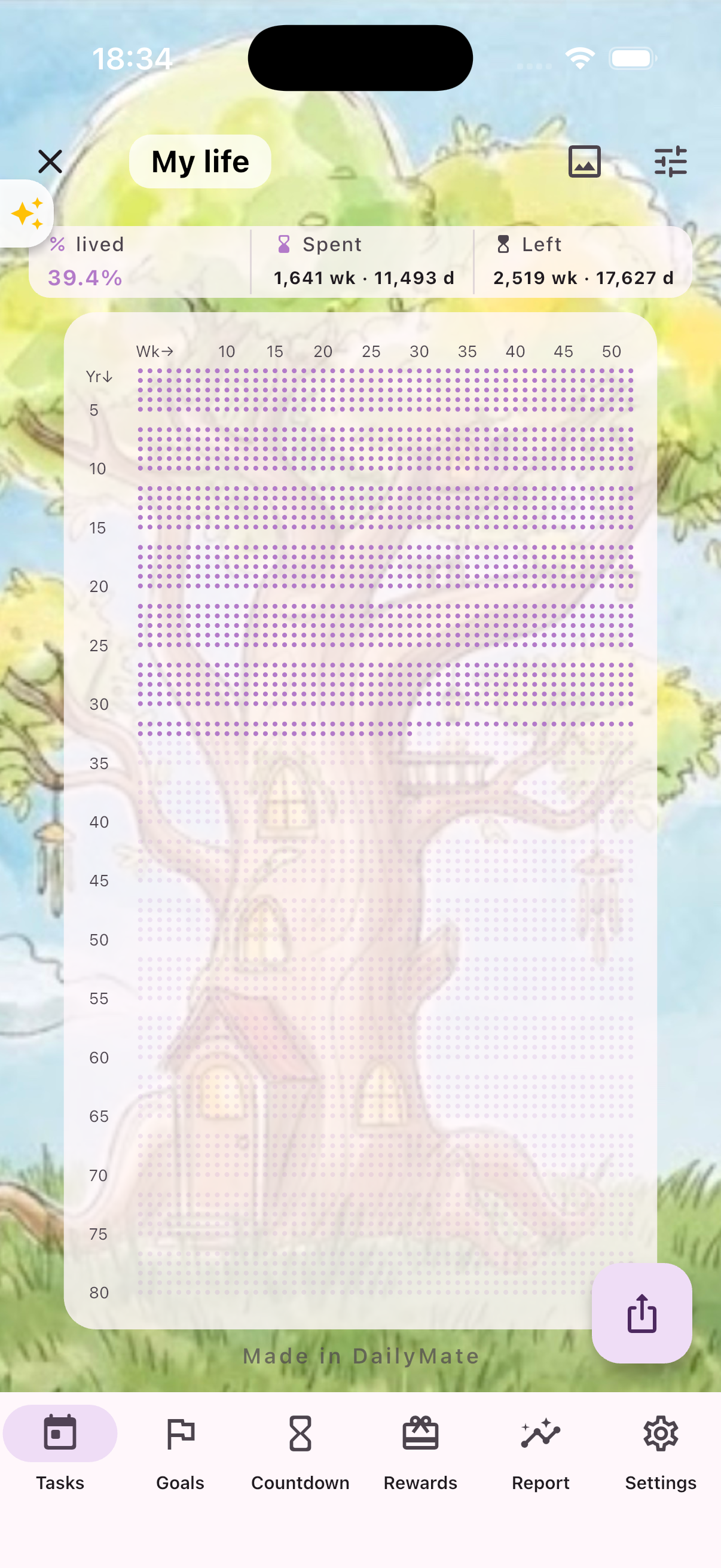
life countdown
-
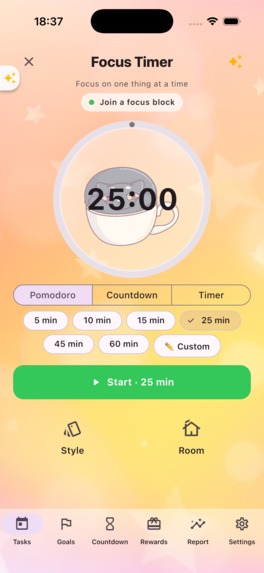
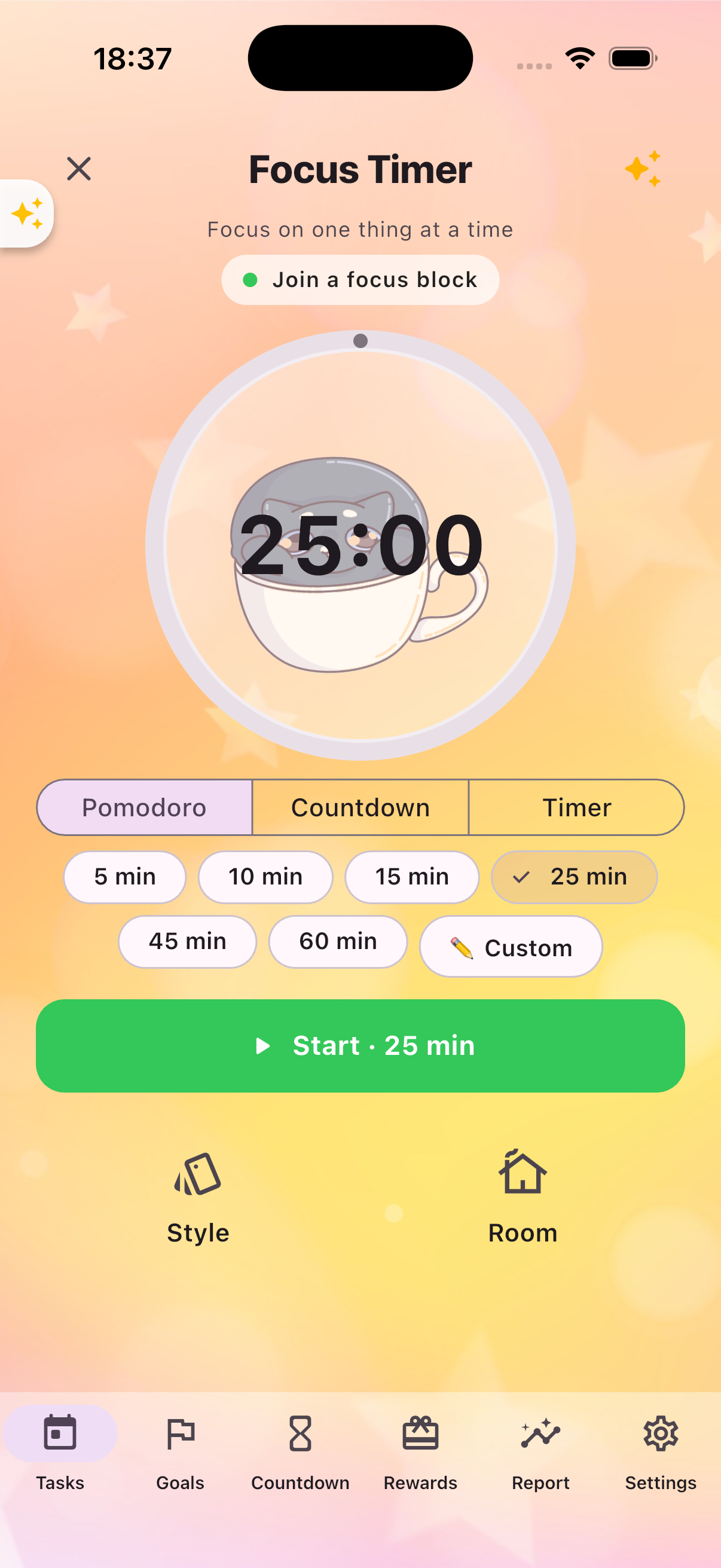
timer
-
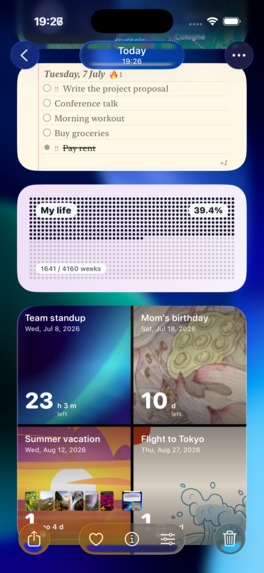
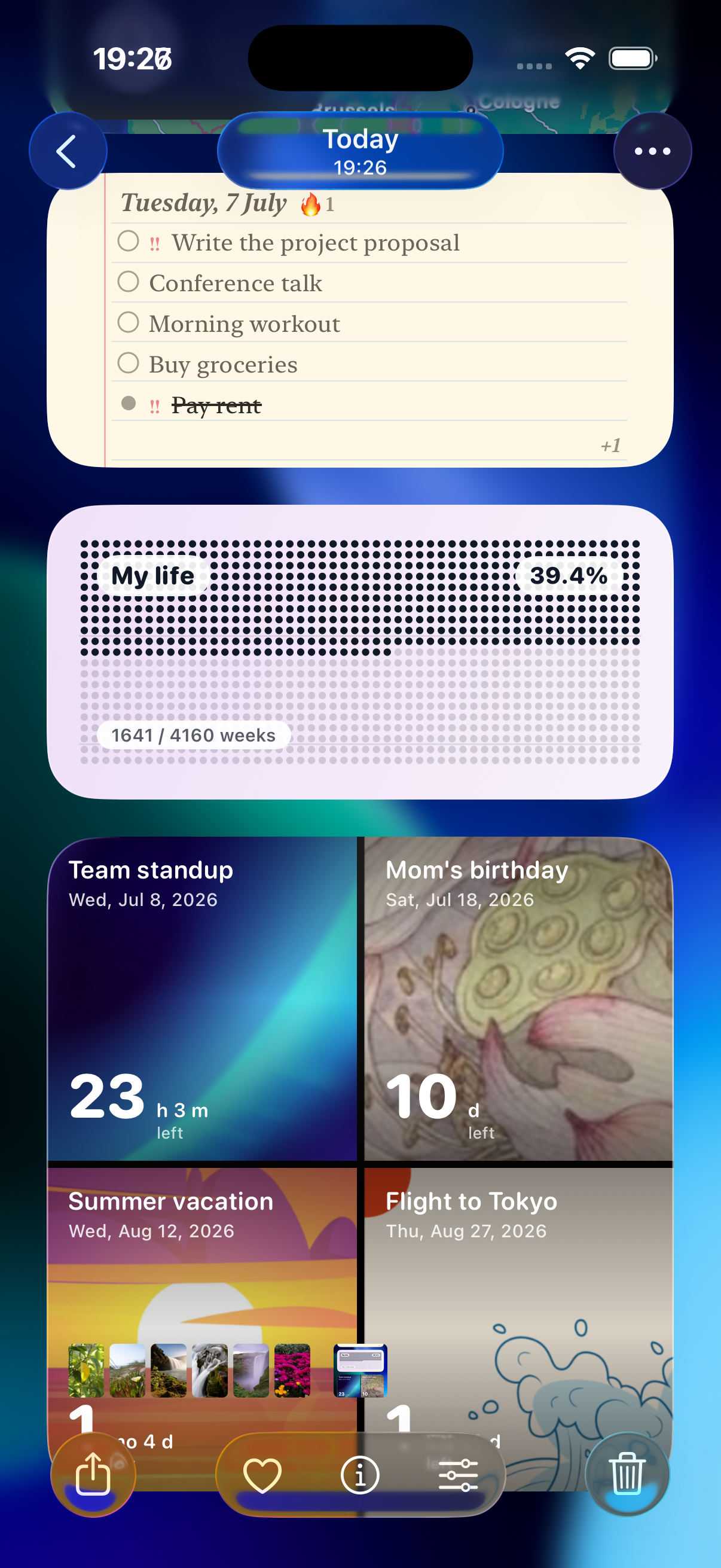
widget
Inspiration
I built DailyMate because I have ADHD, and every task app I tried made me feel more behind instead of more capable. The usual pattern was always the same: long lists, too many priorities, unclear next steps, and no real help when I got stuck.
I wanted something calmer and more practical for people like me and for anyone whose productivity breaks down when planning turns into pressure. DailyMate is my answer to that problem: a task and habit companion that helps you start, recover, and keep moving without overwhelming you.
What I built
DailyMate is a productivity app that connects tasks, goals, habits, rewards, reflections, reports, and focus time into one system.
It includes:
- lightweight daily tasks with effort estimates;
- goals linked to tasks and progress;
- rewards for completed work;
- a focus timer for deep work;
- morning and evening check-ins;
- blocker and helper tracking;
- “Stuck” guidance when starting feels hard;
- reports that turn scattered inputs into simple patterns;
- health insights like pulse and HRV for premium users;
- onboarding and paywall flows designed to help users get a first win quickly.
The main idea is that tasks should move goals forward, and the app should help people recover when things go off track. If a goal is rolled back, its linked tasks, rewards, and progress roll back too, so the product stays consistent instead of showing contradictory data.
How I built it
DailyMate is a local-first iPhone app built with Flutter and Dart. It uses Riverpod for state management, SQLite for local storage, HealthKit for health data, StoreKit for subscriptions, CloudKit for private sync, and an optional Cloudflare Worker with D1 for anonymous social features.
I started with an existing task and habit foundation, then connected separate features into one coherent experience. A lot of the work was not about adding more screens, but about making the existing pieces agree with each other: tasks affect goals, completed tasks affect rewards, check-ins and focus sessions affect reports, and subscription rules stay consistent across the app.
What I learned
The hardest part of building a productivity app is not making individual features work. It is making them work together without creating confusion.
I learned that ADHD-friendly design needs fewer decisions at the moment of action, clear recovery paths, and feedback that reflects reality. Missing data should stay missing instead of becoming fake zeros, and undo actions must reverse the whole connected chain of progress.
I also learned that a good productivity app is not just a checklist. It needs to help users understand patterns, stay motivated, and return to action when they get off track.
Challenges
The main challenges were:
- connecting existing features without breaking their original behavior;
- keeping reports useful when users do not complete every check-in;
- designing a reliable goal, task, reward, and rollback flow;
- protecting health and HRV data behind the correct premium boundary;
- making onboarding and paywall flows clear without overwhelming the user;
- testing real device builds and wireless installation issues.
Closing
DailyMate is still evolving, but it is already solving the problem that inspired it: a productivity system I actually want to use every day, and one that can work for other people with similar ADHD or overwhelm patterns too.


Log in or sign up for Devpost to join the conversation.