-
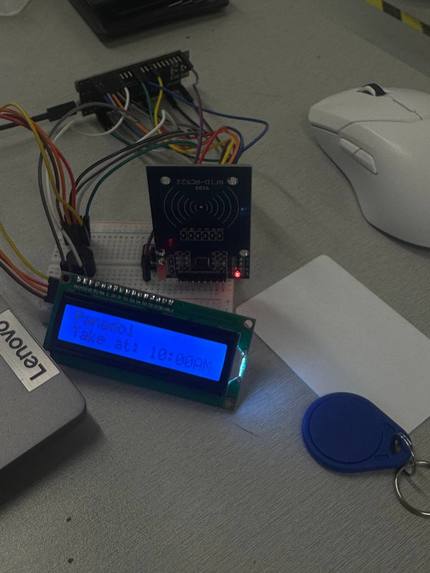
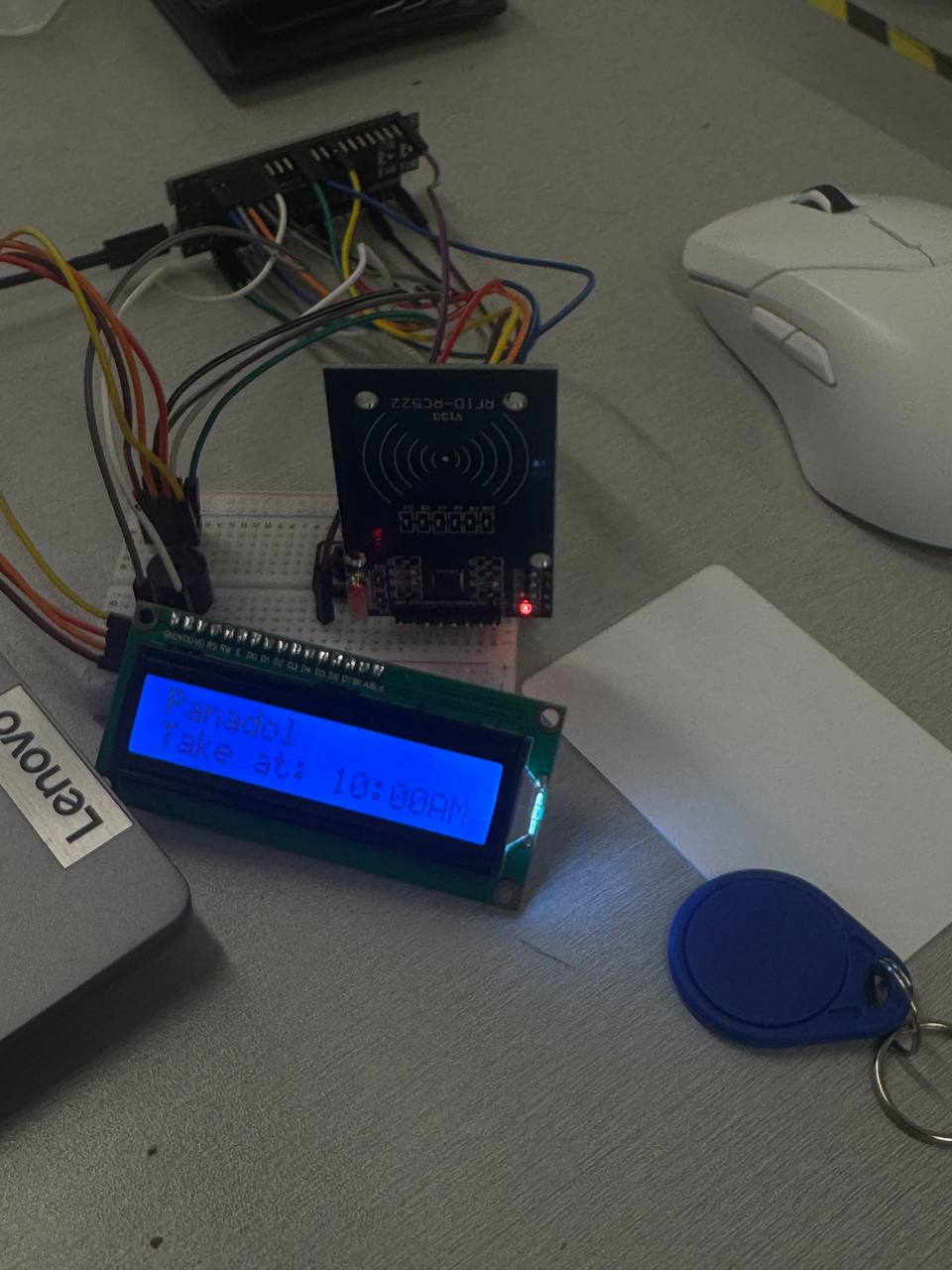
Physical prototype
Inspiration
Based on online sources from Statista, there are only 78 nurses per 10,000 inhabitants in Singapore and this population of nurses most of them are overworked. From our research, the main job scope of nurses is to provide patient care, administer medications, monitor health, assist in treatment, and educate patients. Hence our group has decided to tackle this problem by reducing the repetitive tasks nurses have to tend to by automating the process so that nurses can tend to more critically ill patients that require more medical attention. Problem: Nurses have to go bed by bed to confirm the patient's condition ensure that the patient has taken their medicine and confirm the meal for the patient for the day. This leads to nurses being tired out easily and being very inefficient.
What it does
Solution: The proposed solution comes in 2 parts. The first part is an app for patients to download and use it to select their daily meals, check their health reports and prompt them to take their medication. The second part is a physical prototype that acts like a mini medicine vending machine/robot that scans and receives the RFID tag of each patient, identified by their patient ID and from there displays the medication that the patient has to take and at what time.
How we built it
App: we created using Figma which has 2 interfaces, the first interface is for the patients to use and check their medication, and health report and order food for the day while the second interface is for the doctors to register medicine and check the information of the patients they have diagnosed.
Physical prototype: we mainly used a few components to build this, the esp32s3, RFID RC522, LCD screen, breadboard, and jumper wire. Initially, we wanted to create a mini robot that could move to each of the patients' beds, identify through the RFID tag and dispense their medication based on the dictionary we created to store the data. However, due to time constraints and us not being able to obtain a motor for the robot to move we decided to change it to a simpler prototype that only scans the RFID and dispenses the medication, we added some modification that allows our prototype to be versatile and can be implemented to both a vending machine or a robot that has mapped the entire hospital layout that only require some small changes for it to work.
Challenges we ran into
The current prototype still requires nurses to check the system for patients who have yet to take their medication either due to physical disability to access the mini vending machine or patients that are lazy, which does not solve the primary problem, however, if we implemented the robot system that goes to the patient physically in front of them, this problem would be solved.
Accomplishments that we're proud of
Since this is the first hackathon all of us have participated, and all of us are Y1 ICT students, we lack the knowledge to deal with the ESP32 and other hardware components initially , however, through our research online and through trial and error, we manage to successfully work the physical prototype and enable code to it for it to work smoothly. This was a fruitful experience for all of us and we are proud that within the short timespan and our limited knowledge, we were still able to put together something that worked which can hopefully benefit the healthcare system in some way.
What we learned
We learned new skills such as simple electrical engineering skills to deal with the different pin layouts of the ESP32 and how to connect it to different parts such as the breadboard, LCD screen and RFID scanner. We also learned a new programming language along the way, C++ to program the prototype in Aurdino
What's next for Nursessary
Nursessary can further develop its prototype to link with mini bots that can patrol each ward of the hospital to reduce the workload of nurses to let patients take medicine and deliver food to them.
Further develop the app to include more features for the patients such as visiting schedule and for families of the patient to book slots in advance using the app to visit the patient to reduce overcrowding in the ward with my family members of the patient in 1 ward.
Expand its field to pharmaceutical, making the physical prototype(vending machine) to sell supplements, vitamins and some common medicines at locations around Singapore where normal people can purchase these products. However, due to safety and health concerns, each user has to be limited to a certain amount of medicine to prevent overdosage.
Expand its field to normal clinics which can allow users to book appointments in advance, schedule medical checkups regularly, check on their current health status and alert users if any abnormality is detected.
Built With
- c++
- esp32
- figma


Log in or sign up for Devpost to join the conversation.