-
-
Logo
-
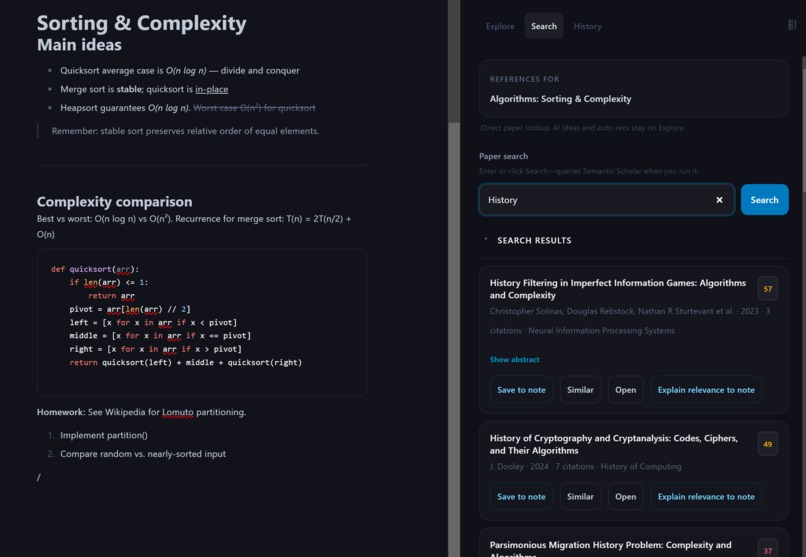
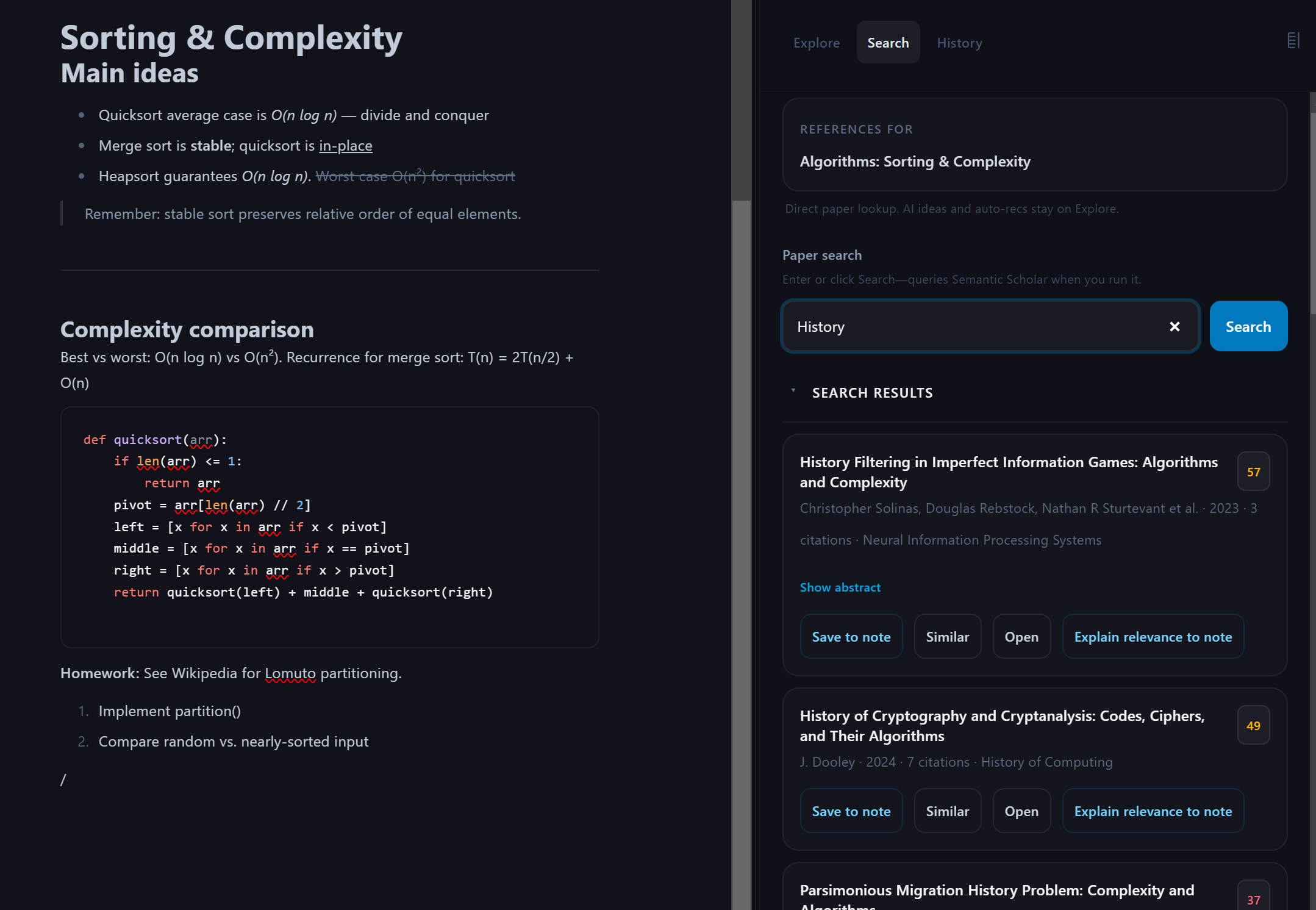
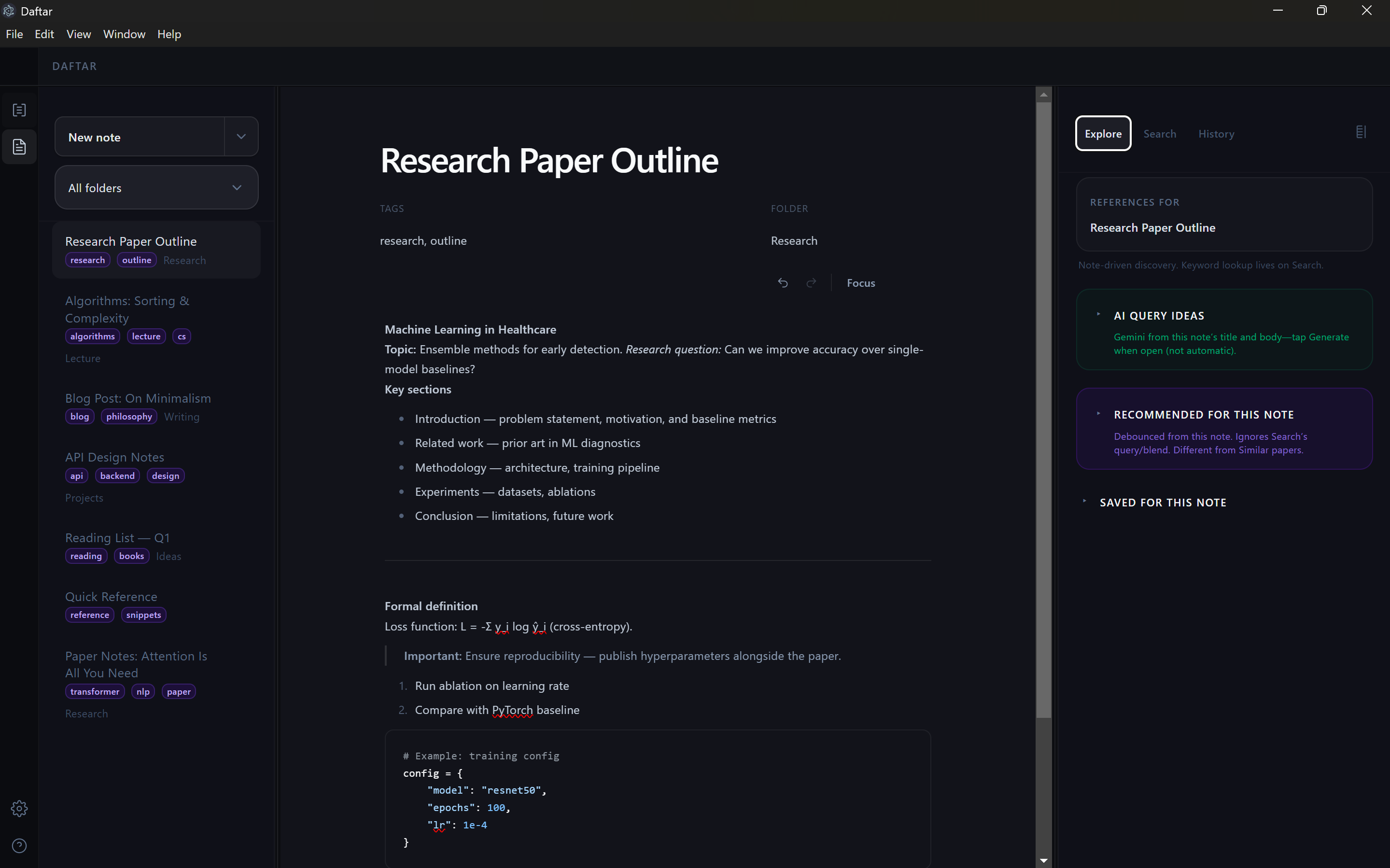
Search the literature directly from your note, with results shown alongside your writing for a seamless research workflow.
-
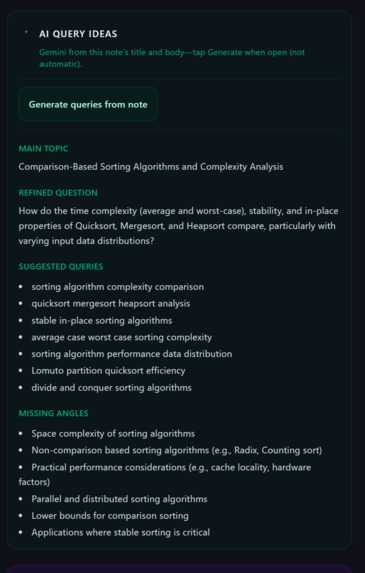
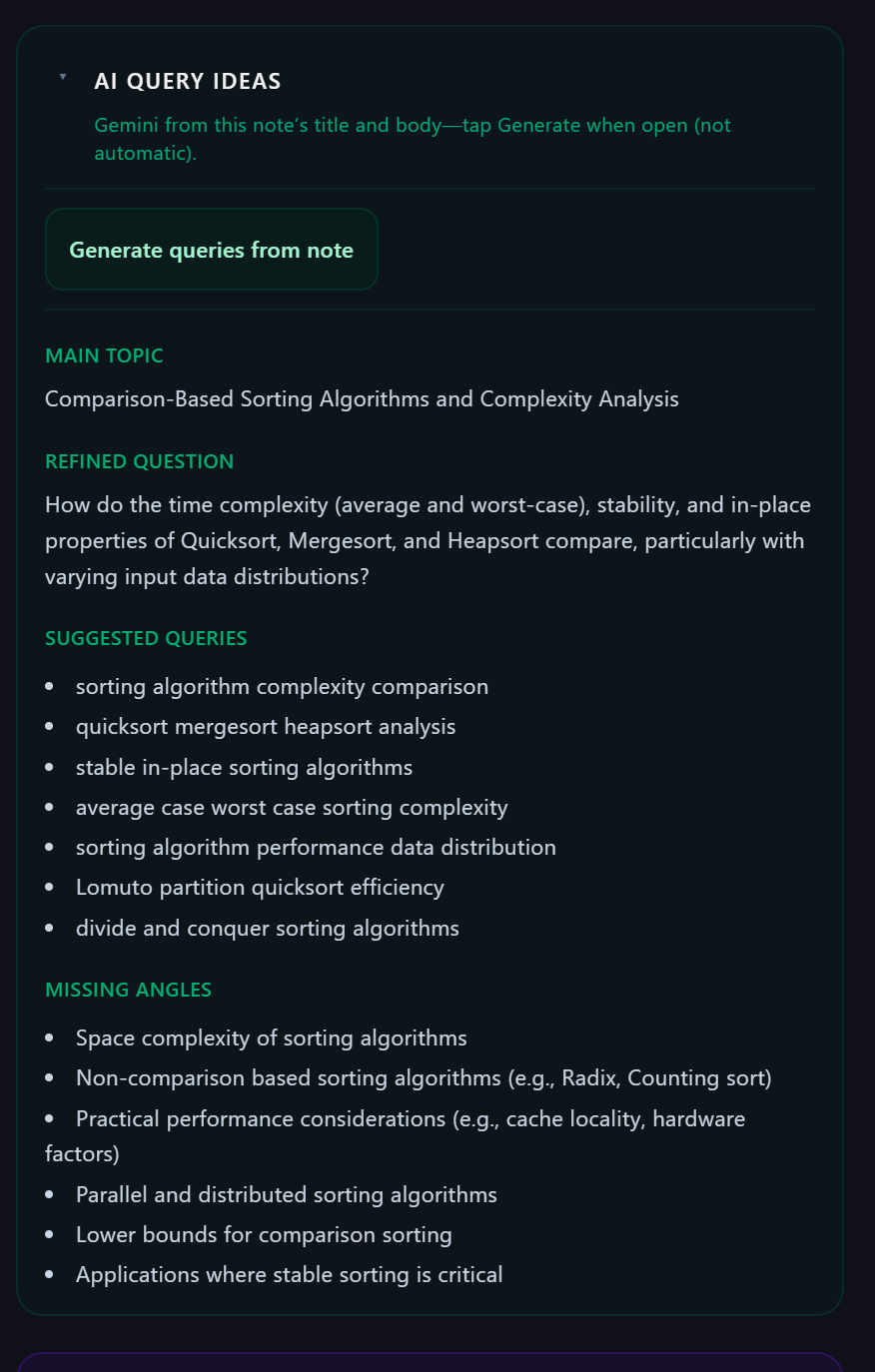
Daftar generates AI-powered query ideas from your note, helping turn rough thoughts into focused research directions.
-
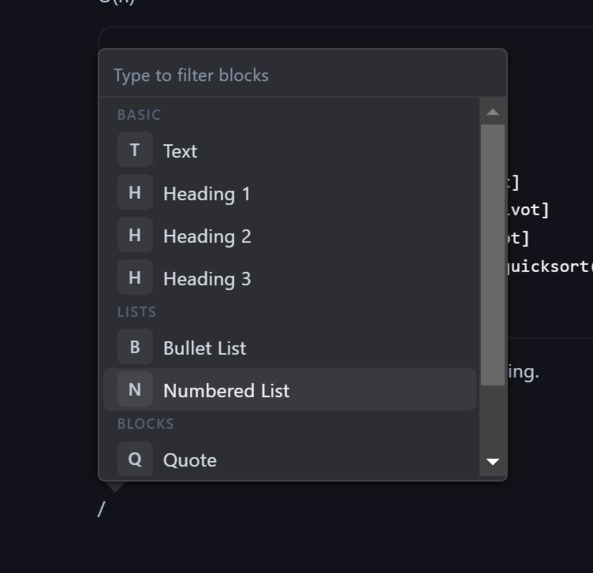
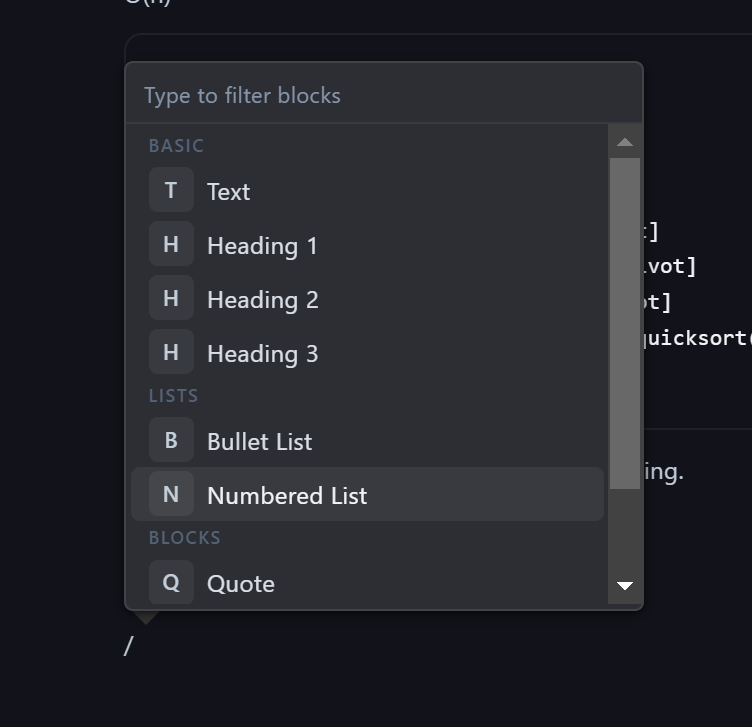
A slash-command editor makes it easy to insert structured blocks like headings, lists, and quotes while drafting notes.
-
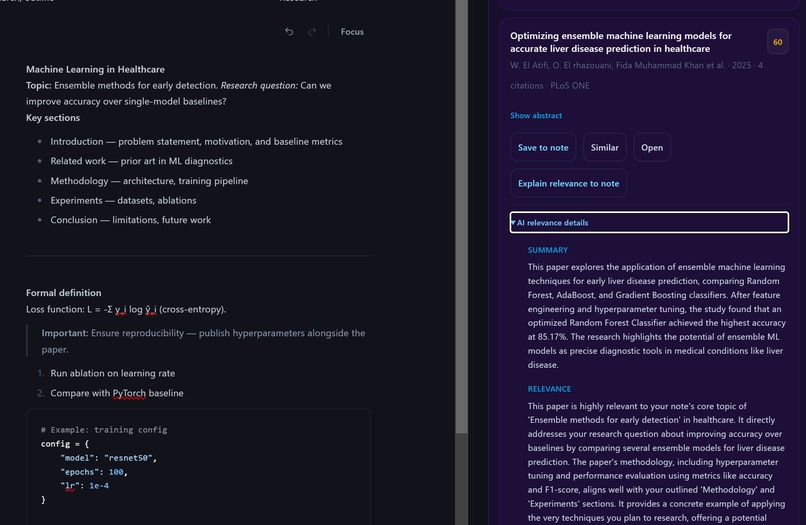
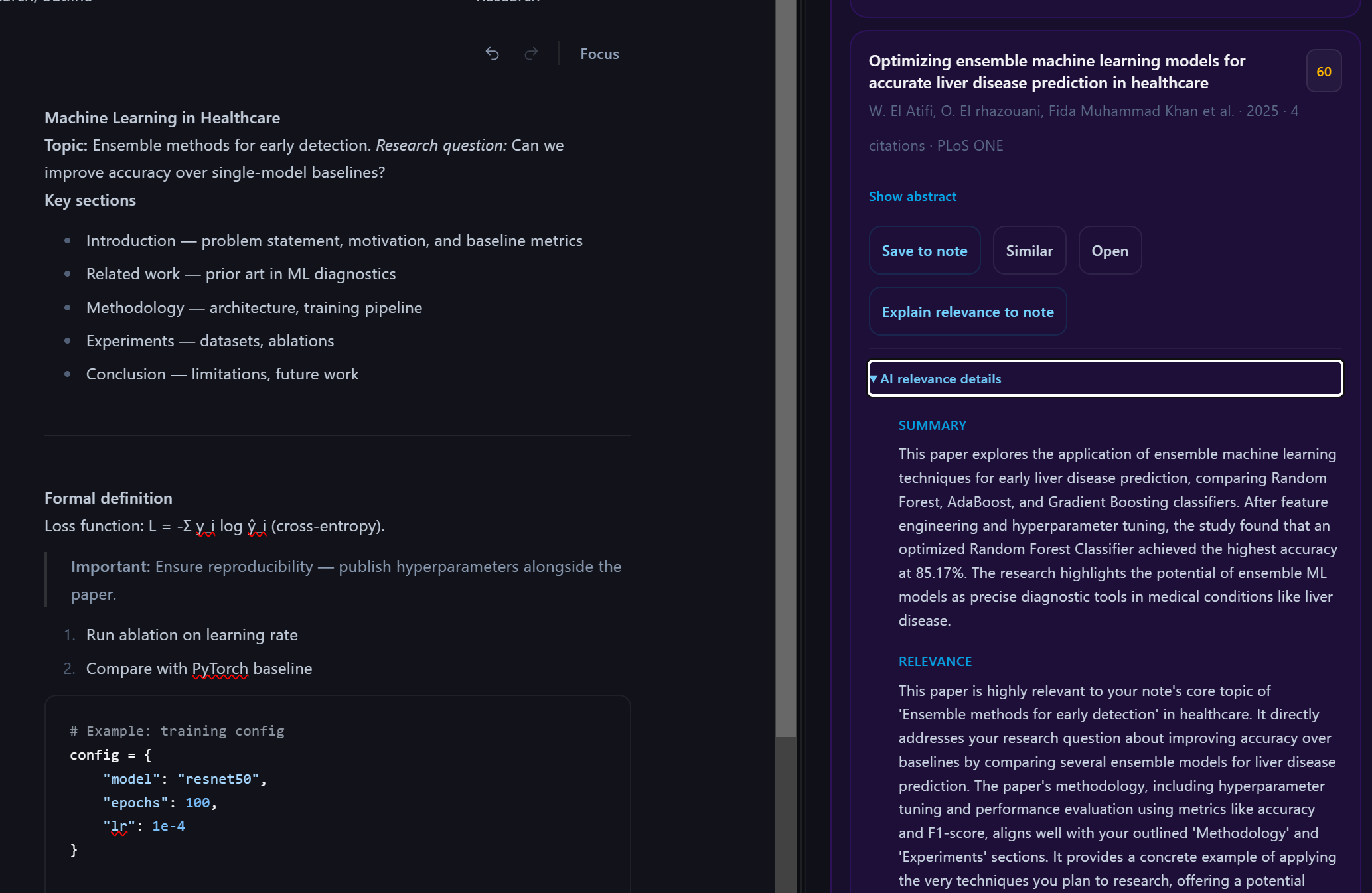
AI relevance explanations show why a paper matters to your note, helping users judge sources faster and stay grounded.
-
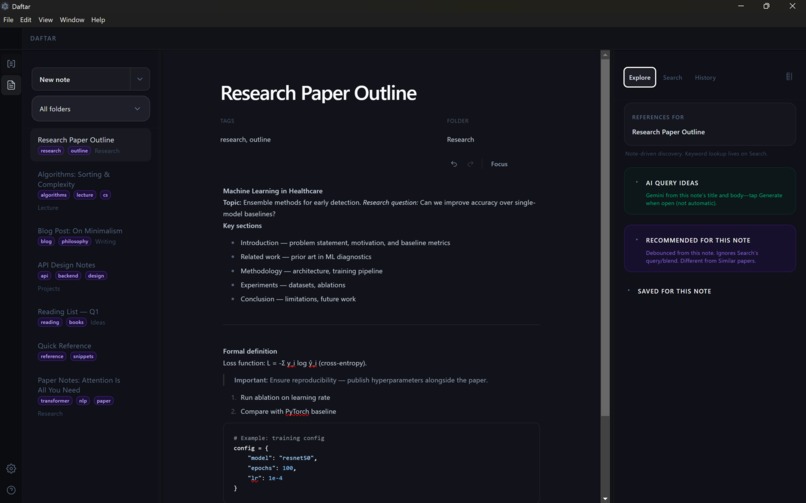
Daftar brings note-taking, organization, and literature discovery into one desktop-style workspace built for active research.
-
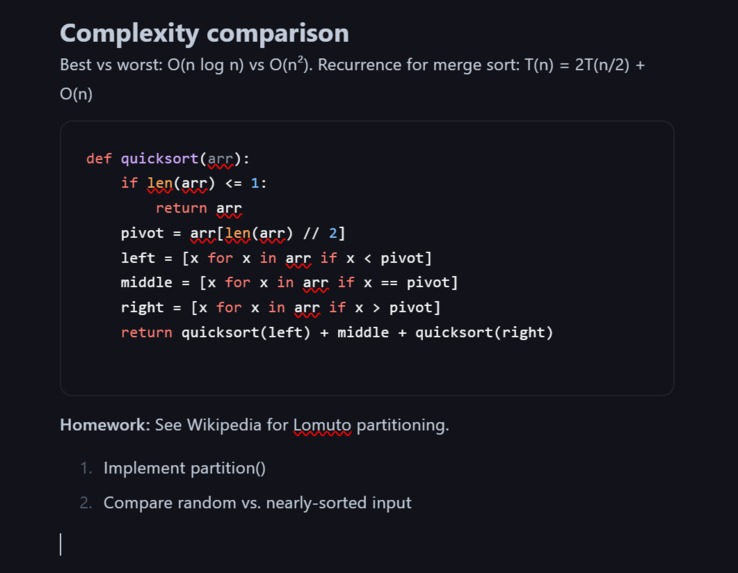
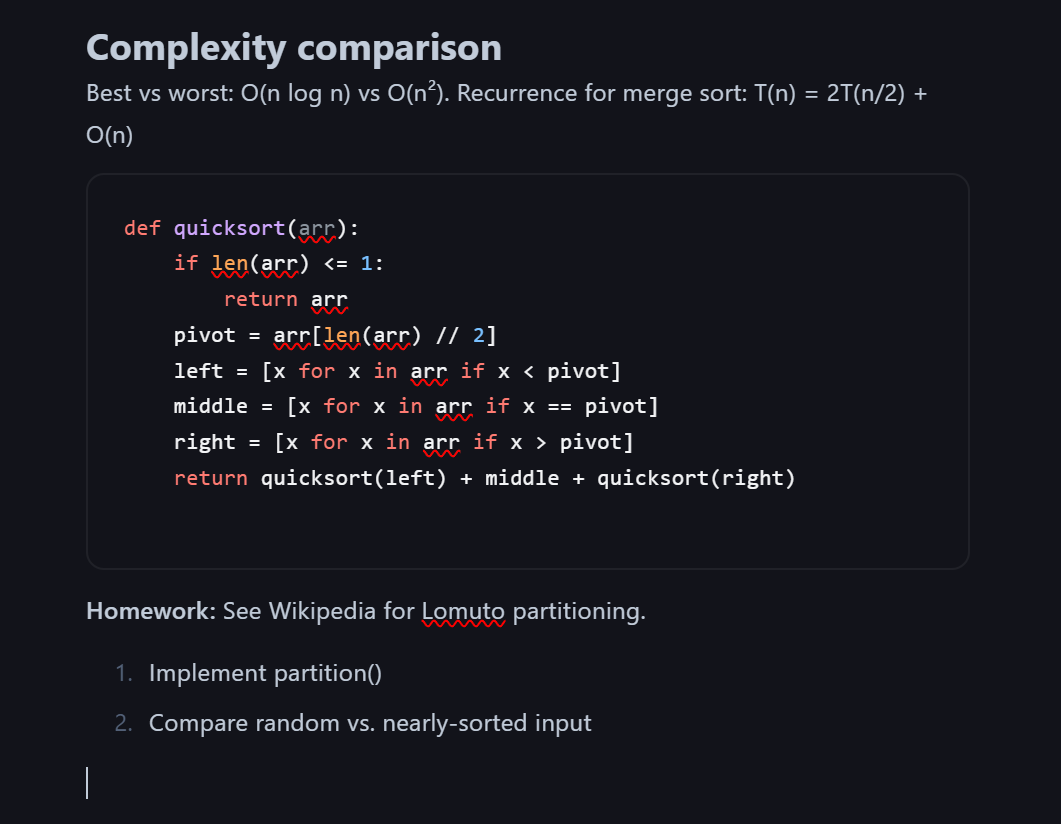
Write technical notes with rich formatting and clean code blocks, making Daftar useful for both concepts and implementation details.
Inspiration
We wanted to make research feel less scattered. Most note apps help you write, and most research tools help you find papers, but very few do both together. We built Daftar to connect writing and discovery.
As you write, your notes become useful context. Instead of opening new tabs, rewriting searches, and manually saving sources, Daftar helps turn freewriting into research.
We’re all South Asian, and that is where the name comes from. “Daftar” is a common word across South Asian languages that can mean notebook, record, or office. It fit a project built around writing, organization, and ideas.
What it does
Daftar is an AI-powered research notebook.
It lets users:
- write and organize notes
- use rich text or LaTeX
- generate query ideas from a note with Gemini
- search papers with Semantic Scholar
- get paper recommendations based on the open note
- save references to each note
- view note history
The main idea is simple: your note is not just text, it helps drive discovery.
How we built it
We built Daftar with React, Vite, TypeScript, Tailwind CSS, Zustand, Electron, Node.js, Gemini, Semantic Scholar, TipTap, CodeMirror, and KaTeX.
The frontend handles the note-taking interface and app state. TipTap powers rich text editing, CodeMirror supports LaTeX, and KaTeX renders math.
The backend is a lightweight Node server that connects to Gemini and Semantic Scholar. Gemini helps generate queries and explain relevance. Semantic Scholar powers paper search and recommendations. Electron wraps everything into a desktop-style app.
We also built separate literature flows for:
- manual search
- note-based recommendations
- similar papers
- saved references
Challenges we ran into
One challenge was debugging the frontend, backend, and Electron setup. Sometimes the UI worked while the backend was missing API keys, which made issues harder to trace.
Another challenge was making the literature experience clear. Search, recommendations, query generation, and similar papers are related, but they are not the same. We had to make those flows feel distinct without being confusing.
We also had to keep the project maintainable while moving fast. Some important files grew large, especially in the literature sidebar, so we cleaned them up without changing behavior.
Accomplishments that we're proud of
We’re proud that Daftar already feels like a real product, not just a rough prototype.
Some highlights:
- making AI feel actually useful
- turning note content into paper recommendations
- supporting both rich text and LaTeX
- creating a desktop-style research workflow
- combining search, recommendations, and saved references in one place
- cleaning up the codebase enough to keep building on it
What we learned
We learned that the hard part of AI products is not just using the model. It is building an experience where users understand what the AI is doing and why.
We also learned about:
- structuring a React and Zustand app
- integrating frontend, backend, and Electron
- handling API limits and configuration issues
- building AI features that feel clear and grounded
- improving code quality with small cleanup passes instead of huge refactors
Most importantly, we learned that research tools work better when they support thinking instead of interrupting it.
What's next for Daftar
Next, we want to make Daftar more useful and easier to understand.
We want to improve:
- clarity around how recommendations are generated
- visibility into AI-generated queries and reasoning
- saved-reference and citation workflows
- note and project organization
- desktop build reliability
- deeper research features like summarization, clustering, and cross-note links
Our goal is to grow Daftar into a full research workspace.
Built With
- codemirror
- electron
- google-gemini-api
- katex
- node.js
- react
- semantic-scholar-api
- tailwind
- tiptap
- typescript
- vite
- zustand

Log in or sign up for Devpost to join the conversation.