-
-
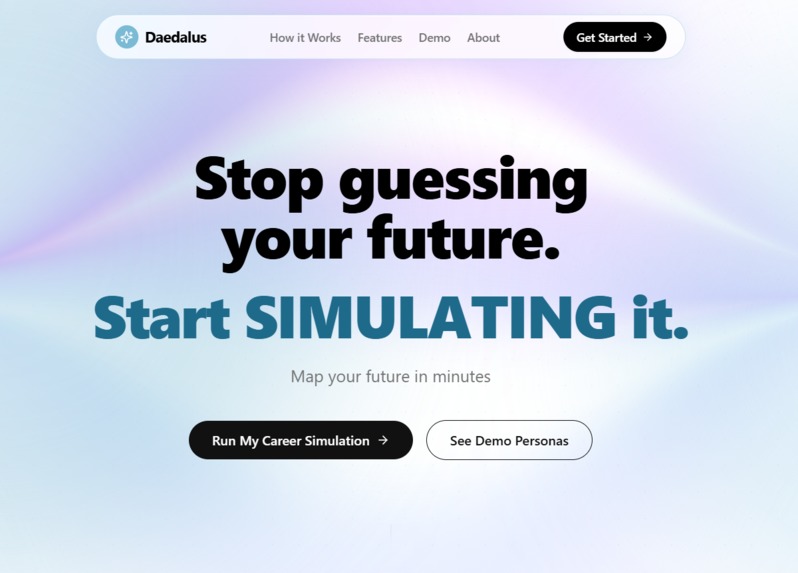
Home Page (in ratio)
-
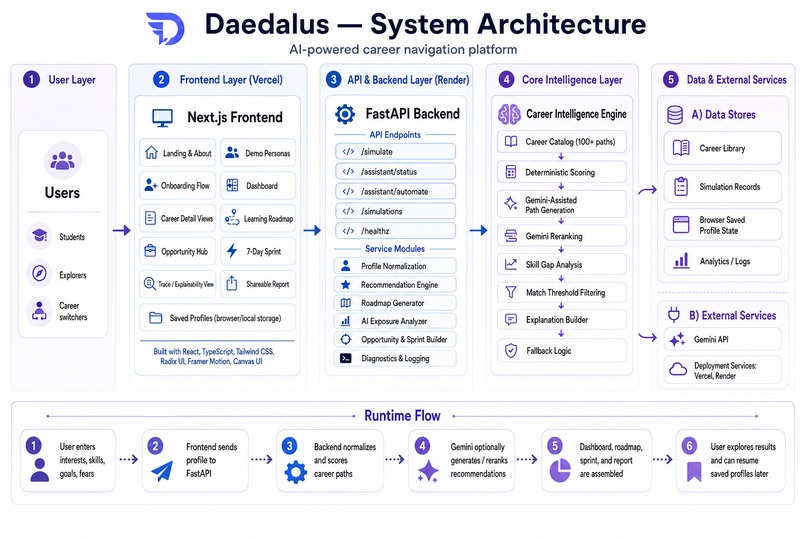
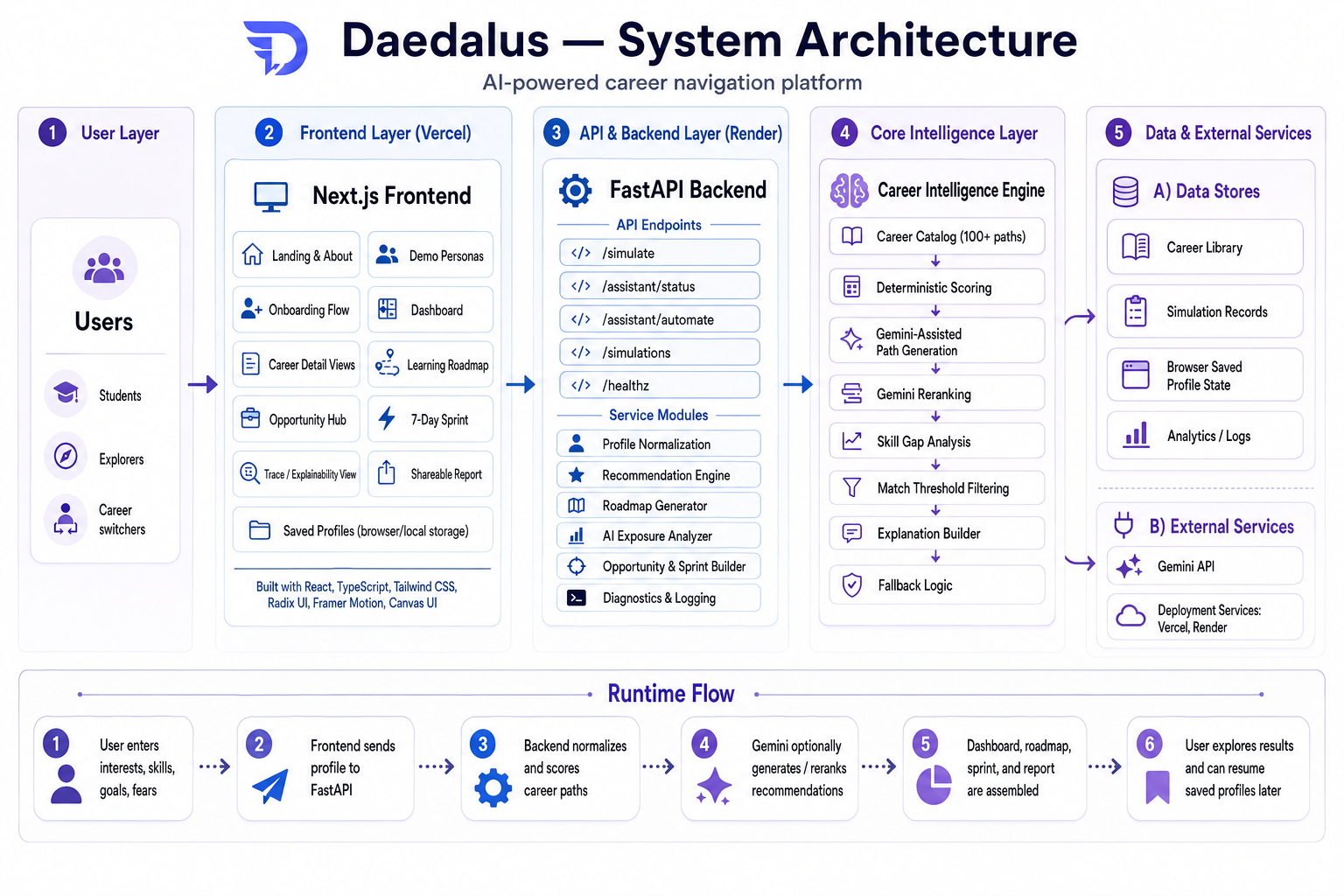
System Architecture
-
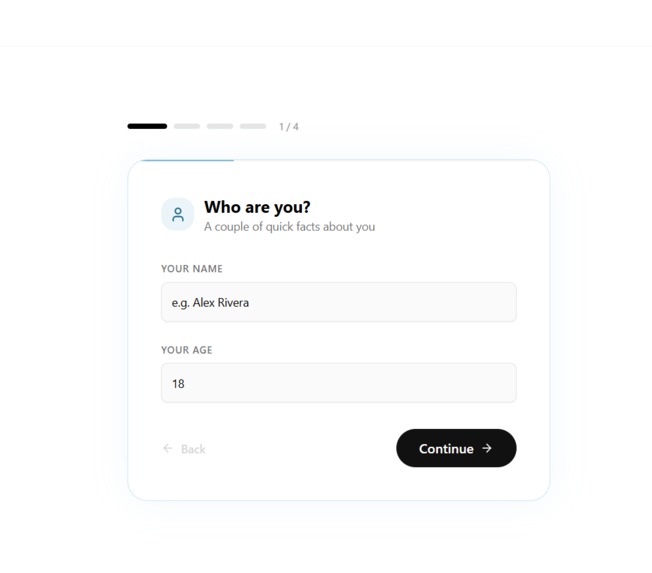
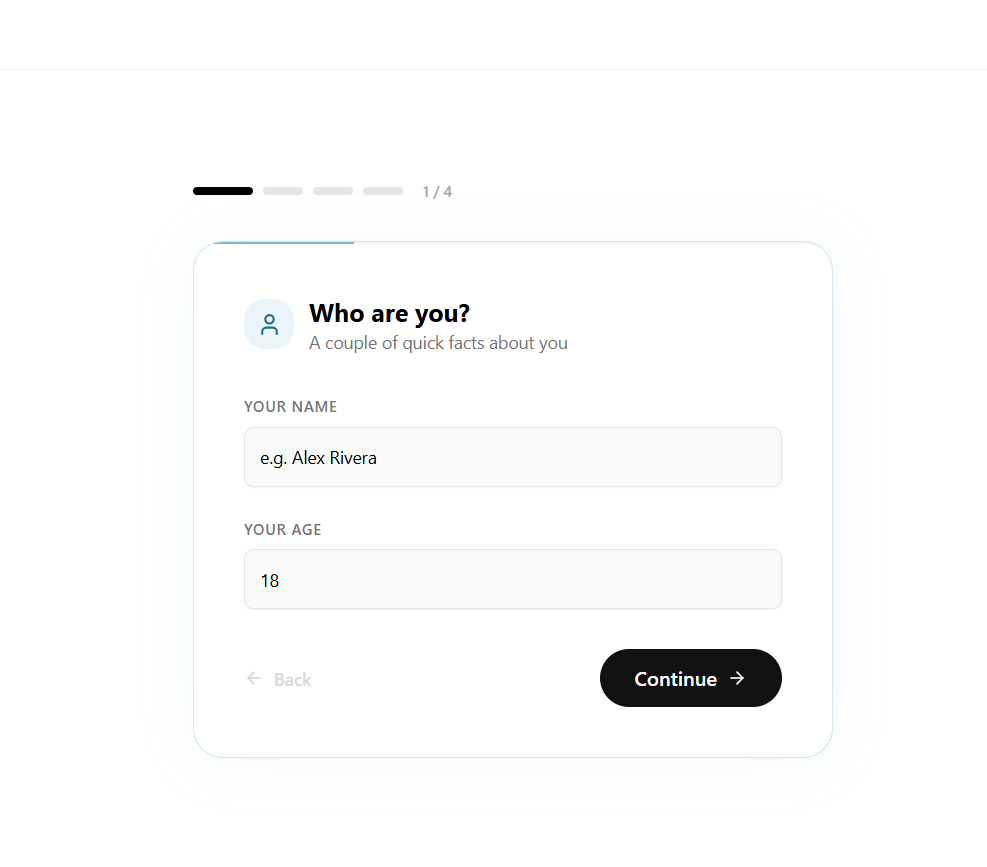
Onboarding Section
-
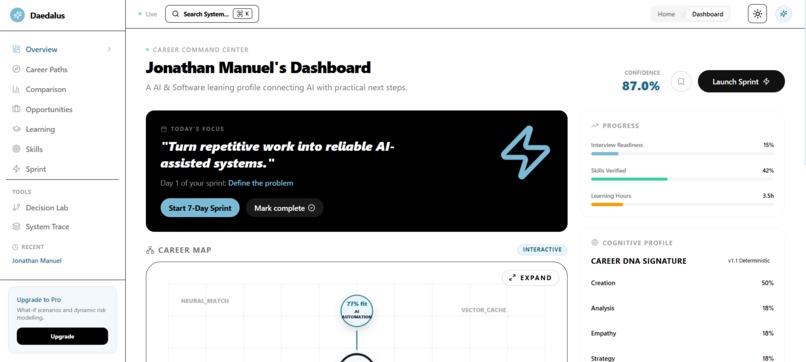
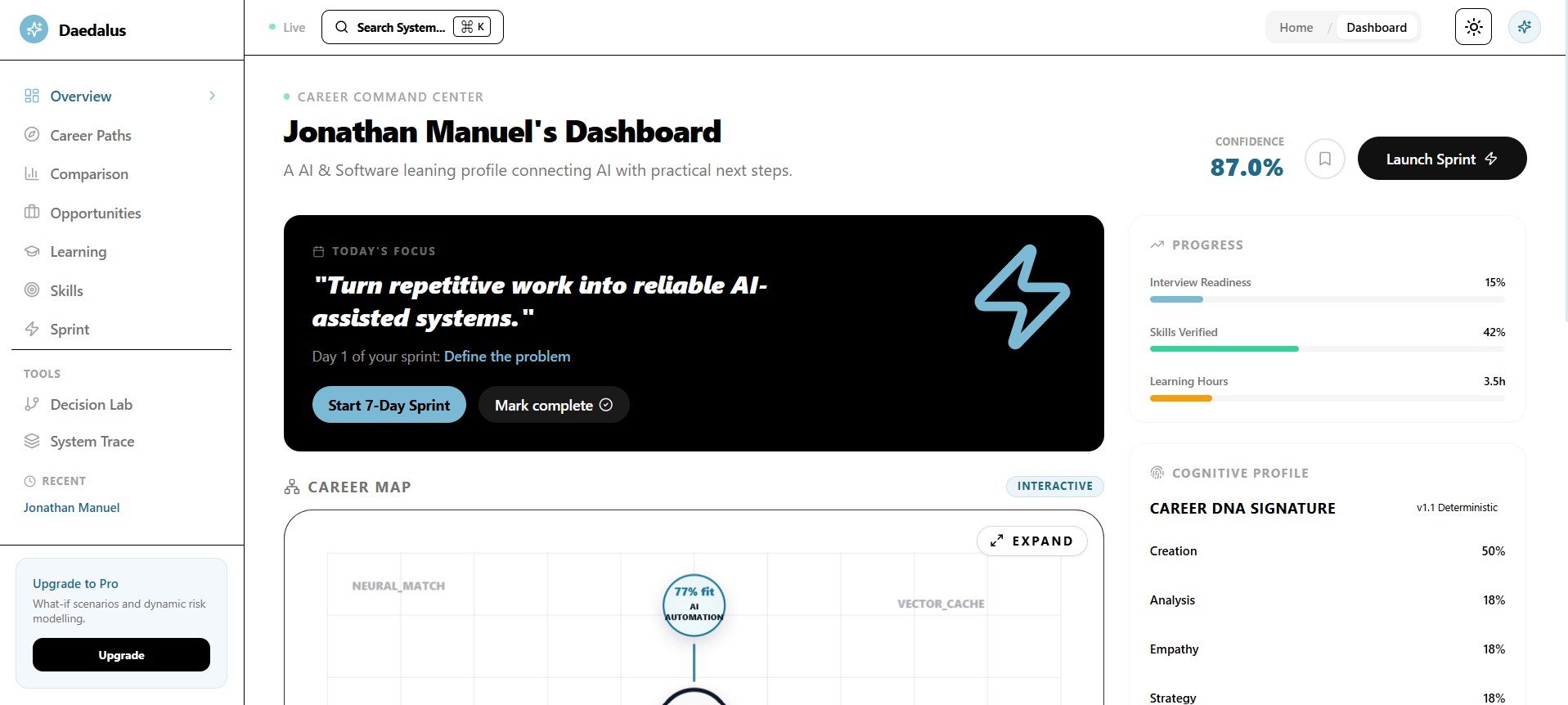
Dashboard Overview
-
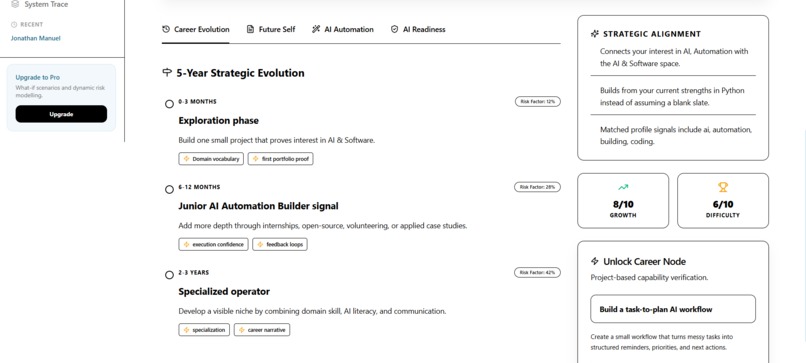
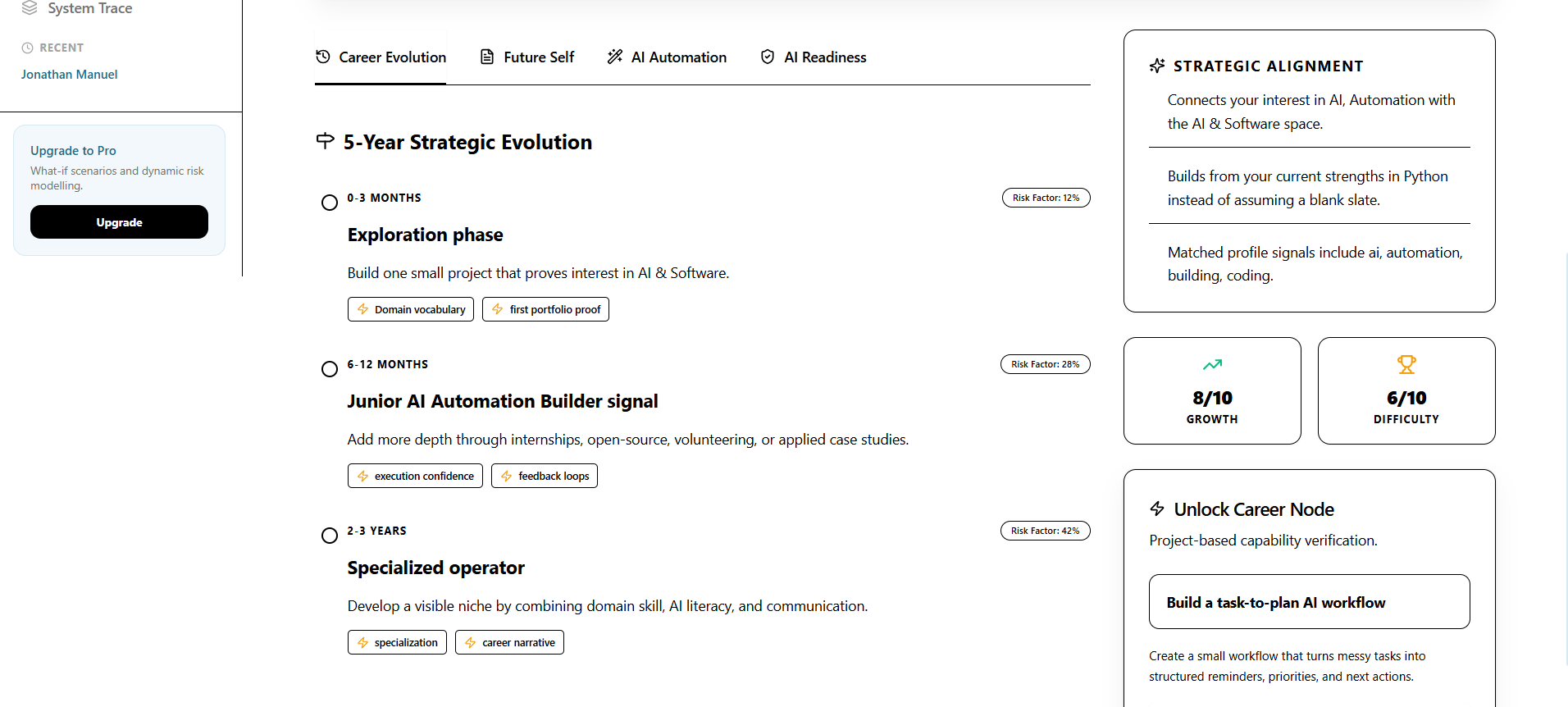
Career Evolution
-
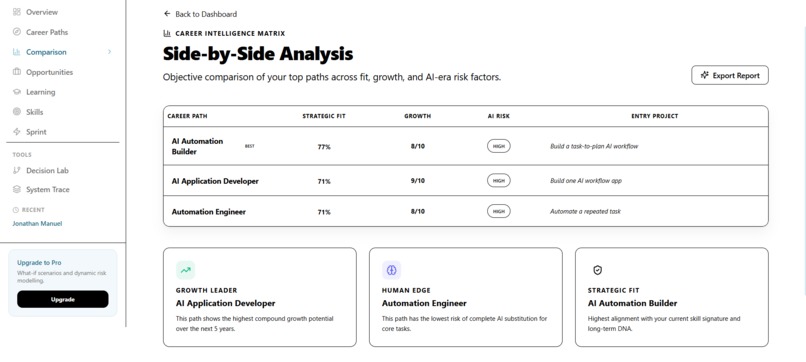
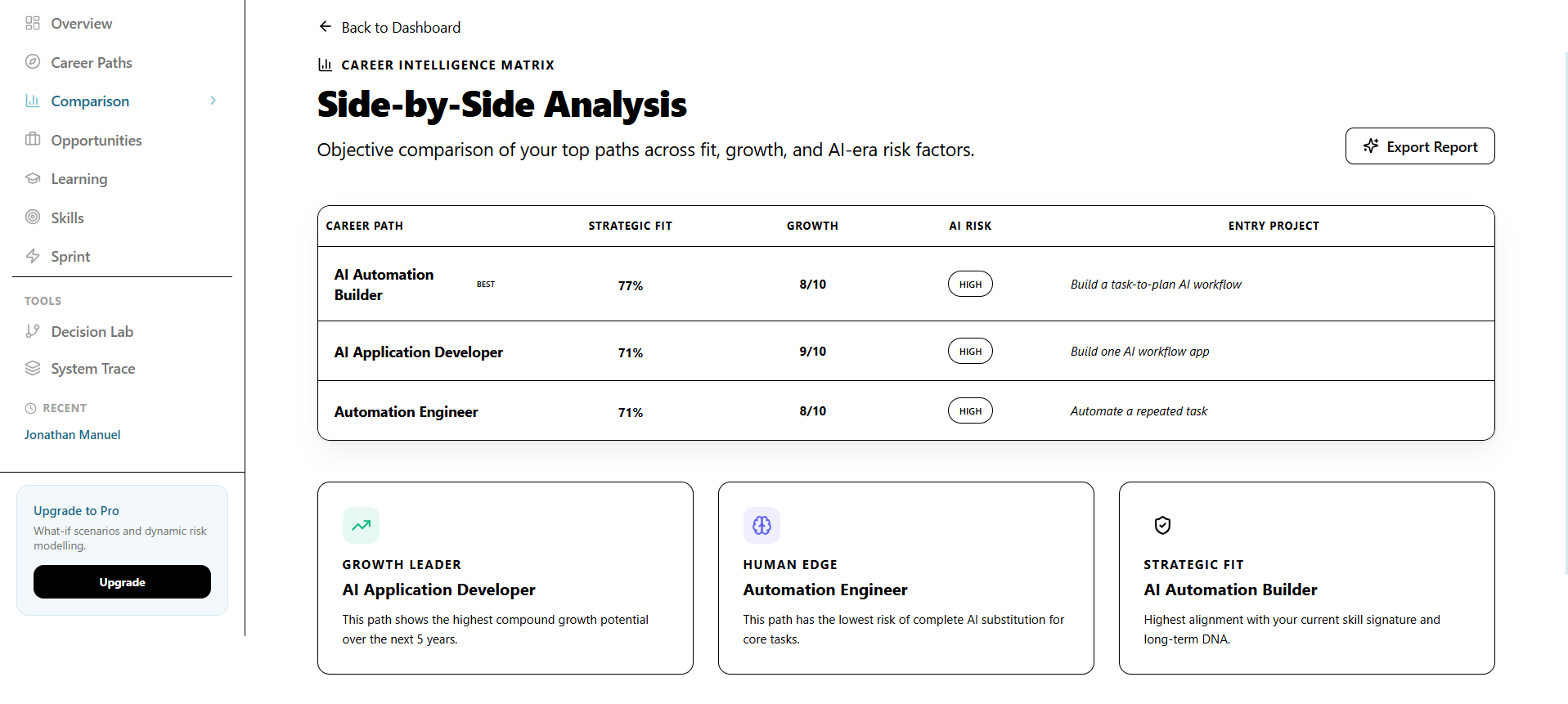
Career Matrix
-
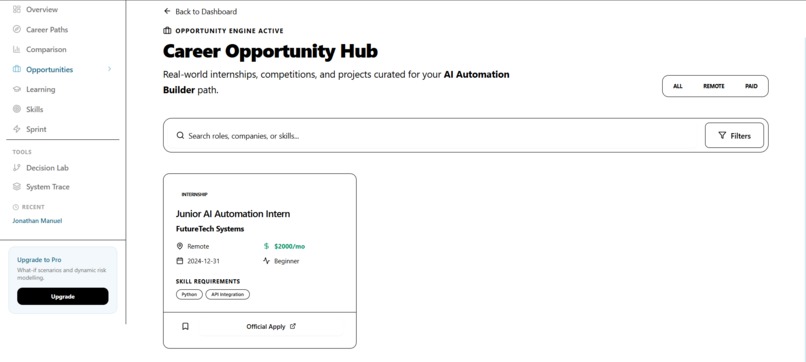
Opportunity Hub
-
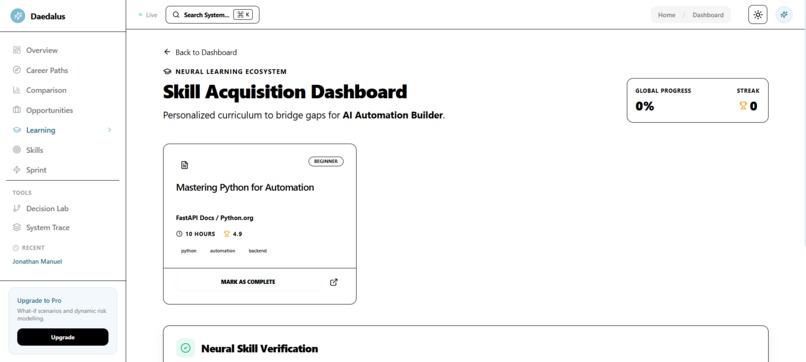
Learning Hub
-
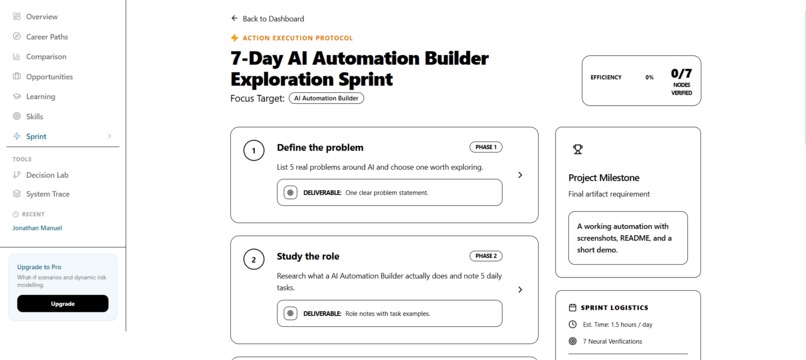
7-Day Sprint
-
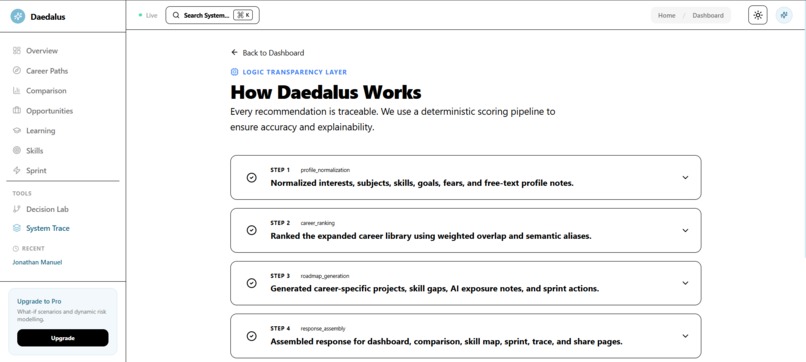
System Trace Tool
Inspiration
Career planning is broken for many students and early professionals. Most tools either give generic advice, resume suggestions, or long lists of careers without helping users understand what actually fits them.
At the same time, AI is changing how almost every career works. This creates a new kind of confusion: people are not only asking “What should I do?” They are also asking “Will this path still matter in an AI-driven future?”
Daedalus was built to answer that problem with structure. Instead of giving a single vague recommendation, it helps users explore possible future paths, understand tradeoffs, identify skill gaps, and leave with a practical plan.
What it does
Daedalus is an AI-powered career navigation platform.
A user enters their interests, current skills, subjects, goals, fears, and work preferences. Daedalus then generates personalized career paths and presents them through a visual decision dashboard.
The platform includes:
- Personalized career path recommendations
- Fit, confidence, difficulty, growth, and AI exposure signals
- Career detail pages explaining why each path fits
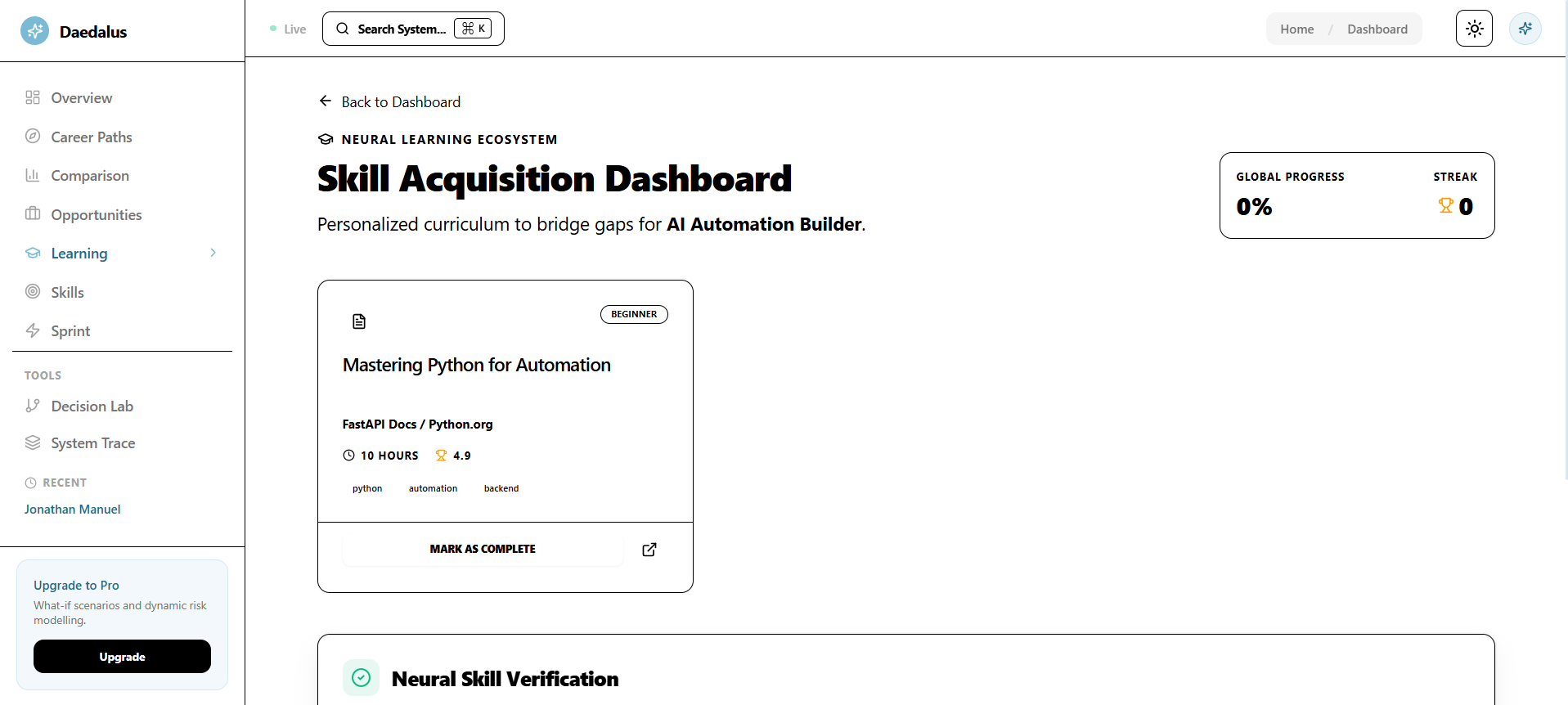
- Skill gap analysis and priority learning areas
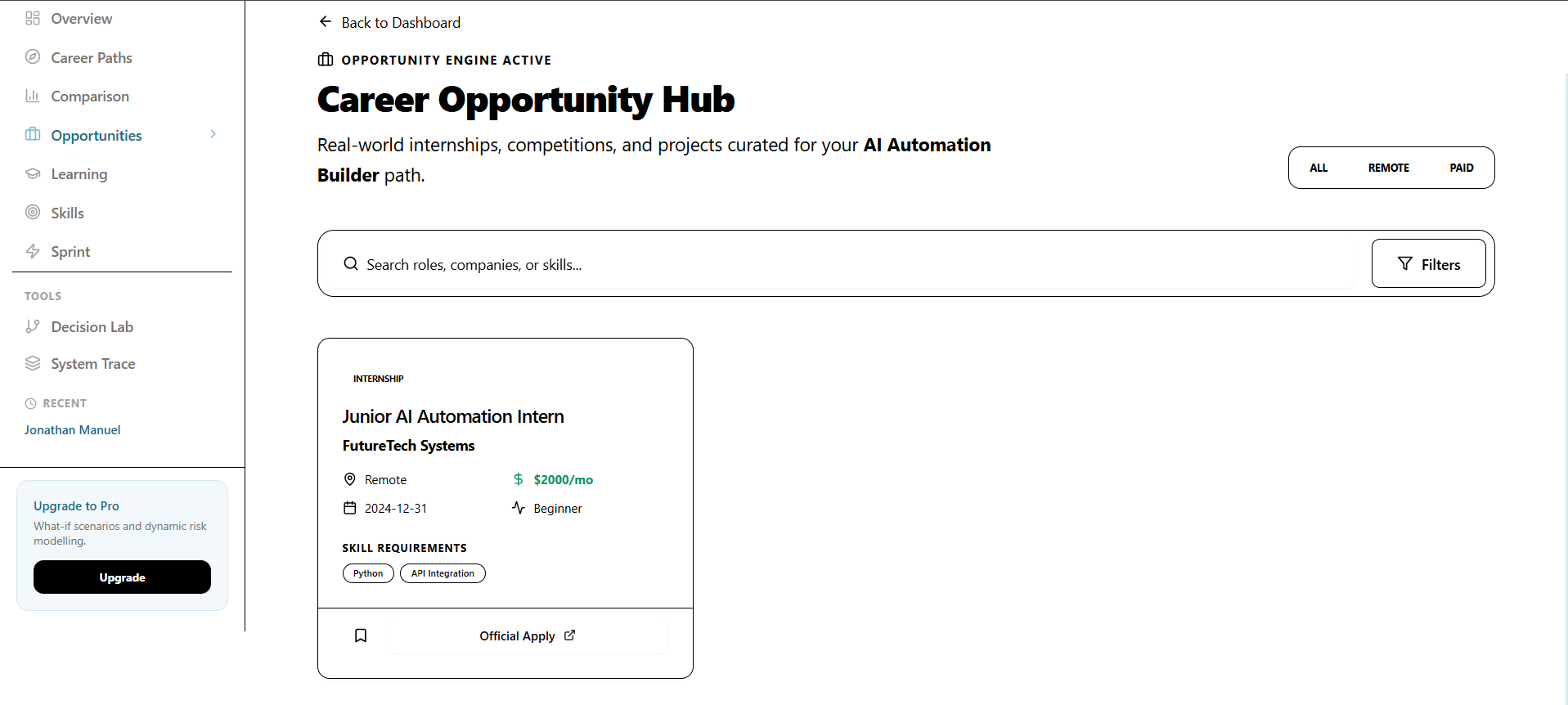
- Learning roadmap and opportunity suggestions
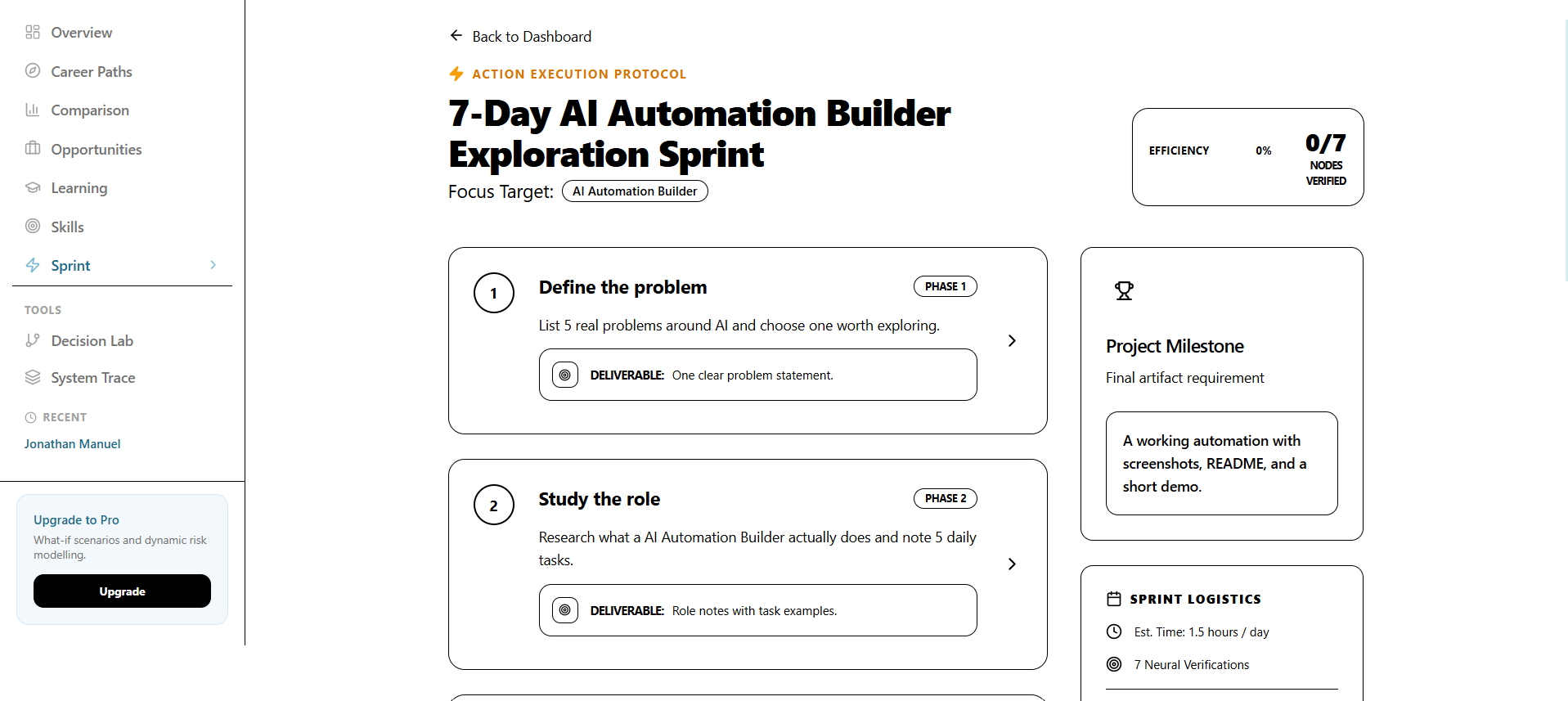
- 7-day action sprint
- Interactive career map
- Shareable career report
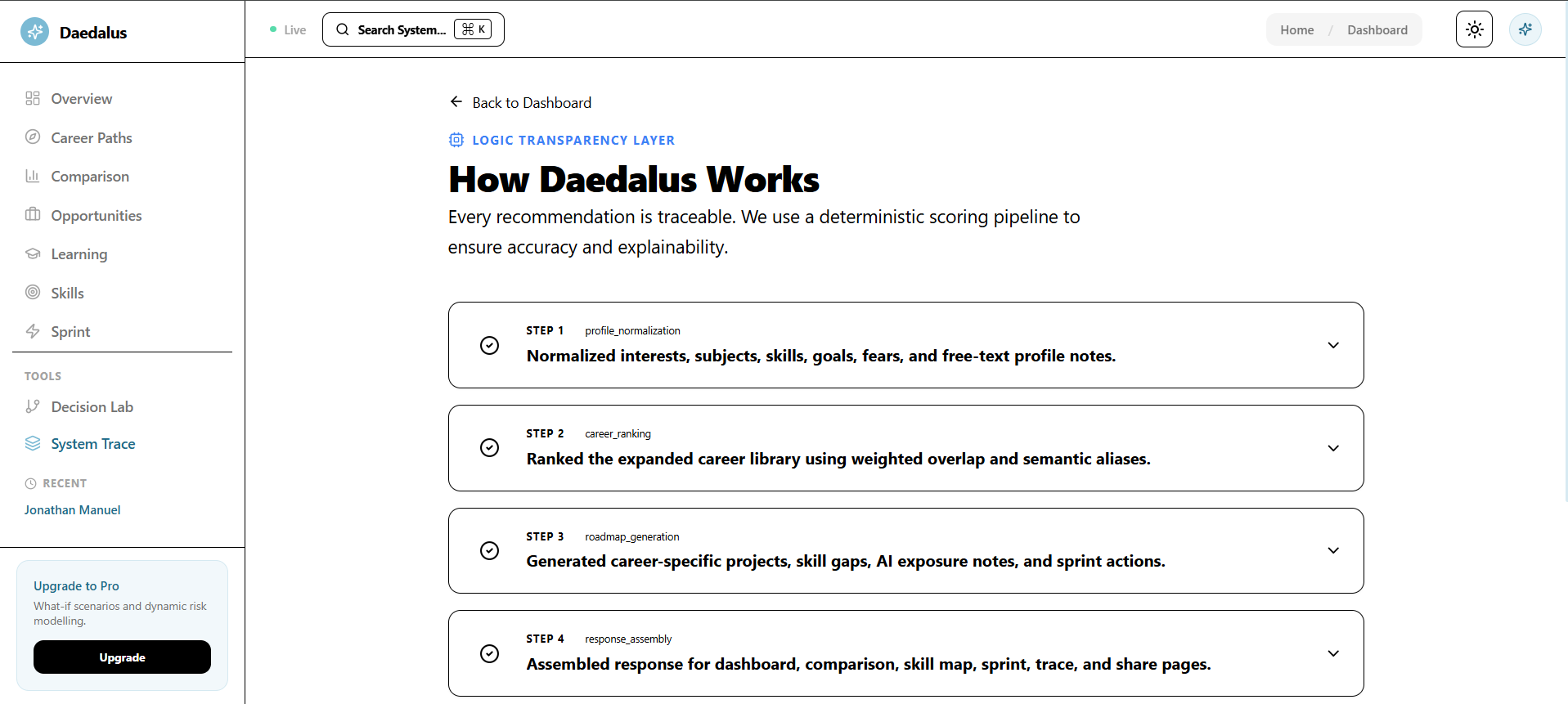
- Trace view explaining how the recommendation pipeline works
- Optional AI assistant support with graceful fallback behavior
Daedalus is designed as a structured career decision system, not a generic chatbot.
How we built it
Daedalus uses a full-stack architecture with a Next.js frontend and FastAPI backend.
The frontend is built with Next.js, React, Tailwind CSS, Radix UI, Framer Motion, and canvas-based visual components. It handles onboarding, dashboard rendering, saved profile recovery, interactive career maps, learning pages, sprint tracking, and shareable reports.
The backend is built with FastAPI, Pydantic, Python services, and a career recommendation pipeline. It processes user profiles, scores career paths, applies fallback recommendation logic, and optionally uses Gemini for AI-assisted generation and refinement.
The system follows this flow:
User Profile Input
        ↓
Frontend Onboarding
        ↓
FastAPI Backend
        ↓
Profile Normalization
        ↓
Career Matching + AI Assistance
        ↓
Skill Gap and AI Exposure Analysis
        ↓
Dashboard, Roadmap, Sprint, Trace, and Share Pages
The frontend is deployed on Vercel, and the backend runs as a Python/FastAPI service.
Challenges we ran into
The biggest challenge was turning a broad career guidance idea into a reliable product flow.
We had to solve several issues:
- Keeping frontend and backend API contracts stable
- Handling backend cold starts and network failures gracefully
- Making the recommendation engine useful across many career interests
- Avoiding generic AI outputs
- Improving fallback behavior when Gemini is unavailable
- Fixing runtime, deployment, and dependency issues across local and cloud environments
- Making the career map visually aligned and bounded
- Ensuring users can return to previous dashboards instead of restarting every time
Another major challenge was product direction. It was easy to keep adding features, but the real work was making the core experience coherent: profile → simulation → dashboard → action plan.
Accomplishments that we're proud of
We are proud that Daedalus works as a complete end-to-end product, not just a prototype screen.
Key accomplishments include:
- A live deployed product users can try
- Full onboarding-to-dashboard flow
- Personalized career recommendations
- AI exposure and human advantage analysis
- Learning and opportunity modules
- 7-day action sprint
- Interactive career map
- Saved dashboard recovery
- Shareable report page
- Backend diagnostics for AI availability
- Graceful fallbacks when AI services are unavailable
- Clean product documentation and deployment setup
We are also proud of the integration work. The project evolved through many frontend, backend, deployment, and product-quality issues, and we stabilized them into a usable product.
What we learned
We learned that AI products need more than model calls. They need structure, fallbacks, observability, and clear user flows.
Important learnings:
- A career platform needs a broad career catalog, not just a few generic paths
- AI recommendations must be explainable to feel trustworthy
- Frontend polish means little if backend contracts are unstable
- Cloud deployment issues can expose hidden dependency and runtime problems
- Graceful error handling is essential for real users
- Product direction matters as much as code quality
- Users need action steps, not just advice
Daedalus helped us understand how to build around AI responsibly: use AI where it adds reasoning and personalization, but keep deterministic fallback logic where reliability matters.
What's next for Daedalus
Next, Daedalus can become a deeper career planning platform with:
- Larger career and skill knowledge base
- Stronger Gemini-based reasoning and reranking
- Durable user accounts and saved history
- More detailed career clusters across creative, technical, business, social impact, and vocational paths
- Mentor or counselor review mode
- Resume and portfolio interpretation
- More personalized learning resources
- Better analytics on user progress
- More robust production database instead of temporary storage
The long-term goal is to make Daedalus a practical career navigation layer for people trying to make better decisions in an AI-driven world.


Log in or sign up for Devpost to join the conversation.