
Inspiration
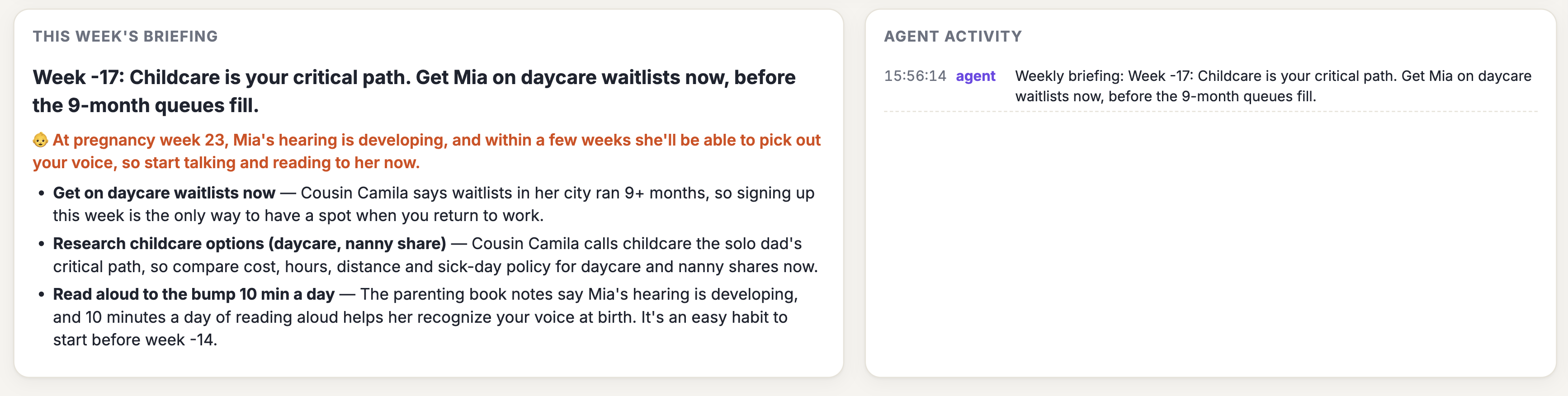
In 17 weeks I meet my daughter Mia, and I'm doing this as a solo dad. Advice comes from everywhere: my pediatrician, my aunt Elisa, my cousin Camila, a friend who's a single dad. Half of it contradicts the other half. DadOS is my personal brain. It turns all of that into one plan that adapts as life happens.
What it does
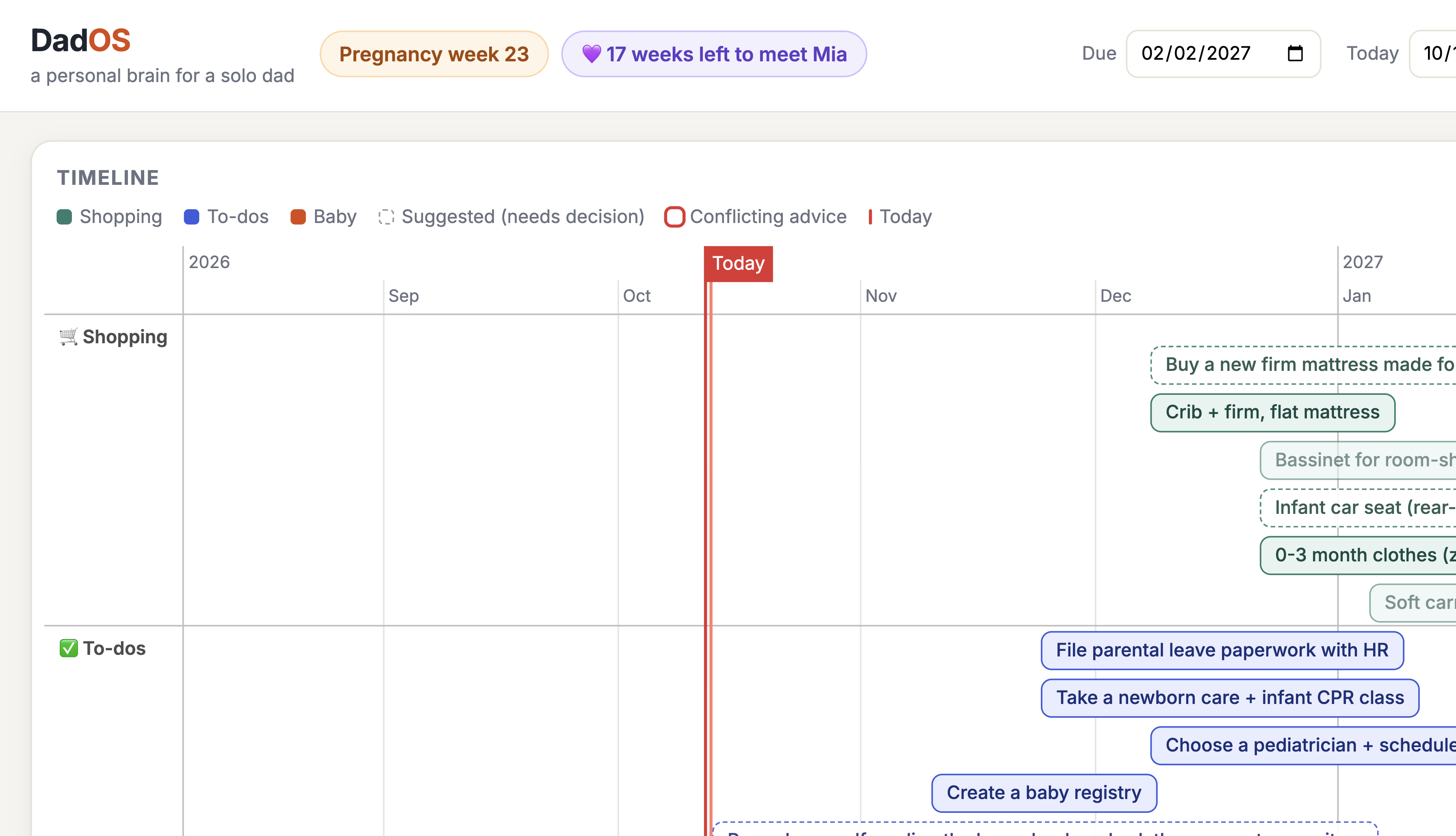
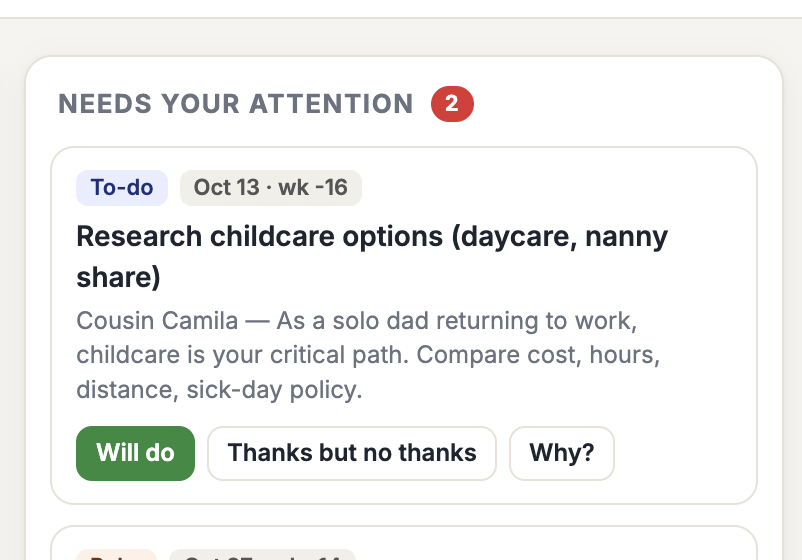
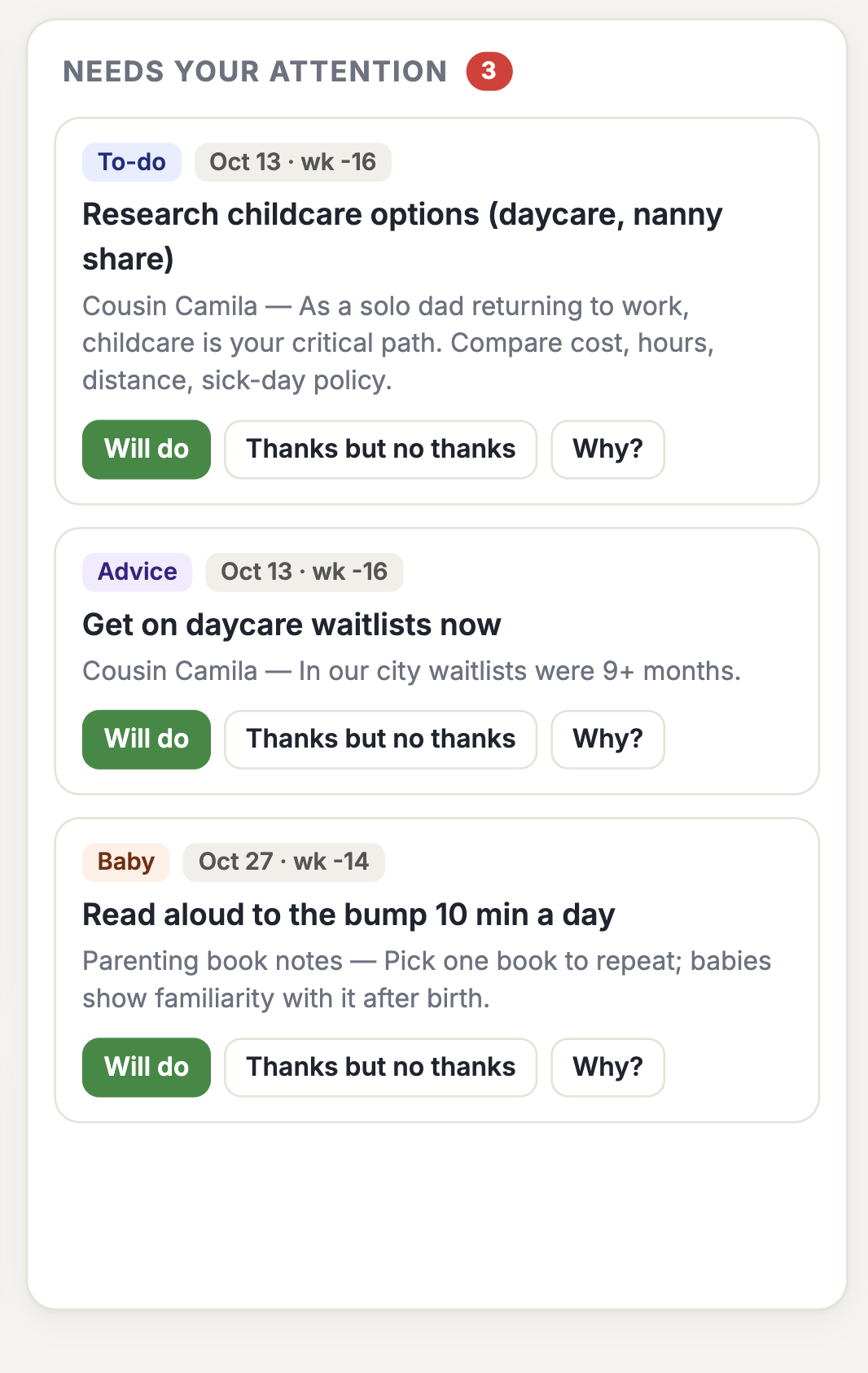
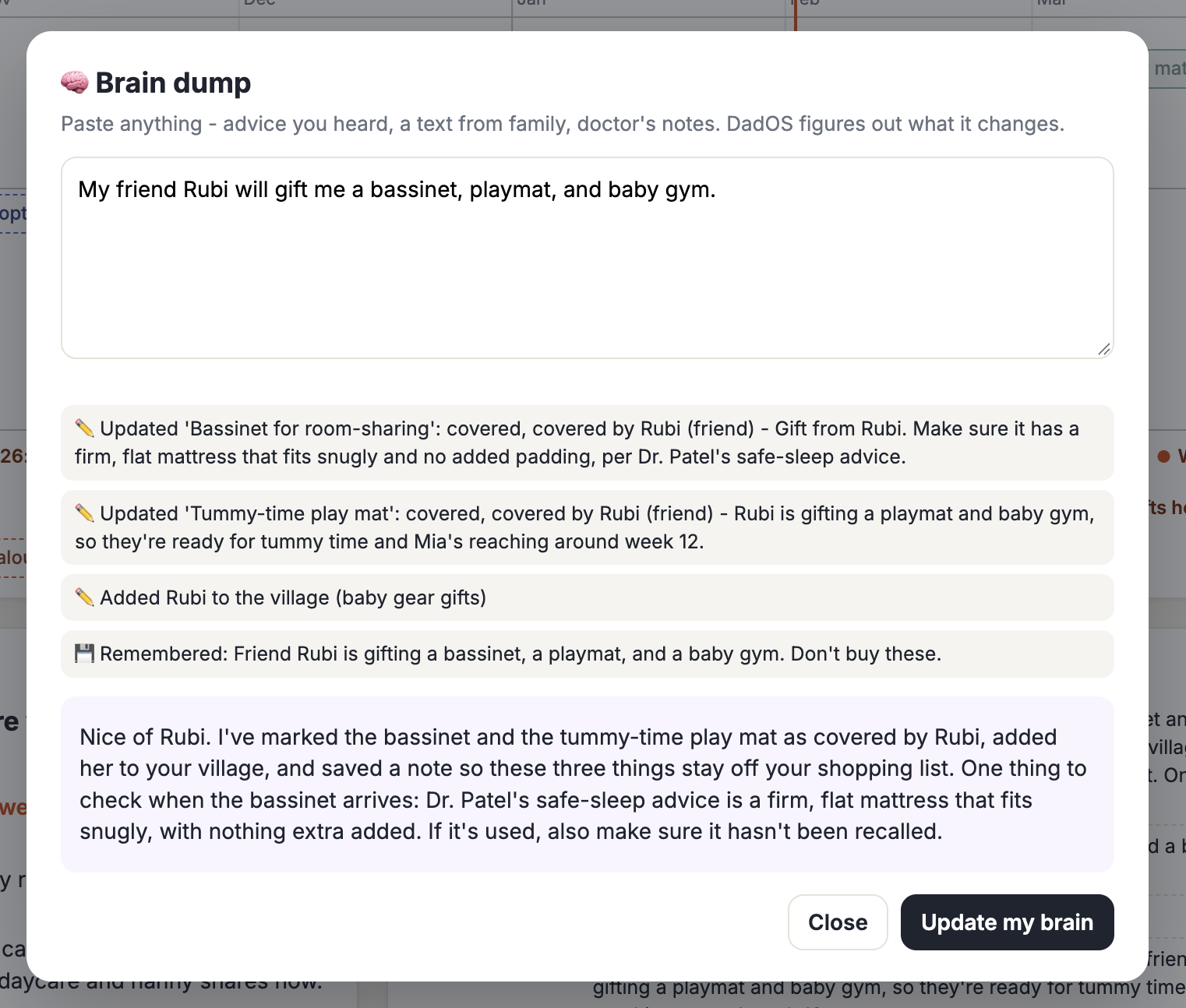
Everything here lives in HydraDB as a knowledge graph. Every product, to-do, milestone and piece of advice is linked to who recommended it, when it's due, and what it requires, unlocks or contradicts. My decisions are stored as HydraDB memory. Solid items are things I've committed to. Dashed items are waiting for my decision. Every brain dump updates the timeline and dependencies, learning from new decisions.
How we built it
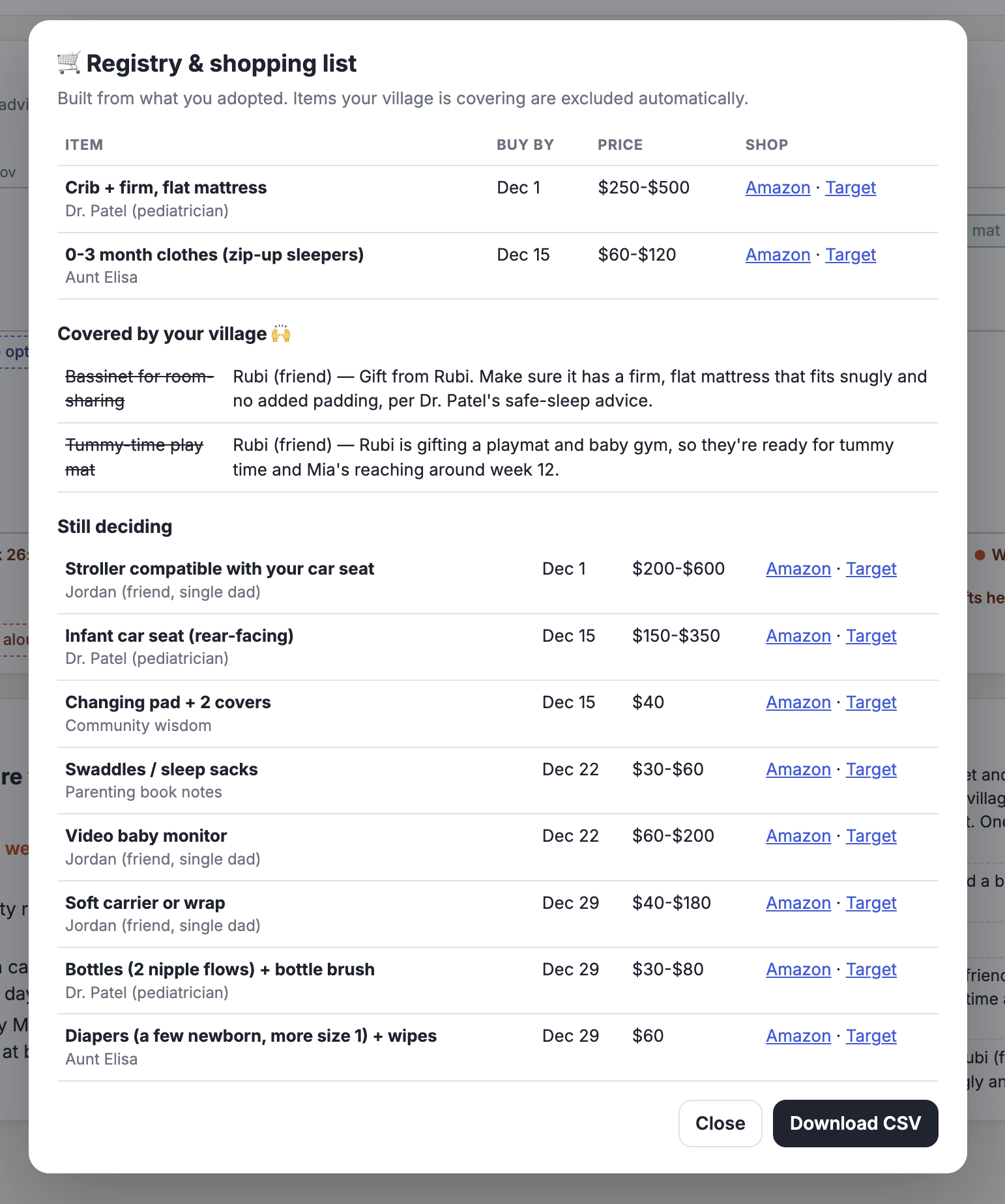
Backend: Python 3.12 with FastAPI, served by uvicorn. Brain: HydraDB cloud through the hydradb-sdk Python package. A knowledge collection holds the items plus a graph you declare yourself, with connections like RECOMMENDS, REQUIRES, UNLOCKS, CONTRADICTS, TIMED_FOR and PROVIDES. A memory collection holds your decisions, your reasons, your support network and facts about you. Searches are hybrid (text plus meaning), with graph context, so they return the actual connection paths. Agent: Claude Opus 5.5 through the Anthropic Python SDK. The brain dump uses tool calling: search_brain, update_item, add_item, remember and add_helper. The briefing, the ripple after “Will do”, learning from “no thanks” and the re-plan use structured JSON output. Server-side fallbacks are on, so another model takes over if one declines. Frontend: one HTML page with plain JavaScript and the vis-timeline library from a CDN. There’s no build step. Exports: a hand-built .ics calendar file and a CSV registry with Amazon/Target search links. App state: a local JSON file for the timeline view and the agent’s activity log.
Challenges we ran into
Updating existing databases takes time.
Accomplishments that we're proud of
The ability to see dependencies of prior decisions based on new data.
What we learned
The power of graph databases and how easy HydraDB is to use.
What's next for DadOS
- Adding the ability to ask free-form questions.
- Improve product recommendations and research and baby registry building, sending weekly briefings to Google Calendar.
- Deploying to Vercel to access it outside my laptop.
Built With
- claude
- hydradb

Log in or sign up for Devpost to join the conversation.