-
-
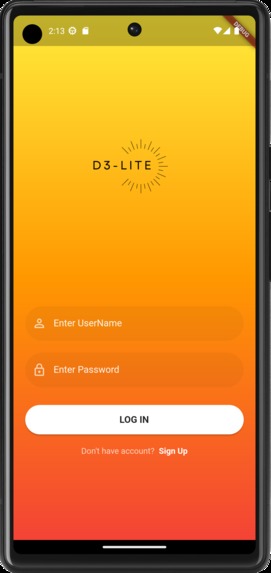
Sign In Page
-
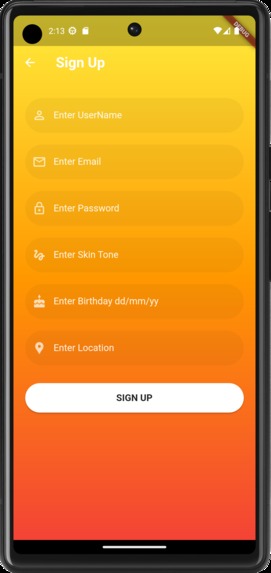
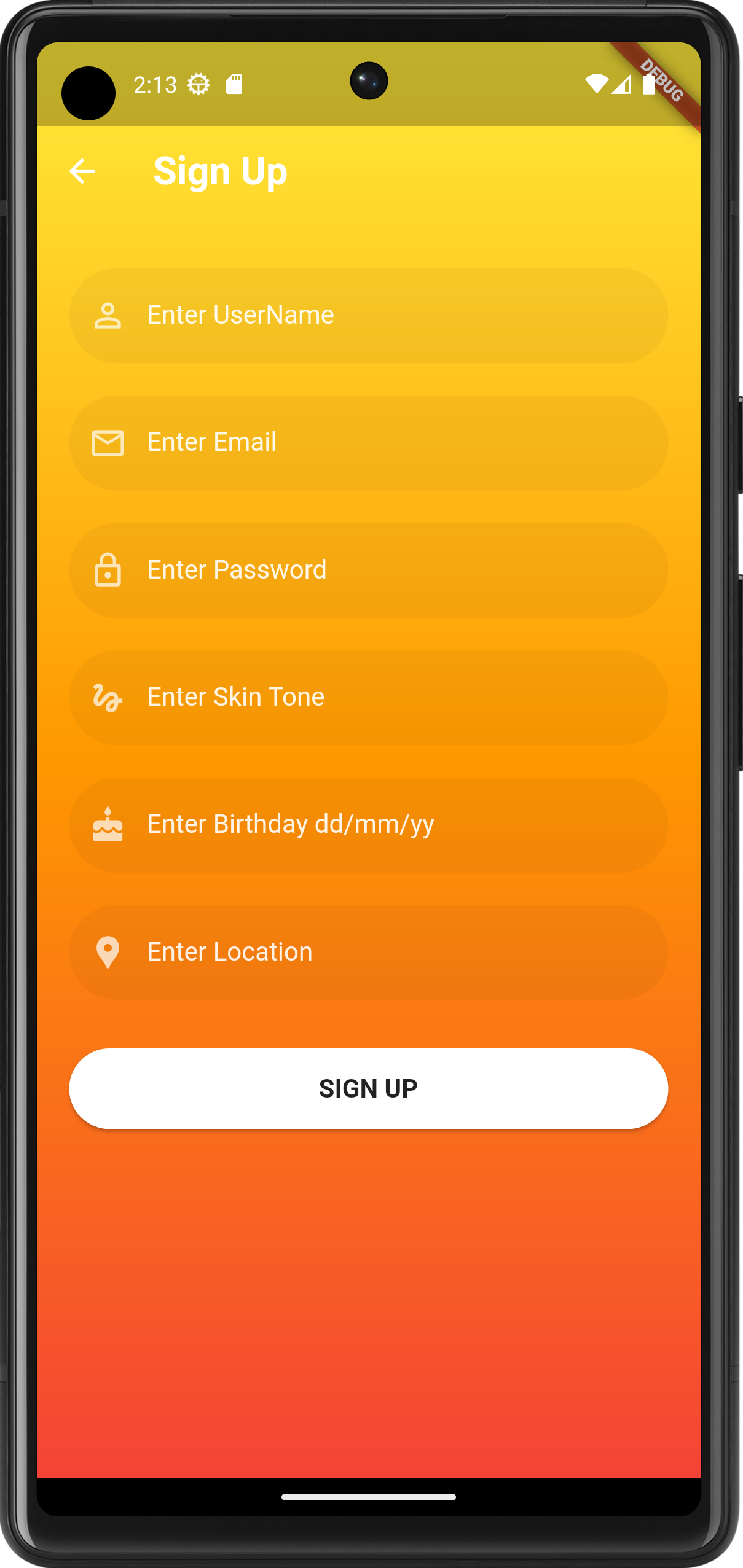
Sign Up Page
-
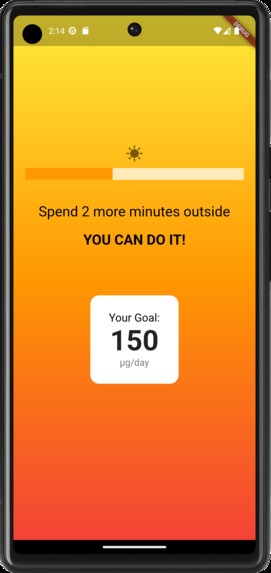
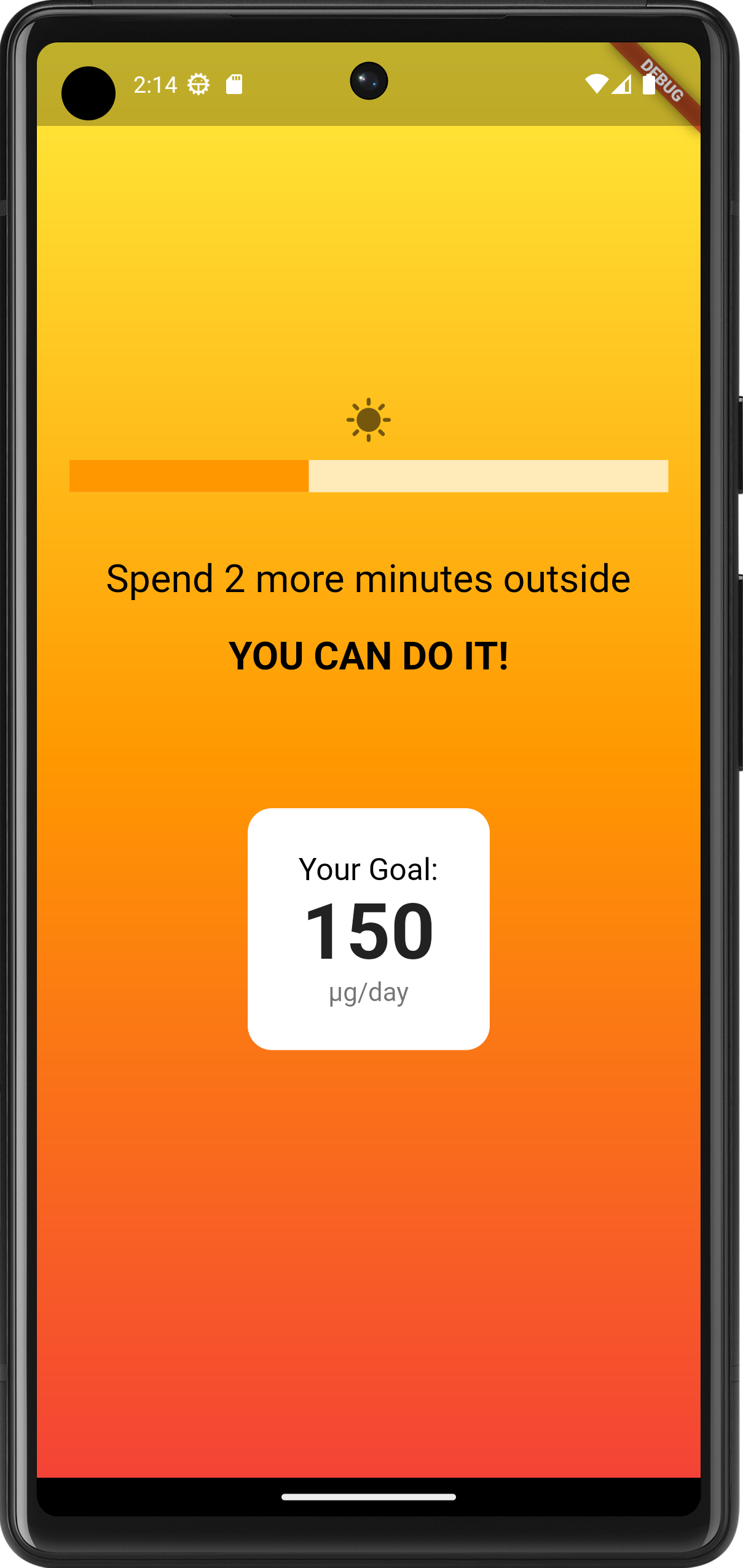
Home Page
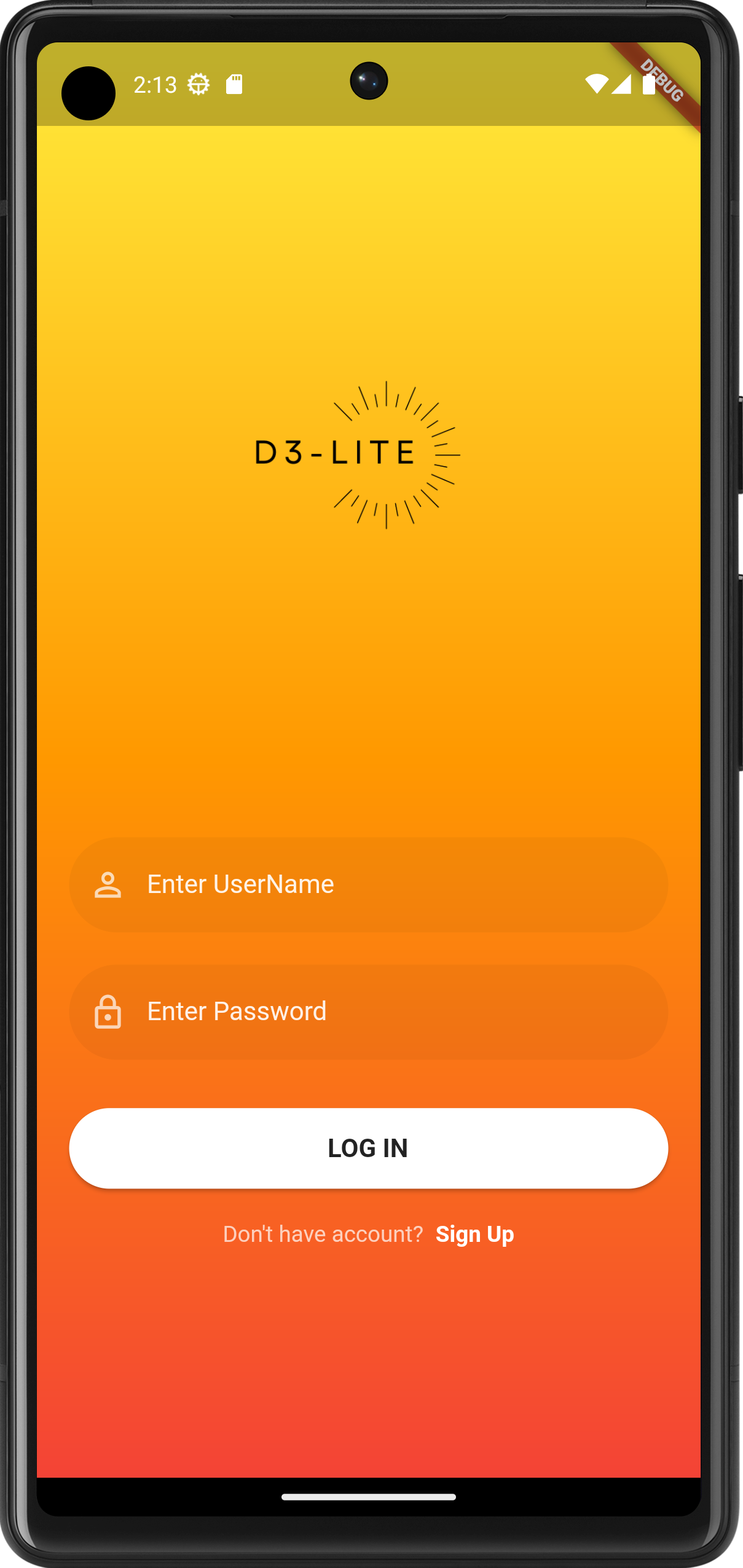
Inspiration
Though our team consists of three Santa Cruz students and one student from Minnesota, we have all experienced the same thing; a lack of and need for sunlight or, more specifically, Vitamin D. This past month, Santa Cruz has dealt with storm after storm; residents have stayed inside, waiting for the sun to peek through. On the other hand, Minnesotans bundle up with puffers and gloves against 20°F climates, watching the snow from inside their insulated buildings. And the problem doesn’t stop at this level; over 1 billion people worldwide are Vitamin D deficient, and 1 in every 2 people on earth are Vitamin D insufficient. We began to voice the effects this weather has had on our moods and energy levels to devise a solution. This shared experience inspired us to create D3-lite. Our mission is to help encourage our users to receive adequate vitamin D with a call to action and a short trip outside. It doesn't matter if you're a student hunkering down for the midterm season or a remote worker typing away at a computer; everyone needs a few minutes of sunshine every now and then.
What It Does
D3-lite is a mobile application that tracks the user’s intake of Vitamin D using our custom algorithm, and reminds them to go outside for a customized amount of time to emphasize the importance of Vitamin D intake. First-time users are prompted to provide information that would help us calculate the Vitamin D absorption base line of their body in their situation. After learning more about our users, D3-lite gives a recommendation on how long the user should be outside daily. The user will have a progress bar as well as a measure unit icon below to help them keep track. Once the user fulfills the recommended amount, the progress bar will be completed.
How We Built It
First, we designed a low-fidelity prototype of what the app's outline would look like. For the app development, we used a Flutter framework in Android Studio, using Dart as the main language, in addition to Java, Swift and C++ for the flutter project related files, and we chose Firebase for a realtime database and authentication. For the Vitamin D absorption calculation algorithm, we researched what impacts Vitamin D levels and created an algorithm that would take the user's information and output a personalized recommendation for how long the user should be in the sun, our bioinformatics engineer built this algorithm in Python function for ease of use and quick testing.
Challenges We Ran Into
As this was most of us’ first hackathon, one of our biggest obstacles was our limited scientific knowledge of anatomy. We needed to research how the body receives the sun's ultraviolet B (UVB) rays and uses it to interact with our body's protein to convert it into D3: the active form of Vitamin D. We also had trouble understanding how this process works under different scenarios as we thought of the various user experiences to be encountered (i.e., weather conditions, clothing materials, etc.) which lead to the recruitment of a BioInformatic major who joined our team. Another challenging part of this project was developing the app itself, as we all didn’t have app development experience and had to learn everything from scratch.
Accomplishments We're Proud Of
We entered this hackathon with a nervous yet determined mindset. One of the most significant accomplishments was our teamwork and our ideation process. We shot a lot of ideas out into the open. We had productive yet exciting discussions throughout Cruzhacks despite many ideas being shot down based on time and feasibility. Our teamwork encouraged us to persevere and try our best regarding ideation and execution. Our time at Cruzhacks was our first time creating and finishing a mobile application that involved a lot of technical components. We all came from various majors, and everyone had something to contribute to D3-lite.
What We Learned
Aside from the scientific and technical knowledge we gained from the development of D3-lite, we also learned the importance of teamwork and communication. Our team consisted of students from different backgrounds, and everyone brought unique skills and perspectives to the table. Through our discussions and collaboration, we were able to come up with creative solutions to the challenges we faced. Additionally, we learned the value of iterative design and prototyping. Our initial ideas went through several revisions before we arrived at our final solution, and the low-fidelity prototype we created helped us visualize our app and make necessary changes before investing time into full development. We also gained valuable experience in app development, including working with the Flutter framework, Dart, Java, Swift, and C++. We learned how to use Firebase for real-time database and authentication, as well as how to develop a custom algorithm for calculating Vitamin D absorption using Python.
What's Next for D3-lite
Given more time, we would like to implement some of the features we had to put on the back burner. The first feature is a User Reward System where we can encourage our users to continue using D3-lite and help users track how much time they spend outside visually through a Dashboard. Ideally, we would have created a virtual garden where every daily milestone reached could help grow a plant in the user's virtual garden, eventually creating a floral cloister for users to look back on. Next, we would like to make a Dashboard for users using the data D3-lite receives as users utilize the app more over time. This can help users gauge their time outside weekly, monthly, or even yearly. We also plan to implement a sunscreen feature to help our users further track their Vitamin D intake with SPF protection and recommend sunscreen that protects them from UV Rays. With these features, we believe D3-Lite can further serve its purpose in supporting its users intake Vitamin D. In terms of the development plans, we want to finalize the connections between the app and the database and implement our unique algorithm in the backend of the website, and eventually launch the app for free, so we can help as many people as possible avoid Vitamin D Deficiency.


Log in or sign up for Devpost to join the conversation.