-
-
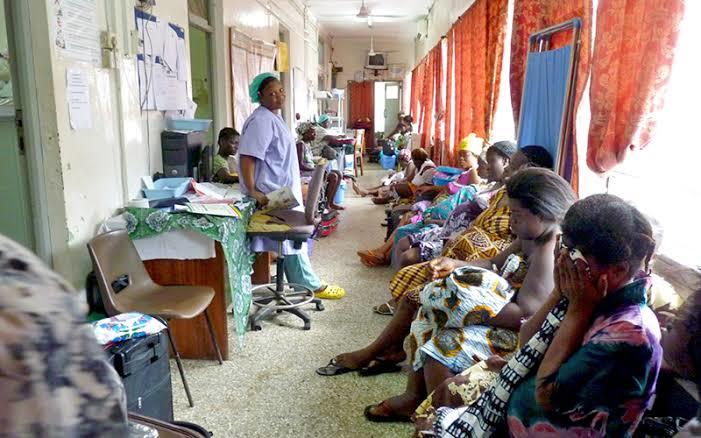
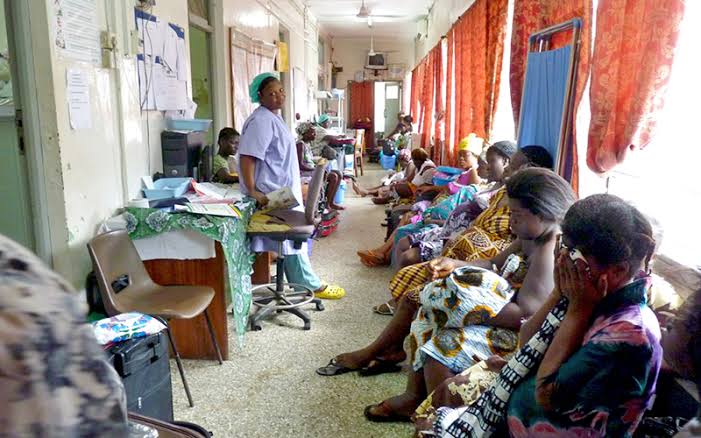
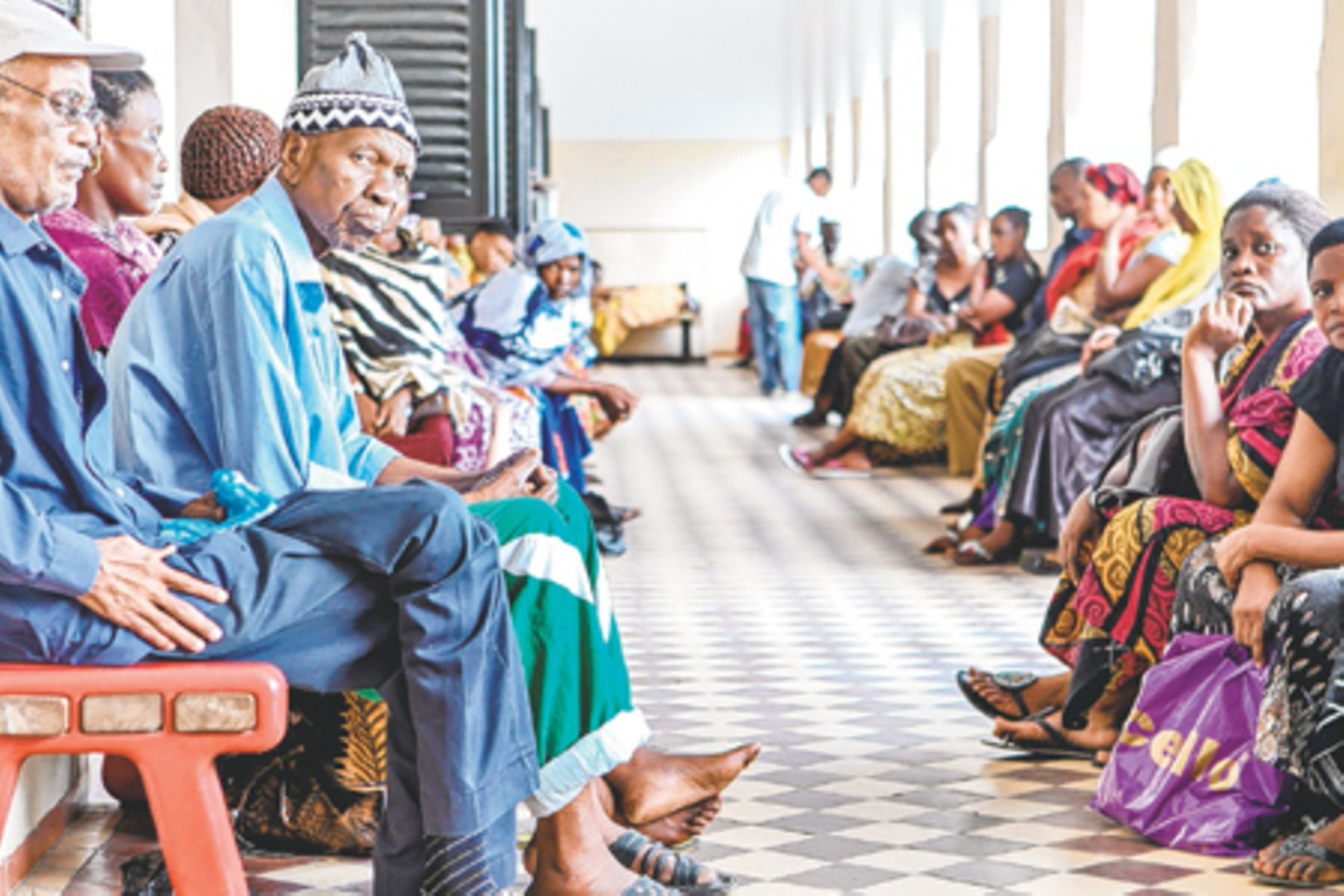
Overcrowding of patients, which raised the problem and some people could admit other diseases from the hospital
-
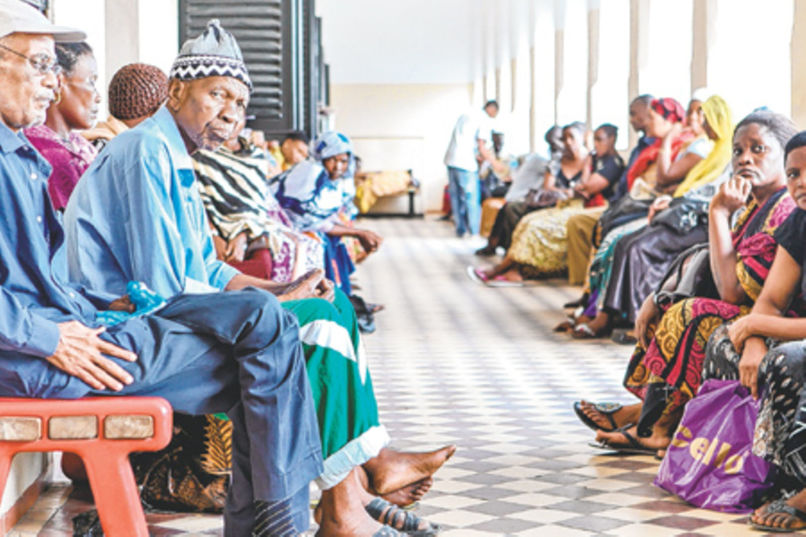
Long Ques that create the long wait for people at the health centre or hospital
-
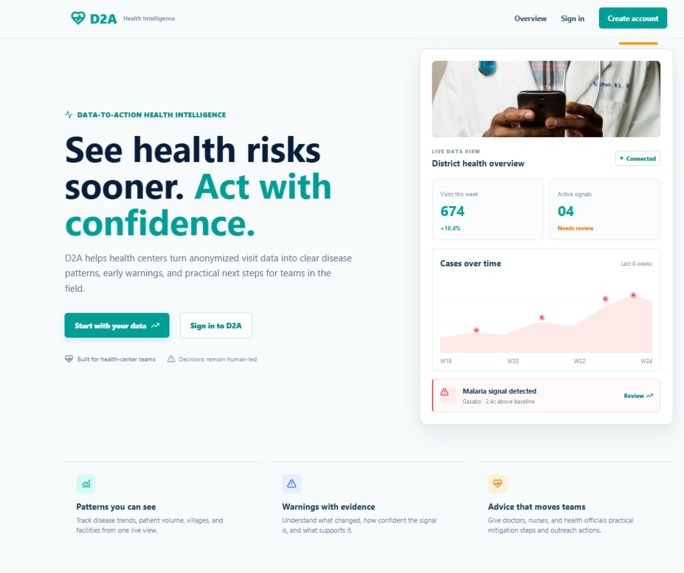
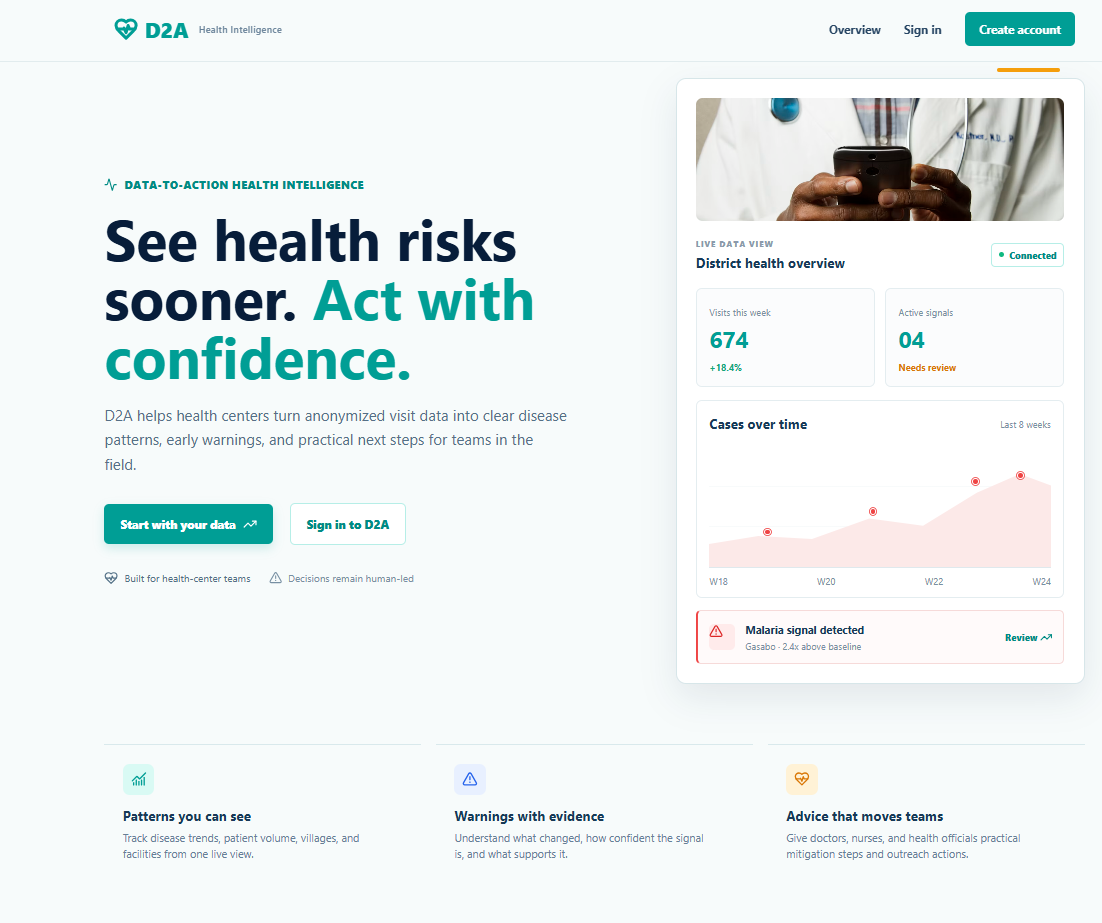
Introducing the Solution D2A-Health project.
-
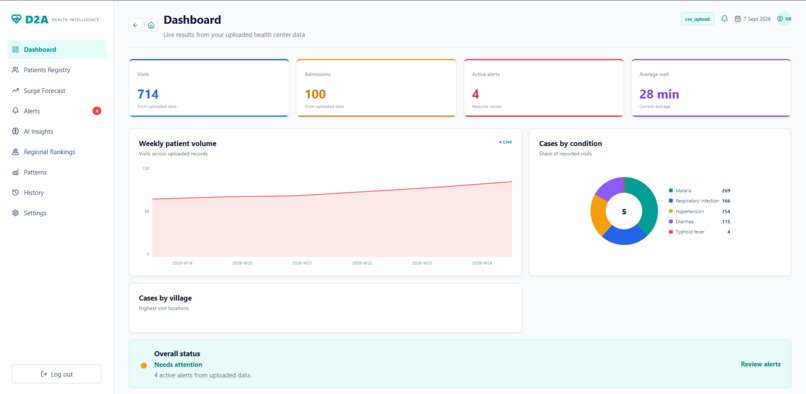
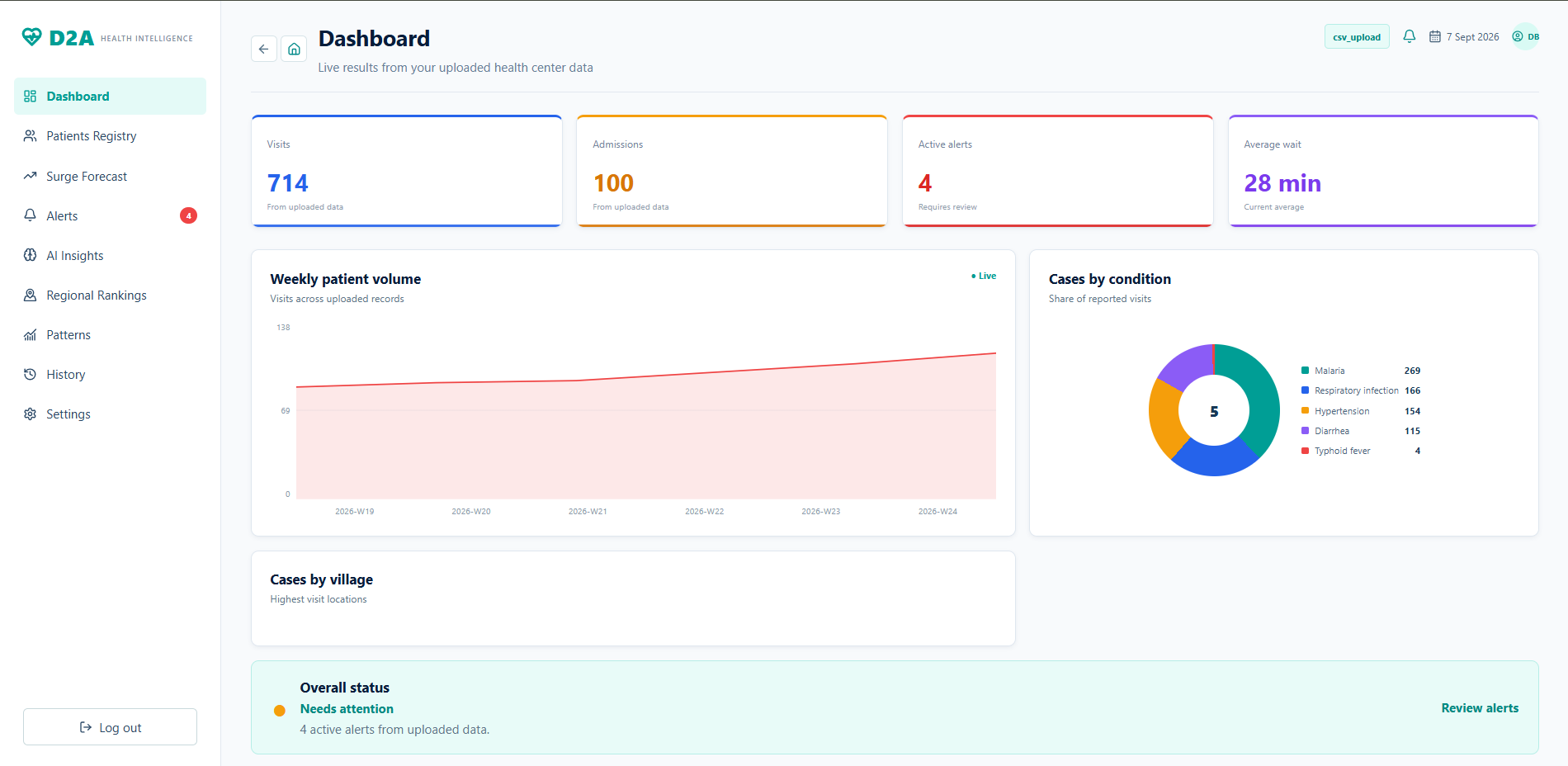
Health official's dashboard overview
-
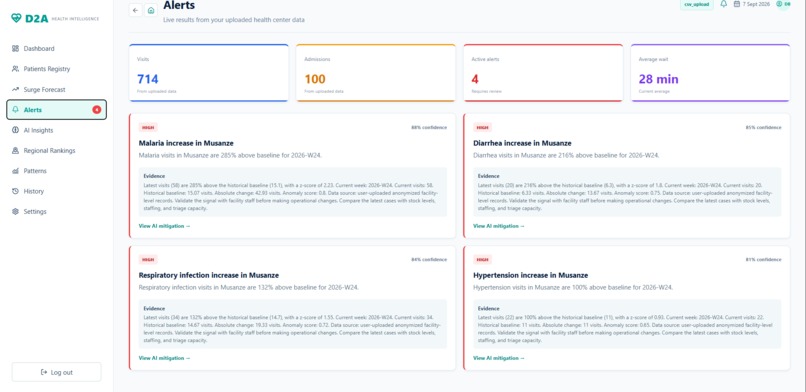
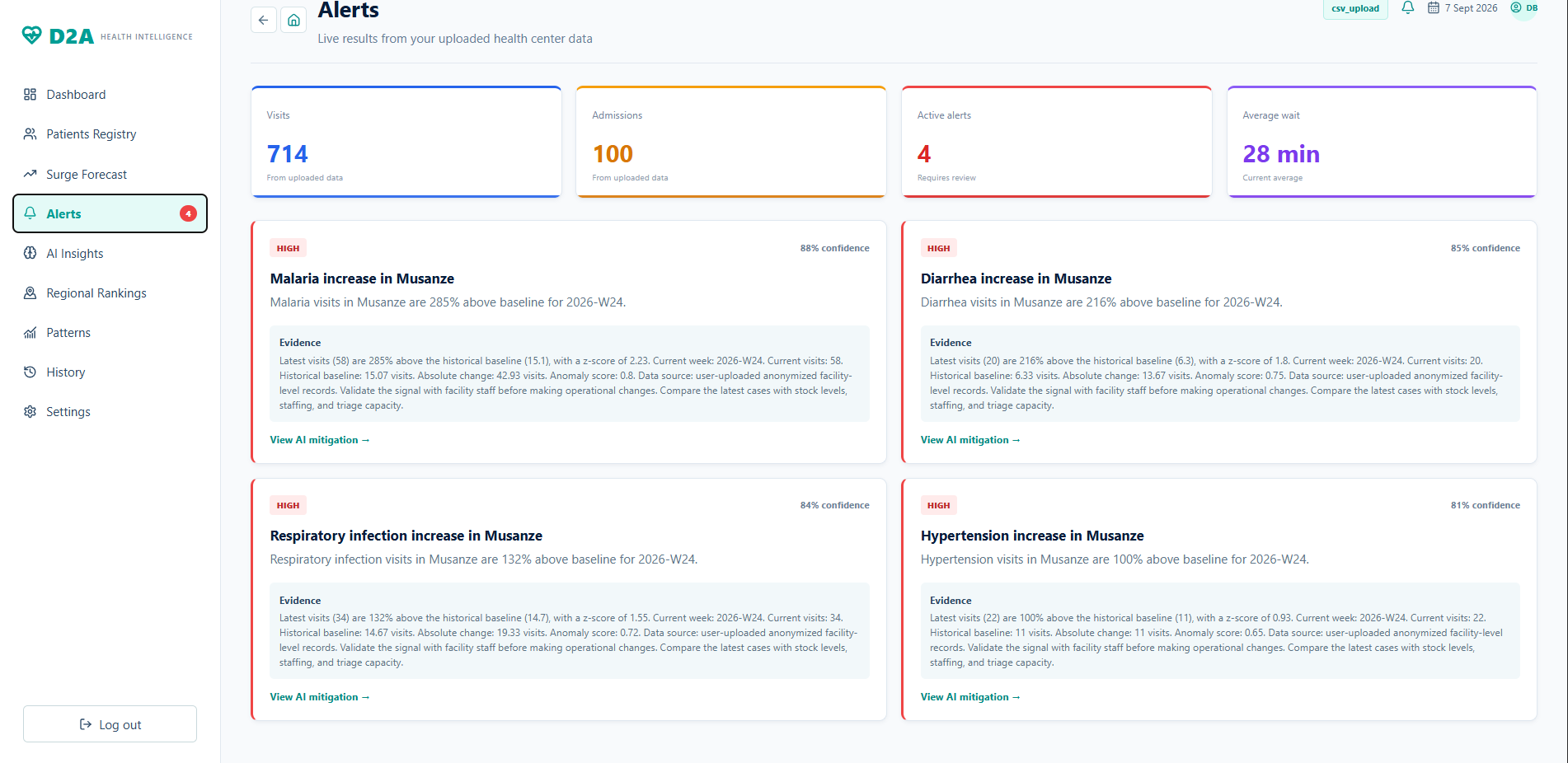
AI alerts from the input data ingestion by AI model
-
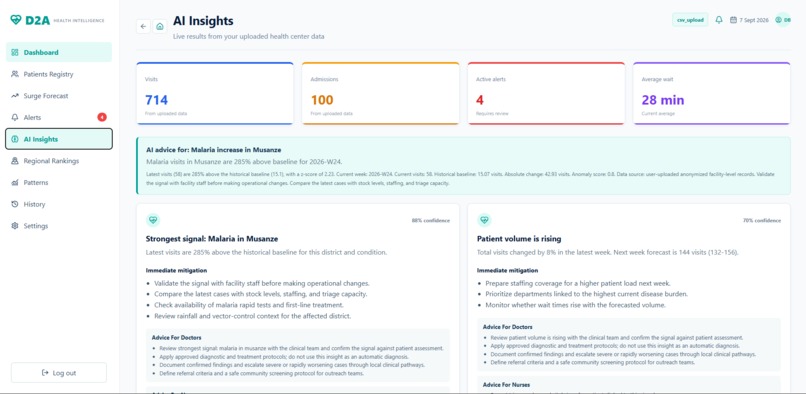
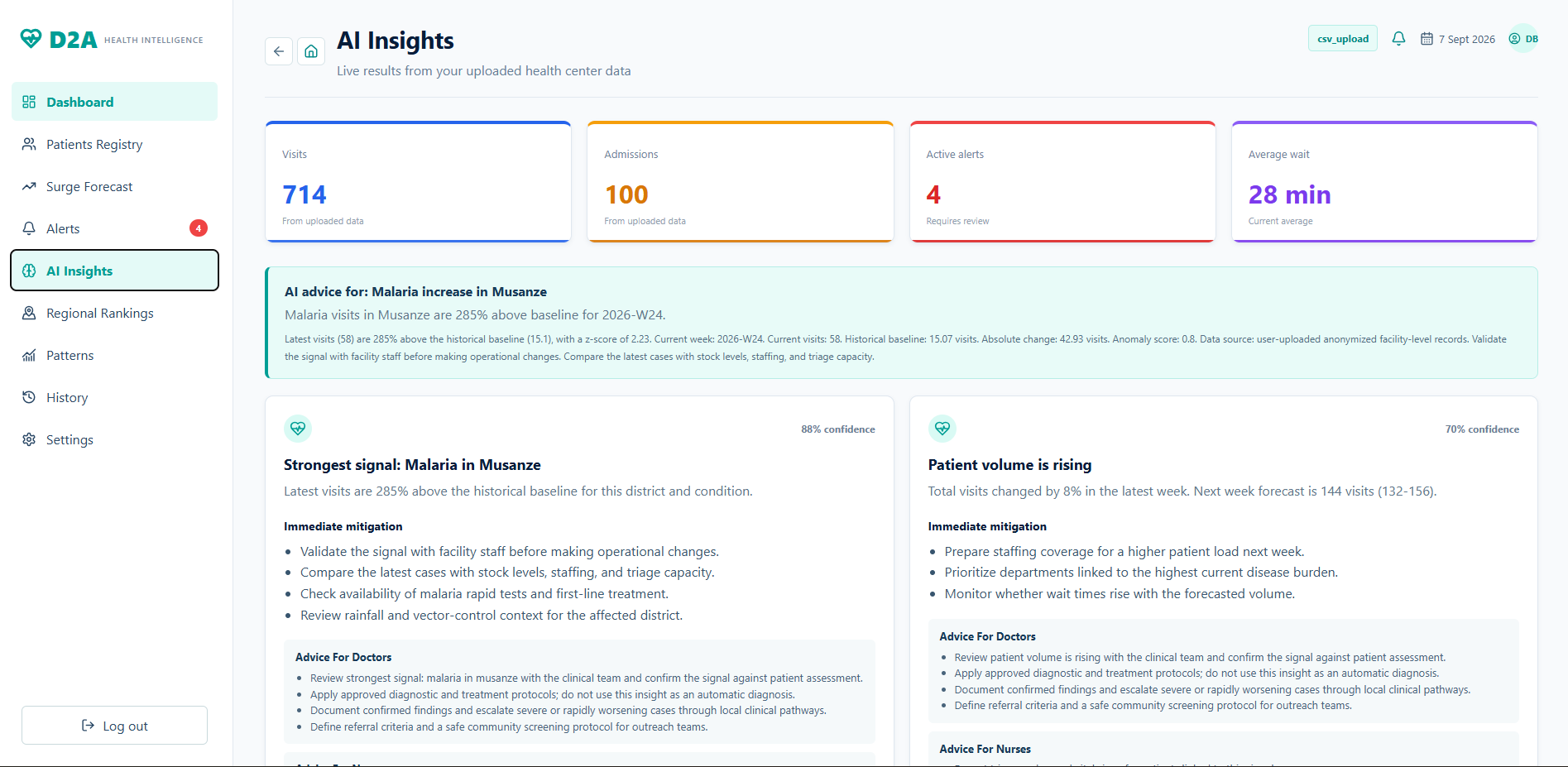
Insights that help the health officials take early mitigation and respond to such trend of any unusual trend, to keep the people safe befor.
Inspiration
Healthcare data is often collected, but it does not always become useful information for the people making decisions on the ground. Health-centre teams may notice increasing patient visits, medicine shortages, or capacity pressure only after the situation becomes urgent.
We built D2A Health to close the gap between data and action:
Data → Insight → Prediction → Decision → Action → Outcome
The project was inspired by the need to help healthcare workers and managers prepare earlier for predictable seasonal disease surges using the data they already have.
What D2A Health Does
D2A Health is a healthcare decision-support platform for health centres. It transforms anonymized patient and operational data into:
- Disease and patient-volume trends
- Early warnings and anomaly detection
- Seasonal risk insights
- Resource and medicine-readiness indicators
- Facility and staffing pressure signals
- Explainable recommendations
- Prioritized actions for healthcare teams
The platform is designed to support nurses, pharmacists, health-centre managers, district health managers, data officers, and administrators. It provides role-based dashboards so each user can focus on the information relevant to their responsibilities.
D2A Health is a decision-support tool, not a diagnostic system. Its recommendations are intended to support qualified healthcare professionals, not replace clinical judgment.
How We Built It
We built the prototype with a React and TypeScript frontend and a FastAPI backend. The backend validates and processes uploaded health-centre datasets, stores structured records in PostgreSQL, and exposes secure APIs for the frontend.
The platform includes:
- A dashboard for health-centre performance and risk indicators
- Patient-history and data-quality views
- Seasonal trend and forecast views
- Alerts and anomaly detection
- AI-assisted insights using Gemini
- Action tracking for recommended interventions
- Role-based authentication
- Email verification and password recovery using Brevo
- Responsive screens for desktop and mobile use
The current MVP uses anonymized CSV data to demonstrate the full workflow. Its architecture is designed to support future integration with systems such as DHIS2, OpenMRS, and HL7 FHIR where access and authorization are available.
What We Learned
During development, we learned how important data preparation is before applying analytics or AI. Missing values, inconsistent dates, duplicate records, and unclear facility names can significantly affect the quality of insights.
We also learned that healthcare AI must be explainable and carefully presented. Users need to understand why an alert was generated, what evidence supports it, and what action may be appropriate. For that reason, D2A Health separates observed data, predictions, alerts, and recommendations in the interface.
Building the authentication, email verification, password reset, deployment, and role-based experience also helped us understand the importance of security and reliability in health technology.
Challenges
Some of our main challenges were:
- Working with incomplete and inconsistent health datasets
- Designing useful indicators from limited data
- Making AI-generated insights understandable and responsible
- Connecting the frontend and backend across Vercel and Render
- Configuring secure email delivery for verification and password recovery
- Designing a responsive interface for different healthcare roles
- Ensuring that predictions are presented as support rather than medical decisions
We addressed these challenges through data validation, clear system states, explainable recommendations, secure environment variables, role-based access, and continuous testing.
Accomplishments That We're Proud Of
We built and deployed a working end-to-end prototype connecting a React frontend, FastAPI backend, PostgreSQL database, Gemini AI insights, and Brevo email services.
We are especially proud that D2A Health can transform uploaded health-centre data into dashboards, alerts, trends, recommendations, and actionable workflows in one platform.
What's Next for D2A Health
Our next steps are to:
- Integrate directly with DHIS2, OpenMRS, and FHIR-supported systems
- Improve forecasting accuracy with larger real-world datasets
- Add stronger offline-first functionality
- Expand Rwanda district and facility mapping
- Add multilingual support
- Improve model monitoring and outcome evaluation
- Develop resource coordination between health centres
- Conduct pilot testing with healthcare workers
Our Vision
D2A Health aims to help healthcare teams identify risks sooner, prepare resources earlier, and make more informed operational decisions. By connecting health data to practical action, the platform can contribute to more prepared health centres and better continuity of care.
Built With
- brevo
- data-analytics
- fastapi
- gemini-api
- healthcare
- machine-learning
- postgresql
- python
- react
- render
- responsive
- rest-api
- typescript
- vercel


Log in or sign up for Devpost to join the conversation.