-
-
Home
-
Labs
Inspiration
The use of deep learning models in visual disease identification has the potential to improve healthcare access, diagnosis accuracy, resource efficiency, and scalability. It can benefit individuals in remote or underserved areas who may not have easy access to medical professionals, lead to faster and more accurate diagnoses, free up medical professionals to focus on other aspects of patient care, and potentially reduce costs. The scalability of these models also makes it possible to reach a larger population, making a significant impact on public health. Overall, deep learning models have the potential to greatly improve healthcare and public health outcomes.
What it does
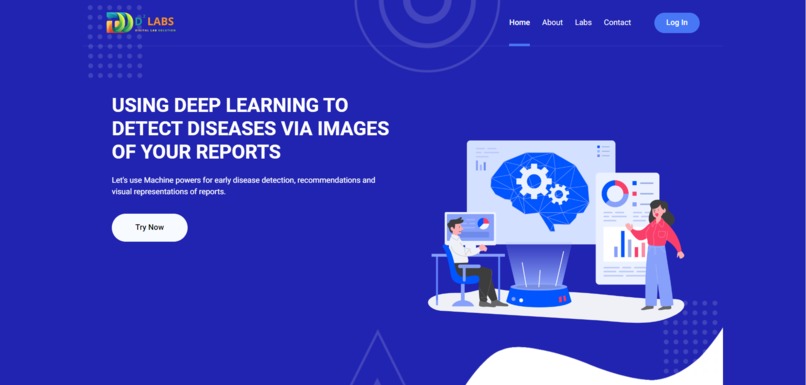
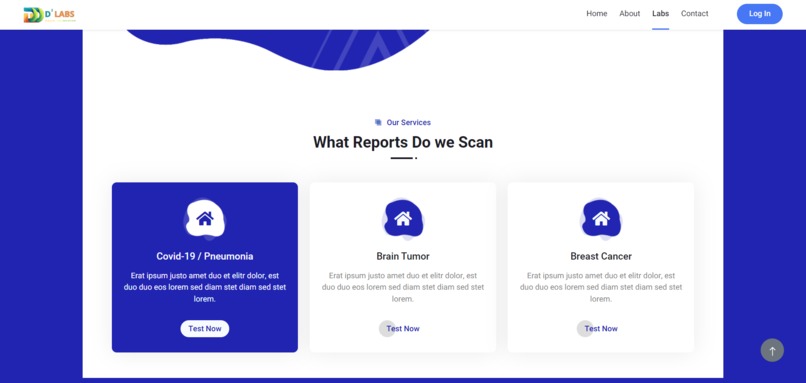
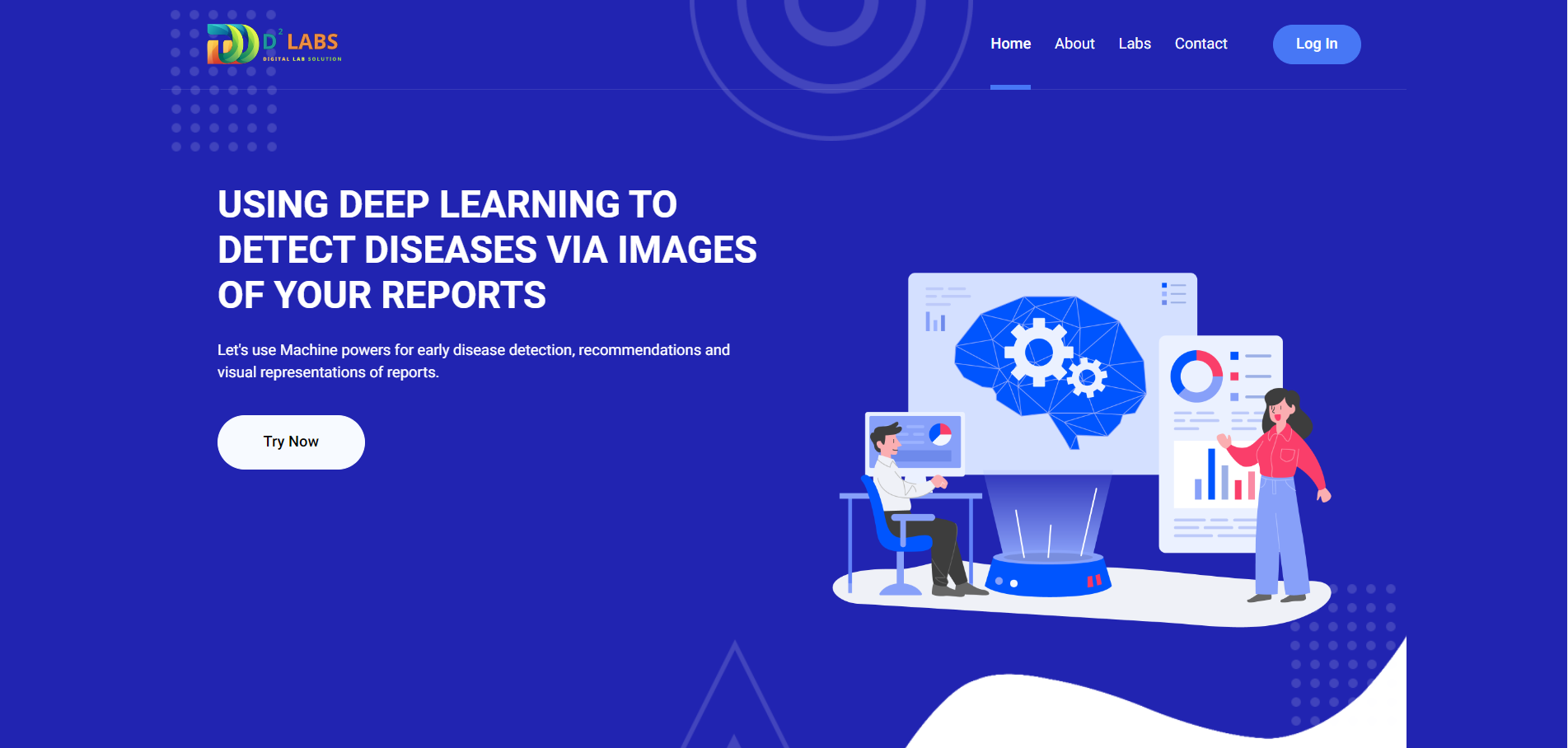
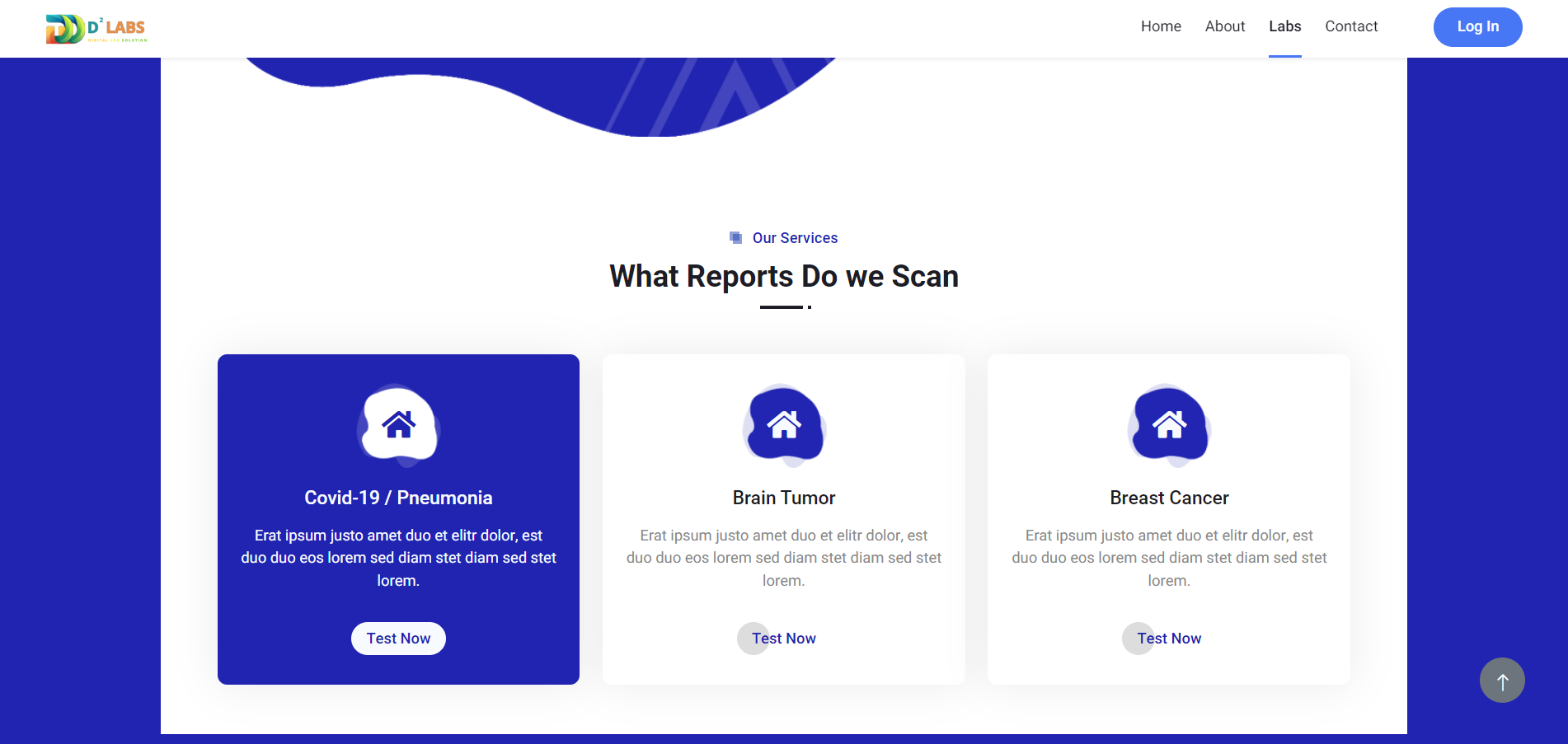
Introduction: D2Labs is a project that focuses on identifying various diseases using deep learning models, such as COVID-19, pneumonia, breast cancer, and brain tumor. The project aims to automate the diagnostic process to help medical professionals make faster and more accurate diagnoses while providing patients with user-friendly reports and AI prescriptions for treatment, cause, cure, and follow-up.
Methodology: D2Labs uses deep learning models to analyze medical imaging data, such as X-rays, CT scans, and MRIs, to identify diseases with a high degree of accuracy. The models are trained using large datasets of medical images, and they can identify patterns and anomalies that might be difficult for human doctors to detect.
Once the deep learning models have analyzed the medical imaging data, they generate reports that are sent automatically to the patient's email. These reports include detailed information about the patient's condition, including the cause, cure, and follow-up recommendations. The reports also include AI prescriptions for treatment, which can help medical professionals make informed decisions about how to proceed with the patient's care.
User Interface: D2Labs has a user-friendly interface that allows medical professionals to upload medical images and receive detailed reports quickly and easily. The interface is intuitive and easy to use, with clear instructions on how to upload images and access reports.
Conclusion: D2Labs is a groundbreaking project that uses deep learning models to identify dangerous diseases such as COVID-19, pneumonia, breast cancer, and brain tumors. By automating the diagnostic process, D2Labs can help medical professionals make faster and more accurate diagnoses, leading to better patient outcomes. With its user-friendly interface and AI prescriptions for treatment, D2Labs is a powerful tool for improving healthcare access and outcomes.
How we built it
D2Labs is a visual disease identification system built using deep learning models that can identify diseases like COVID-19, pneumonia, breast cancer, and its subcategories, and brain tumors. The project uses large datasets of medical images to train the models and identify patterns and anomalies that might be difficult for human doctors to detect.
Once the deep learning models have analyzed the medical imaging data, they generate reports that are sent automatically to the patient's email. These reports contain detailed information about the patient's condition, including the cause, cure, and follow-up recommendations. Additionally, the reports include AI model prescriptions that provide medical professionals with information about treatment, causes, follow-up, and symptoms.
D2Labs has a user-friendly interface that allows medical professionals to upload medical images and access reports quickly and easily. The interface is intuitive and easy to use, with clear instructions on how to upload images and access reports.
Overall, D2Labs is a powerful tool for improving healthcare access and outcomes by automating the diagnostic process and providing medical professionals with detailed reports and AI model prescriptions. The project's user-friendly interface and automated report generation make it a valuable resource for medical professionals and patients alike.
Challenges we ran into
Developing a visual disease identification website can come with several challenges. These include issues with data quality and model accuracy, designing an intuitive user interface, integrating various components, ensuring privacy and security, complying with healthcare regulations, and maintaining and updating the website regularly. Overcoming these challenges is essential to create an effective and reliable website for disease identification.
Accomplishments that we're proud of
The D2 LABS project has achieved several notable accomplishments. These include developing accurate and effective disease detection models for COVID-19 and pneumonia, brain tumors, and breast cancer, as well as designing a user-friendly interface that allows patients to upload their images and receive clear and concise reports. Ultimately, the project's success in improving patient outcomes by facilitating early diagnoses and appropriate treatment is perhaps its most significant accomplishment.
What we learned
Developing a website for visual disease identification can provide opportunities to learn about domain knowledge, technical skills, problem-solving, collaboration, and user-centered design. The process may involve encountering challenges and finding creative solutions to overcome them. It is essential to work effectively as part of a team and create user-friendly interfaces that meet the needs of different users.
What's next for D2 Labs
To improve and maintain a visual disease identification website, you can enhance model accuracy, expand disease coverage, update the user interface, address security concerns, incorporate feedback, collaborate with healthcare professionals, and stay current with technology. By taking these steps, you can create a more comprehensive, user-friendly, and reliable website that meets evolving user needs and technological advancements.
Built With
- deeplearning
- express.js
- imagedataset
- node.js
- python


Log in or sign up for Devpost to join the conversation.