-
-
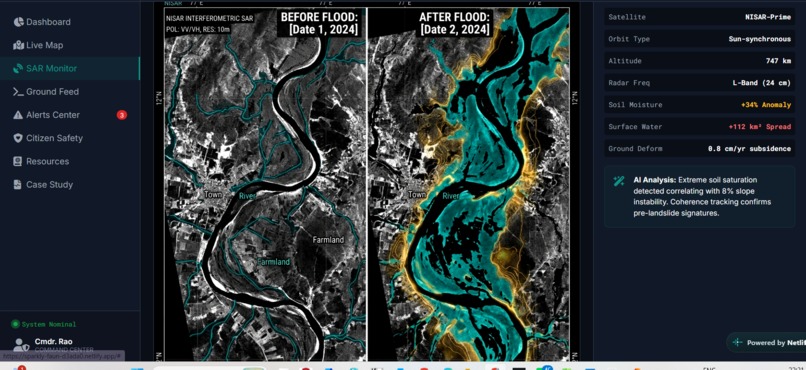
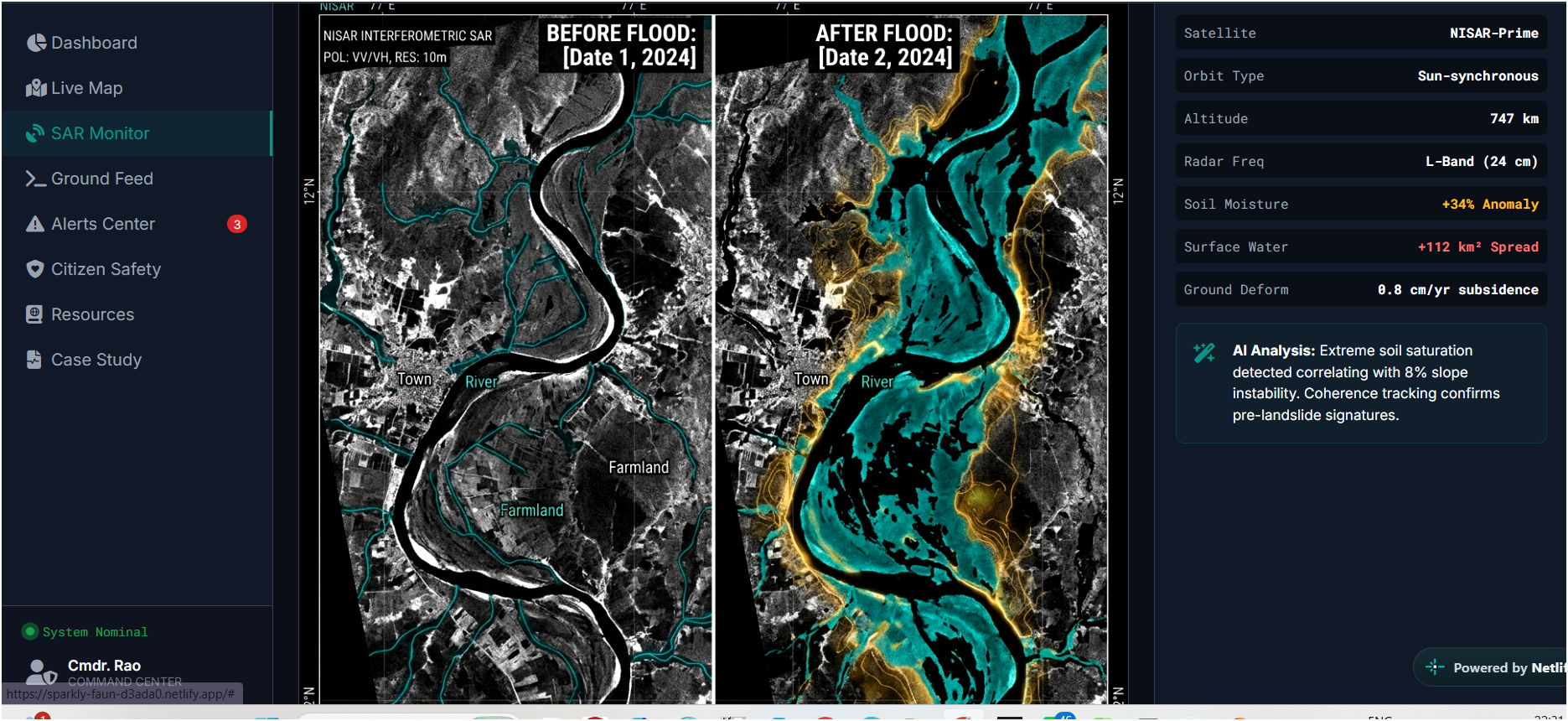
SAR WHICH ANALYSIS THE PARAMETER
-
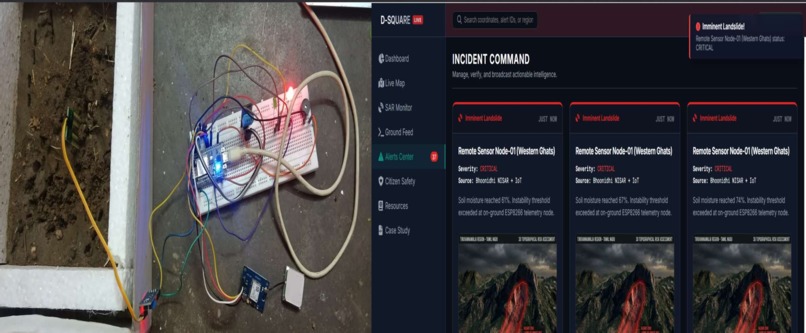
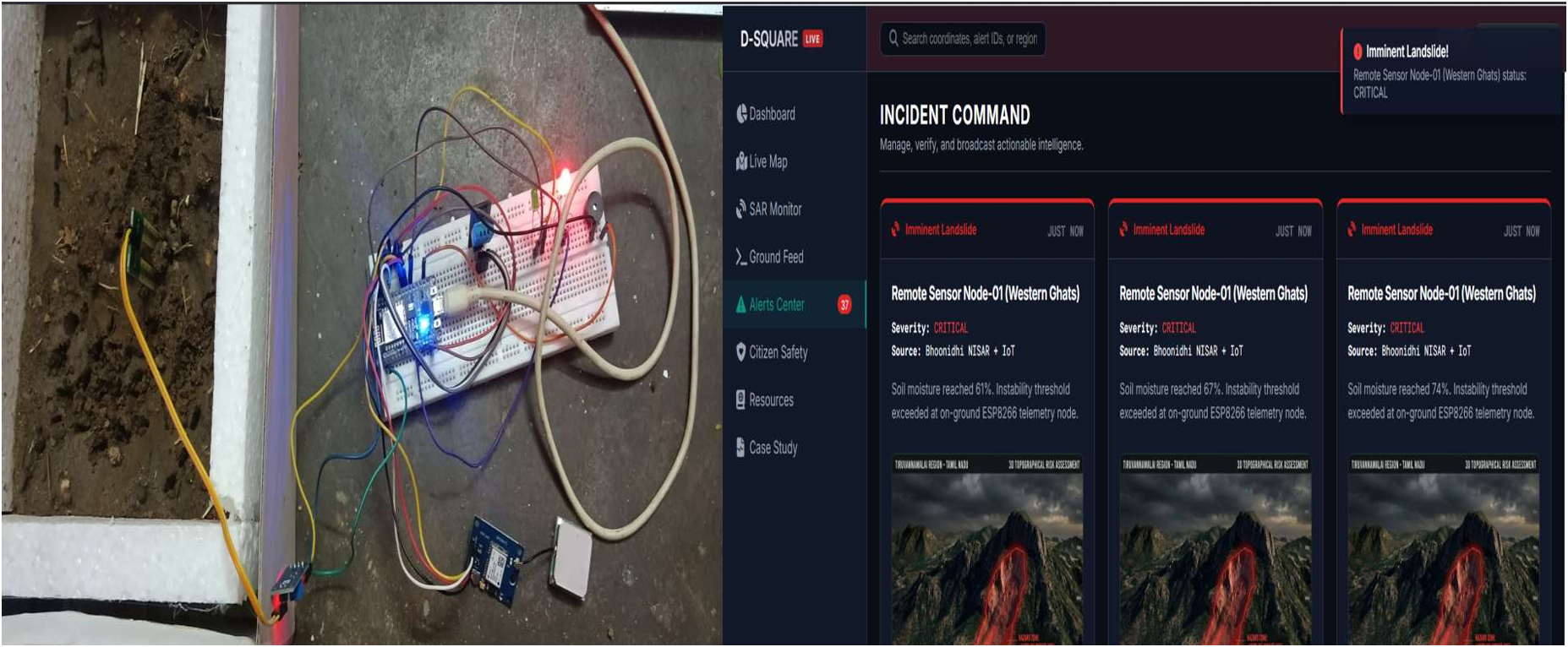
HARDWARE DEMOSTRATION
Inspiration
Natural disasters often cause severe damage to human communities, ecosystems, wildlife, and infrastructure. We were inspired by the challenge of turning fragmented disaster information into a unified and actionable system.
D-SQUARE was created with the vision of combining satellite imagery, weather and environmental data, IoT sensors, and AI to help users better understand disasters. By providing early detection, real-time monitoring, impact assessment, and response-oriented insights, we aim to make disaster information more accessible and support faster, more informed decisions.
Our inspiration comes from the need to build technology that not only responds to disasters but also helps protect communities, habitats, and ecosystems through better environmental monitoring and disaster preparedness.
What it does
D-SQUARE is an AI-powered disaster intelligence platform that brings multiple data sources into one unified system. It combines satellite imagery, weather and environmental data, IoT sensor readings, and AI-assisted analysis to monitor and assess natural disasters.
The platform helps detect potential disaster events, analyze affected areas, compare before-and-after conditions, assess severity and impact, and provide real-time alerts. Its interactive dashboard visualizes disaster information and supports faster, more informed response and decision-making.
D-SQUARE can be used to monitor disasters such as floods, landslides, wildfires, cyclones, and earthquakes, depending on the available data sources. By converting complex environmental and sensor data into actionable insights, it supports disaster preparedness, environmental protection, and emergency response.
How we built it
We built D-SQUARE as a unified disaster intelligence platform combining a web-based dashboard, IoT monitoring, database integration, and AI-assisted analysis.
The application was developed using JavaScript, HTML, and CSS to create an interactive disaster monitoring dashboard. The backend uses Node.js with SQLite to manage disaster alerts and sensor data. The database stores information such as alert type, location, severity, timestamps, temperature, humidity, soil moisture, and risk level.
The IoT component provides ground-level sensor data to the platform. This information can be monitored and integrated with the disaster intelligence system for real-time analysis. The platform also incorporates satellite imagery, weather, and environmental data to support disaster detection and assessment.
We designed the dashboard to provide features such as live monitoring, disaster alerts, affected-area visualization, IoT sensor monitoring, risk assessment, and response-oriented insights. The final application was deployed online so users can access the platform through a web browser.
By integrating AI, IoT, satellite data, environmental monitoring, and a centralized dashboard, D-SQUARE transforms multiple disaster-related data sources into a single ecosystem for faster and more informed disaster assessment and response.
Challenges we ran into
Building D-SQUARE involved several technical challenges. One of the main challenges was integrating different types of data into a single platform, including IoT sensor data, satellite imagery, weather information, and environmental data.
Another challenge was handling real-time data and presenting it in a clear and useful way through the dashboard. We also worked on connecting the IoT monitoring system with the backend and database for storing sensor readings and disaster alerts.
Data availability and the different formats used by environmental and disaster data sources were additional challenges. Ensuring that the platform could organize this information into meaningful alerts and risk assessments required careful system design.
Finally, we focused on making the dashboard easy to understand while still displaying complex information such as disaster severity, sensor values, affected areas, alerts, and environmental conditions. These challenges helped us improve D-SQUARE into a more unified and scalable disaster intelligence platform.
Accomplishments that we're proud of
We are proud to have transformed the D-SQUARE concept into a functional disaster intelligence platform that brings multiple technologies into one system. We successfully developed an interactive web dashboard and integrated disaster alerts, sensor data monitoring, and a database for managing disaster-related information. The project includes database structures for sensor readings and alerts, supporting information such as severity, location, temperature, humidity, soil moisture, and risk levels.
We are also proud of creating a unified approach that combines AI, IoT, satellite imagery, weather, and environmental data for disaster monitoring and assessment. Another major accomplishment is deploying the application online, making the D-SQUARE platform accessible through a web browser.
Most importantly, we are proud of building a project focused on using technology to support disaster preparedness, environmental protection, and faster response to natural disasters.
What we learned
Through building D-SQUARE, we learned how to combine different technologies into a unified disaster intelligence platform. We gained practical experience in developing a web application, creating an interactive dashboard, and integrating frontend and backend components.
We learned how IoT sensor data can be collected, stored, and visualized for disaster monitoring. We also gained experience with database integration for managing sensor readings and disaster alerts.
Another important learning was understanding the challenges of integrating multiple data sources, such as IoT, satellite imagery, weather, and environmental information. We learned the importance of organizing complex data into clear visualizations, alerts, and actionable insights.
Most importantly, this project helped us understand how AI, IoT, and environmental technologies can work together to support disaster preparedness, impact assessment, and emergency response.
What's next for D-SQUARE
The next step for D-SQUARE is to expand the platform into a more comprehensive and scalable disaster intelligence ecosystem. We plan to integrate additional real-time data sources, improve IoT connectivity, and enhance the platform's ability to analyze environmental conditions.
We also aim to improve the AI-assisted analysis for detecting disaster patterns, assessing affected areas, and supporting faster risk assessment. Future development will focus on expanding satellite and weather data integration and improving before-and-after disaster comparison.
We plan to enhance the dashboard with more detailed visualizations, real-time notifications, historical disaster data, and improved response recommendations. Another important goal is to make D-SQUARE scalable so it can support different regions and multiple types of natural disasters.
In the future, we envision D-SQUARE evolving into a unified platform that connects AI, IoT, satellite imagery, weather data, and environmental monitoring to support disaster preparedness, environmental protection, early warning, and more informed emergency response.

Log in or sign up for Devpost to join the conversation.