Inspiration
Mental health concerns among university students have risen sharply, with disclosures increasing from under 1% in 2010/11 to 5.8% in 2022/23. Many students struggle silently, especially late at night when support is limited. We wanted to explore whether an always-available, privacy-respecting robotic companion could provide immediate emotional support and early intervention.
What it does
D.O.R.M.A is a mobile robot assistant designed to patrol university dorms and initiate supportive conversations with students who appear distressed.
Using computer vision and conversational AI, the robot can:
- Detect and approach nearby students
- Hold natural voice conversations
- Recall past interactions to personalise responses
- Provide calm, supportive dialogue in moments of stress
The goal is not to replace human support, but to act as an accessible first line of comfort when no one else is immediately available.
How we built it
Hardware
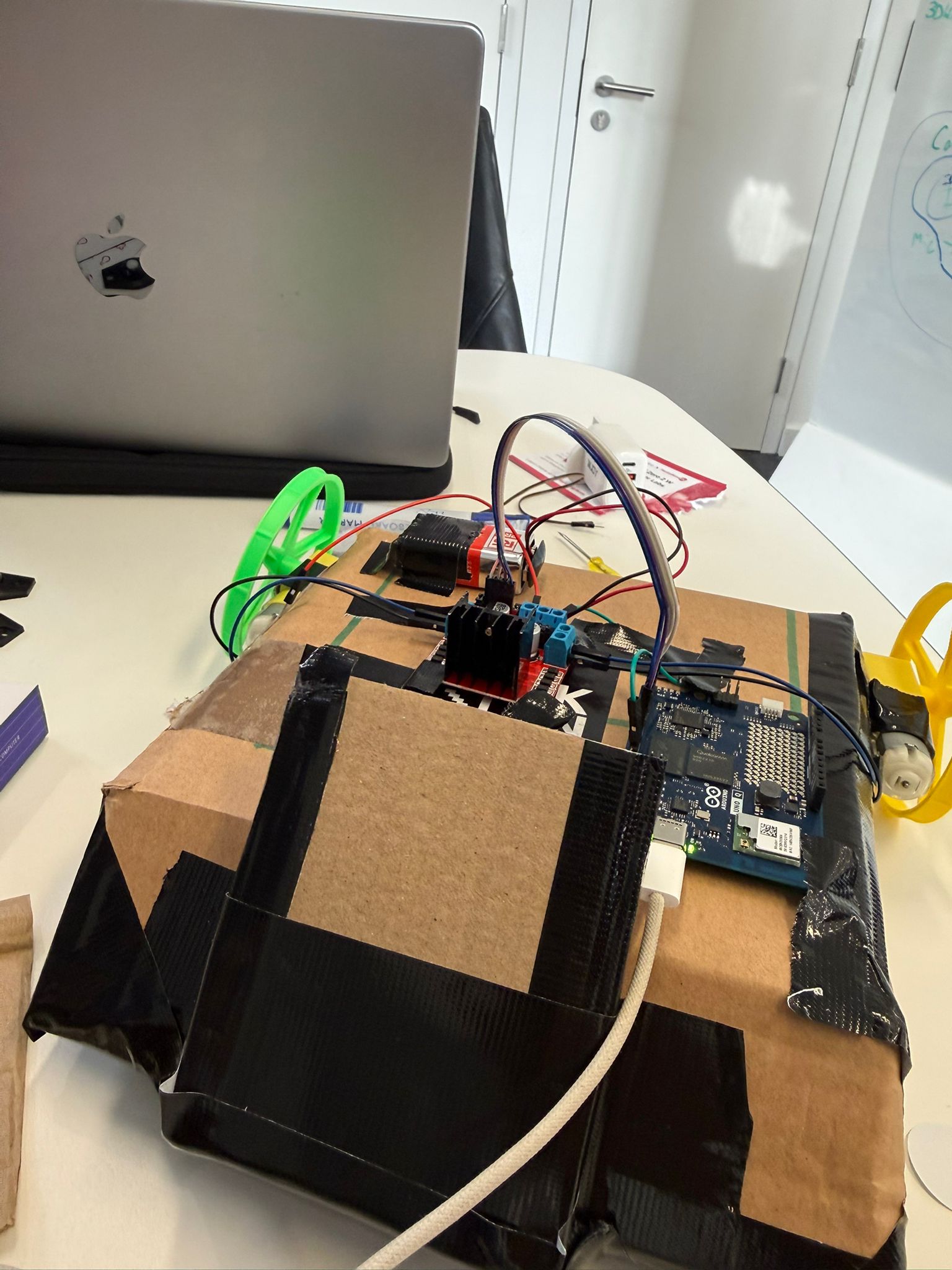
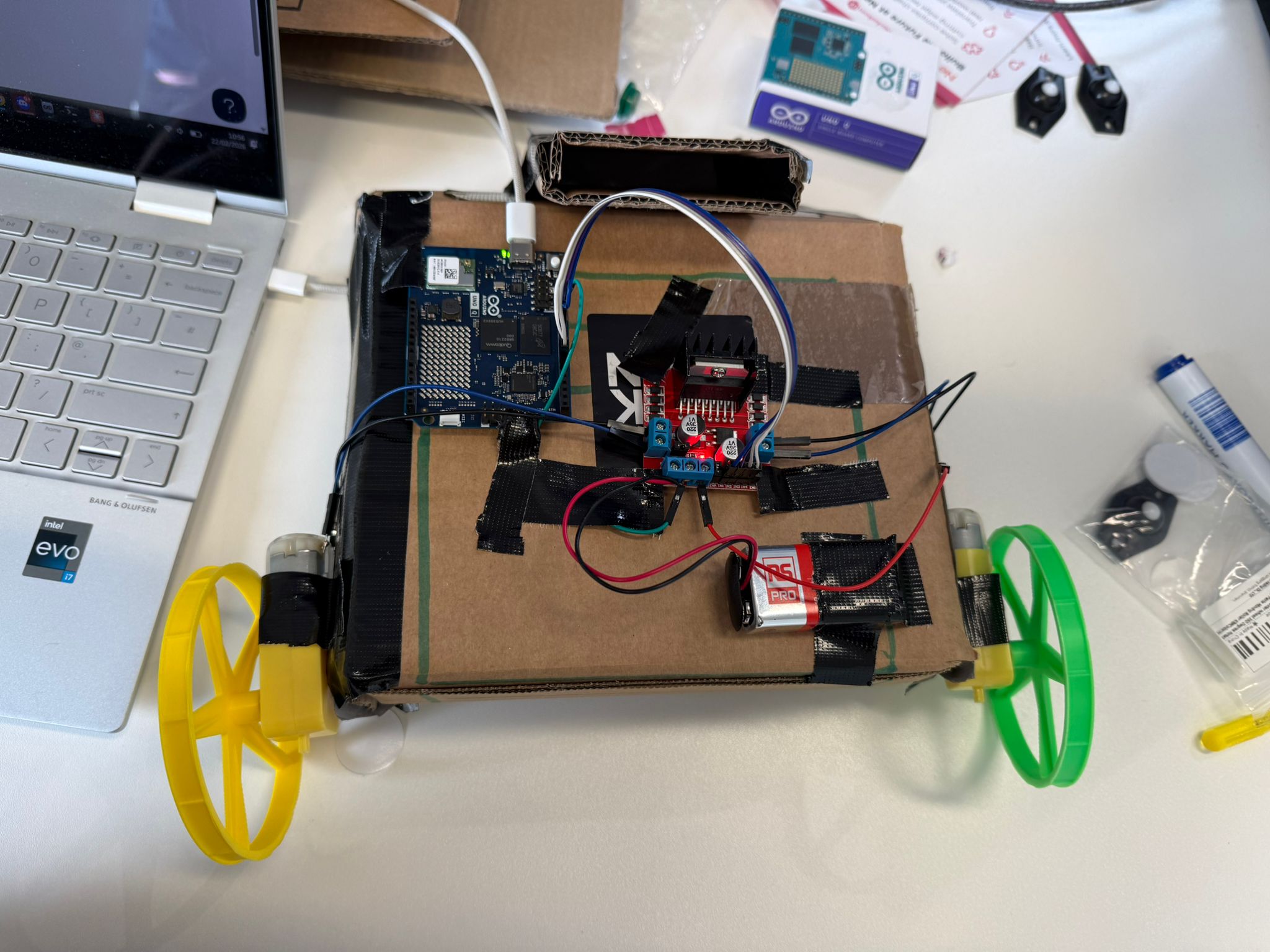
- Arduino Uno R4 (motor control and mobility)
- Differential drive (two independently powered wheels)
- Camera for face detection
- Microphone for speech input
- Speaker for voice output
Software stack
- Python orchestration layer
- Facial recognition pipeline for user identification
- MongoDB for persistent user memory and conversation history
- Retrieval agent to build personalised context
- OpenAI LLM for response generation
- ElevenLabs for natural voice synthesis
System flow
camera → face recognition → user_id
microphone → speech-to-text
MongoDB → memory retrieval
LLM → personalised response
ElevenLabs → spoken reply
This architecture allows D.O.R.M.A to maintain stateful, evolving interactions rather than stateless chatbot responses.
Challenges we ran into
- Reliable identity tracking: Ensuring the system does not treat the same student as a new user required careful handling of facial embeddings and database lookups.
- Real-time orchestration: Coordinating vision, audio, LLM calls, and speech synthesis within acceptable latency was non-trivial.
- API quota constraints: Managing ElevenLabs credit usage required optimising prompt length and response size.
- Hardware–software integration: Synchronising Arduino motor control with the Python AI pipeline required iterative testing.
- Data structure design: Storing time-series biometric data efficiently in MongoDB while keeping queries fast needed thoughtful schema design.
Accomplishments that we're proud of
- Built a fully stateful conversational robot, not just a stateless chatbot
- Implemented persistent memory using MongoDB
- Achieved end-to-end voice interaction pipeline
- Successfully integrated face recognition with personalised recall
- Designed a modular architecture that can scale beyond the prototype
Most importantly, we demonstrated that emotionally aware robotic support in student living spaces is technically feasible.
What we learned
- Memory is critical — without persistent context, conversational agents feel shallow
- Latency budgets matter more than expected in embodied AI systems
- Hardware reliability becomes the bottleneck faster than model quality
- Clean modular architecture dramatically speeds up iteration
- Even simple personalisation significantly improves perceived empathy
What's next for D.O.R.M.A
Short term
- Improve distress detection using multimodal signals (posture, voice tone, physiology)
- Add real-time speech-to-text loop for fully continuous conversation
- Enhance safety and privacy controls
Medium term
- Deploy pilot testing in controlled university environments
- Add wellbeing check-ins and trend monitoring
- Improve on-device inference to reduce cloud latency
Long term vision
D.O.R.M.A could become a supportive ambient presence in student housing, hospitals, and assisted living environments, providing immediate, personalised comfort while escalating to human support when needed.


Log in or sign up for Devpost to join the conversation.