-
-
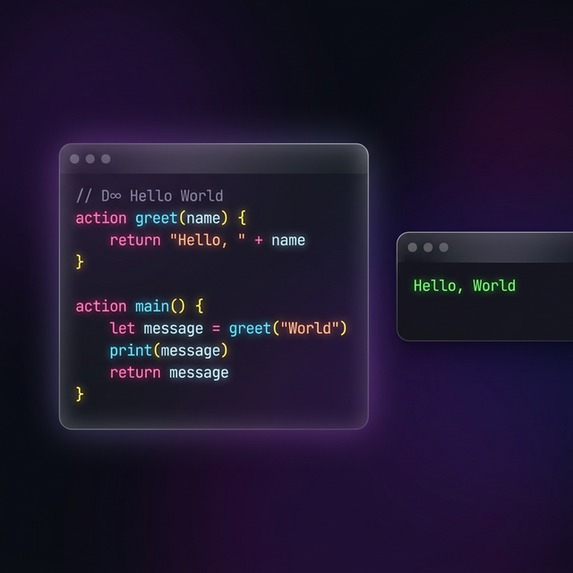
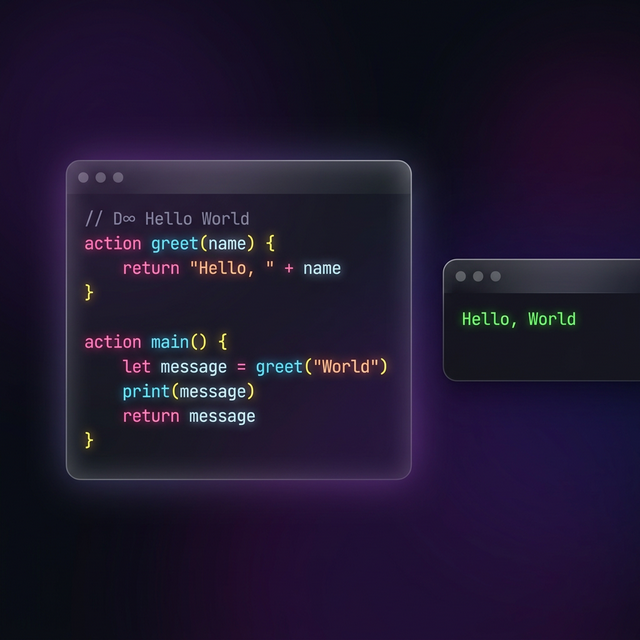
to print hello world
-
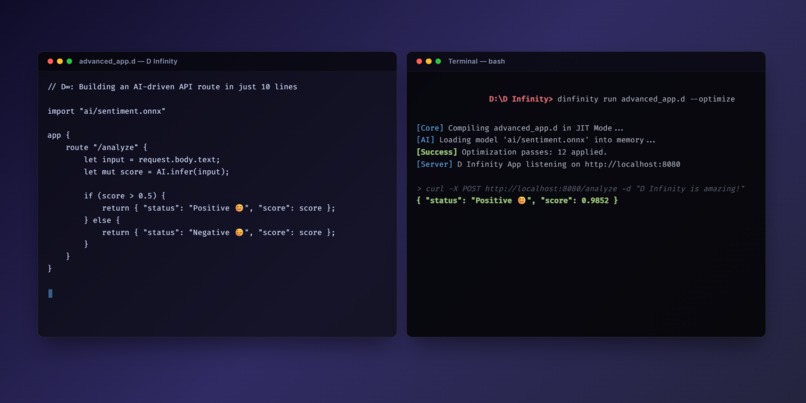
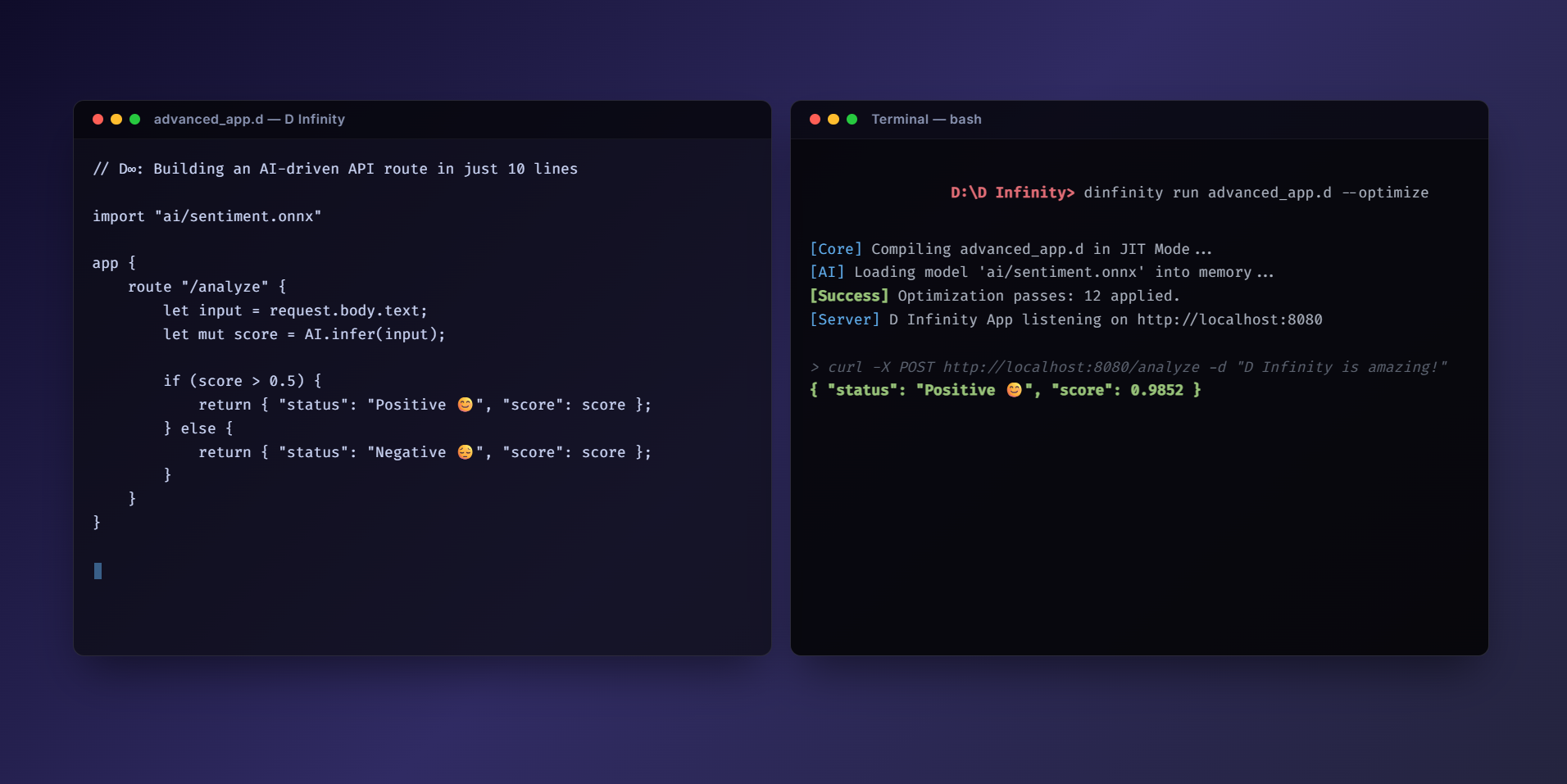
D∞: Building an AI-driven API route in just 10 lines
D∞ (D Infinity) — AI-Native Full-Stack Programming Language Inspiration Modern AI applications often require multiple languages and frameworks. Developers frequently combine Python for AI models, web frameworks for APIs, and separate tools for databases and deployment. This complexity slows innovation and increases development time. We were inspired to simplify this fragmented workflow by designing D∞ (D Infinity) — a programming language where AI, backend logic, and data handling are built directly into the language itself. The goal is to make building AI-powered SaaS products simpler, faster, and more expressive. What It Does D∞ is an AI-native full-stack language runtime that allows developers to build AI applications using minimal code. Key features include: Built-in AI model integration Native API routing Automatic database mapping Async execution model Machine-independent runtime A simple D∞ example: D Copy code universe {
entity User {
    name: text
}

mind Sentiment {
    load "sentiment.onnx"
}

portal "/analyze" {
    emit Sentiment.think(input)
}
} In one file, this defines: a database model an AI model a web endpoint How We Built It The language runtime is implemented in Rust to ensure performance and reliability. The architecture includes: Compiler Frontend Lexer Parser AST generation Execution Engine Register-based virtual machine Actor-based concurrency model Immutable message passing AI Runtime ONNX model execution wrapper async inference pipeline The execution pipeline follows: Where DVM is the D∞ Virtual Machine. Challenges We Faced
- Language Design Balancing powerful features with simple syntax was difficult. Too many abstractions make a language complex, but too few reduce flexibility.
- Runtime Architecture Designing a machine-independent VM while keeping performance acceptable required careful planning.
- AI Integration Embedding AI inference as a native language feature without making the runtime heavy was a major engineering challenge.
- Scope Control Programming languages can easily become extremely complex. We had to focus on a minimal but extensible core. What We Learned This project taught us: How programming language runtimes are structured The importance of developer experience in language design How concurrency models impact scalability How AI systems can be integrated into programming environments Future Plans Future versions of D∞ aim to include: Advanced bytecode optimization distributed flow execution GPU-accelerated AI runtime full package ecosystem The long-term vision is to make D∞ a powerful yet simple language for building AI-driven software.

Log in or sign up for Devpost to join the conversation.