-
-
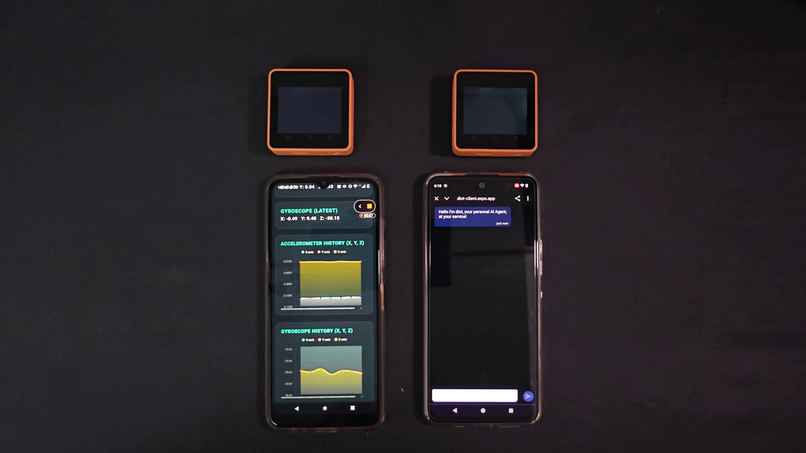
Hardware
-
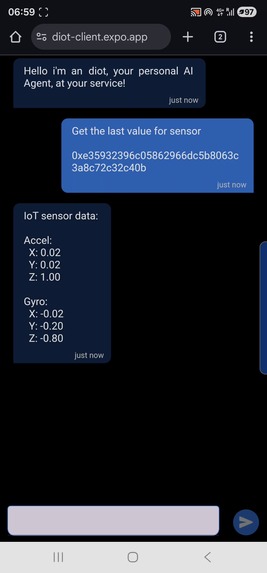
Agent
-
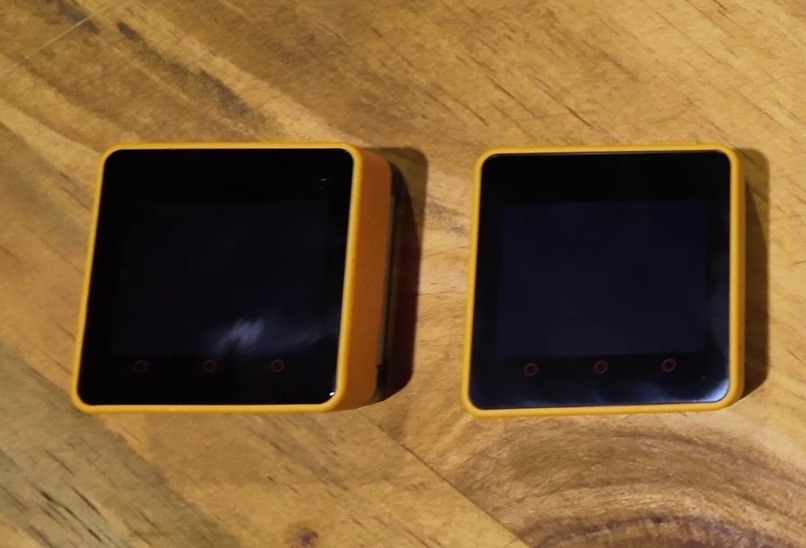
Devices
-
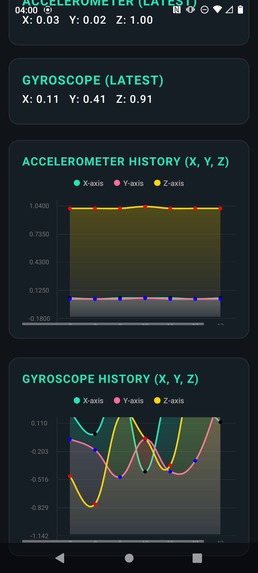
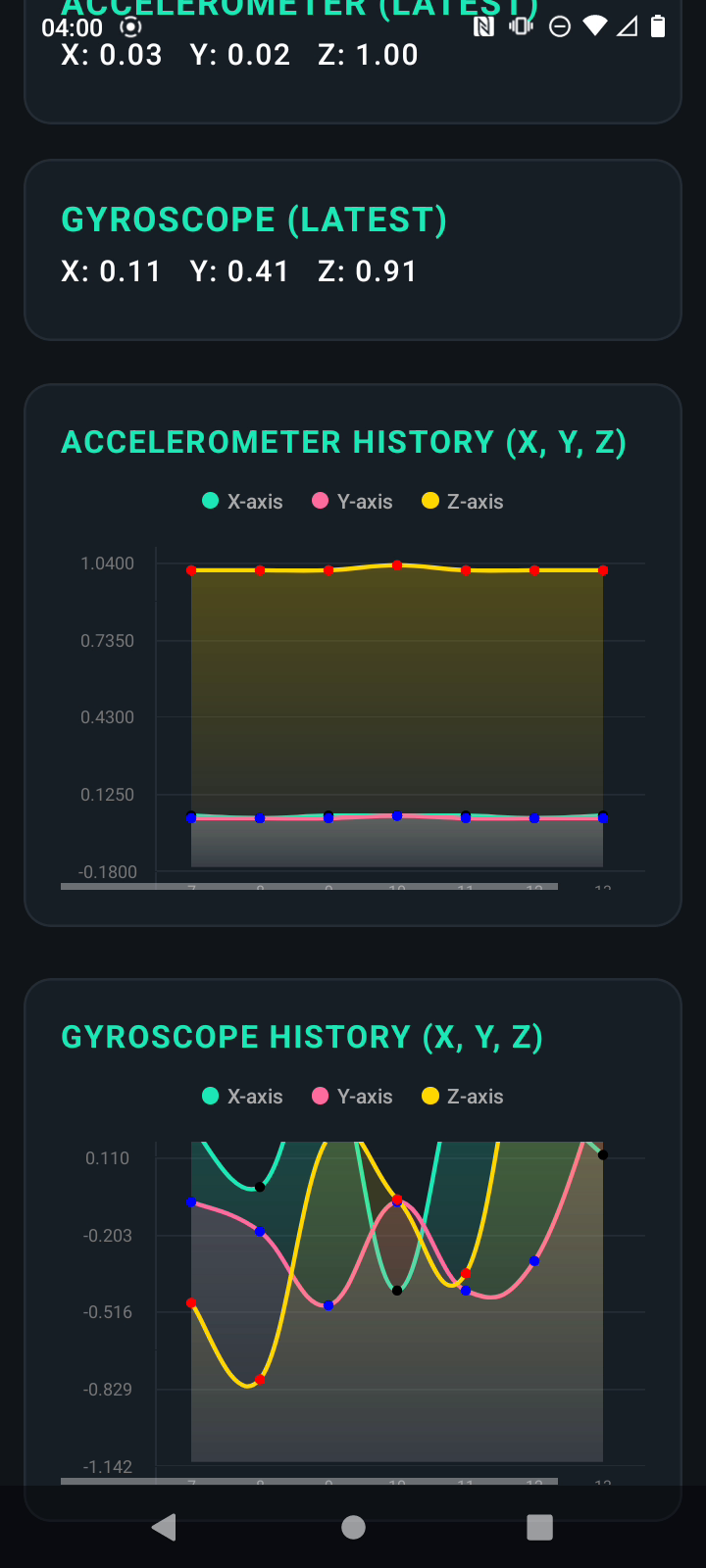
IoT dashboard
-
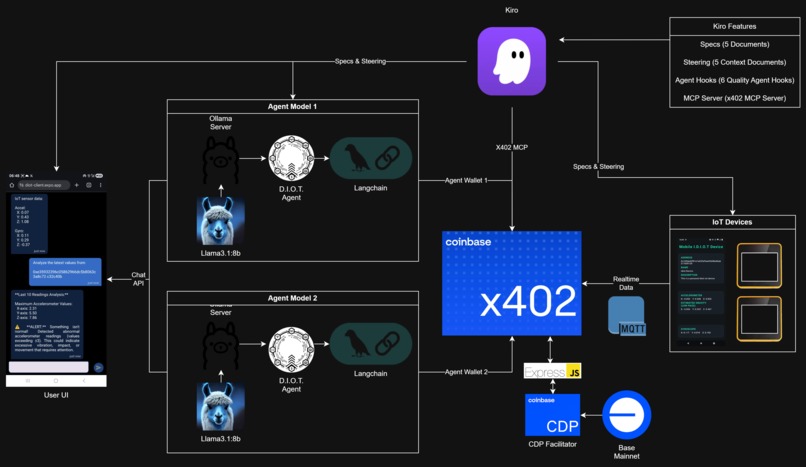
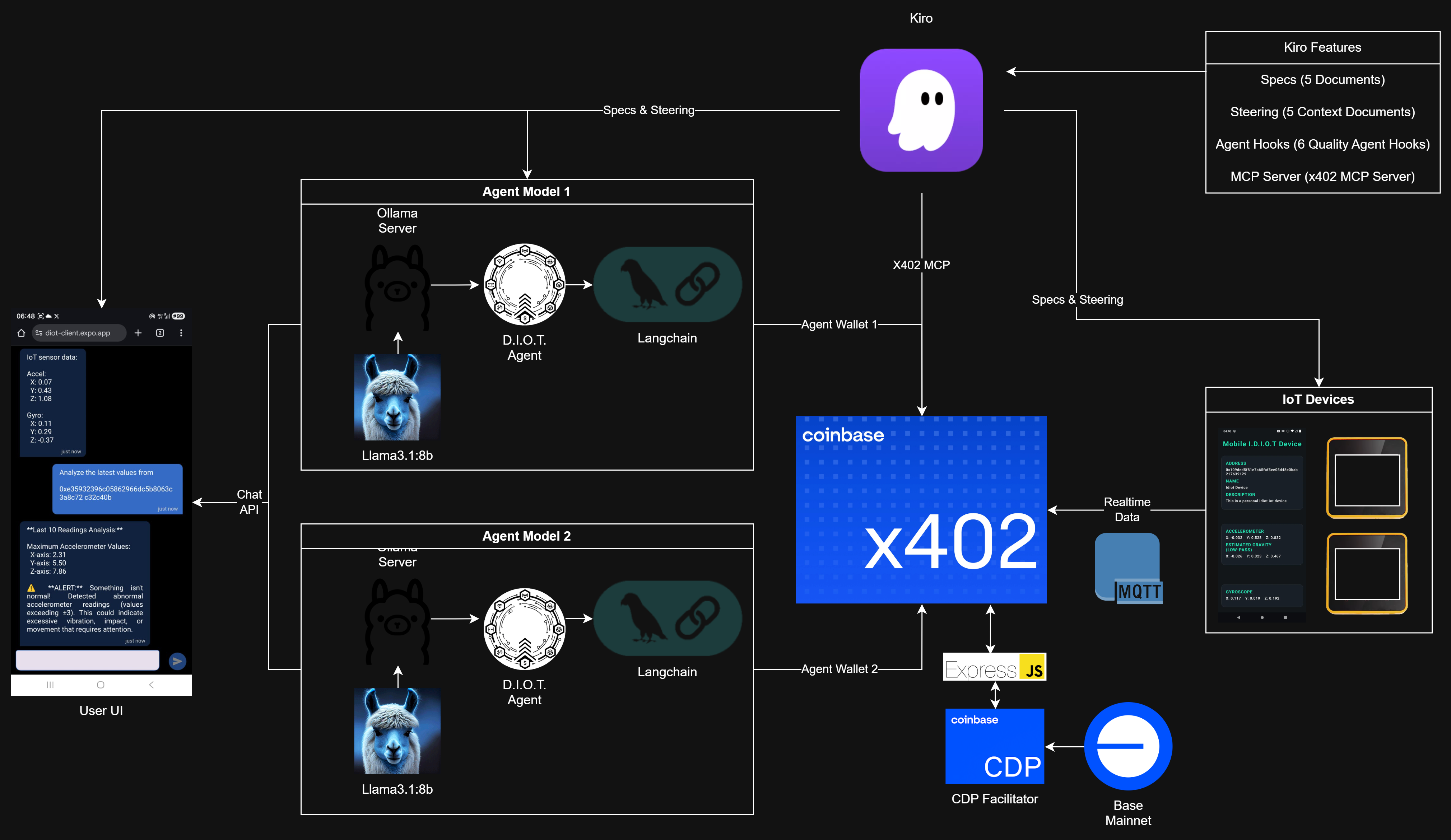
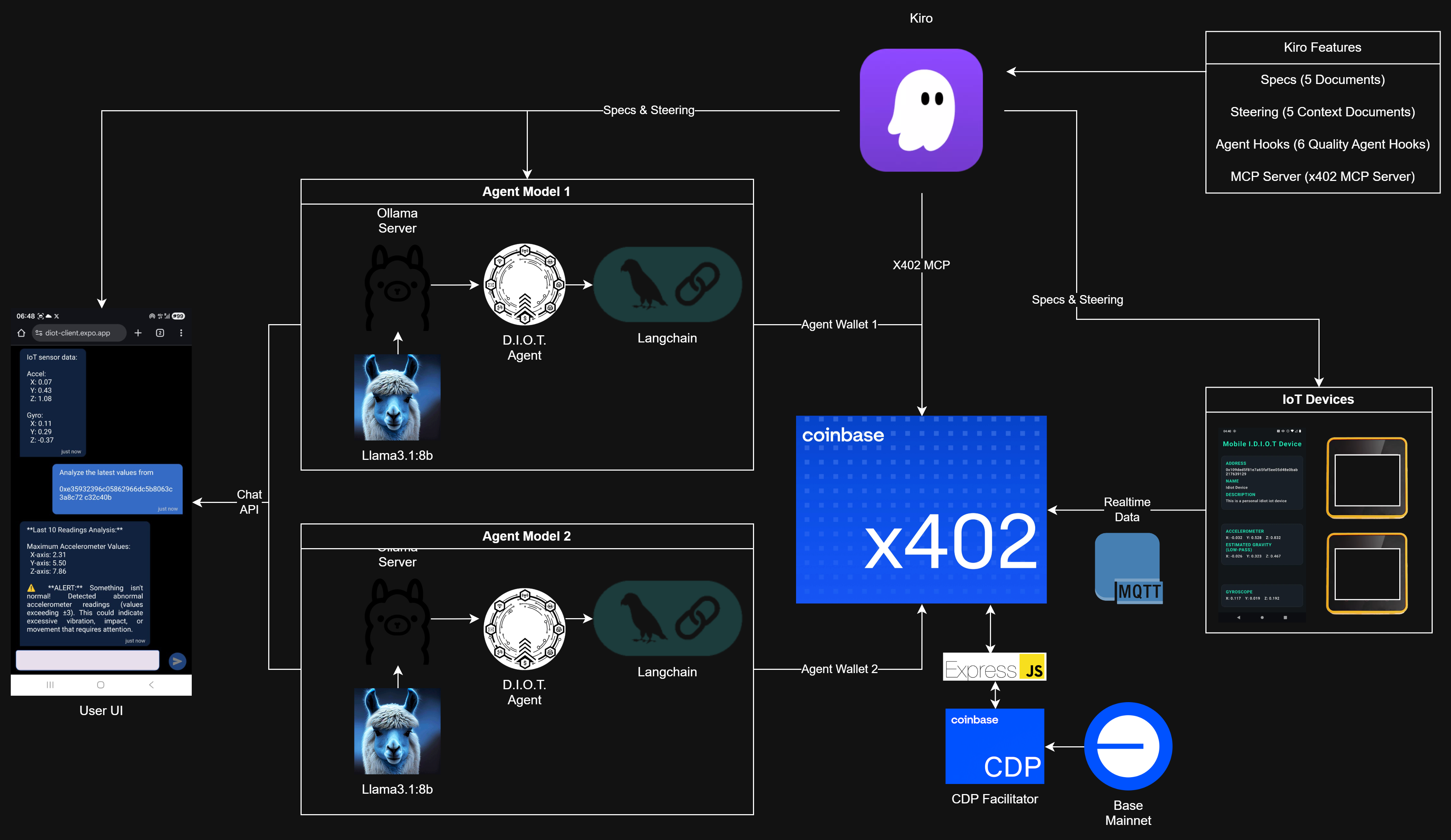
System Architecture
Decentralized Internet of Things Protocol
A machine-to-machine payments and data-exchange network powered by autonomous agents, x402 messaging, and on-chain verification. Where machines pay machines for truth.


FAST LINKS (if you're a judge, click these links):
Overview
D.I.O.T Protocol is a trustless, self-sustaining data marketplace where IoT devices autonomously buy, sell, and settle for real-world sensor data. Each device runs a lightweight agent that uses the CDP Facilitator to enable machine-to-machine payments via x402 protocol on Base network.
| Capability | Description |
|---|---|
| 🤖 Autonomous Agent Economy | Devices operate as independent economic actors |
| 💰 x402 Micropayments | $0.001-$0.005 per query via blockchain HTTP payments |
| 🔗 On-Chain Verification | Sensor readings signed, validated, and anchored on-chain |
| 📈 Financial Incentives | Data providers earn revenue per query |
| 💬 Natural Language Interface | AI agents translate conversational queries into transactions |
How It Works
┌─────────────────┐    POST /api/sensors    ┌─────────────────┐
│  Sensor Device  │ ──────────────────────► │    diot-api     │
│  (Data Provider)│                         │   (Marketplace) │
└─────────────────┘                         └────────┬────────┘
                                                     │
┌─────────────────┐    x402 Payment + GET   ┌────────▼────────┐
│   diot-client   │ ◄────────────────────── │   diot-agent    │
│  (Chat Interface)│                        │  (AI + Wallet)  │
└─────────────────┘                         └─────────────────┘
Payment Flow:
- Sensor device collects data → publishes to marketplace
- User asks question in natural language
- AI agent decides which data to purchase
- Agent pays via x402 → receives data → analyzes → responds
Marketplace Economics
| Role | Earnings | Action |
|---|---|---|
| Data Provider | $0.001-$0.005/query | Publish sensor readings |
| AI Agent | Autonomous | Decides when to buy data |
| Blockchain | — | Trustless payment verification |
Tech Stack
| Layer | Technology |
|---|---|
| Mobile Apps | React Native + Expo (iOS/Android/Web) |
| AI Agent | LangChain + Ollama (llama3.1:8b) |
| Payments | x402 protocol on Base network |
| Storage | LowDB (future: IPFS/Arweave) |
| Hardware | ESP32/M5Stack support |
Components
diot-api — Data Marketplace Backend
Node.js · Express · x402-express · LowDB · CDP Facilitator
The marketplace coordinator that verifies payments and facilitates data exchange.
// x402 payment middleware - pay per endpoint
const x402RouteConfigs = {
  "GET /api/sensors/latest": { price: "$0.001", network: "base" },
  "GET /api/sensors/latestTop": { price: "$0.005", network: "base" }
};
app.use(paymentMiddleware(RECEIVING_ADDRESS, x402RouteConfigs, facilitator));
| Endpoint | Price | Description |
|---|---|---|
GET /api/sensors |
Free | List all sensors |
GET /api/sensors/latest?address=0x... |
$0.001 | Latest reading |
GET /api/sensors/latestTop?address=0x... |
$0.005 | Last 10 readings |
diot-agent — Autonomous Economic Agent
LangChain · LangGraph · Ollama · x402-fetch · viem · CDP Facilitator
An AI that operates its own wallet, autonomously deciding when to purchase data based on user queries.
Workflow: User asks → Agent selects tool → Pays via x402 → Analyzes data → Responds
// Autonomous payment execution
const fetchWithPay = wrapFetchWithPayment(fetch, walletClient);
const response = await fetchWithPay(`${API_URL}/api/sensors/latest?address=${address}`);

// Built-in anomaly detection
if (Math.abs(x) > 3 || Math.abs(y) > 3 || Math.abs(z) > 3) {
  alert = "⚠️ ALERT: Abnormal vibration detected!";
}
diot-device — Data Provider App
React Native · Expo · expo-sensors
Transforms smartphones into autonomous data providers that earn revenue.
// Collect and publish sensor data every 10 seconds
Accelerometer.addListener((data) => {
  const filtered = applyLowPassFilter(data, gravity, 0.8);
});

setInterval(() => {
  fetch(API_URL, {
    method: "POST",
    body: JSON.stringify({ address: SENSOR_ADDRESS, data: { accel, gyro, magnet } })
  });
}, 10000);
diot-client — Chat Interface
React Native · Expo · React Native Paper
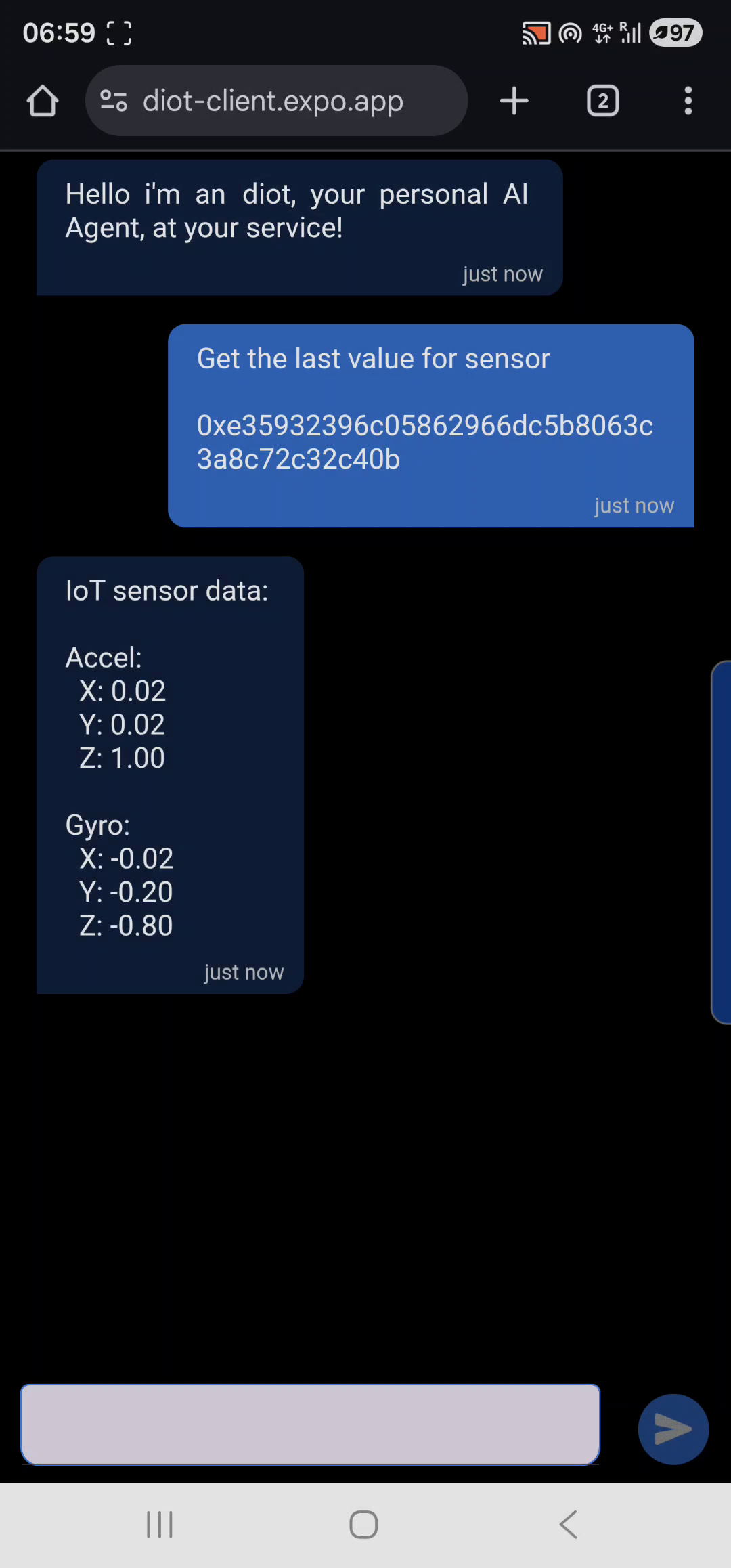
Screenshots:
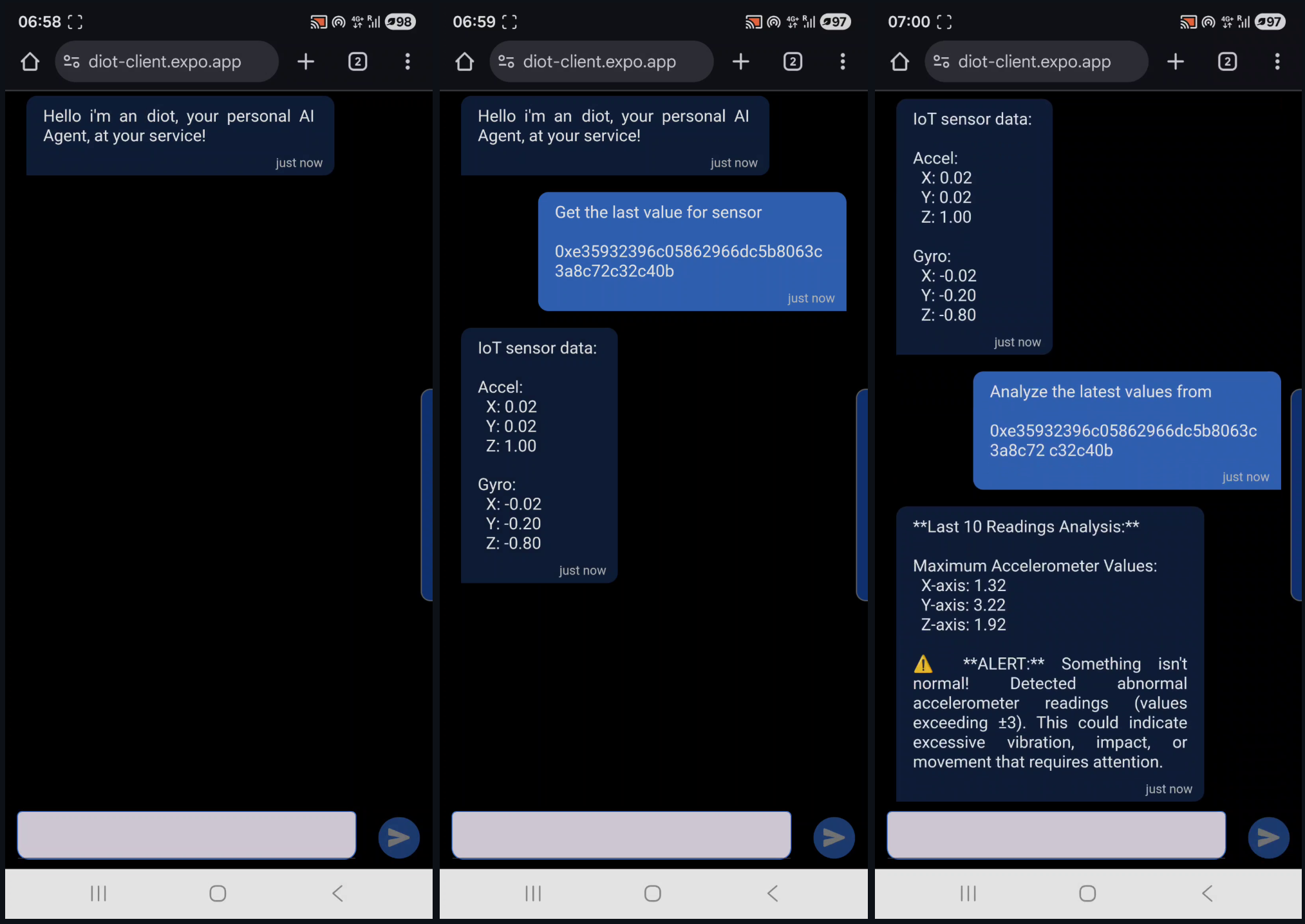
Natural language interface that abstracts blockchain complexity from end users.
// Simple chat API
const response = await fetch("/api/chatWithAgent", {
  method: "POST",
  body: JSON.stringify({ message, context: { address } })
});
diot-iot — Hardware Sensor Device
Arduino/ESP32 · C++ · WiFi · HTTP Client
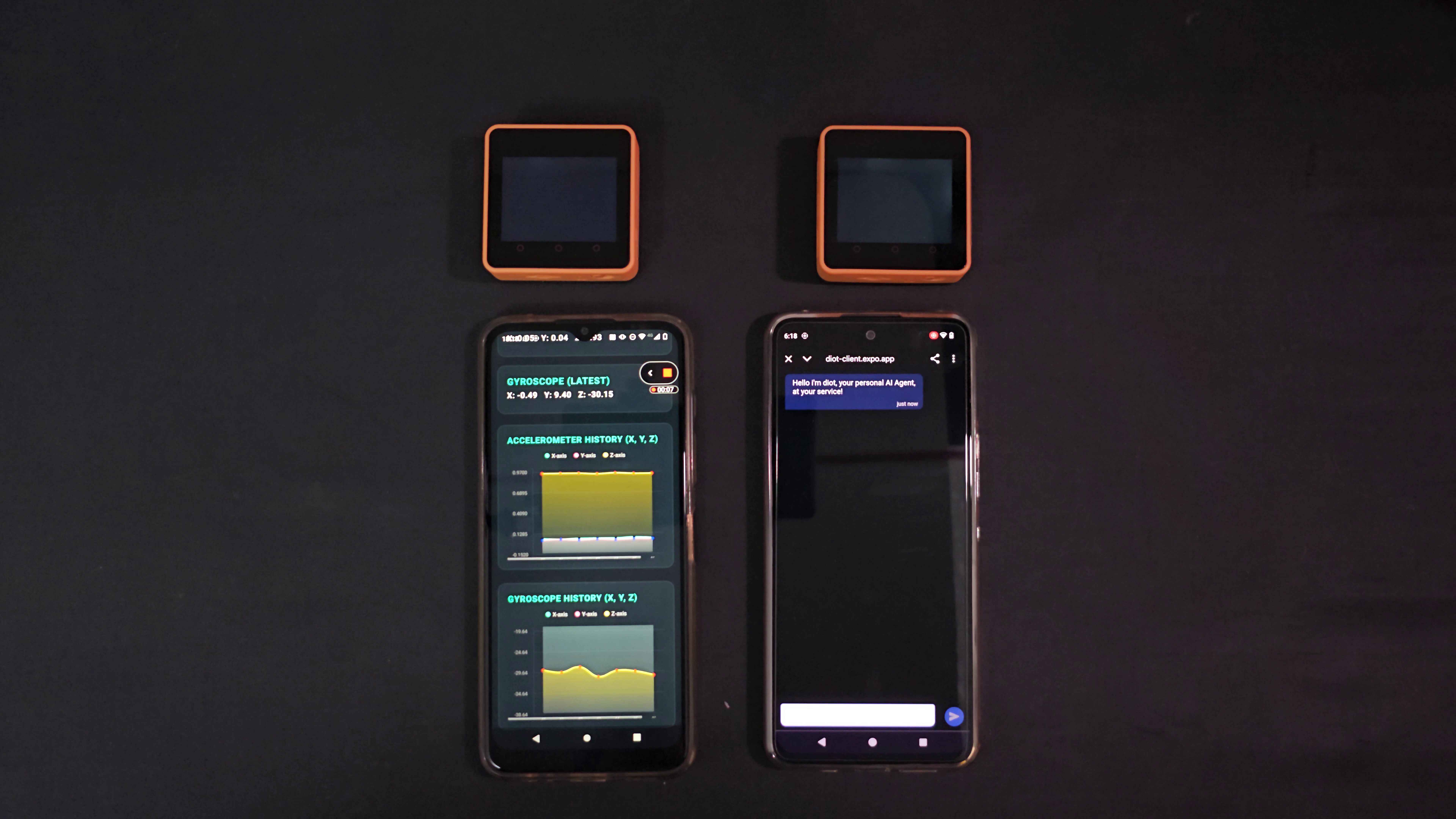
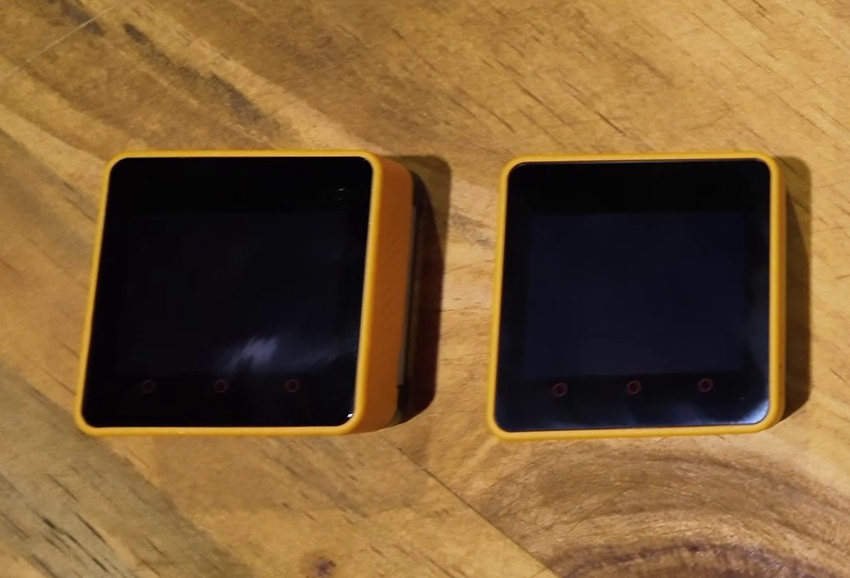
Physical Devices:

Screenshots (Monitor):
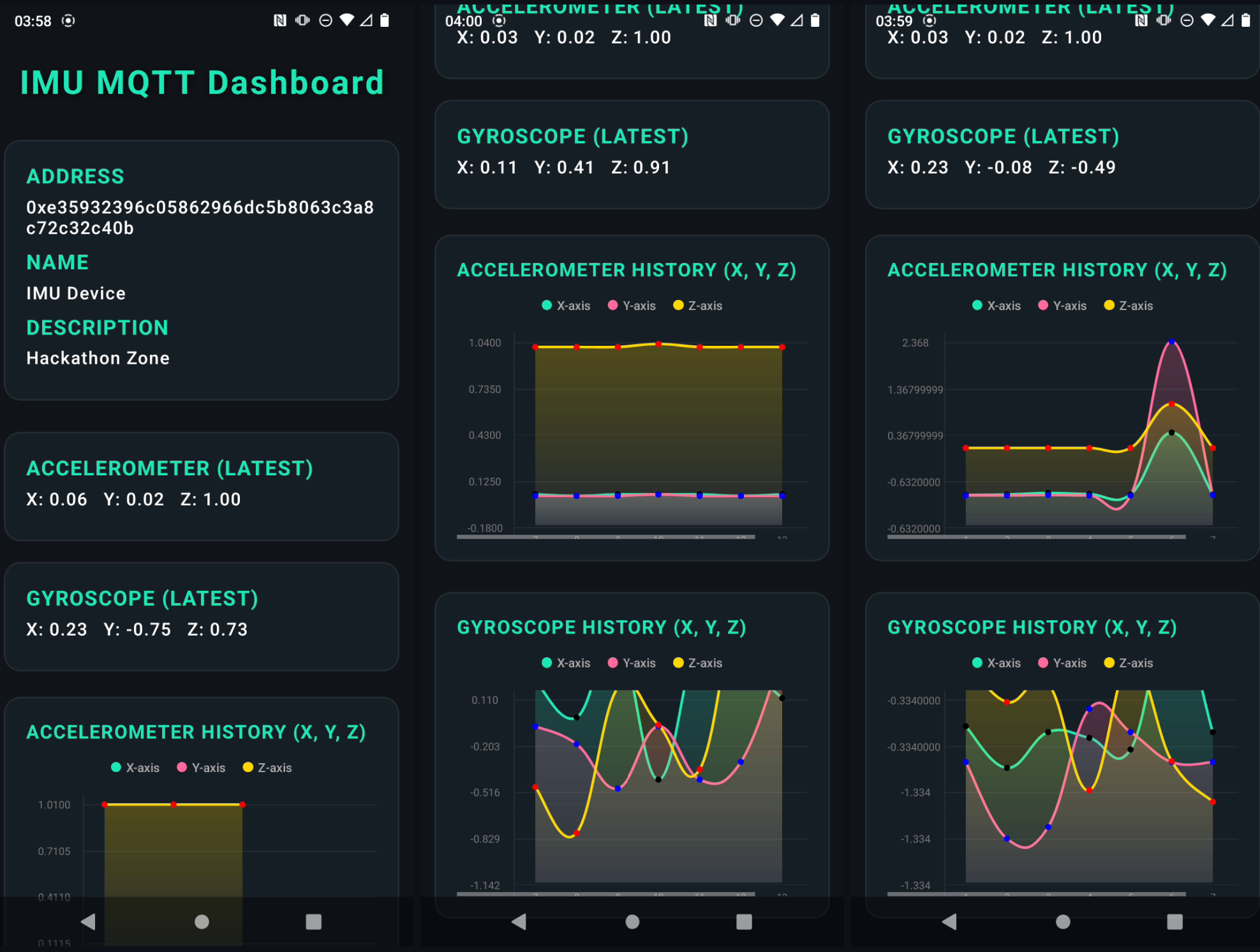
Physical IoT hardware that collects real-world sensor data and publishes it to the marketplace.
// Connect to WiFi and publish sensor readings
WiFiClient client;
HTTPClient http;

void loop() {
  // Read sensors (temperature, humidity, pressure, TVOC, eCO2, accelerometer)
  float temperature = readTemperature();
  float humidity = readHumidity();

  // Publish to marketplace
  http.begin(client, API_ENDPOINT);
  http.addHeader("Content-Type", "application/json");
  String payload = buildSensorPayload(temperature, humidity, ...);
  http.POST(payload);

  delay(10000); // Publish every 10 seconds
}
Supported Hardware:
- ESP32 / ESP8266
- M5Stack devices
- Arduino with WiFi capability
Sensor Types:
- Environmental (temperature, humidity, pressure)
- Air quality (TVOC, eCO2)
- Motion (accelerometer, gyroscope, magnetometer)
Built with Kiro AI — Professional AI-Assisted Development
2 weeks from concept to production — 1,450+ lines of code, 85% AI-generated
This isn't "vibe coding" — it's professional software engineering accelerated by AI.
Kiro becomes a serious development tool when you treat it like one. With proper configuration (specs, steering, hooks, MCP), it handles production-grade complexity while you maintain architectural control. The result: professional developers with domain expertise achieve 10x implementation velocity.
Development Approach
We combined spec-driven development for complex features (50+ requirements across 5 specs) with conversational coding for rapid iteration. Kiro read our specs and implemented features systematically while maintaining consistent code style through steering documents.

Kiro Features Used
🪝 Agent Hooks — 6 automated quality checks (security scan, lint, error handling, performance, complexity, commit messages). Impact: 20 min manual review → 30 seconds
📋 Steering Documents — 5 always-included context docs eliminated repetitive explanations. Result: 90% reduction in "how do I..." questions
🔌 MCP Integration — Coinbase Developer Platform server for live x402 development on this project.
// .kiro/settings/mcp.json
{ "mcpServers": { "coinbase-mcp": { "url": "https://docs.cdp.coinbase.com/mcp" } } }
Development Metrics
Estimated values — this project was built from zero to production entirely with AI assistance, making precise tracking impractical.
| Component | Lines | AI Generated | Time Saved |
|---|---|---|---|
| diot-agent | ~320 | ~95% | ~6h |
| diot-api | ~167 | ~90% | ~3h |
| diot-client | ~561 | ~80% | ~8h |
| diot-device | ~261 | ~80% | ~5h |
| diot-iot | ~152 | ~70% | ~3h |
| Total | ~1,461 | ~85% | ~25h |
Kiro Configuration
.kiro/
├── specs/          # 5 requirement documents (AI Agent, Client, IoT, Device, API)
├── steering/       # 5 context docs (project, workflow, agent, standards, x402)
├── hooks/          # 6 quality automation hooks
└── settings/       # MCP server configuration
Key Learnings
What makes the difference between toy projects and production systems? Configuration and discipline.
This project demonstrates that AI-assisted development can handle real-world complexity when you invest in proper infrastructure. The difference isn't the AI — it's how you set it up.
| Insight | Impact |
|---|---|
| Infrastructure first, code second | Steering + specs + hooks created a foundation for consistent, quality output |
| Write steering docs first | 1 hour investment saved 10+ hours of repetitive explanations |
| Specs for complexity, chat for iteration | Structured approach for features, conversational for refinement |
| Trust AI output with good context | 85% production-ready code when Kiro has full project understanding |
| Build hooks early | Automated quality checks compound — minutes saved per use = hours saved overall |
| Context is everything | Open files + steering + MCP = dramatically better, architecture-aware suggestions |
| Real developers benefit most | Domain knowledge + AI execution = 10x velocity on implementation |
Built With
- base
- cdp
- javascript
- kiro
- langgraph
- x402


Log in or sign up for Devpost to join the conversation.