-
-
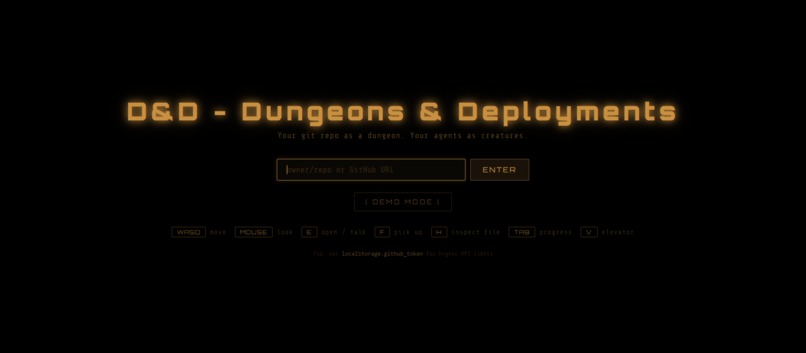
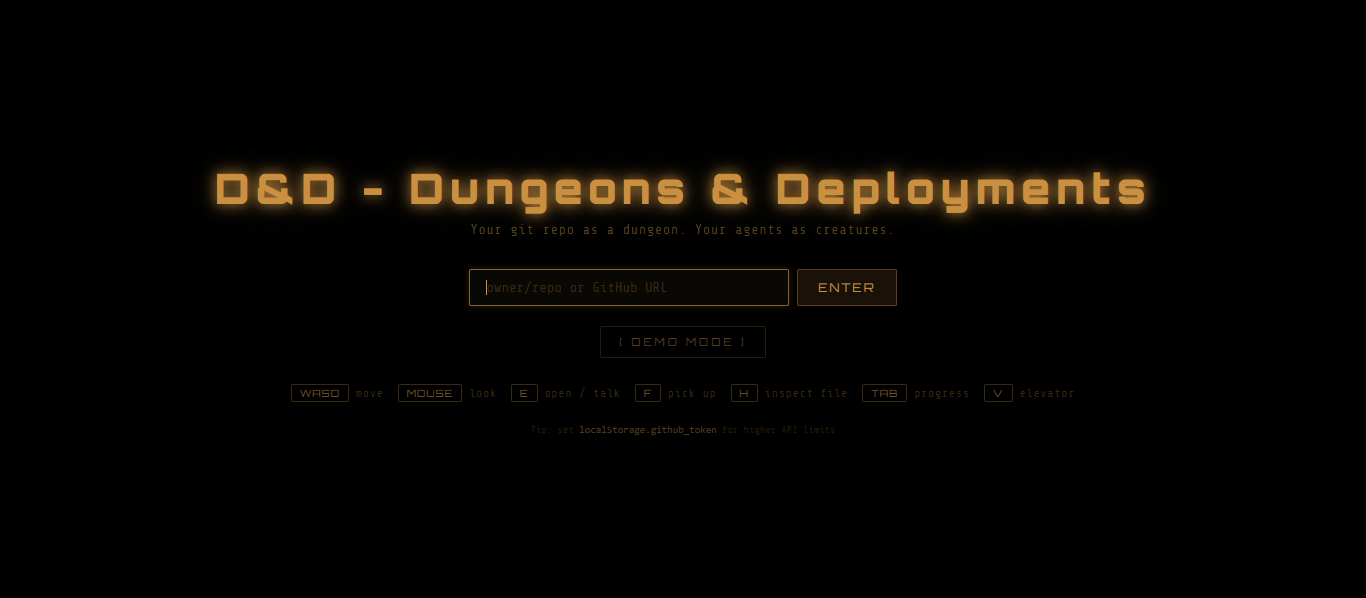
Title Screen
-
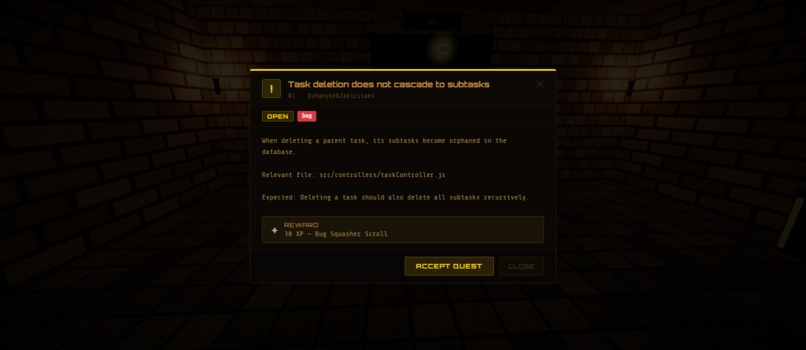
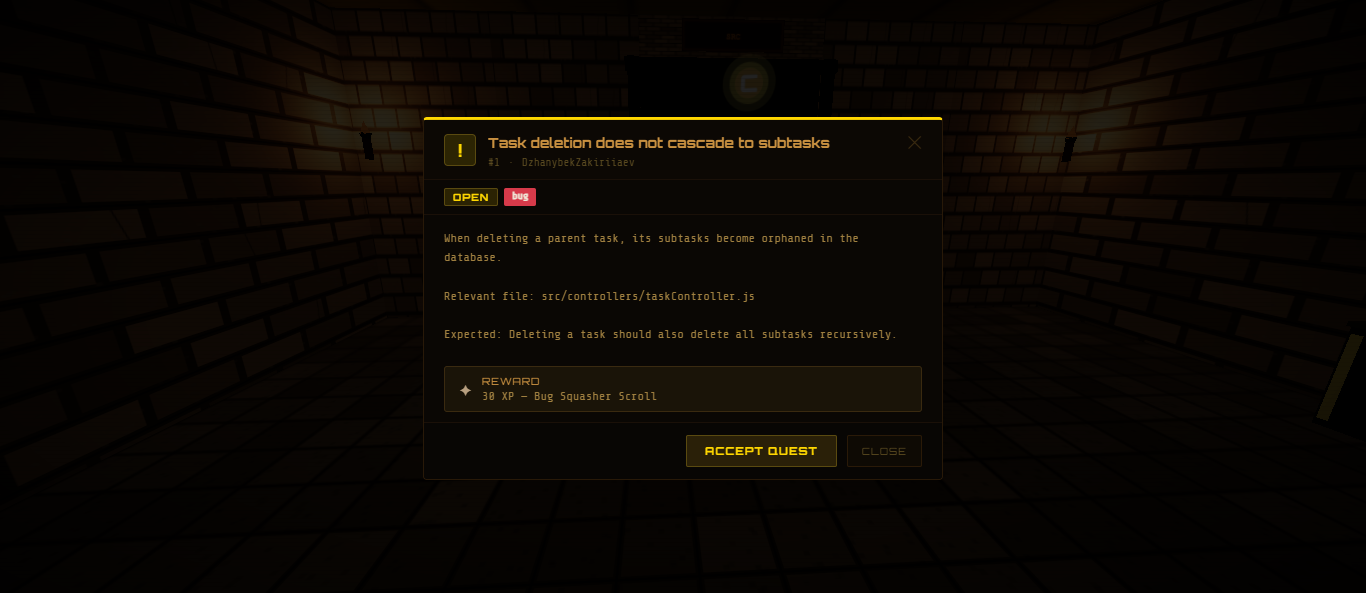
Educational quest from a dynamic curriculum
-
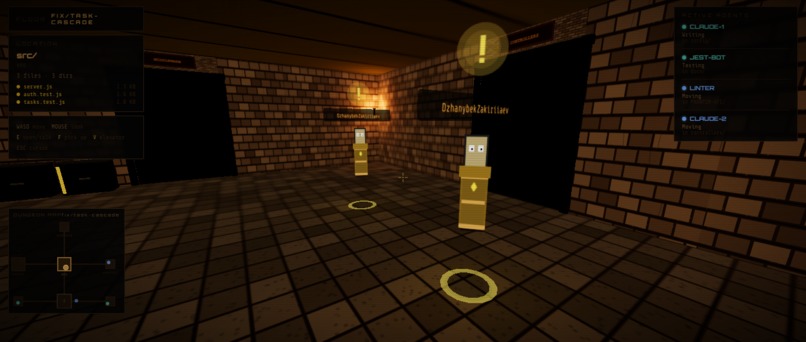
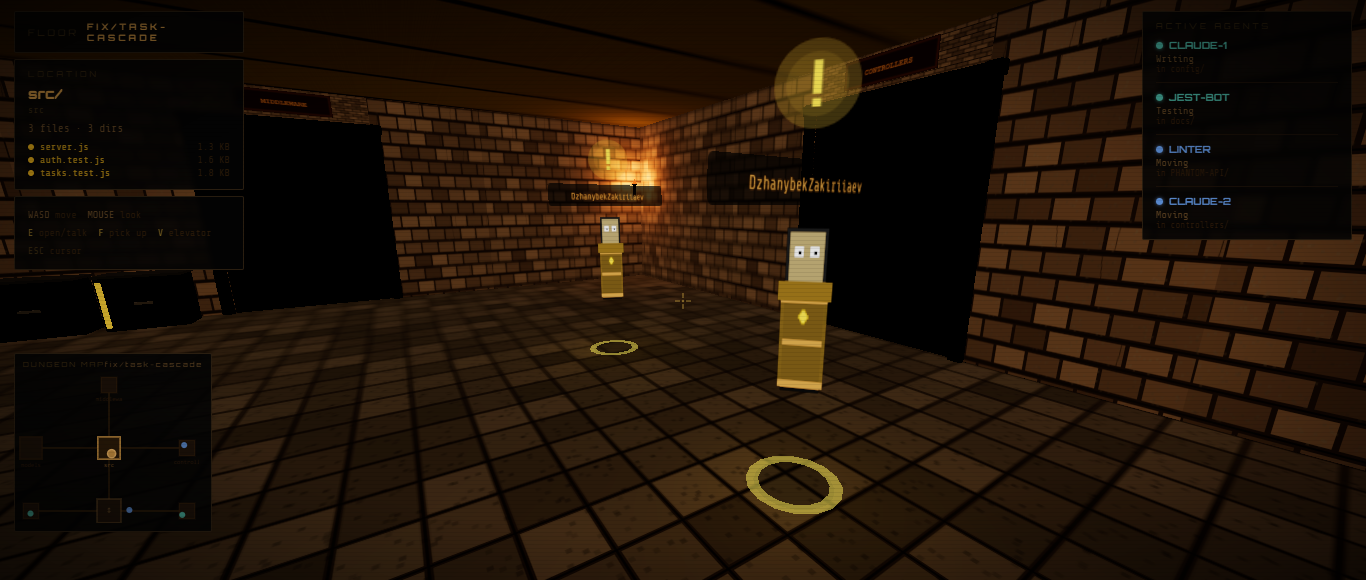
Tickets left and assigned to a specific developer
-
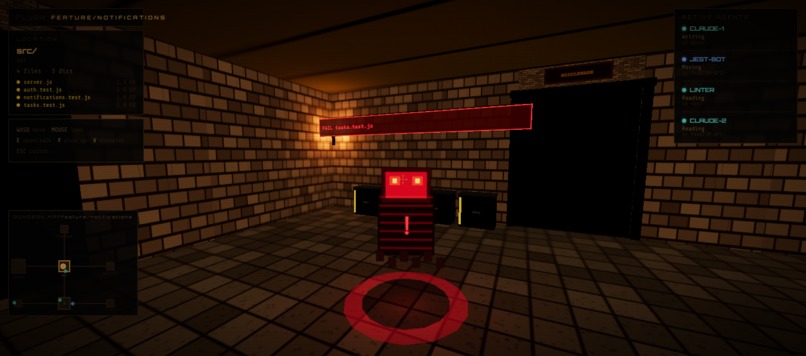
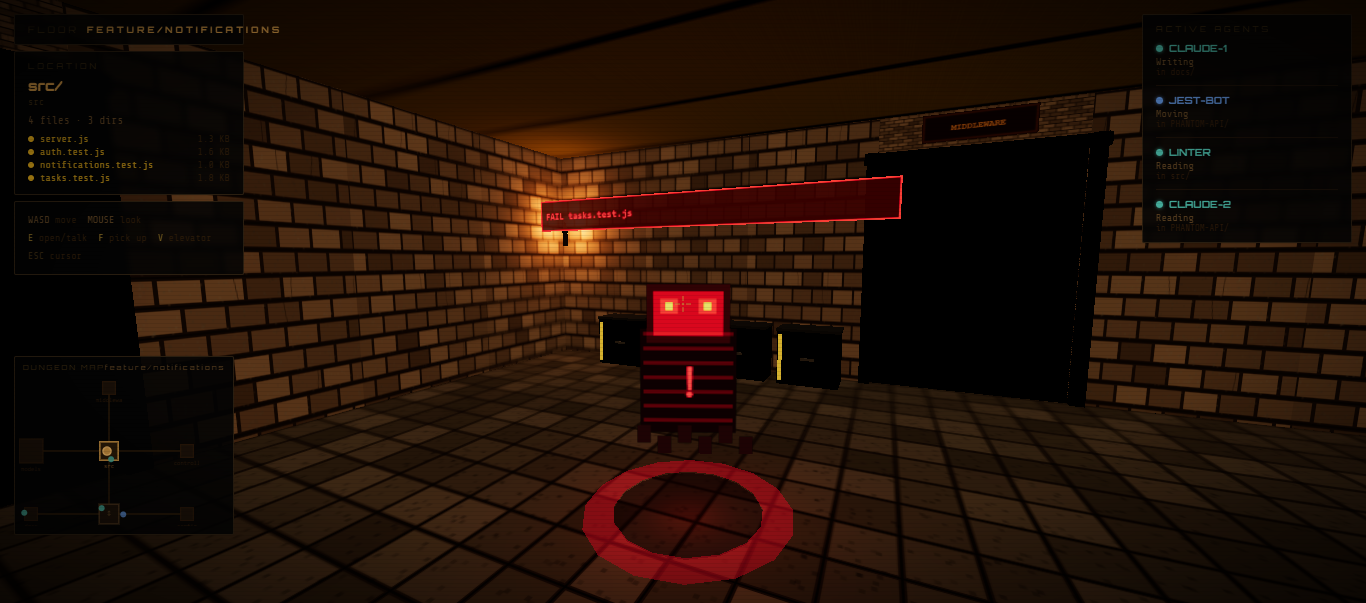
Failed deployment
-
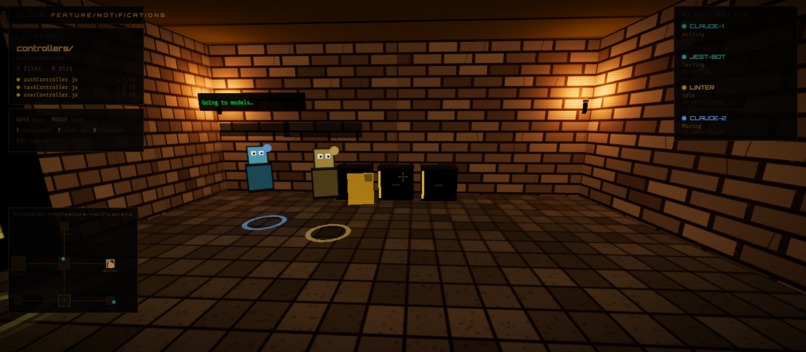
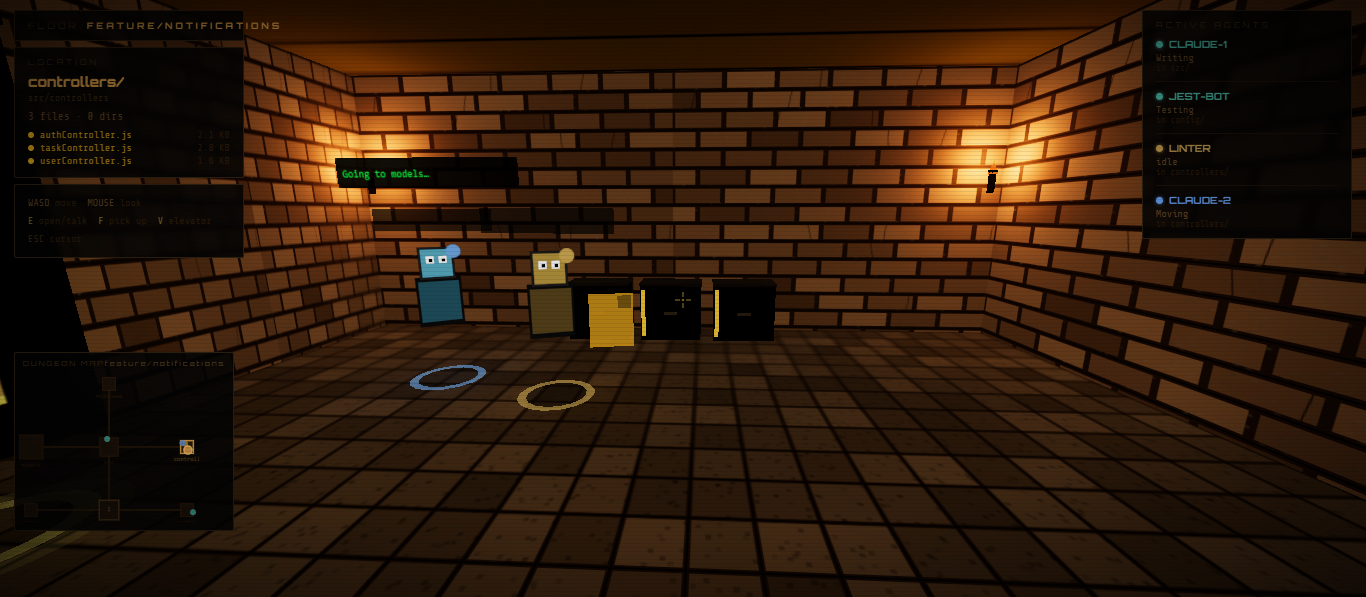
My ai agents talking to each other and modifying/carrying files
Inspiration
I wanted to reimagine something we use every day but rarely question: the filesystem.
Instead of building another B2B tool or just adding an AI wrapper, I wanted to rethink the experience itself. I also drew inspiration from older classic games—like Doom and other early PC games—that made exploration exciting, immersive, and intuitive, and which originally sparked my interest in technology.
This idea really clicked after my first internship, where I was dropped into a large, unfamiliar codebase. Navigating lifeless folders and files felt like being lost. I asked myself: what if exploring a codebase actually felt like exploring something alive?
What it does
D&D – Dungeons & Deployments turns your codebase into a living 3D dungeon:
Directories are rooms, and branches become separate floors Files are physical objects you can pick up and inspect Tickets become quests you can complete Bugs and failed deployments spawn enemies A coverage map reveals unexplored or weak areas AI agents can be spawned as allies to help you navigate A helpful wizard guides you through the maze
You walk through your repository instead of scrolling through folders, interacting with files, fixing bugs, and watching AI agents bring the system to life.
How we built it
Three.js for rendering a retro-style 3D dungeon in the browser Procedural generation to turn filesystem trees into rooms and corridors Interactive systems for picking up and inspecting files Lightweight AI agents to simulate allies and system activity Coverage and quest mechanics tied to repository state
The focus was on creating a compelling core experience rather than overengineering integrations.
Challenges we ran into
My main goal was to sharpen my CI/CD and systems skills, but I quickly realized that the frontend—3D rendering, interaction, and navigation—was unexpectedly difficult.
Balancing multiple systems within a short timeframe forced tough prioritization: procedural dungeon layout, file interactions, AI agents, and visual style all competed for attention. Making the world feel alive while keeping it intuitive was a challenge.
Accomplishments that we're proud of
A fully interactive 3D dungeon representing a codebase AI agents that act as allies or roam independently Bugs, failed deployments, and tickets represented as dynamic challenges and quests Multi-floor support for branches and a coverage map that tracks exploration A retro aesthetic that blends nostalgia with modern interactivity Tested with an unfamiliar codebase: the dungeon successfully teaches core concepts, gives quests, and adjusts its challenges based on the user’s knowledge
Even in a short hackathon, the project transforms a familiar workflow into something playful, immersive, and educational.
What we learned
Spatial and visual representations can make complex systems far more intuitive Even simple 3D interactions can transform a mundane task into an engaging experience Balancing scope is critical in short projects—focusing on a strong core experience is key CI/CD and filesystem concepts can be gamified to enhance understanding and retention
What's next for D&D - Dungeons & Deployments
D&D is already a great experience for students, first-time employees, or anyone learning to navigate unfamiliar codebases. I’d love for it to become an open-source project and continue evolving with new features, quests, and interactive learning experiences.

Log in or sign up for Devpost to join the conversation.