



Inspiration
PCOS, short for Polycystic Ovary Syndrome, is a very common problem for women in the age group of 14 - 49. According to a study by UNICEF 9.13 % women suffer from PCOS in the state of Maharashtra alone. This number is similar across the globe and even increasing in some parts. Compelling evidence suggests that women with PCOS have significantly higher risks of obesity, dyslipidemia, impaired glucose tolerance, and long-term complications such as diabetes, endometrial cancer, and cardiovascular disease. There is no exact cause or treatment of PCOS but there are tools and methods by which it can be avoided or overcome.
What it does
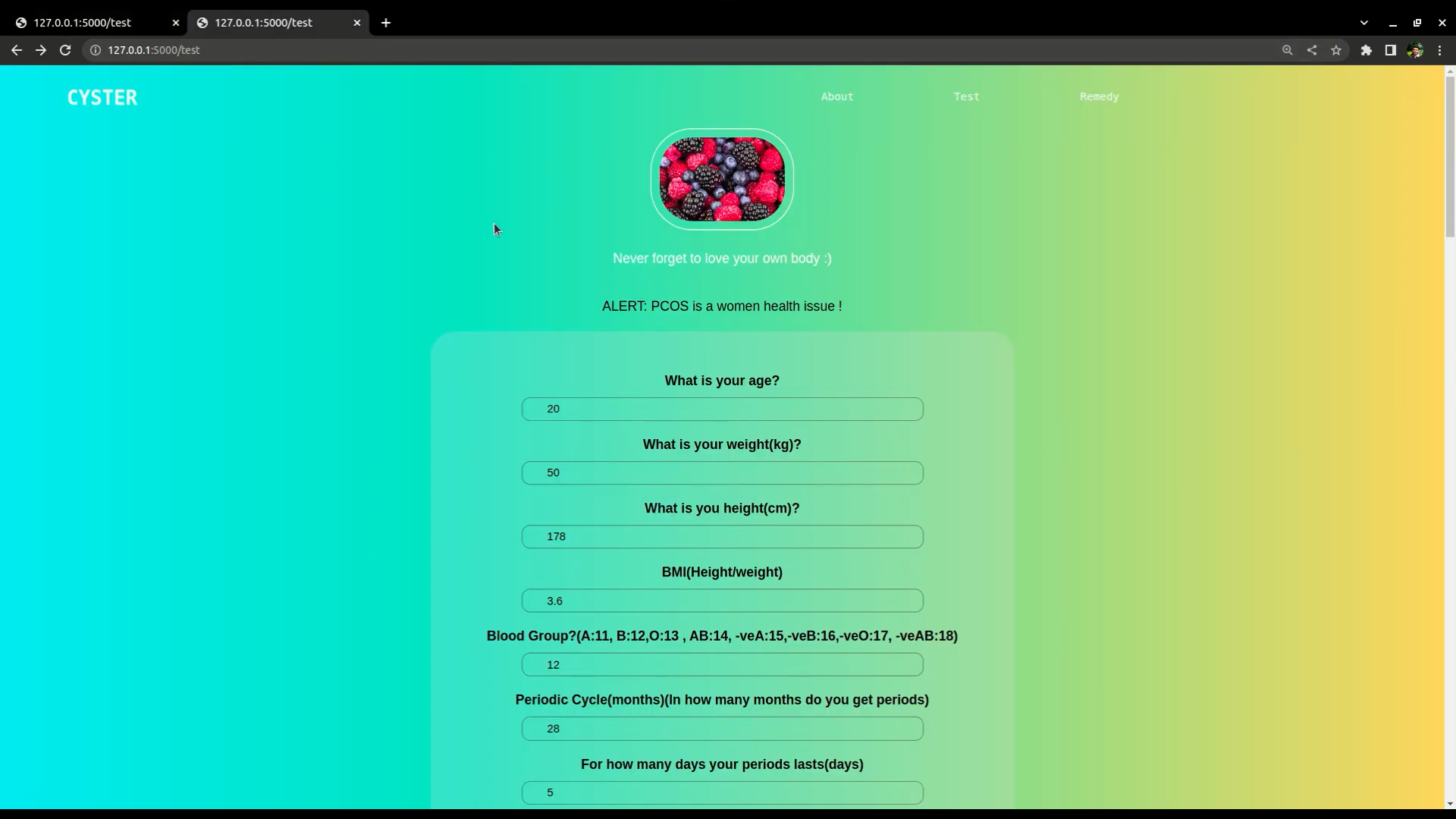
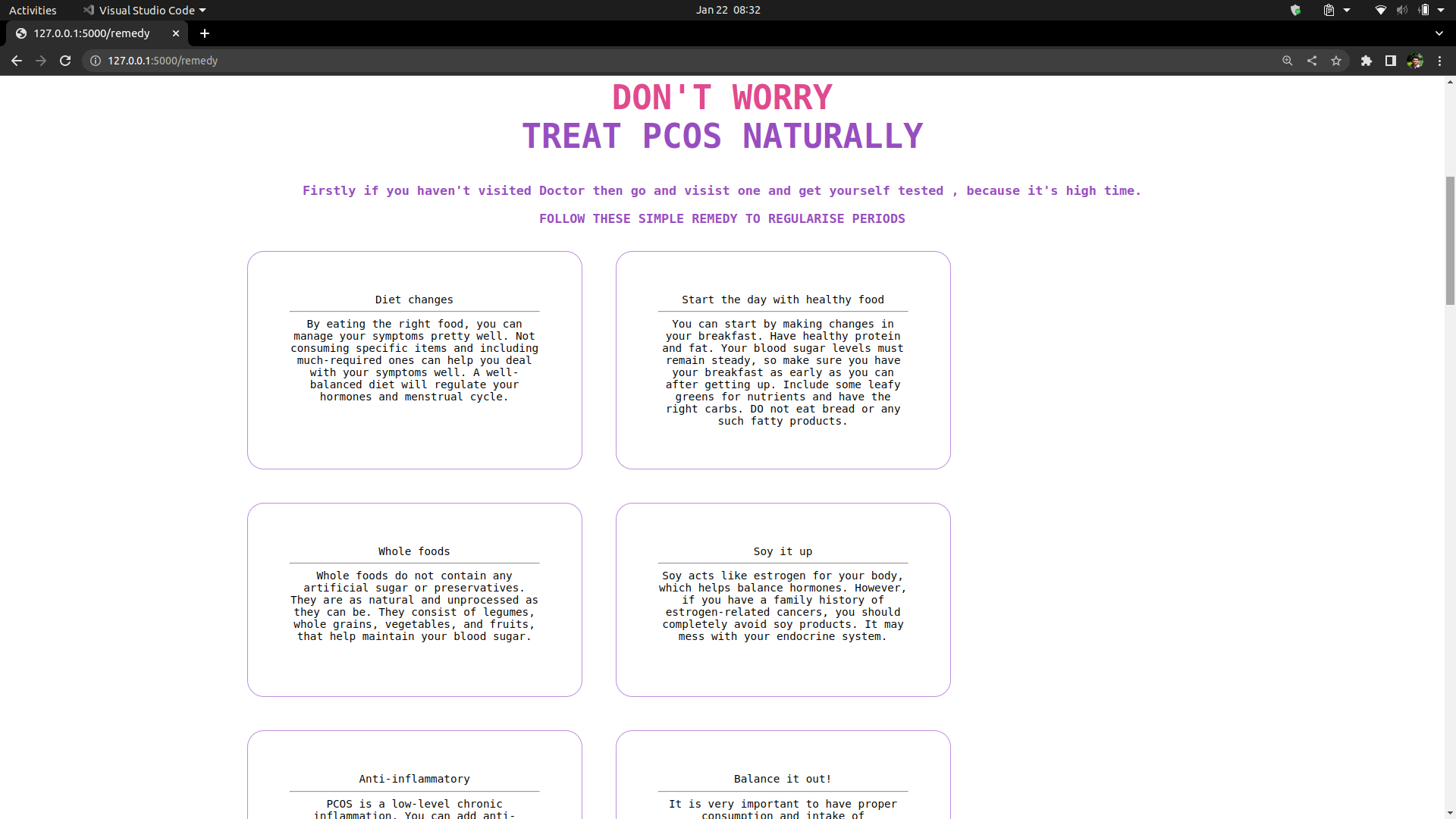
Our application aims to be one such tool to help women overcome these problems and lead a happy and healthy life by providing an easy to use application at the fingertips of people who do not have access to proper medical facilities or consider it a taboo subject to openly discuss and get it diagnosed. This project is designed to detect PCOS in its early stages with the help of machine learning models and provide easily accessible remedies to overcome the symptoms.
How we built it
Libraries : numpy, pandas, sklearn for logistic regression Front-end : HTML, CSS Backend : Flask deployed using Heroku. Tech used: Machine Learning
-> The project works by asking a set of questions to the users which it uses as test data against a pre-trained model trained on a dataset available on Kaggle.
-> Dataset: https://www.kaggle.com/datasets/prasoonkottarathil/polycystic-ovary-syndrome-pcos The dataset contains two files PCOS_data_without_infertility.csv and PCOS_infertility.csv. In these it contains close to 50 features which provides a very precise analysis of the patients suffering from PCOS. The dataset was split in the ratio of 80:20, 80 being used for training and 20 for testing the prediction model.
->We used logistic regression to train our model after finding out the correlation between the variables. The model is trained and saved as a pickle file (PKL) to be reused for prediction in our application made with the help of Flask framework.
Challenges we ran into
(1) Faced some errors while ML Model Testing, solved using Kaggle opensource resources.
(2) Deciding and Including the right CSS theme was very time-consuming
Accomplishments that we're proud of
The F1 Score of our model is 0.88 which we believe is a very good score to start with and we look forward to improving our accuracy and trying to fulfil the aim of this hackathon “Tech for Good” and in turn overcome the taboo imposed by society with proper education on PCOS and its prevalence.
What we learned
(1) Integrated ML technology with web development to build a platform that solves a problem that concerns so many women around us, thereby contributing our bit to apply technology for social good
(2) Improved both our Hard and Soft skills and the ability to work under pressure of a deadline.
(3) Building a Collaborative Team Spirit to achieve a common goal.
What's next for Cyster by Trinibals Team - 87
(1) To increase the efficiency of the present ML Model
(2) Improve UI of the Website
(3)Add features such as :If found positive, the patient should be referred to the nearest available doctor for proper medical diagnosis and cure.
(4) Add more Blogs on PCOS, its causes, treatment and symptoms to educate more folks about it.


Log in or sign up for Devpost to join the conversation.