-
-
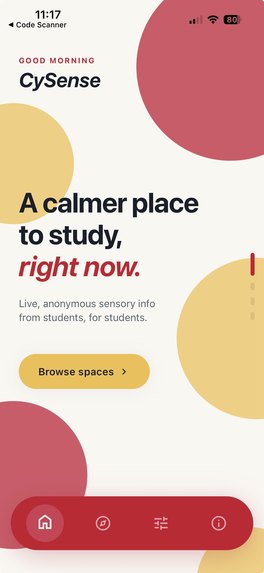
Home
-
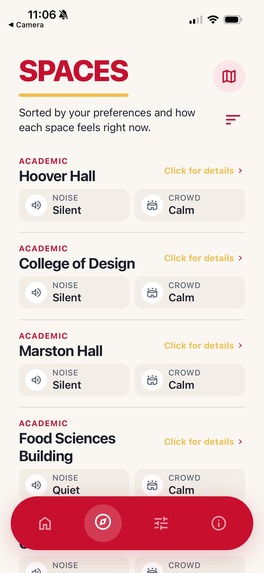
Spaces - List
-
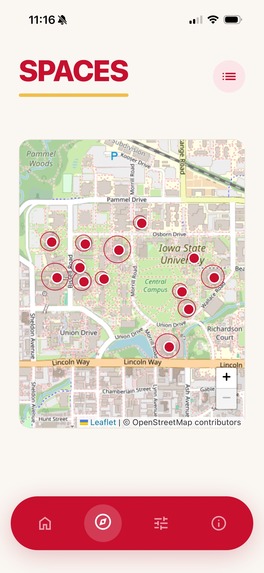
Spaces - Map
-
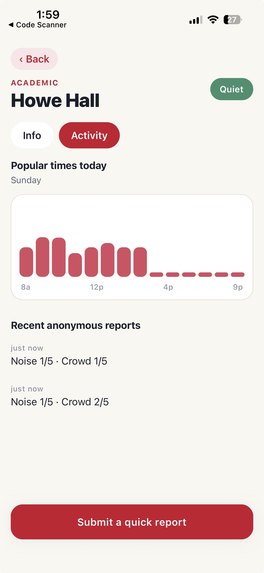
Howe Hall
-
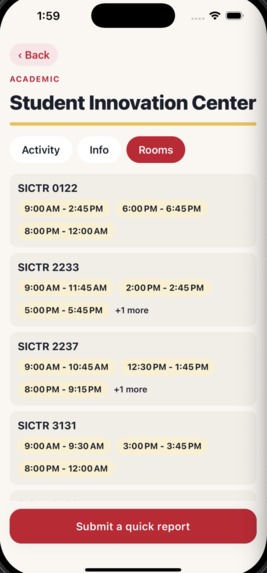
SIC Rooms
-
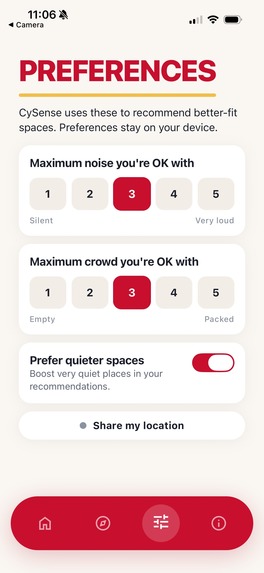
Preferences
-
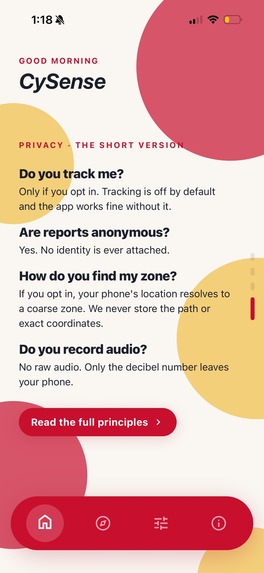
Privacy
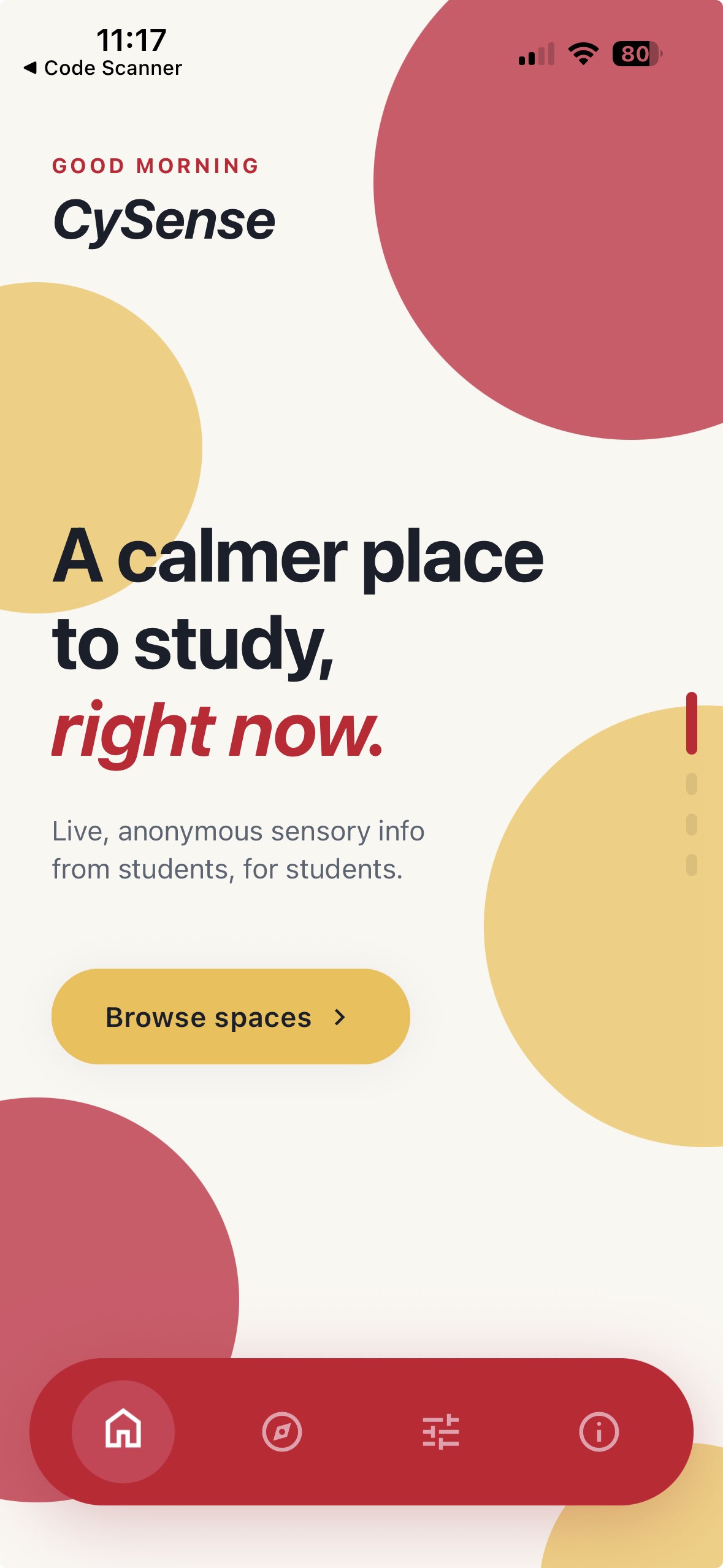
Inspiration
We noticed that finding a good place to study on campus is not always about distance. Sometimes the closest place is too loud, too crowded, or just uncomfortable. CySense was inspired by students who need calmer spaces but do not have an easy way to check conditions before walking across campus.
About the app
CySense is a campus app designed to help students at Iowa State University find spaces that match their comfort level. It provides real-time and historical data on noise, crowd levels, and seating, so students can decide where to study or relax. The app is especially helpful for students who feel overwhelmed in busy environments, but it works for anyone looking for a quieter or more focused space. By using simple, anonymous reports, CySense makes it easier to move around campus in a way that feels more comfortable and manageable.
Features
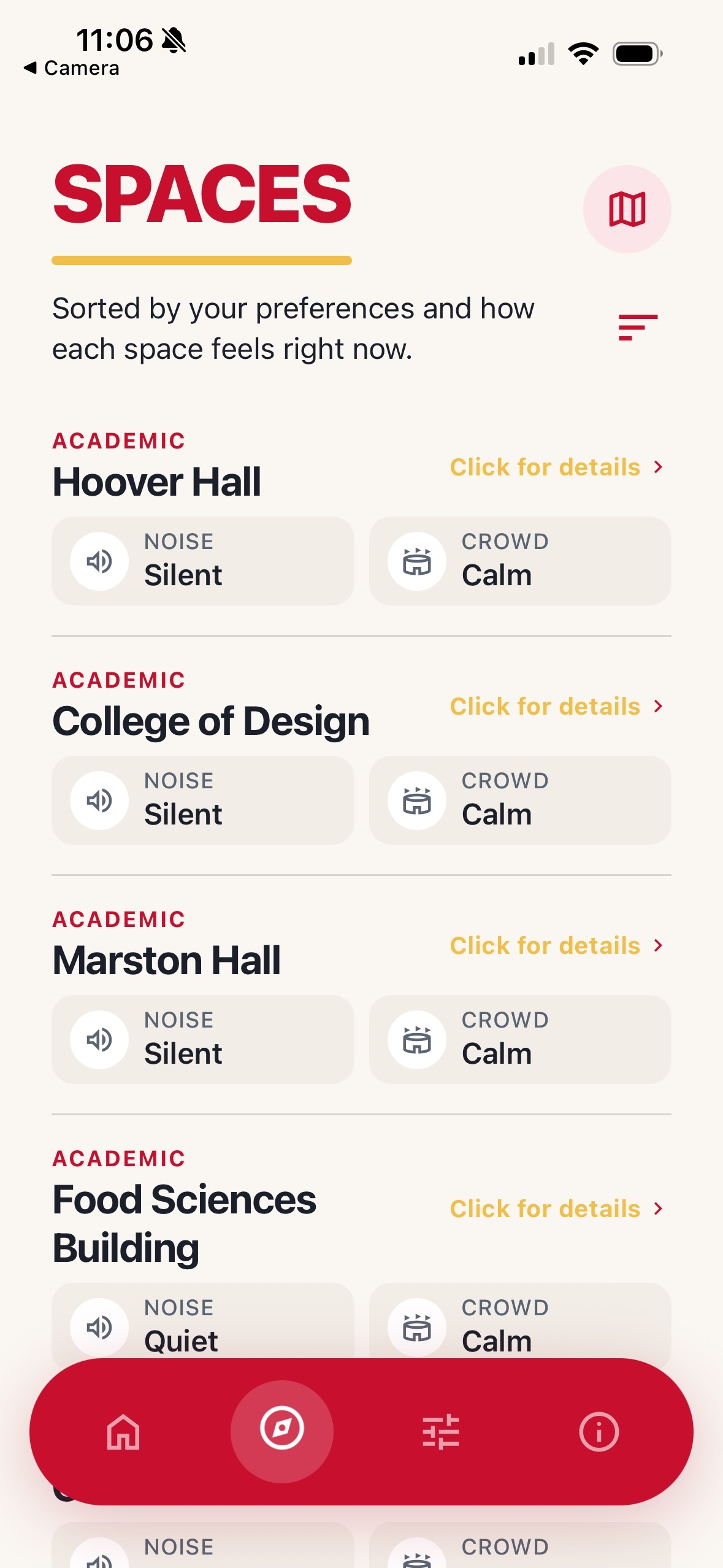
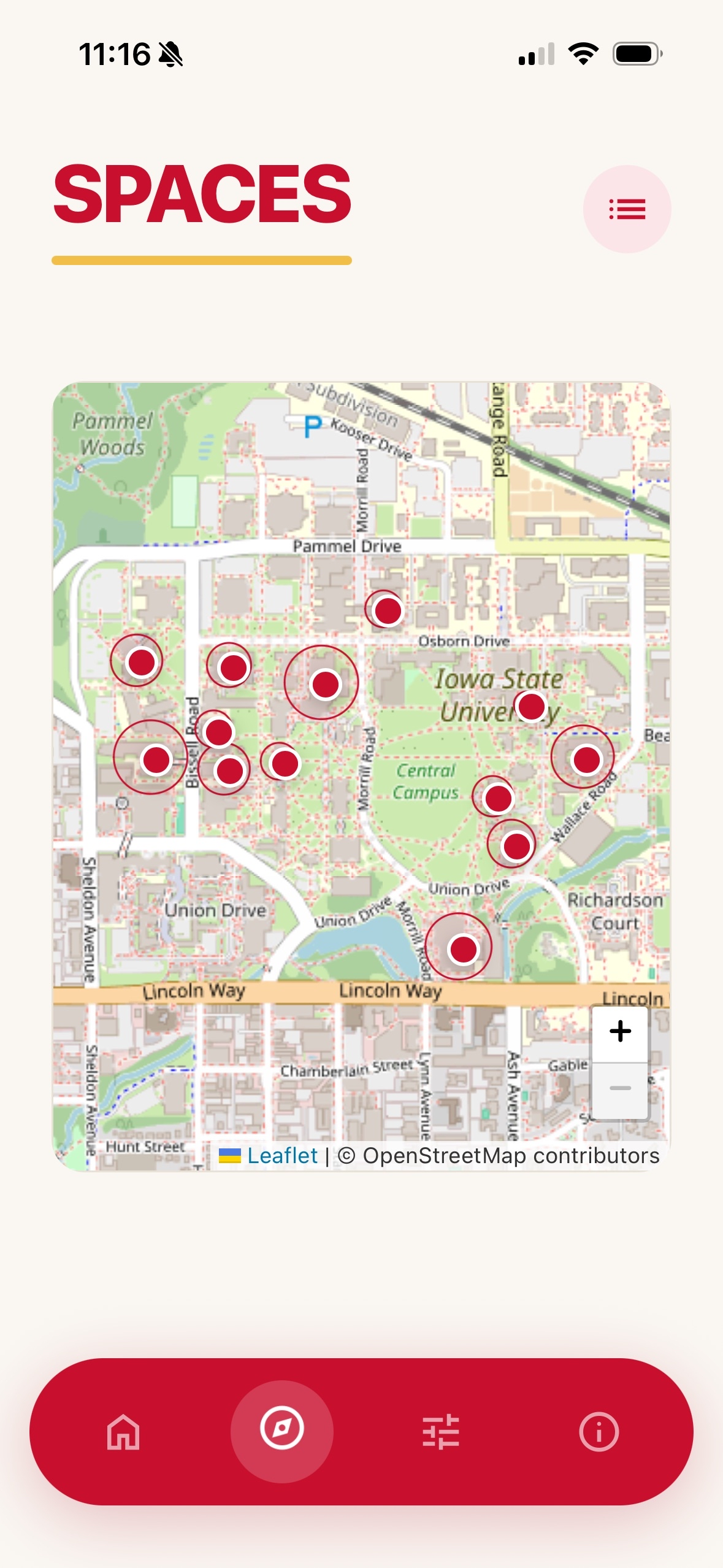
CySense provides real-time updates on noise levels, crowd levels, and seating availability across different campus spaces. Users can explore locations through an interactive map or a list view, making it easier to compare places before deciding where to go.
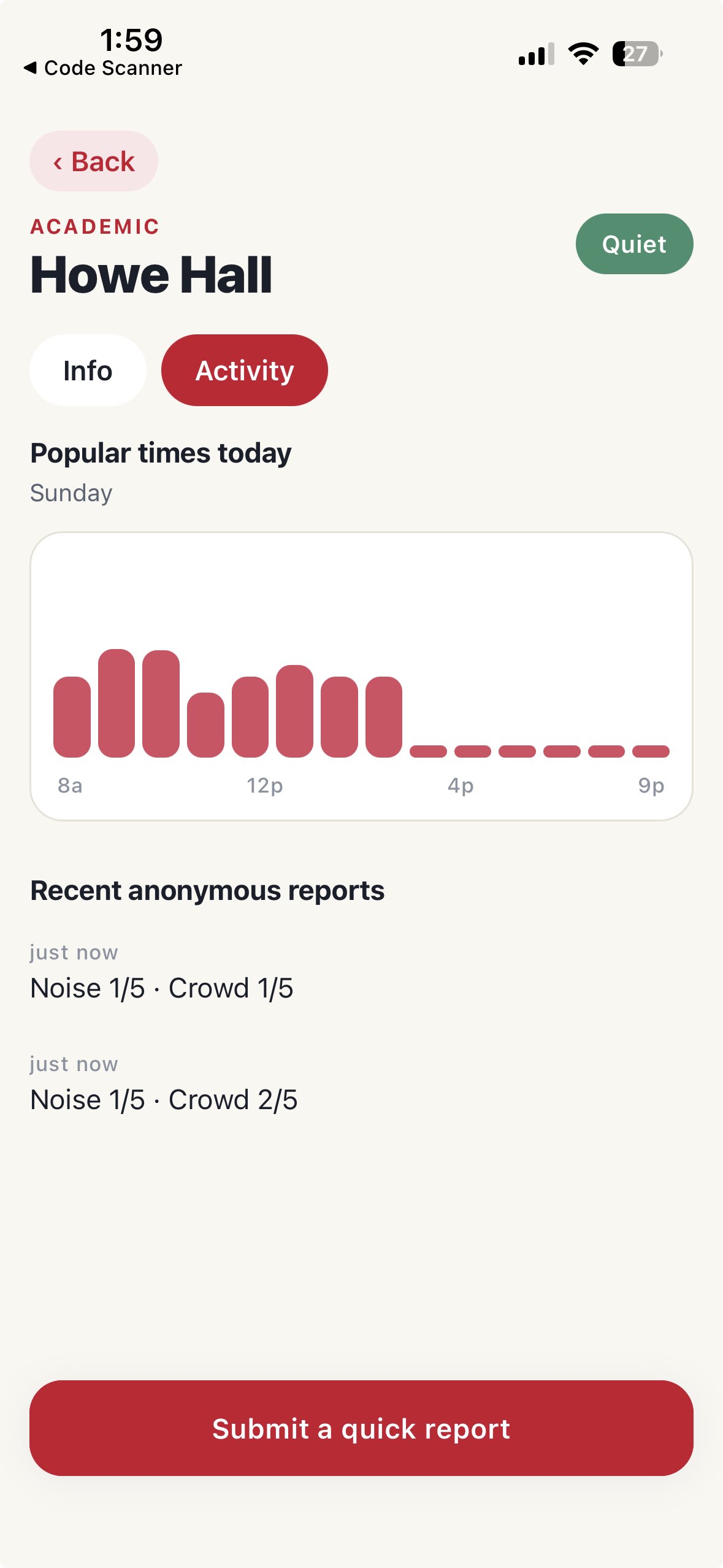
Each location has a details page that shows current conditions, popular times, recent anonymous reports, and an overall sensory status. Students can also submit quick reports using simple sliders for noise and crowd levels. If they want, they can use their phone’s microphone to measure the average sound level, but the app does not store any audio.
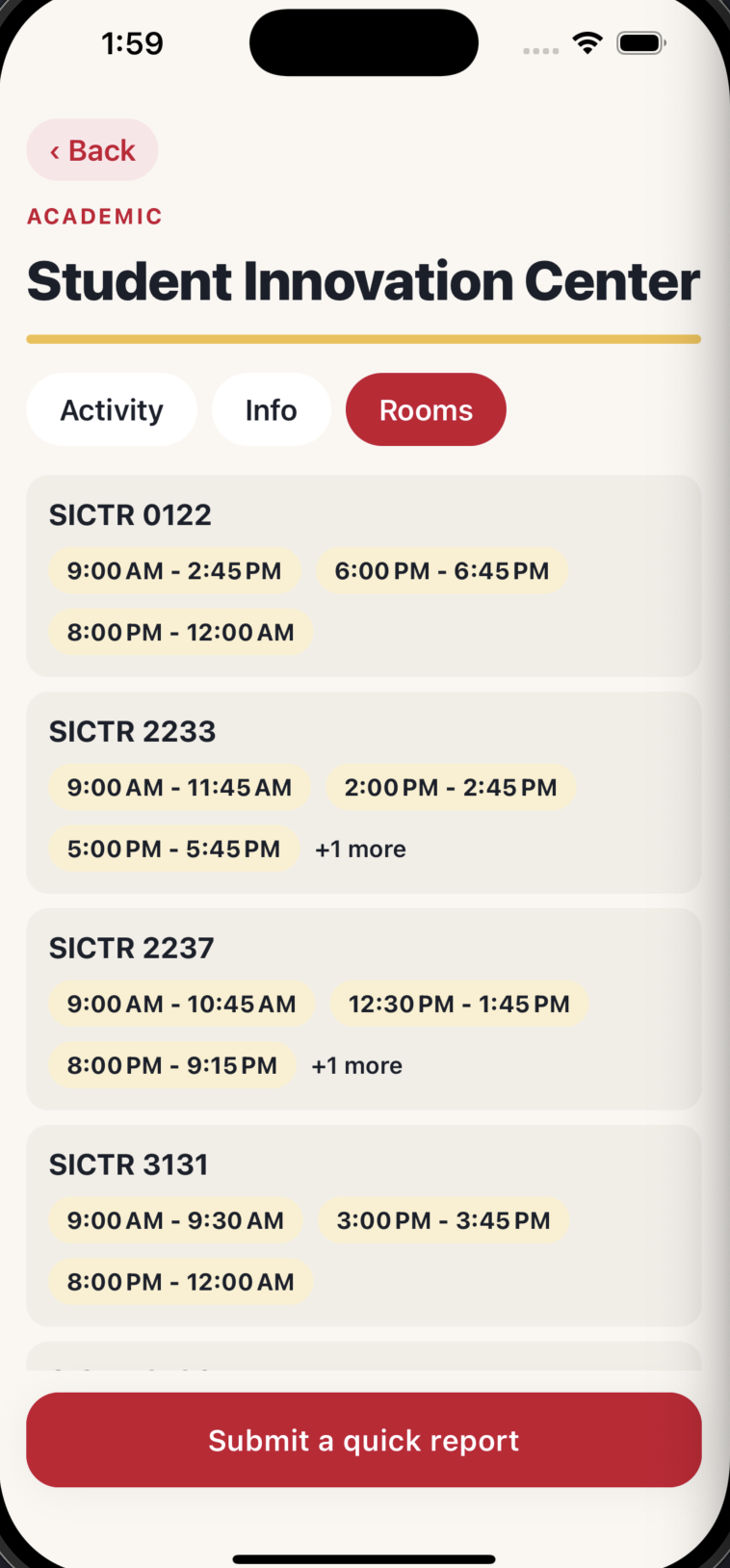
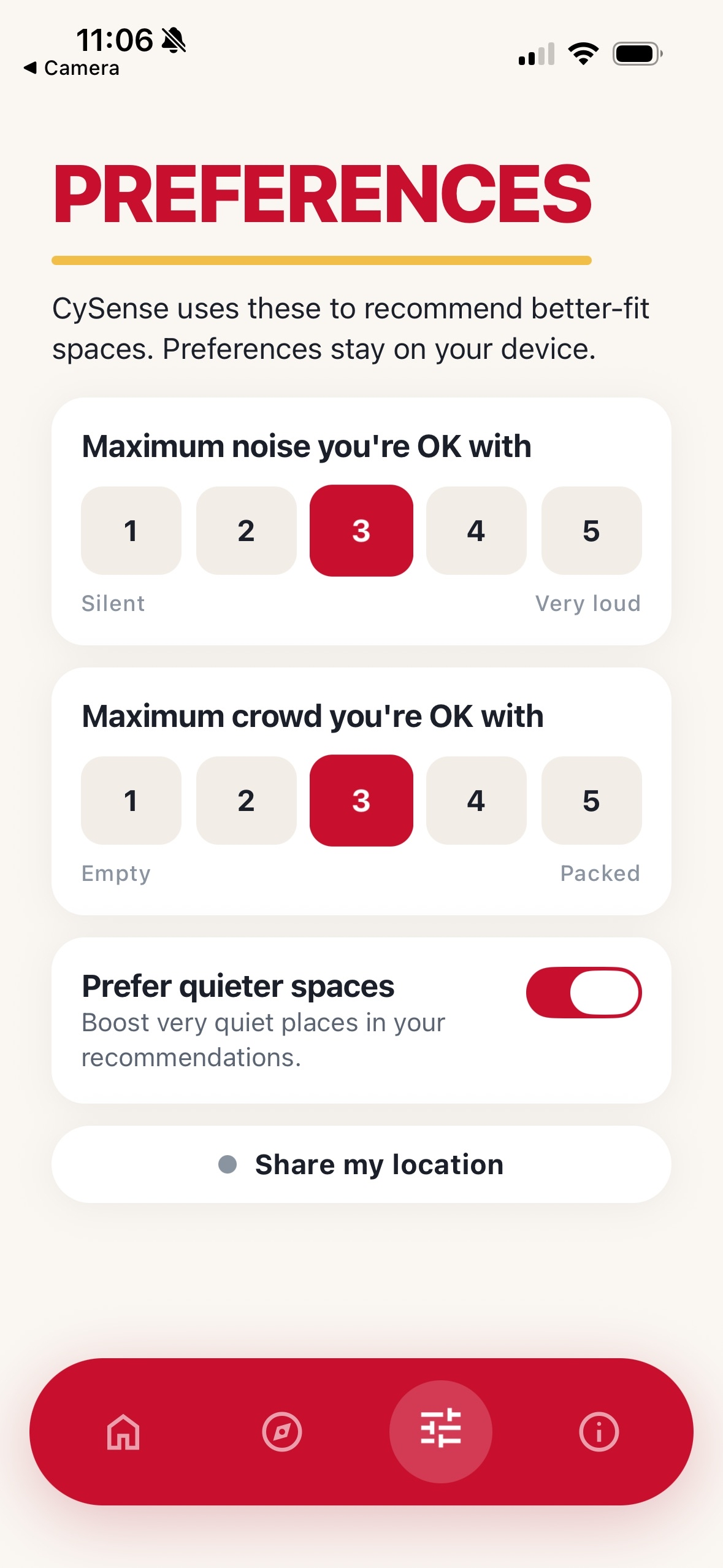
CySense also gives personalized recommendations based on the user’s preferences, such as how much noise or crowding they are comfortable with. For places like Parks Library and the Student Innovation Center, the app can show room availability so students know which study rooms are open or booked. The app also uses past reports to predict when a place may be quiet, noisy, empty, or busy.
Challenges we ran into
One challenge was making the app helpful without making it feel too complicated. We had a lot of information we wanted to show, like noise, crowd levels, seating, lighting, reports, and predictions, so we had to organize it in a way that students could understand quickly.
Another challenge was designing the app for different student needs. Some students may want the quietest place possible, while others may care more about seating, location, or lighting. We had to make sure CySense could support different preferences instead of assuming everyone is looking for the same type of space.
Accomplishments that we're proud of
We are proud that CySense solves a real problem students face on campus. Instead of only helping students find the closest place, the app helps them find a place that actually fits their comfort level.
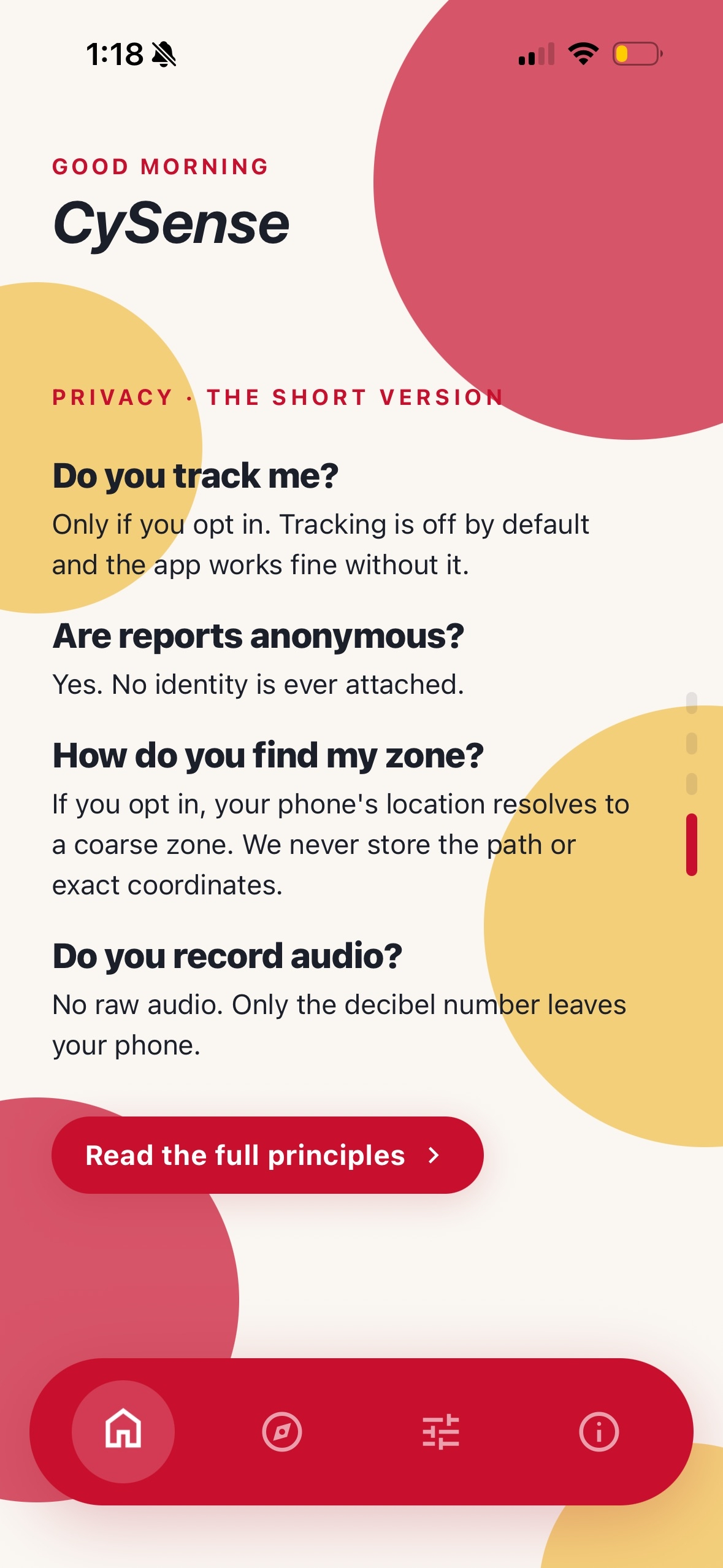
We are also proud of building a working app with several useful features, including live reports, a campus map, user preferences, room availability, sound detection, and activity predictions. Another accomplishment is that we kept privacy in mind by using anonymous reports and avoiding stored audio.
What we learned
We learned that a good study space is not the same for every student. Some people may care most about distance, while others may need a quieter or less crowded environment to focus.
We also learned a lot about building a full app with live data. This included working with React Native, Expo, Supabase, location permissions, microphone access, and data from user reports.
What's next for CySense
In the future, we would like to place QR codes around campus so students can quickly open a location page or submit a report while they are already in that space. We also hope to add privacy-safe decibel meters in busy areas like Parks Library and the Student Innovation Center, with university approval. These meters would only measure sound levels and would not record audio. Over time, we hope CySense can grow beyond Iowa State University and help students at other campuses find spaces that feel comfortable for them.
Built With
- expo-router-for-navigation
- expo.io
- ios
- react
- supabase
- typescript


Log in or sign up for Devpost to join the conversation.