Inspiration
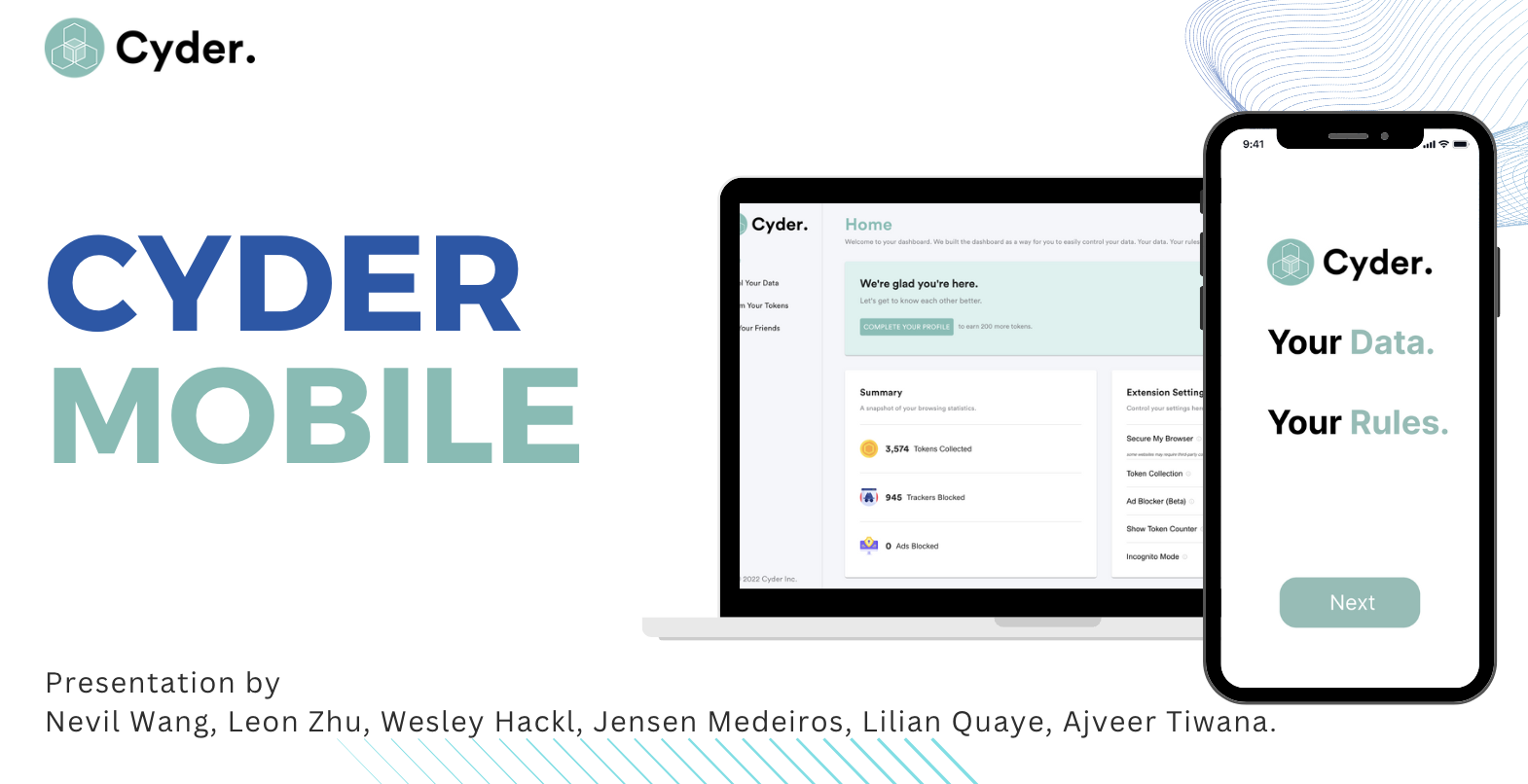
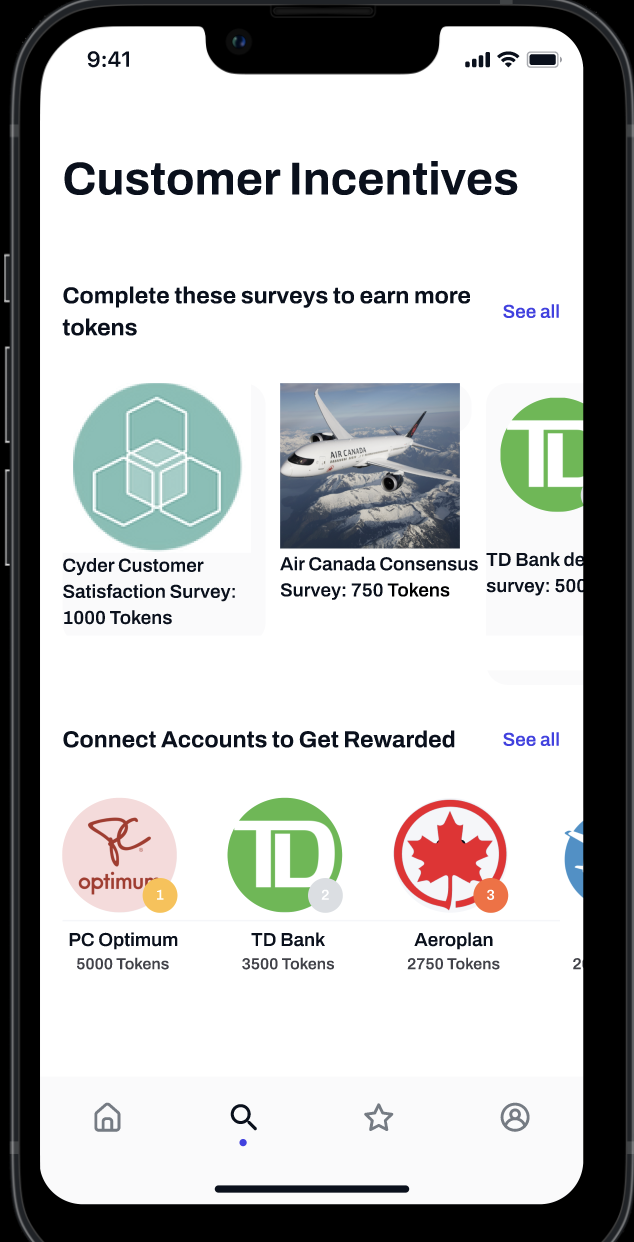
The inspiration for the app comes from the noticable difference of features that can be used between desktop and mobile. We are allowed much more features that are more personal to a person like health and lifestyle and incorporate that using our app while rewarding the consumer for sharing that information with us. Especially, when it comes to data sharing it is important to make the consumer feel safe and rewarded for the sharing of their information. So we tried to keep the incentivized program of Cyder with incorporating more data analytics for Cyder to look at that they can share to other companies.
What it does
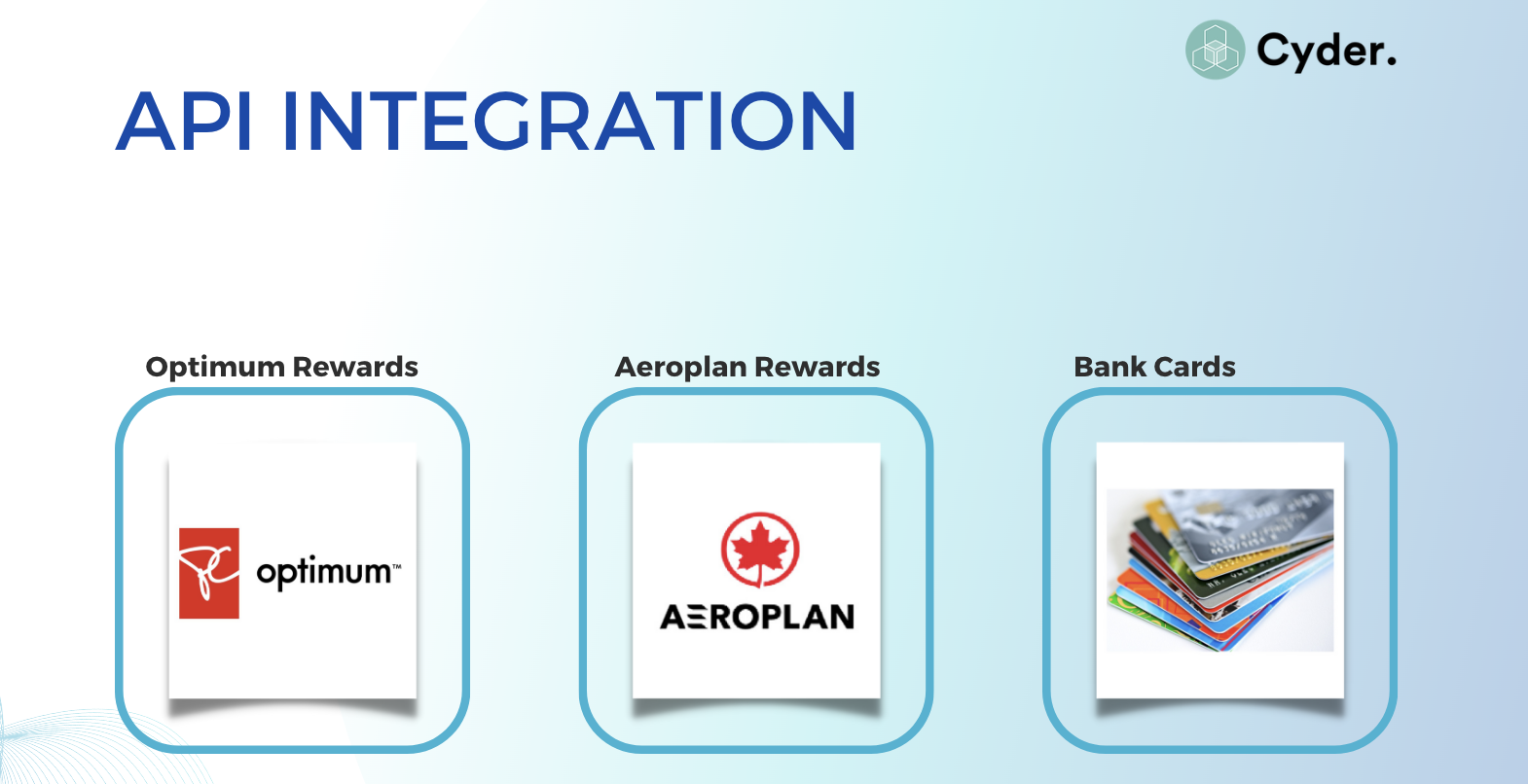
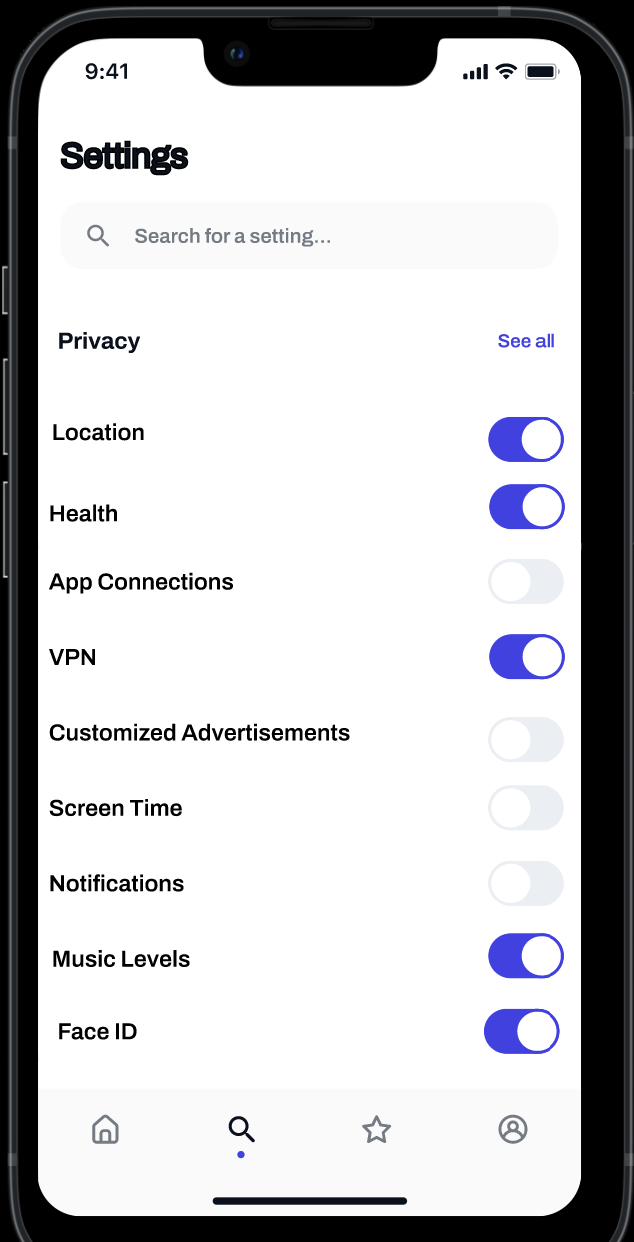
We've implemented a third-party centric app. Looking at the key pillars of privacy, monetization, and user control, we used systems and design thinking to create a seamless experience for users to protect, share, control, and monetize their data.
How we built it
Starting with a foundation of systems maps and technical capabilities, we narrowed down what the Cyder app needs and is able to do within the timeframe of 6 months of dev time. We primarily used figma, but also looked at Swift and Javascript implementations, as this app would need to be robust on the backend to handle the amount of data required.
Challenges we ran into
We ran into some challenges with creating a seamless UI/UX experience while balancing the functionality from a business standpoint. The hardest part was creating rationale and a rollout plan for the mobile application.
What's next for Cyder Mobile: Get Paid for Living Your Life
Beyond the future recommendations listed in our presentation, the mobile ecosystem is constantly changing, and so Cyder Mobile would need to constantly evaluate its competitive advantages in relation to the offerings of the greater market.
Built With
- canva
- figma
- javascript
- powerpoint
- swift


Log in or sign up for Devpost to join the conversation.