-
-
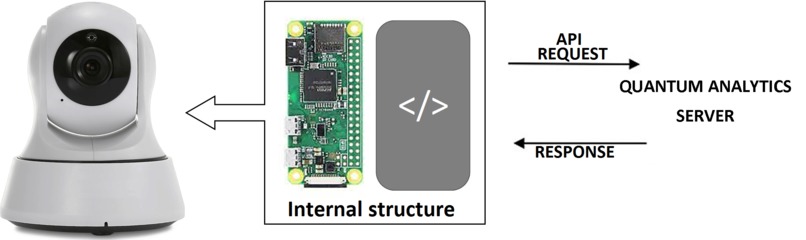
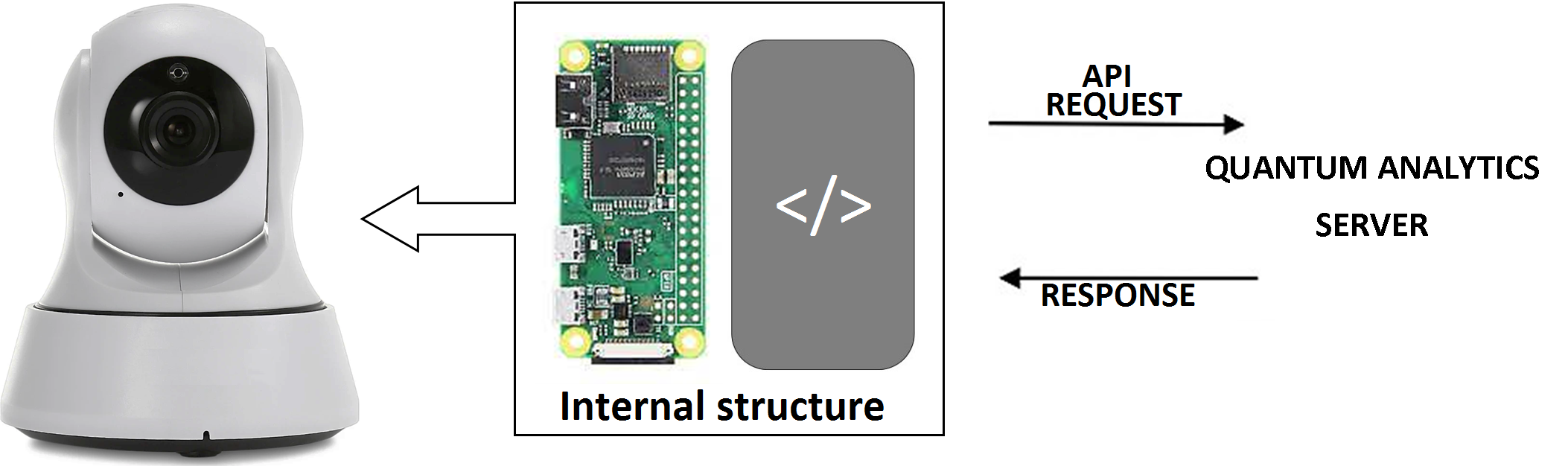
cyclops architecture
Inspiration
My motivation for developing beauty technologies for individuals with disabilities is to provide them with the same access to beauty products and services that everyone else has. By creating technologies that are accessible to people with disabilities, we can help them feel more confident and empowered in their own skin. Additionally, these technologies can help to reduce the stigma associated with disabilities and create a more inclusive society.
What it does
It provides personalized beauty advice tailored to each individual user. Cyclops uses machine learning algorithms to analyze user data such as skin type, age, lifestyle, and preferences to create customized beauty tips, product recommendations, and educational articles. The AI assistant is also able to detect changes in the user’s skin condition and provide advice accordingly. The goal of Cyclops is to provide users with the most accurate and up-to-date beauty advice, allowing them to make informed decisions about their beauty routine.
How we built it
How we made Cyclops into a reality:-
- I started by doing research and gathering information on the latest AI technologies and trends.
- I created a plan for the project and outlined my goals and objectives.
- I gathered data and built the AI’s knowledge base. This included collecting information on natural language processing, machine learning algorithms, and other AI technologies.
- I designed the user interface of the AI assistant. This included creating a simple and easy-to-use interface that would be easy for users to understand and interact with.
- I developed the necessary software and hardware components for the AI assistant. This included coding the AI’s logic, creating the necessary hardware components, and connecting the AI assistant to the internet.
- I tested the AI assistant extensively to make sure it was working properly and addressing user requests accurately.
- I deployed the AI assistant and launched it for the public. This included setting up the necessary servers and hosting the AI assistant on the internet.
- Finally, I monitored the AI assistant’s performance and continued to refine and improve its features. ## Challenges we ran into Some of the challenges include:-
- Integrating the AI assistant with other applications and services: One of the biggest challenges we faced while building Cyclops was integrating it with other applications and services. We had to ensure that the AI assistant was compatible with multiple platforms and services, while also making sure that the user experience was consistent across different platforms.
- Integrating the natural language processing (NLP) system: Natural language processing is a complex field of computer science and AI that requires a lot of research and development. We had to build an NLP system that could understand and respond to human language in a natural way in order to make the AI assistant more useful and intuitive.
- Ensuring accuracy and reliability: Another major challenge we faced while building Cyclops was ensuring accuracy and reliability. We had to make sure that the AI assistant’s responses were accurate and relevant to the user’s queries, and that it was reliable enough to be used in real-world scenarios. ## Accomplishments that we're proud of Am happy to have achieved the following during the hackathone:-
- Developing an intuitive user interface that makes it easy to interact with Cyclops.
- Implementing a natural language processing engine that can understand and respond to user commands.
- Training Cyclops to recognize and respond to voice commands.
- Utilizing machine learning algorithms to improve performance and accuracy.
- Integrating Cyclops with popular third-party services such as Google Assistant and Amazon Alexa.
- Building a modular architecture that allows for easy customization and expansion.
- Creating an open-source platform to allow developers to contribute and customize Cyclops.
- Creating a secure and reliable platform that is protected against malicious activities.
- Utilizing cloud computing technology to ensure scalability and availability. ## What we learned My expertise was expanded to include:- I was able to learn the following during the process
- Natural Language Processing (NLP): Understanding, analyzing, and generating human language.
- Natural Language Understanding (NLU): Process of recognizing and extracting the intent and entities from a natural language.
- Machine Learning: Using data to train algorithms and make predictions.
- Dialog Management: Managing conversations between a user and an AI assistant.
- Voice User Interface Design: Designing a conversational interface that is easy to use and understand.
- Text-to-Speech Synthesis: Converting text into spoken words.
- Speech Recognition: Interpreting spoken words into text.
- Knowledge Representation and Reasoning: Representing knowledge in a way that can be used to answer questions and make decisions.
- Knowledge Graphs: Representing knowledge in a graph structure.
- Automated Reasoning: Using logic to infer conclusions from given facts.
- Context-Aware Computing: Understanding the context of a conversation to respond appropriately.
- Explainable AI: Making AI decisions explainable to humans. ## What's next for cyclops The next step for Cyclops AI assistant is to continue to improve its capabilities. This will involve adding more features, such as natural language processing (NLP) capabilities, to support more complex conversations with users. Additionally, further development of the platform’s understanding of context and user preferences will be required to enhance the user experience. Furthermore, a focus on improving the interface of the AI assistant to make it easier to use and more intuitive should also be a priority. Finally, expanding the AI assistant’s ability to understand the user’s environment and proactively provide useful information or recommendations would be beneficial.
Built With
- natural-language-processing
- raspberry-pi
- tensorflow


Log in or sign up for Devpost to join the conversation.