-
-
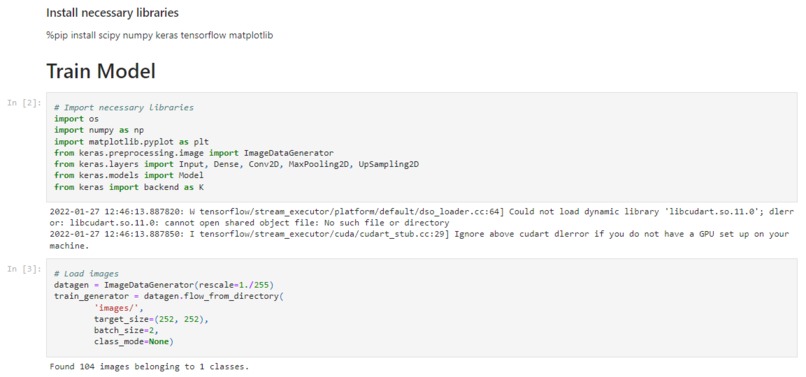
Model Training Phase
-
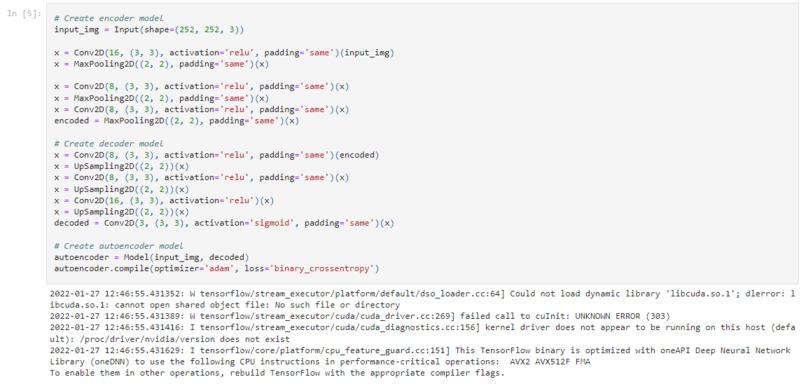
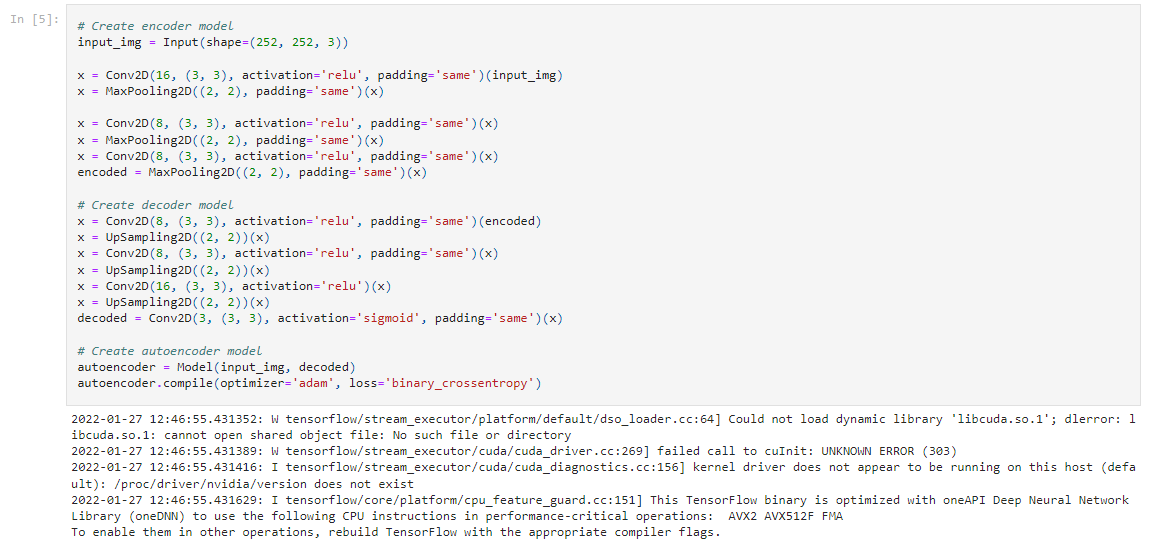
Model Architecture
-
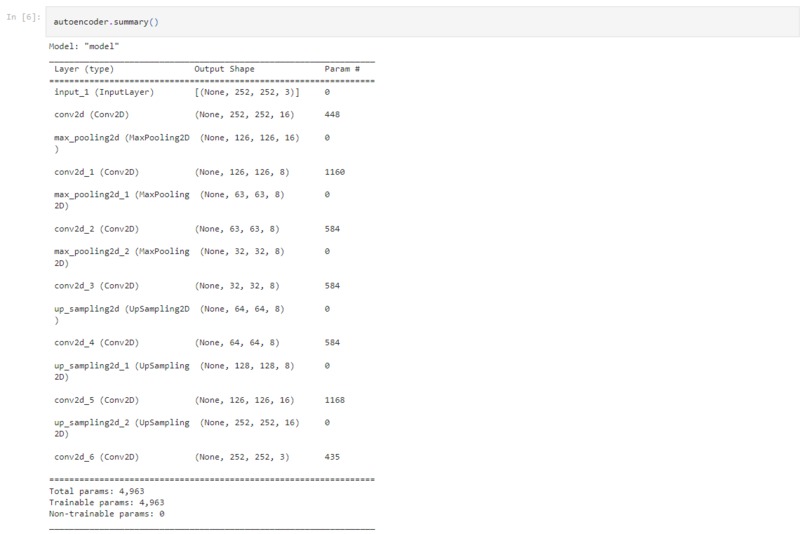
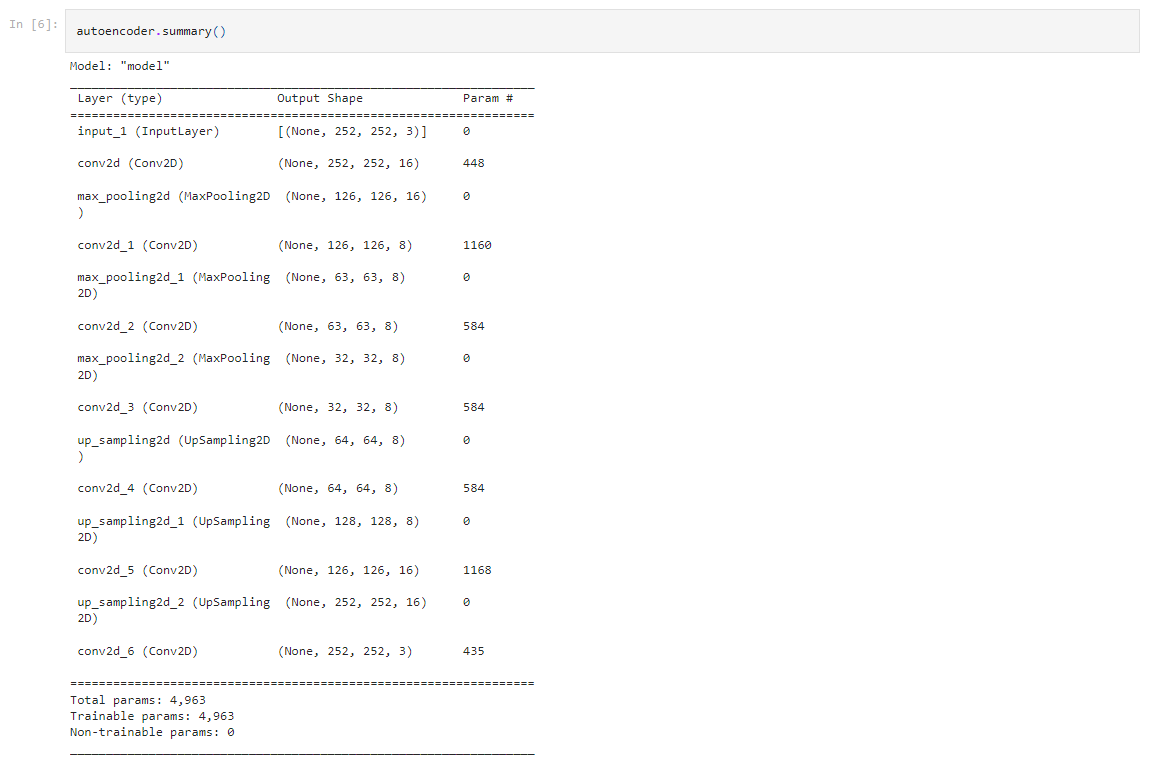
Model Summary
-
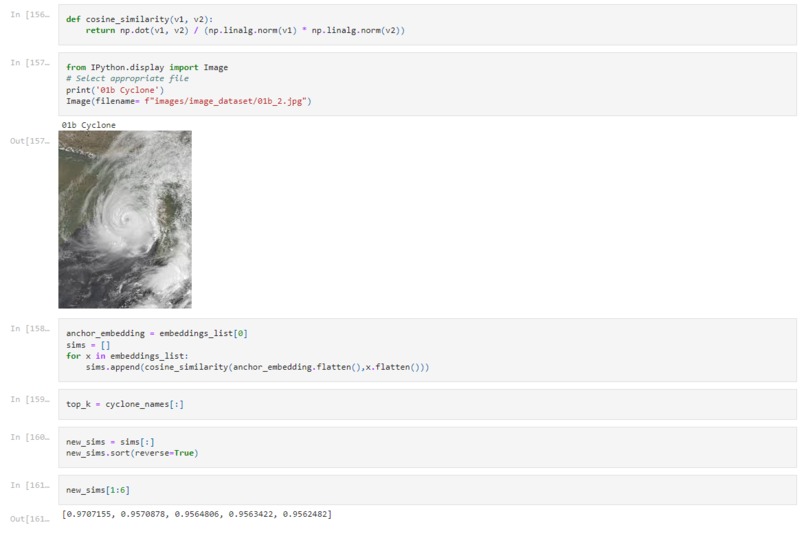
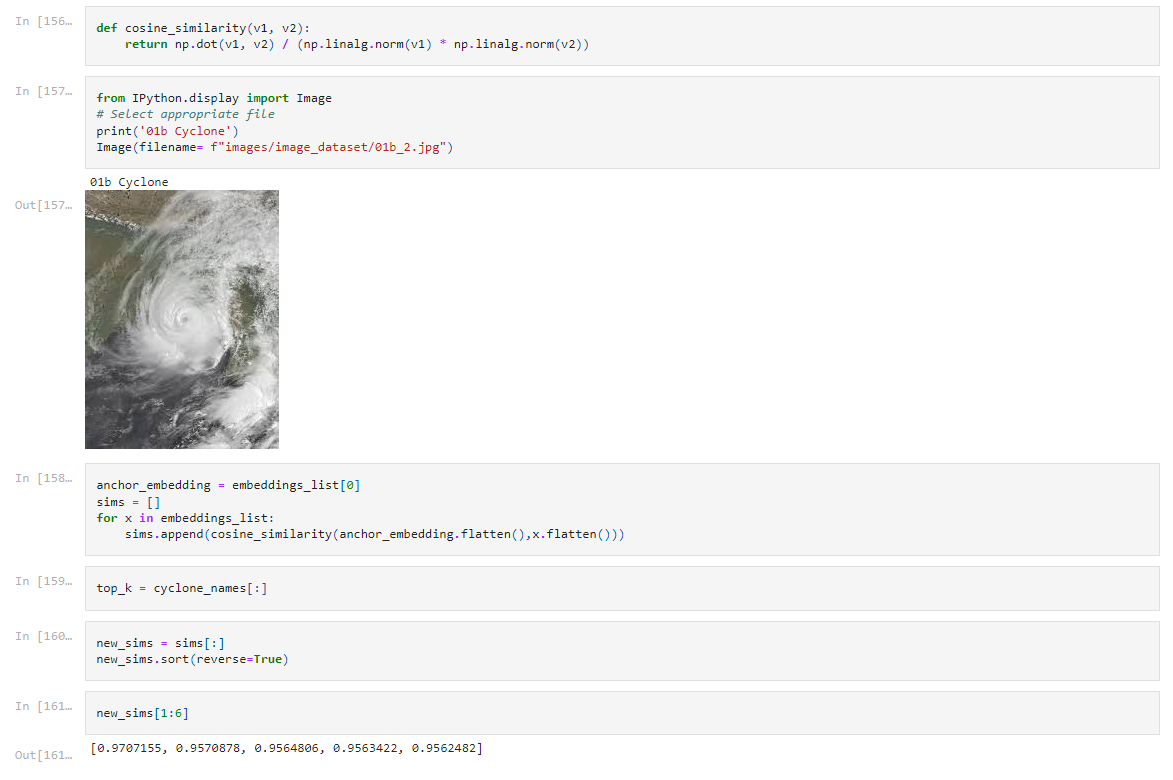
Find Vector Embeddings
-
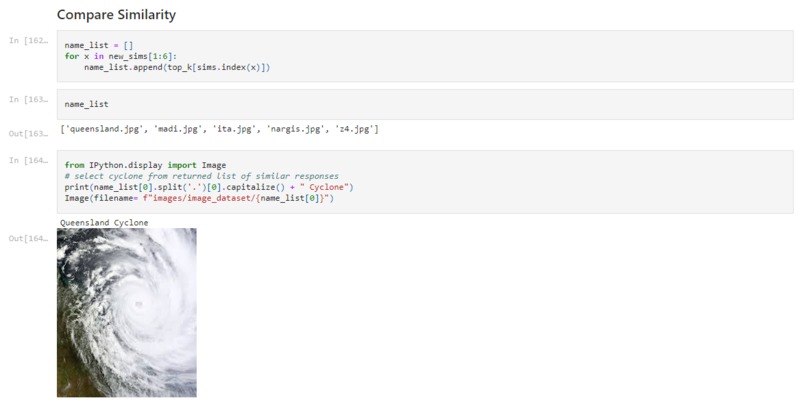
Compute Similarity
-
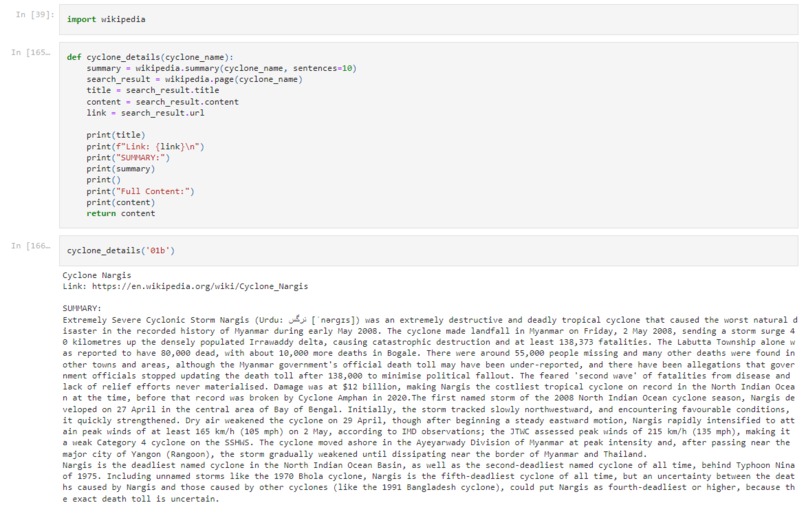
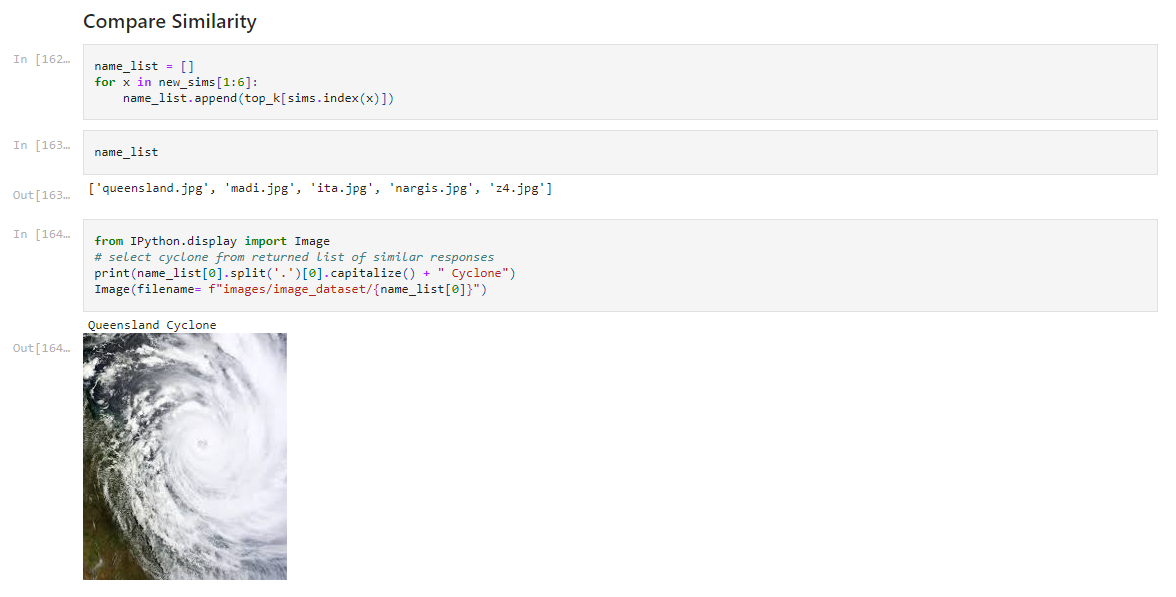
Info related to cyclone under inspection
-
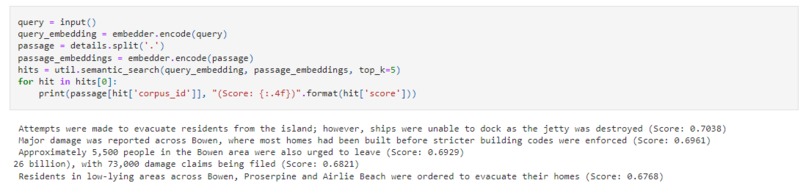
Semantic Similarity for important information retrieval
Inspiration
To come up with a novel approach for quick knowledge retrieval in the space of cyclones. Such a system could help people recognize patterns in cyclone occurrences and fetch relevant past cyclone data to combat new threats.
What it does
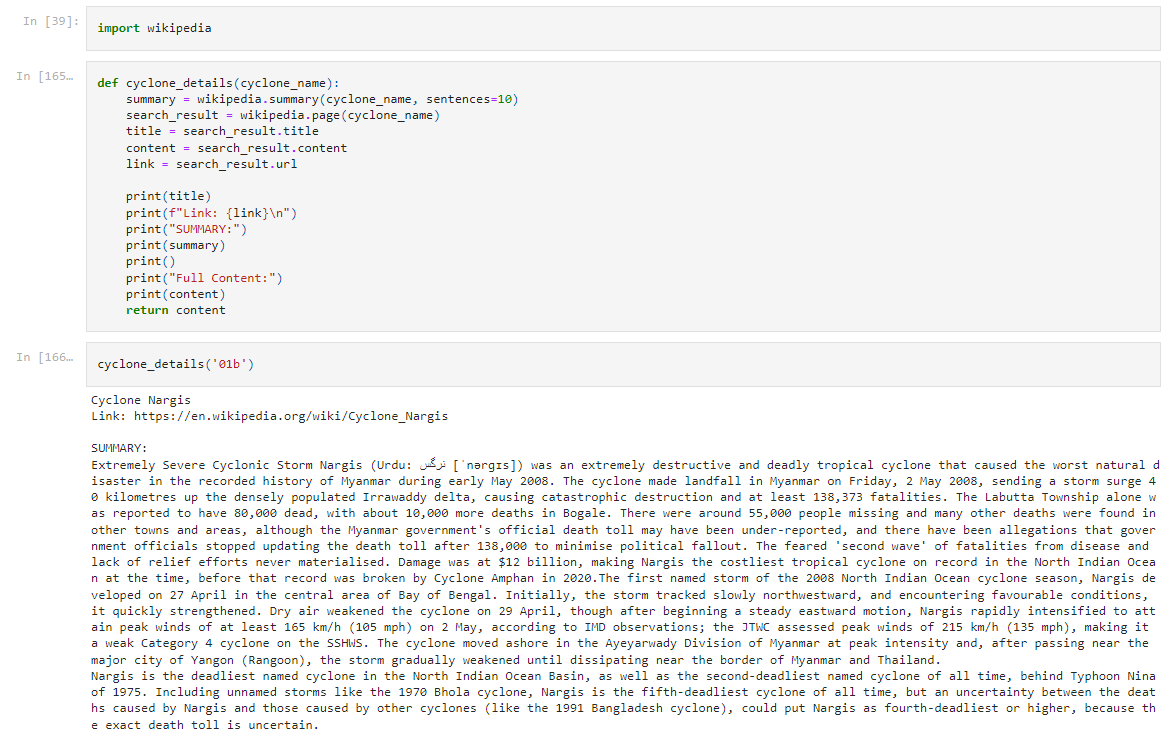
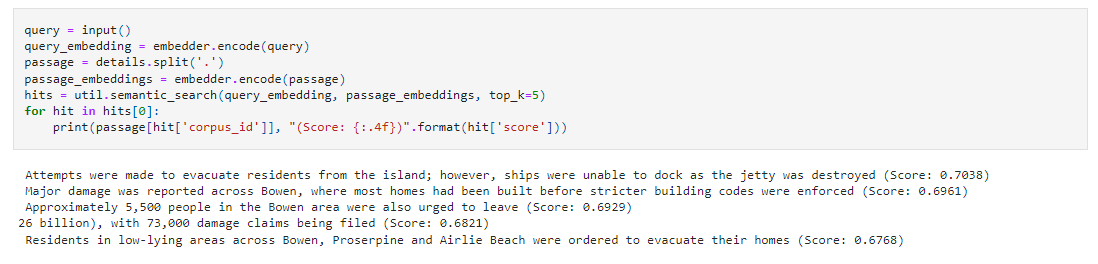
Given a cyclone image, it returns similar cyclones that occurred in the past. After finalizing the most similar cyclone, information related to that particular cyclone is retrieved. Using a natural language search technique called Semantic Search, we enable the user to query the information returned efficiently. This is effective and time-saving, as we are not performing lexical search like classical search engines but we are instead interested in the intent of the query.
How we built it
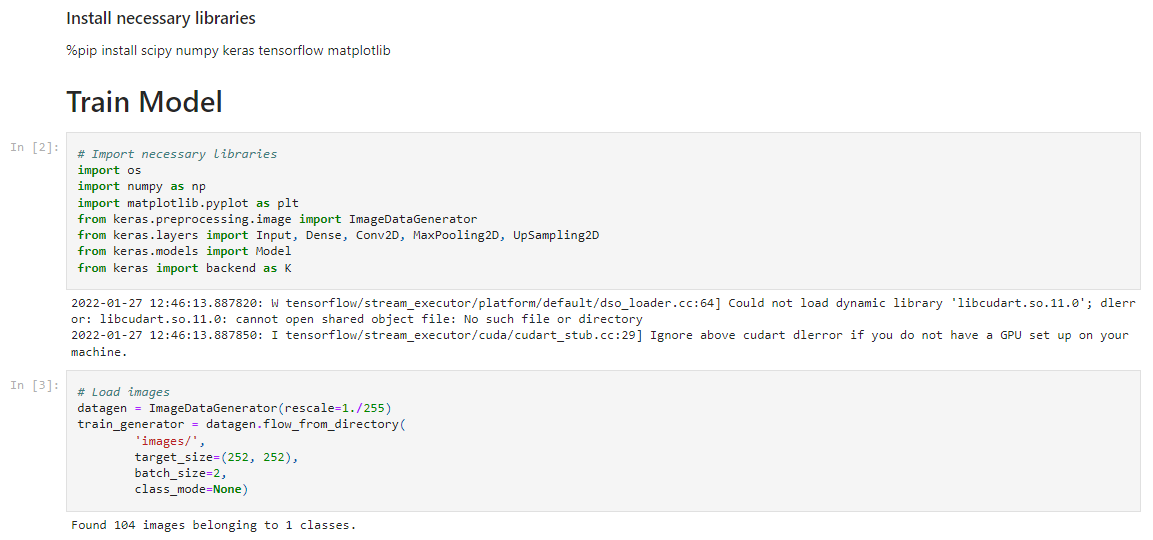
We trained a convolutional autoencoder model using Keras. The encoder is saved separately and used in the following phases to generate embeddings. Later, Cosine Similarity measure is used to compute similarities. A pre-trained NLP model called SBERT is used for Semantic Search on information retrieved from sources like Wikipedia.
Challenges we ran into
Carefully curating dataset and labelling cyclone names to ensure that only good data is fed into the model.
Accomplishments that we're proud of
Proud that I could build an application that could potentially serve a great cause.
What we learned
Using SageMaker Studio Lab was extremely easy and smooth. The feature I loved the most was persistent storage and this increased my productivity a lot. Thanks to it, I did not have to load the trained models and entire dataset, every time I came back to use the notebook. The huge set of resources to get started with SageMaker Studio lab was also helpful in getting used to the platform.
Also learned about technologies like vector search, embeddings and training deep learning models.
What's next for Cyclone Search
Collecting more cyclone data to enhance the accuracy of the Deep Learning Model.

Log in or sign up for Devpost to join the conversation.