-
-
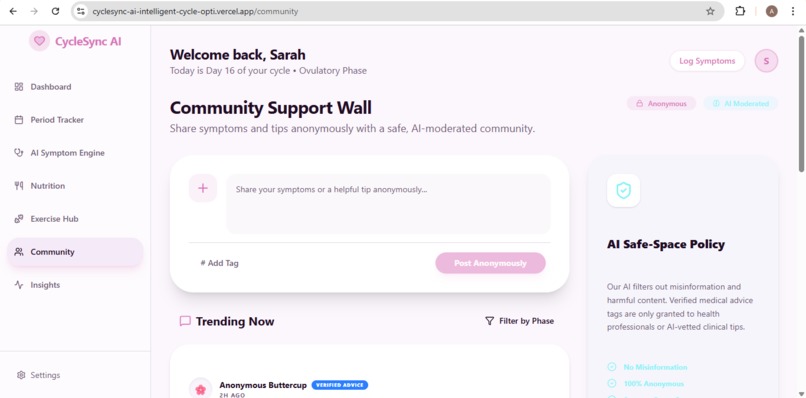
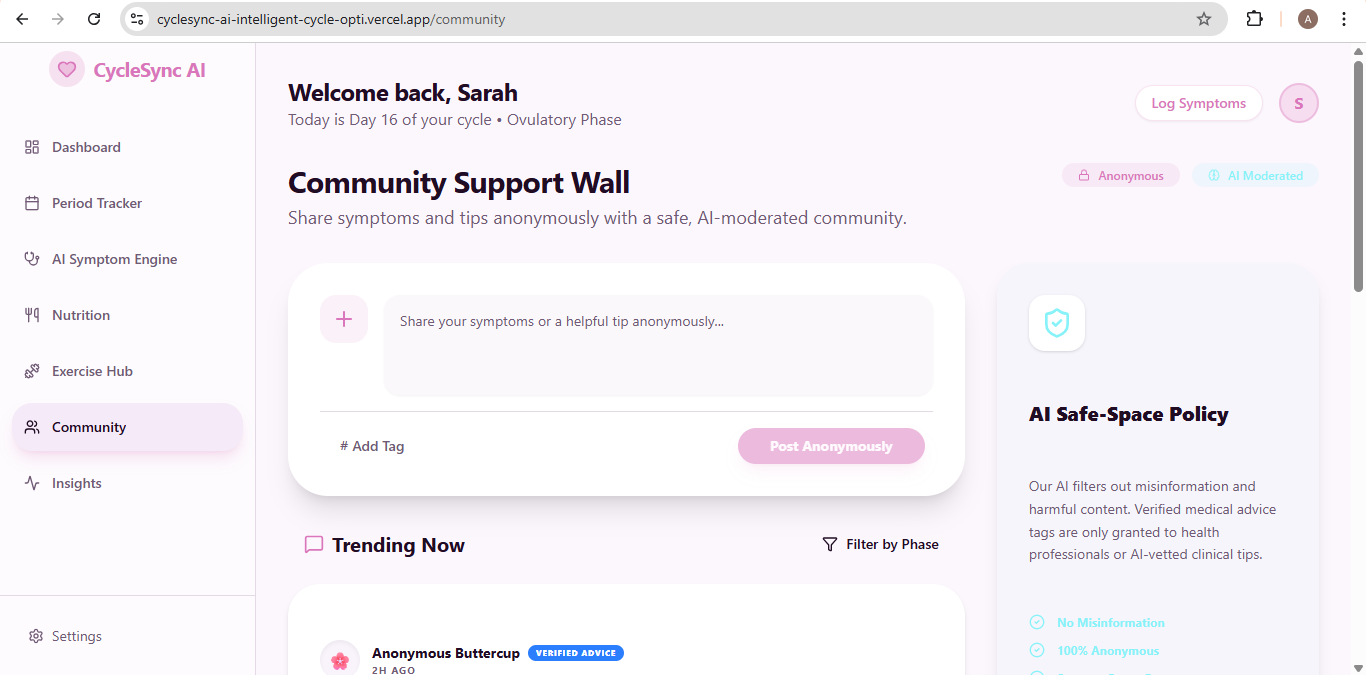
Supportive Community
-
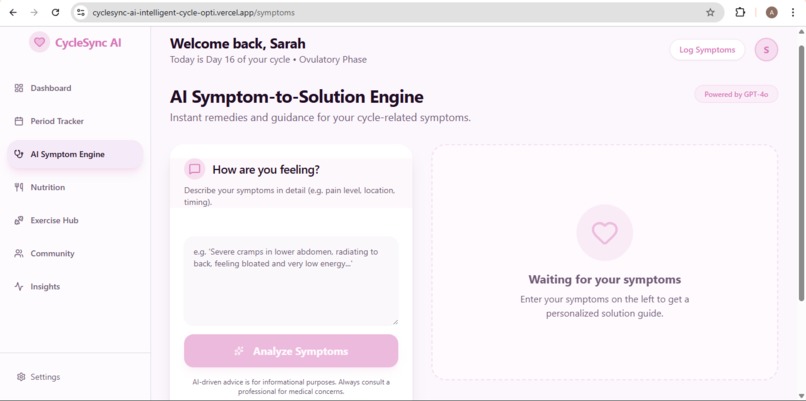
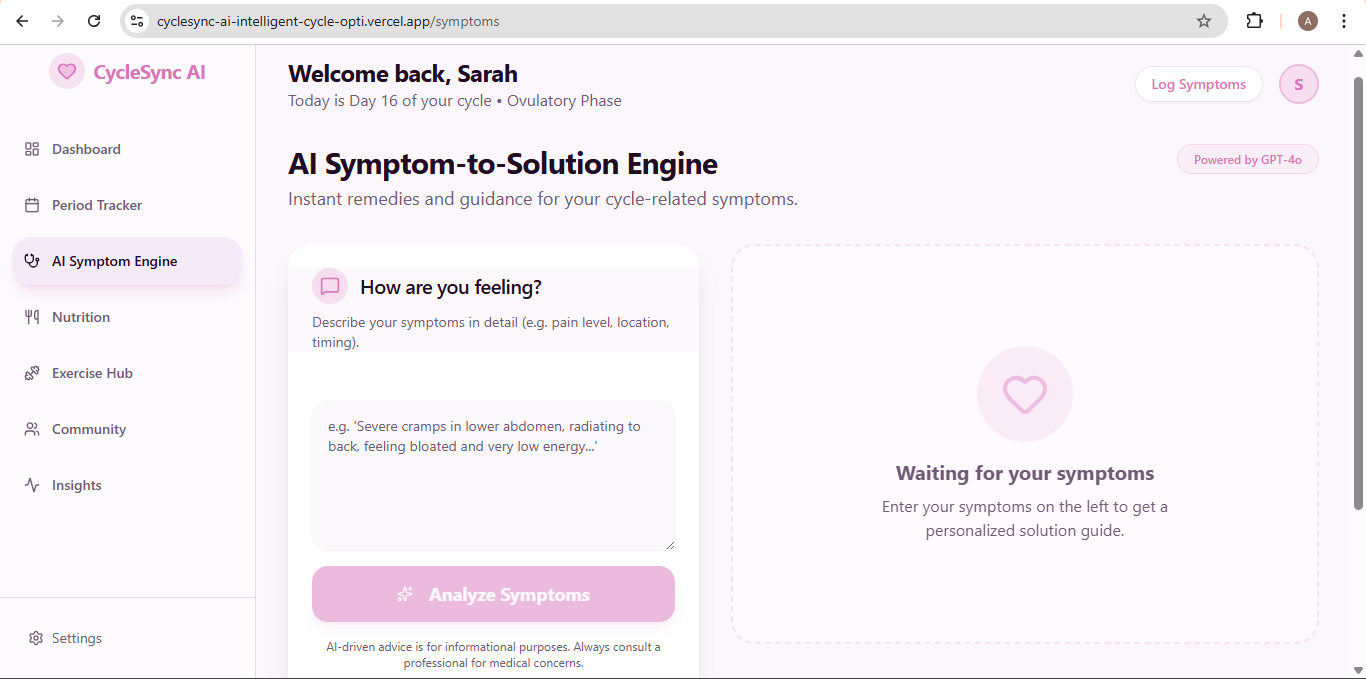
AI Symptom Analyzer
-
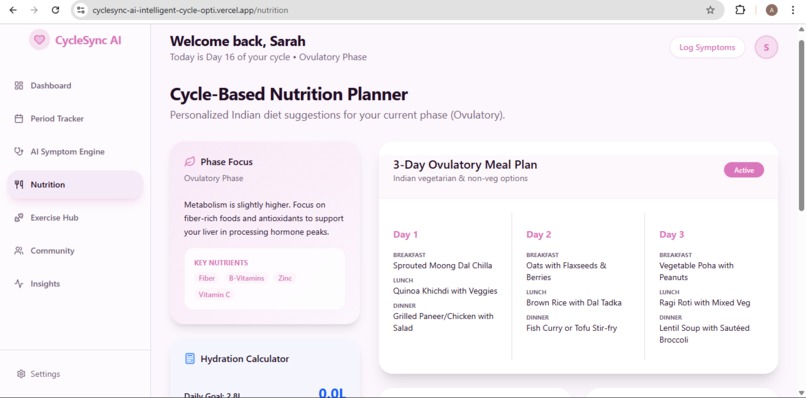
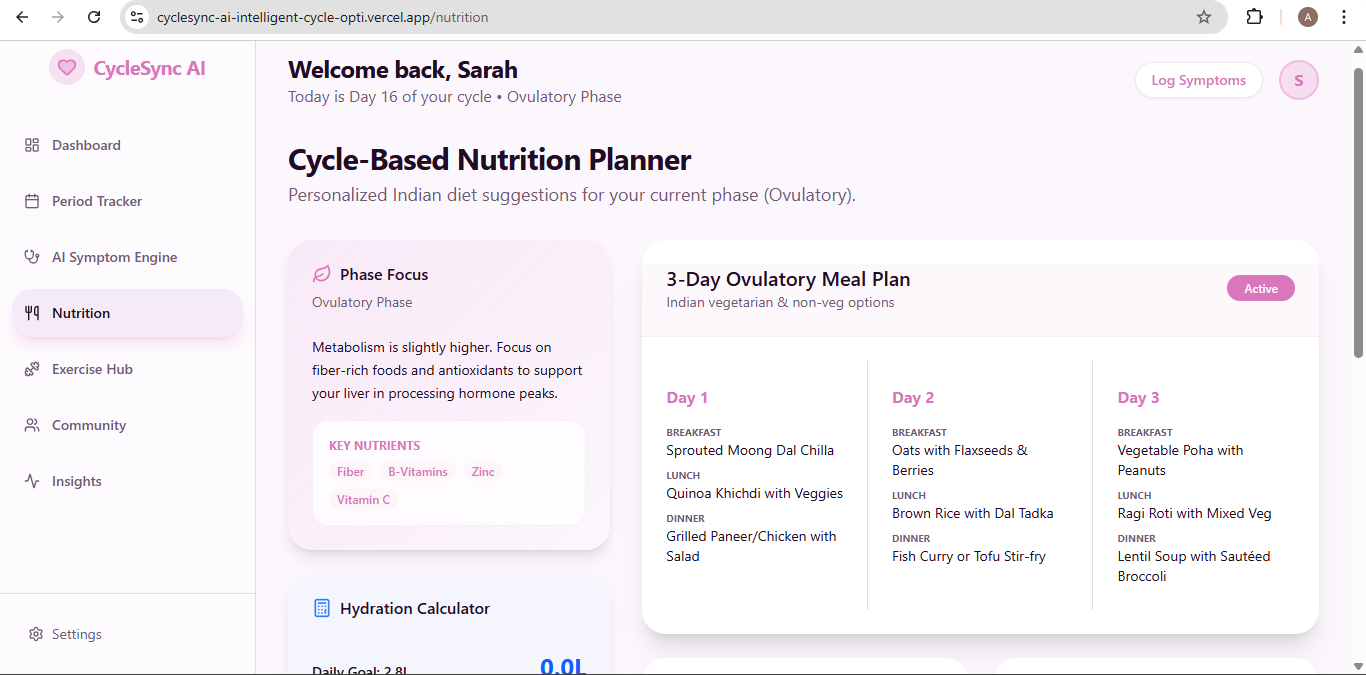
Personalized Diet Plan
-
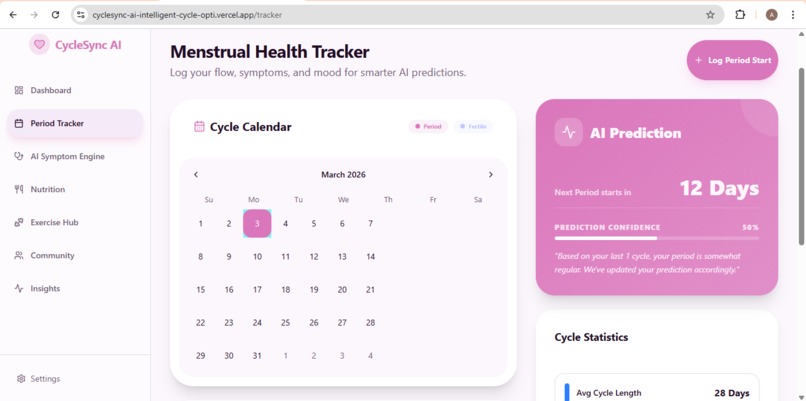
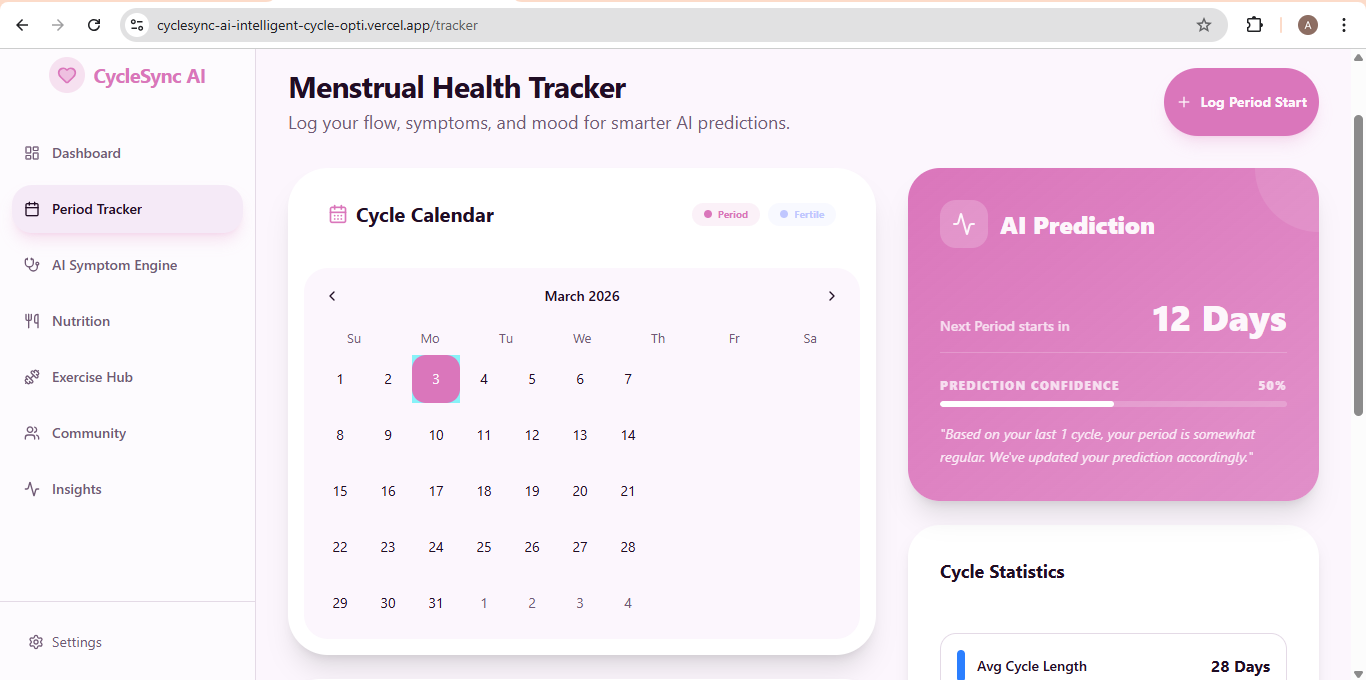
Menstrual Tracker
-
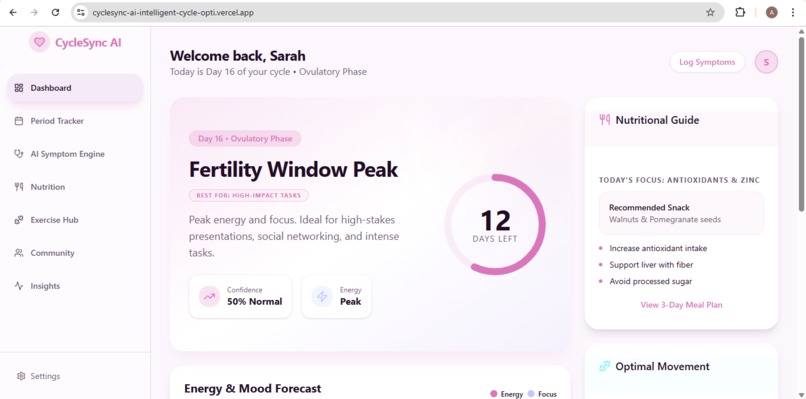
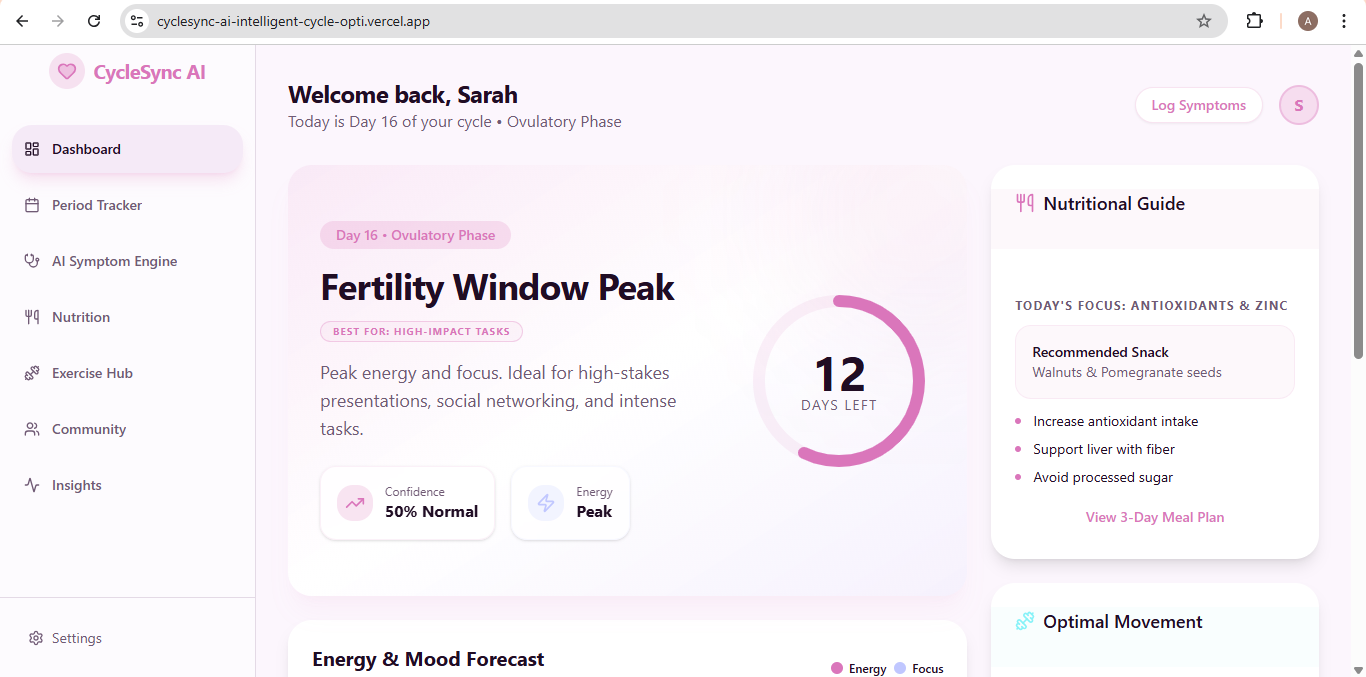
Dashboard
Inspiration
Menstrual health is still managed largely through guesswork. While apps like Flo and Clue provide tracking, they stop at data logging rather than delivering actionable intelligence.
We realized that women don’t just need to know when their period is coming — they need to know: What to eat? How to reduce cramps? When to schedule demanding tasks? When a symptom is normal vs concerning? CycleSync was built to transform menstrual tracking into a predictive, AI-powered decision support system. Our goal was to create a privacy-first, intelligent companion that converts cycle data into meaningful daily guidance.
What it does
CycleSync is an AI-powered menstrual intelligence web app that goes beyond tracking. It:
Predicts menstrual cycles using adaptive learning
Detects irregularities and flags potential health concerns
Converts symptoms into instant remedy recommendations
Generates personalized diet plans based on cycle phase
Suggests cramp-relief exercises categorized by severity
Aligns productivity and energy planning with hormonal phases
Provides mood and energy forecasts
Maintains a privacy-first, secure architecture Instead of just tracking cycles, CycleSync turns hormonal patterns into actionable insights.
How we built it
We designed CycleSync as a full-stack AI-powered web application. Frontend: React for dynamic UI Tailwind CSS for responsive, accessible design Data visualization using chart libraries for cycle graphs Backend: FastAPI / Node.js for scalable API architecture PostgreSQL for structured cycle data storage AI Layer Adaptive cycle prediction model based on historical averages and variance Rule-based health safety engine for abnormal symptom detection
NLP-based symptom interpreter to convert user inputs into actionable outputs
Recommendation engine for nutrition, hydration, and exercise We focused on modular architecture so the AI layer can scale independently.
Challenges we ran into
- Designing medically safe recommendations without being alarmist
- Handling irregular cycle predictions with limited training data
- Avoiding misinformation in health advice
- Balancing personalization with privacy
- Creating an AI system that adapts without overfitting small datasets Ensuring ethical and responsible health guidance was our biggest technical and design challenge.
Accomplishments that we're proud of
- Built a working adaptive cycle prediction engine
- Developed a symptom-to-solution AI assistant
- Integrated productivity alignment with hormonal phases
- Designed culturally relevant nutrition recommendations
- Implemented privacy-first architecture Most importantly, we transformed menstrual tracking into an intelligent decision-support system
What we learned
- Menstrual health needs contextual intelligence, not just tracking.
- AI in health-tech requires safety guardrails and clear limitations.
- Personalization significantly improves engagement.
- Even small structured datasets can produce meaningful predictive insights. We also learned the importance of designing with empathy in health-focused products.
What's next for CycleSync
Our roadmap includes:
- PCOS and anemia risk scoring
- Integration with wearable devices
- Doctor consultation integration
- Multilingual support
- Mobile app deployment
- Advanced AI-generated health reports for medical professionals
- Community support with misinformation filtering Our long-term vision is to build a comprehensive AI-powered menstrual health ecosystem that is accessible, intelligent, and stigma-free.
Built With
- chart.js
- css3
- html
- javascript
- react
- tailwindcss
- vite

Log in or sign up for Devpost to join the conversation.