
Inspiration
Cybersecurity can be difficult for small businesses and teams that do not have dedicated security personnel. Security findings can become scattered across different tools, while understanding risk, tracking remediation, monitoring changes, and communicating results can require significant technical effort.
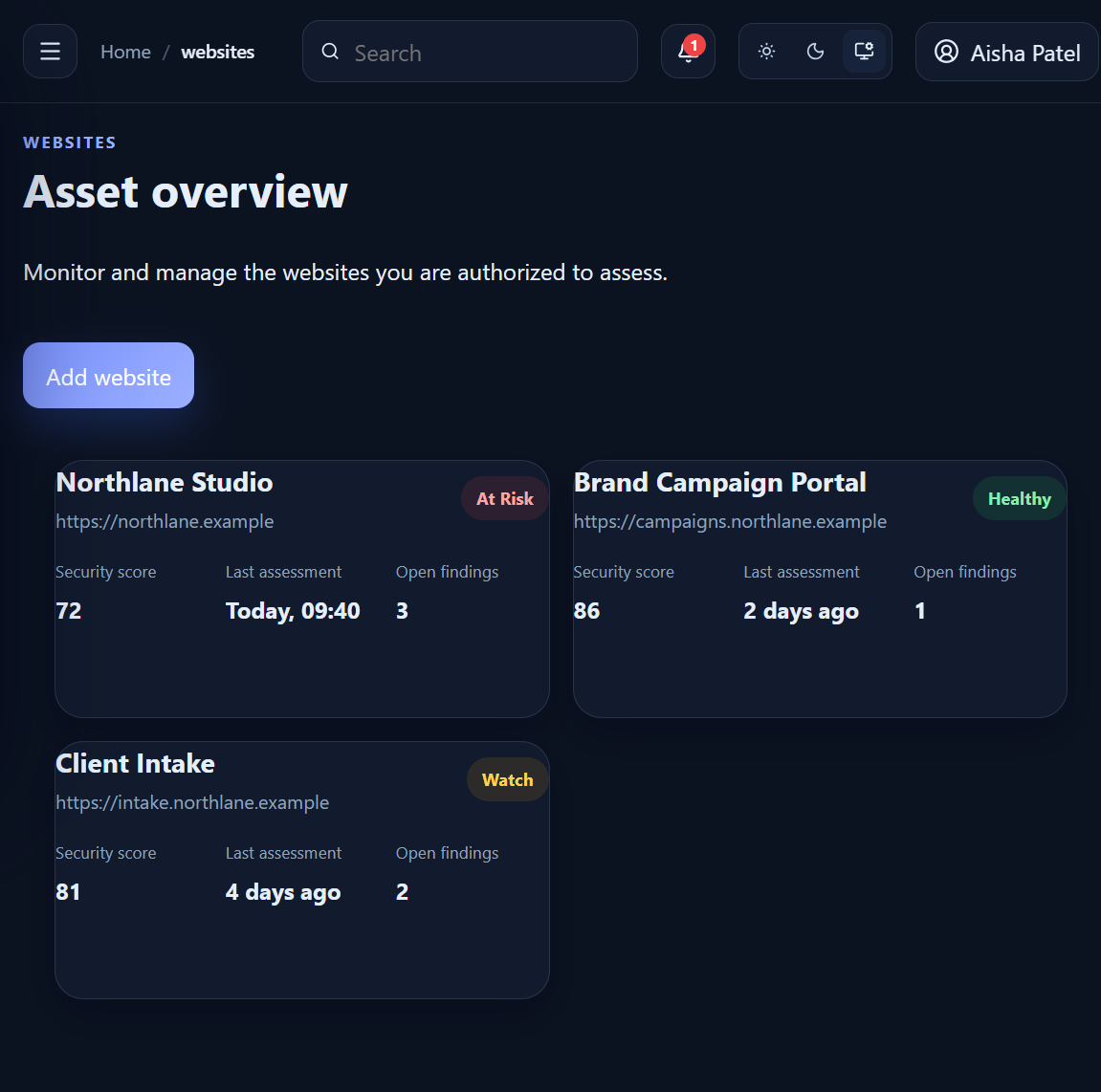
We built CyberShield to bring these activities into one security-focused platform. The goal was to create a practical workflow where a business can add a website, run security assessments, review findings, understand risk, track remediation, monitor security posture, and generate reports from a single interface.
What We Built
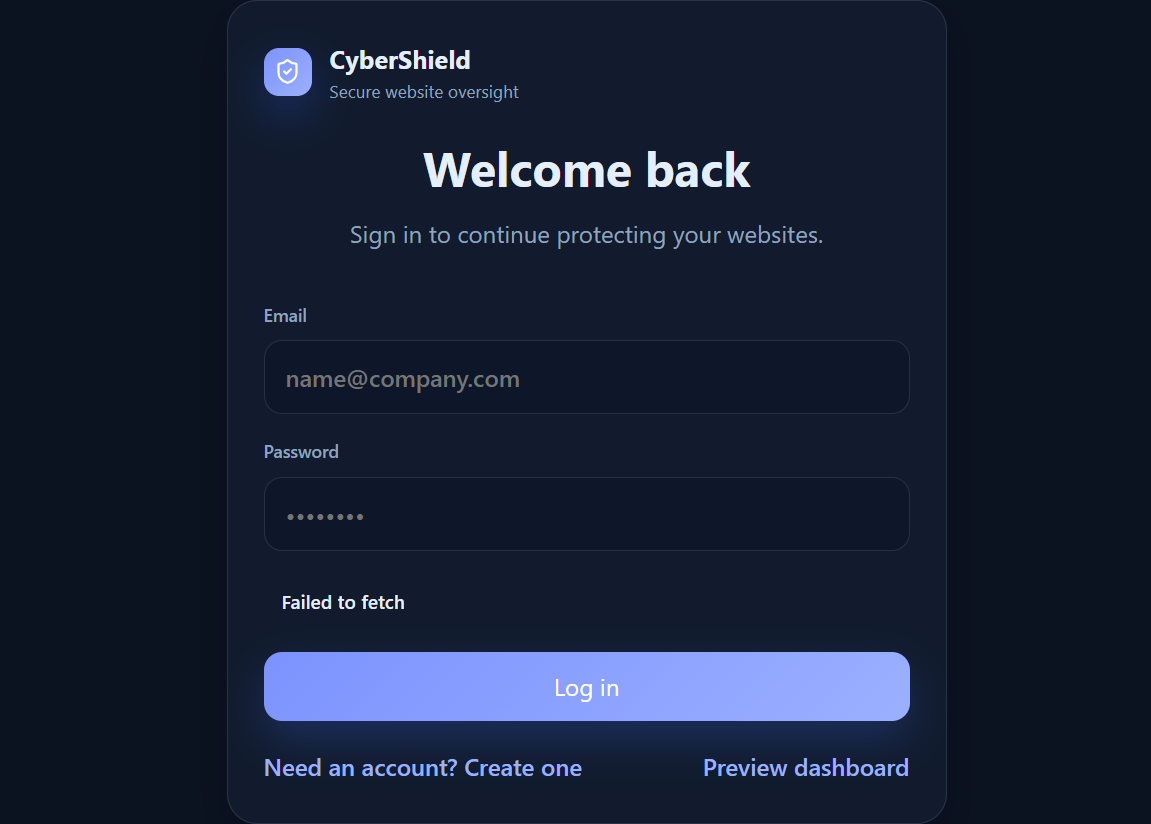
CyberShield is a full-stack web security platform built around a centralized security workflow.
The platform includes:
- Website and business onboarding
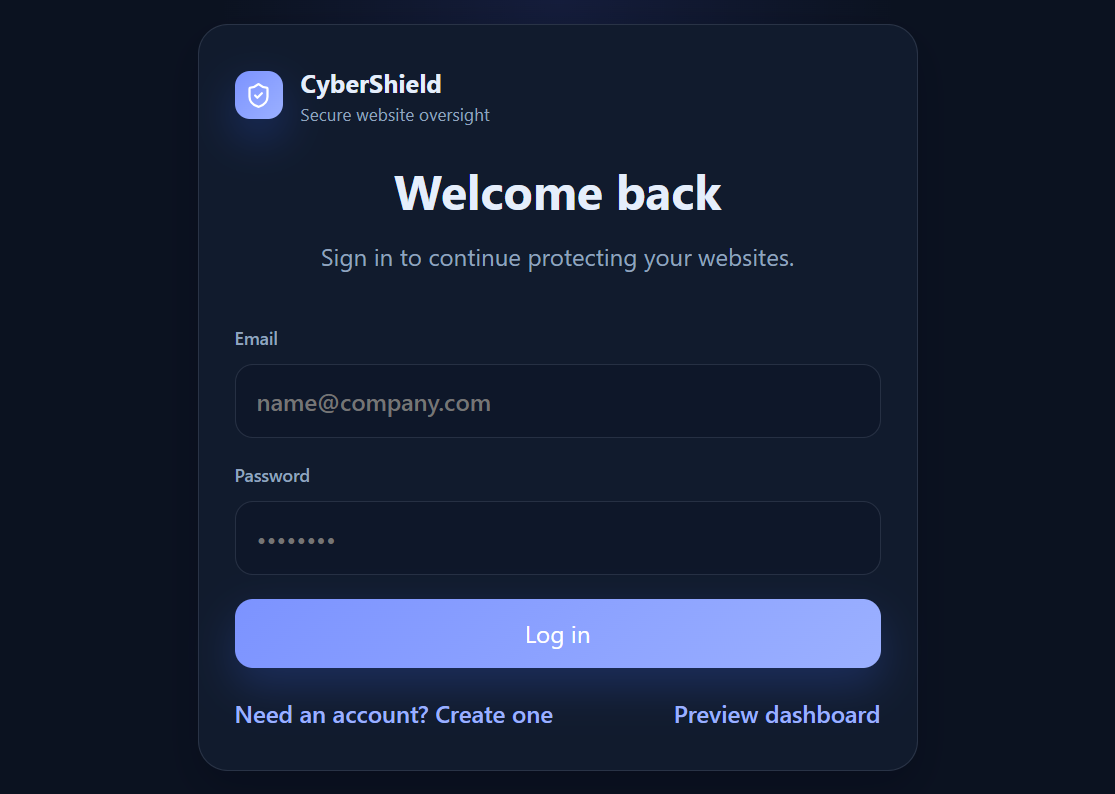
- Authentication and owner-scoped authorization
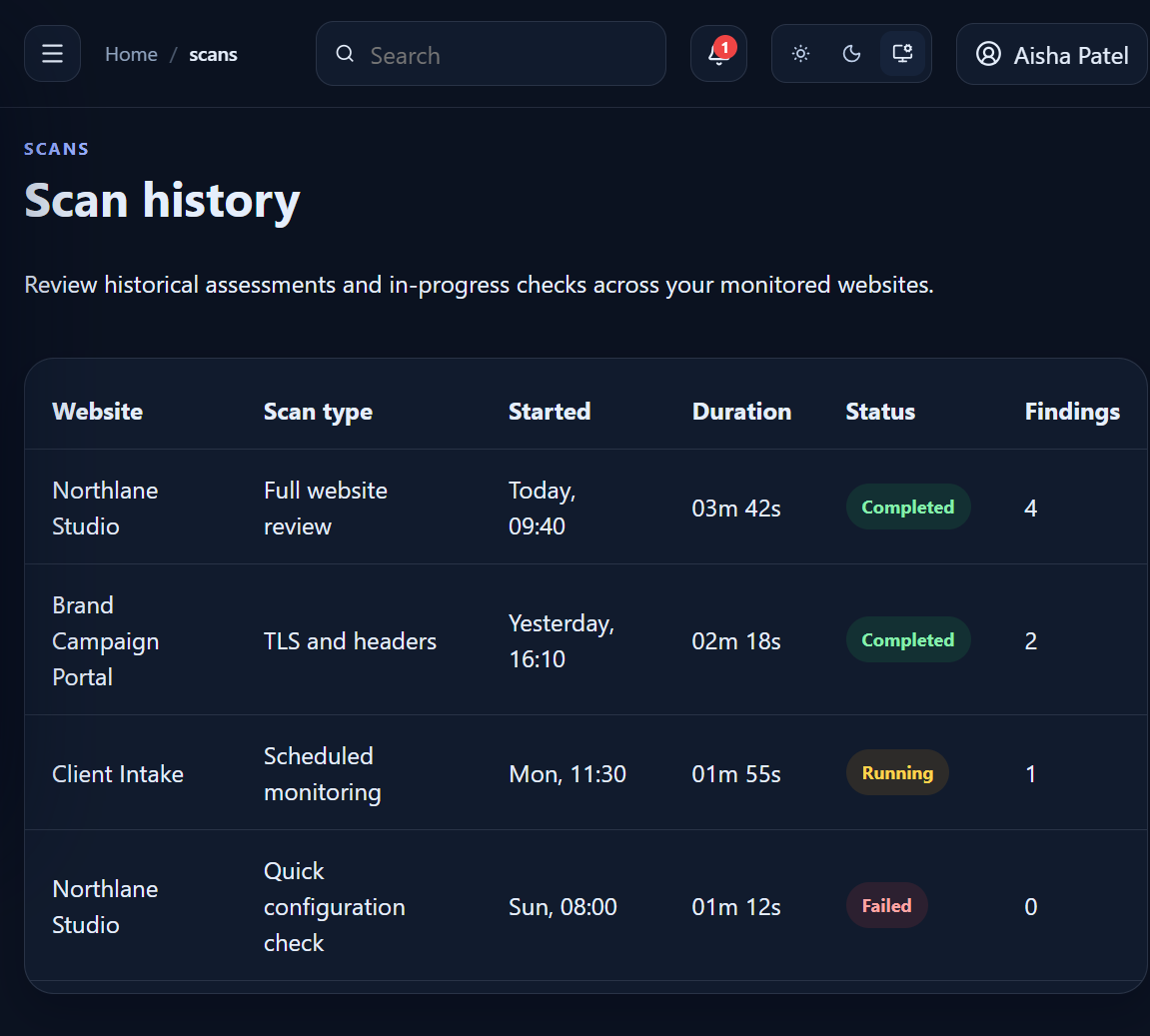
- Web security scanning and scan lifecycle management
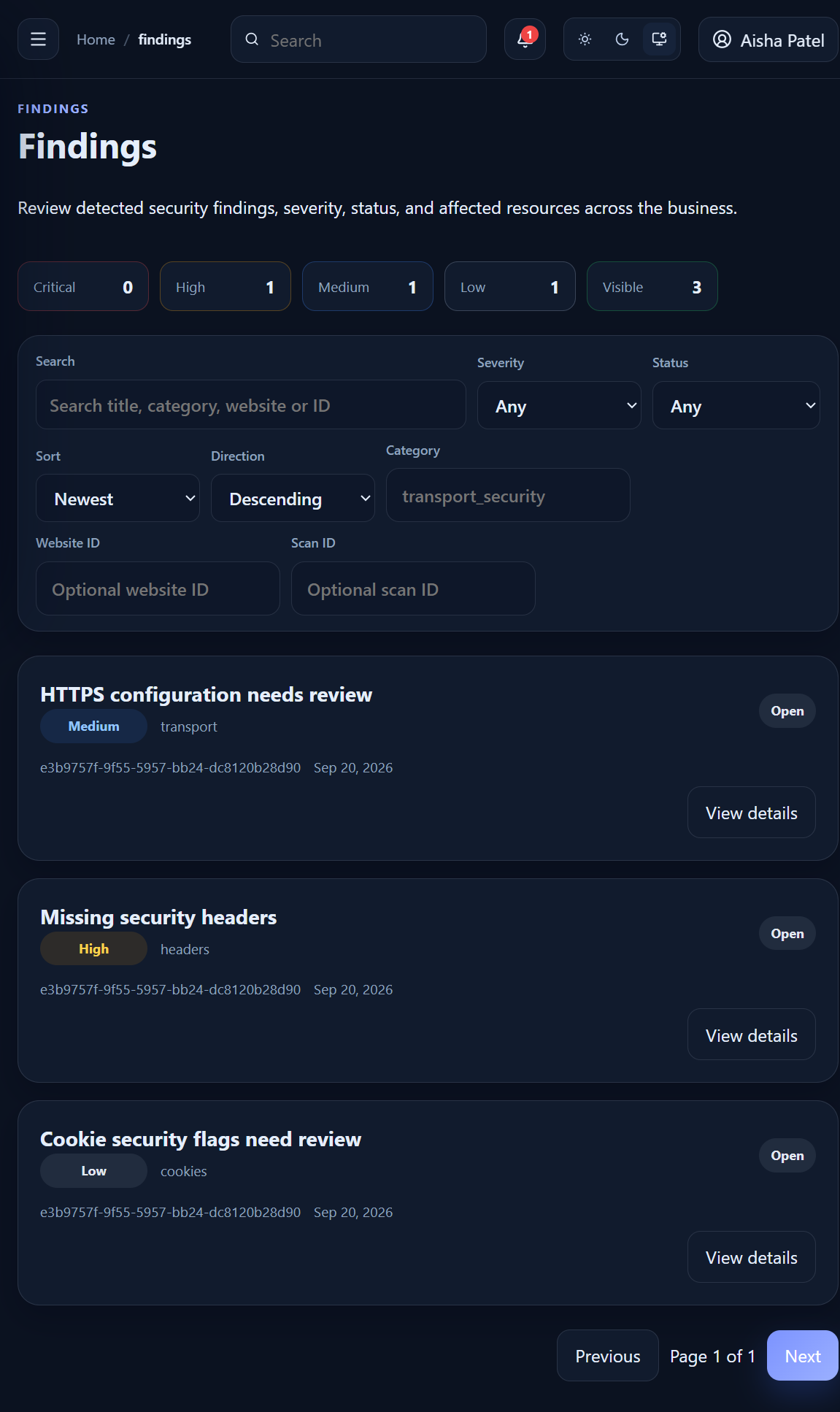
- Finding detection, deduplication, categorization, and severity handling
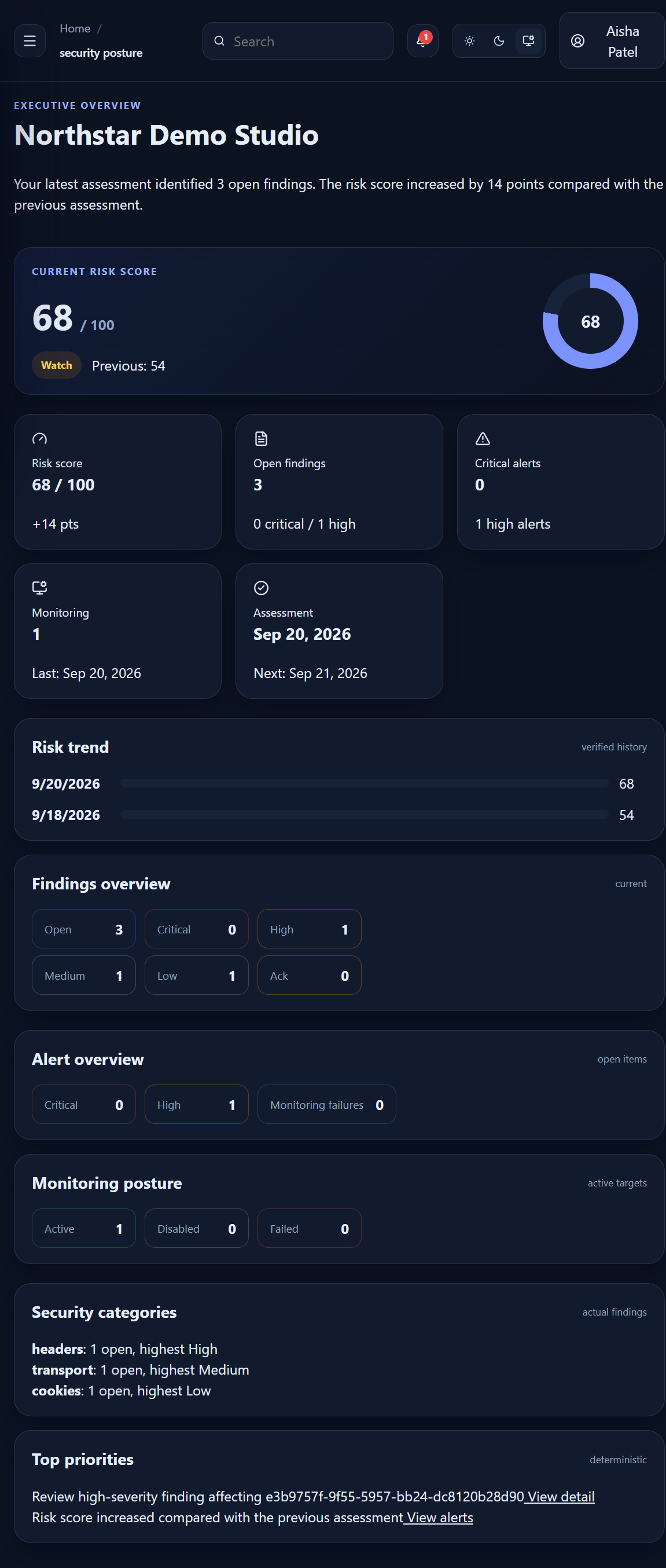
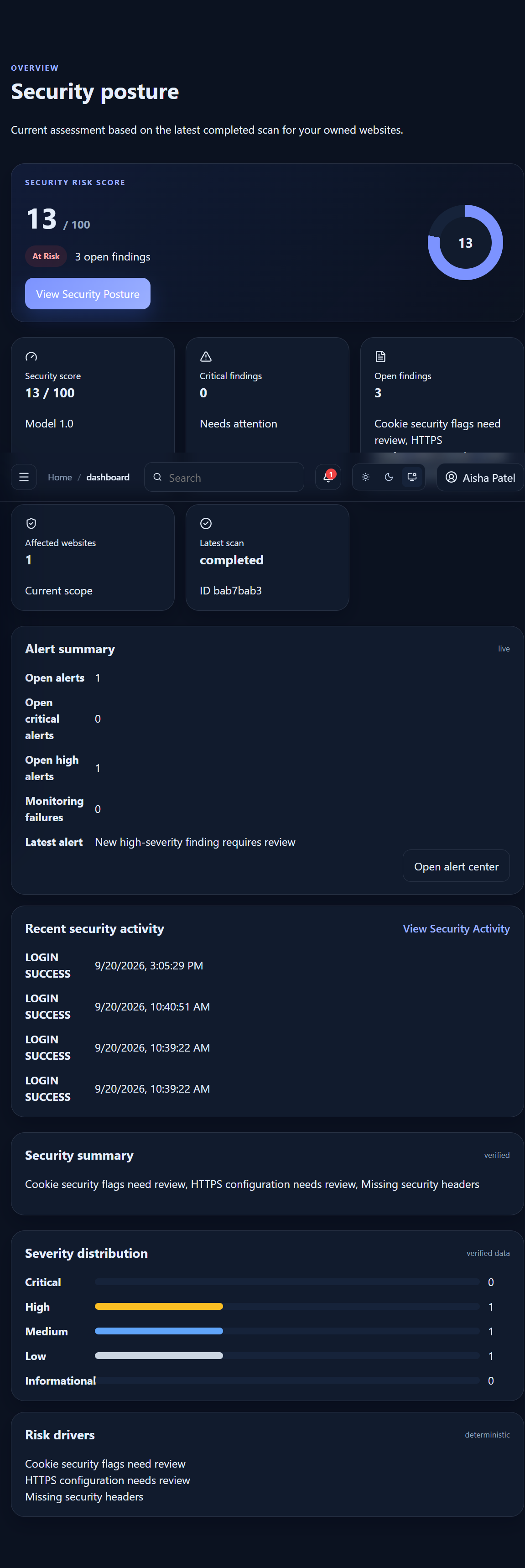
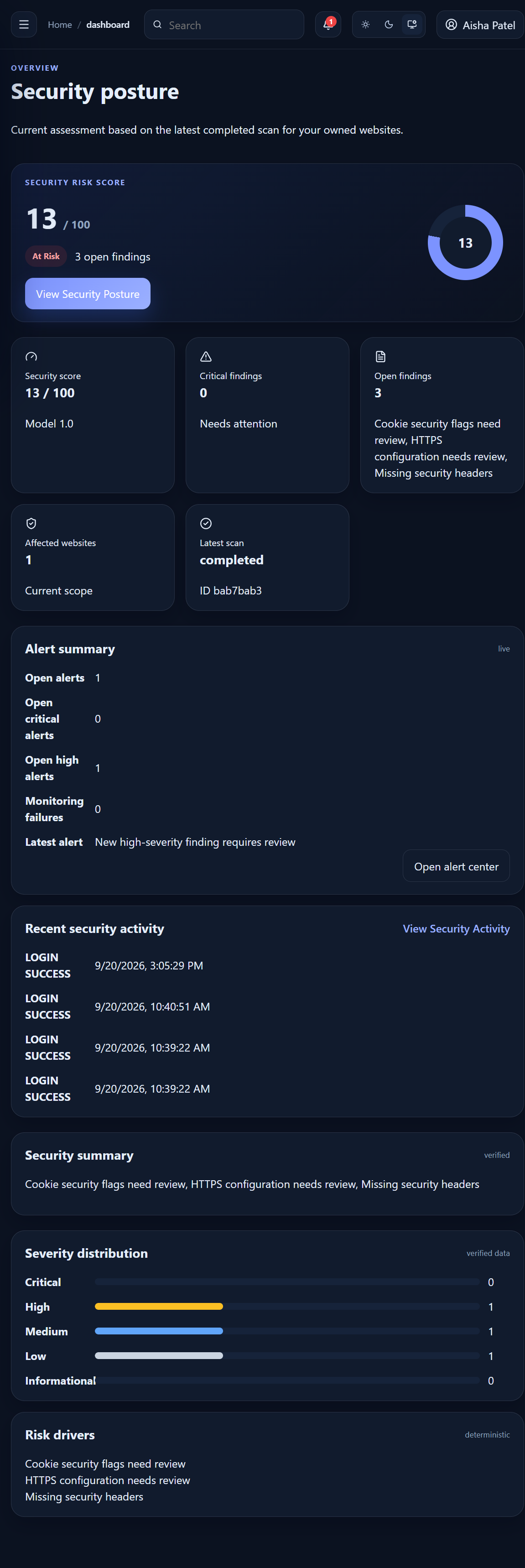
- Risk scoring and security posture views
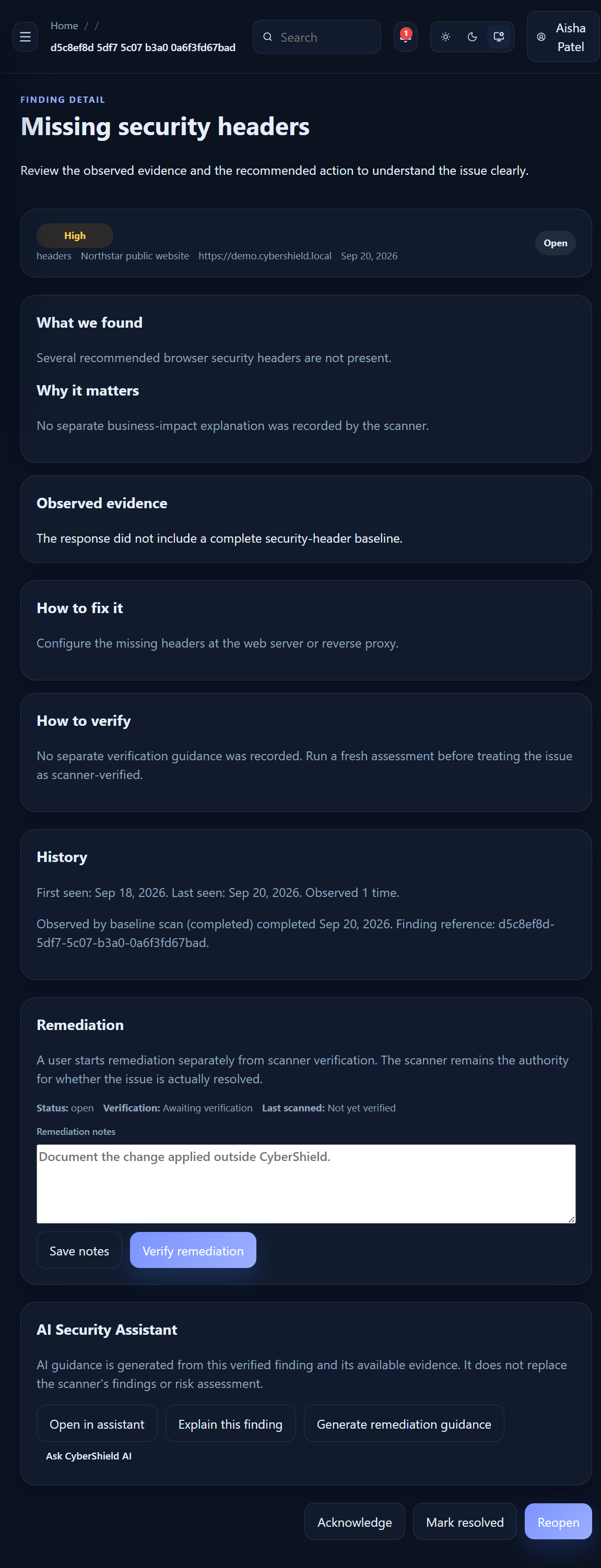
- Finding details and remediation tracking
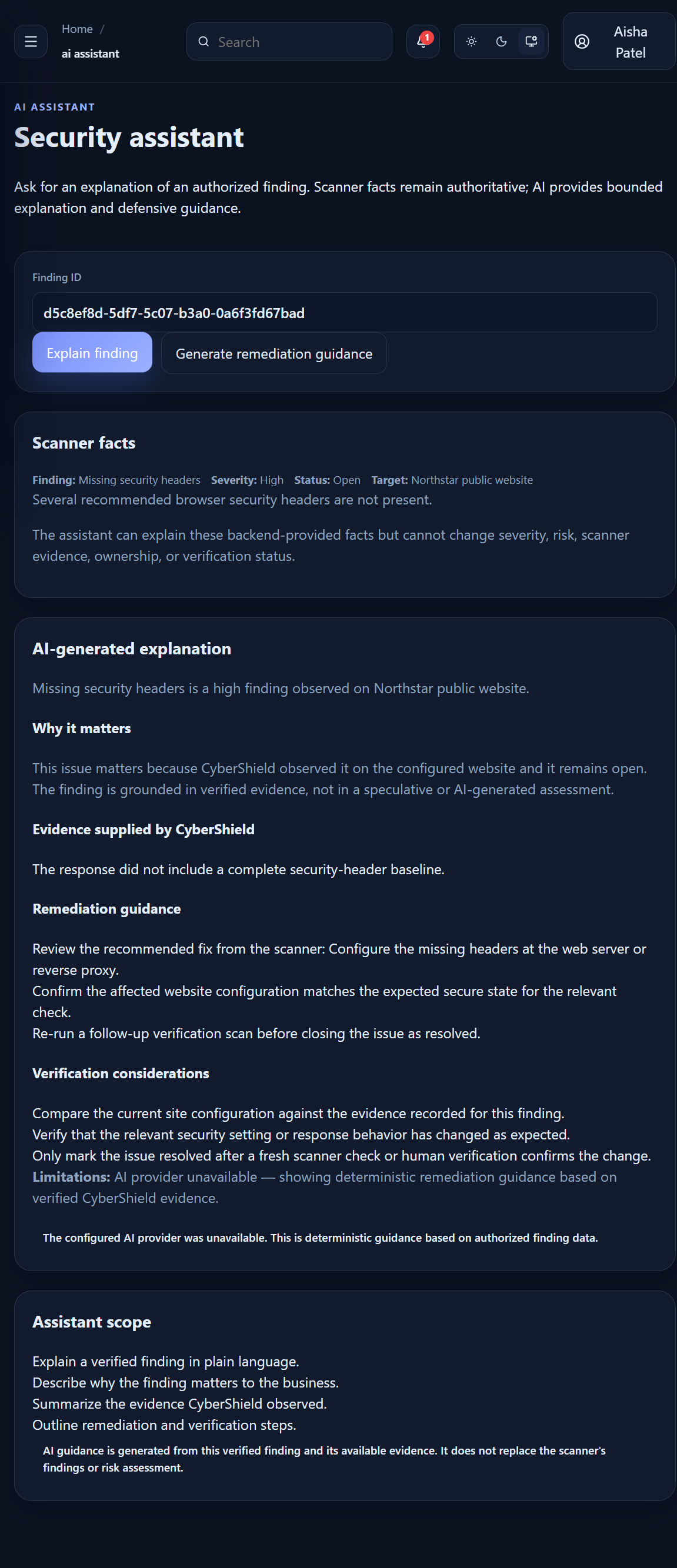
- AI-assisted security analysis with security-conscious input handling
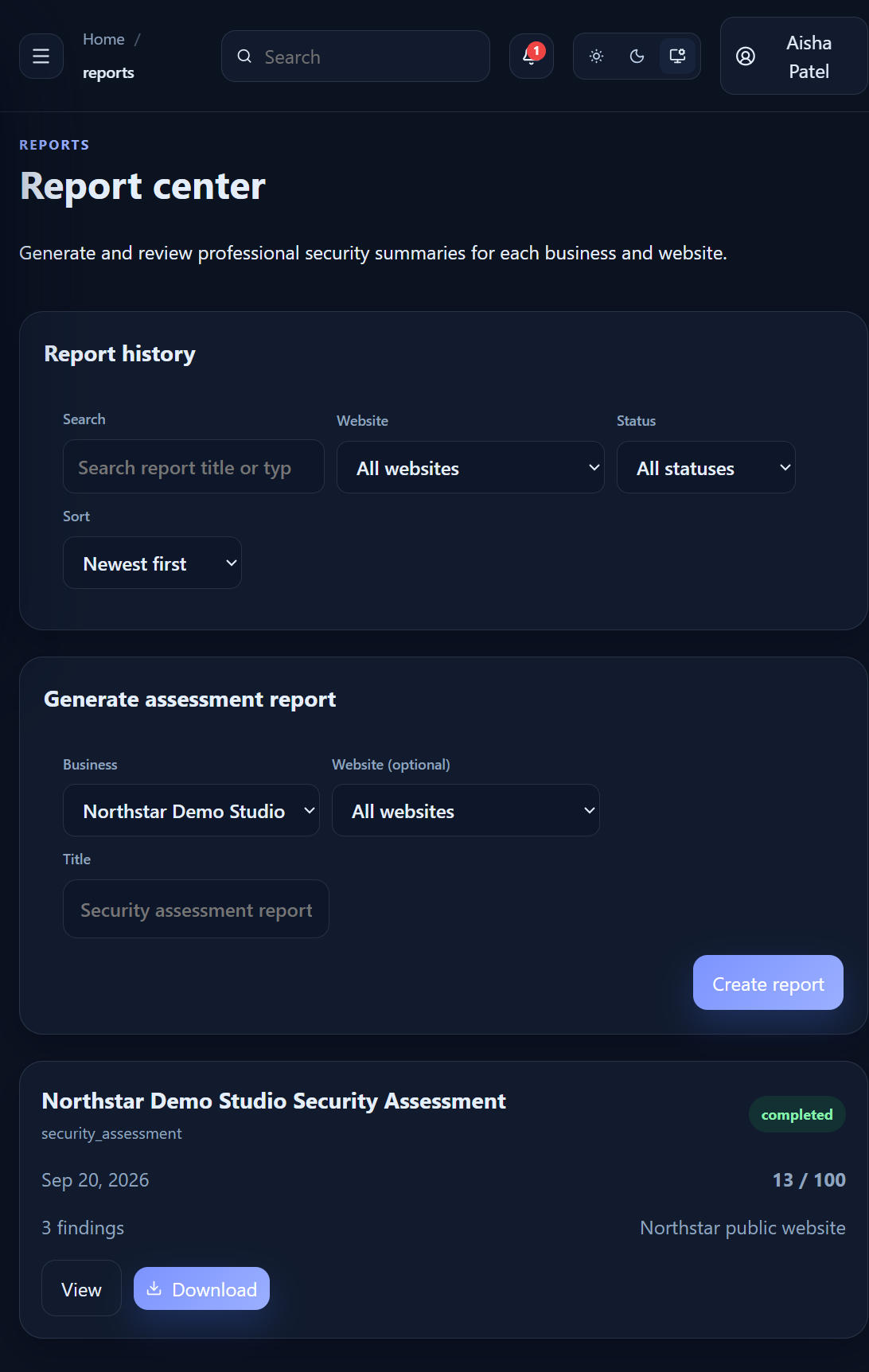
- Security assessment reports and report management
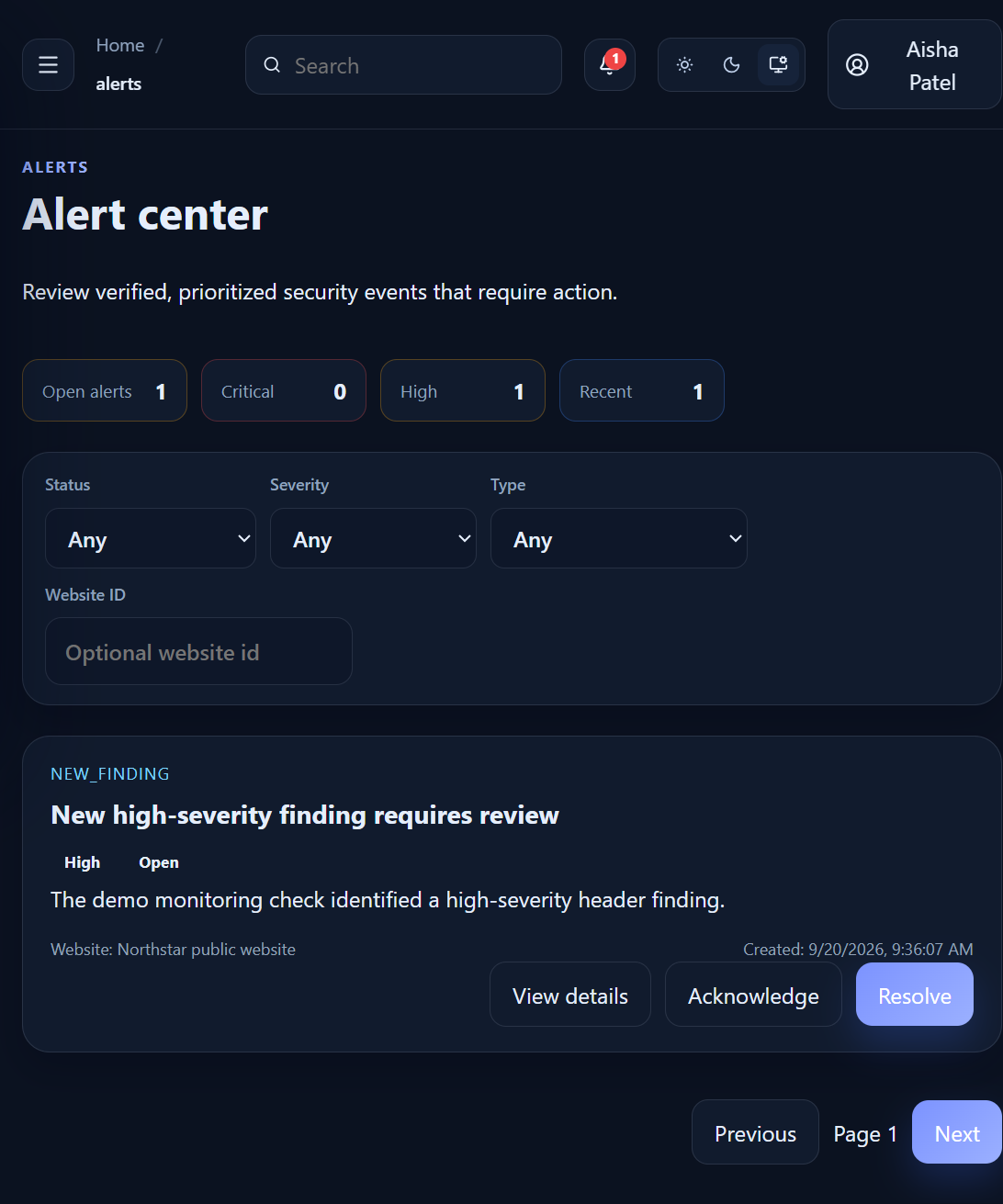
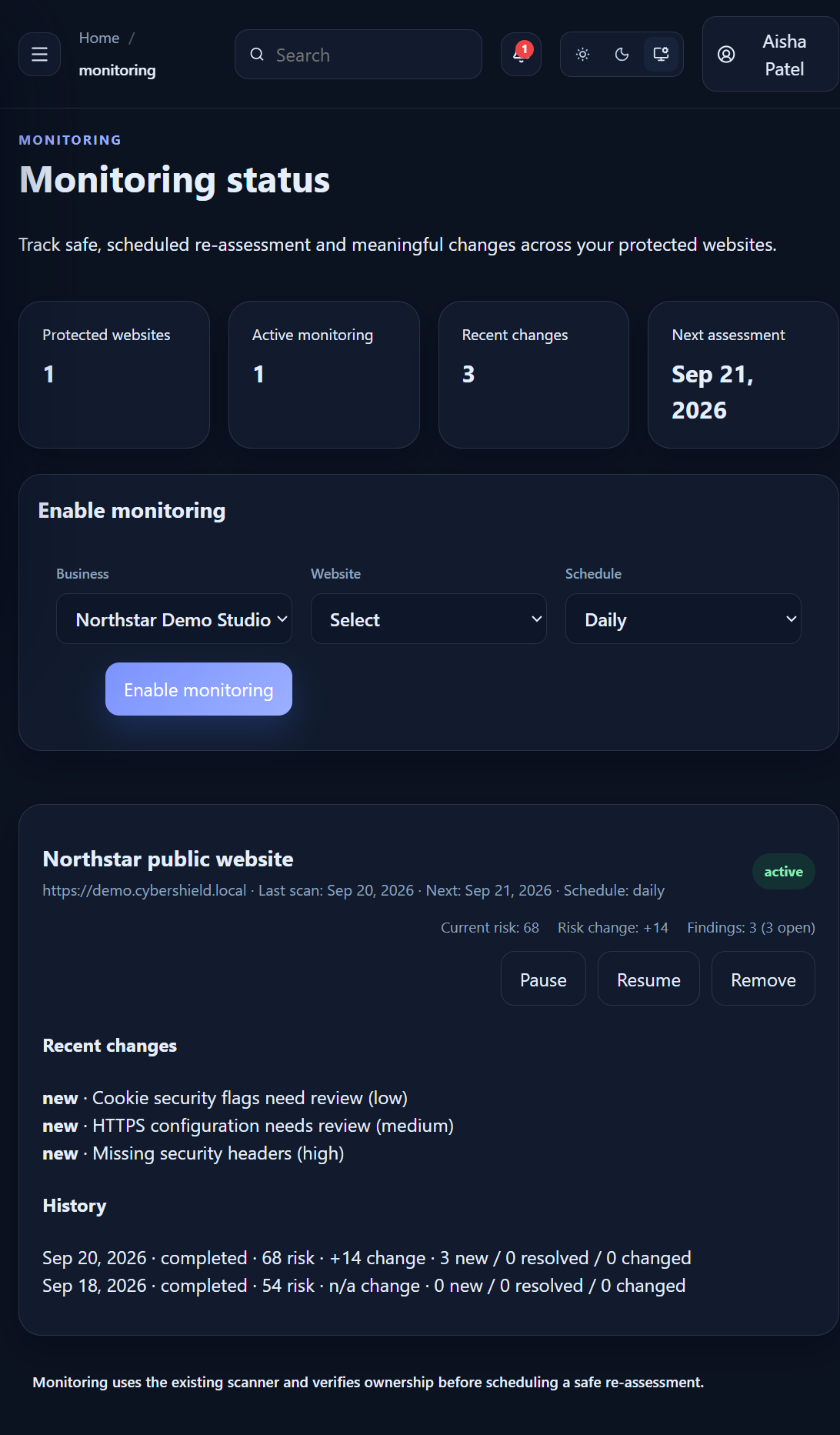
- Continuous monitoring and alerting
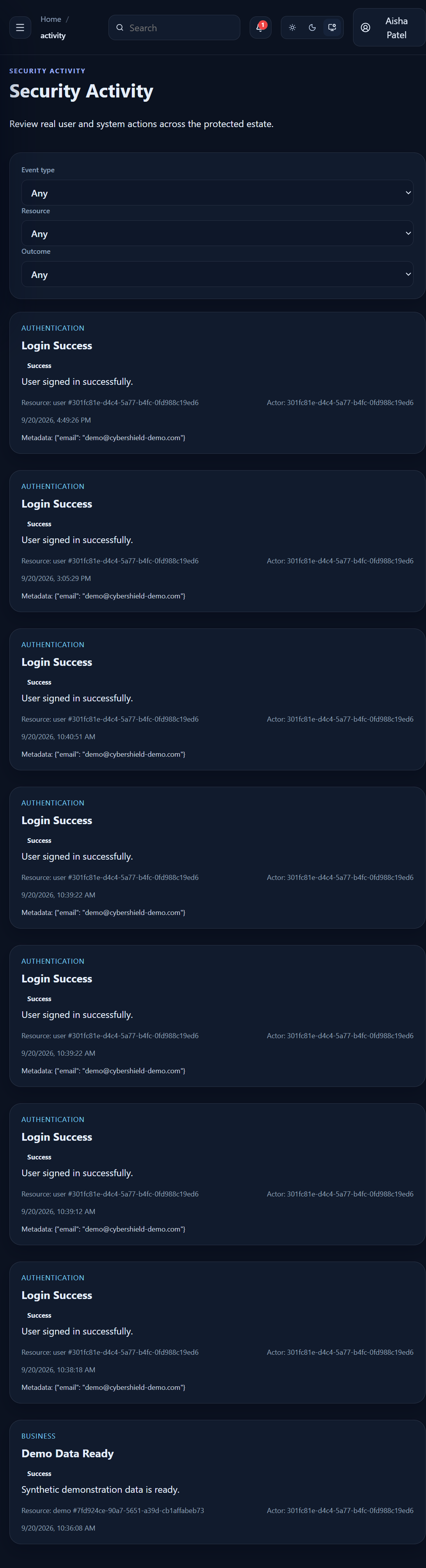
- Security activity and audit logging
- Security headers, protected API endpoints, validation, and sanitized error handling
- Production-oriented configuration and deployment readiness
The frontend was built with React, TypeScript, and Vite, while the backend uses FastAPI, Python, SQLAlchemy, and Alembic. The application uses a relational database and a REST API architecture with JWT-based authentication.
How We Built It
We developed CyberShield incrementally, starting with the product architecture and security model before implementing the user interface and backend services.
The development process covered the complete product lifecycle:
- Defined the problem, target users, product scope, and architecture.
- Designed the application experience and security-focused dashboard.
- Built the FastAPI backend and React frontend foundations.
- Implemented authentication and authorization.
- Developed the database and core business entities.
- Built the scanning, findings, risk, monitoring, alerting, reporting, and AI-assisted workflows.
- Added security hardening, audit logging, ownership enforcement, validation, and production-oriented configuration.
- Performed backend regression testing, frontend type checking, linting, and production builds.
- Validated API behavior, authentication enforcement, security headers, CORS, database integrity, and frontend integration.
- Prepared an isolated, controlled demo environment and captured genuine browser evidence for the final product workflow.
What We Learned
One of the biggest lessons was that building a cybersecurity product requires more than implementing individual security features. The surrounding engineering controls are equally important.
We learned how to:
- Design security workflows around real business entities and ownership boundaries.
- Build APIs with authentication and authorization as first-class requirements.
- Structure findings and risk information so that technical security data can become actionable.
- Handle database schema evolution and migration drift safely.
- Validate security controls independently instead of relying only on application-level assumptions.
- Handle AI-assisted security functionality carefully, including input handling and data redaction.
- Build reproducible testing and evidence workflows for security-focused applications.
- Separate local demonstration capabilities from claims about public production deployment.
Challenges We Faced
One significant challenge was maintaining consistency between the application's SQLAlchemy models, Alembic migration history, and existing SQLite database state. During validation, we identified schema drift caused by multiple database initialization paths.
Instead of blindly running migrations or modifying the active database, we created an isolated reconciliation and validation process. This allowed us to verify the required schema changes, preserve existing data, validate foreign-key integrity, and keep the active database unchanged.
Another challenge was validating the complete application without making unsupported production claims. We therefore used a controlled local demo environment and explicitly separated verified local functionality from future deployment capabilities such as public hosting and publicly trusted TLS.
We also focused heavily on regression testing so that new security features would not silently break existing functionality.
The Result
CyberShield evolved from a security-platform concept into a working full-stack application with an end-to-end security workflow.
A user can move from onboarding a website to security assessment, findings, risk analysis, remediation, monitoring, AI-assisted analysis, reporting, and security activity within the same platform.
The project was built with an emphasis on security, traceability, ownership, validation, and practical usability rather than simply demonstrating isolated security features.
Built With
- ai-assistant
- alembic
- application-security
- artificial-intelligence
- audit-logging
- cybersecurity
- fastapi
- full-stack
- jwt
- pdf-reports
- python
- react
- rest-api
- risk-assessment
- saas
- security-automation
- security-monitoring
- sqlalchemy
- sqlite
- typescript
- vite
- vulnerability-management
- web-security

Log in or sign up for Devpost to join the conversation.