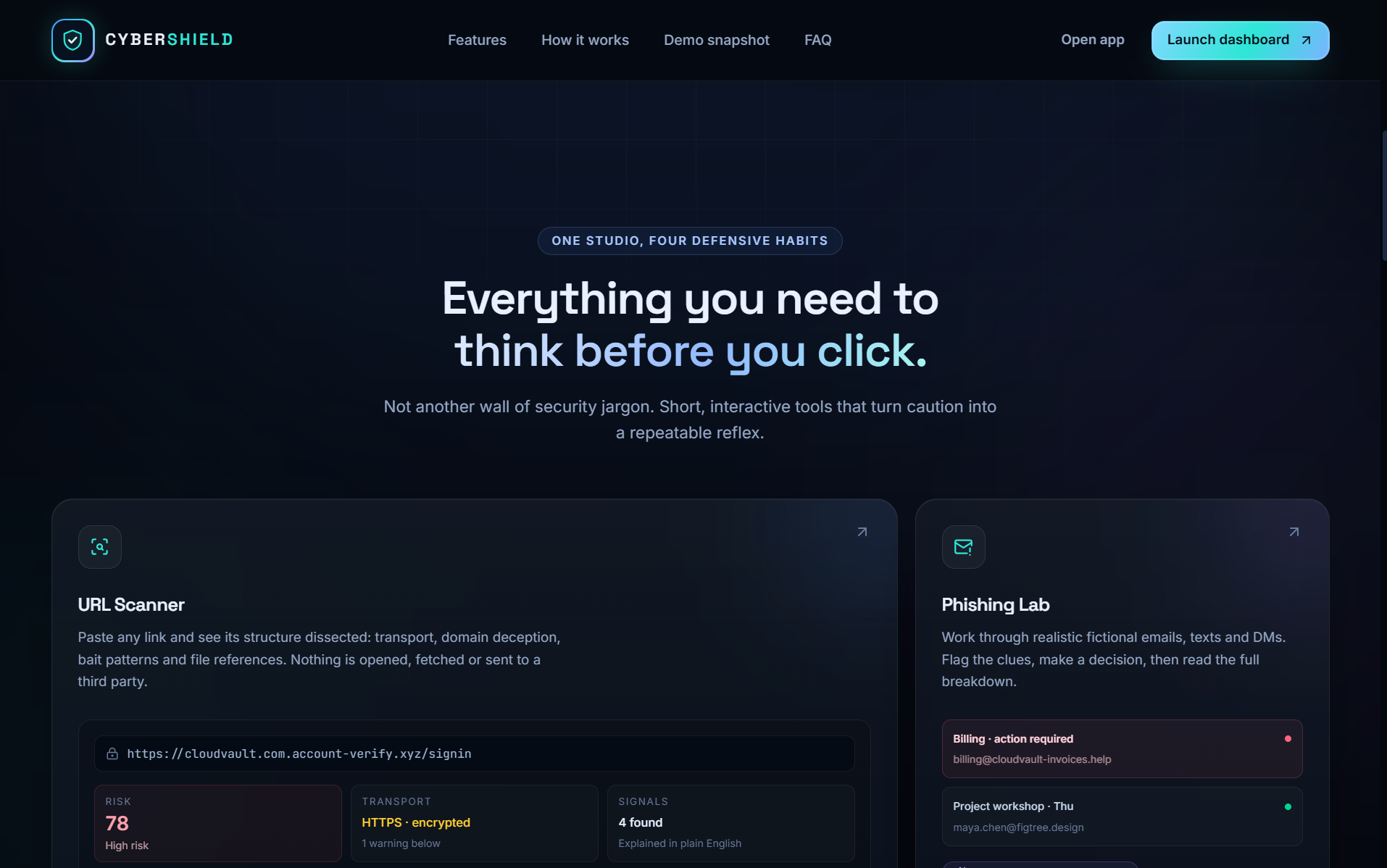
CYBERSHIELD: Learn Cybersecurity. Recognize Threats. Stay Protected.
Inspiration
Cyber threats such as phishing, suspicious links, and online scams are becoming increasingly common. However, many people still lack the practical knowledge to recognize warning signs and respond safely.
We wanted to build a platform that makes cybersecurity awareness more accessible, interactive, and engaging. Instead of limiting learning to theory, we wanted users to experience real-world inspired examples in a safe educational environment.
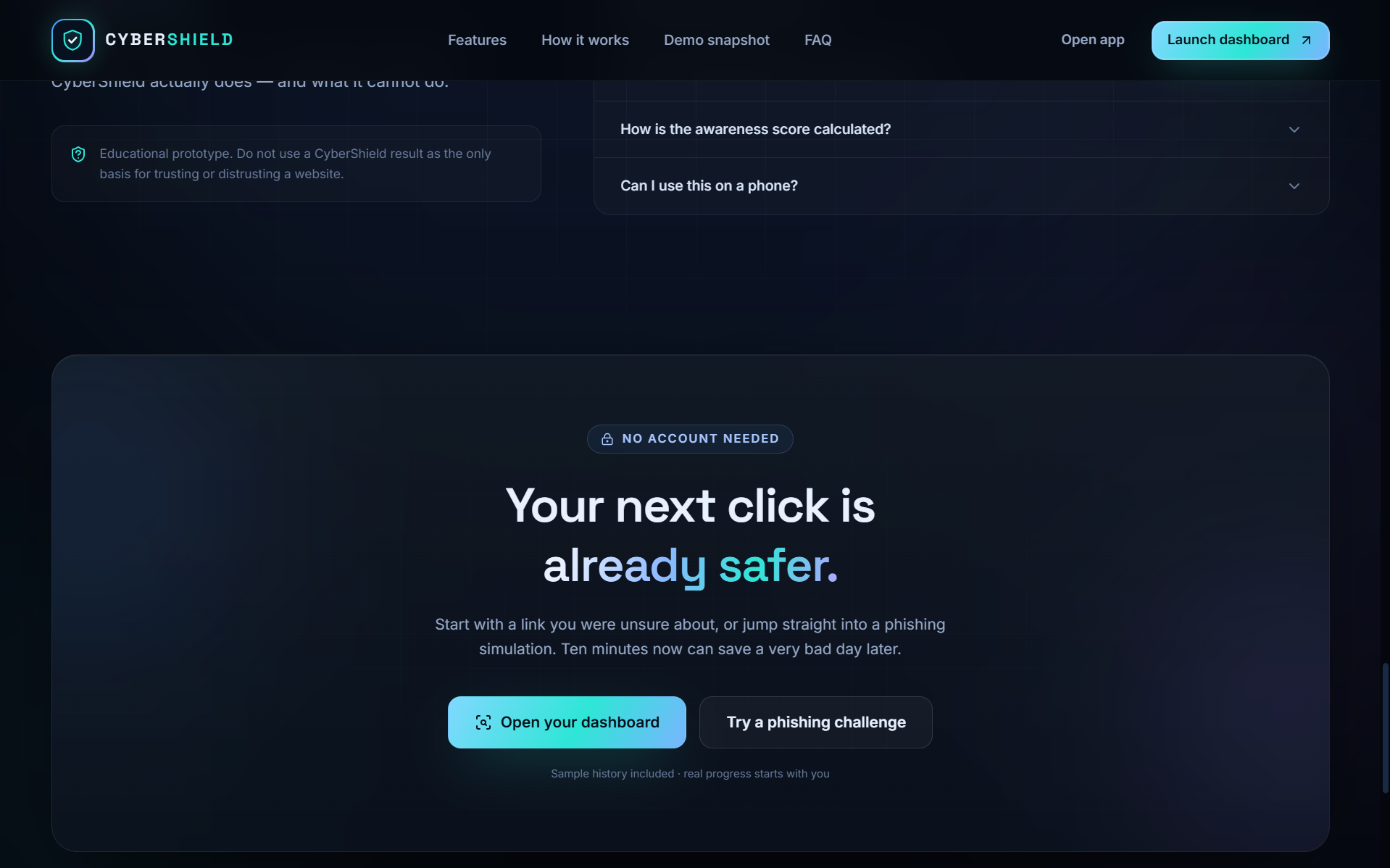
That idea led to CYBERSHIELD, an interactive cybersecurity awareness and learning platform designed to help people develop safer digital habits.
What it does
CYBERSHIELD brings cybersecurity education and interactive learning together through five key features:
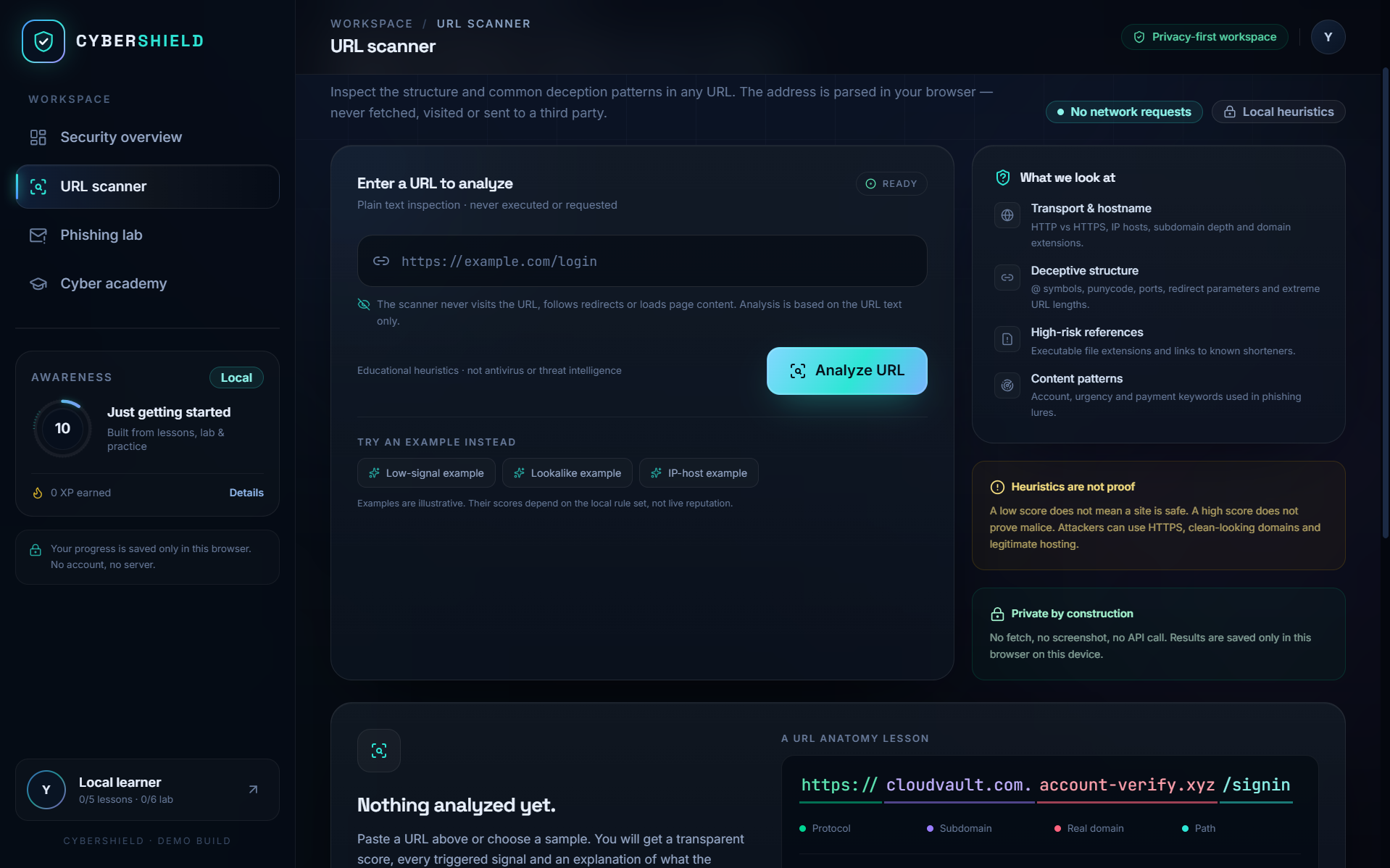
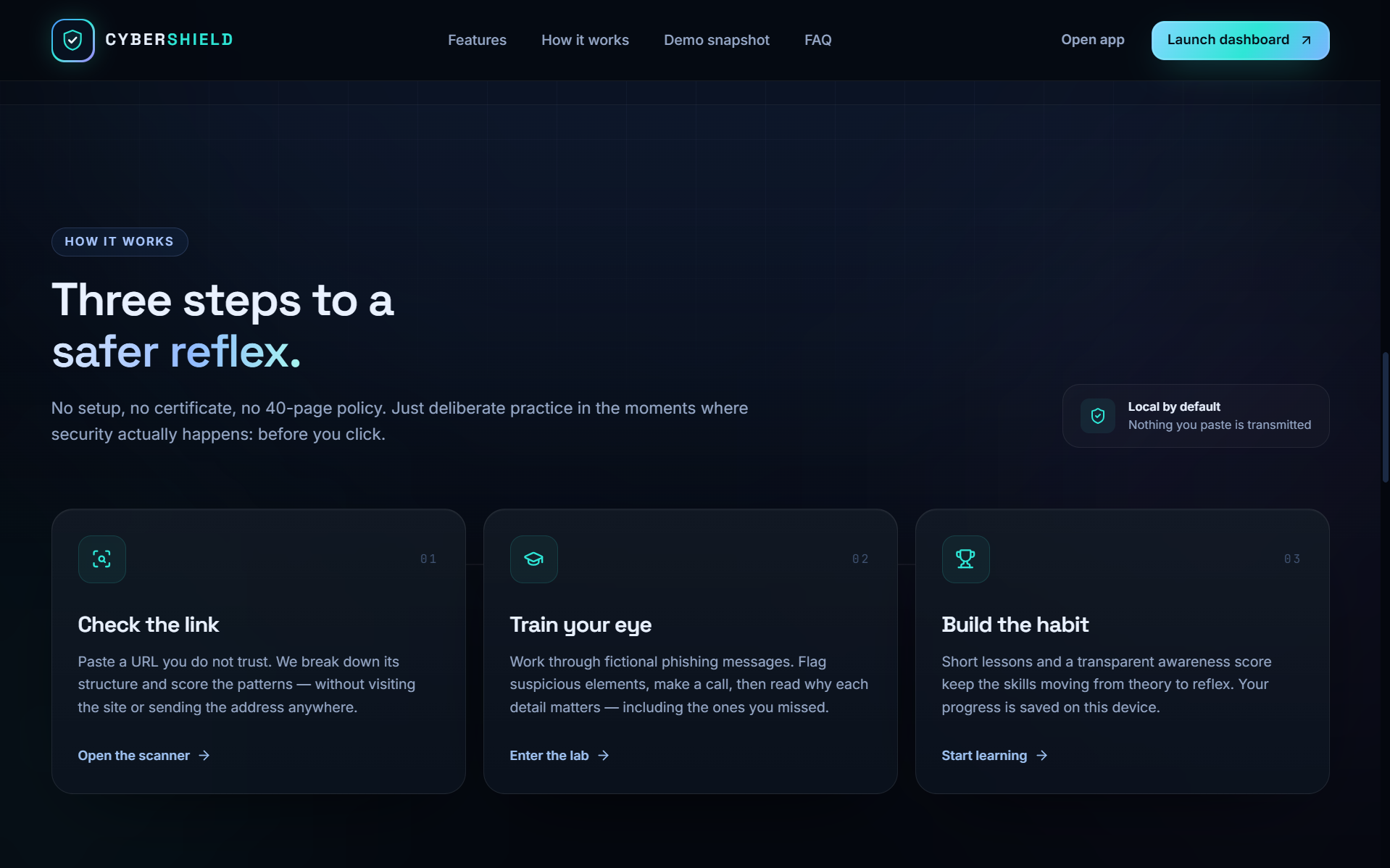
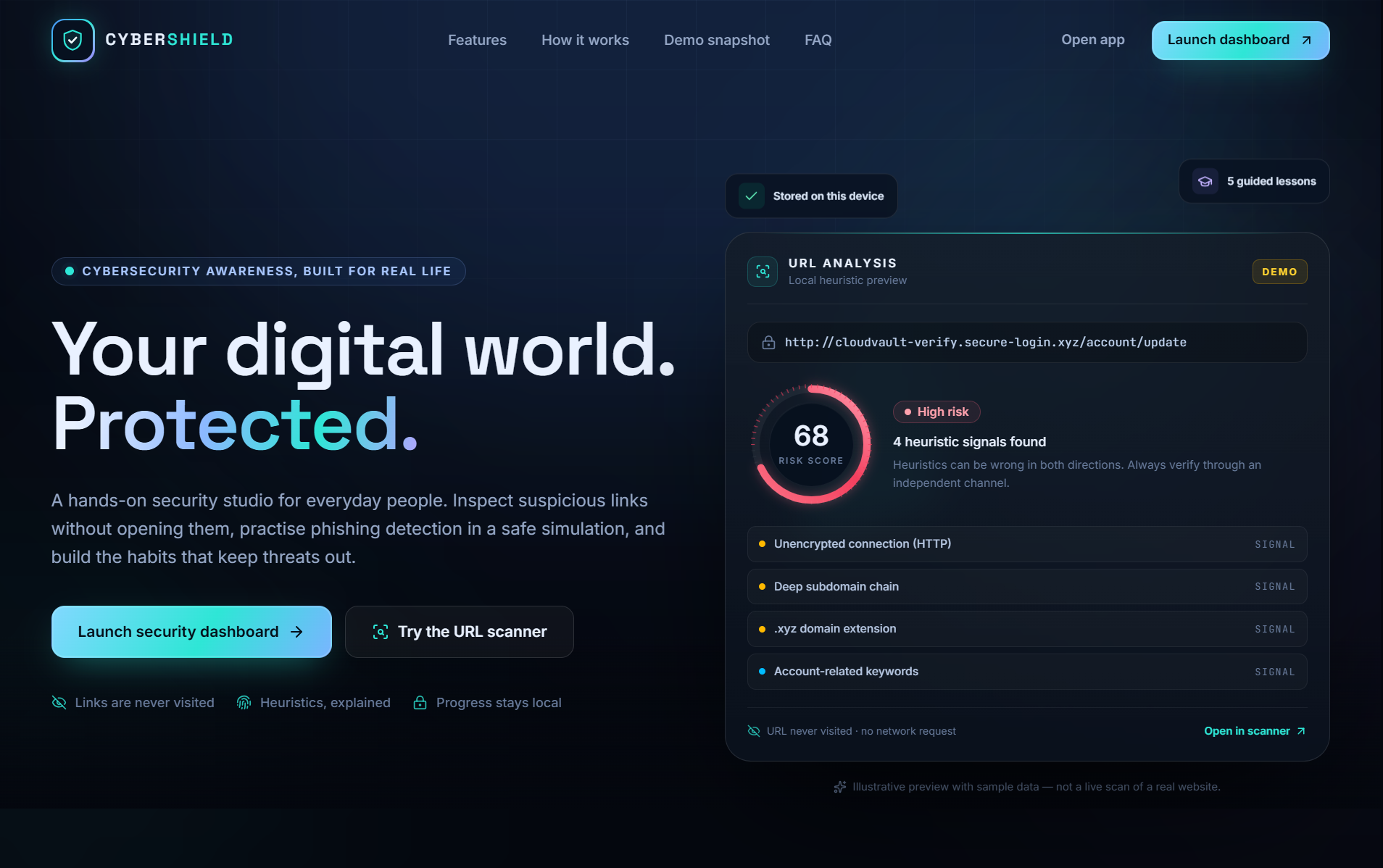
- Educational URL Scanner: Analyzes submitted URLs using local heuristic checks, identifies potentially suspicious indicators, and explains the signals behind its assessment.
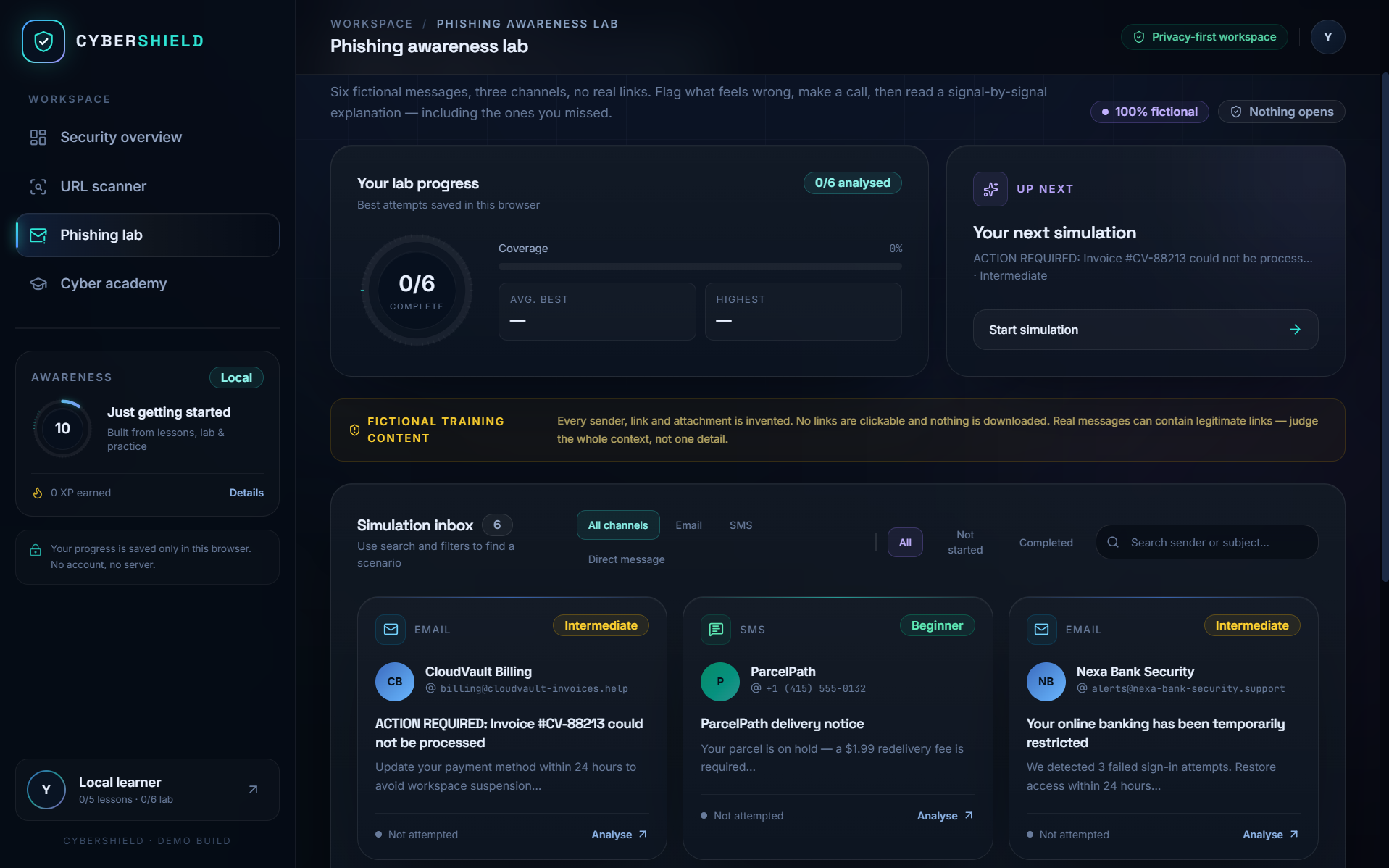
- Phishing Lab: Offers fictional phishing scenarios where users identify suspicious elements, test their knowledge, and receive feedback.
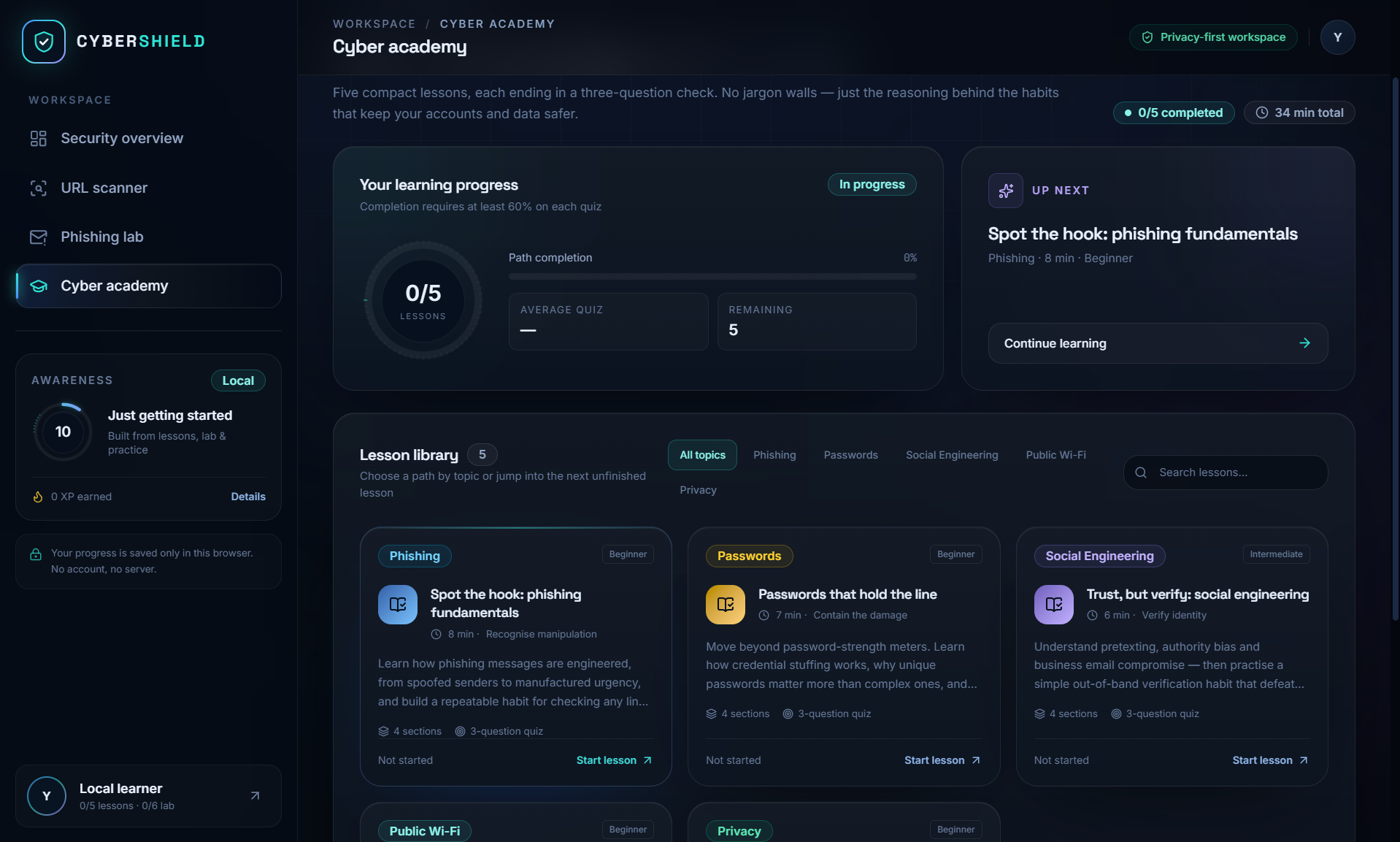
- Cyber Academy: Provides educational lessons and quizzes covering essential cybersecurity concepts.
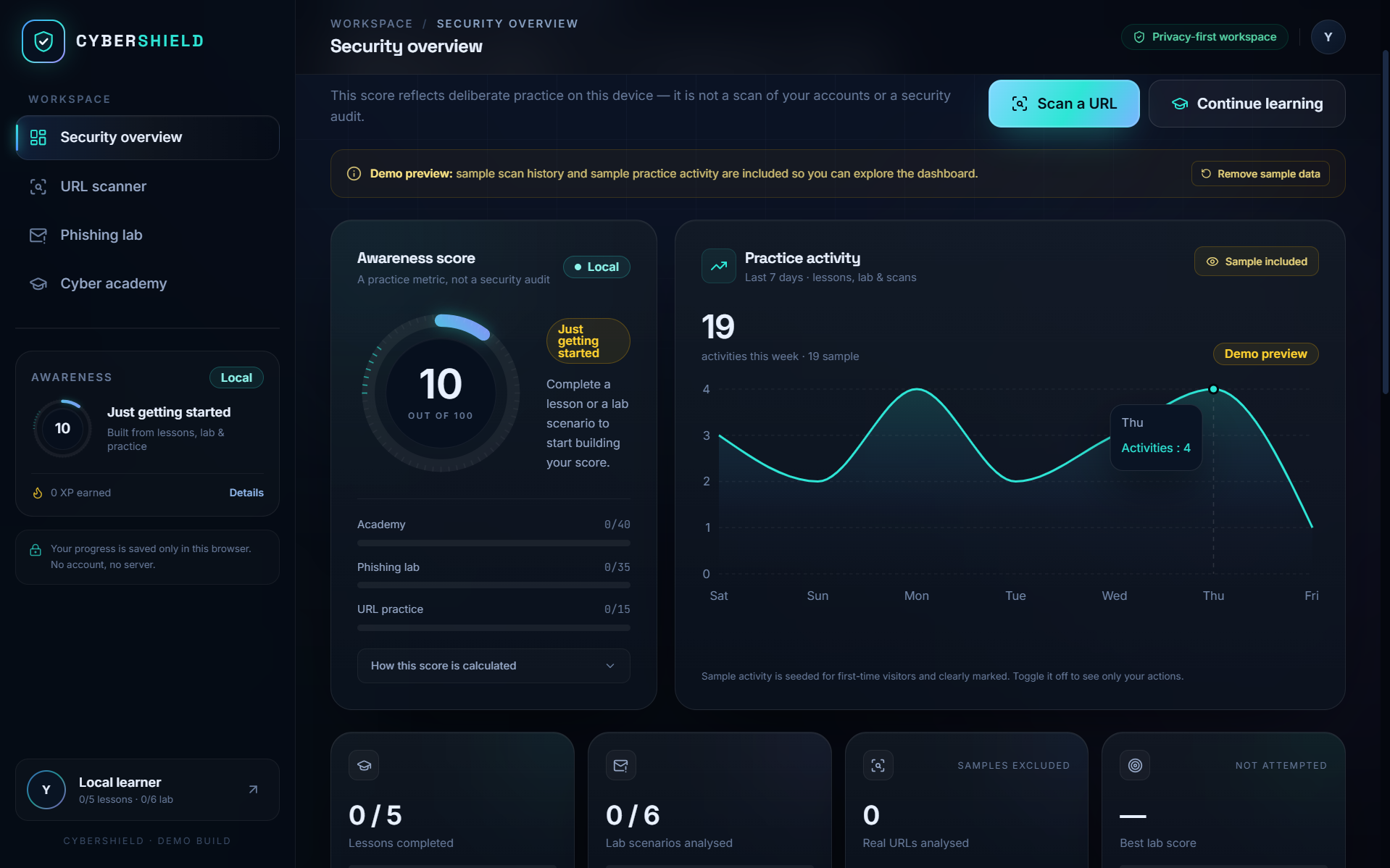
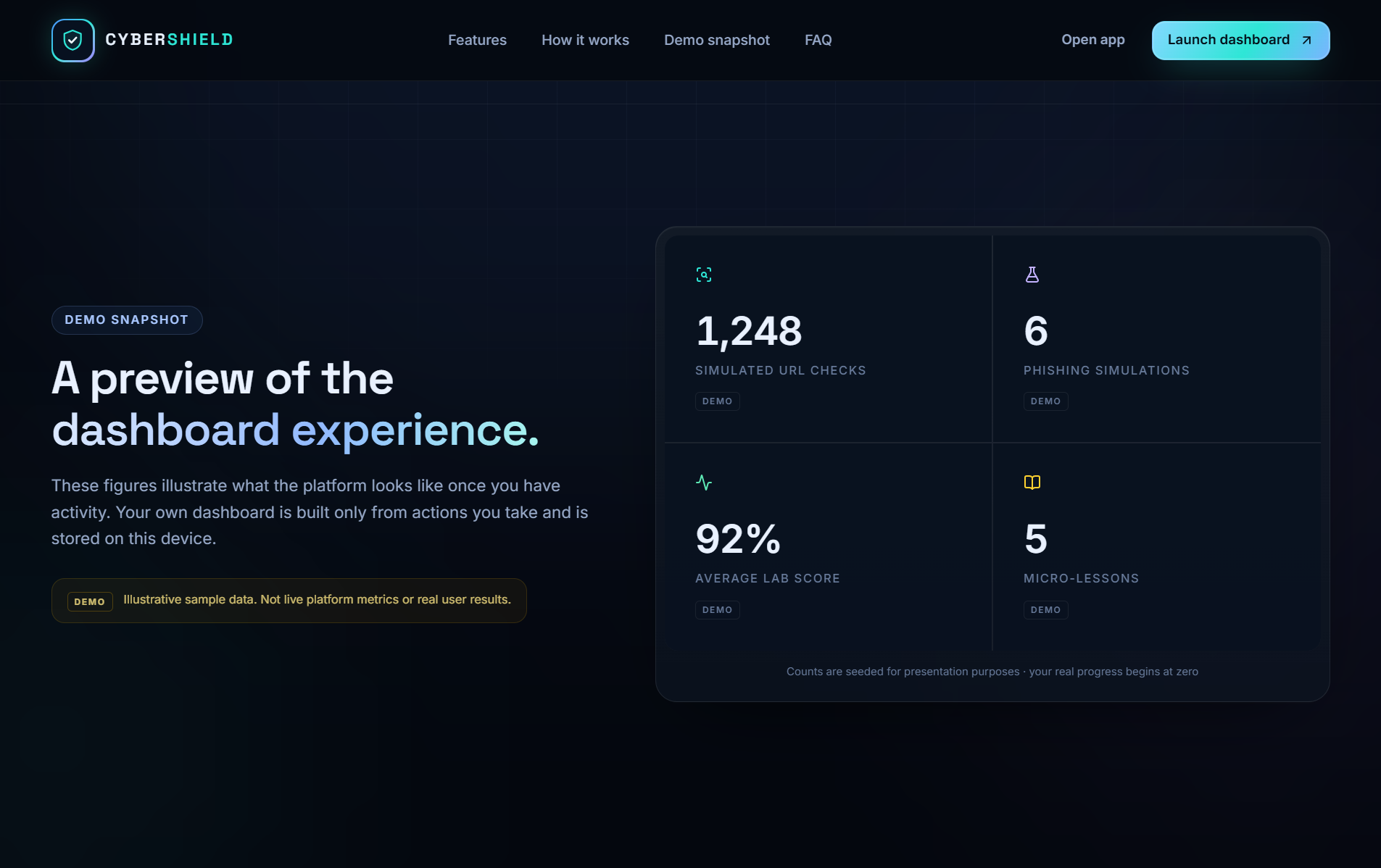
- Awareness Dashboard: Displays learning progress, awareness scores, and completed activities.
- Progress Tracking: Saves learning progress locally, allowing users to continue their learning journey.
How we built it
We developed CYBERSHIELD using modern web technologies:
- Next.js 16: Application framework
- React 19: User interface
- TypeScript: Type-safe development
- CSS: Styling and responsive layouts
- Local Storage: Progress persistence
- Vercel: Deployment and hosting
- GitHub: Source code management
We focused on creating a clean, responsive interface with a premium dark visual theme, intuitive navigation, and interactive learning experiences.
An important part of our approach was user privacy. The URL scanner performs its educational heuristic analysis locally. It does not visit submitted URLs or transmit them to external services. Its results are learning indicators, not definitive security verdicts.
Challenges we faced
One of our biggest challenges was making cybersecurity concepts understandable without oversimplifying them.
During development, we worked through challenges such as:
- Creating an engaging interface that remains simple to navigate.
- Making phishing simulations interactive and educational.
- Explaining suspicious URL indicators in a clear and understandable way.
- Maintaining consistent progress tracking across different activities.
- Ensuring the platform works smoothly across desktop, tablet, and mobile devices.
- Testing functionality while maintaining transparency about the scanner's limitations.
We addressed these challenges through iterative development, functional testing, responsive testing, and continuous improvements.
What we learned
Building CYBERSHIELD helped us strengthen our understanding of full-stack web development, TypeScript, responsive UI design, application deployment, and GitHub workflows.
More importantly, we learned that cybersecurity awareness becomes more effective when people actively participate, explore realistic examples, identify warning signs, and understand the reasons behind potential online risks.
What's next?
CYBERSHIELD is a foundation that we hope to expand with additional learning modules, more phishing scenarios, richer educational content, and improved progress analytics.
Our vision is to make cybersecurity awareness a practical everyday skill rather than something people learn only after encountering an online threat.
CYBERSHIELD: Learn to identify. Understand the risk. Browse smarter.
Built With
- css
- github
- html
- javascript
- next.js
- react
- storage
- typescript
- vercel
