-
-
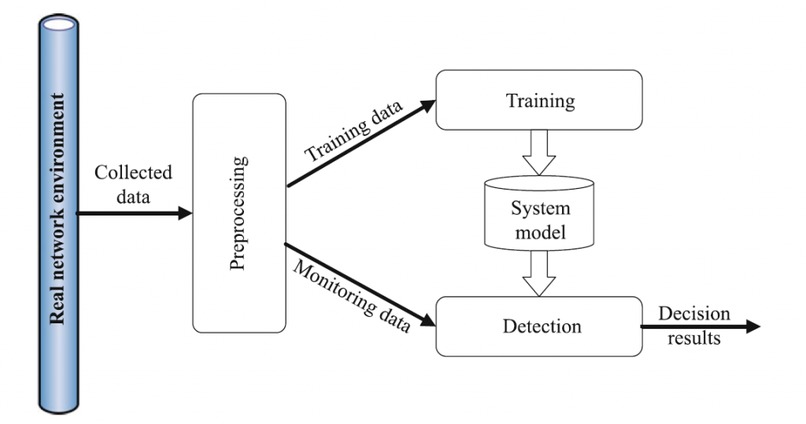
model architecture
-
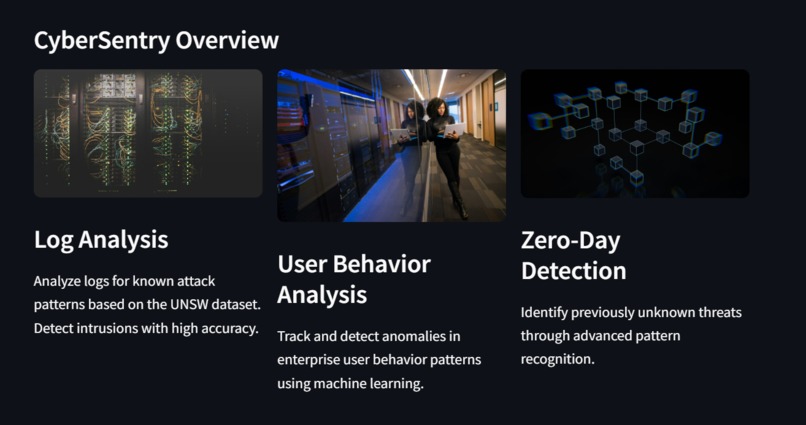
dashboard


With cyberattacks evolving daily, we were inspired by the real-world need for intelligent, adaptable, and robust cybersecurity systems. Enterprises often struggle to keep up with both known and unknown (zero-day) threats, and traditional signature-based systems fall short. That’s where CyberSentry was born—a smart, scalable engine for enterprise-grade cyber defense.
Inspiration
We were deeply intrigued by the challenge of detecting sophisticated and stealthy intrusions in massive volumes of logs. Reading real cyberattack case studies and observing the rising tide of data breaches motivated us to build something that could really make an impact.
What it does
CyberSentry is an adaptive cybersecurity system that detects both known and unknown cyber threats using machine learning. It:
- Classifies attacks like DoS, Exploits, Reconnaissance using a LightGBM classifier.
- Detects zero-day threats via anomaly detection using Isolation Forest.
- Analyzes user behavior patterns to catch suspicious log activity.
- Uses blockchain to log threats in a tamper-proof manner.
- Displays live predictions and alerts on an interactive dashboard.
How we built it
- Dataset: We used the UNSW-NB15 dataset containing real-world system logs and labeled attack types.
- Preprocessing: Feature engineering, normalization, handling class imbalance.
- Models Used: LGBM for multiclass classification of known attacks. Isolation Forest for zero-day attack detection. Behavior-based filtering to detect deviations in login and command activity.
- Blockchain: Implemented a simple Python-based hash chain for immutable threat logging.
- UI: Built an interactive dashboard using Streamlit for visualizing predictions and logs.
Challenges we ran into
- Tackling class imbalance in the dataset.
- Designing a system to handle both known and unknown threats.
- Optimizing model accuracy and speed.
- Integrating multiple models in a modular way.
- Ensuring the blockchain didn’t slow down the system.
Accomplishments that we're proud of
- Achieved high accuracy with LightGBM across multiple attack types.
- Successfully implemented a working zero-day detection pipeline.
- Created an easy-to-use, visual dashboard.
- Developed a modular design that can scale to real enterprise systems.
- Combined AI + Blockchain effectively for enhanced security.
What we learned
- The power of combining multiple ML approaches for better security coverage.
- The importance of data preprocessing in improving model results.
- How anomaly detection complements classification models.
- Using blockchain concepts for tamper-proof logging.
- How to present technical models in a user-friendly way.
What's next for CyberSentry: Adaptive Threat Detection System
- Deploy it in real-time with cloud log integrations (AWS)
- Add NLP models for analyzing terminal commands and access logs.
- Build alerting mechanisms (email/webhooks) for instant response.
- Plug into existing enterprise SIEM tools.
- Improve blockchain scalability using lightweight consensus protocols.
Built With
- blockchain
- css3
- gemini
- google-cloud
- javascript
- matplotlib
- numpy
- pandas
- python
- scikit-learn
- streamlit
- streamlit-cloud
