-
-
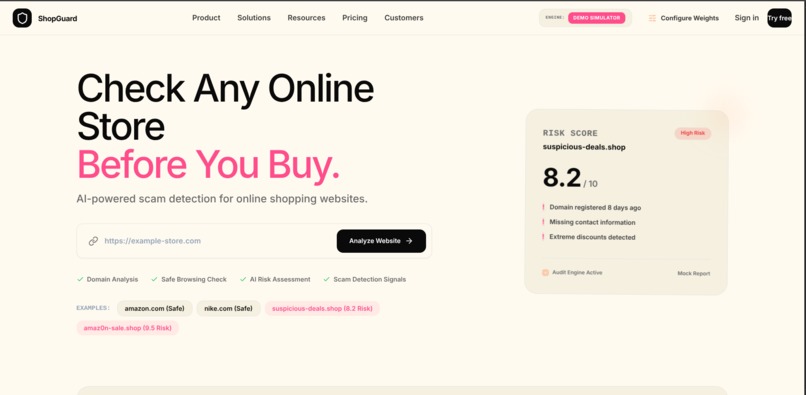
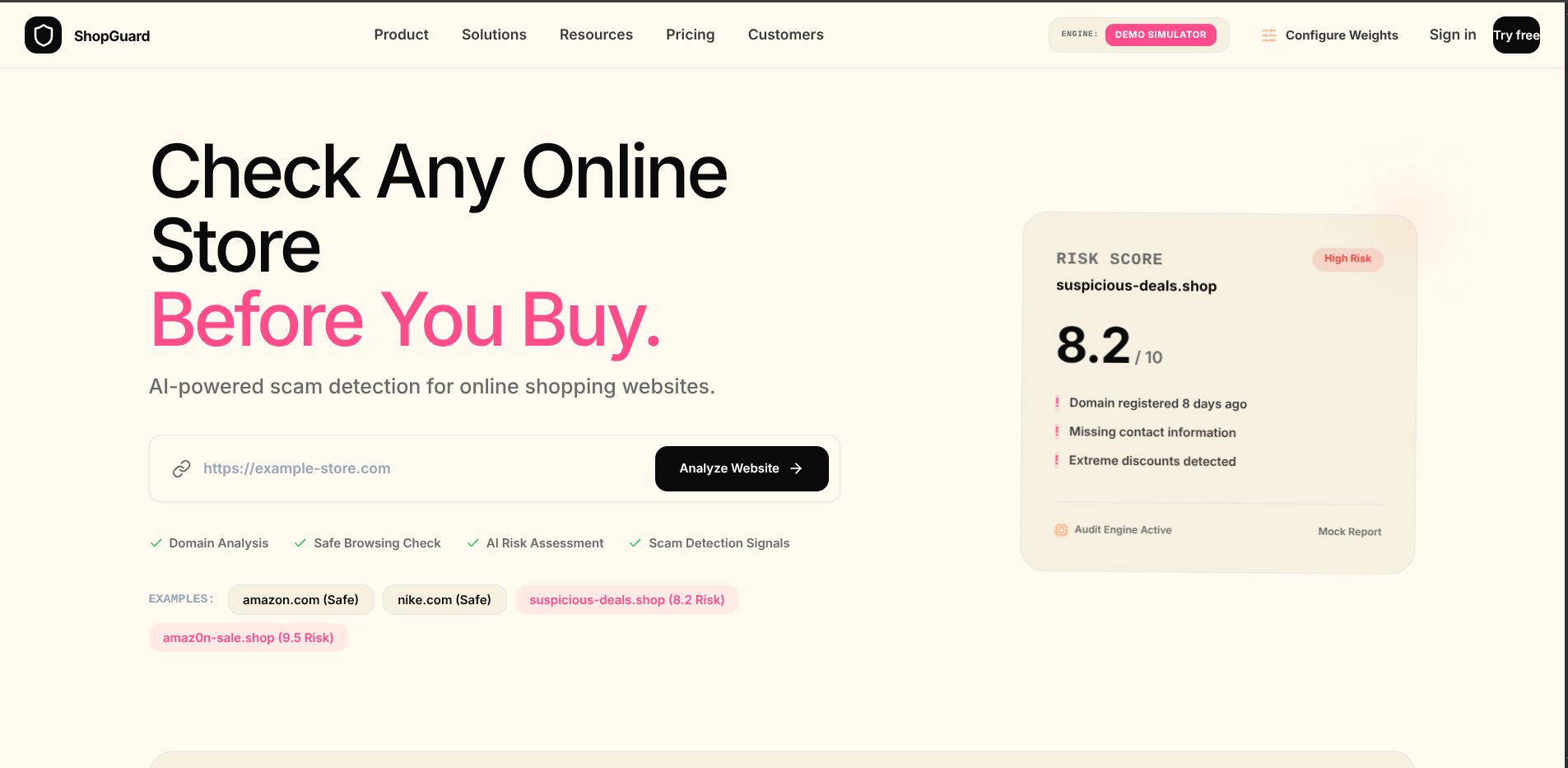
Landing page
-
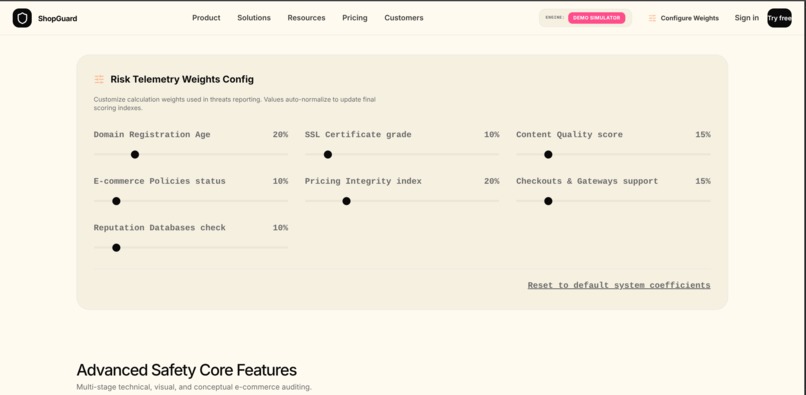
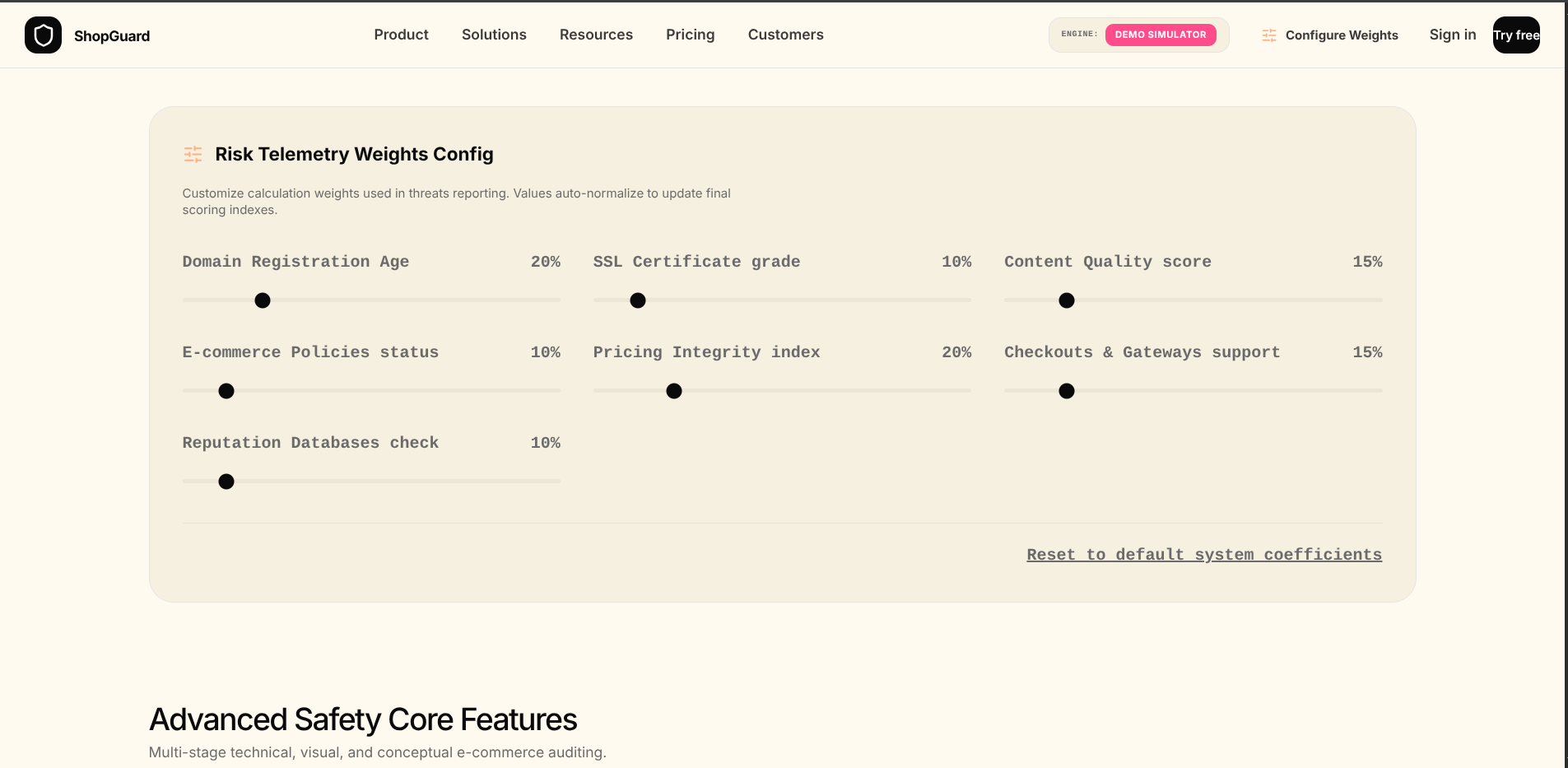
Parameter Coefficients
-
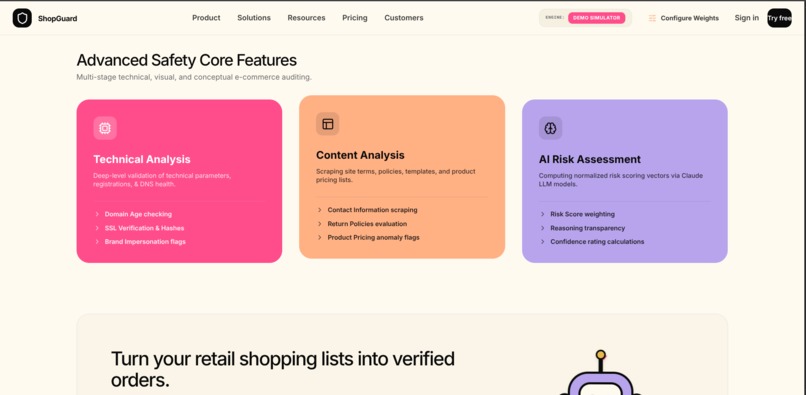
Techincal Cores
-
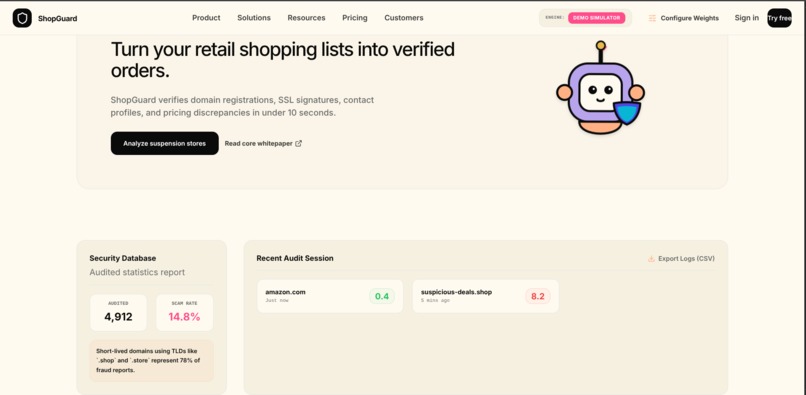
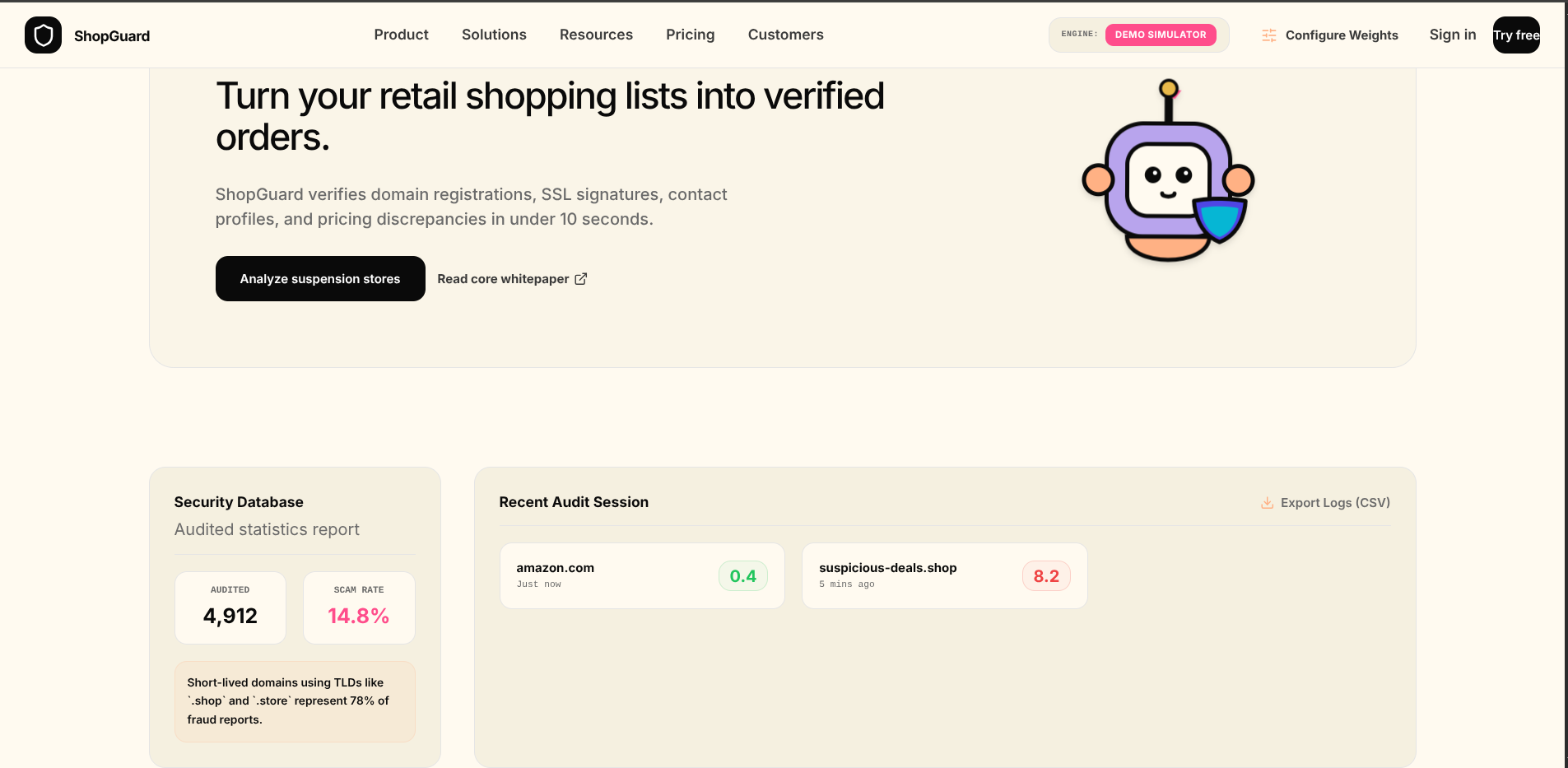
Security Database and Audit session

The Story Behind ShopGuard
A few years ago, my parents came across what looked like a genuine online shopping website offering attractive discounts on branded products. The site looked professional, had a secure HTTPS connection, product images, customer reviews, and everything you'd expect from a legitimate store.
Trusting the website, they placed an order and made the payment.
Unfortunately, the product never arrived.
Only later did we realize the website was a scam designed to imitate a real online store. What surprised us most was how convincing it looked. There were no obvious warning signs for an average shopper. The site had SSL, a polished design, and appeared completely legitimate.
That experience made us realize that most people do not have the technical knowledge to verify whether an online store is trustworthy. Existing security tools focus on detecting malware, phishing, or malicious code, but they rarely answer the question consumers actually care about:
"Can I trust this seller with my money?"
During major online sales and festive shopping seasons, thousands of fake stores emerge on social media and search engines, offering unrealistic discounts and impersonating popular brands. Many of these websites bypass traditional security checks because they are not technically malicious—they are simply deceptive businesses.
This inspired us to build ShopGuard AI, a platform that analyzes the trustworthiness of online merchants by examining business credibility signals, website behavior, payment methods, domain history, and public reputation.
Instead of merely checking whether a site is safe to visit, ShopGuard AI helps users decide whether a website is safe to buy from.
Built With
- css
- framer
- html5
- next.js
- playwright
- python
- tailwind
- typescript


Log in or sign up for Devpost to join the conversation.