-
-
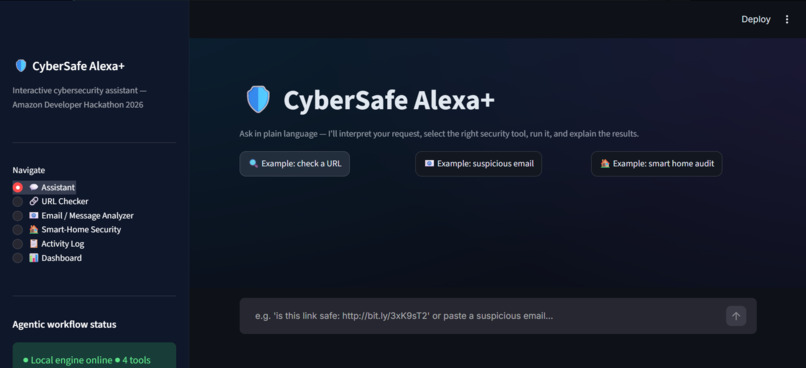
Assistant
-
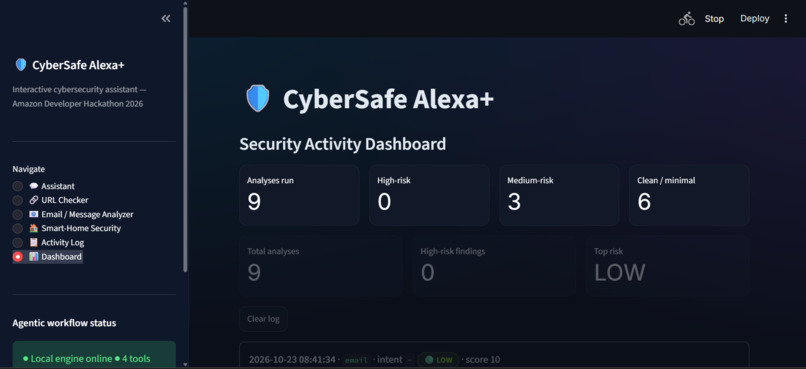
Dashboard
-
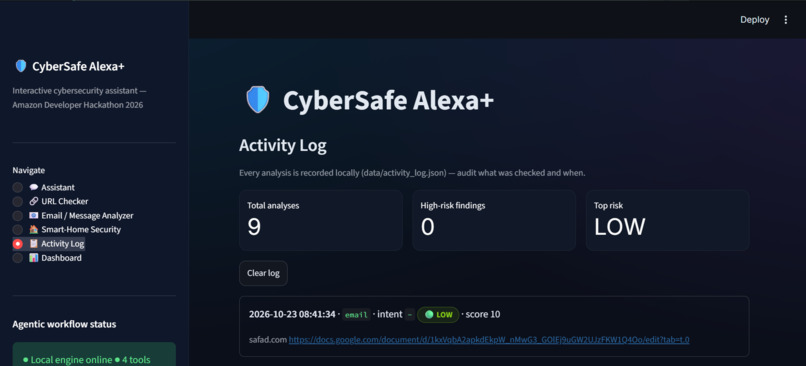
Activity Log
-
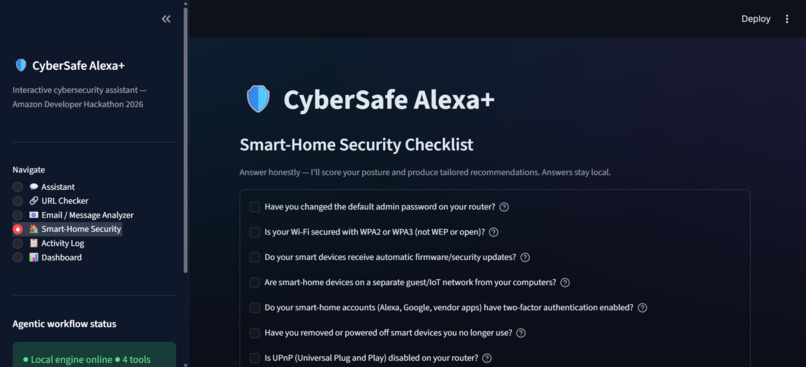
Smaar
-
-
Inspiration
Smart homes keep adding connected devices, but the security habits of the people living in them haven’t kept up. Phishing texts, fake delivery links, and “your account is locked” scams reach people daily, and most have no easy way to tell what’s safe. Voice assistants like Alexa+ are already part of the home, so we asked: what if one could act as a friendly security helper for everyday people, not just experts?
What it does
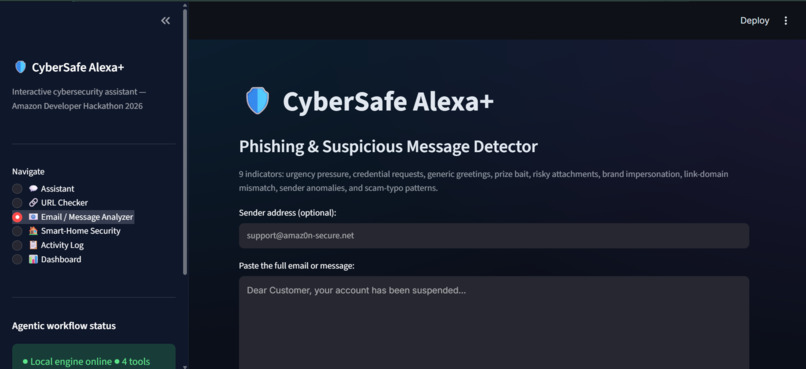
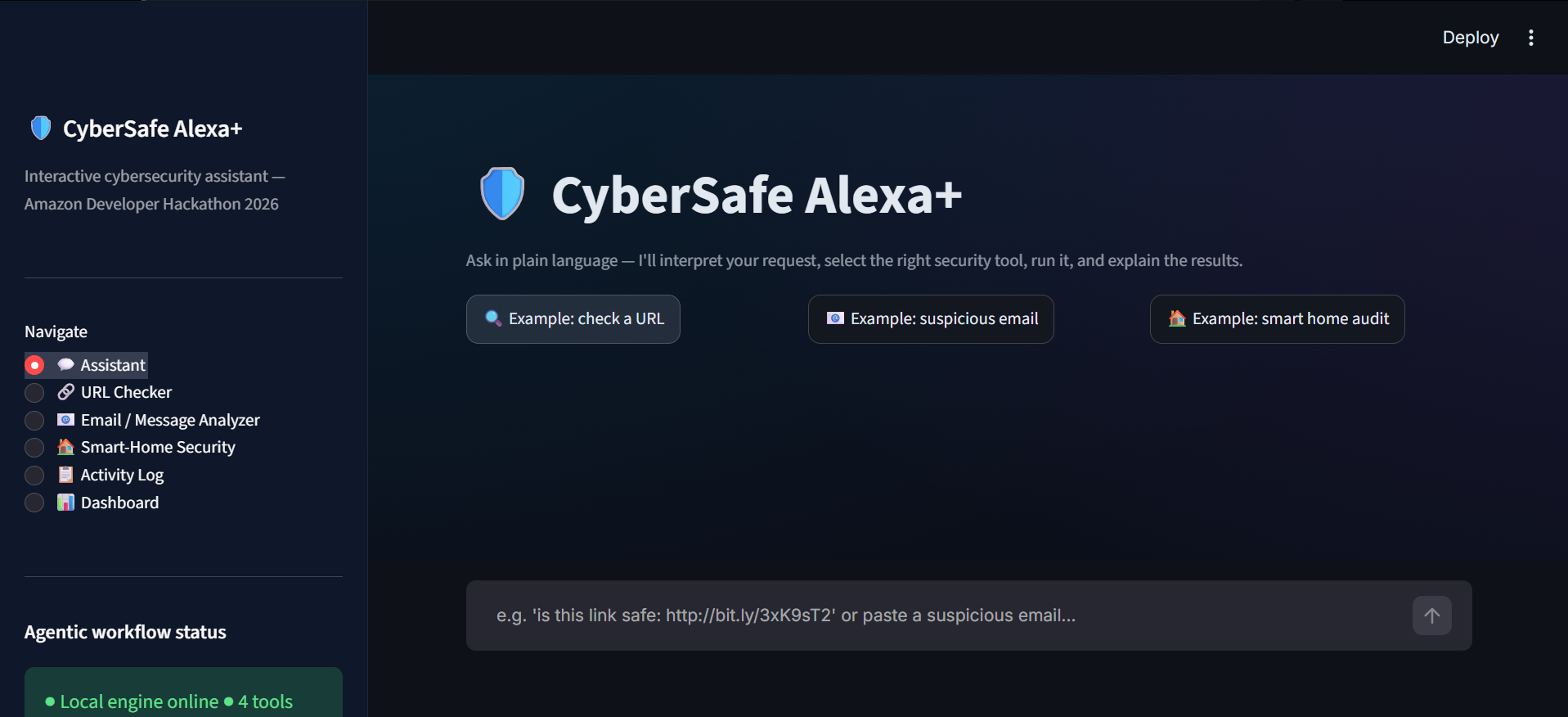
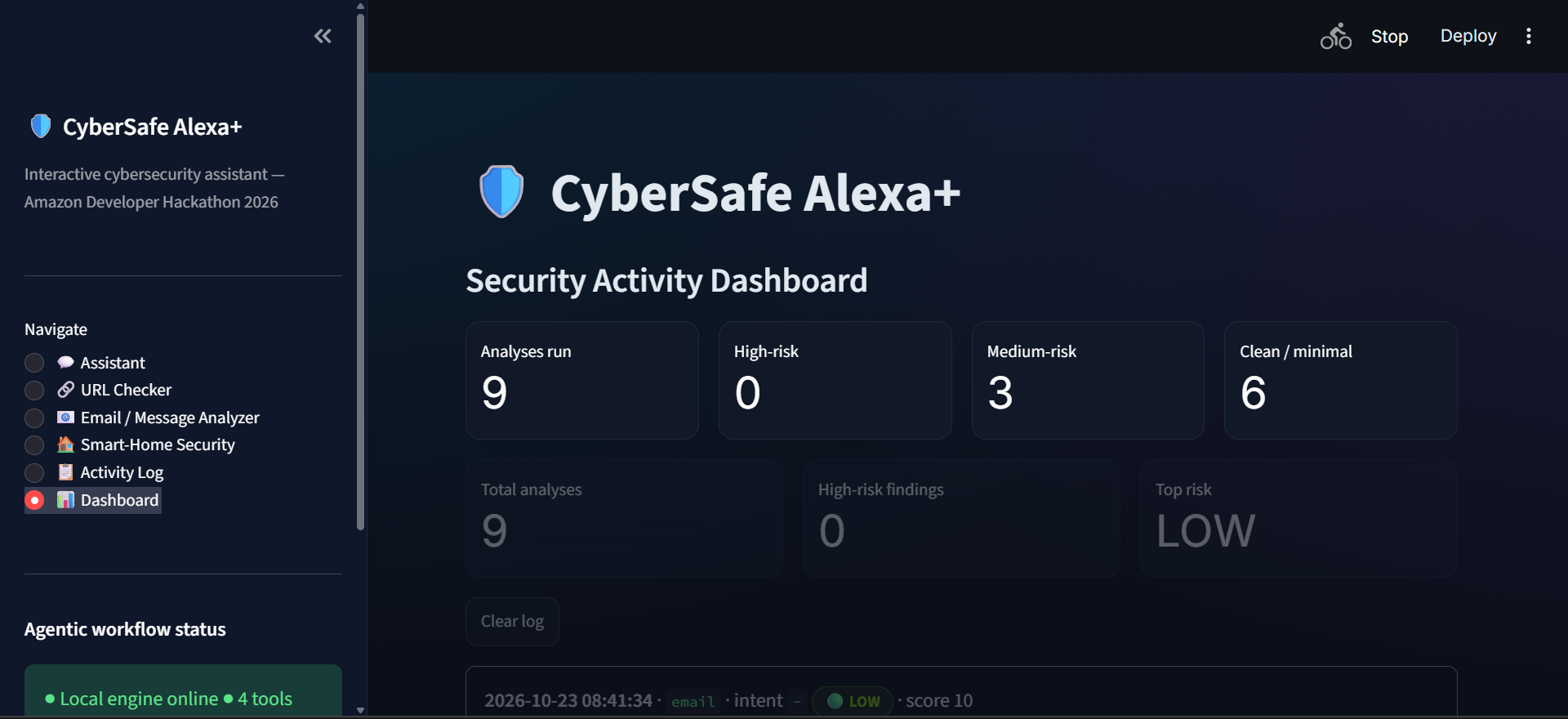
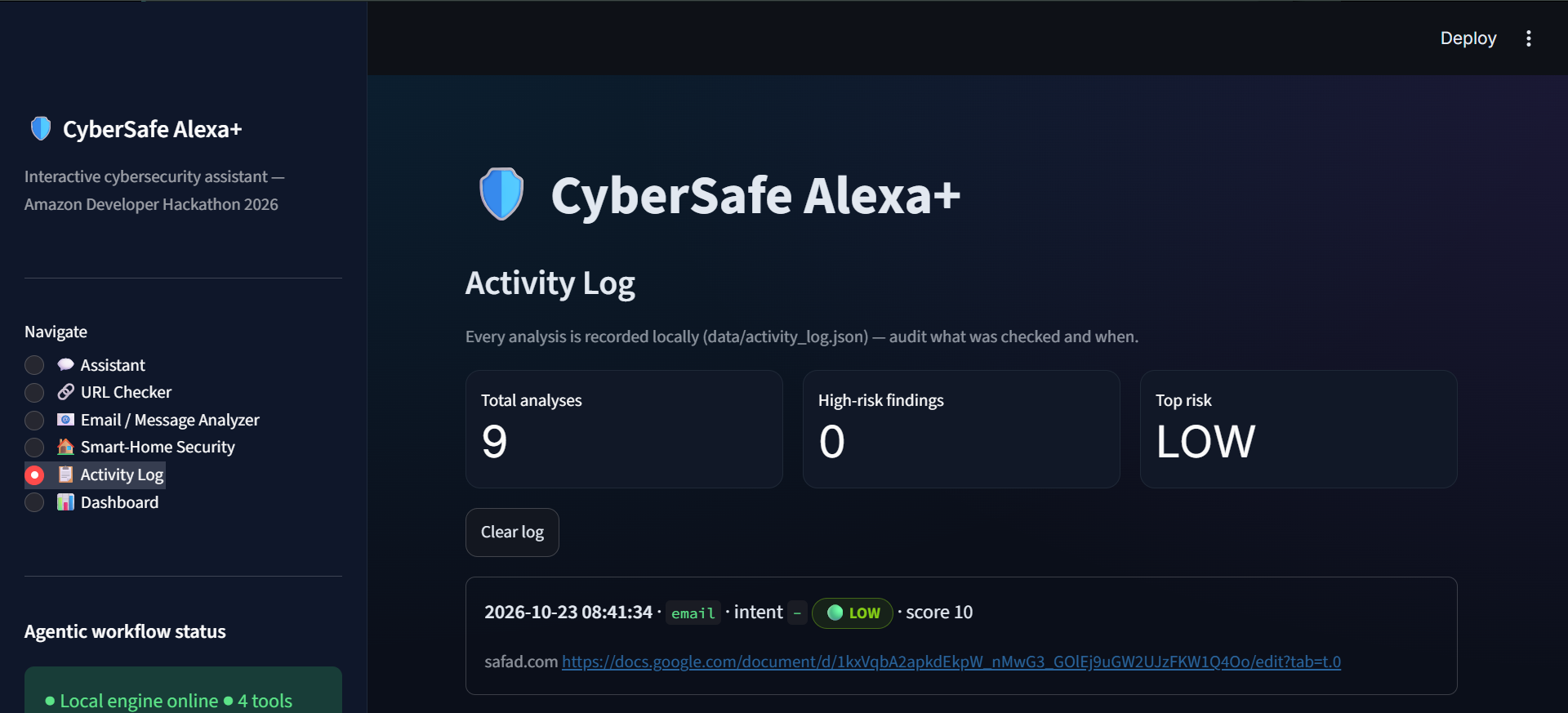
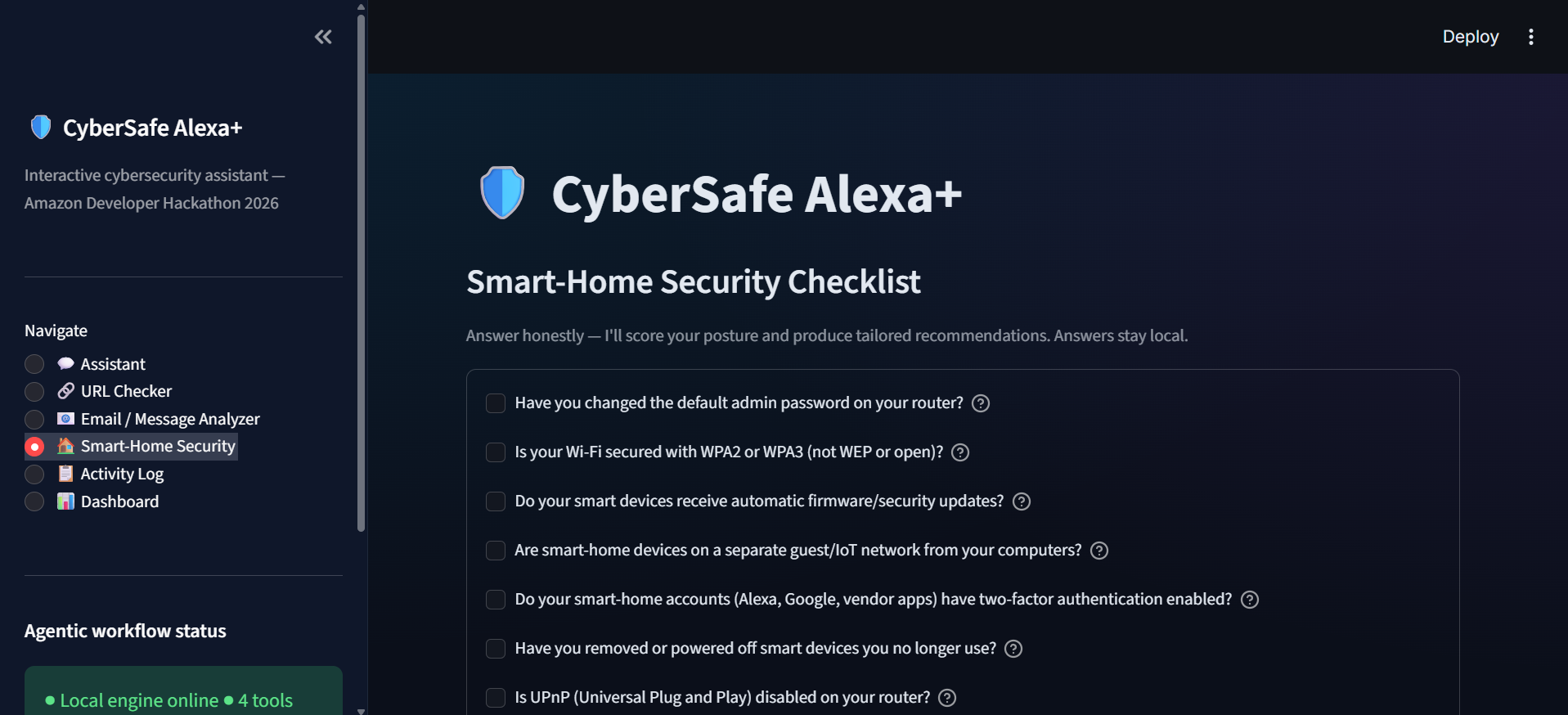
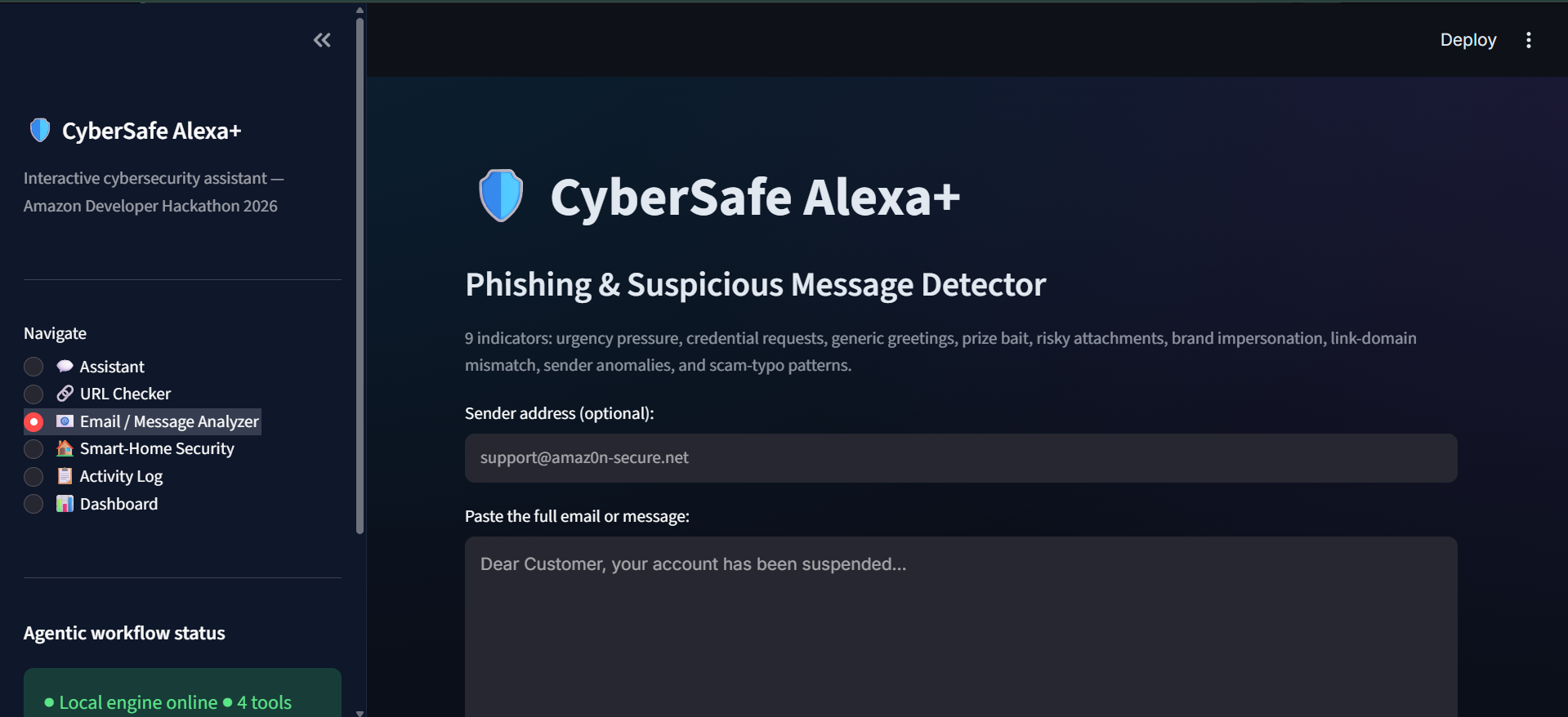
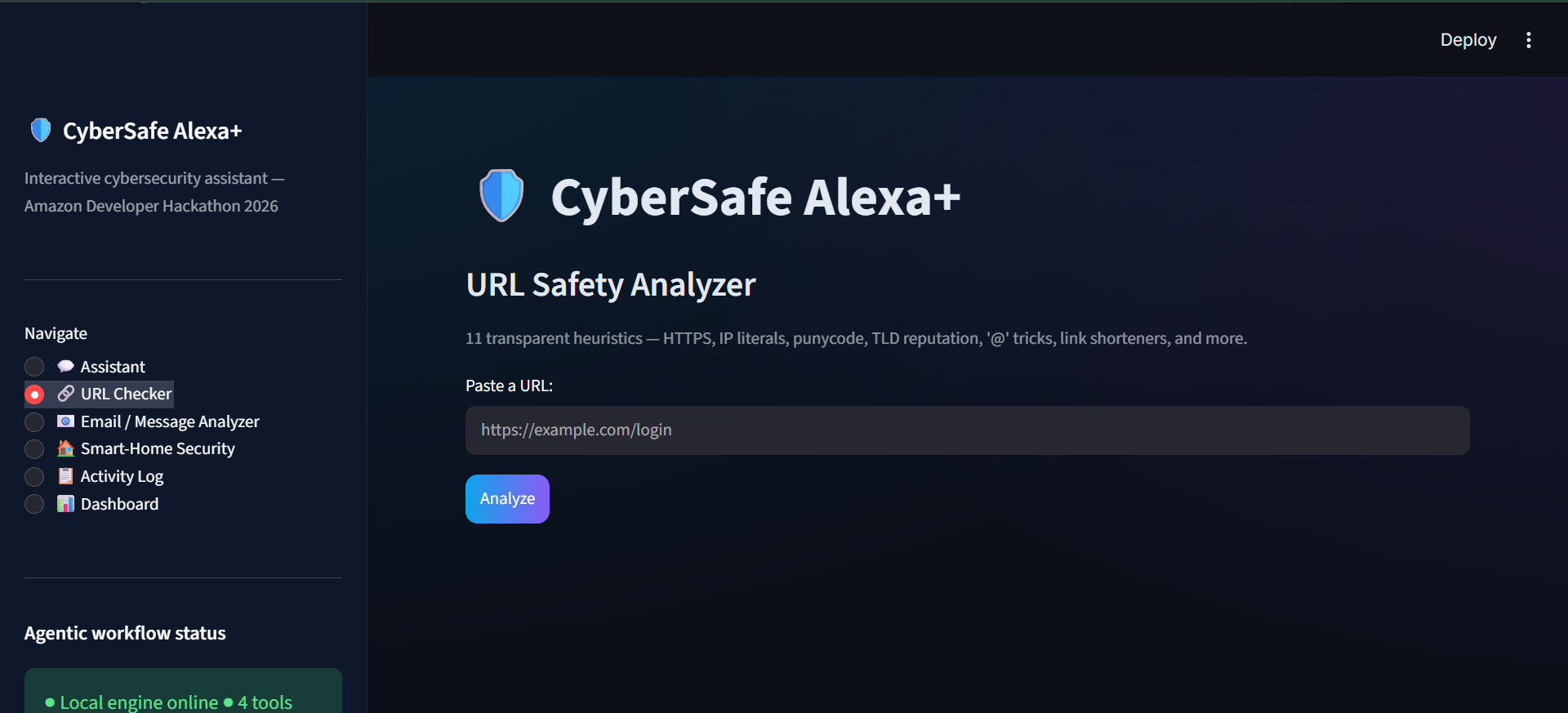
CyberSafe Alexa+ is a web-based, simulated Alexa+-style assistant with three core features:
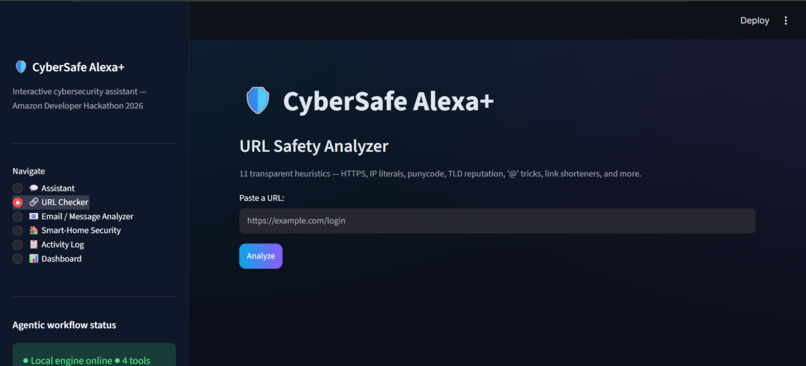
Suspicious message analysis: Paste a text or email and it explains the red flags in plain language, such as urgency, impersonation, and requests for credentials. URL warning-sign checks: Enter a link and it checks for lookalike domains, odd characters, shortened links, and other common indicators. Smart-home hardening guidance: Ask about your setup and get practical steps like stronger Wi-Fi passwords, router updates, and tighter device permissions.
This is an independent, simulated experience and is not an official Alexa+ integration.
How we built it
We built it in Python with Streamlit for a fast, beginner-friendly web interface. The assistant is a conversational front end backed by rule-based detection logic for messages and URLs, plus a curated set of smart-home security recommendations. We focused on real, working functionality so the demo does something useful instead of just looking like a chatbot.
Challenges we ran into Making the Alexa+-style experience feel natural in a text-based web app. Deciding which URL and message signals are reliable enough to flag without overwhelming users with false alarms. Explaining security concepts in plain, jargon-free language that stays accurate. Keeping the scope small enough to deliver a working demo within the hackathon timeline. Accomplishments that we’re proud of A functional demo where every feature works end to end. Security explanations that are clear and actionable for non-technical users. A project that is honest about being a simulation while still delivering real value. A clean, approachable interface built entirely in Python. What we learned
We learned that good security guidance depends as much on communication as on detection. A correct warning is useless if the person can’t understand it. We also learned how quickly Streamlit lets you turn an idea into an interactive prototype, and how important it is to be transparent about what a project is and isn’t.
What’s next for CyberSafe Alexa+ — A smart-home security assistant Add voice input and output for a more Alexa-like experience. Integrate threat-intelligence and URL reputation feeds for deeper link checks. Expand smart-home guidance with device-specific checklists for cameras, locks, and routers. Add multilingual support to reach more households. Explore a path toward a real Alexa skill, if the platform allows it.

Log in or sign up for Devpost to join the conversation.