-
-
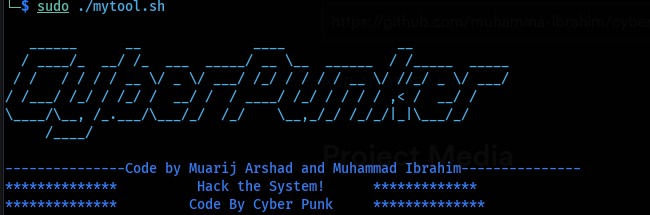
Installation..
-
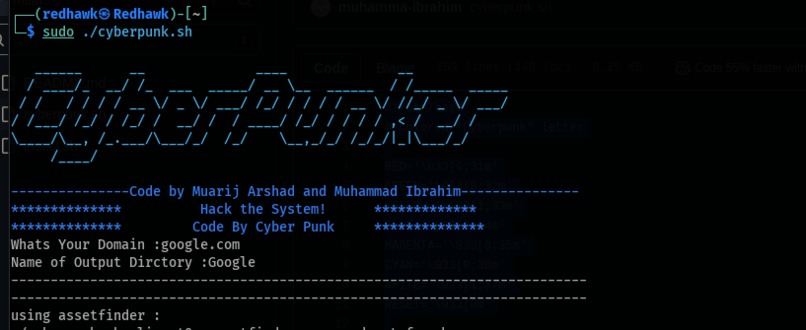
Running ...
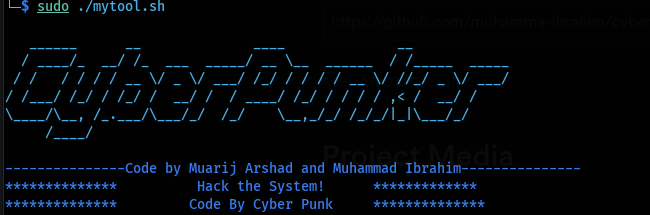
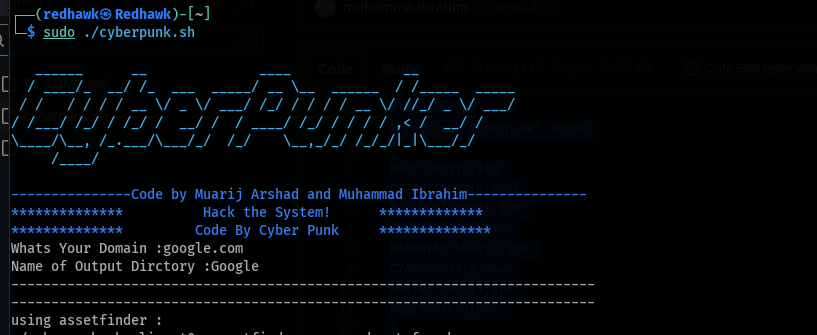
Inspiration
Engaging in bug bounty and penetration testing involves utilizing various tools. However, there comes a point when the decision is made to develop a proprietary tool for conducting information gathering and automating the identification of major vulnerabilities. The satisfaction derived from using our own tool surpasses that of relying on external solutions.
What it does
The developed tool serves a dual purpose by streamlining the information gathering process and automating the discovery of significant vulnerabilities. Its functionality encompasses comprehensive data collection and the ability to identify and assess critical security weaknesses. This proprietary tool empowers us to conduct thorough assessments and enhance the efficiency of our bug bounty and penetration testing endeavors.
How we built it
We began by defining the specific requirements and objectives of the tool. This involved understanding the desired functionalities, target platforms, and the scope of information gathering and vulnerability identification. Designed the architecture of the tool, outlining the different modules and their interactions. This step involved deciding on the target and how the tool would handle various tasks. Developed a prototype to validate the initial design and functionalities. This allowed for quick testing and iteration of ideas before committing to a full-scale development effort. Executed the development phase based on the finalized design and prototype. This involved writing code for each module, integrating components, and ensuring seamless interactions. Created comprehensive documentation covering installation, configuration, and usage guidelines. Clear documentation is crucial for the tool's adoption and future development.
Challenges we ran into
Indeed, simplifying the user experience and automating processes without the need for manual commands is a significant challenge. Creating scripts that seamlessly execute tasks without user intervention enhances usability but demands careful consideration of user interaction and potential errors. Debugging, as you rightly pointed out, is a formidable challenge during the development process. Identifying and rectifying flaws in the code, ensuring error-free execution, and maintaining the reliability of the tool require meticulous attention. Establishing a robust system for error handling and debugging is essential to address issues promptly and maintain the tool's effectiveness.
Accomplishments that we're proud of
We take pride in the significant accomplishments achieved during the development of our proprietary cybersecurity tool. Foremost among our achievements is the creation of an intuitively automated system, eliminating the need for manual commands and thereby enhancing user experience. Our tool excels in comprehensive information gathering, empowering users to conduct thorough bug bounty and penetration testing assessments. The implementation of robust mechanisms for automatic identification of major vulnerabilities stands as a testament to our commitment to bolstering cybersecurity efforts. Our team's dedication is further reflected in the streamlined debugging processes we've established, minimizing downtime and ensuring the tool's reliability. Notably, the tool's adaptability across diverse environments and operating systems underscores its versatility and widespread applicability. Positive user feedback attests to the real-world impact of our efforts, while our commitment to a continuous improvement cycle ensures the tool remains at the forefront of cybersecurity tools.
What we learned
Through the development journey of our proprietary cybersecurity tool, we've gained invaluable insights and experiences that have deepened our understanding of the intricacies in this dynamic field. The foremost lesson centers on the pivotal role of user experience - simplifying complex processes and automating tasks seamlessly enhances accessibility and usability. Debugging, a challenge we confronted earnestly, taught us the importance of a systematic and efficient approach, minimizing disruptions and ensuring the tool's reliability. The success of our tool in comprehensive information gathering and automated vulnerability identification underscored the significance of robust architecture and meticulous design. Adaptability across diverse environments was a crucial lesson, emphasizing the need for versatility in addressing the ever-changing landscape of cybersecurity. Positive user feedback became a driving force, highlighting the real-world impact of our efforts and validating the user-centric focus of our development.
What's next for CyberPunk
As we reflect on the achievements of our CyberPunk tool, we are driven by a forward-looking vision to propel it even further. The next phase involves a commitment to continual innovation and enhancement, guided by the evolving landscape of cybersecurity. We aim to expand the tool's capabilities, introducing advanced features that align with emerging threats and industry best practices. Our focus includes refining automation processes for even greater efficiency, broadening the scope of information gathering, and incorporating cutting-edge techniques for vulnerability identification.
Built With
- anew
- assetfinder
- bashscripting
- crt.sh
- gau
- gf-tool
- go
- go-lang
- httpx
- katana
- mathscan
- nmap
- openssl
- subenum.sh
- subfinder
- subjs
- waybackurls
- xaxgx


Log in or sign up for Devpost to join the conversation.