-
-
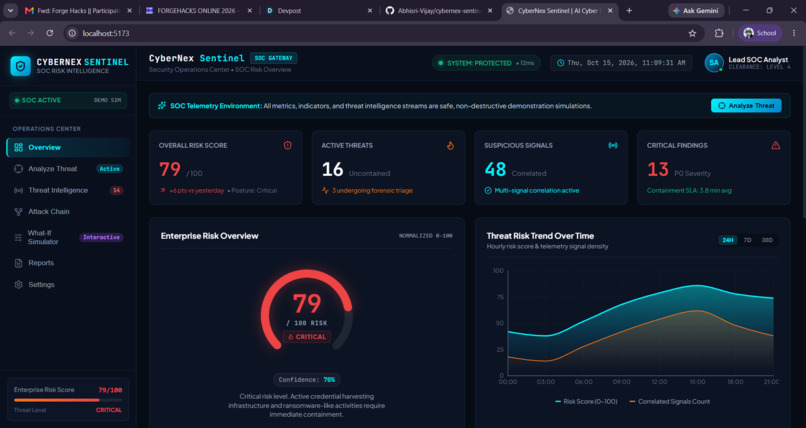
OVERVIEW page
-
-
-
-
-
-
-
-
-
-
-
-
Inspiration## CyberNex Sentinel — AI-Powered Cyber Risk Intelligence Platform
Tagline: Don't just detect the threat. Understand it. Explain it. Act before it becomes damage.
Inspiration
Cybersecurity teams often face multiple suspicious events, alerts, and security signals at the same time. Looking at each signal independently can make it difficult to understand the bigger picture, identify possible attack progression, and decide which defensive action should be taken first.
We were inspired to build CyberNex Sentinel to demonstrate how a centralized cyber-risk intelligence platform can correlate suspicious signals, explain risk levels, visualize potential attack chains, and help security teams prioritize their response.
What It Does
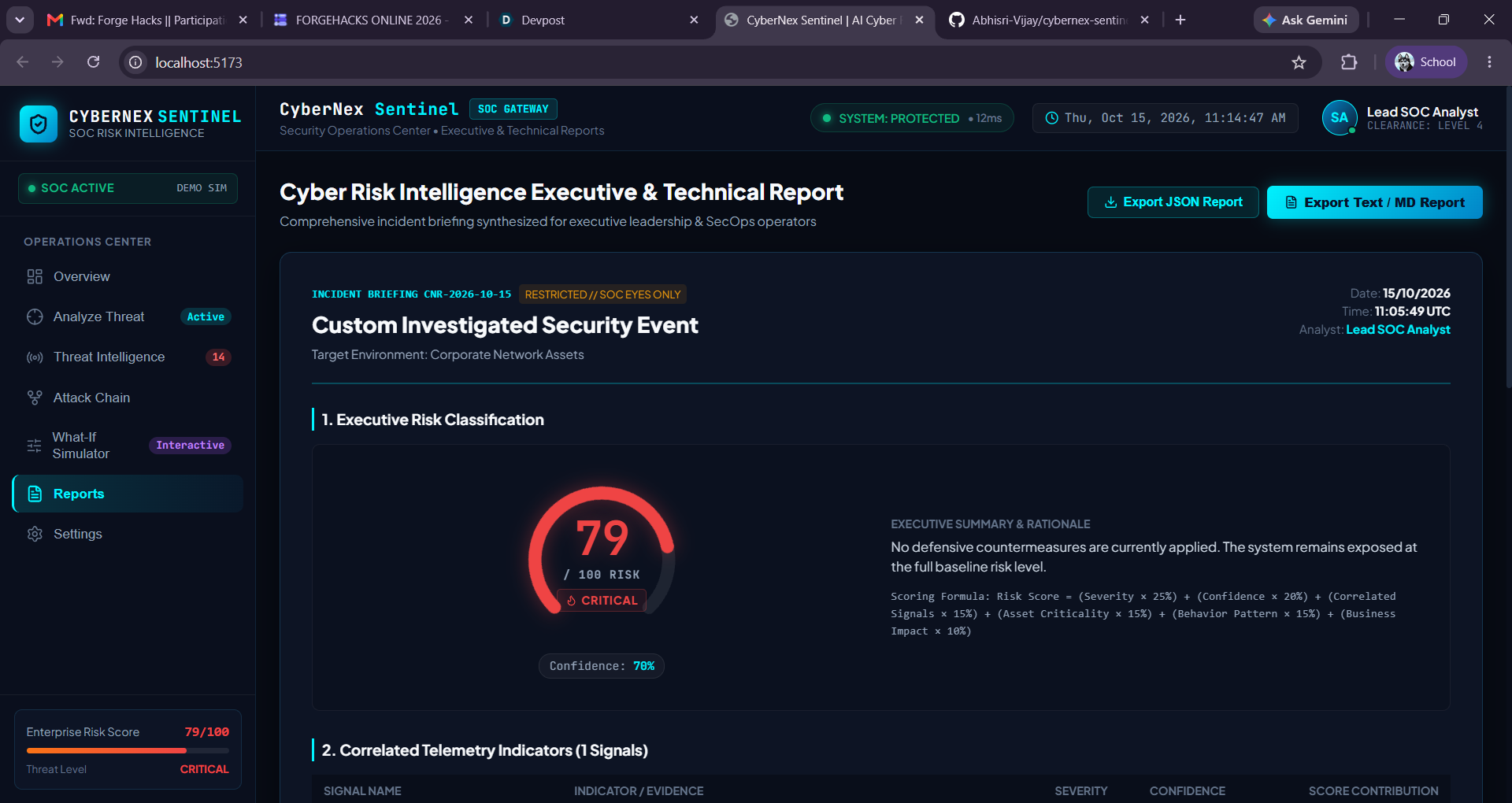
CyberNex Sentinel is a full-stack cybersecurity demonstration platform that transforms simulated security events into an understandable risk assessment and defensive action plan.
Its key features include:
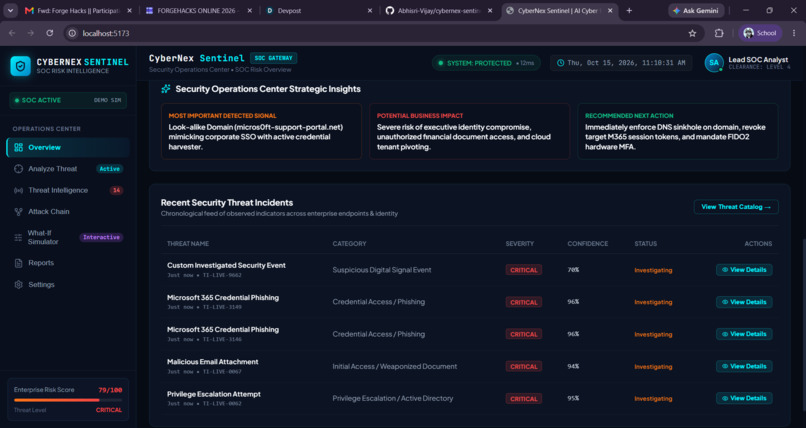
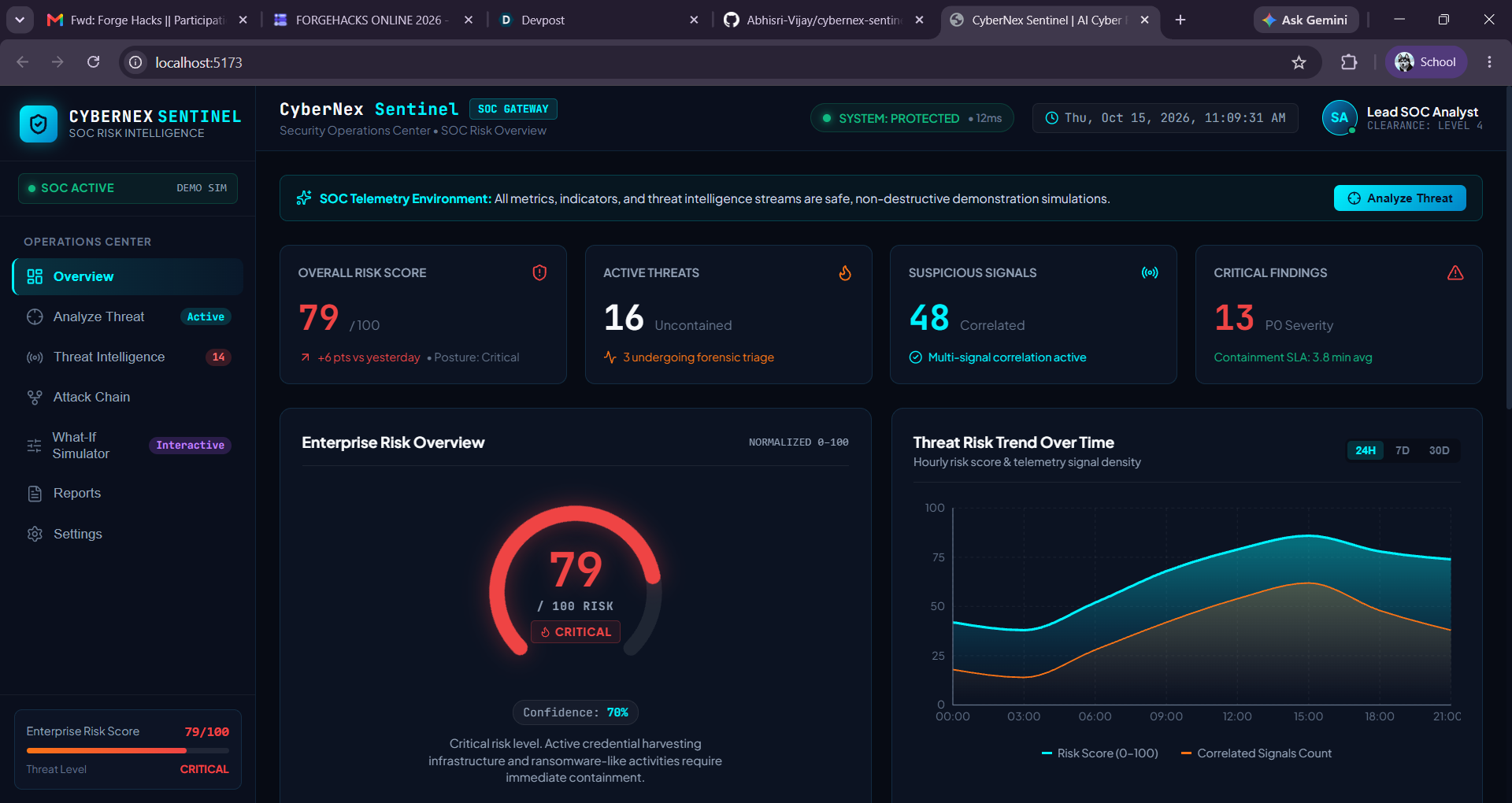
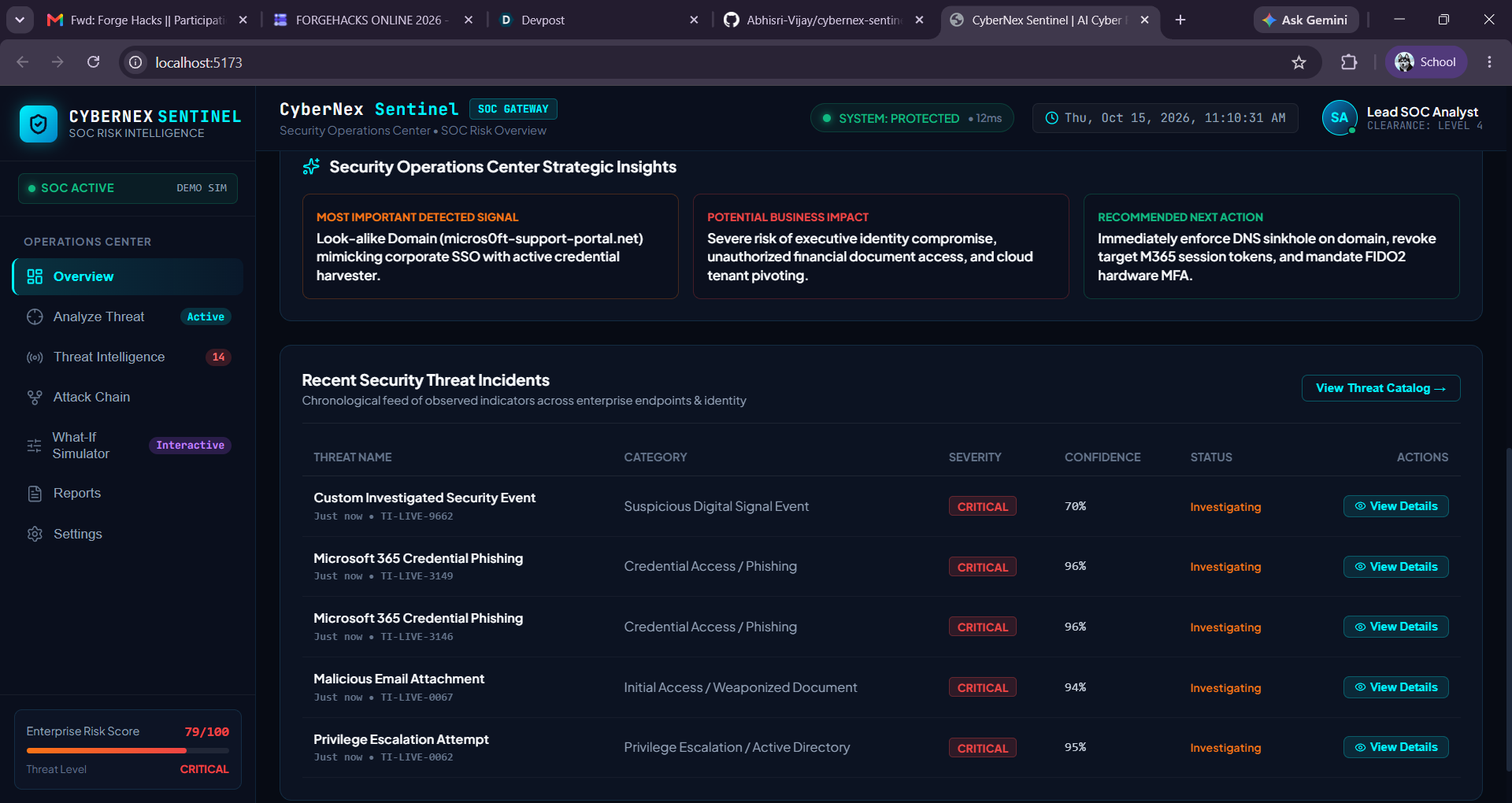
- SOC Overview Dashboard: Displays risk scores, active threats, suspicious signals, critical findings, and threat trends.
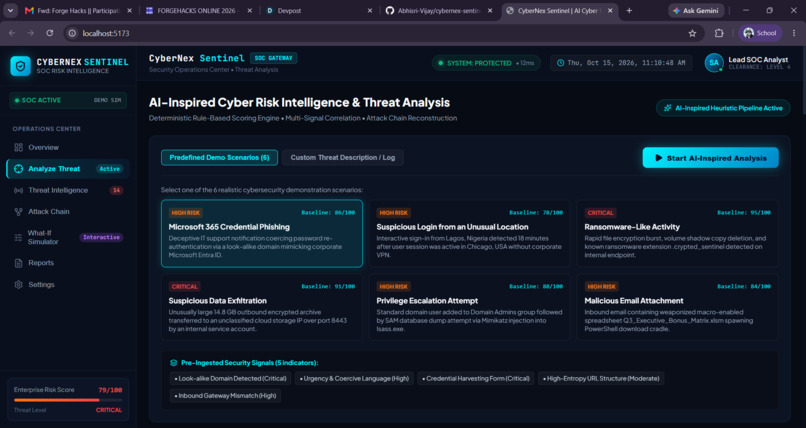
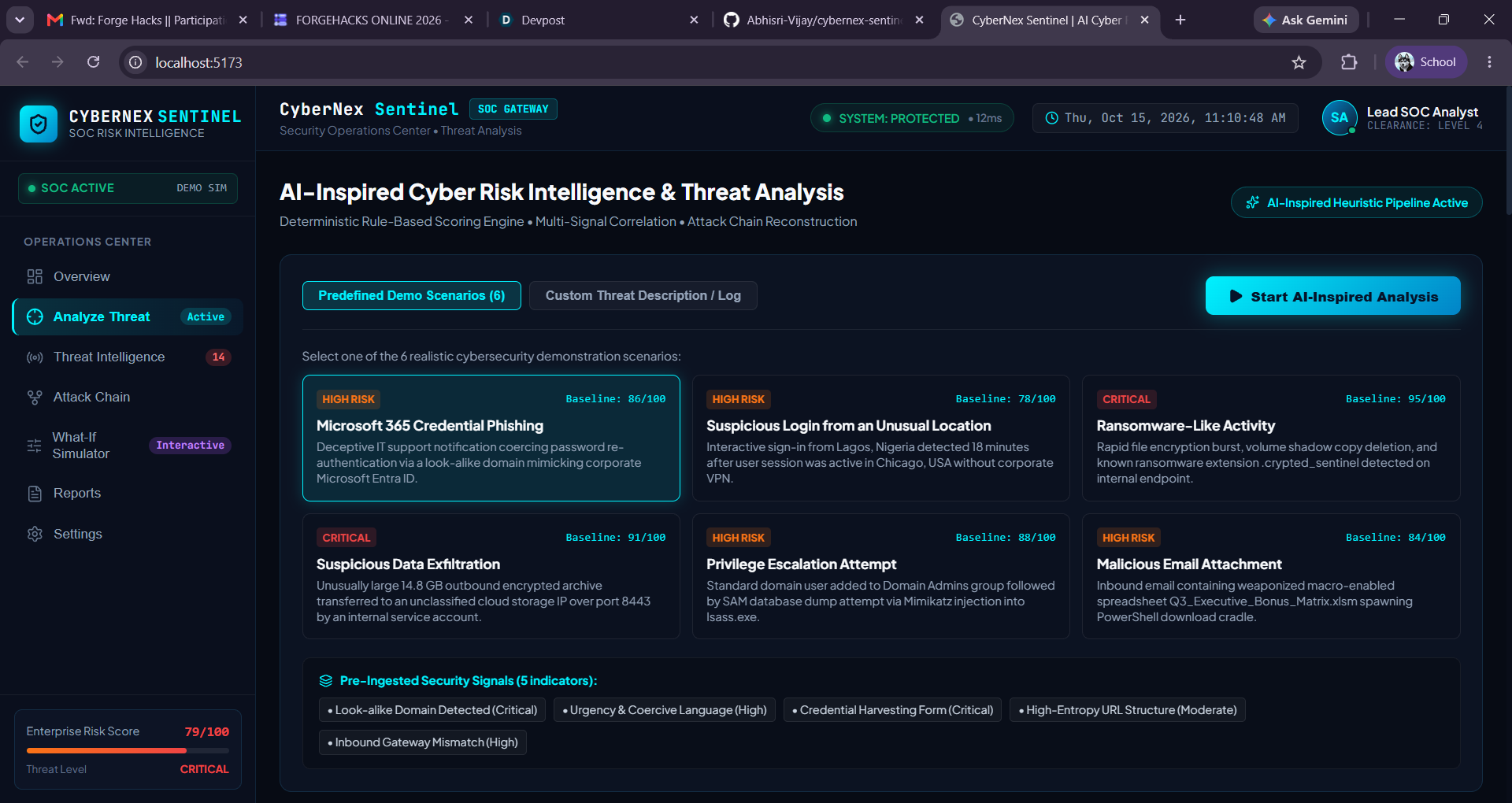
- Threat Analysis: Supports six predefined cybersecurity scenarios and custom threat descriptions.
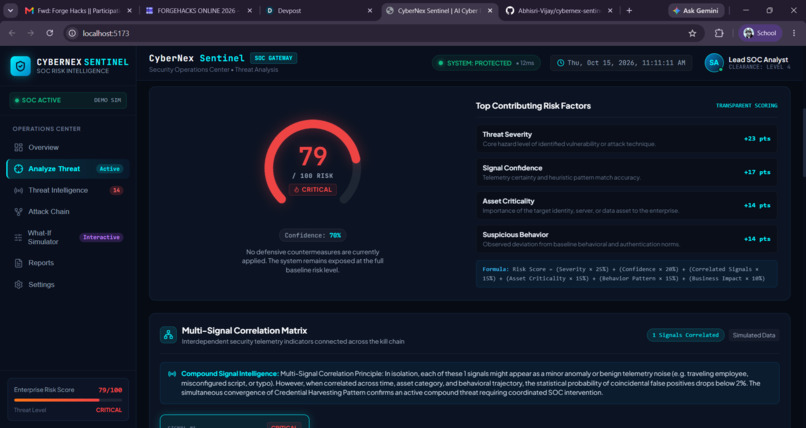
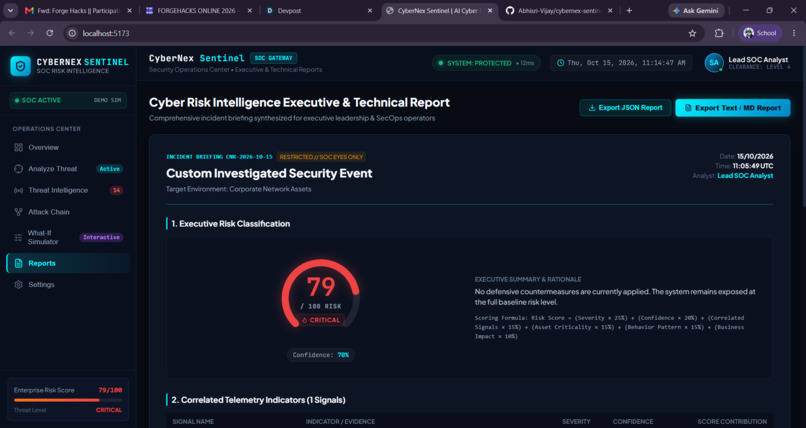
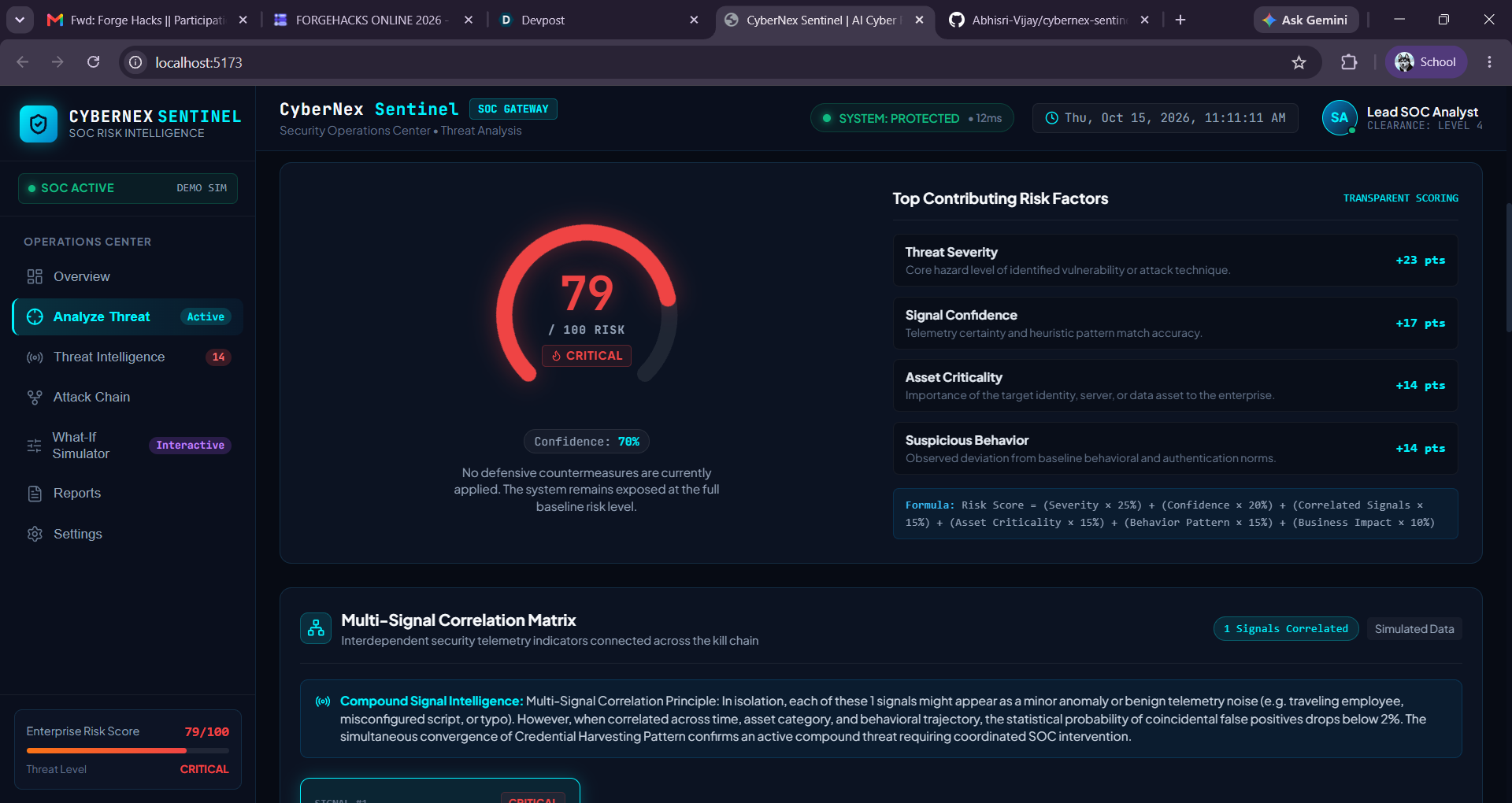
- Risk Scoring Engine: Calculates a normalized risk score using weighted factors such as threat severity, signal confidence, correlated signals, asset criticality, suspicious behavior, and business impact.
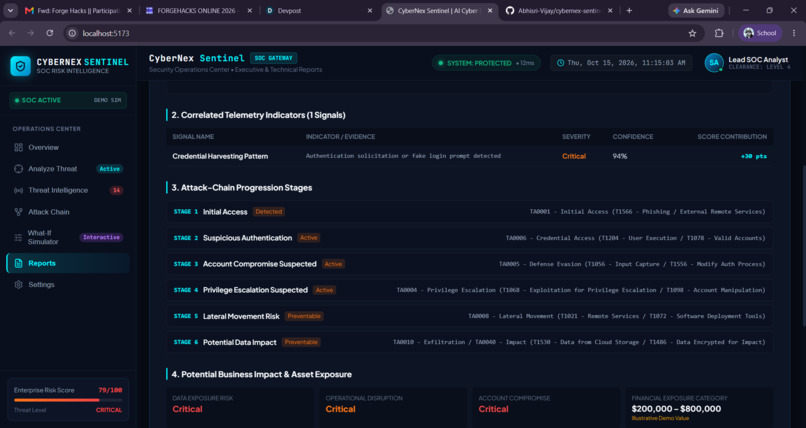
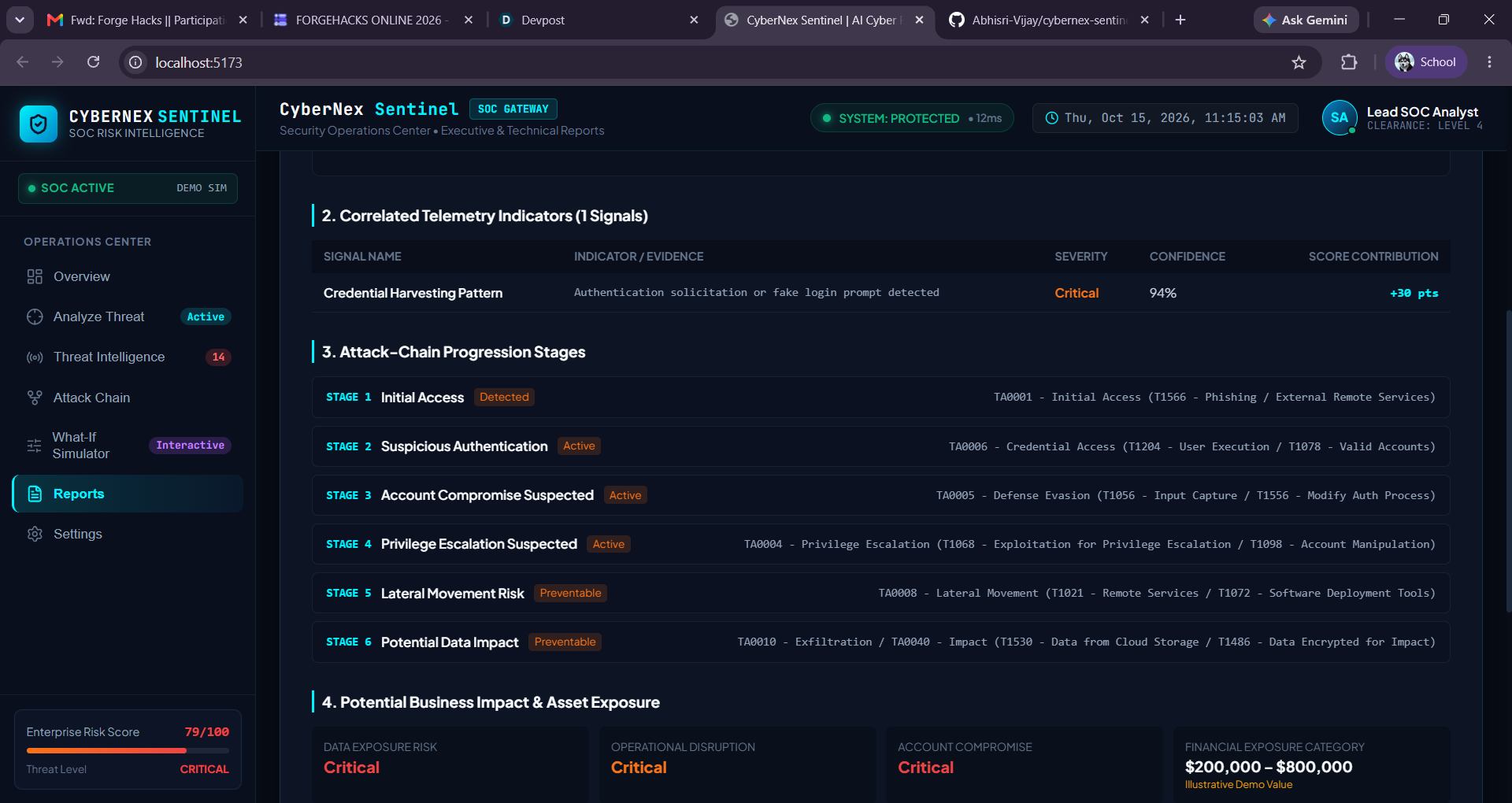
- Multi-Signal Correlation: Connects related security indicators to demonstrate how several suspicious events can collectively suggest a potential threat.
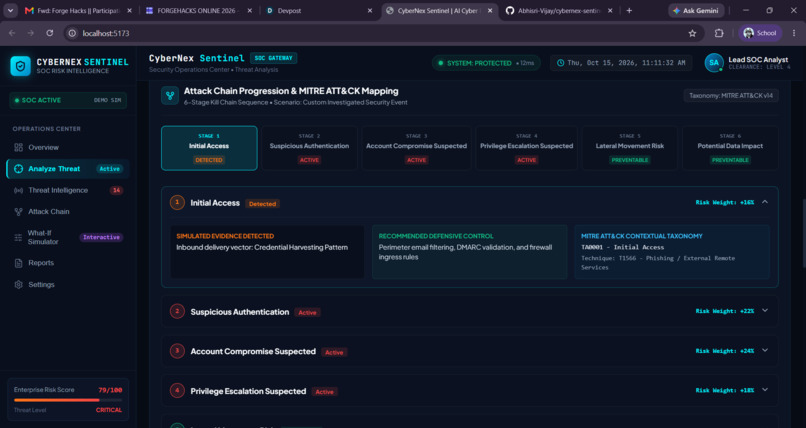
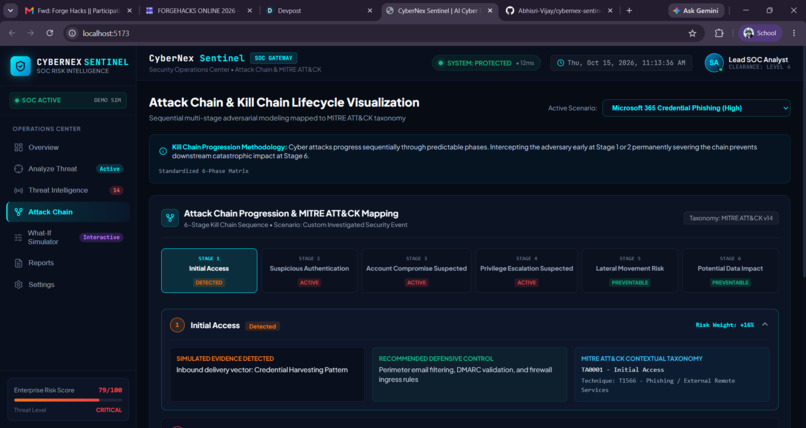
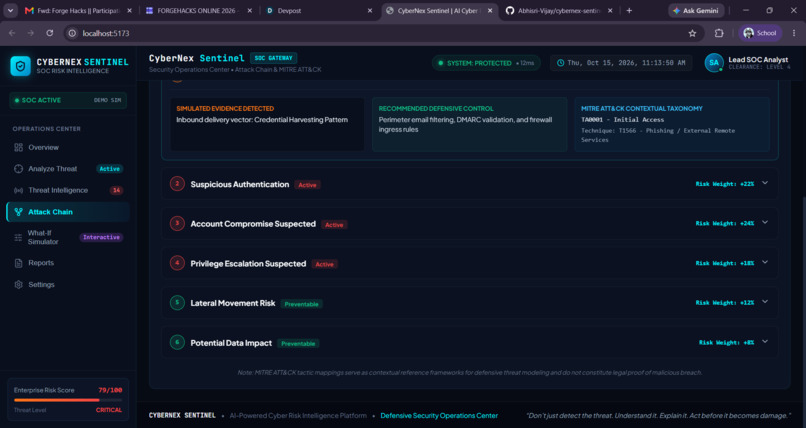
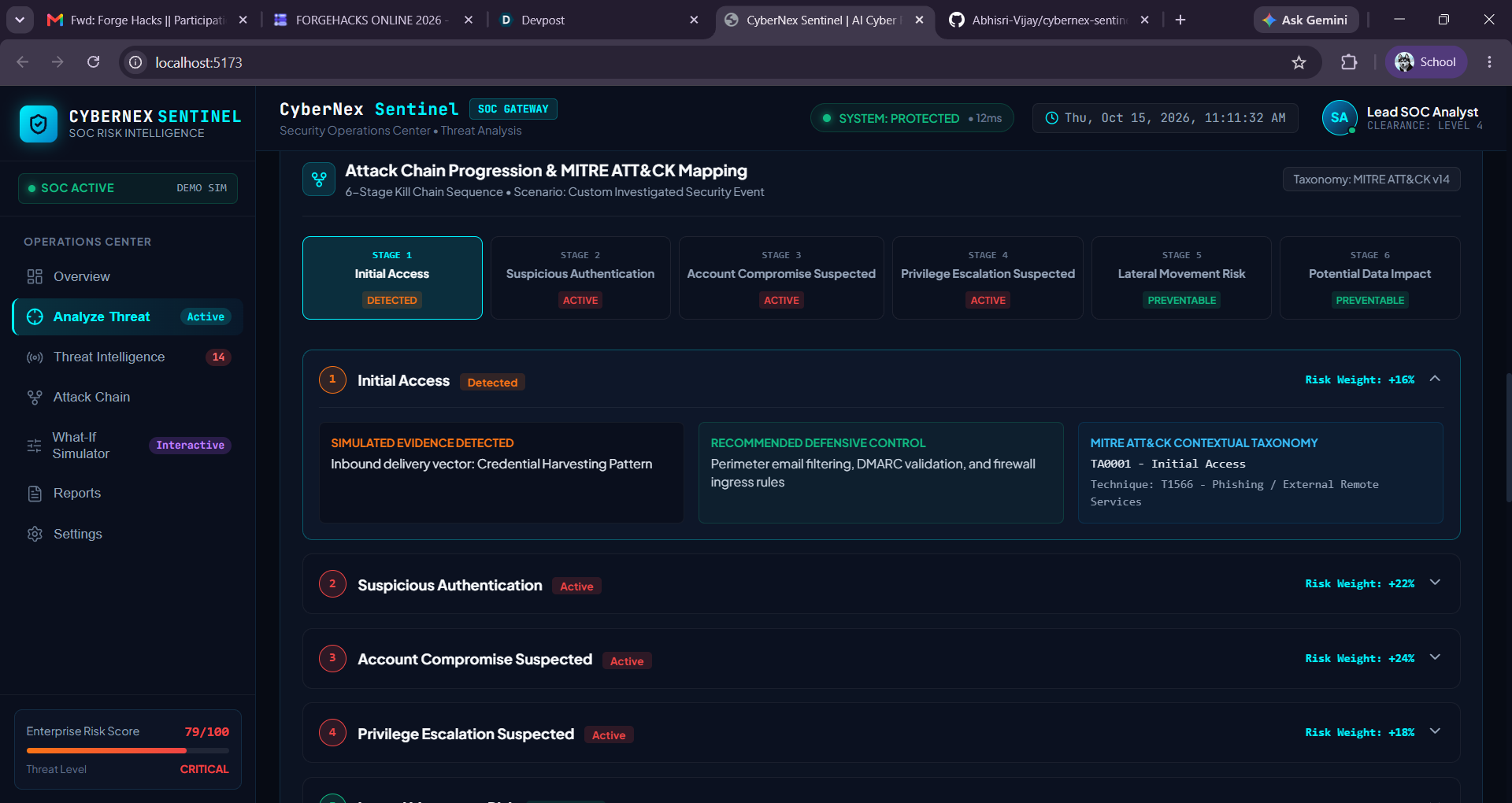
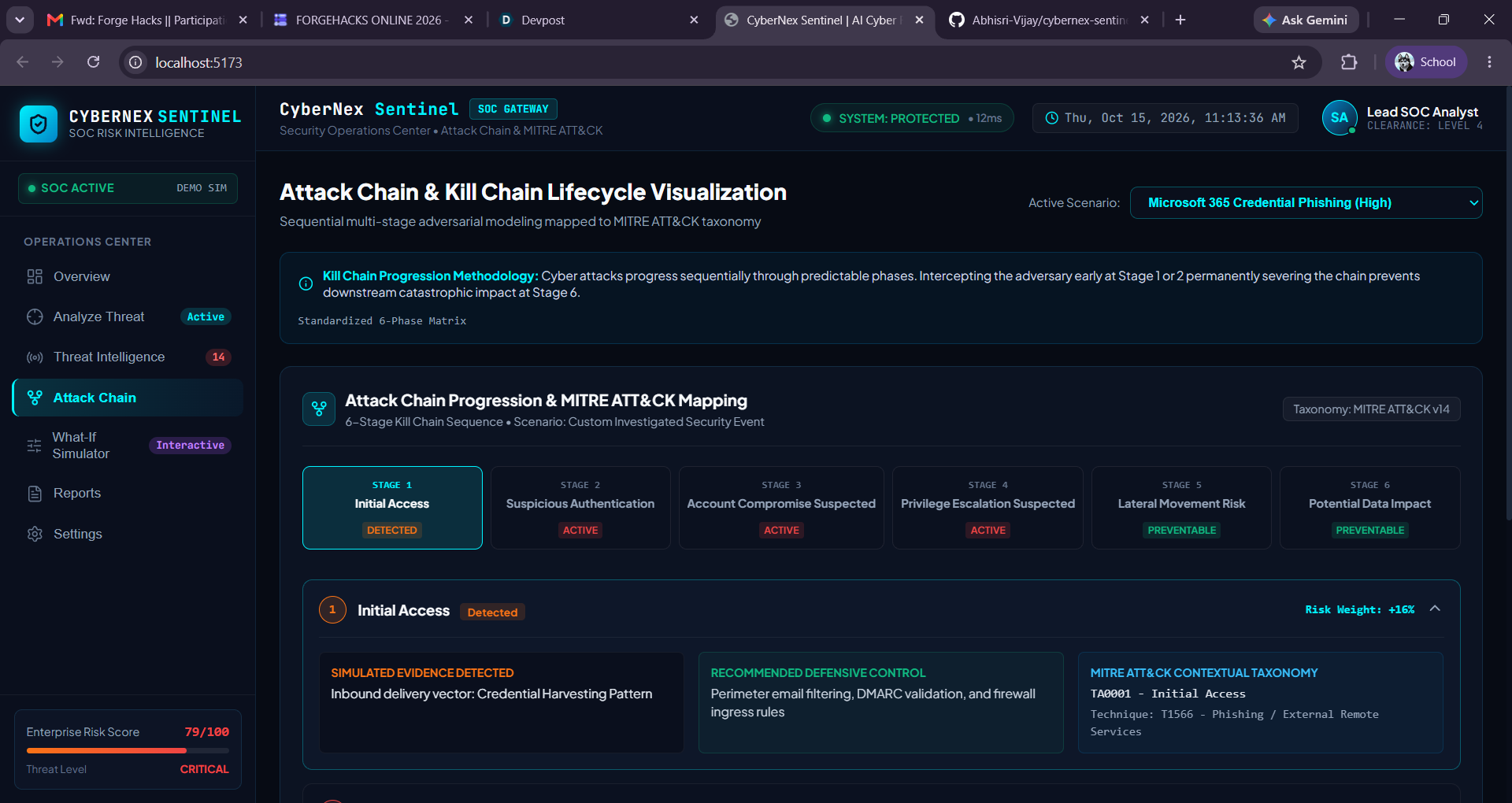
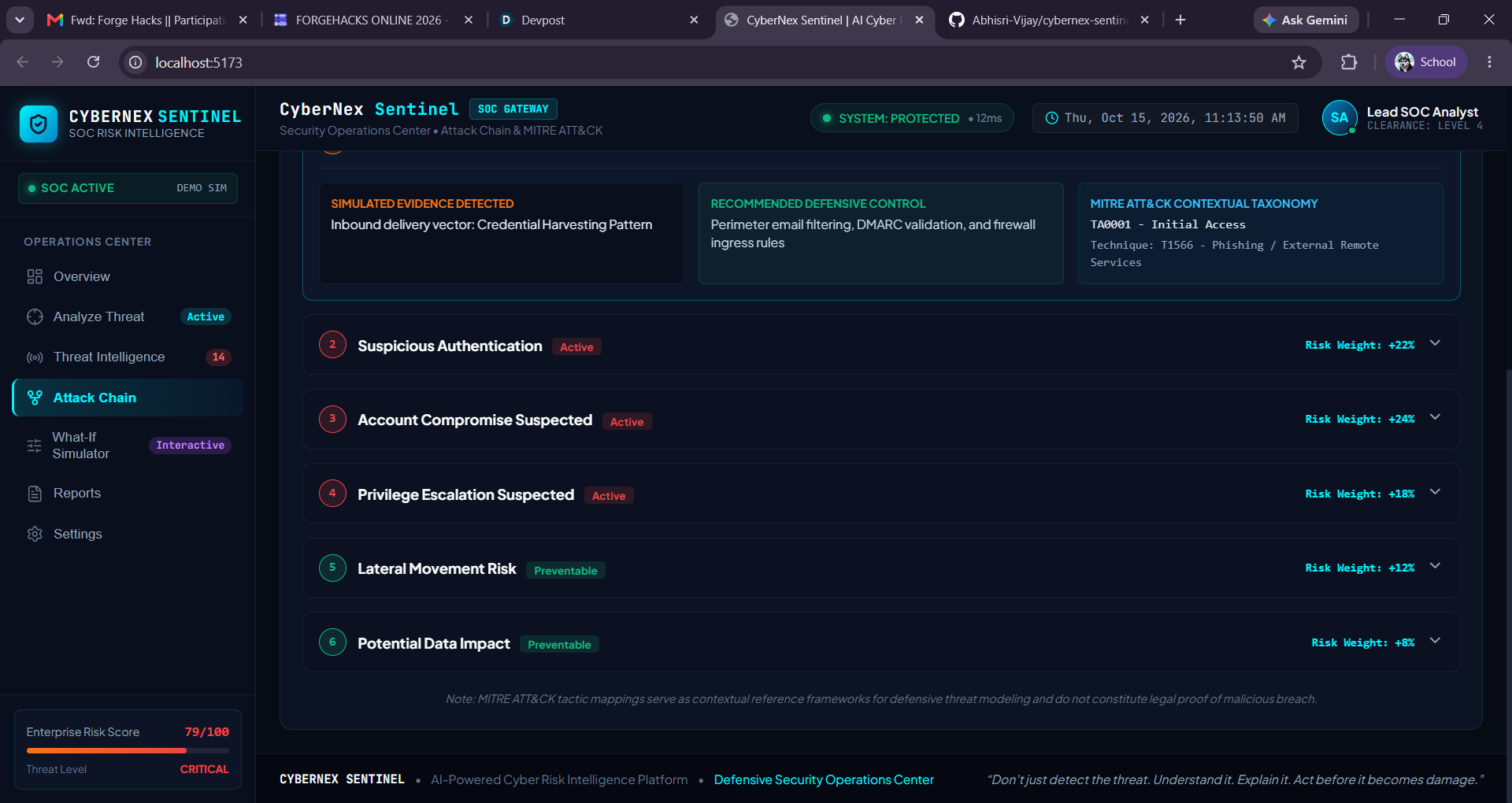
- Attack Chain Visualization: Presents a six-stage potential attack progression with relevant MITRE ATT&CK mappings.
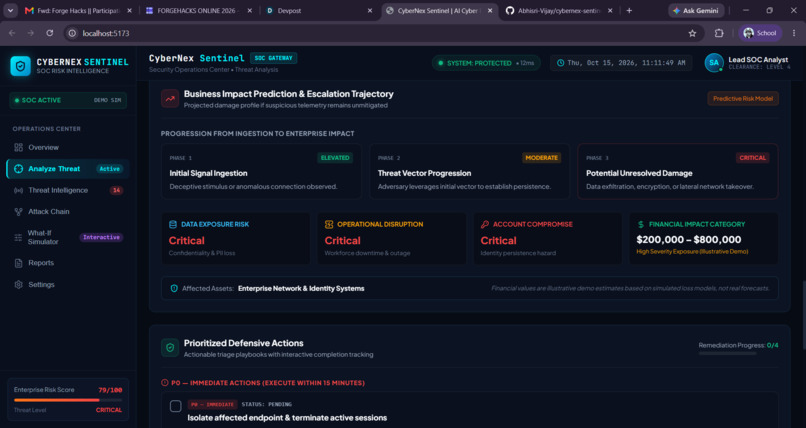
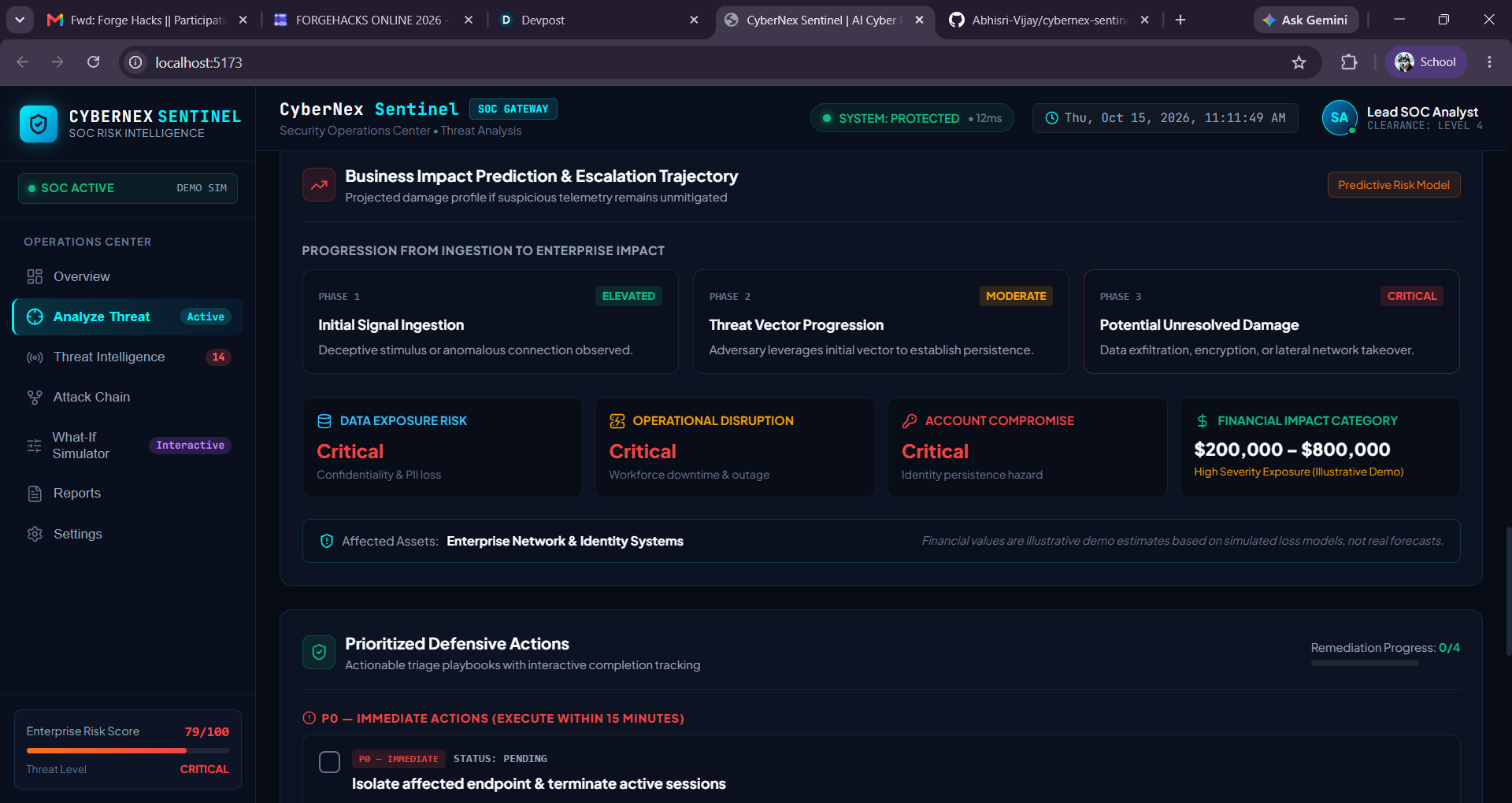
- Business Impact Assessment: Illustrates potential data exposure, operational disruption, and account compromise.
- Prioritized Defense Playbook: Organizes suggested defensive actions into P0 (Immediate), P1 (High Priority), and P2 (Recommended).
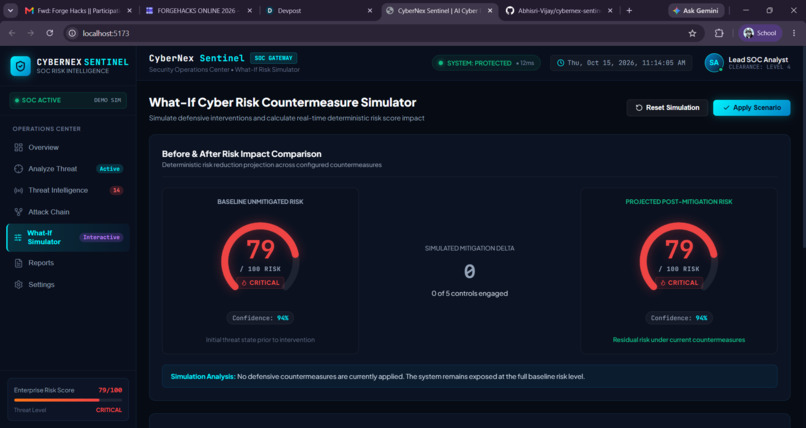
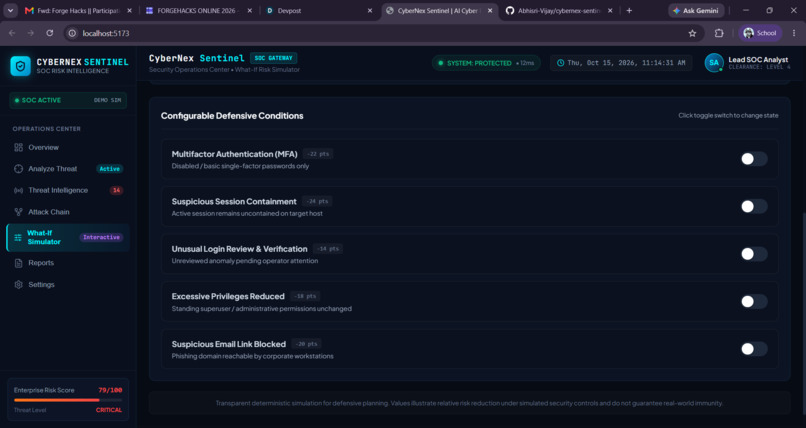
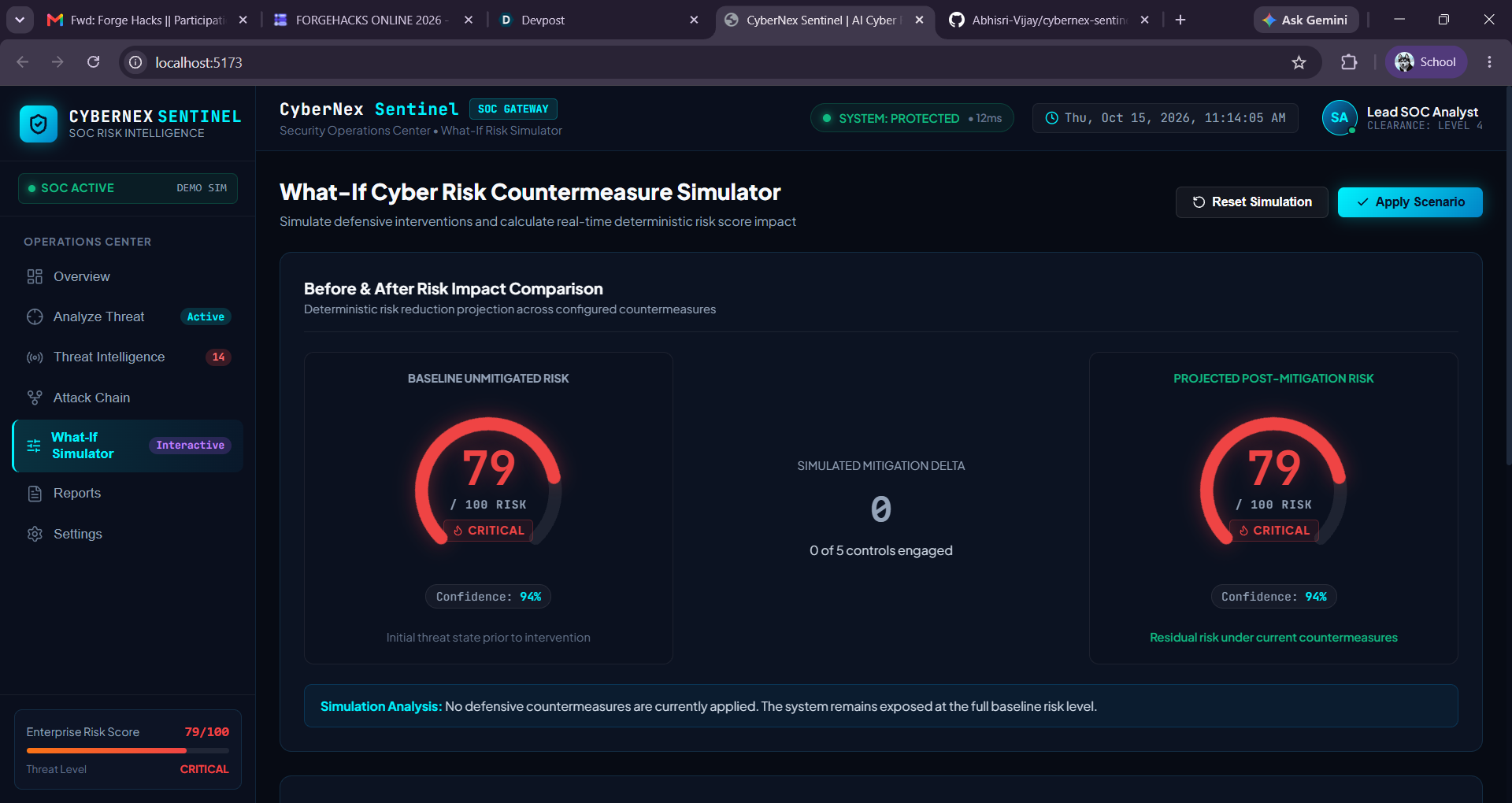
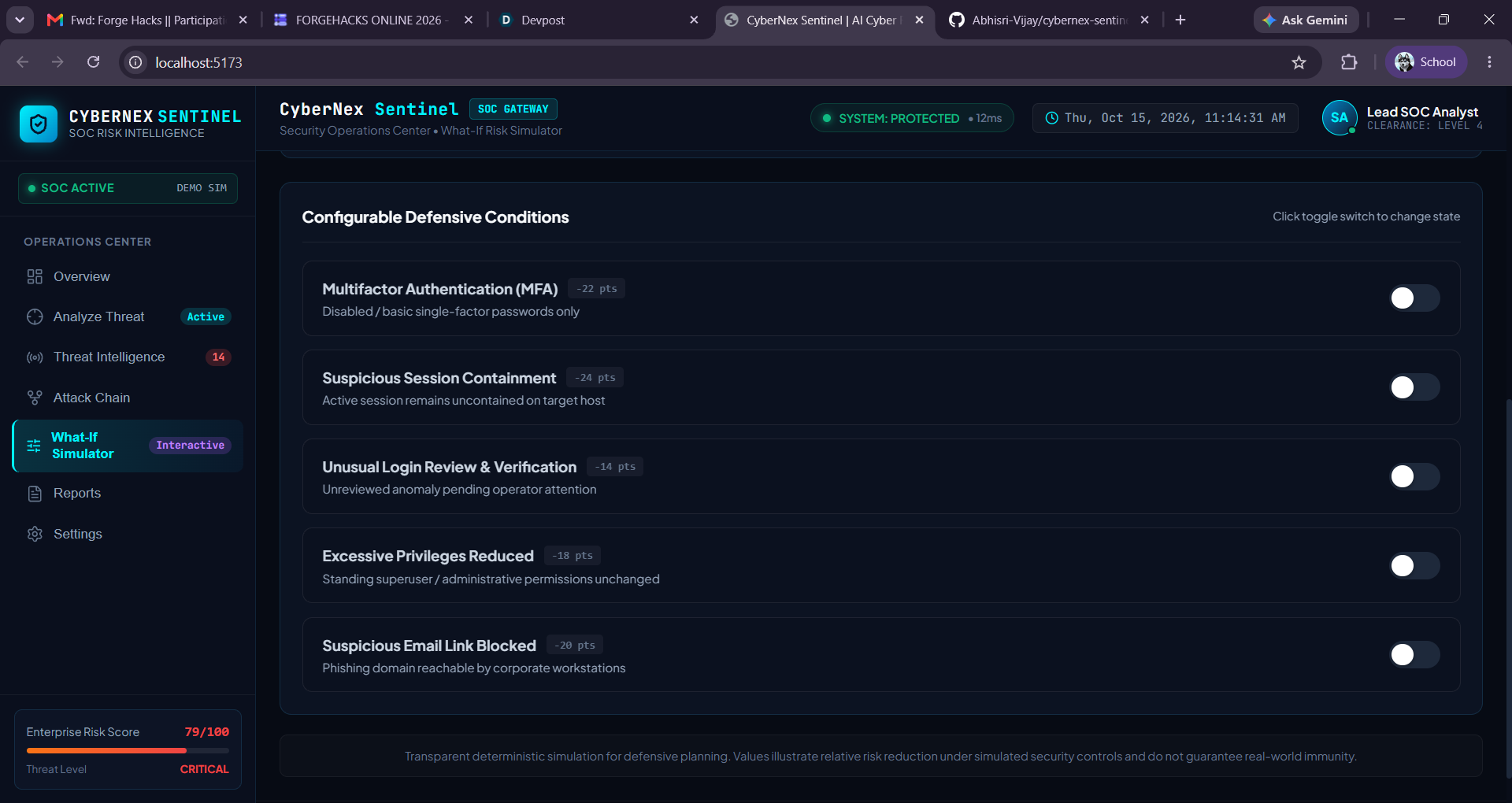
- What-If Risk Simulator: Demonstrates how controls such as enforcing MFA, containing suspicious sessions, and reducing excessive privileges can change a projected risk score.
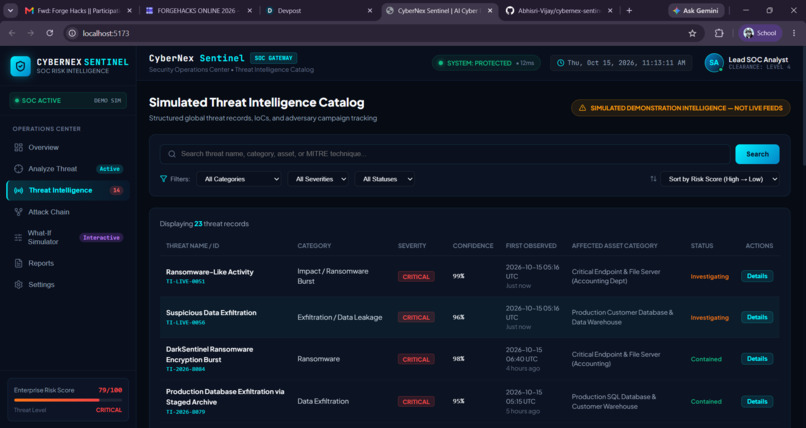
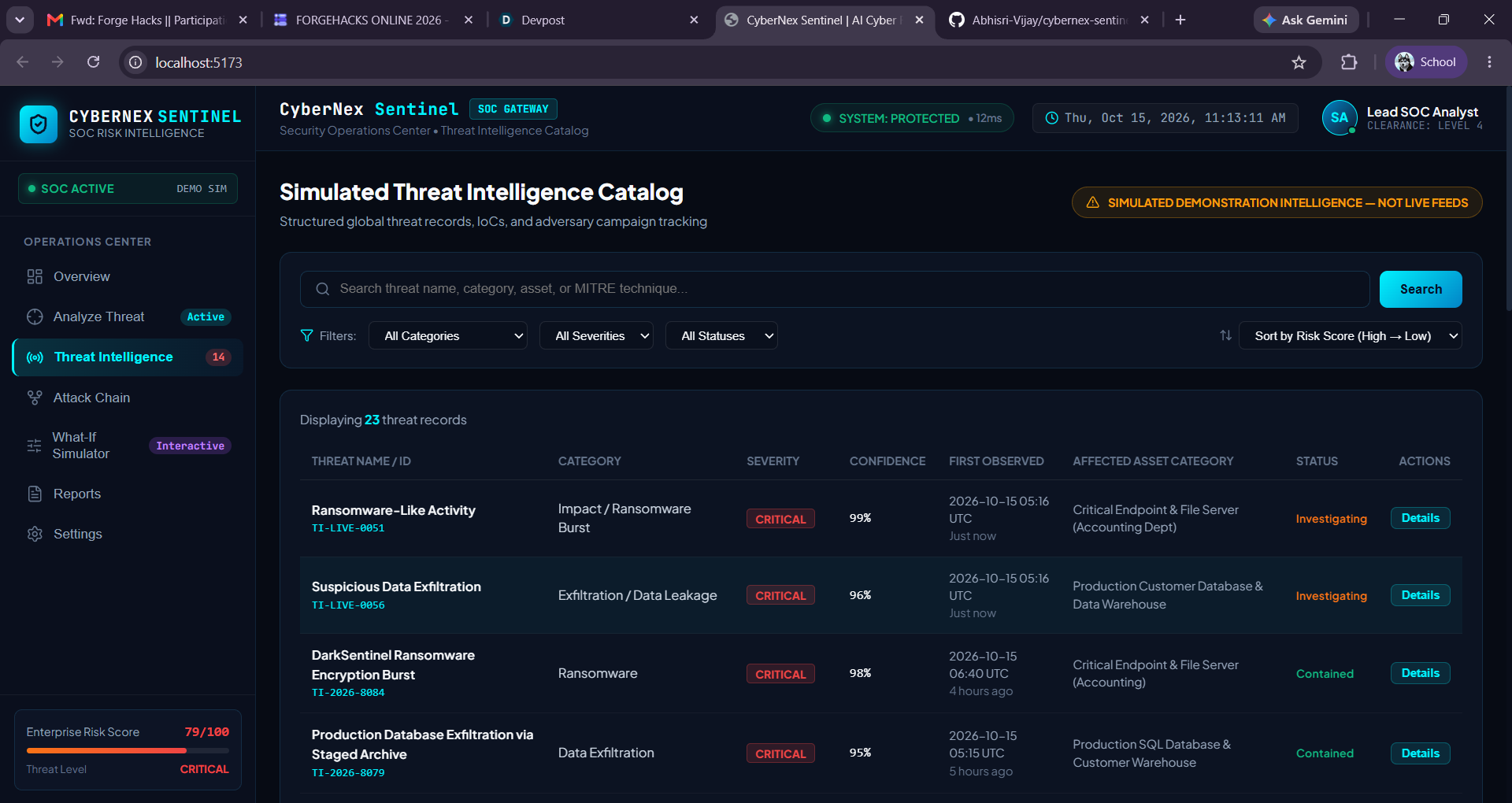
- Threat Intelligence Catalog: Supports searching, filtering, sorting, and inspecting simulated threat records.
- Report Export: Generates JSON and text-based reports for analysis and documentation.
How We Built It
We built CyberNex Sentinel as a full-stack web application using React and Vite for the frontend, Node.js and Express.js for the backend API, and JavaScript for the application logic.
The frontend provides a dashboard-based interface with interactive charts, risk indicators, signal correlation views, attack-chain visualization, and simulation controls.
The backend exposes endpoints for retrieving demo scenarios, analyzing threats, calculating risk scores, retrieving threat records, and simulating defensive controls.
The risk-scoring engine combines weighted security factors into a score from 0 to 100. The platform then categorizes the score, identifies contributing factors, presents a potential attack progression, and recommends prioritized defensive actions.
The application uses deterministic, locally processed demo data and does not require paid third-party AI APIs or live cloud-based language models.
Challenges We Faced
One of our main challenges was bringing several cybersecurity concepts together into a single, understandable workflow. Risk scoring, signal correlation, attack progression, business impact, and remediation priorities each provide different information, so we needed to connect them without overwhelming the user.
We also worked on making the interface interactive, ensuring that scenario selection updates the analysis, and connecting the React frontend with the Express backend. Resolving local development server and API connectivity issues was another important part of the implementation process.
What We Learned
Through this project, we strengthened our understanding of full-stack development, REST API integration, modular JavaScript architecture, cybersecurity risk assessment, data visualization, and interactive dashboard design.
We also learned the importance of explainability in security tools: presenting a risk score alone is not enough. Analysts need to understand which signals contributed to the score, how a potential attack could progress, and which defensive actions may reduce the risk.
What's Next
Future improvements could include integrating real security telemetry, connecting trusted threat-intelligence feeds, evaluating the scoring model against labelled datasets, introducing authenticated user roles, and deploying the platform for controlled evaluation.
Important Note
CyberNex Sentinel is an educational prototype for demonstrating cybersecurity risk analysis. Its scenarios, threat indicators, attack chains, and financial impact estimates are illustrative. Risk scores and simulated control outcomes are not guarantees of real-world threat detection or risk reduction. The current version does not provide live enterprise security monitoring.
GitHub Repository: https://github.com/Abhisri-Vijay/cybernex-sentinel
What it does
How we built it
Challenges we ran into
Accomplishments that we're proud of
What we learned
What's next for CyberNex Sentinel
Built With
- artificial-intelligence
- css
- cybersecurity
- data-visualization
- development
- express.js
- full
- html
- javascript
- mitre-att&ck
- node.js
- react
- rest-api
- risk-assessment
- stack
- threat-intelligence
- vite


Log in or sign up for Devpost to join the conversation.