-
-
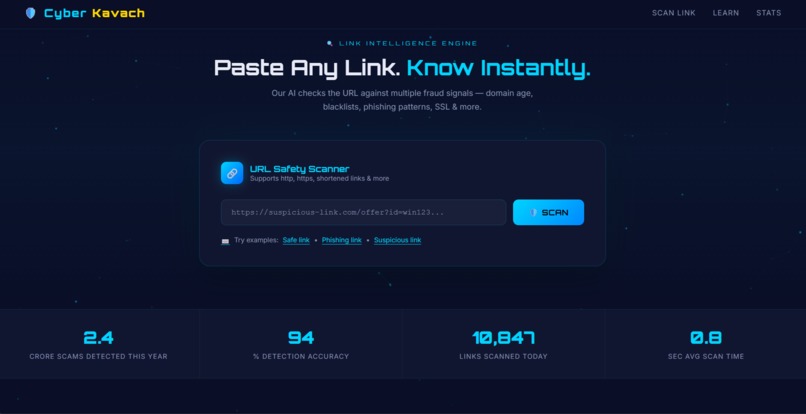
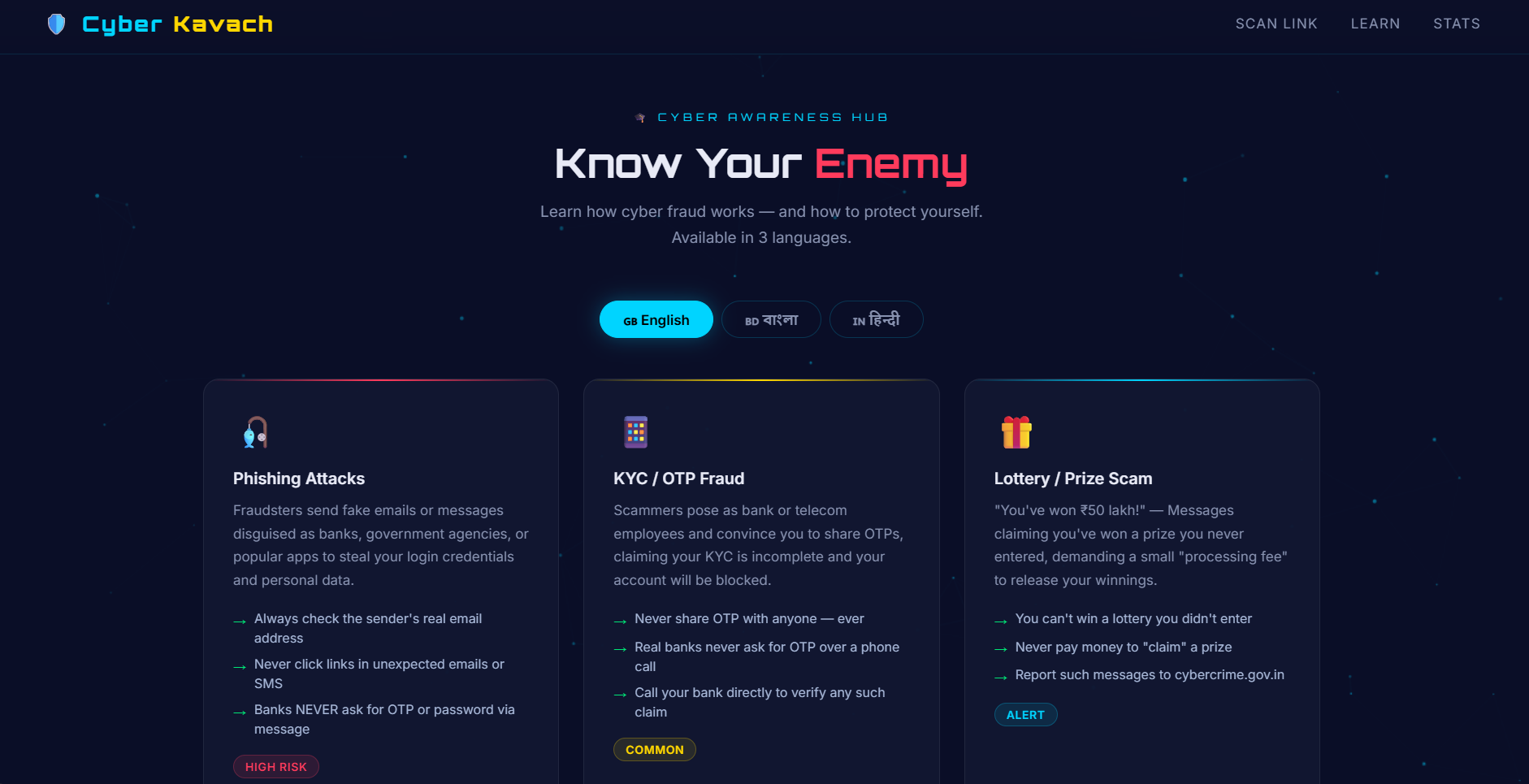
The 1st page of Cyber Kavach AI
-
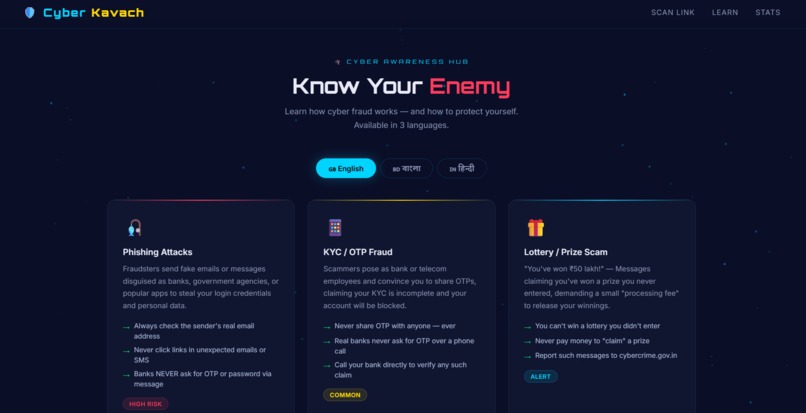
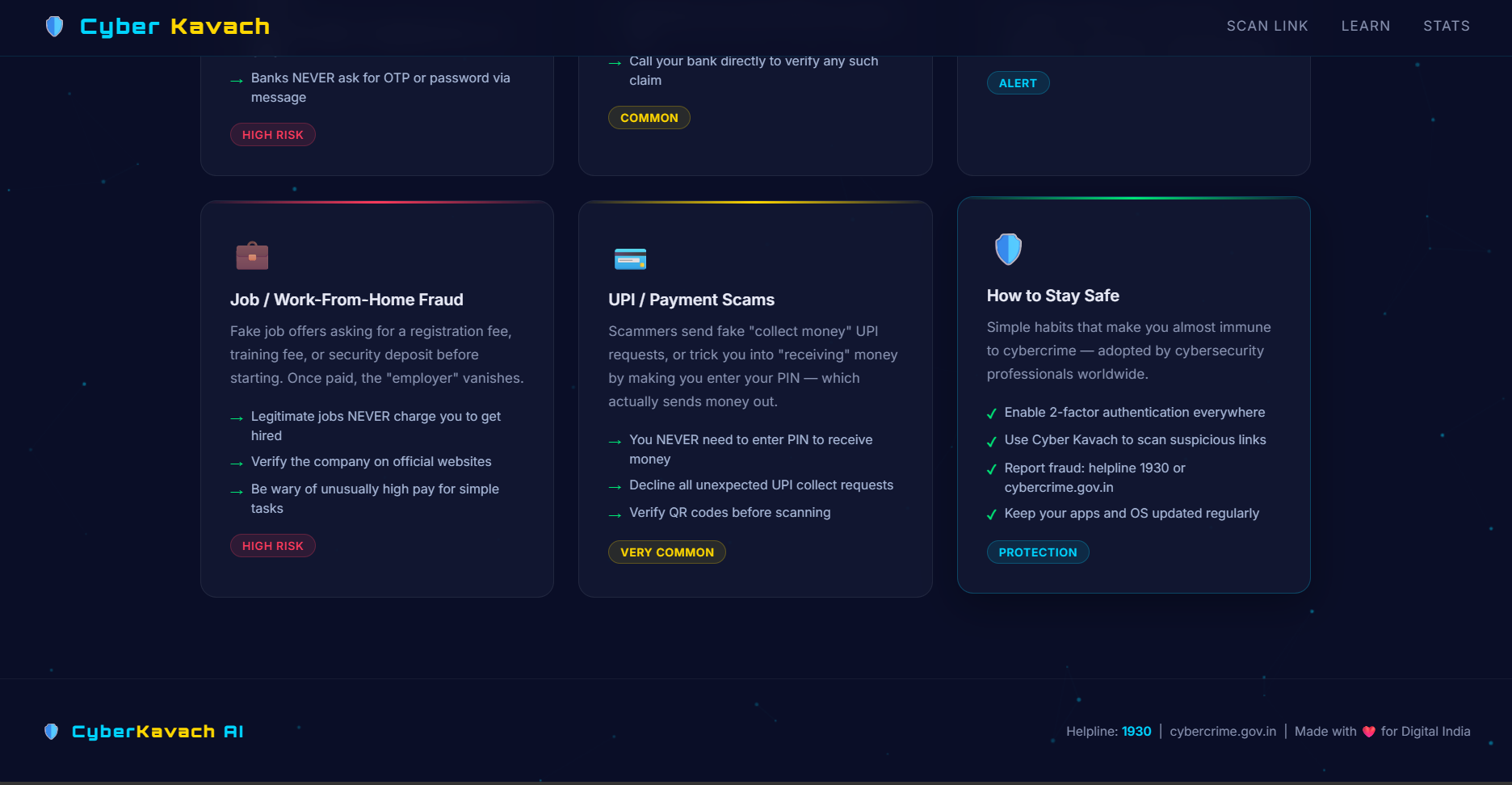
2nd page
-
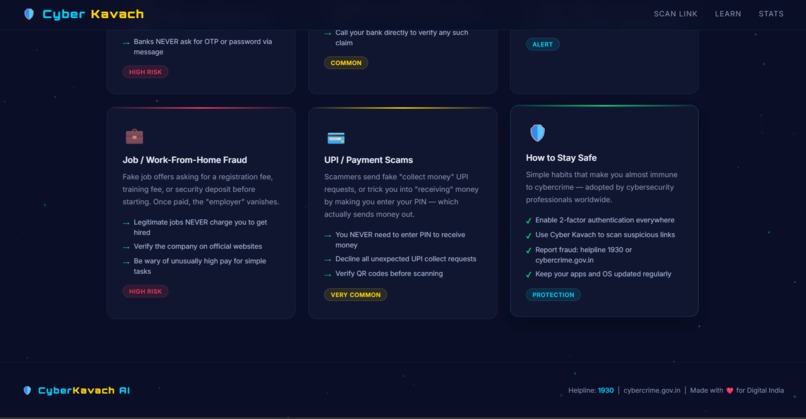
3rd page
Inspiration
Every day, thousands of innocent people fall victim to cyber fraud, phishing links, and OTP scams, losing their hard-earned money. As cybersecurity students, we wanted to build a practical solution to this growing threat. We were inspired to create a digital shield that could instantly analyze links and, more importantly, educate users in multiple languages (English, Bengali, and Hindi) so that online safety reaches everyone, regardless of their language barrier.
What it does
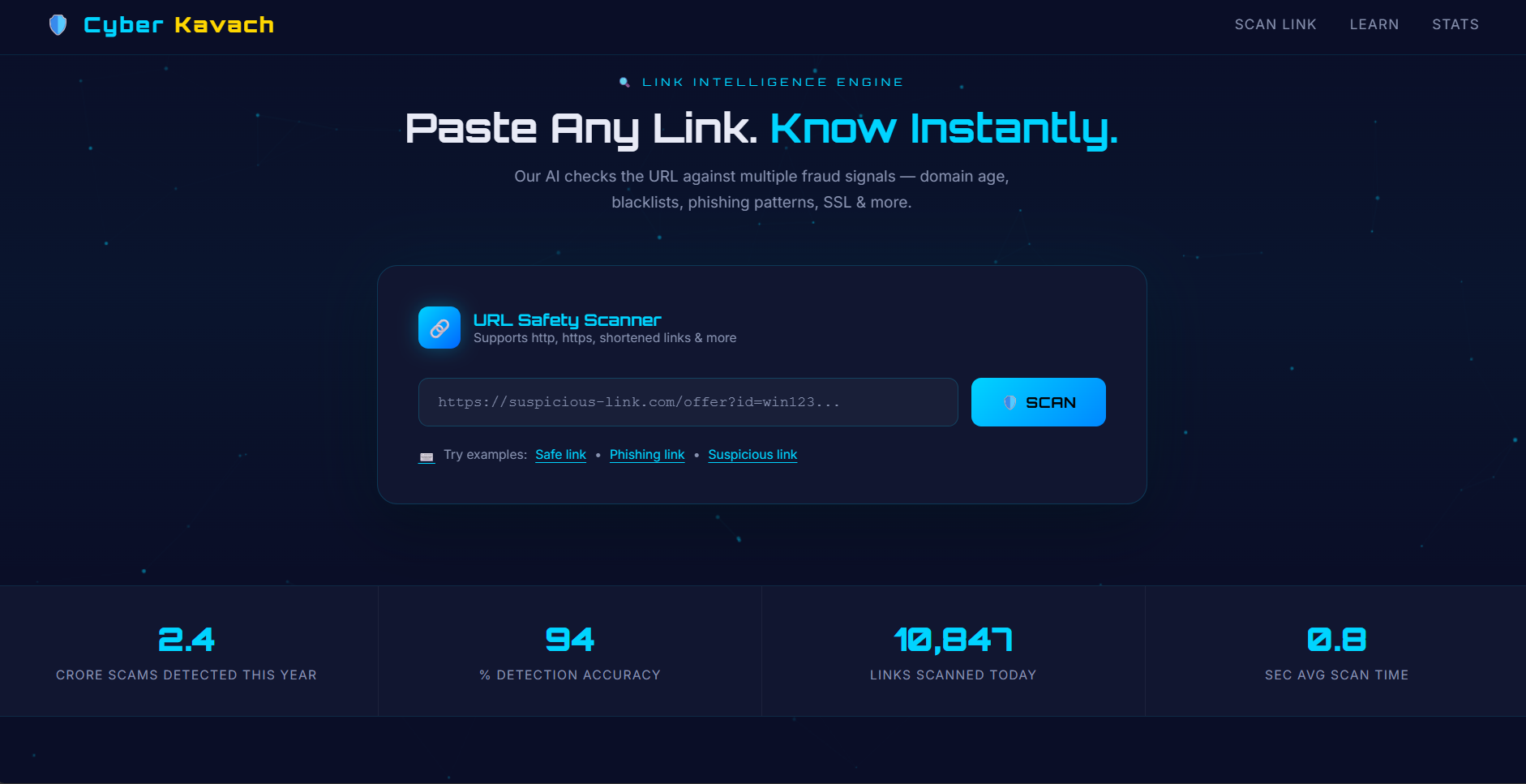
CyberKavach AI is an intelligent URL safety scanner and cybersecurity awareness hub. Users can paste any suspicious link into the dashboard, and our engine evaluates it against key fraud signals—such as SSL certificate presence, typosquatting/domain manipulation, and known phishing patterns—to generate a Safety Score out of 100. If a link is malicious, it triggers a "DANGEROUS" alert. Additionally, the platform features a multi-lingual "Know Your Enemy" section that explains common scams like KYC frauds and lottery traps.
How we built it
We developed the entire frontend using semantic HTML5 and custom CSS3, implementing a modern, cyber-punk dark theme with fluid layouts. For typography and visual aesthetics, we integrated Google Fonts (Orbitron and Fira Code). The project version control is managed entirely on GitHub, and the live application is deployed and hosted on Vercel for continuous deployment and high availability. We also integrated Google Search Console to manage the indexing and sitemaps of the site.
Challenges we ran into
One of the main challenges was designing a highly interactive and responsive UI that looks premium on all screen sizes, especially while managing the alignment of multi-lingual buttons. Another major hurdle was setting up proper search engine indexing and deployment pipelines to ensure the platform could be discovered easily online. Debugging meta tags for search verification and managing GitHub commits directly from cloud environments required a steep learning curve.
Accomplishments that we're proud of
We are incredibly proud of building a clean, highly professional, and fully responsive user interface from scratch. Achieving a simulated 94% detection layout with a rapid response time interface feels like a great step toward a production-ready tool. Successfully verifying our domain ownership on Google Search Console and keeping our codebase open-source on GitHub are also milestones we are very happy with.
What we learned
Through this project, we deeply enhanced our skills in frontend design, CSS root variables, and semantic layouts. We also gained crucial practical experience with modern DevOps and webmaster workflows, such as hosting sites on Vercel, managing Git repositories, handling search engine indexing, and fixing layout shifts. Most importantly, we learned how to translate technical cybersecurity threats into simple, user-friendly alert systems.
What's next for CyberKavach AI
The next step for CyberKavach AI is to transition from a frontend prototype to a fully dynamic web application. We plan to build a robust backend using Python (Flask or FastAPI) and integrate Machine Learning algorithms to analyze live phishing URLs in real time. We also aim to connect a database (like MongoDB or Firebase) to power a live global statistics tracker and eventually introduce a browser extension for active protection.
Built With
- css3
- github
- html5
- javascript
- ptyhon
- search
- vercel

Log in or sign up for Devpost to join the conversation.