-
-

-

-

-
-

gamified learning badge



Inspiration
The rising number of cyber threats in recent years has highlighted the critical need for robust cybersecurity measures. Inspired by the desire to protect sensitive information and ensure the safety of online activities, we embarked on creating CyberGuard. Our goal was to develop a comprehensive system that could detect and mitigate various cyber threats.
What it does
CyberGuard is a cybersecurity solution designed to identify and respond to a wide range of cyber threats, including phishing, malware etc. It analyzes network traffic patterns to differentiate between normal and suspicious behavior, providing alerts and automated responses to potential threats.
How we built it
We built CyberGuard using a combination of AI and ML techniques:
Data Collection: We gathered data and labeled datasets of known cyber threats. Data Preprocessing: The data was cleaned and normalized to ensure accuracy. Model Selection: We evaluated several AI models, including neural networks and anomaly detection algorithms, to determine the most effective ones for real-time threat detection. Model Training: The chosen models were trained on the preprocessed data and validated using testing datasets.
Challenges we ran into
During the development of CyberGuard, we encountered several challenges:
Data Quality: Ensuring the accuracy and completeness of the data was a significant challenge, as inconsistencies could lead to incorrect threat detection.
Model Selection: Identifying the most effective models for different types of threats required extensive experimentation and fine-tuning.
Accomplishments that we're proud of
We are proud of several key accomplishments:
Effective Threat Detection: CyberGuard successfully identifies a wide range of cyber threats with high accuracy, providing timely alerts and responses.
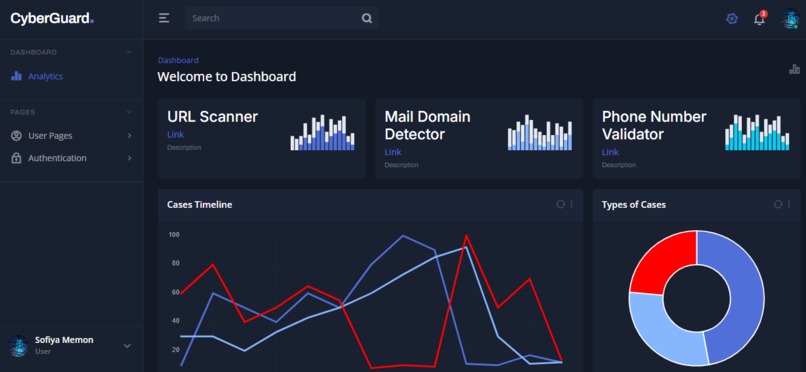
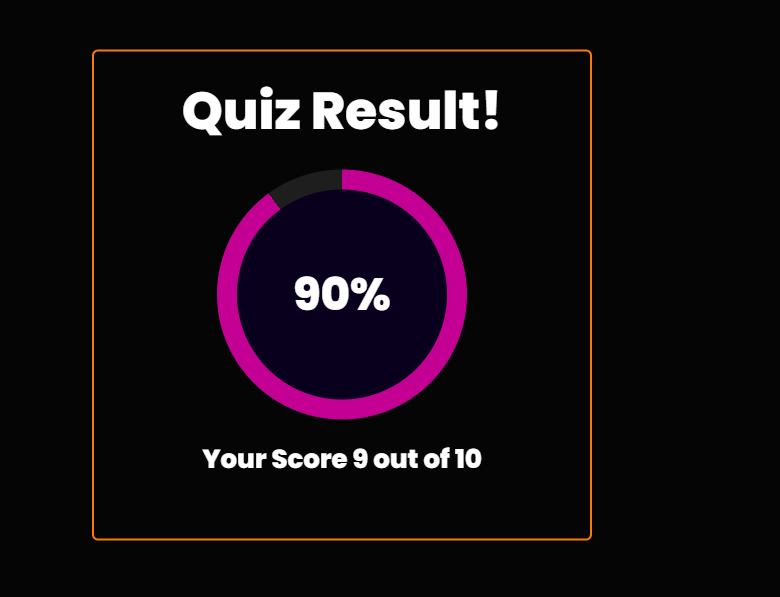
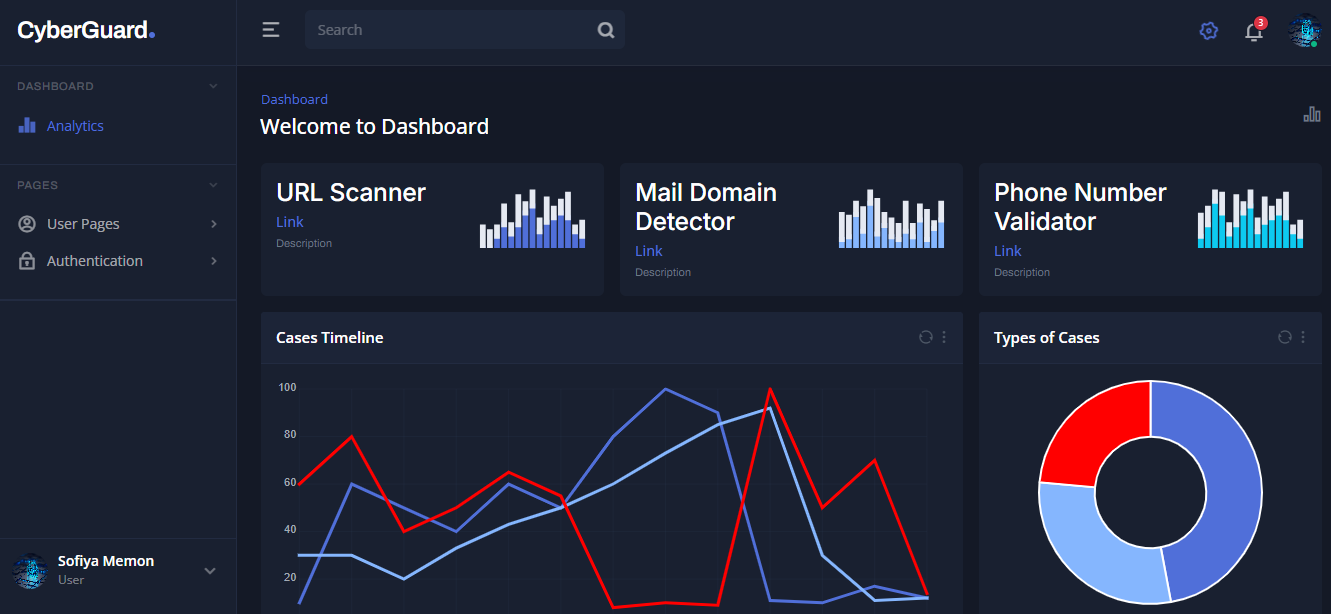
User Engagement: The interactive dashboard and AI-oriented learning tools enhance user awareness and engagement, contributing to better cybersecurity practices.
Scalability: The system is designed to handle large volumes of network traffic, making it suitable for both small and large organizations.
What we learned
Throughout the development of CyberGuard, we gained valuable insights into cybersecurity:
Importance of Data Quality: High-quality data is crucial for accurate threat detection and model training.
Model Adaptability: Different models excel at detecting different types of threats, underscoring the importance of using a diverse set of algorithms.
User Education: Educating users about cybersecurity practices significantly enhances the overall effectiveness of the system.
What's next for CyberGuard
Looking ahead, we plan to further enhance CyberGuard by:
Expanding Threat Coverage: Continuously updating the system to detect emerging threats and new attack vectors.
Improving User Interface: Enhancing the interactive dashboard and learning tools to provide a more intuitive and engaging user experience.
Integration with Other Systems: Developing integrations with other security tools and platforms to create a comprehensive cybersecurity ecosystem.


Log in or sign up for Devpost to join the conversation.