-
-
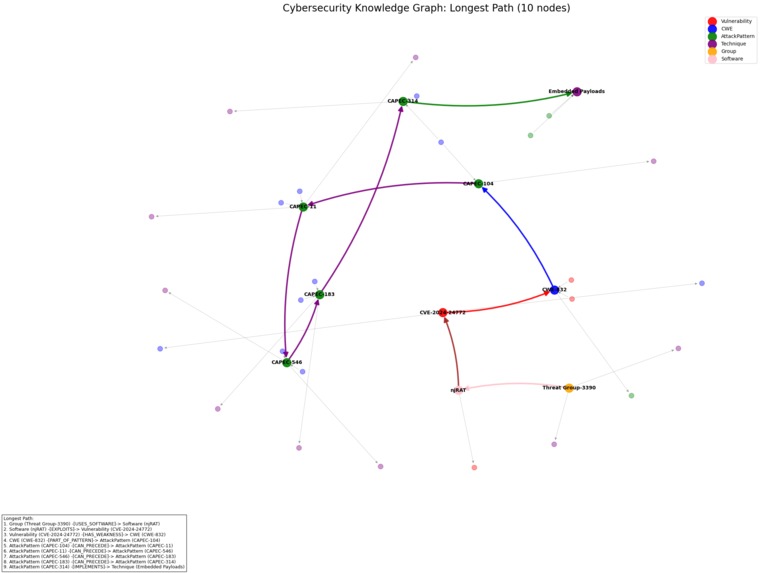
Sample Attack Path
-
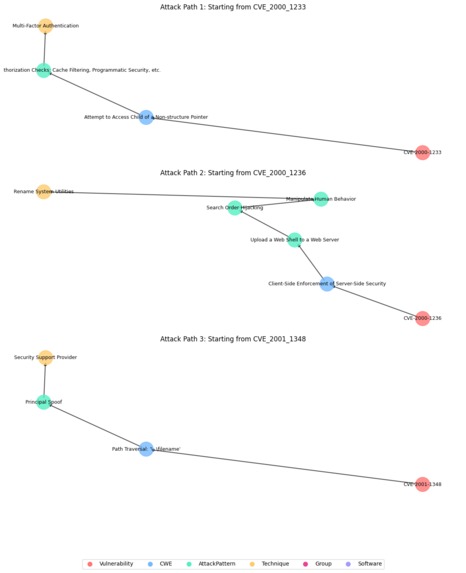
Attack Pattern Output
-
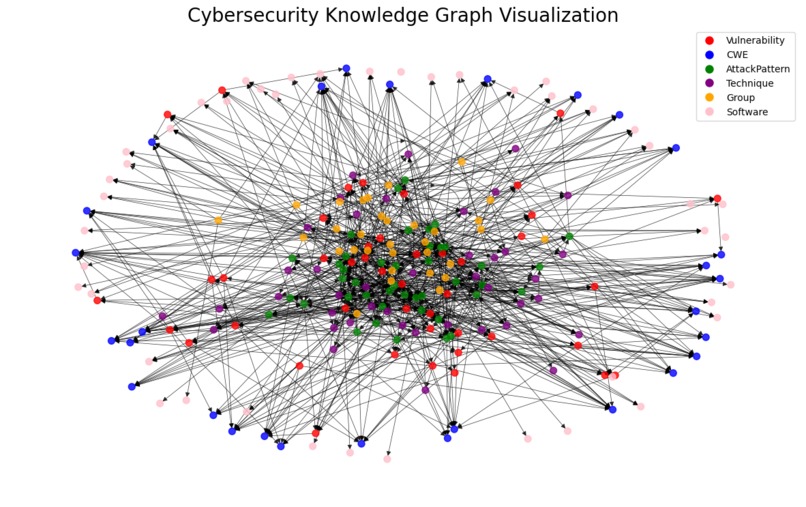
Sample Dataset
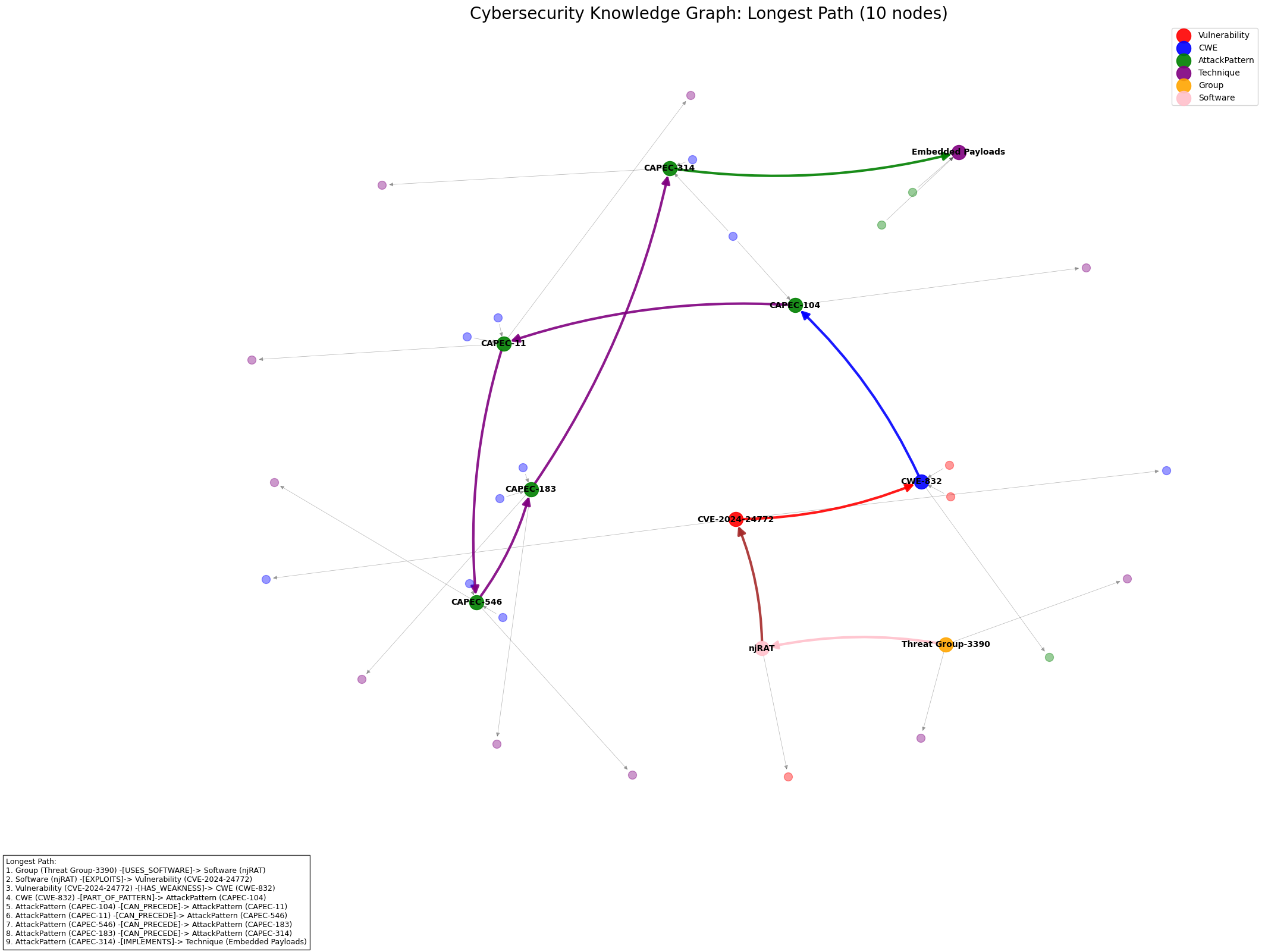
Inspiration
Our inspiration came from witnessing the persistent challenge that cybersecurity professionals face every day: drowning in vulnerability data while starving for actionable intelligence. Security teams are overwhelmed by thousands of vulnerabilities to patch, hundreds of attack techniques to understand, and dozens of threat actors to monitor. The critical connections between these elements—which vulnerabilities will actually be exploited, by whom, and how—remain largely invisible. We realized that graph technology, accelerated by NVIDIA GPU computing, could illuminate these hidden attack paths and transform how organizations prioritize their security efforts.
What it does
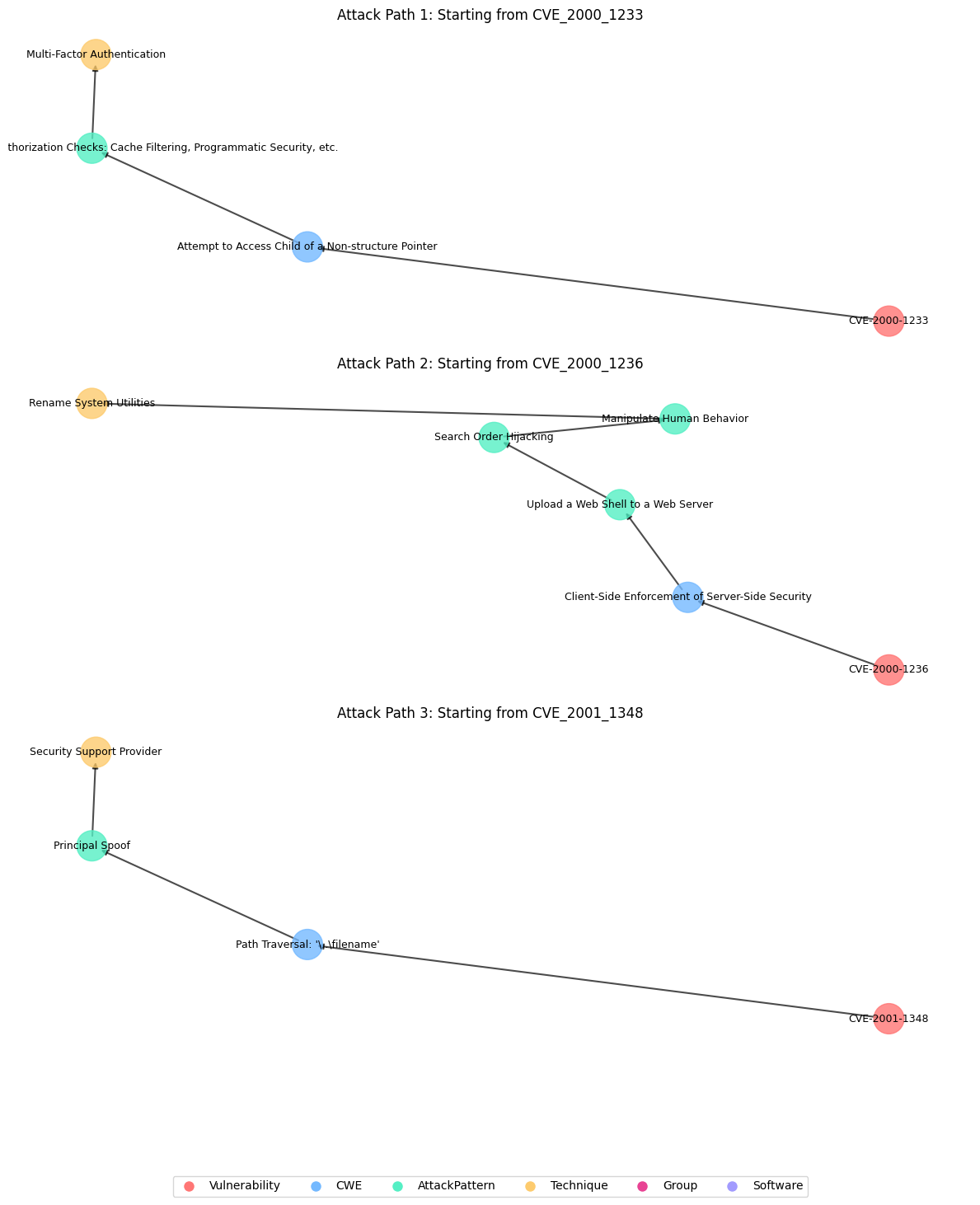
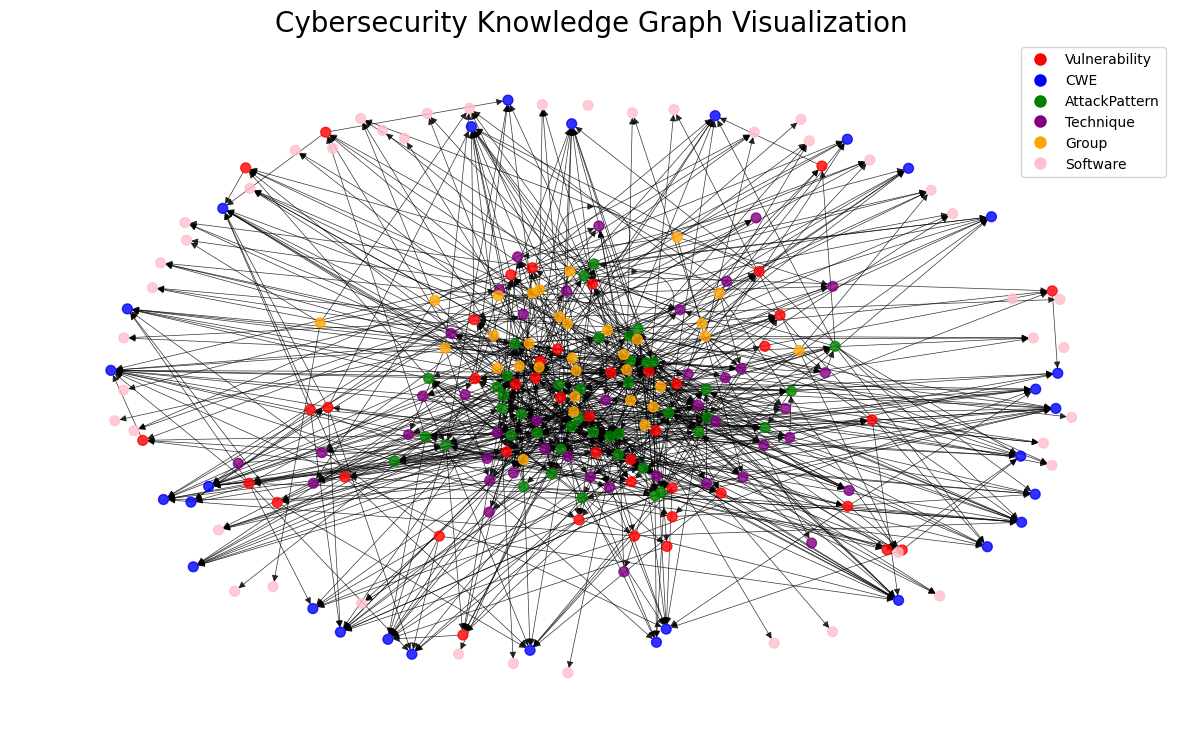
CyberGraph Sentinel is a GPU-accelerated cybersecurity knowledge graph that connects vulnerabilities (CVEs), weaknesses (CWEs), attack patterns (CAPECs), techniques (ATT&CK), threat actors, and malicious software into a comprehensive intelligence system. Security professionals can query this graph using natural language to:
- Identify potential attack paths from specific vulnerabilities to their organization
- Determine which threat actors are likely to exploit particular vulnerabilities
- Understand the relationships between different attack techniques and patterns
- Prioritize vulnerability remediation based on real-world threat intelligence
- Visualize complex attack sequences through intuitive graph representations
By integrating these disparate data sources into a unified model, CyberGraph Sentinel provides context-aware security intelligence that traditional vulnerability management tools cannot match.
How we built it
We built CyberGraph Sentinel by integrating three key technologies:
- ArangoDB: A multi-model graph database that stores our comprehensive cybersecurity knowledge graph with over 280,000 vulnerabilities and their relationships
- NVIDIA cuGraph: GPU-accelerated graph analytics that enables real-time traversal and analysis of complex attack paths
- LangChain with Google Gemini: An LLM-powered interface that translates natural language queries into precise graph operations
Our implementation involved:
- Designing a graph schema with six node types and seven relationship types
- Cleaning and normalizing data from multiple cybersecurity sources (NVD, MITRE)
- Developing robust data import pipelines to maintain data integrity
- Creating a path-finding algorithm to identify attack vectors using BFS
- Implementing GPU-accelerated centrality calculations to identify critical nodes
- Building a natural language processing pipeline for query enhancement and response generation
Challenges we ran into
Building CyberGraph Sentinel presented several significant challenges:
- Data integration complexity: Mapping between different ID systems (CVEs, CWEs, CAPECs) required careful entity resolution across disparate datasets.
- Scale management: With over 280,000 vulnerabilities and 500,000+ relationships, we needed efficient batch processing and memory management techniques.
- Query translation: Converting natural language questions into precise AQL (ArangoDB Query Language) required sophisticated prompt engineering and error handling.
- Performance bottlenecks: Initial graph traversals were prohibitively slow until we implemented GPU acceleration with cuGraph.
- Path relevance: Not all connections in the graph represent meaningful attack paths; we needed algorithms to identify and prioritize plausible attack vectors.
Accomplishments that we're proud of
Our team is particularly proud of:
- Comprehensive data integration: Successfully connecting six major cybersecurity datasets into a unified knowledge graph with meaningful relationships.
- Intuitive natural language interface: Enabling security analysts to query complex graph data without needing to learn specialized query languages.
- Real-time attack path visualization: Creating an interactive system that visually maps potential attack vectors from vulnerabilities to threat actors.
- Context-aware vulnerability prioritization: Moving beyond simplistic CVSS scores to prioritize vulnerabilities based on actual threat intelligence.
What we learned
This project taught us valuable lessons about:
- Graph modeling for cybersecurity: The importance of relationship types in representing complex attack scenarios and threat intelligence.
- GPU-accelerated graph algorithms: How to effectively leverage NVIDIA's RAPIDS ecosystem for real-time analysis of large-scale graphs.
- LLM prompt engineering: Techniques for enhancing natural language queries with domain-specific context to improve query precision.
- Graph database optimization: Methods for efficient storage and retrieval of complex cybersecurity relationships in ArangoDB.
- Cybersecurity intelligence integration: The power of connecting previously siloed security datasets to reveal hidden insights.
What's next for CyberGraph Sentinel
Our roadmap for CyberGraph Sentinel includes:
- Real-time threat intelligence: Integrating live feeds from threat intelligence platforms to continuously update the knowledge graph.
- Organization-specific context: Adding capabilities to overlay an organization's asset inventory and network topology onto the knowledge graph.
- Temporal analysis: Implementing time-based analysis to track the evolution of threats and vulnerabilities over time.
- Predictive analytics: Leveraging historical exploitation patterns to predict which new vulnerabilities are most likely to be weaponized.
- Automated remediation recommendations: Providing specific, actionable steps to mitigate identified attack paths based on industry best practices.
- Mobile interface: Developing a mobile application for security teams to access critical intelligence on the go during incidents.
By continuing to enhance CyberGraph Sentinel, we aim to fundamentally transform how organizations understand and prioritize cybersecurity threats, moving from reactive vulnerability management to proactive threat mitigation.


Log in or sign up for Devpost to join the conversation.