-
-
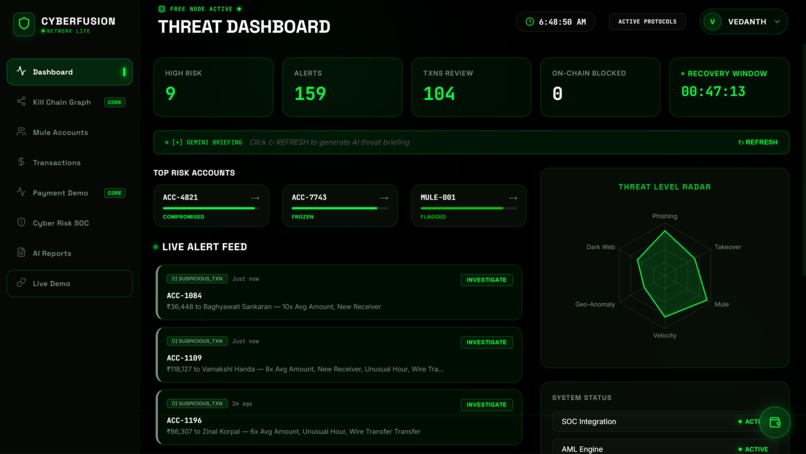
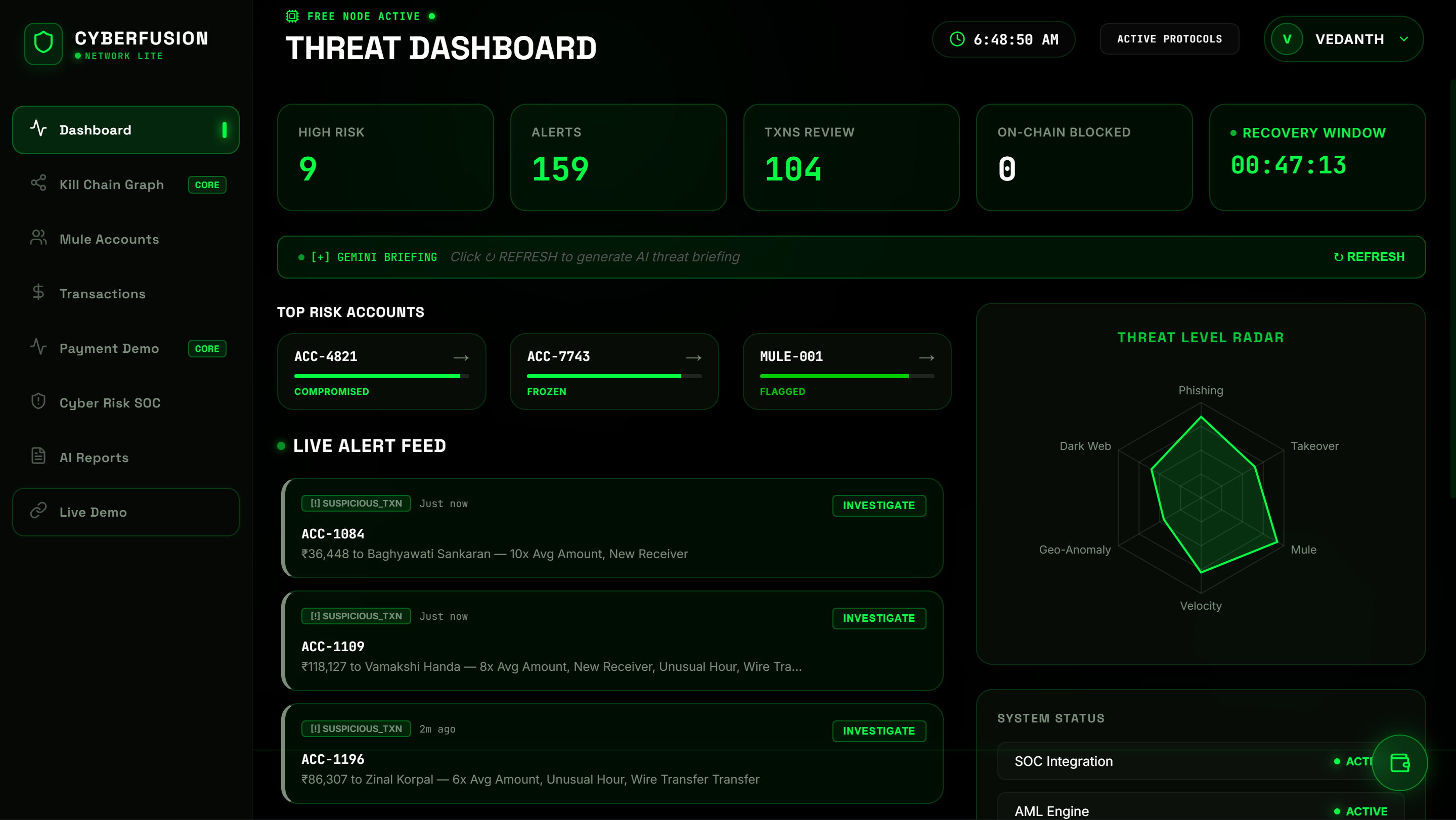
DashBoard
-
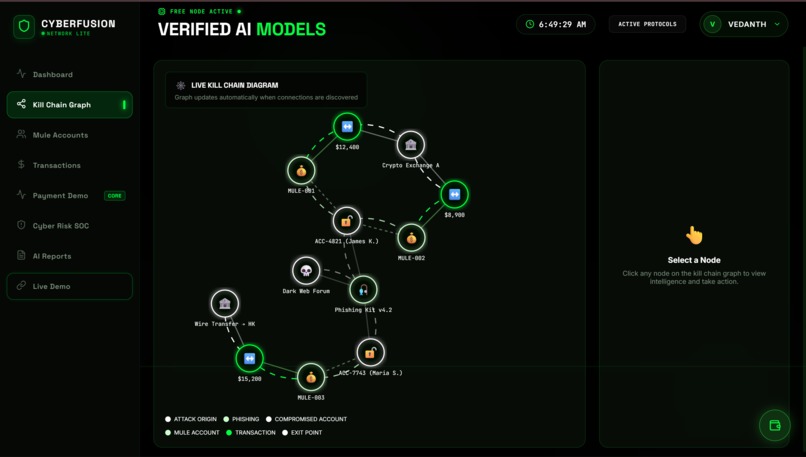
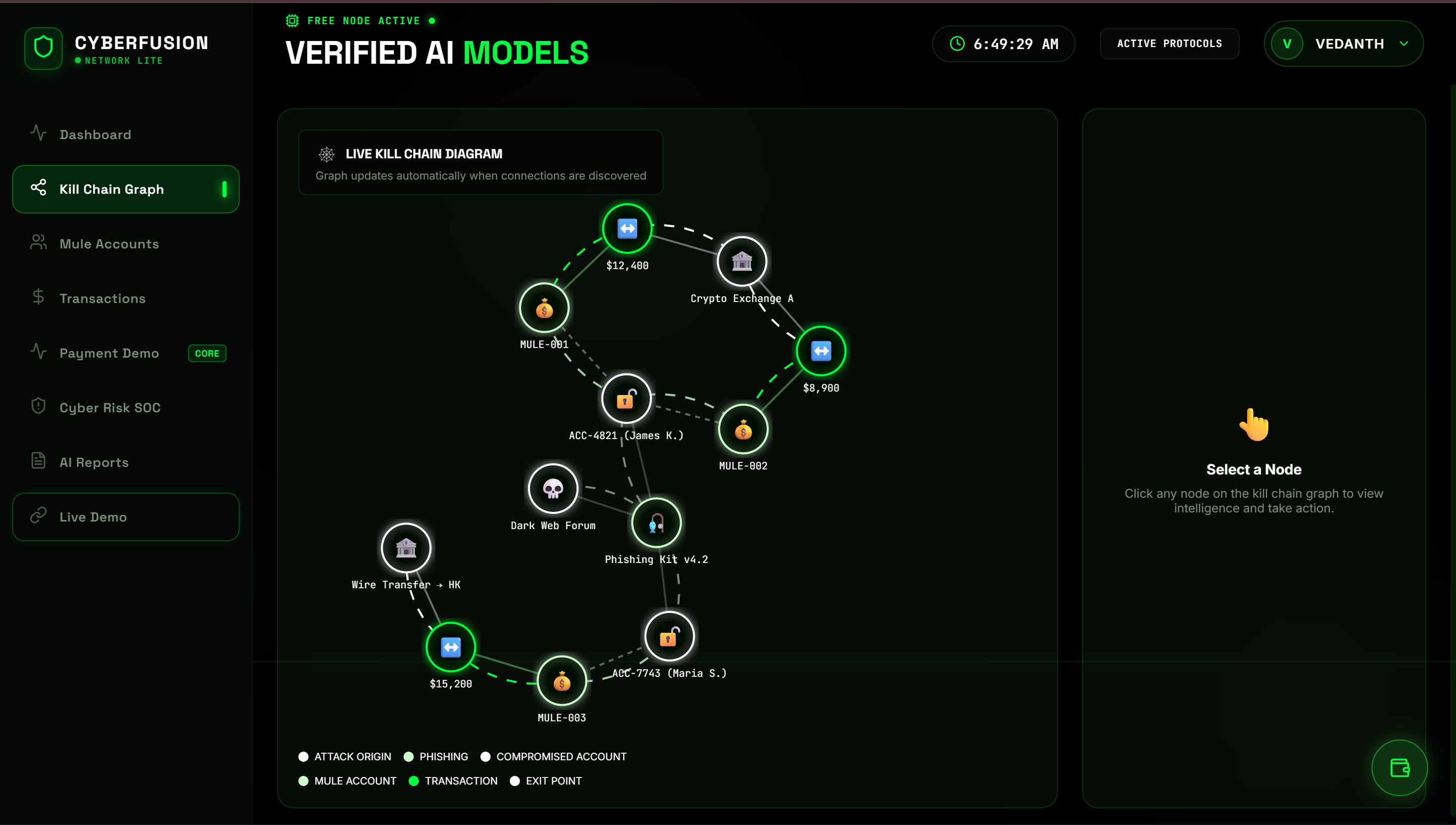
Kill Chain Graph
-
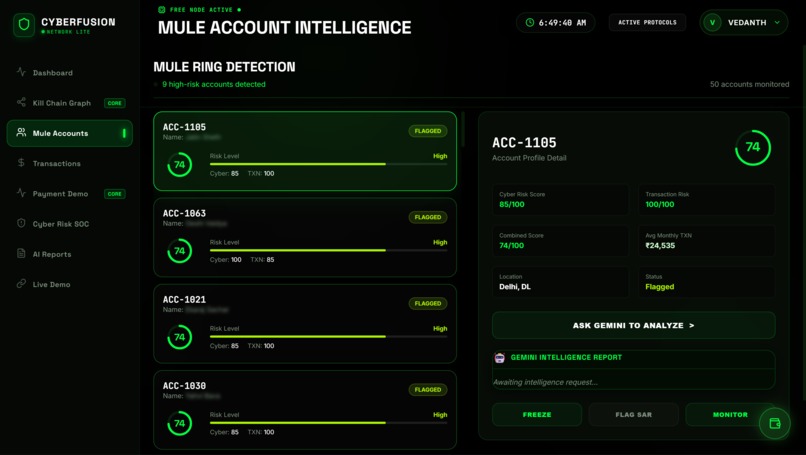
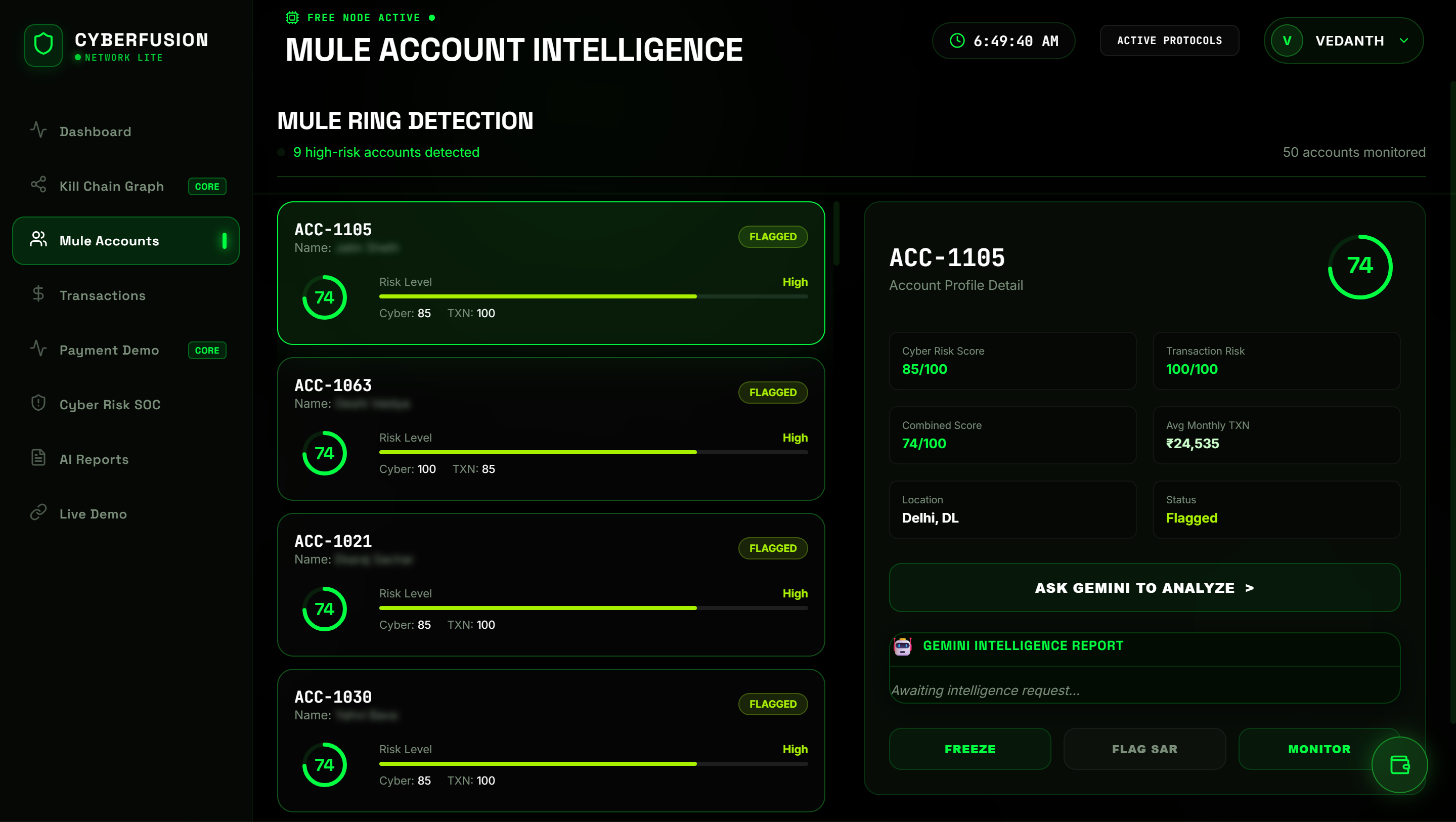
Mule Accounts
-
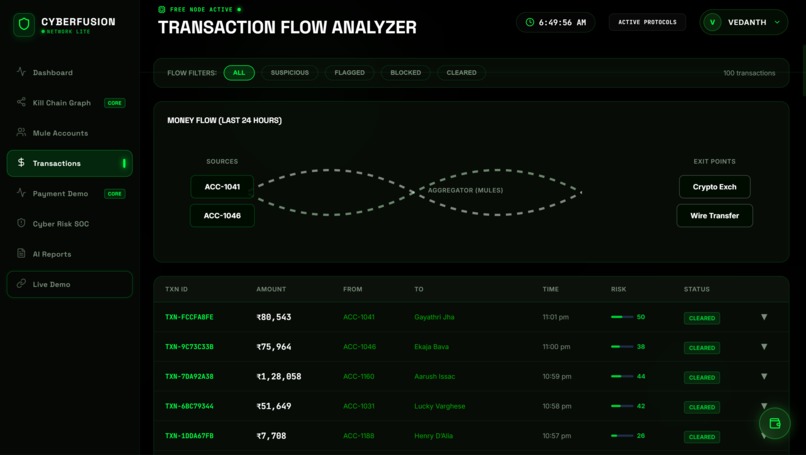
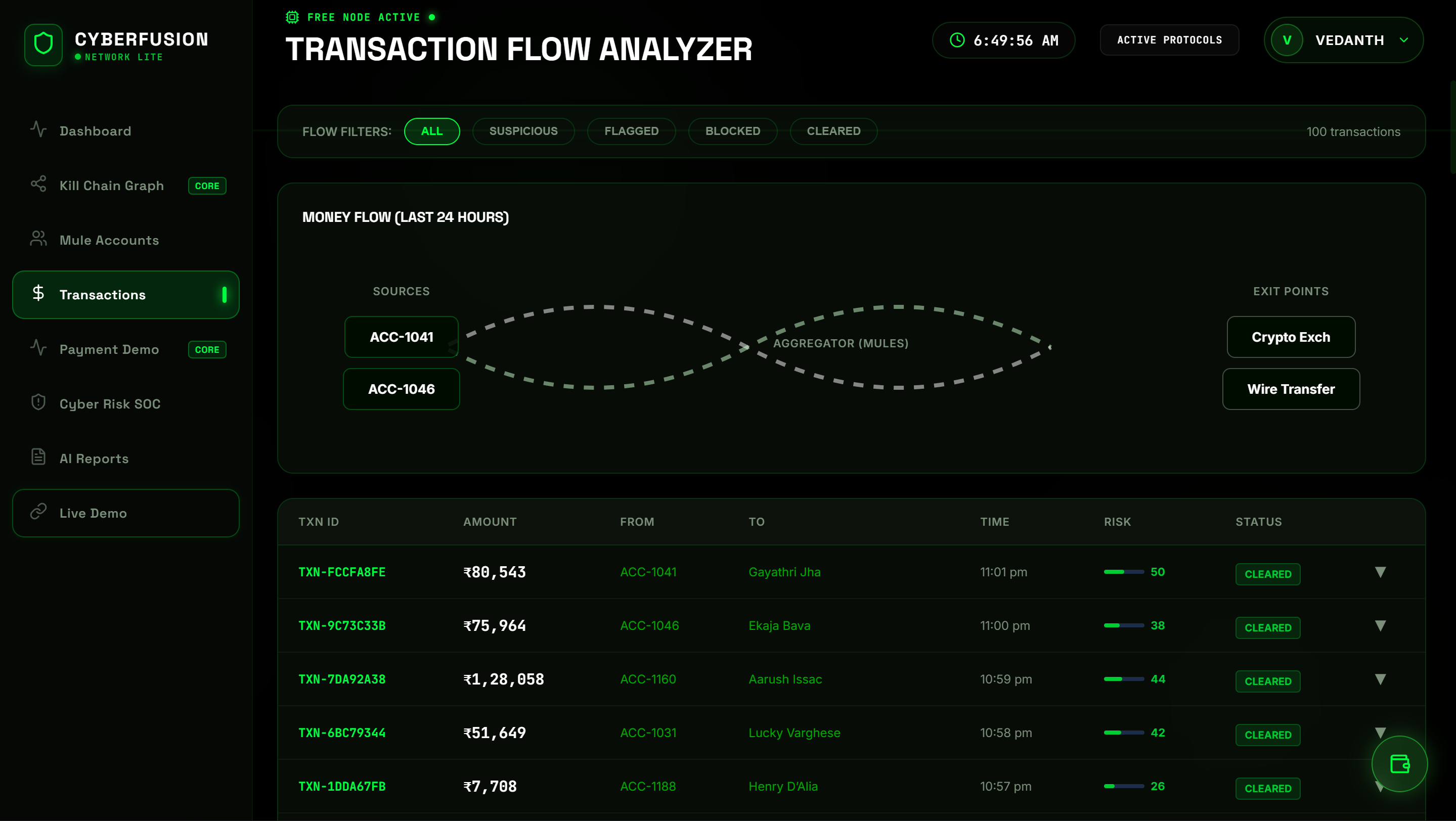
Transactions
-
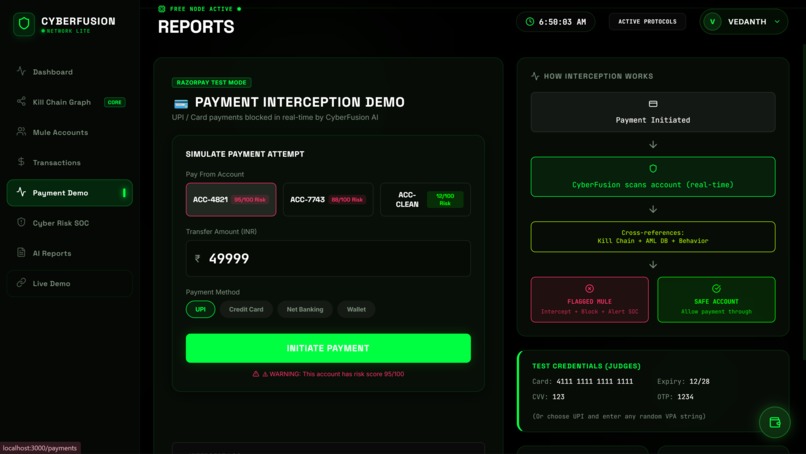
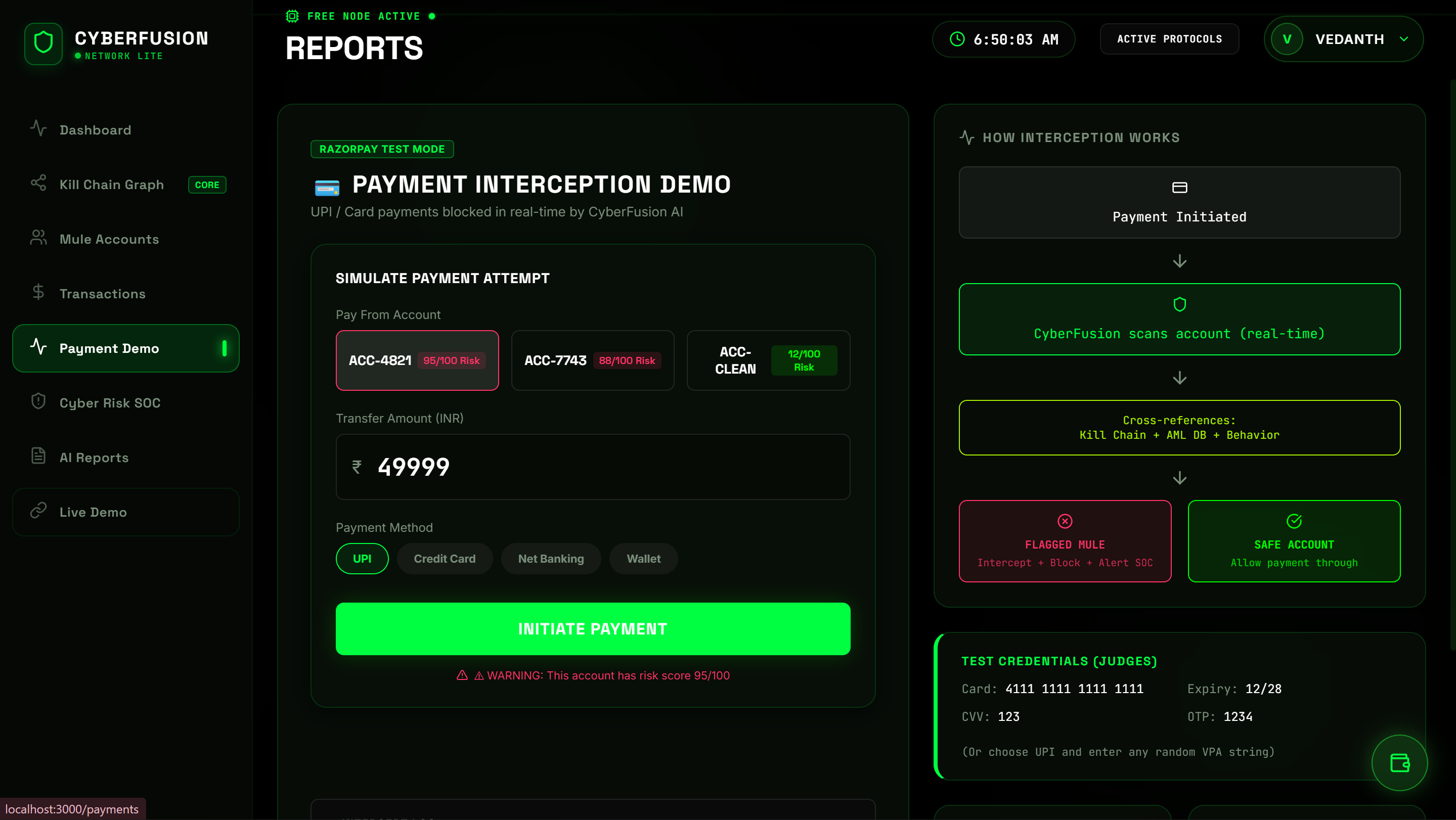
Payment Demo
-
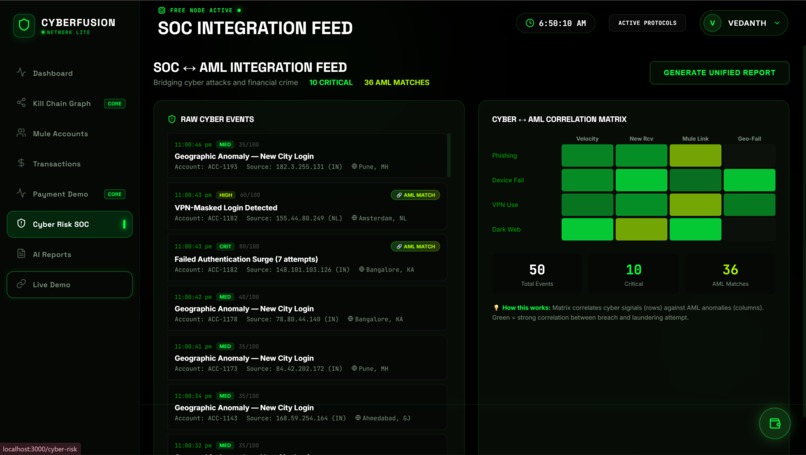
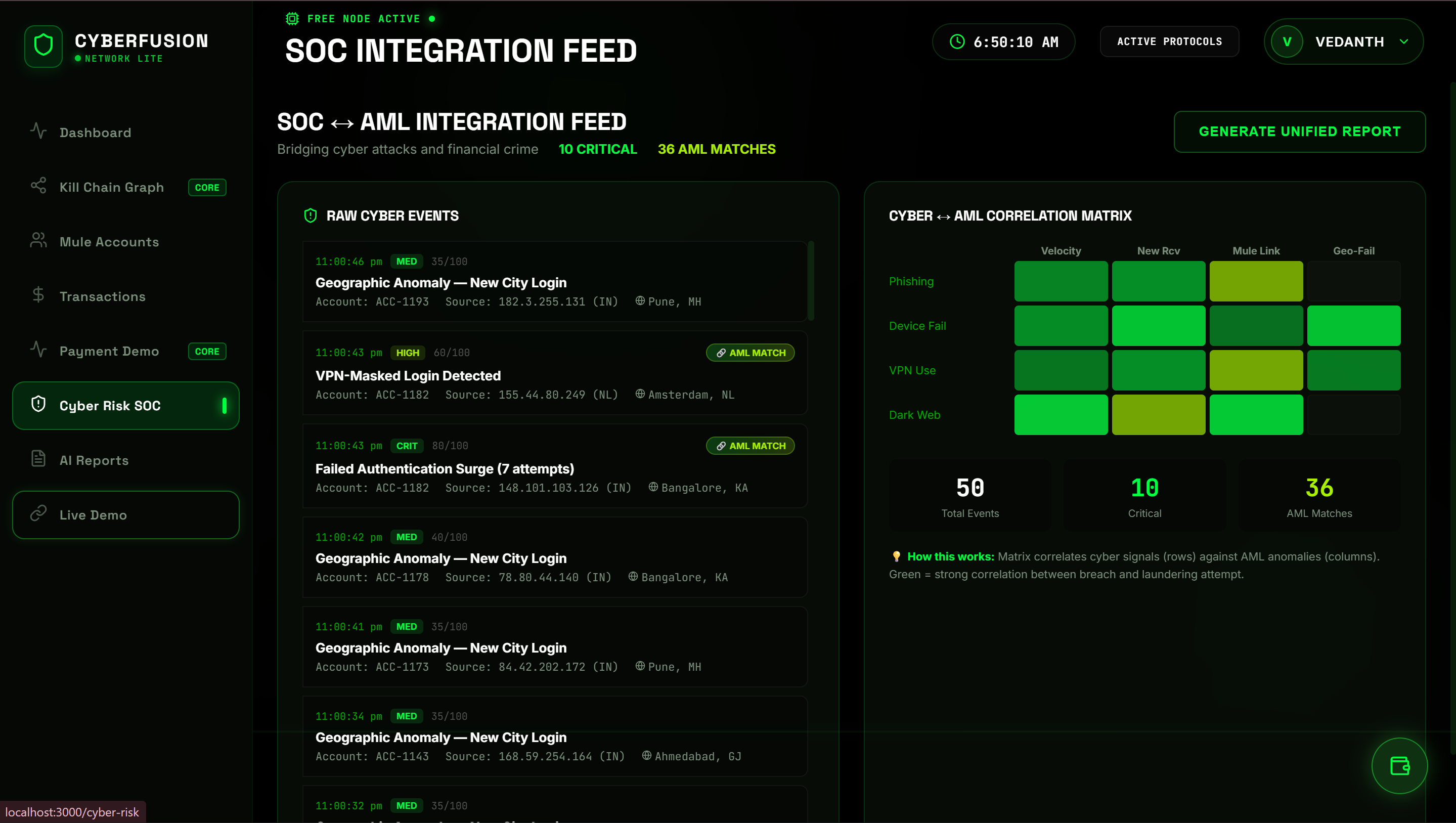
Cyber Risk SOC
-
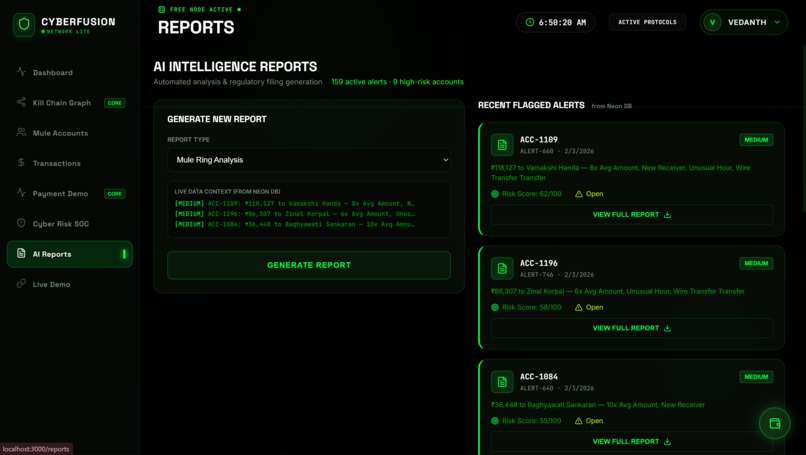
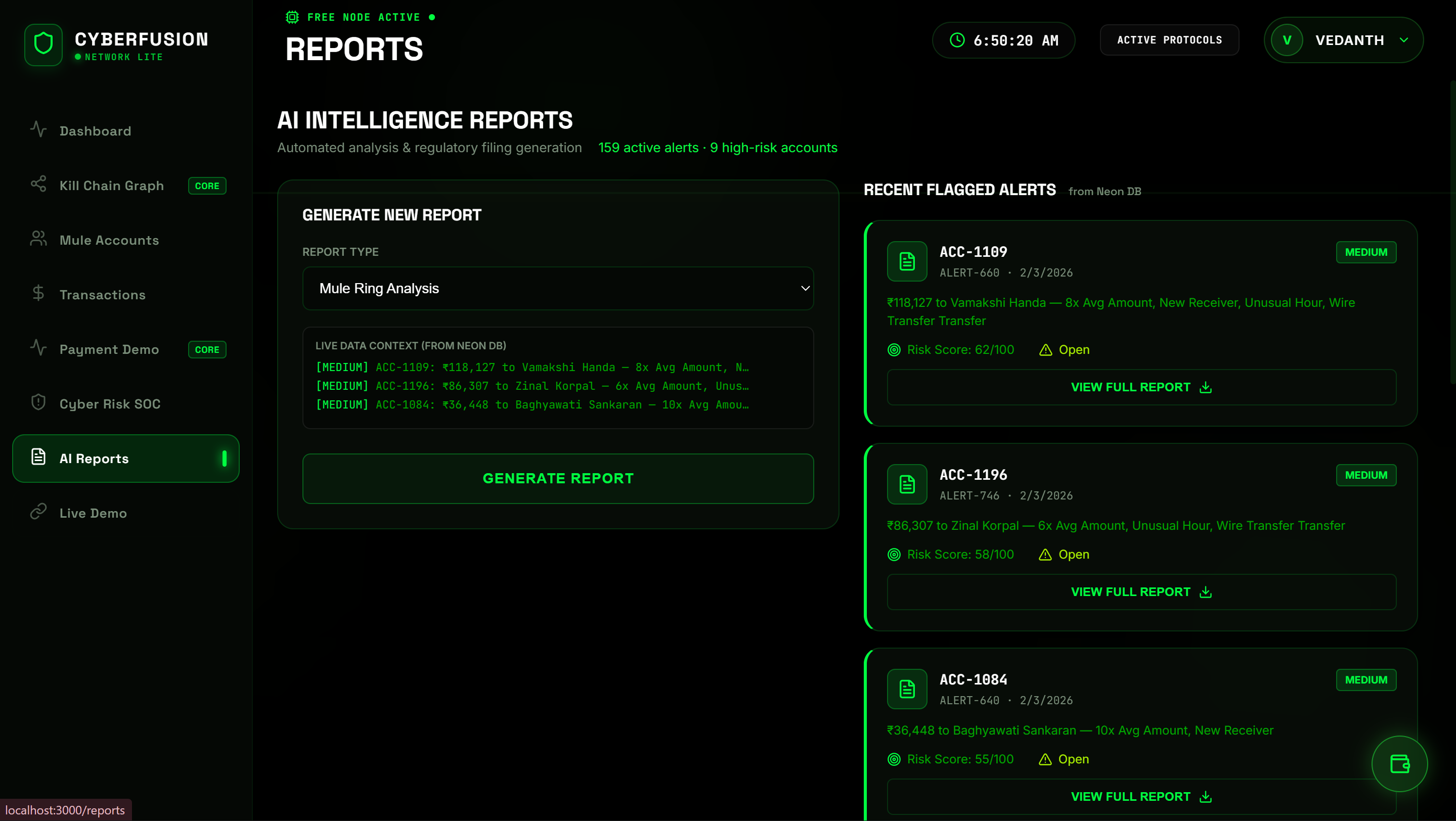
AI Reports Generator
-
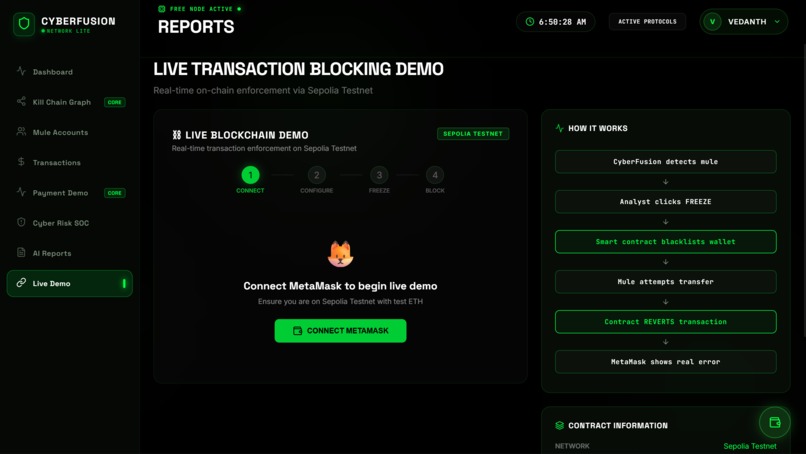
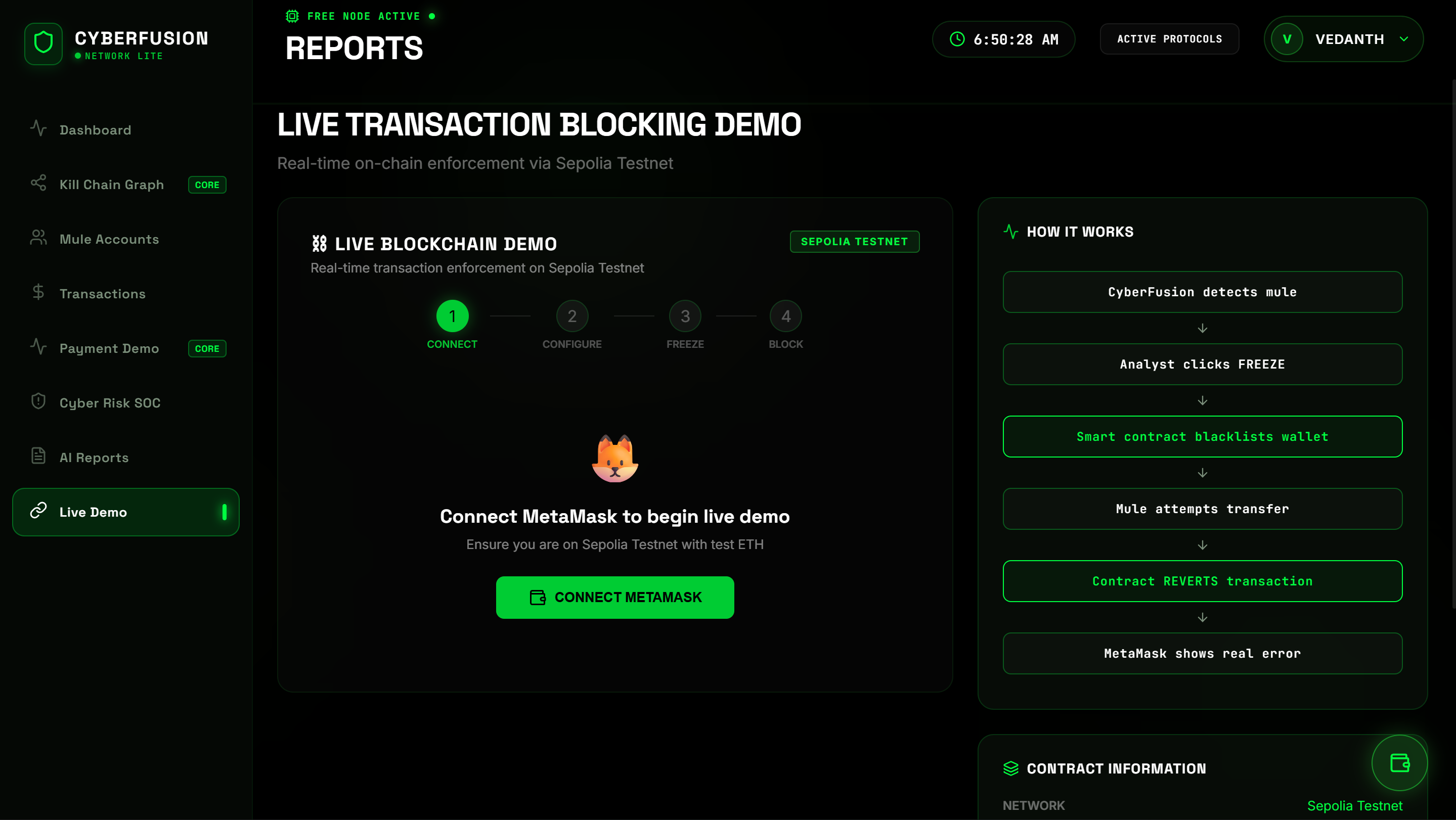
Live Demo
Inspiration:
Financial fraud is no longer isolated to a single suspicious transaction — it is coordinated, network-driven, and often layered across multiple accounts. Mule accounts, rapid multi-hop transfers, and phishing-based attacks allow funds to disappear before traditional AML systems can react. We were inspired by the idea that fraud detection should not focus on individual transactions alone, but on the network behavior behind them. We wanted to build a system that combines graph intelligence, behavioral analytics, and Gemini AI to provide explainable, investigation-ready insights in real time.
What it does:
CyberFusion is an AI-powered financial intelligence platform that: Detects mule account networks Visualizes transaction kill chains using graph modeling Calculates dynamic behavioral risk scores Generates explainable AML-style reports using Gemini AI Simulates blockchain-based audit transparency through MetaMask Instead of asking “Is this transaction suspicious?”, CyberFusion asks: “Is this transaction part of a coordinated fraud network?”
How we built it
We built CyberFusion using a modular architecture: Frontend: React + Tailwind + custom graph visualization Backend: FastAPI + PostgreSQL (Neon DB) AI Layer: Gemini API with intelligent fallback system Blockchain Integration: MetaMask + Ethereum Sepolia testnet Graph Intelligence
We modeled accounts as nodes and transactions as directed edges. This enabled detection of: Multi-hop laundering paths Clustered mule networks Circular fund flows
Gemini AI Integration Gemini AI is used to: Generate structured investigation summaries Explain risk signals clearly Provide compliance-ready outputs
Challenges we ran into
API Rate Limits: Gemini’s free-tier quota required careful engineering: Request throttling Exponential backoff Caching repeated prompts Deterministic fallback responses This forced us to design for reliability rather than assuming unlimited AI access.
Preventing Duplicate API Calls React StrictMode and component re-renders initially caused duplicate requests. We solved this by implementing: In-flight request tracking Prompt-level caching Controlled invocation triggers
Balancing Detection Sensitivity Too sensitive → excessive false positives Too strict → missed fraud
We tuned risk weights iteratively to balance detection precision and recall.
Accomplishments that we're proud of
Built a full-stack AI-driven AML intelligence system Implemented graph-based fraud visualization from scratch Integrated Gemini AI with reliable quota handling Designed a tunable risk scoring engine Added blockchain audit simulation through MetaMask Delivered explainable, compliance-style reporting
What we learned
Fraud detection is fundamentally network-based, not transaction-based Explainability is critical for compliance systems AI systems must include reliability safeguards Graph modeling dramatically improves visibility of coordinated fraud Real-world systems require engineering beyond core ML logic
What's next for CyberFusion: AI-Driven AML Intelligence
Real-time streaming transaction ingestion Cross-bank fraud pattern sharing Advanced graph clustering algorithms Enterprise-ready deployment pipeline On-chain compliance intelligence expansion
Our long-term vision is to evolve CyberFusion into a scalable, AI-driven financial crime intelligence layer that enables proactive fraud prevention instead of reactive investigation.
Built With
- customgraphvisualizationengine
- ethereumsepoliatestnet
- fastapi
- framermotion
- geminiapi
- javascript
- metamask
- postgresql
- python
- react
- sqlalchemy
- tailwind
- uvicorn


Log in or sign up for Devpost to join the conversation.