-
-
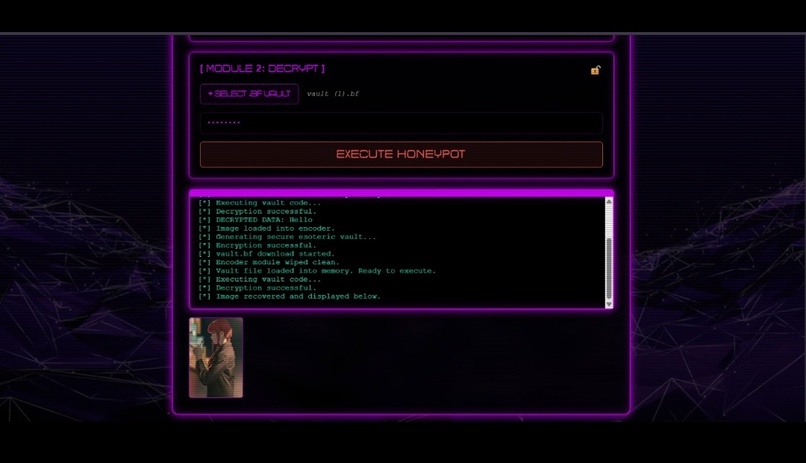
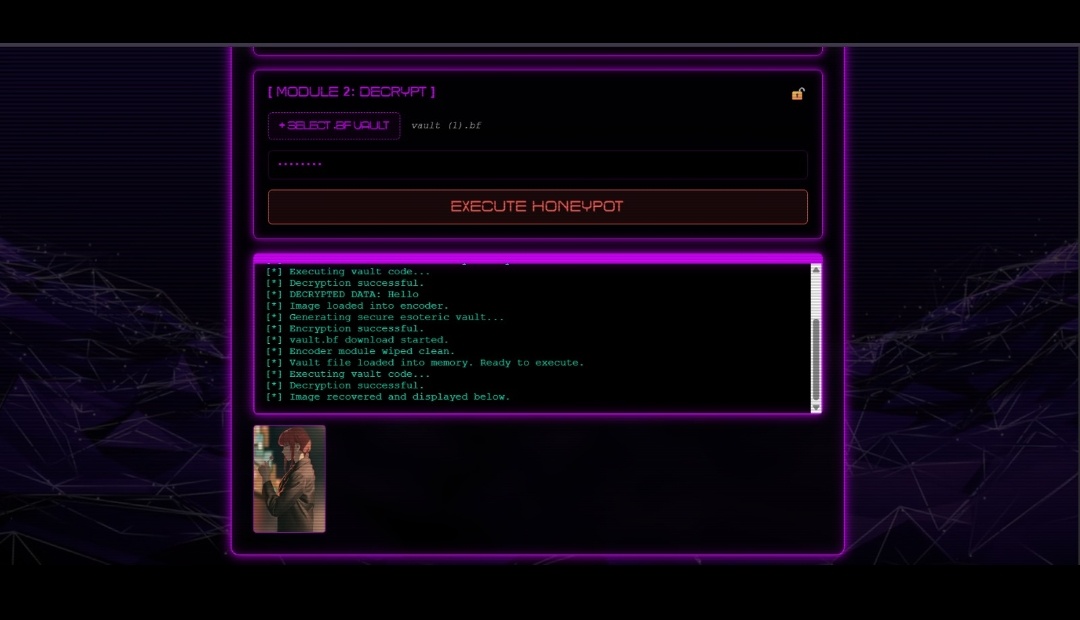
The image after
-
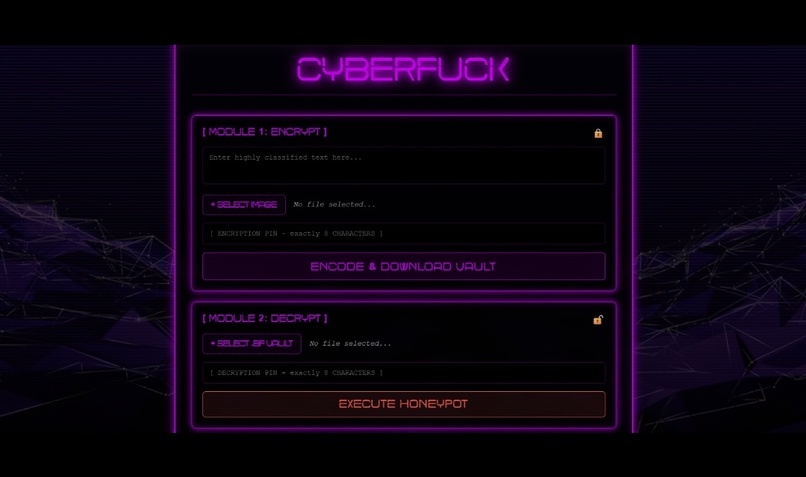
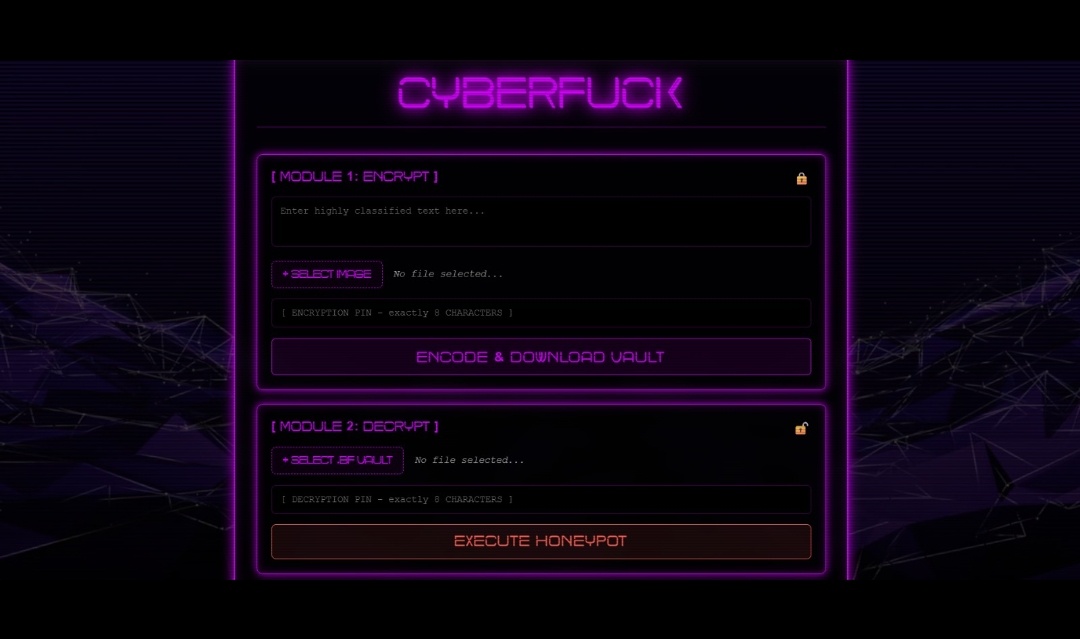
The main site
-
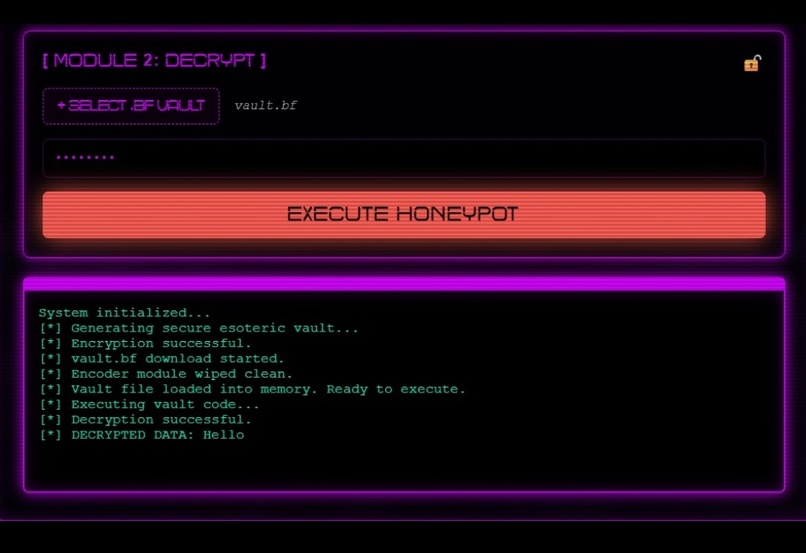
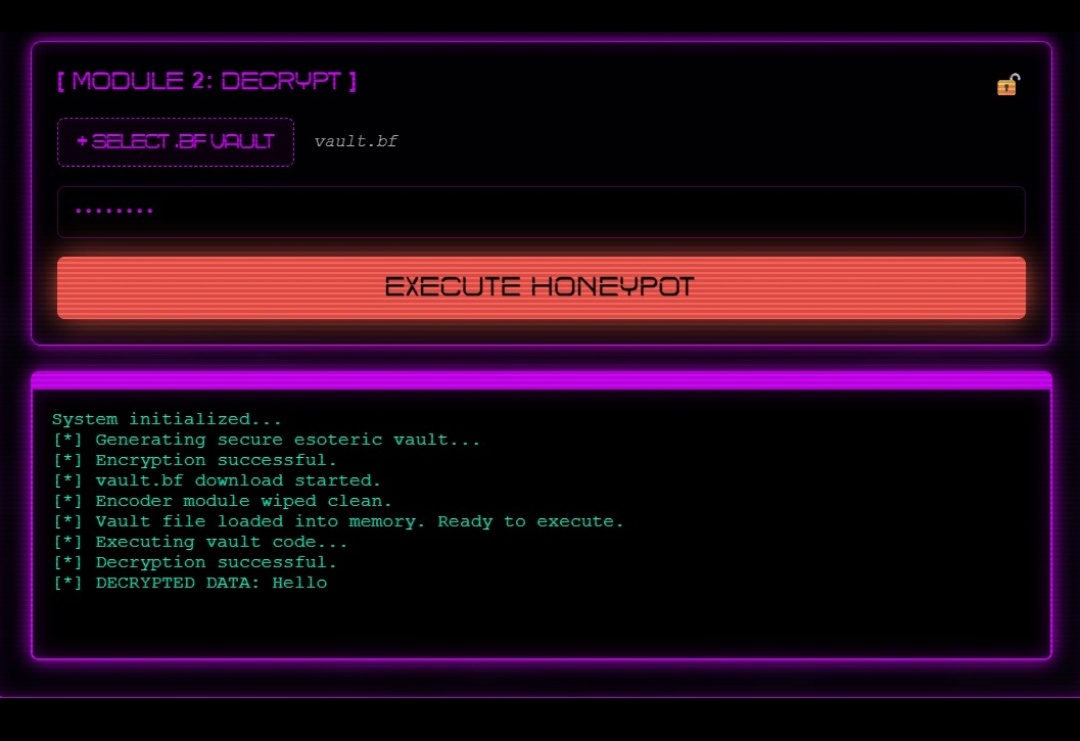
Executing Honeypot
-
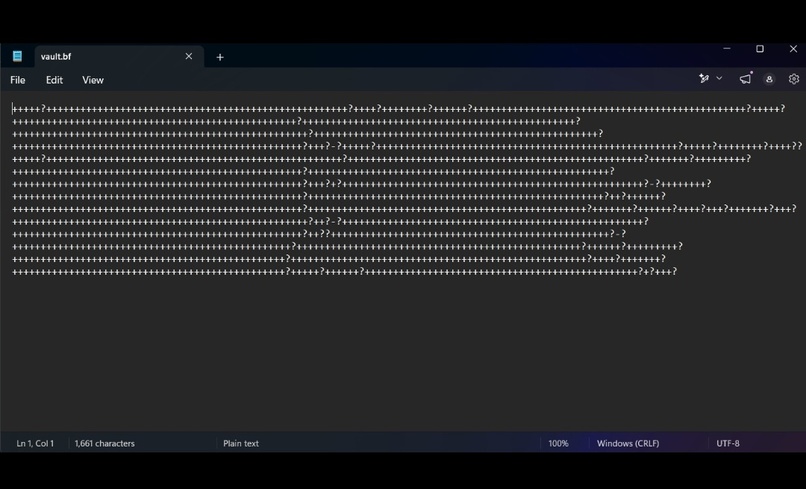
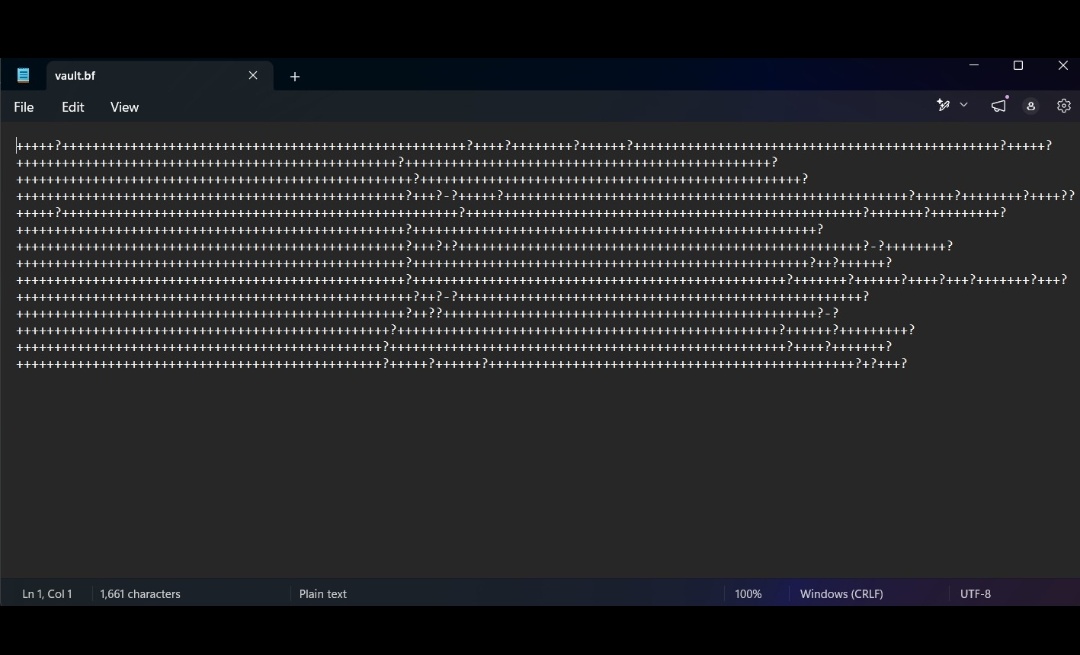
The brainfuck code
Inspiration
Data sovereignty in an era of cloud-dependency is increasingly fragile. We wanted to build a security tool that prioritizes local control and mathematical resilience over convenience-first web architectures, creating a vault that is truly portable and independently verifiable.
What it does
CyberFuck is a terminal-native security tool designed to protect sensitive data through a multi-layered approach. It features an integrated file manager and uses AES-256-GCM encryption for data confidentiality and integrity, with key derivation powered by PBKDF2 with 100k iterations to ensure resistance against high-speed brute-force attacks.
How we built it
The project was developed in two phases. Initially, it used a web-based interface for accessibility; however, to achieve true security and performance, we refactored it into a statically-linked, terminal-native binary. We utilized AES-256-GCM for the cryptographic core and implemented PBKDF2 for key stretching to negate hardware-accelerated attacks. The interface is built directly for the terminal, focusing on a TUI approach that removes all web-server dependencies.
Challenges we ran into
The primary challenge was balancing aesthetics with security. We implemented a custom obfuscation "dialect" for visual flair, which was initially misinterpreted as the primary security layer. We overcame this by clearly separating the cosmetic encoding from the actual cryptographic layer (AES-256-GCM). Additionally, we transitioned away from a web-server architecture to mitigate attack surfaces, shifting to a more complex, terminal-based file management system.
Accomplishments that we're proud of
- Successfully implemented production-grade AES-256-GCM encryption.
- Hardened the security model by moving from a web-based interface to a statically-linked, terminal-native binary.
- Integrated an internal file management system for improved user workflow.
- Maintained code portability by removing external dependencies. ## What we learned We learned that perceived complexity is not security; true resilience comes from industry-standard cryptographic primitives. We also learned the importance of architecture design, specifically recognizing when to abandon a web-based design in favor of a native, terminal-based solution to eliminate entire classes of vulnerabilities.
Linux, Terminal, AES-256-GCM, PBKDF2, Security, Encryption, C++, Cryptography, TUI, DataPrivacy
Built With
- aes-256-gcm
- c++
- cryptography
- encryption
- linuxfr.org
- pbkdf2
- privacy
- security
- tui


Log in or sign up for Devpost to join the conversation.