-
-
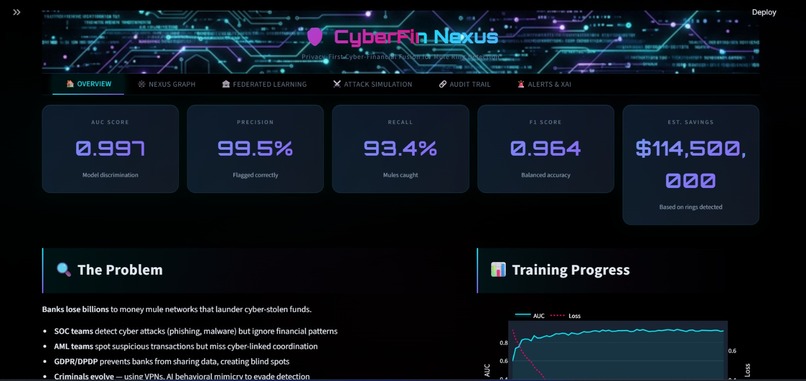
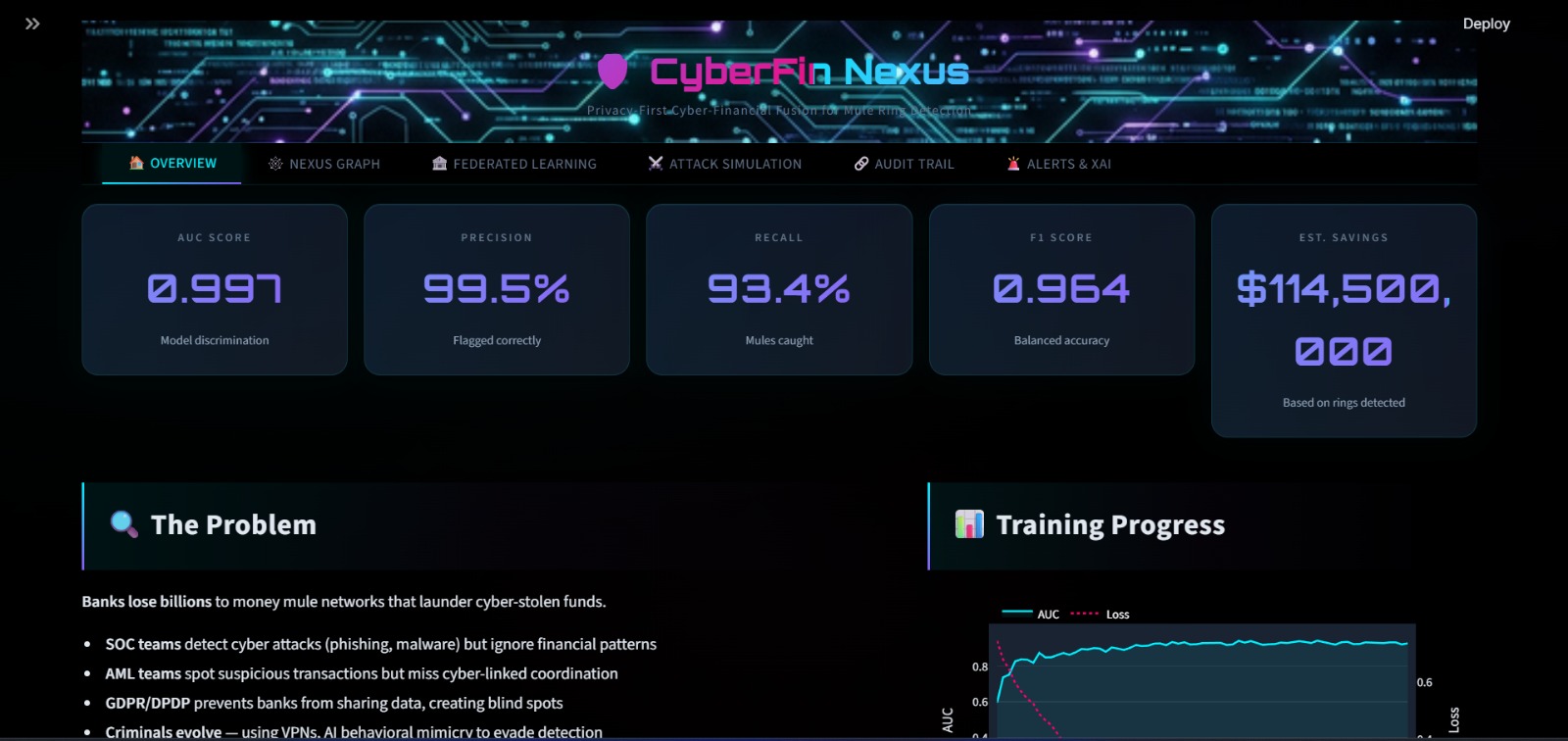
Home Page
-
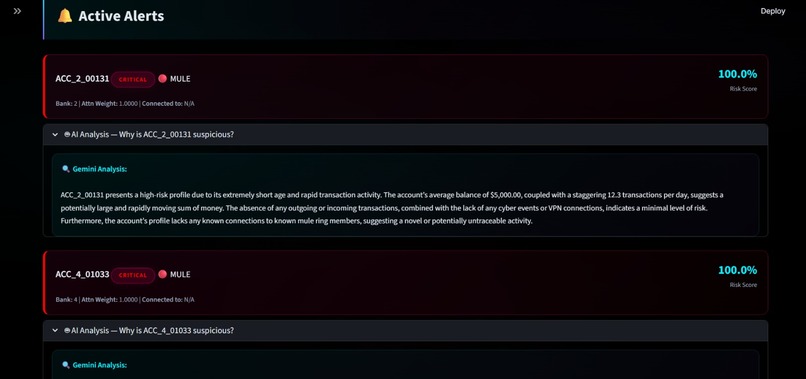
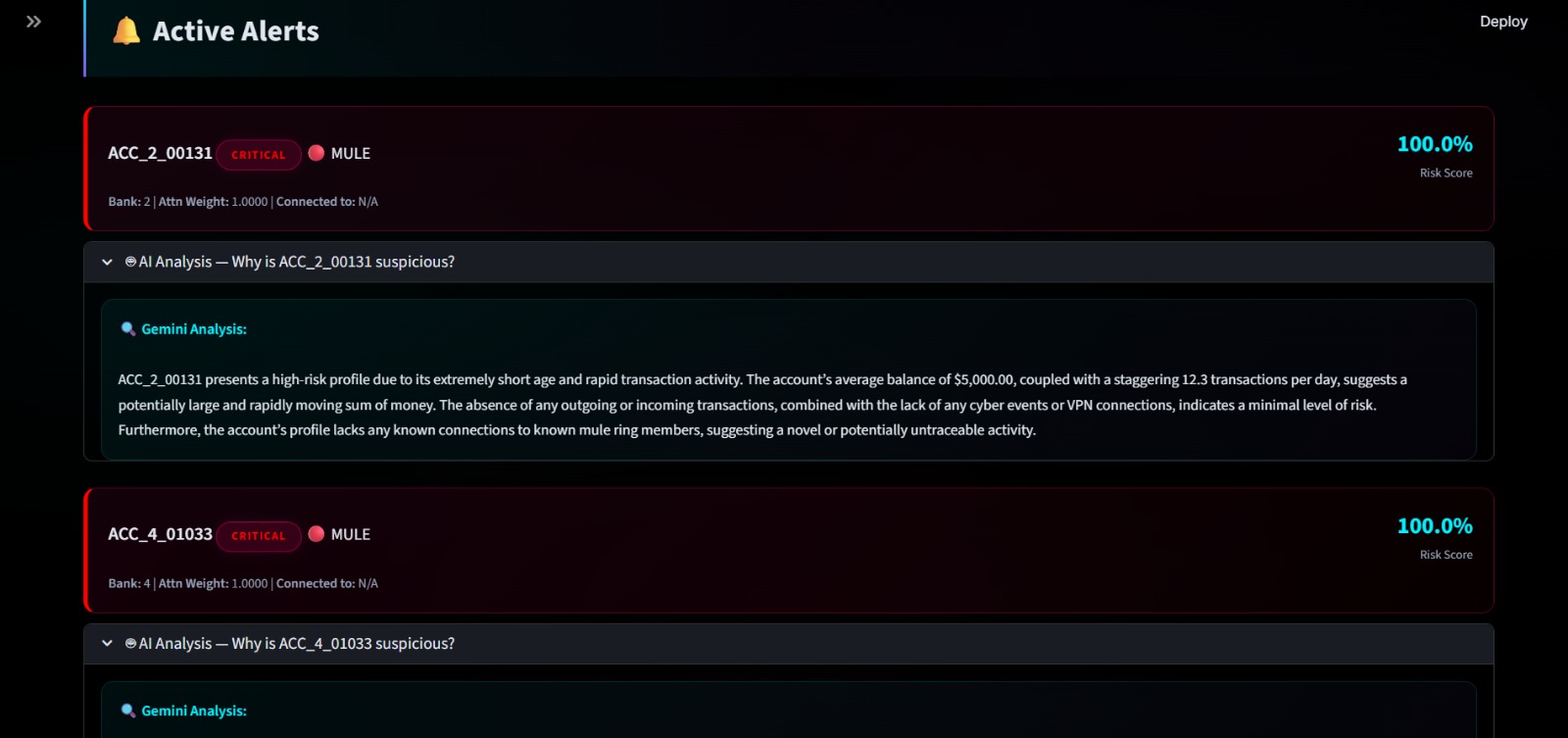
Gemini Risk Assessment
-
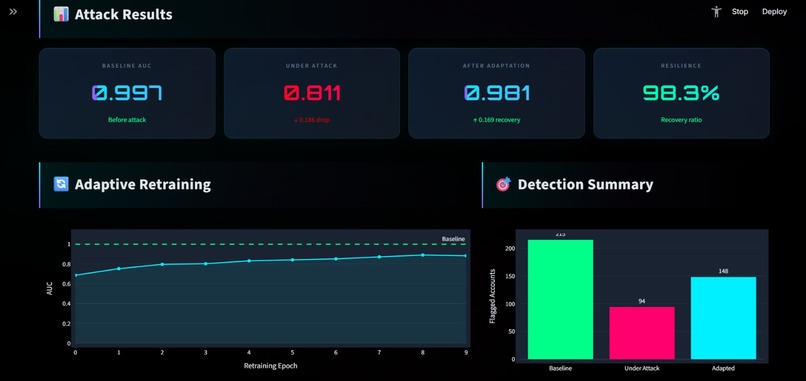
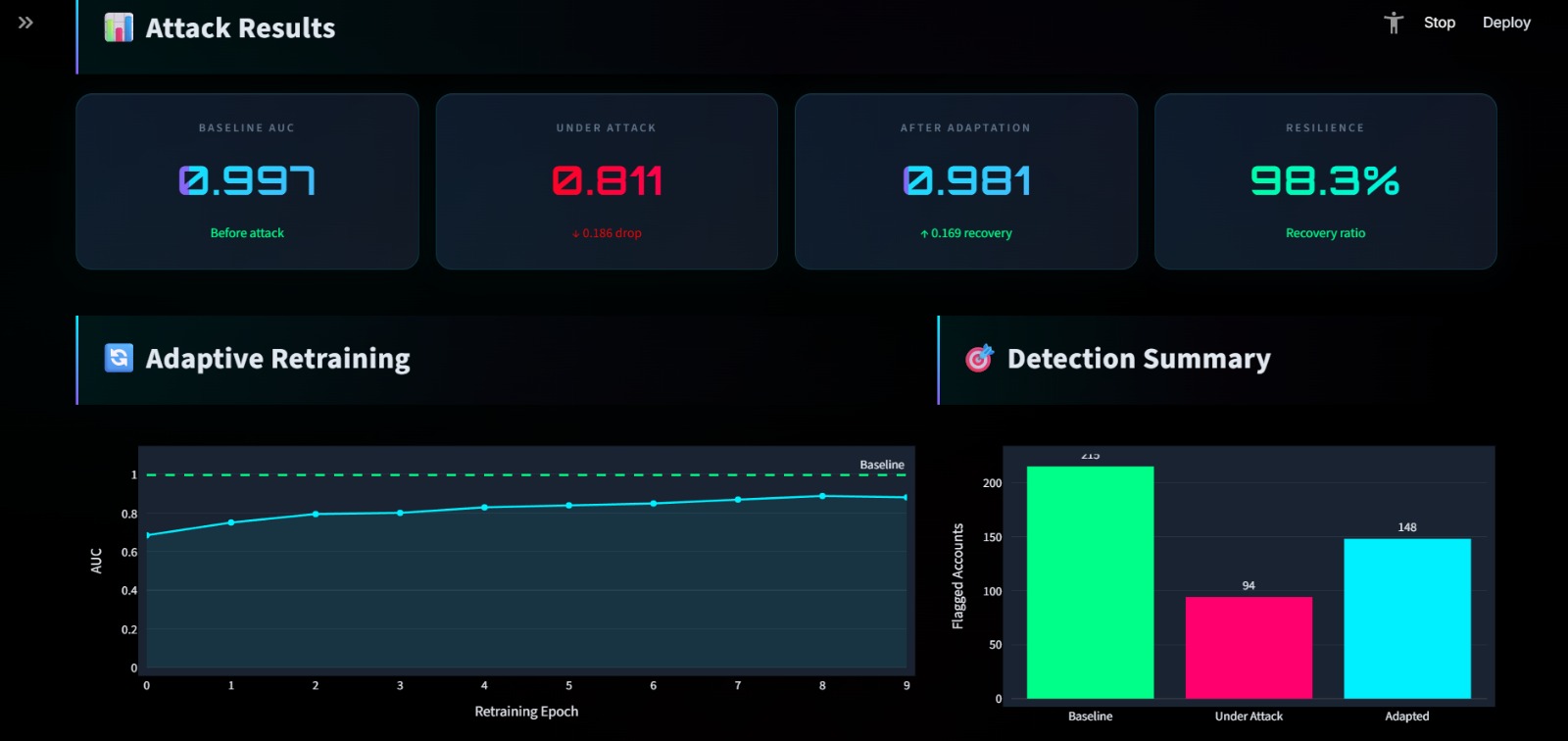
Cyber Attack Results2
-
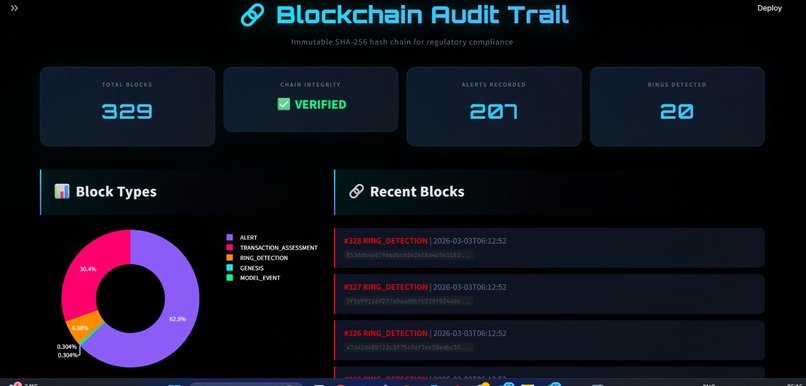
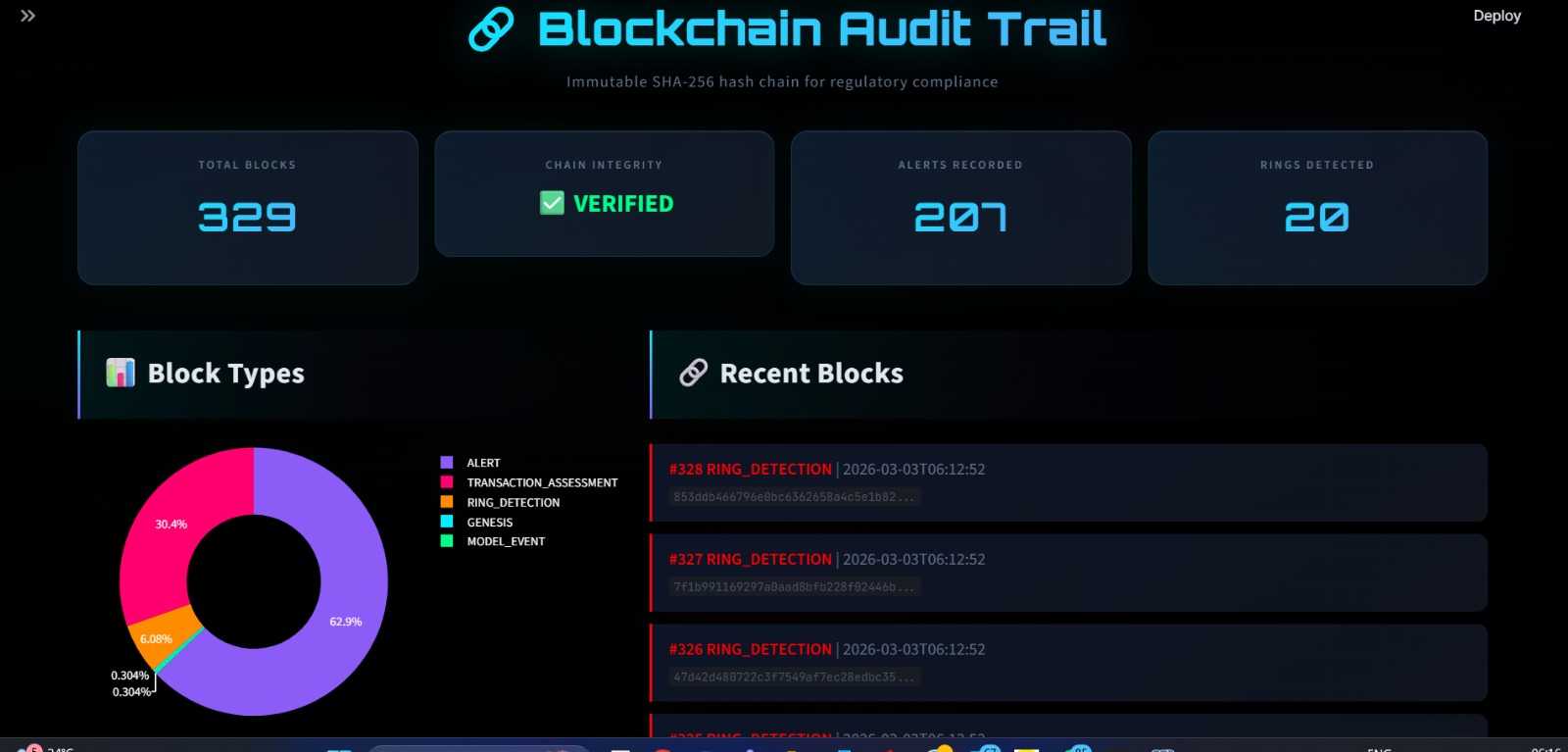
Blockchain Audit Screen
Inspiration
Financial fraud rarely happens in isolation it spreads through hidden patterns, shared devices, and similar behaviors. We wanted to explore how AI can move beyond viewing transactions individually and instead understand the connections between them. This idea led us to build a graph-based system that detects fraud by analyzing relationships, not just data rows.
What it does
CyberFin Nexus detects potentially fraudulent transactions by modeling banking data as a network. Instead of treating each transaction separately, it connects similar transactions and uses a Graph Neural Network (GNN), Federated Learning, Ensembled Models and Reinforcement Learning based Adversarial Simulation to identify suspicious clusters and patterns. The system helps flag risky activity early, improving fraud detection accuracy.
How we built it
We started with a bank transaction fraud dataset and transformed the tabular data into a graph structure. Each transaction became a node, and edges were created based on behavioral similarity (device, payment type, risk score, velocity patterns, etc.). We then trained a GNN using PyTorch Geometric to learn fraud patterns from these connected relationships. Alongside model training, we performed preprocessing, feature encoding, and evaluation using precision, recall, and F1-score.
Challenges we ran into
The biggest challenge was that the dataset was not originally designed as a graph. We had to design our own strategy for building meaningful connections between transactions. Handling imbalanced fraud data was another challenge, since fraudulent cases were much fewer compared to normal ones. Choosing the right graph structure and avoiding noisy connections required multiple iterations.
Accomplishments that we're proud of
We successfully converted a traditional fraud dataset into a graph-based problem and built a working GNN model. More importantly, we demonstrated how relationship-aware AI can reveal patterns that normal ML models might miss. Turning a complex idea into a practical prototype was a big milestone for us.
What we learned
This project taught us how powerful graph learning can be for real-world problems. We learned that data representation matters as much as model choice. We also gained hands-on experience with graph construction, feature engineering, imbalance handling, and building AI systems that mimic real financial fraud analysis.
What's next for CyberFin Nexus
Next, we plan to combine real-time streaming data and cyber signals (device risk, suspicious logins) with financial transactions, and build a live monitoring dashboard. The long-term goal is to evolve CyberFin Nexus into a privacy-first system capable of detecting coordinated fraud networks before large-scale damage occurs.
Built With
- gemini
- neo4j
- postgresql
- python
- pytorch
- streamlit

Log in or sign up for Devpost to join the conversation.