-
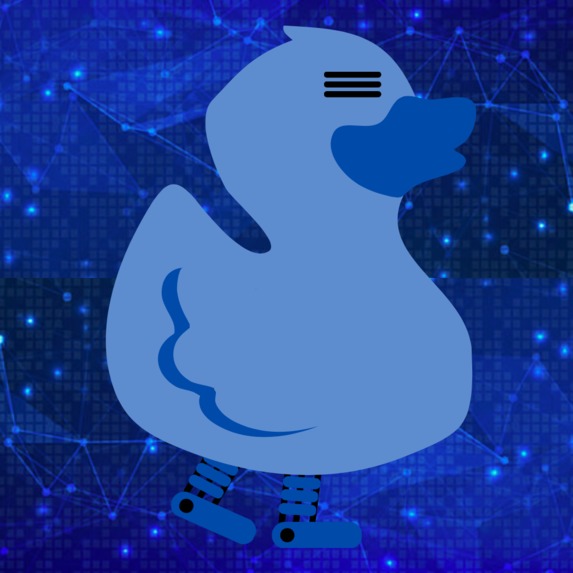
A-dog the duck for da kidz
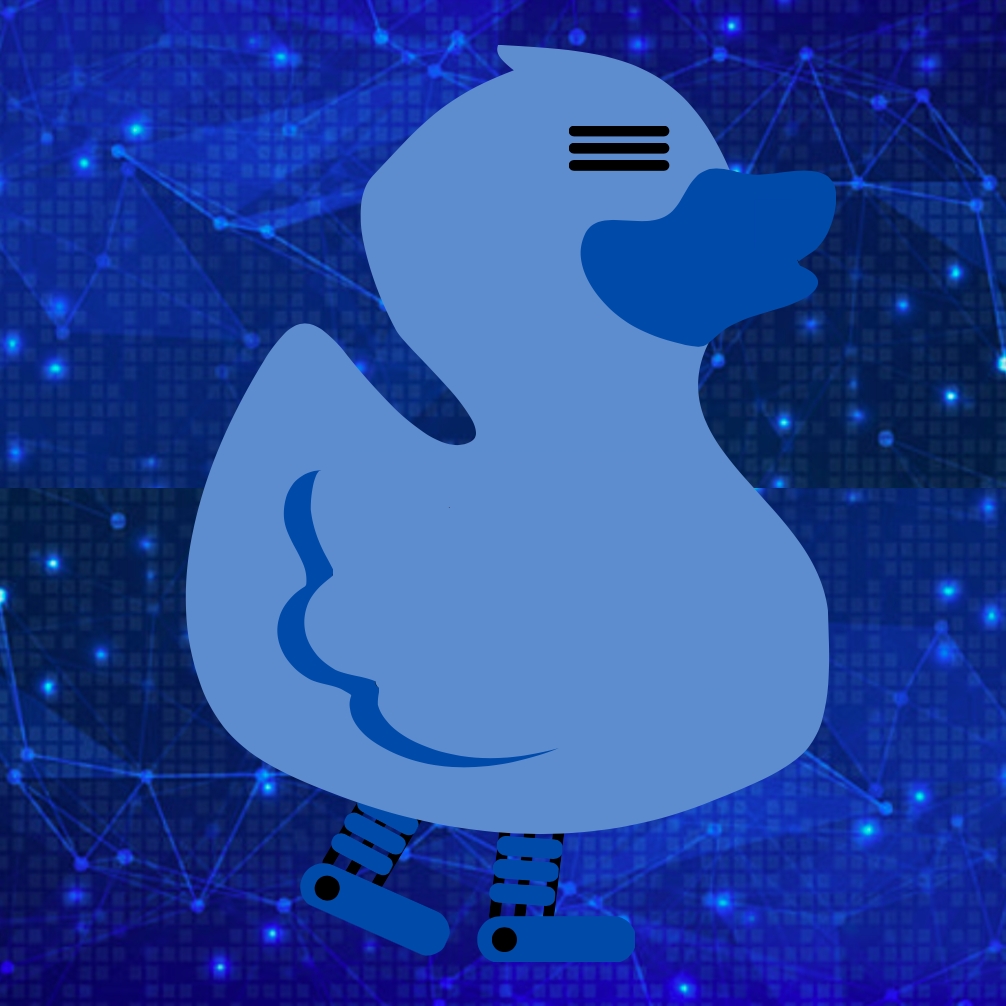
CyberDuckz.
About 50% of teens aged 13-17 say that they are using social media “almost constantly”. There’s been a 17% increase in screen media use by tweens and teens over the past two years – including children as young as 8 years old. These kids and adolescents are using screen media from anywhere between 5.5 to 8.5 hours per day. 6 out of 10 children aged 8-12 are exposed to various online cyber threats, with around ⅓ being exposed to attacks like phishing and hacking.
There is a need, now more than ever, to provide youth with the knowledge to navigate securely in the digital world and the tools to protect themselves and their data against cyber attacks. However, kids’ short attention span and their general lack of interest in learning about these topics makes it difficult to get the information across.
This weekend, we wanted to create a fun and engaging online game that employs the use of cyber security concepts. However, we had our work cut out for us, as our team is made up of two business and two life sciences students with next to no coding experience. So today we will mainly be pitching our game concept and as well as showing you what we were able to learn this weekend.
The foundation to our game concept is based on the highly popularized Among Us, a social deception game that averages millions of monthly players.
Our game, CyberDuckz., is a multiplayer game that can support a maximum of 10 players, all of which are programmed ducks aboard on a spaceship. Each player takes on the role of either a crewmate or a hacker. The goal for the crewmates is to complete several cyber security tasks around the ship while simultaneously the hackers goal is to sabotage their efforts and kill everyone without being caught.
Crewmates will be instructed in the fundamentals of cyber security through the assignment of tasks that are relevant to their daily online experiences. Examples of tasks will include distinguishing between secure and insecure websites in regards to identity protection, establishing of robust passwords, and recognizing and avoiding phishing emails, and other relevant cyber security topics.
Whereas, potential security breaches during the mission may arise in the form of hacking attempts from the hackers. These hacks may take on the guise of seemingly trustworthy crewmates, but their true intention is to inflict harm upon other players while avoiding detection. The hackers' arsenal of disruption includes various sabotaging mechanisms, such as tools that impede task progress and facilitate the killing of crewmates. One such example of this is the "impersonation" maneuver, which enables the hacker to alter its programming to resemble a crewmate, thereby gaining access to confidential information from other crew members. Should such information be stolen, the affected crewmate will suffer fatal consequences, and their crewmembers will be tasked with investigating the matter and identifying potential suspects.
One member of the crew will have the specialized position of a "Cyber Officer." This individual will be responsible for executing advanced security protocols aimed at defending the crew against malicious cyberattacks from hackers. Such measures will encompass the utilization of multi-factor authentication, virtual private network (VPN) technology, and firewall protections - all of which are realistic implementations that children would be able to learn and apply within their personal devices.
As the game progresses, players will participate in a democratic voting process to determine their suspected hacker(s) among the crew. If their collective judgement proves to be accurate, the identified hacker will be removed from the game. The game will conclude when either the crew accomplishes all assigned tasks or the hackers successfully eliminate all players.
The game can be played online or locally, with friends or with strangers, making it a highly accessible and social experience. Overall, since "Among Us" has become a cultural phenomenon due to its addictive gameplay and popularity on social media, with over 300 million downloads in 2020, we believe we would be providing a new interactive way to teach youth on the importance of cyber security.
However, when designing a game, or any online website for that matter, it is crucial to make it accessible, which is also listed as one of the Canadian Charter of Rights. Given the time and skills constraints, our team was not able to make sure that our website was compliant with the WCAG 2.2, but if we were able to, our CyberDuckz. game would make sure we have a good colour contrast with the text and graphics, a minimum font size of 12px, the layouts would be responsive, so our game would scale according to whatever device people are using. We would also provide text alternatives such as alt text on images and audio for screen readers for instructions that pop up, as well as make sure that we have focus appearances. It could be seen that our active keyboard focus is not as good, since our cursor is black and it is on a dark blue background. Some other features to consider would be timers for automatic scrolling content, sufficient target size on interactive elements.
Some features that we were able to include when designing our game, was that kept in mind to make it operable. We used semantic HTML sections instead of DIV sections in CSS. We also made sure that our game was easily navigable. We also do not have any keyboard traps. When users click on the Play Now or My Account buttons, it brings them to the correct page. Our game also uses plain language. Doing so was especially important, since our game will be played by kids and teenagers.
With all these accessibility features that we have added, we will also use automated tools like Google Lighthouse or the WAVE evaluation tool to evaluate the quality of our website and go throughs it with a keyboard and a screen-reader.
By: Shandru, Arthik, Amanda, Thuy-Vi

