-
-
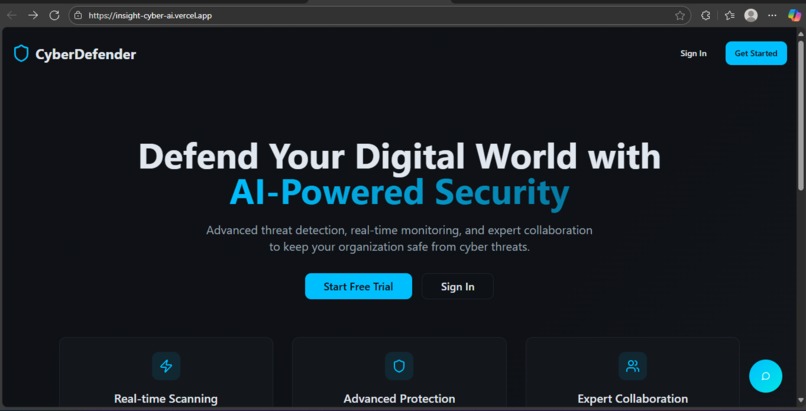
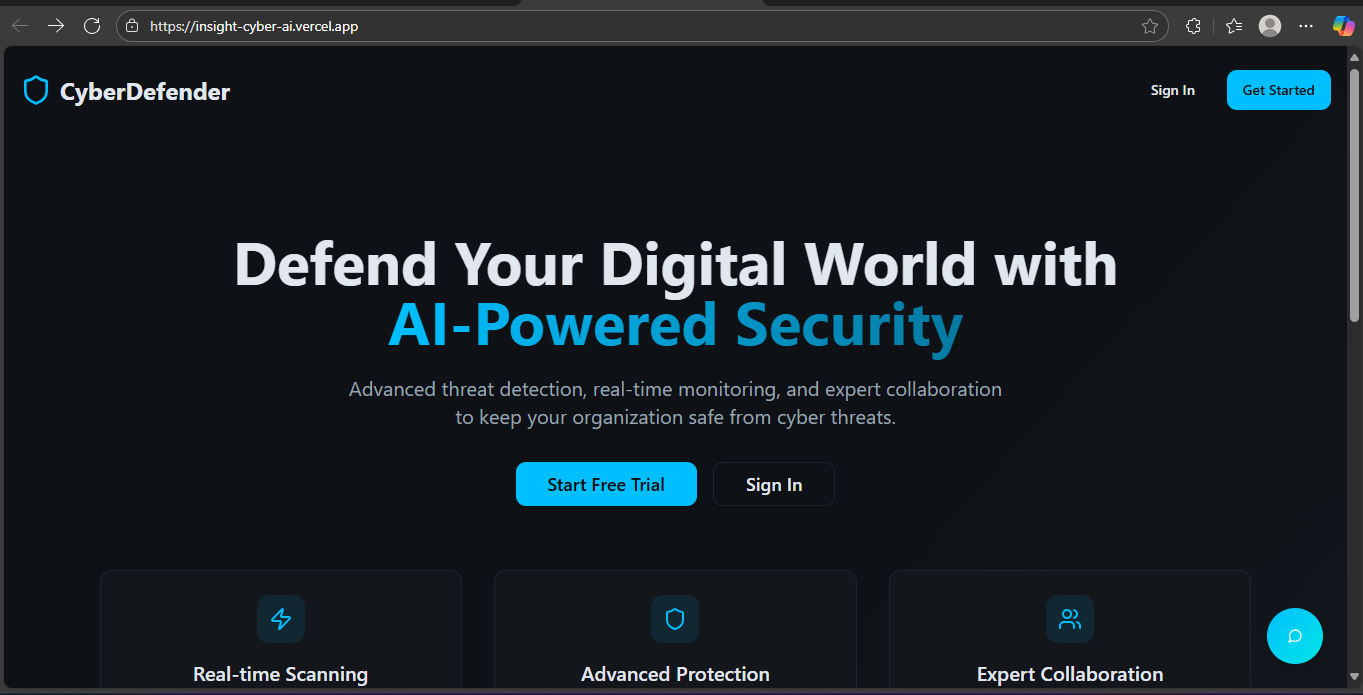
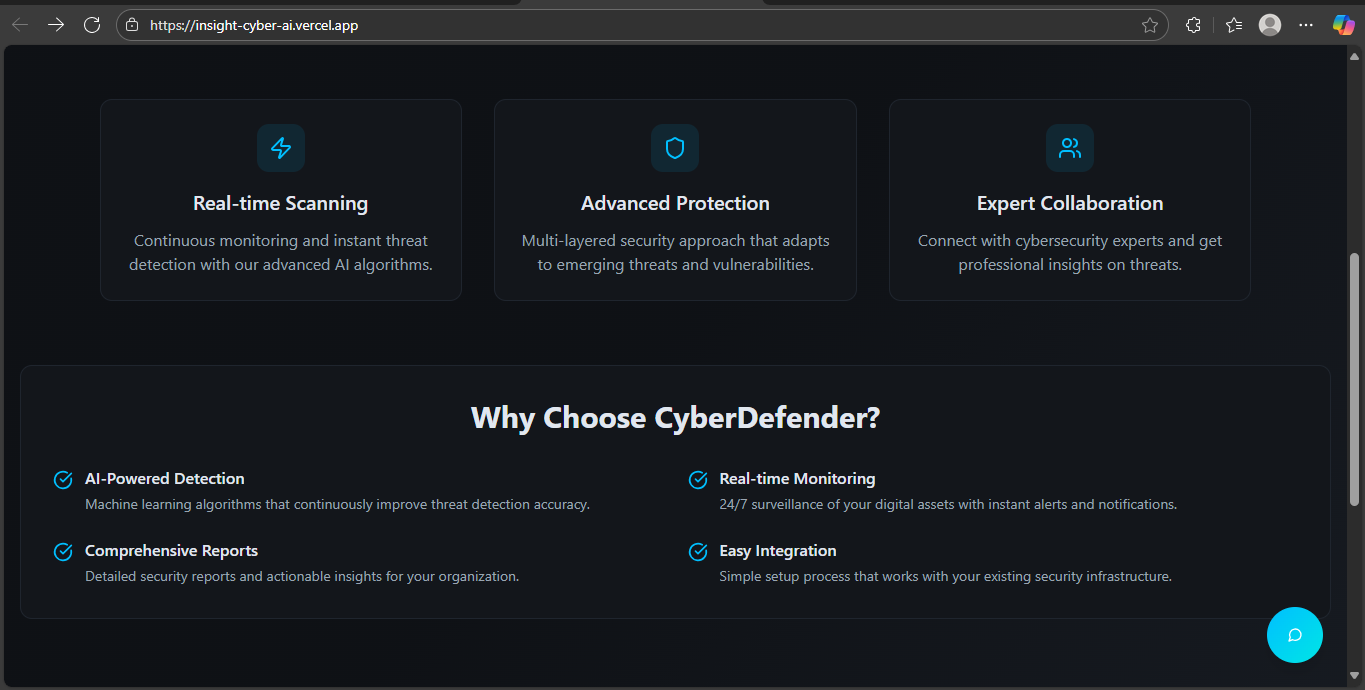
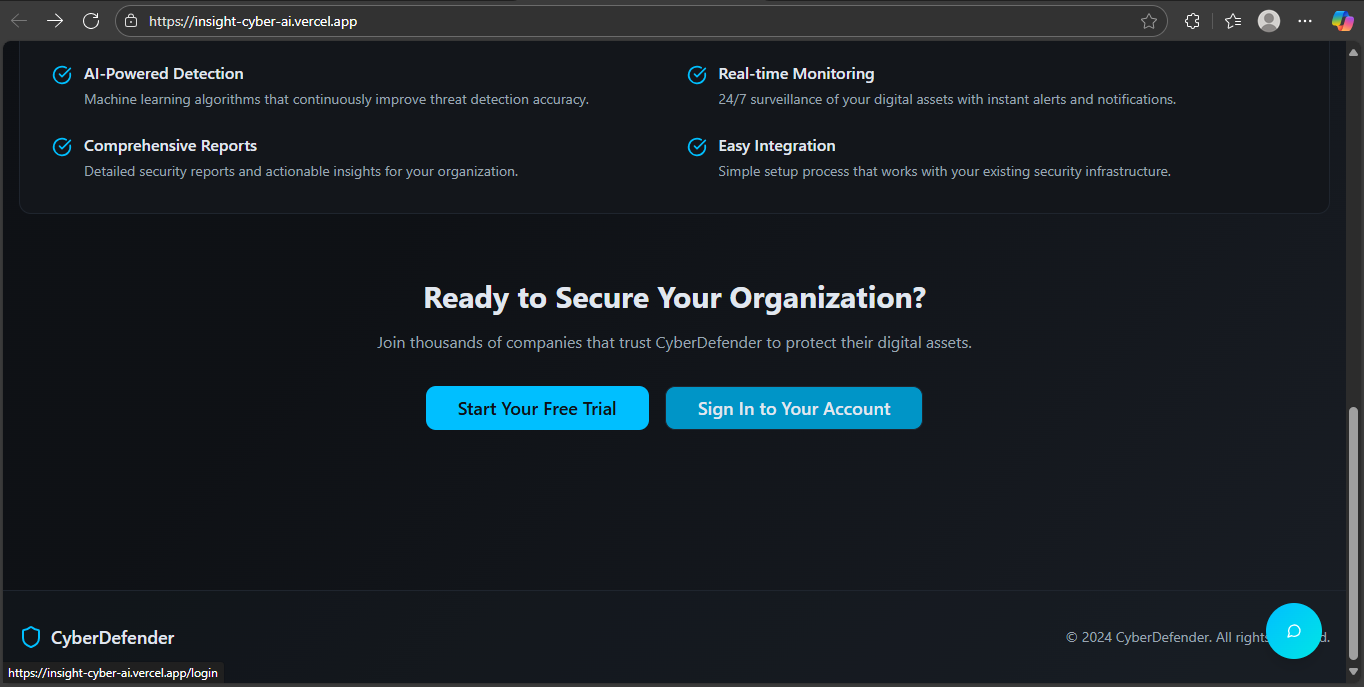
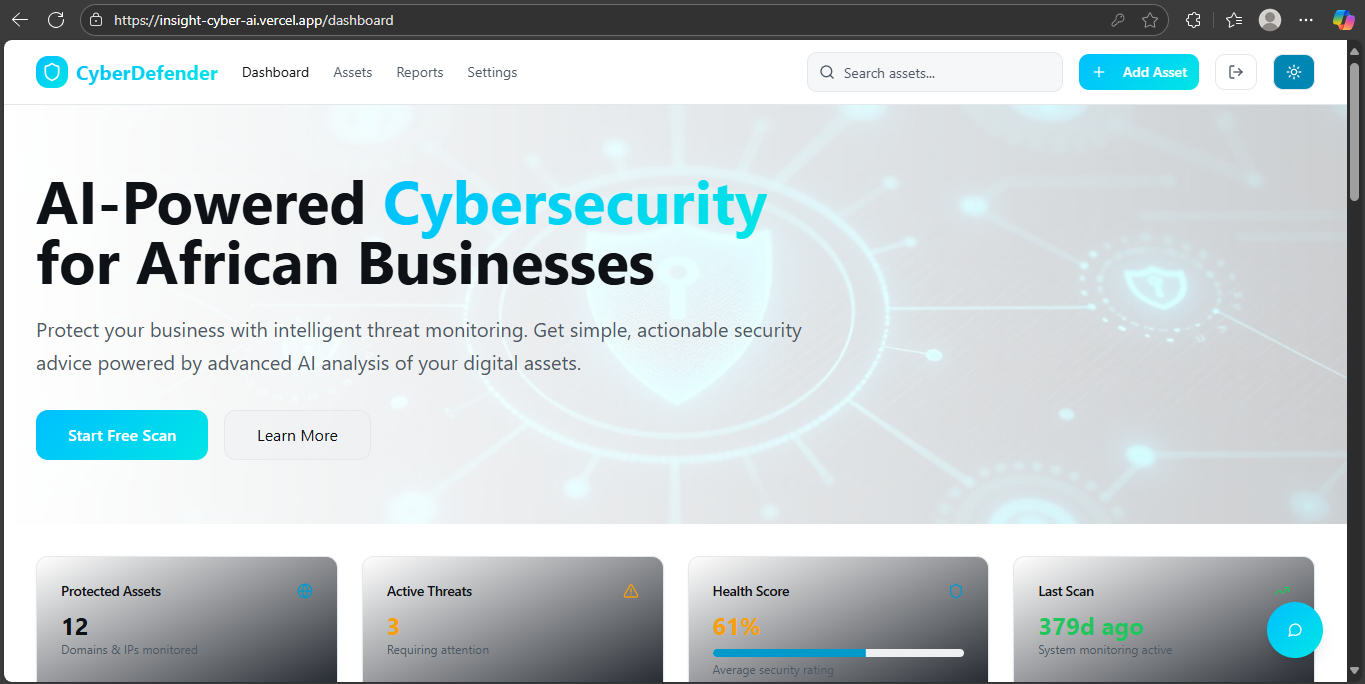
Landing Page
-
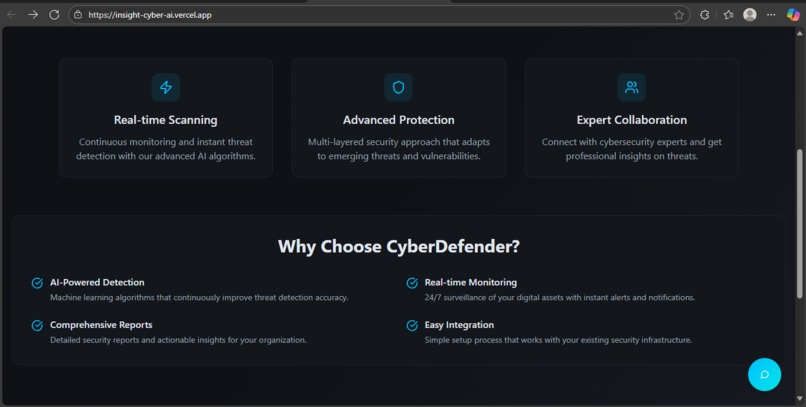
Landing Page
-
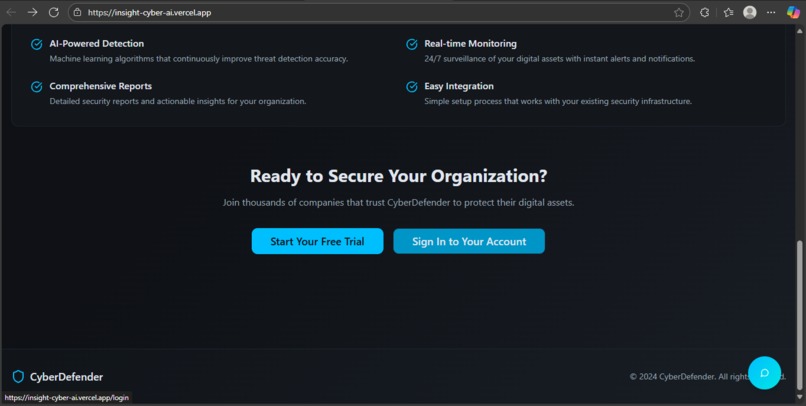
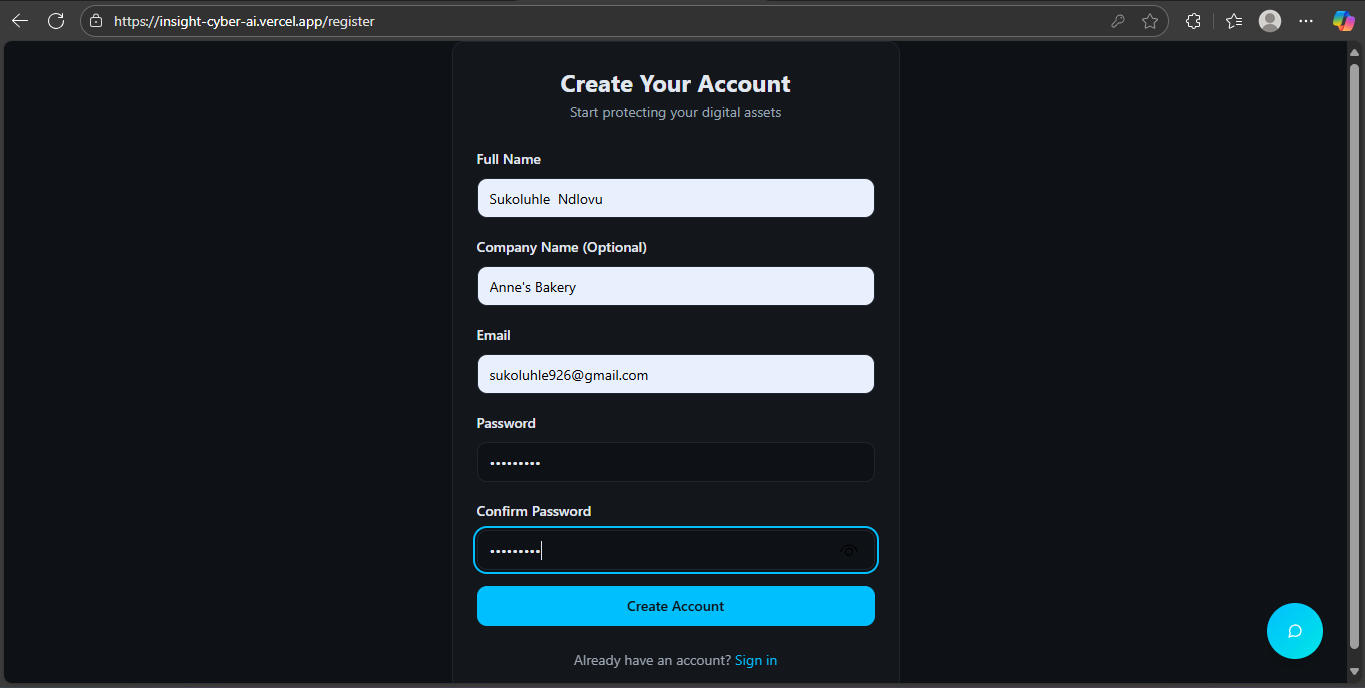
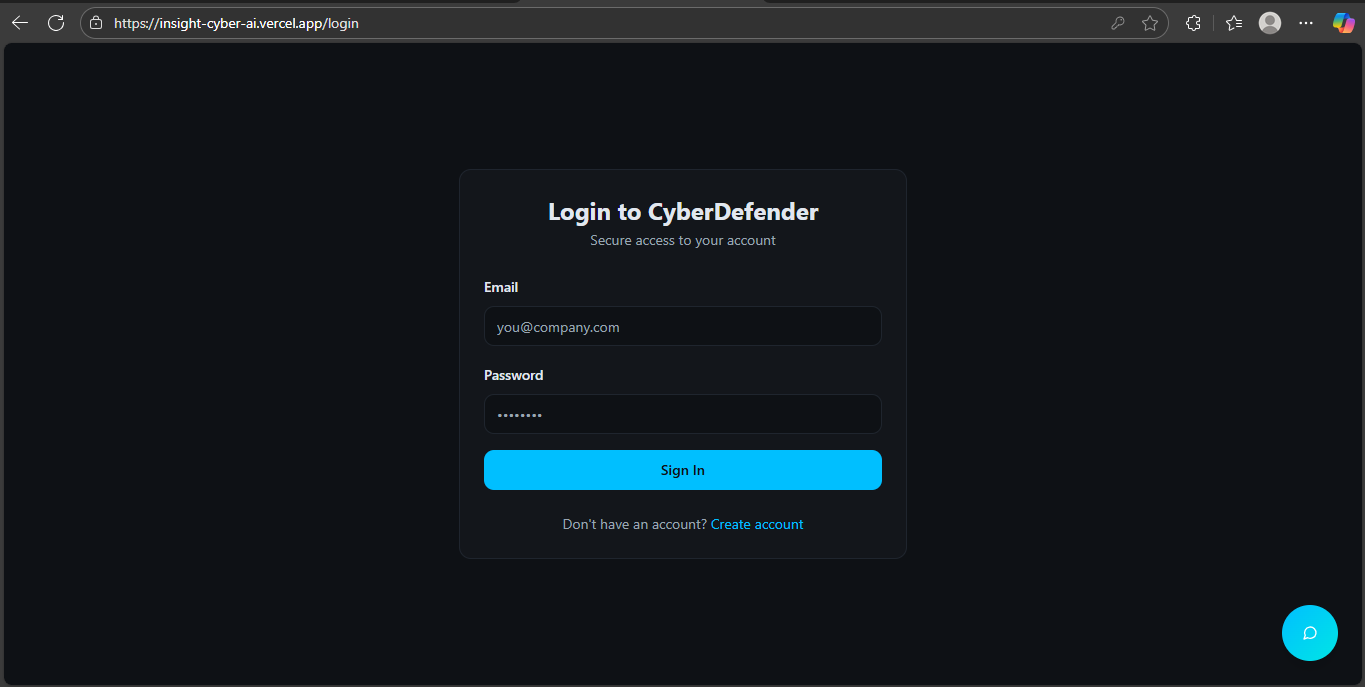
Start Trial by Registering or Logging in
-
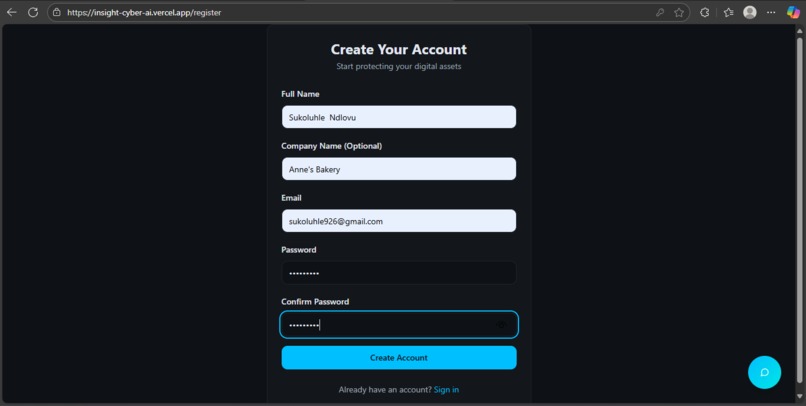
Registering Page
-
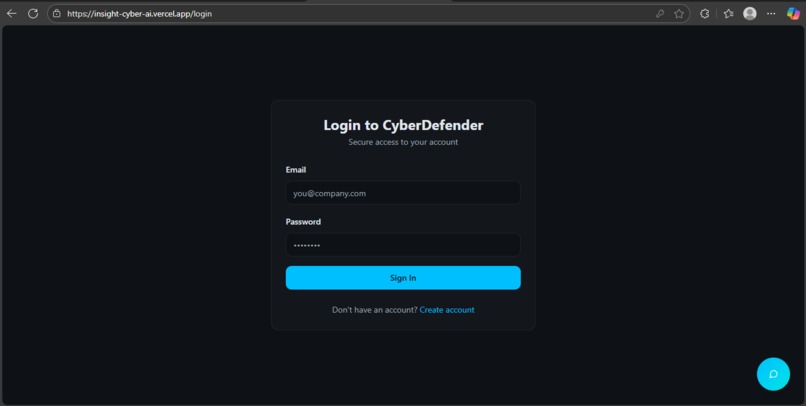
Login Page
-
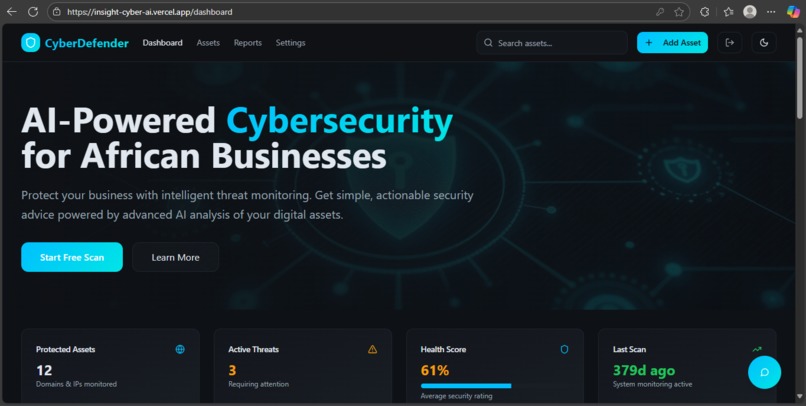
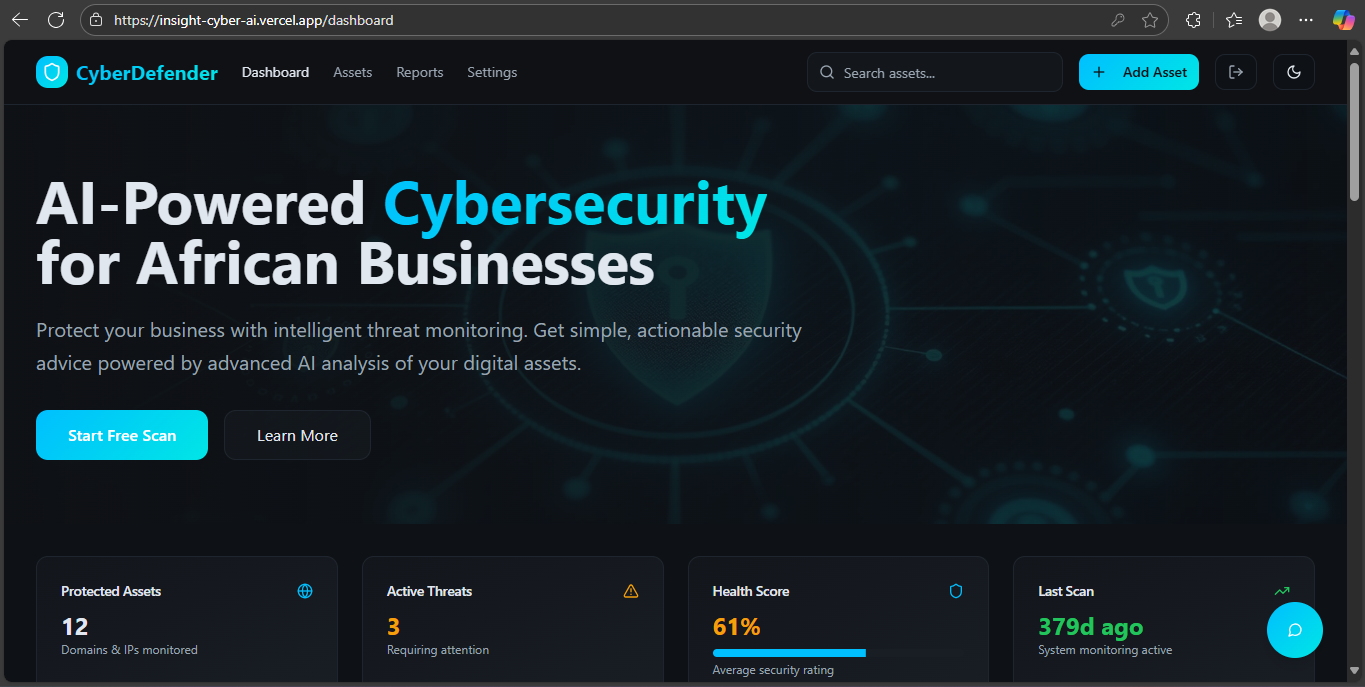
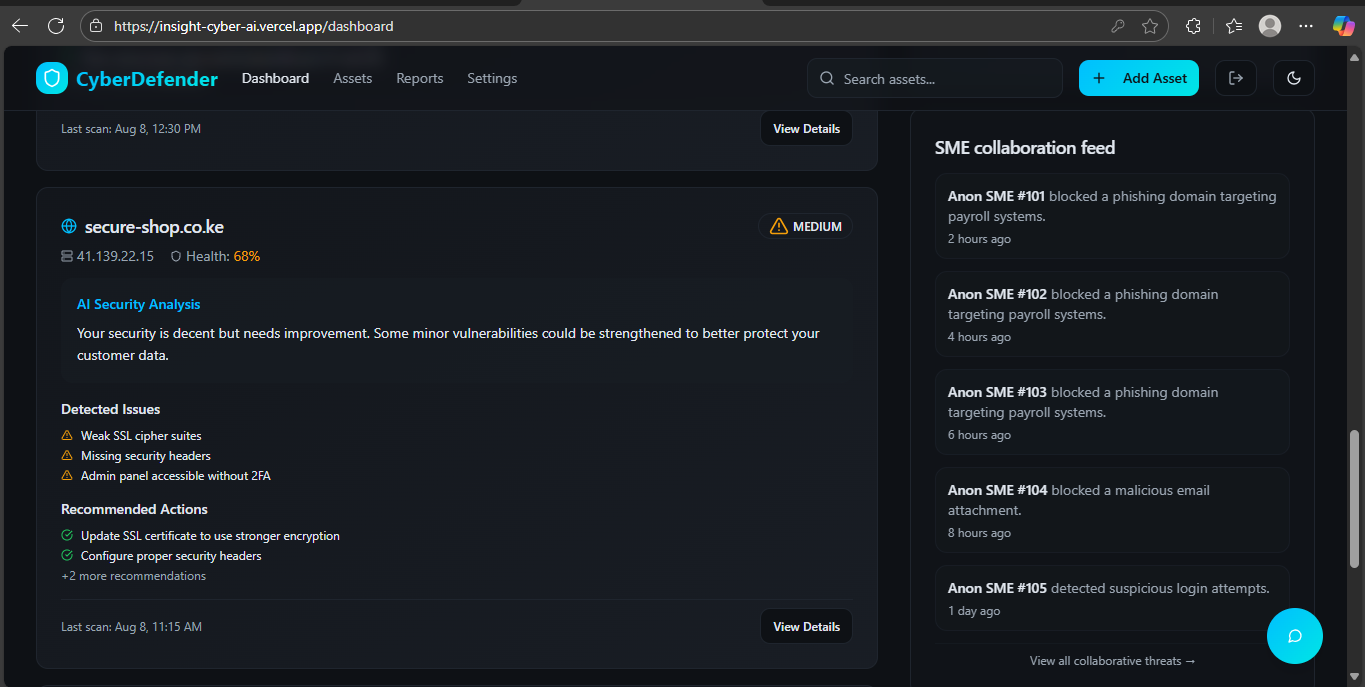
Dashboard
-
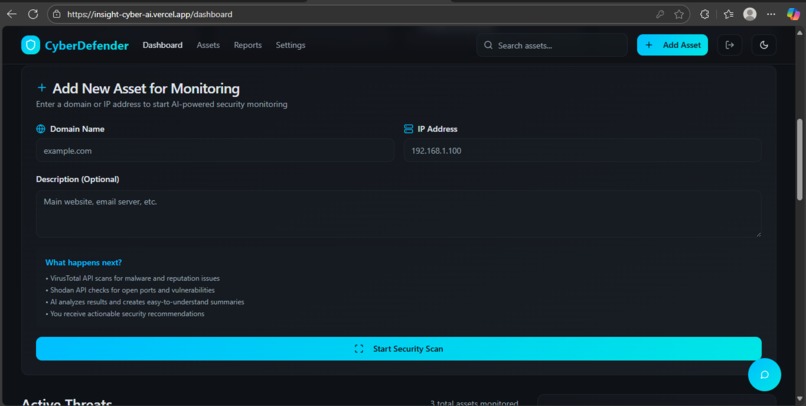
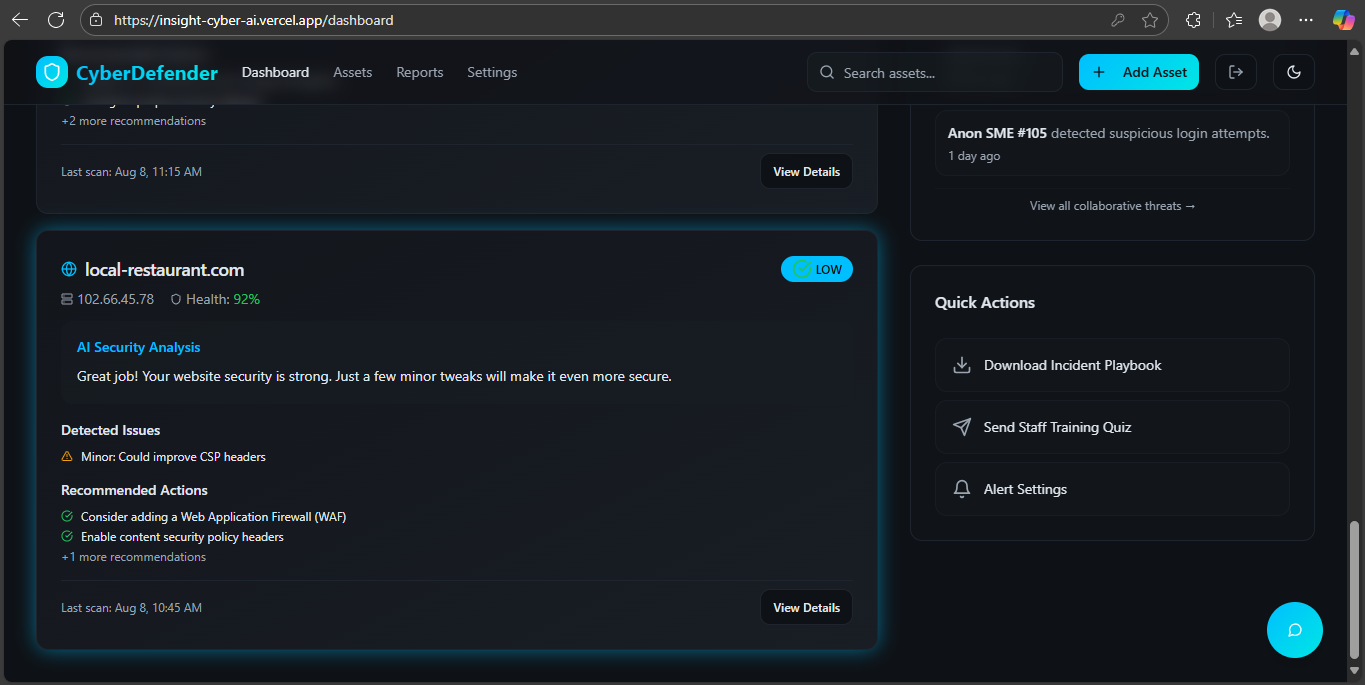
Assets
-
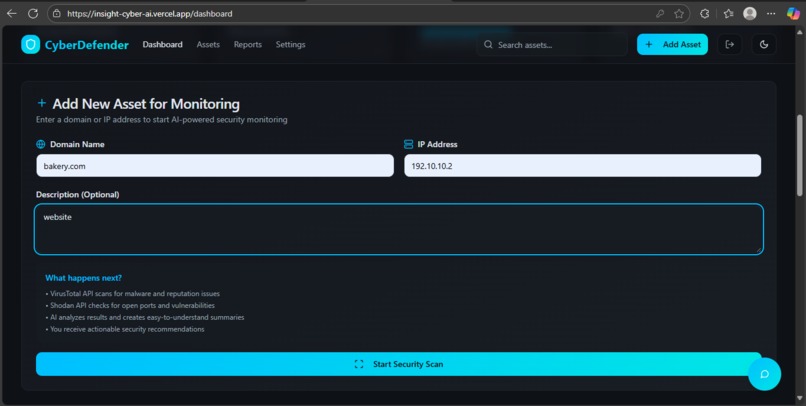
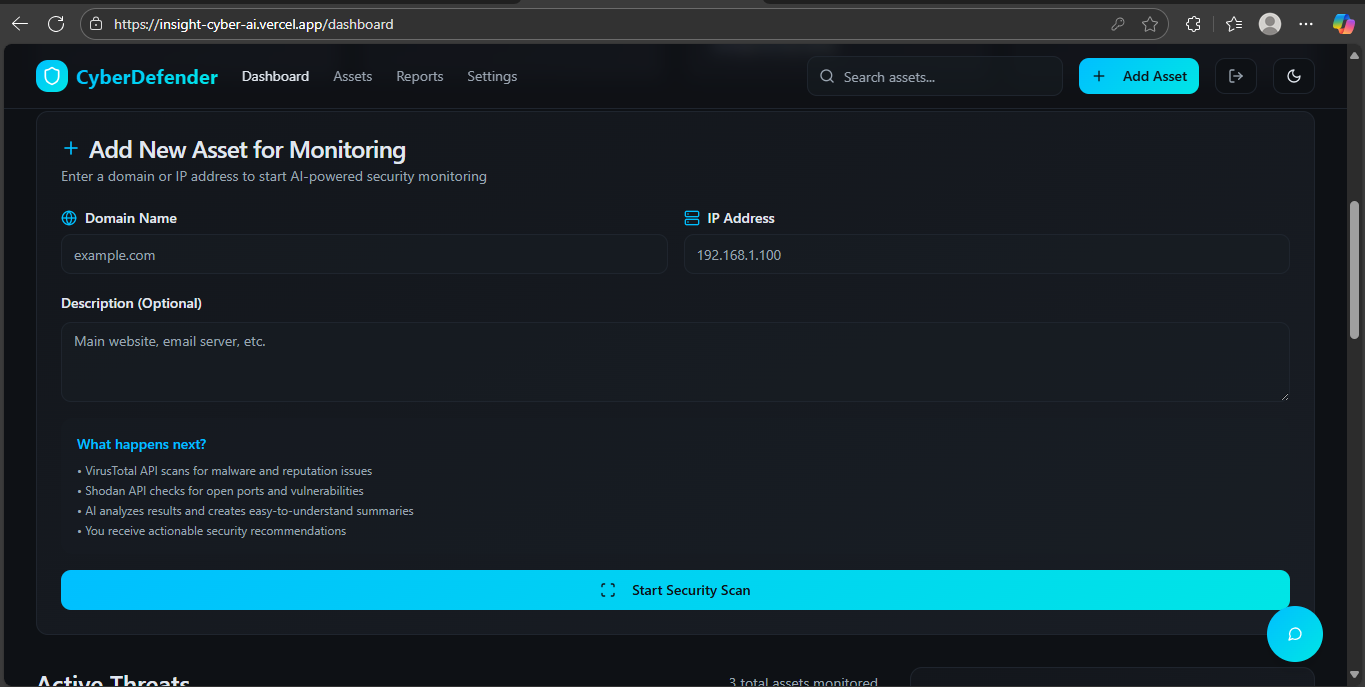
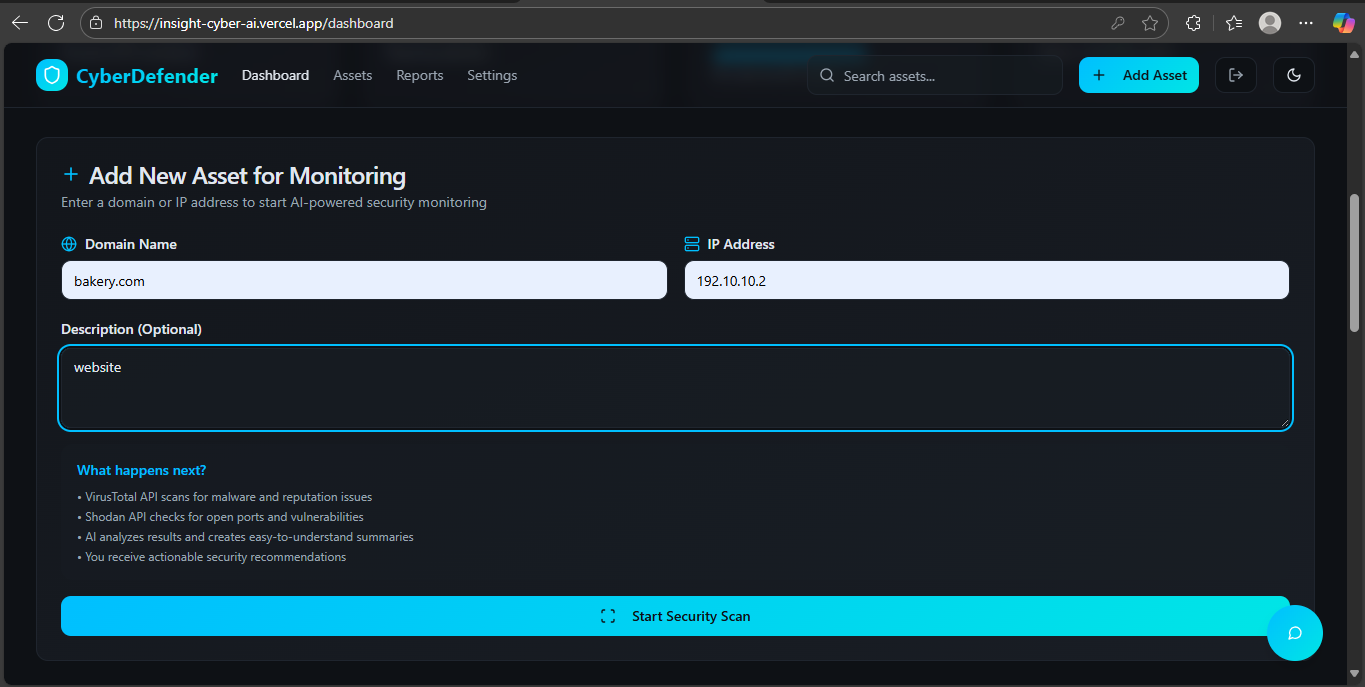
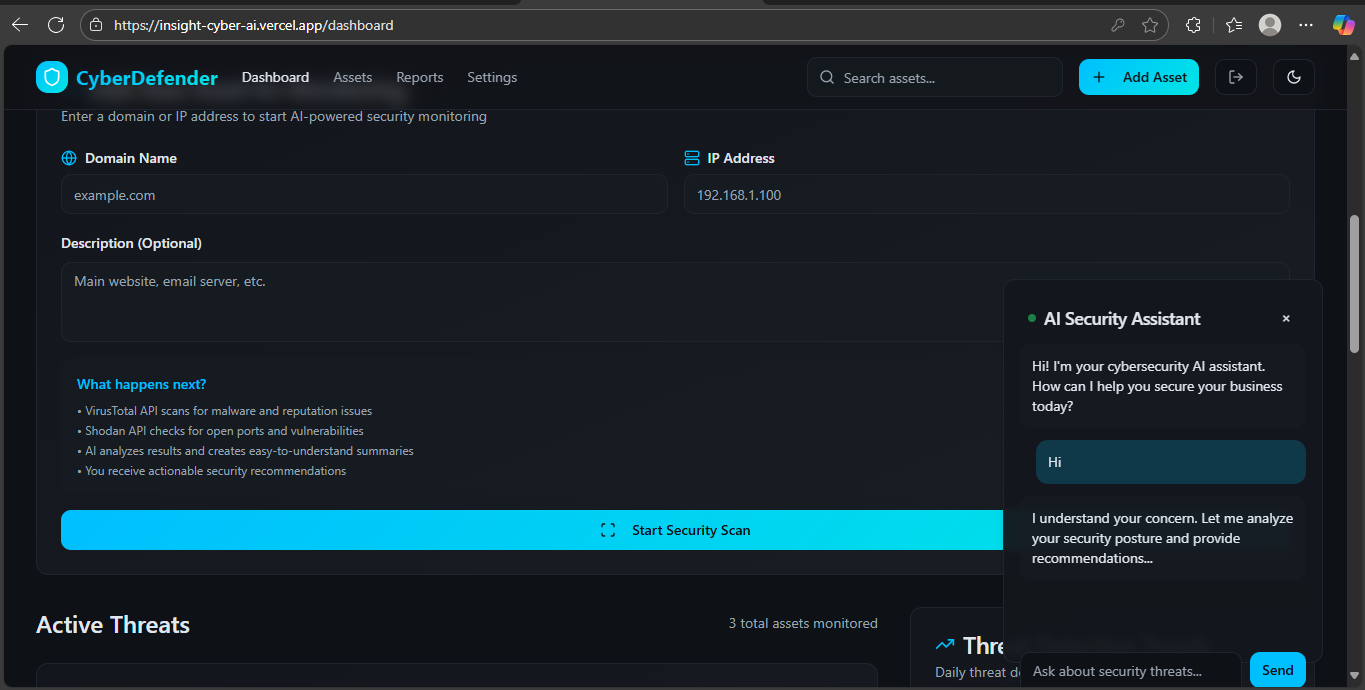
Filling in your Details for Scanning
-
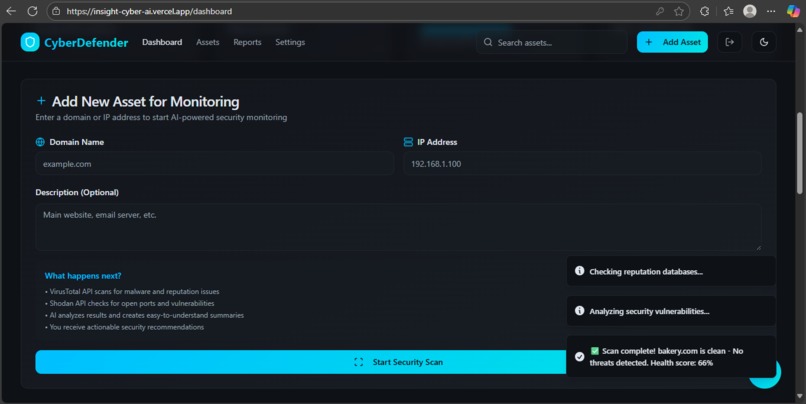
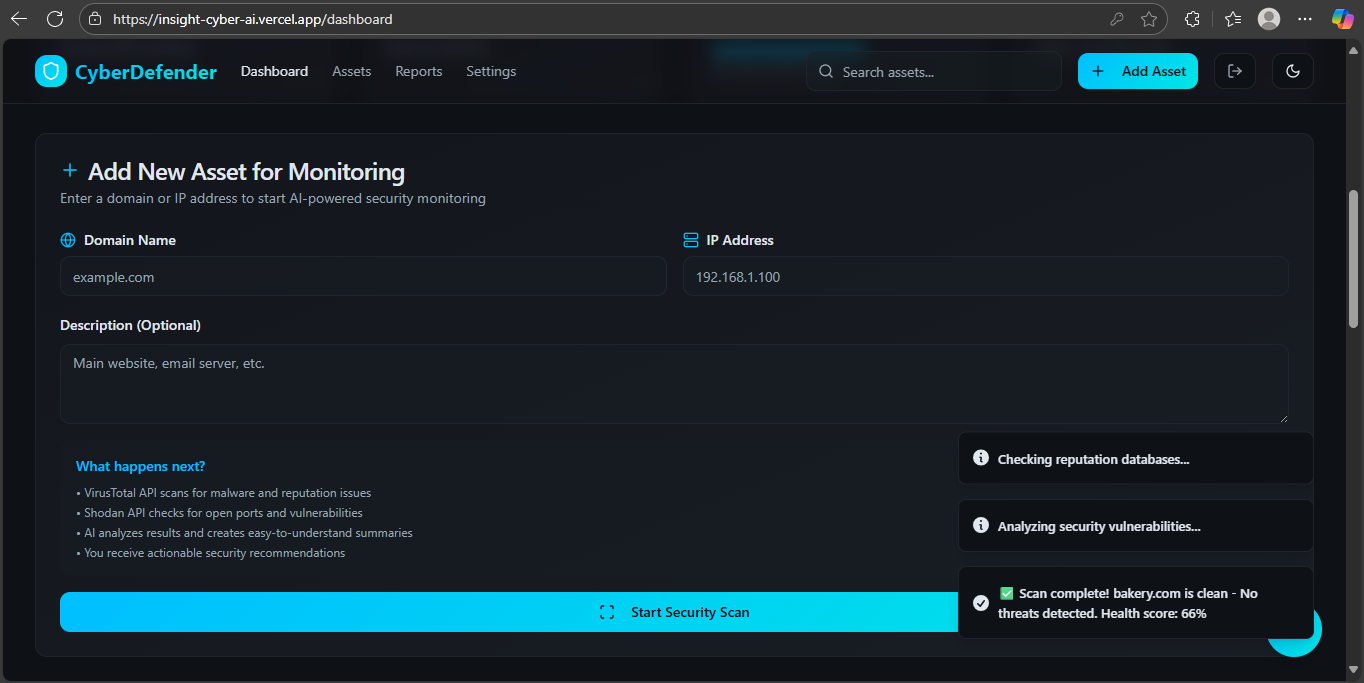
Results from Scanning
-
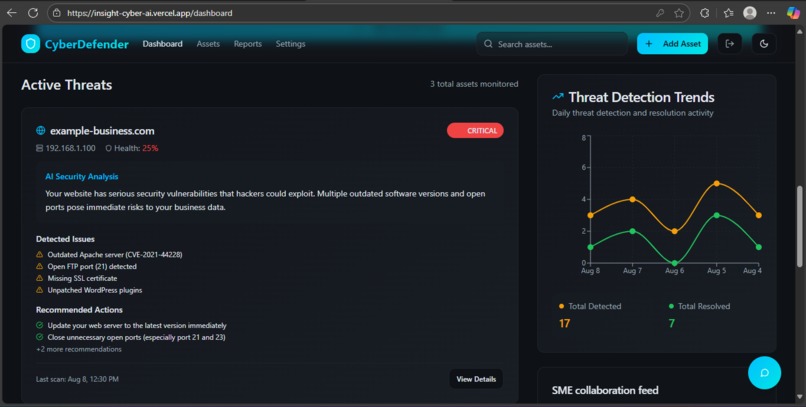
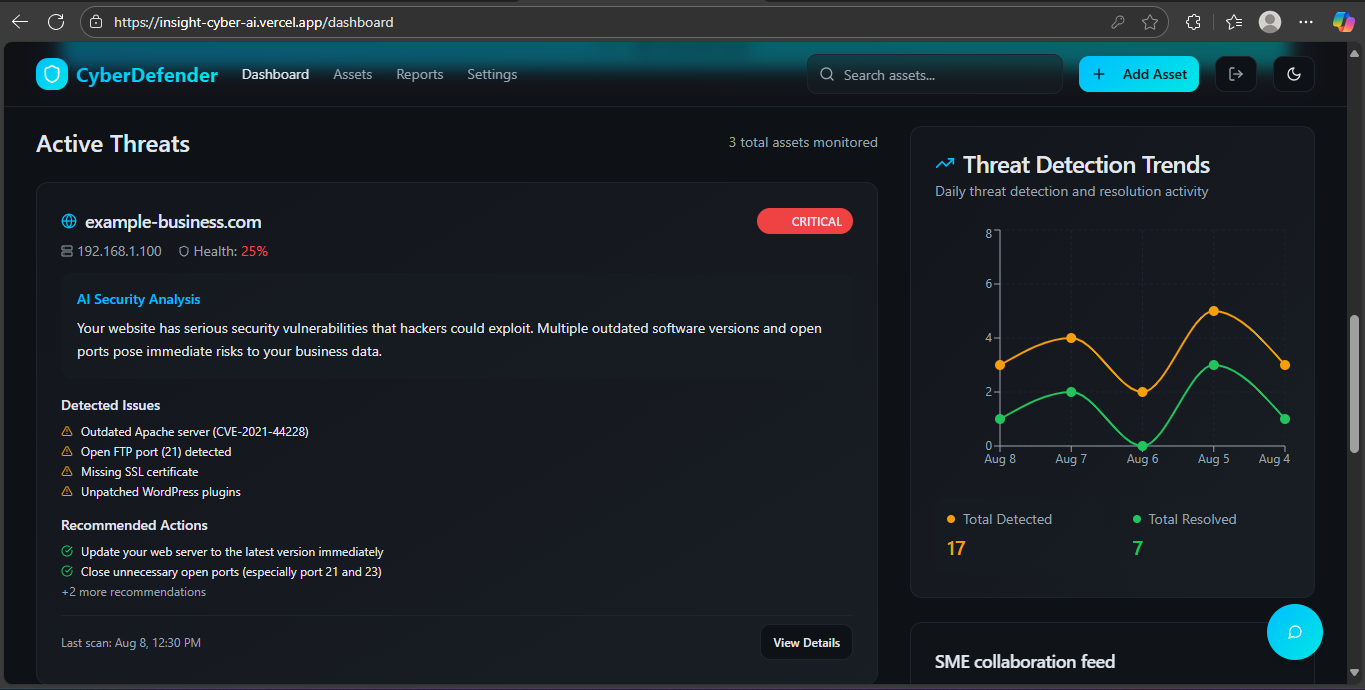
Threat Detection Threats
-
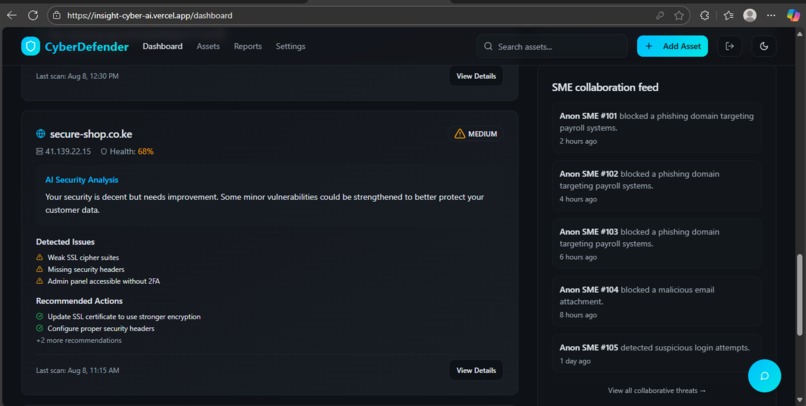
SME Collaboration Feed
-
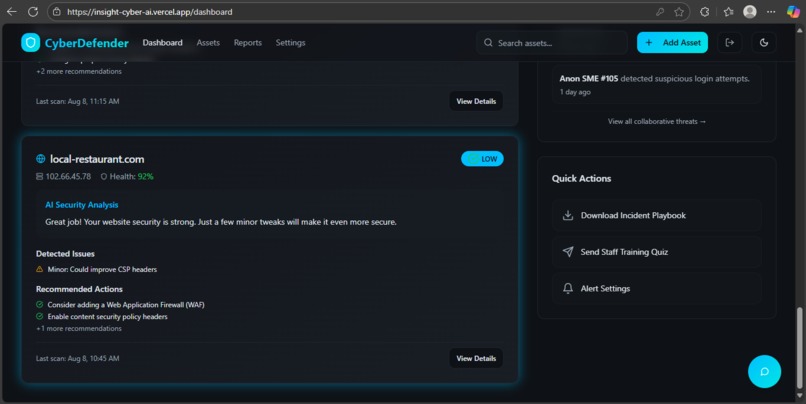
Quick Actions
-
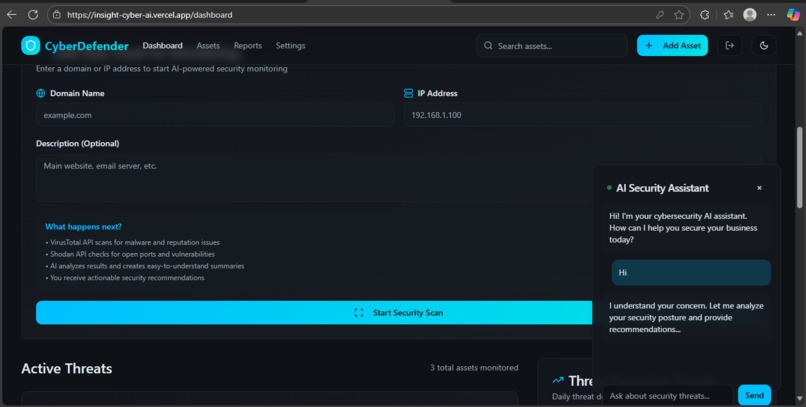
Chatbot/Virtual Assistant
-
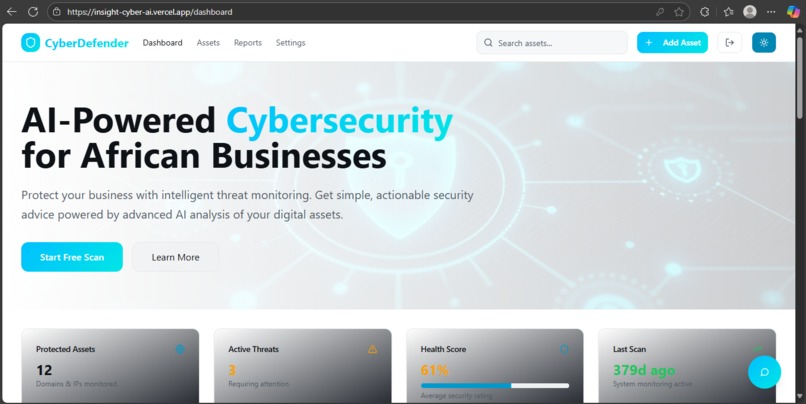
Light Mode Feature
Inspiration
Small and medium-sized enterprises (SMEs) are increasingly targeted by cyber threats but often lack dedicated cybersecurity expertise or resources. This leaves them vulnerable to phishing, malware, weak configurations, and data breaches.
What it does
CyberDefender is an AI-powered threat intelligence dashboard designed specifically for SMEs. It continuously monitors an organization’s digital footprint, analyzes potential vulnerabilities, and provides actionable AI-generated tips on how to secure systems.
- Monitoring domain & IP reputation via VirusTotal API
- Vulnerability scanning with OWASP security libraries
- A clean React dashboard for real-time insights
- AI-generated security recommendations
- SMS-based alert system for critical threats
How we built it
The inspiration came from noticing that most cybersecurity tools are built for large enterprises with big budgets and specialized teams. SMEs despite being major contributors to the economy remain under protected. I wanted to bridge that gap with a lightweight, affordable and intelligent solution powered by AI.
Challenges we ran into
Backend:
- Developed with Python (FastAPI) for speed and scalability.
- Integrated VirusTotal API to analyze files, URLs, and IP addresses.
- Used OWASP ZAP libraries for vulnerability scanning.
- Implemented AI modules to generate easy-to-understand recommendations.
Frontend: 1. Built with React for a responsive and interactive user interface. 2. Data visualization handled with Recharts & TailwindCSS.
Alert System: 1. Implemented Twilio API for real-time SMS alerts when high-risk threats were detected.
Accomplishments that we're proud of
1. Built a working AI powered dashboard that SMEs can actually use to monitor cyber risks
2. Successfully integrated VirusTotal API and OWASP libraries for real threat detection
3. Deployed a real time SMS alert system for critical vulnerabilities
4. Translated complex cybersecurity findings into plain, actionable language for non technical users
5. Created a solution that is lightweight, affordable and scalable perfect for small businesses.
What we learned
 1. How to combine threat intelligence with AI to make cybersecurity more accessible.
 2. The importance of UI/UX in cybersecurity tools, especially for non-experts.
 3. How to manage API limits, caching, and data pipelines effectively.
 4. Learned that alert design is just as important as detection—too many alerts can cause fatigue.
 5. The value of team collaboration and iteration in solving real-world problems.
What's next for CyberDefender
1. Expand threat intelligence sources: Integrating Shodan, HaveIBeenPwned and Dark Web   monitoring
2. Machine learning models to predict potential breaches based on user activity and threat patterns
3. Multi-language support to reach SMEs globally
4. Mobile app version for monitoring and alerts on the go
5. Gamified training modules that teach SME employees cybersecurity best practices
6. Explore partnerships with fintech and insurance providers to integrate CyberDefender into SME risk management packages

Log in or sign up for Devpost to join the conversation.