-
-
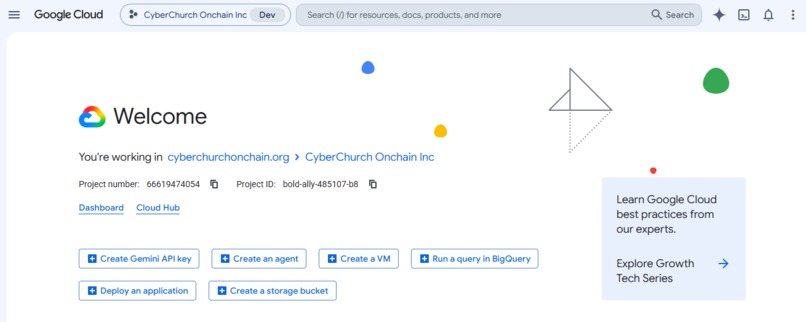
GCP Console: Active project environment hosting our serverless Gemini AI agent backend.
-
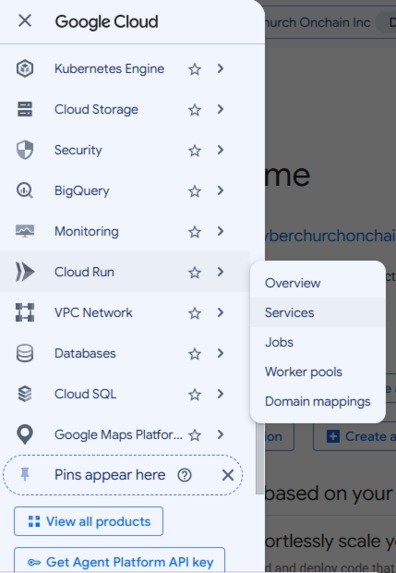
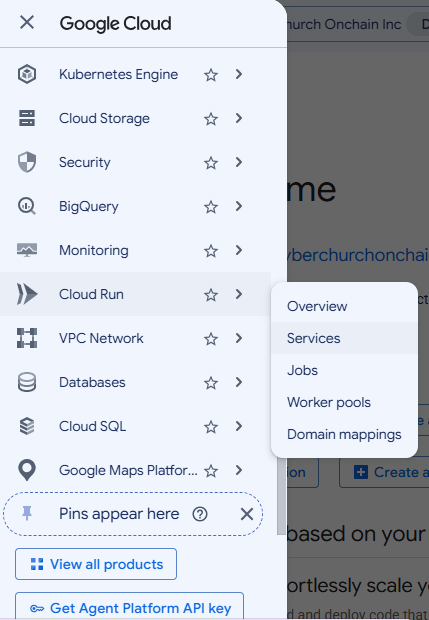
GCP Cloud Run Services: Serverless container navigation for the staging-api microservices backend.
-
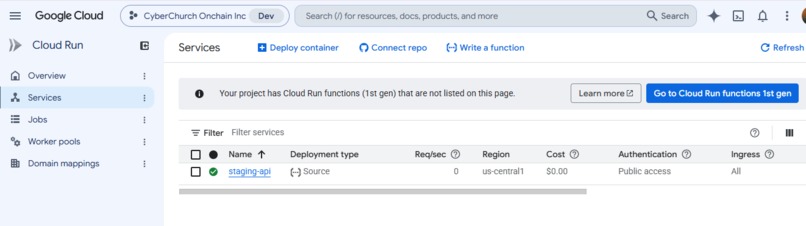
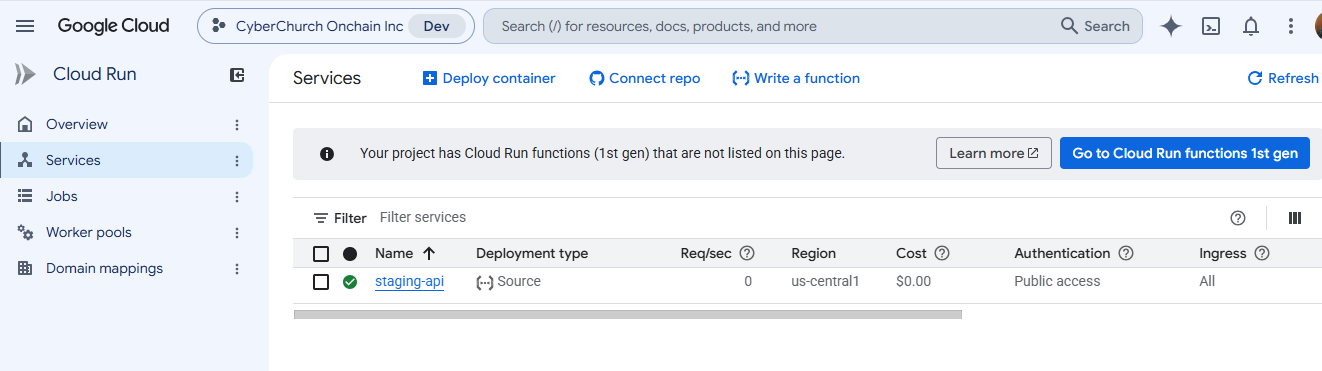
Cloud Run Services: Active staging-api deployment in us-central1 hosting our serverless backend.
-
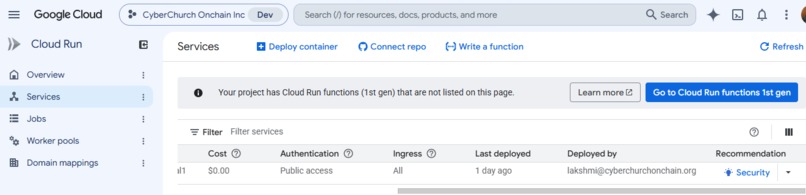
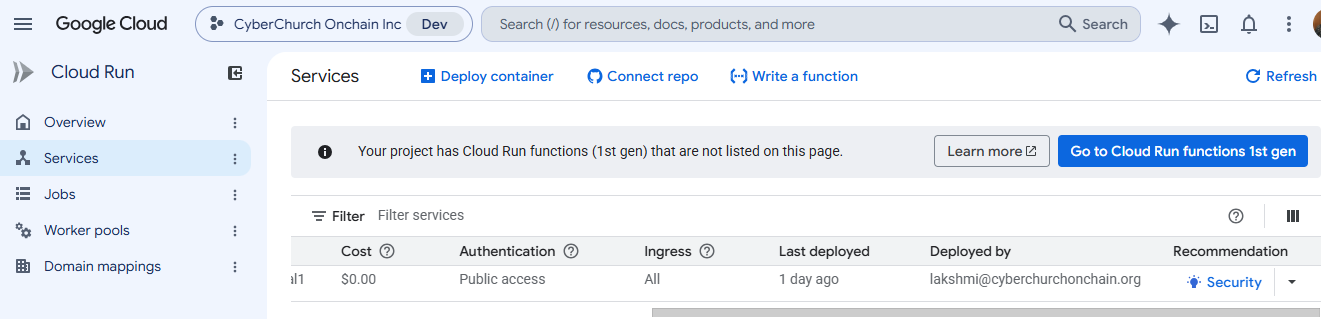
**Cloud Run Deployment Details: Active staging API deployment verification and access configuration.**
-
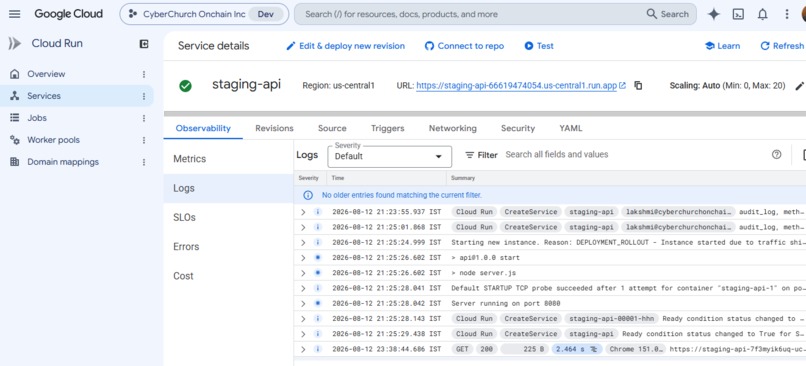
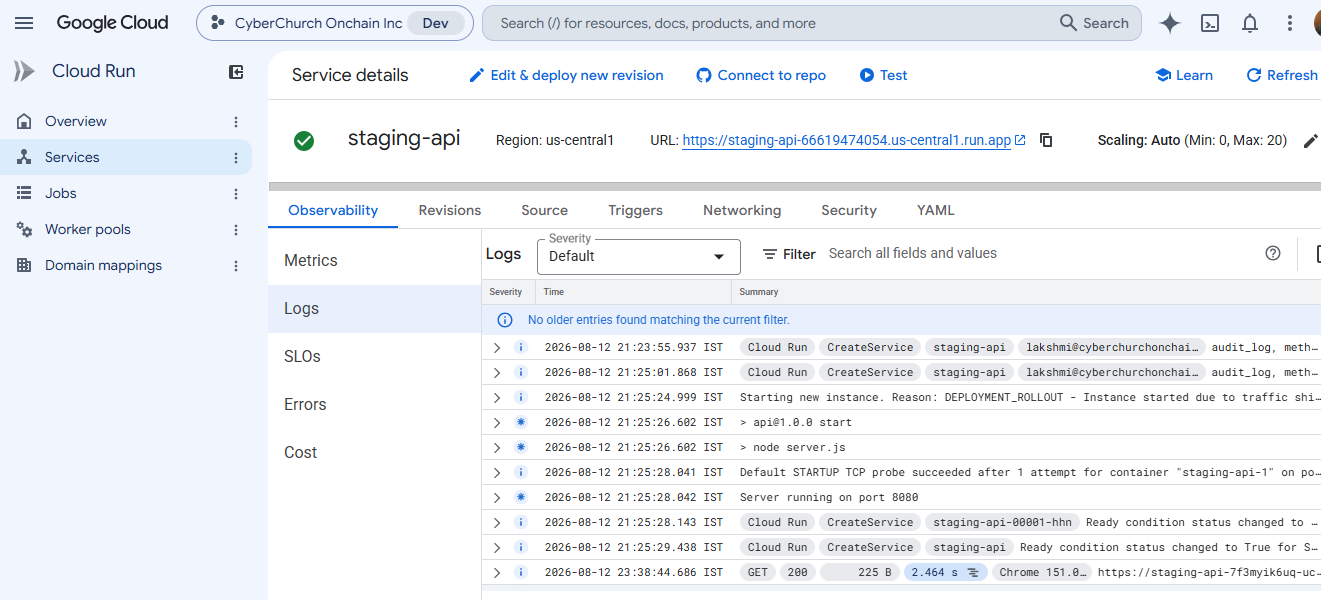
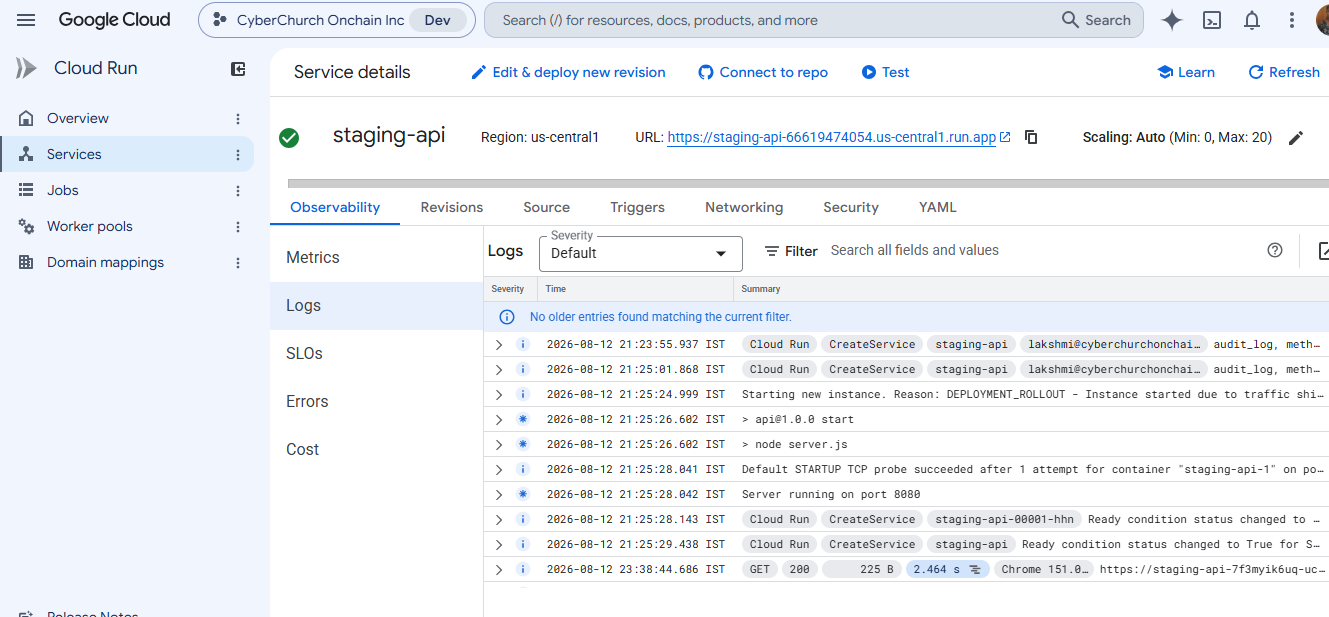
Cloud Run Service Observability: Active container logs showing server startup,health checks,auto-scaling configuration, and successful HTTP
-
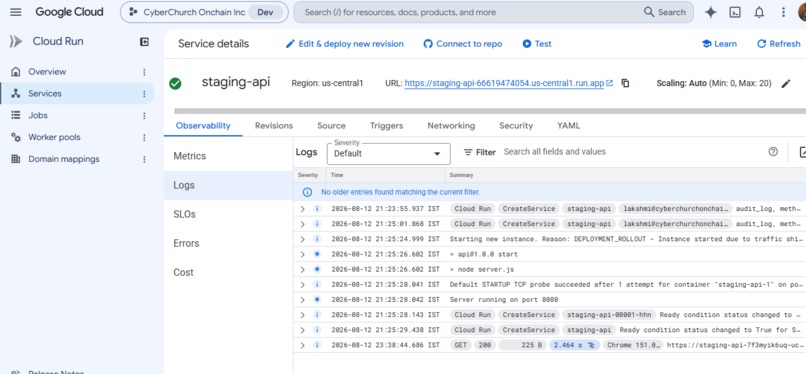
Cloud Run Service Observability: Active container logs showing server startup, health checks,auto-scaling configuration,and successful HTTP
-
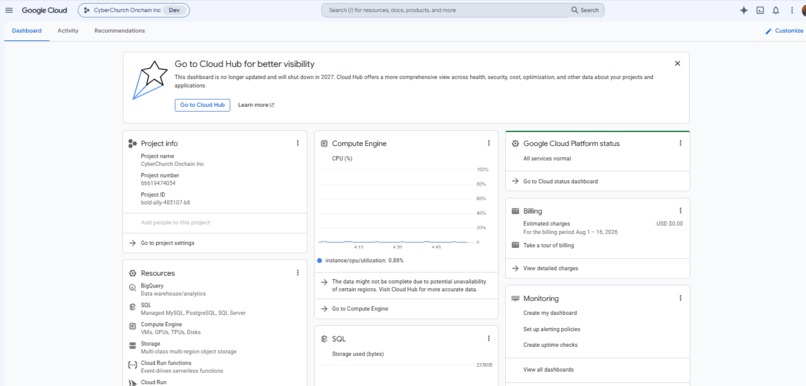
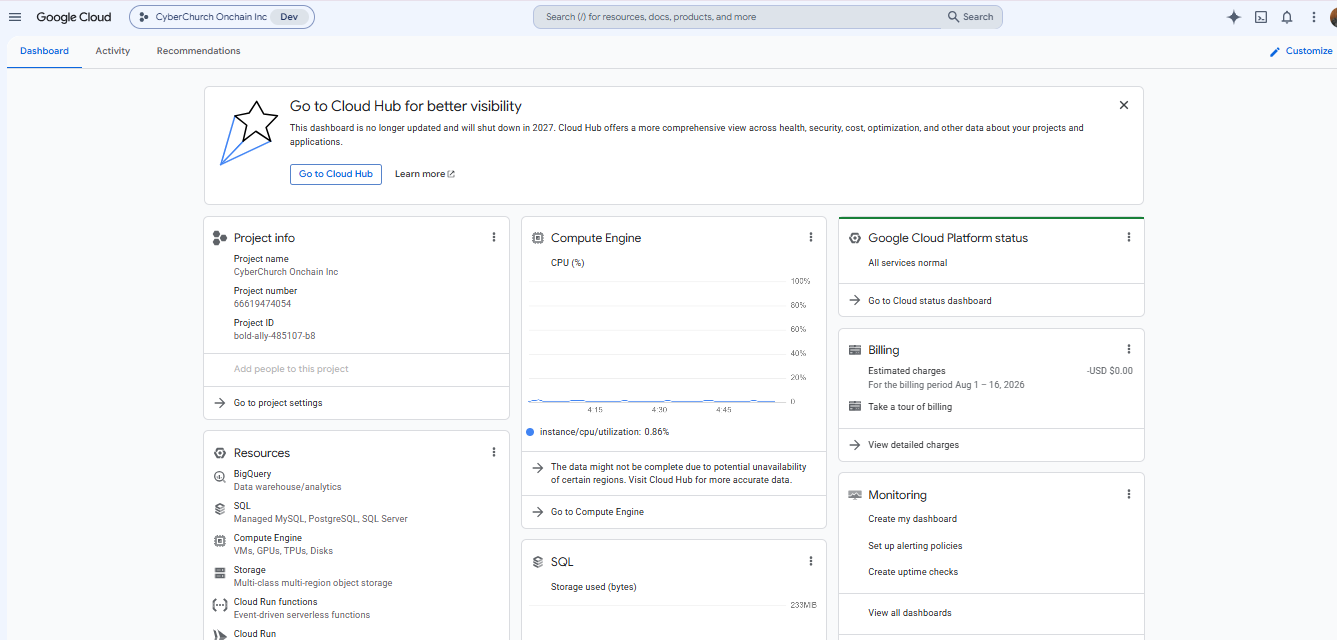
GCP Project Dashboard: Live system metrics, platform status, and active resource utilization for the hackathon billing period.
-
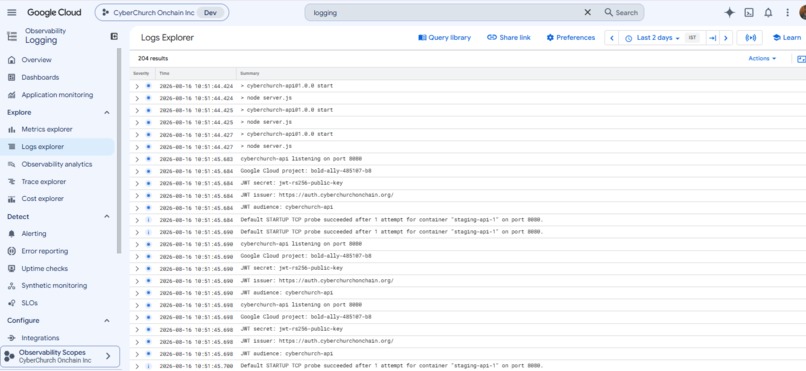
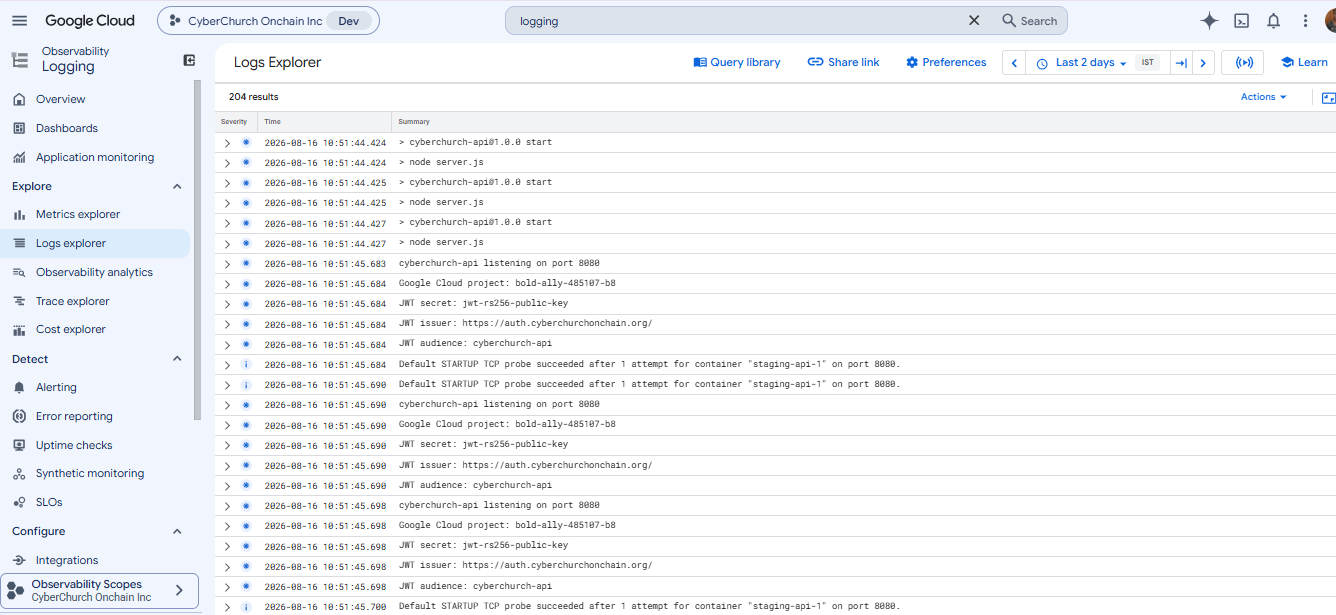
**Logs Explorer: Live backend runtime logs confirming server startup, TCP health probes, and RS256 JWT public key initialization.**
-
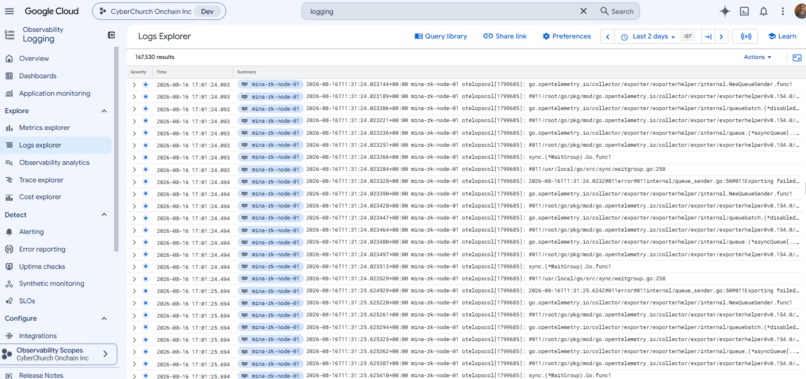
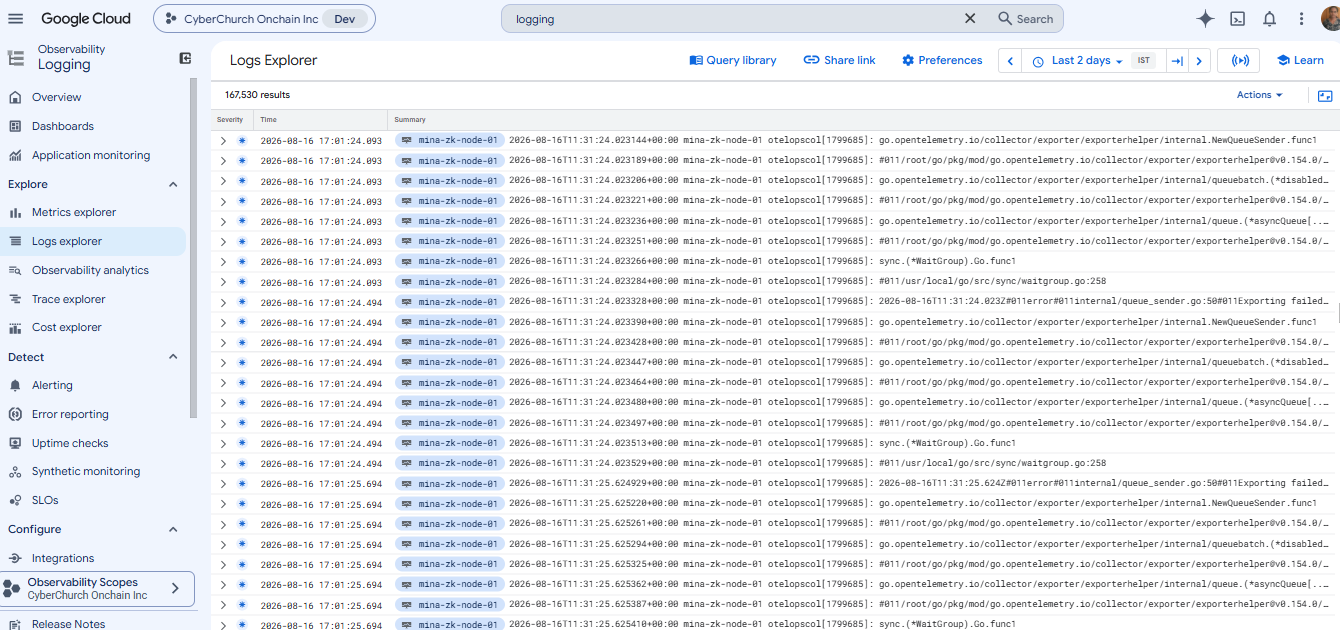
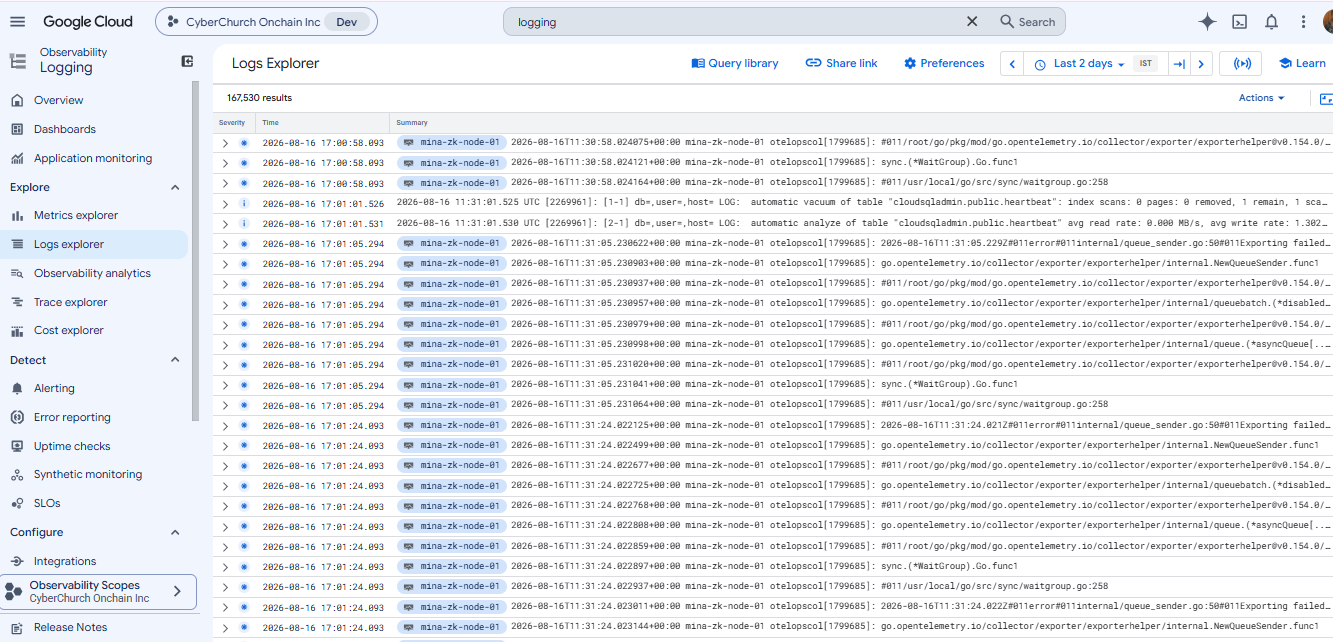
Observability Explorer showing Open Telemetry exporter activity and live execution state for the minazknode ZeroKnow ledge infrastructure
-
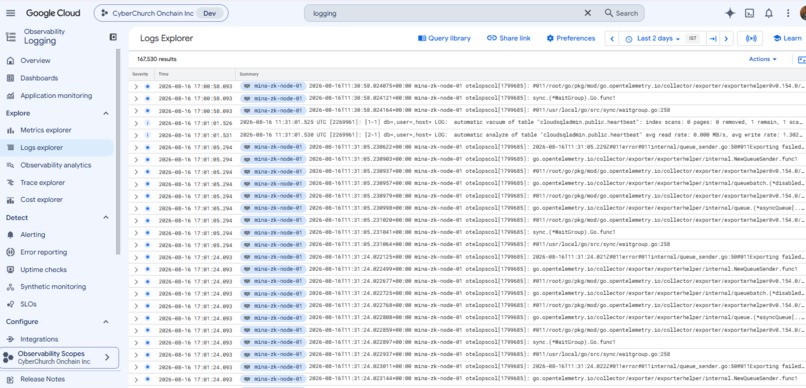
**Database & ZK Node Logs:** Observability Explorer capturing Cloud SQL heartbeats and ZK node OpenTelemetry execution events.
-
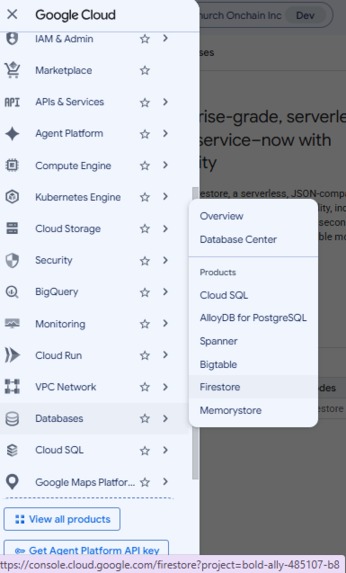
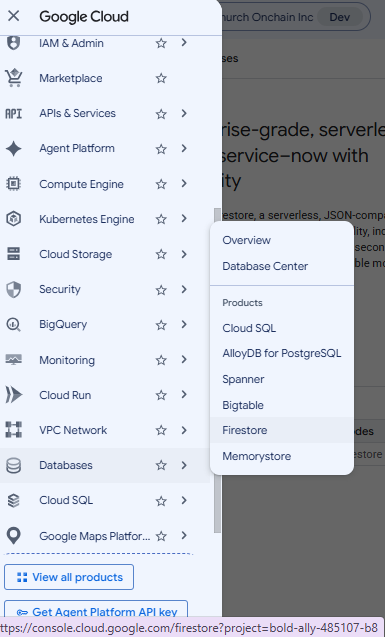
**GCP Database Services: Firestore navigation for serverless session state, workflow data, and ZK proof metadata.**
-
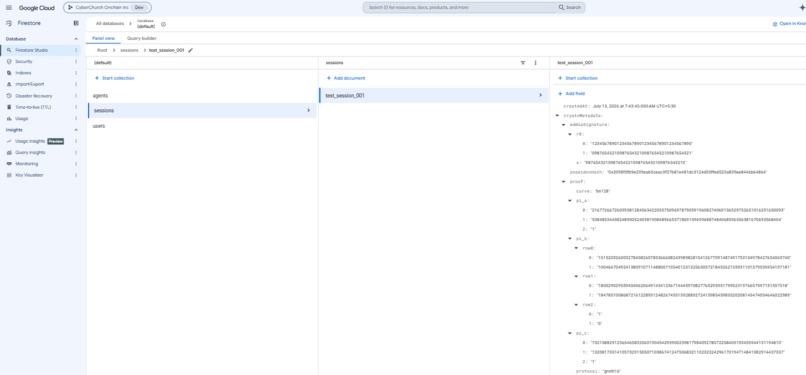
**GCP Database Services: Firestore navigation for serverless session state, workflow data, and ZK proof metadata.**
-
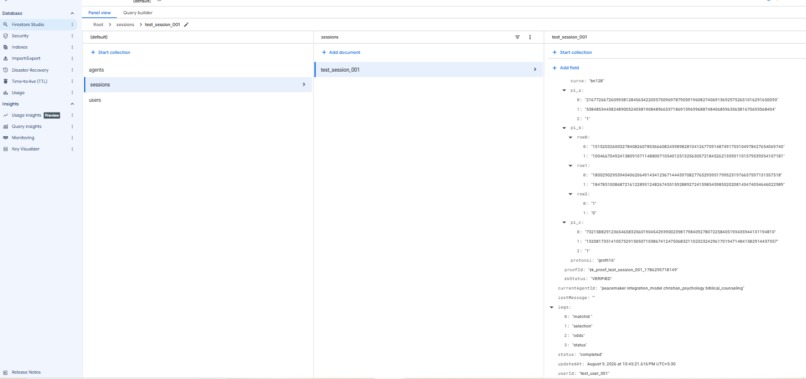
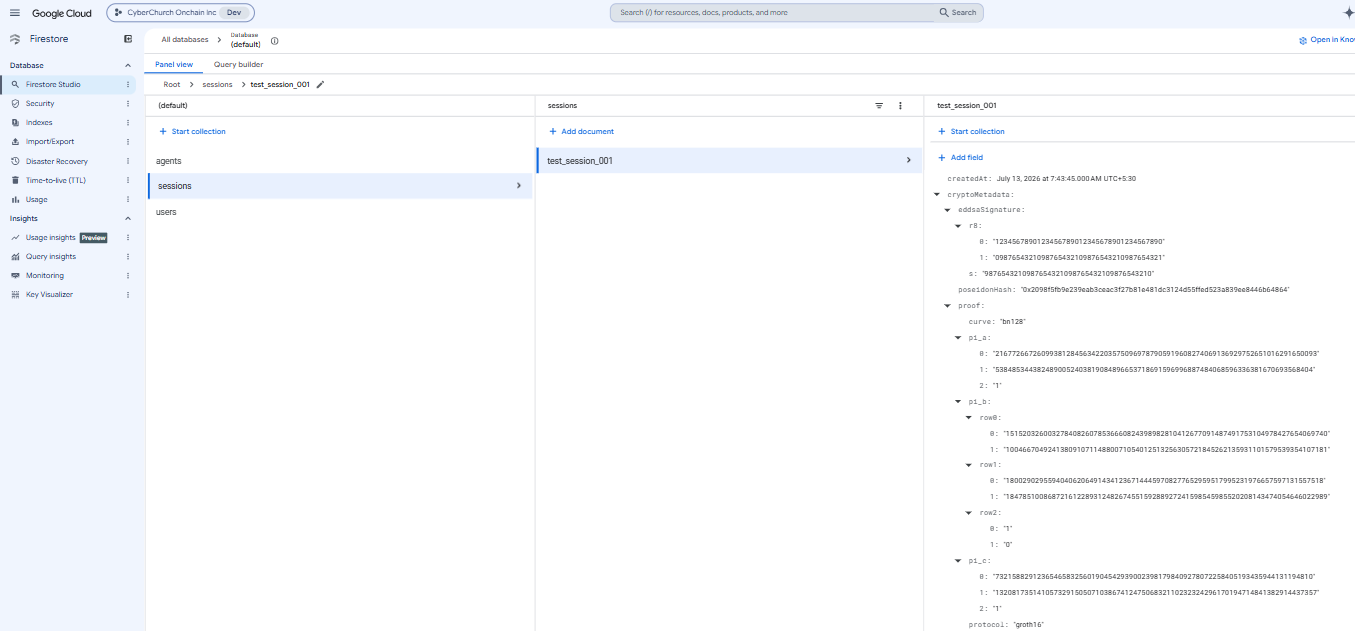
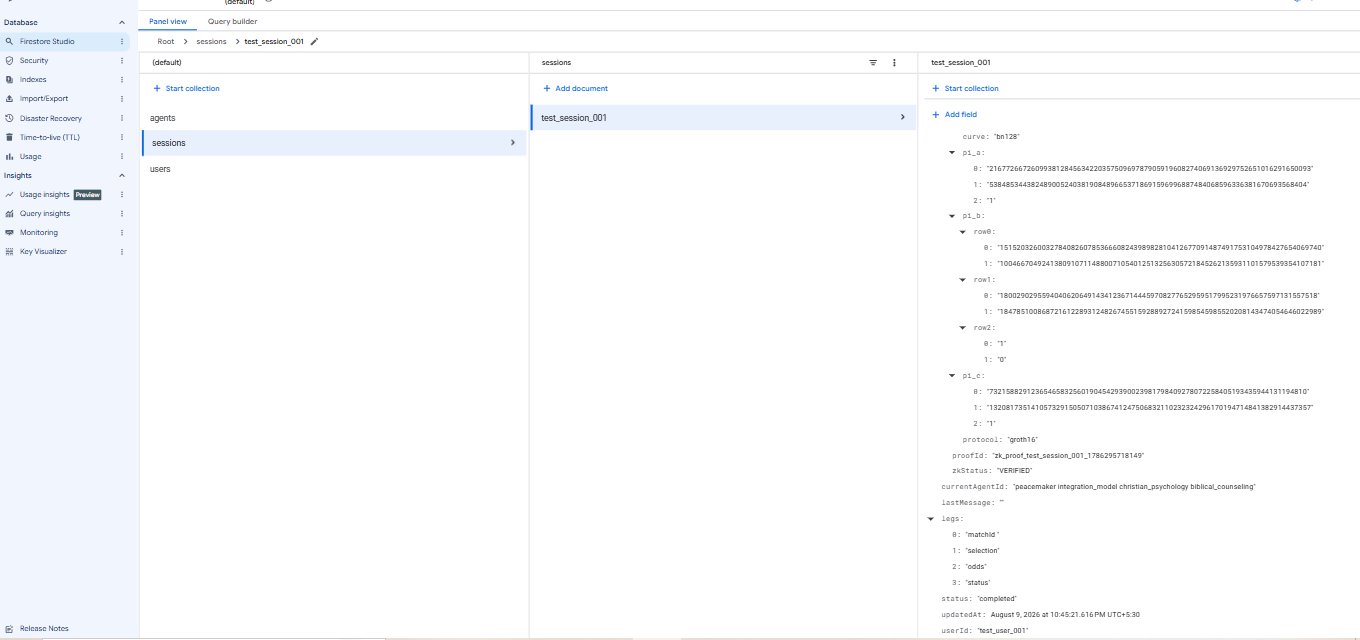
**Firestore Session State:** Real-time session document showing verified Groth16 ZK proof (`bn128`) and active Gemini counseling agent state
-
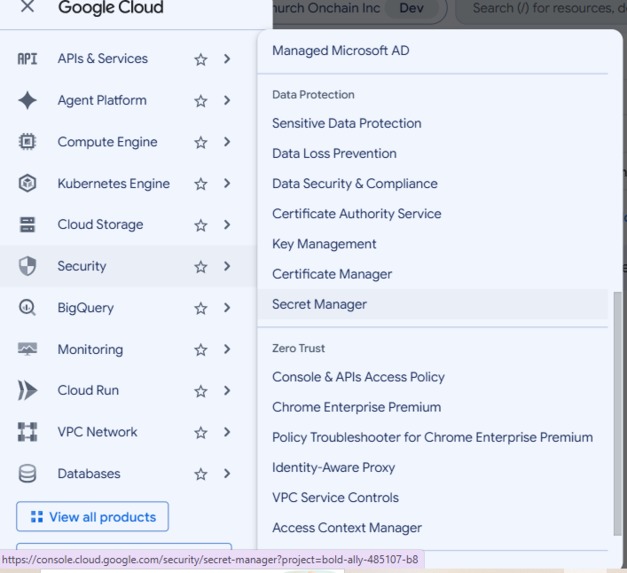
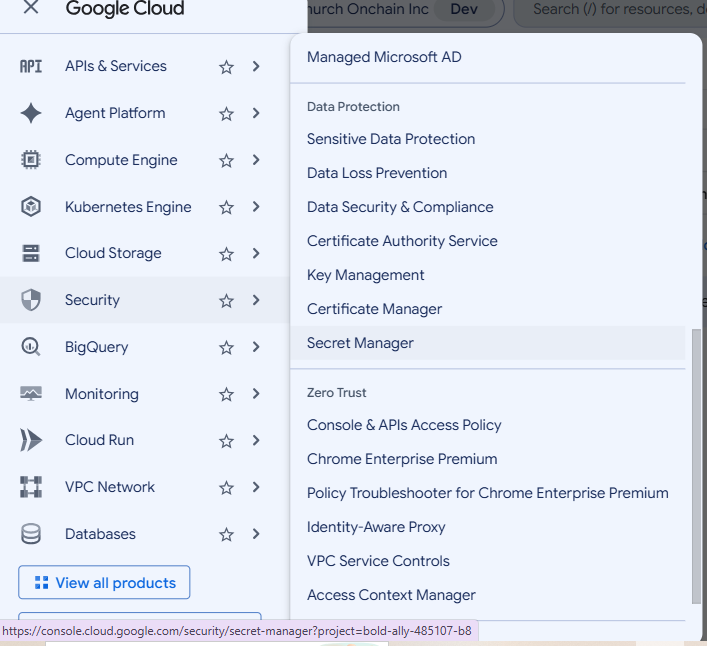
**Secret Manager Navigation:** GCP Security menu for managing zero-trust RS256 public keys and cryptographic configuration.
-
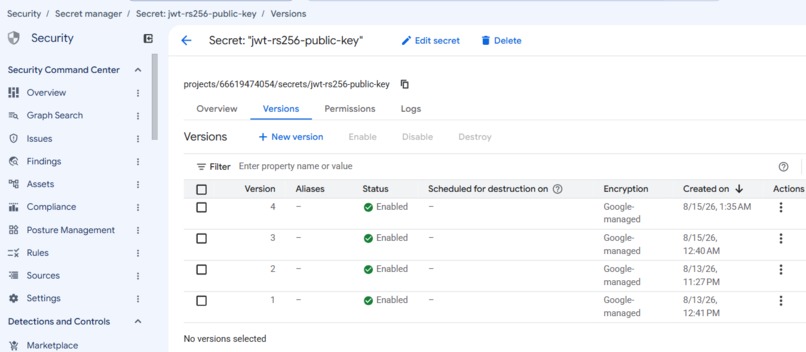
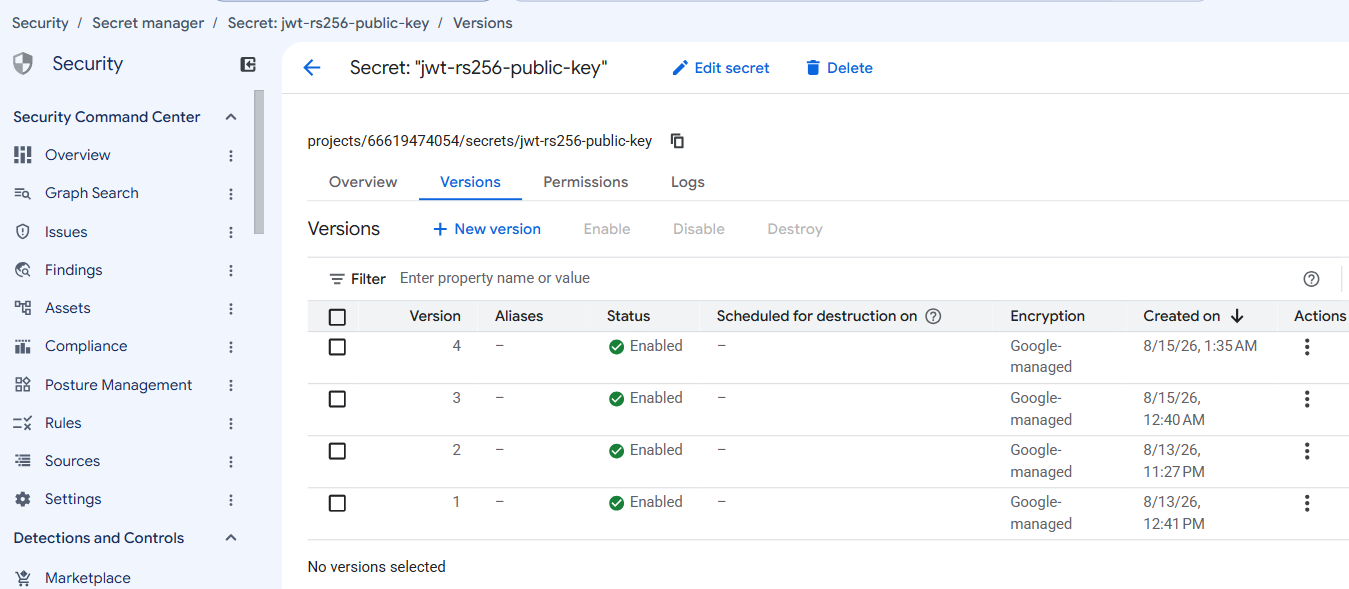
Secret Manager Key Versions: Active versions for jwt-rs256-public-key supporting zero-trust RS256 authentication.
Inspiration Static 3D virtual spaces often lack real-time reactivity and autonomous intelligence. CyberChurch Onchain was built to bridge this gap by transforming 3D WebGL spatial venues into living, autonomous environments powered by Google’s Gemini AI agents and zero-knowledge cryptography. Supported by the Google for Startups AI Agents Challenge, our goal is to deliver low-latency AI interactions without compromising user privacy or zero-trust security. How We Built It
AI & Serverless Backend: Deployed microservices on Google Cloud Platform (GCP Cloud Run) hosting Gemini AI agent decision loops that process real-time session inputs.
Low-Latency Telemetry: Integrated Server-Sent Events (SSE) to stream live agent decisions and event updates directly from Cloud Run to the client.
3D Spatial Client: Developed the CyberChurch_Mesh engine in Unity 3D (WebGL), deserializing incoming SSE JSON streams in real time to render active spatial states.
Zero-Trust Security & Auth: Secured API routes using RS256 JWT tokens with public key management inside GCP Secret Manager, paired with WebAuthn Passkeys and Coinbase Developer Platform for frictionless Web3 transactions.
Zero-Knowledge Privacy: Structured off-chain prediction models to generate ZK execution receipts, ensuring session evaluations remain verifiable and privacy-preserving.
Challenges We Faced
Unity WebGL Streaming: Native Unity web requests lack out-of-the-box SSE streaming support, requiring custom C# deserialization models to process continuous event loops without dropping frames.
Serverless Auto-Scaling: Ensuring fast cold-start performance on GCP Cloud Run while scaling from zero to active container instances during sudden traffic spikes.
Architectural Pivot for WebGL: Bypassing native mobile app store restrictions by transitioning from traditional native IAP to Web3 Passkey authentication directly inside the browser.
What We Learned
Building low-latency streaming pipelines between serverless GCP infrastructure and client-side WebGL engines.
Structuring multi-agent Gemini loops to maintain coherent spatial session states under zero-trust authentication constraints.
What's Next Completing full ZK circuit compilation (.wasm and .zkey artifacts) to transition from mock proof metadata to fully verified on-chain execution receipts on Base L2.
Built With
- base
- blockchain
- c#
- cloud
- cloudstorage
- gemini
- google-cloud
- google-cloud-firestore
- google-cloud-run
- jwt
- latex
- mardown
- unity
- web3
- webgl
- zero-knowledge-proofs


Log in or sign up for Devpost to join the conversation.