About the Project
Inspiration
In today's digital world, people use public Wi-Fi, Bluetooth devices, and online services every day, but most users are unaware of the cybersecurity risks around them. Phishing attacks, weak passwords, and unsafe network practices continue to cause data breaches and privacy issues.
We wanted to build a project that doesn't just explain cybersecurity through text but allows users to interact with and visualize these threats in a safe and educational environment. This idea led to the creation of CyberShield Lab, an interactive cybersecurity awareness platform that combines IoT hardware and a modern web dashboard.
What It Does
CyberShield Lab is a cybersecurity awareness and education platform that demonstrates common digital security risks through interactive simulations.
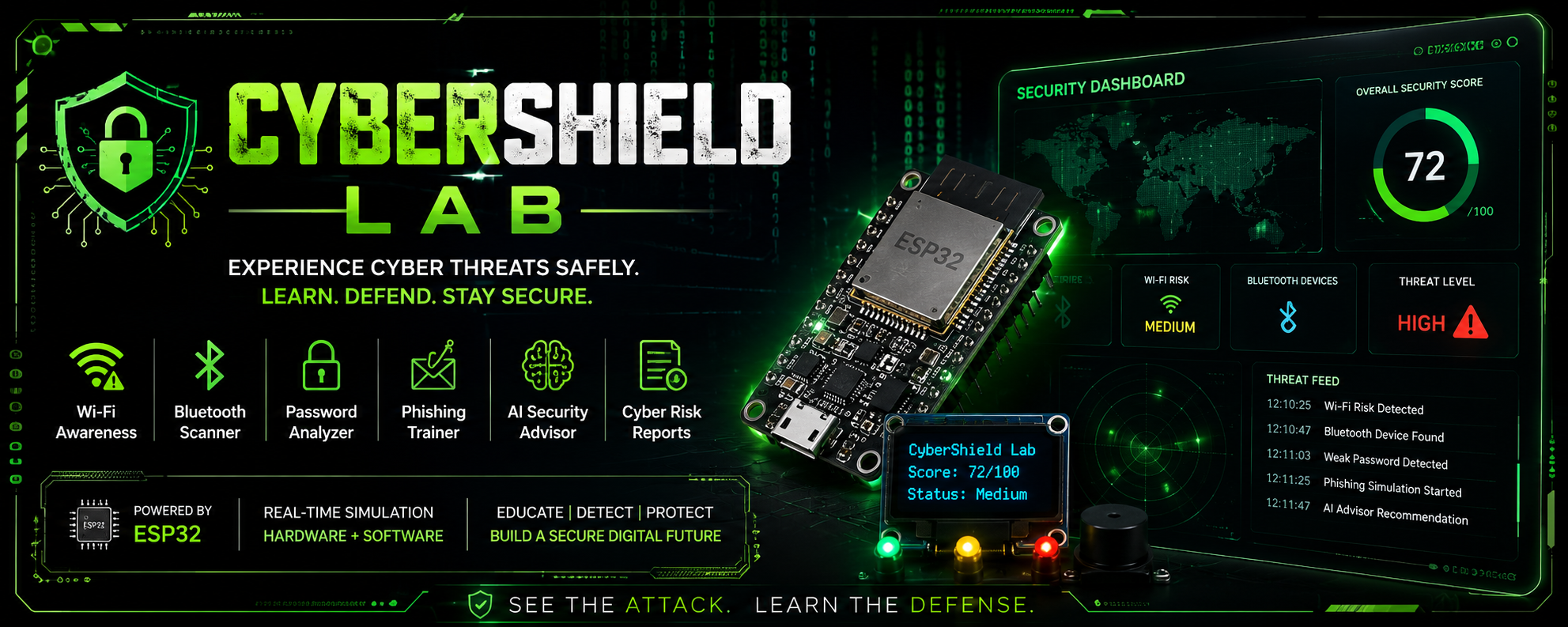
The platform includes:
- Wi-Fi security awareness simulator
- Bluetooth privacy scanner
- Password strength analyzer
- Phishing awareness trainer
- AI-powered security advisor
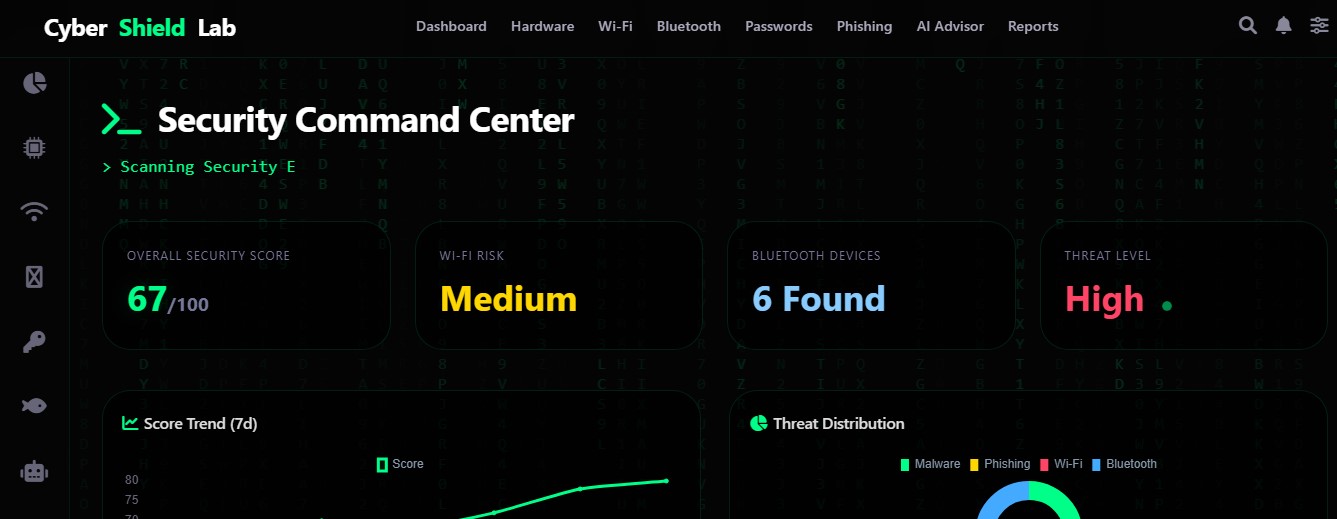
- Cyber risk scoring dashboard
- Downloadable security report
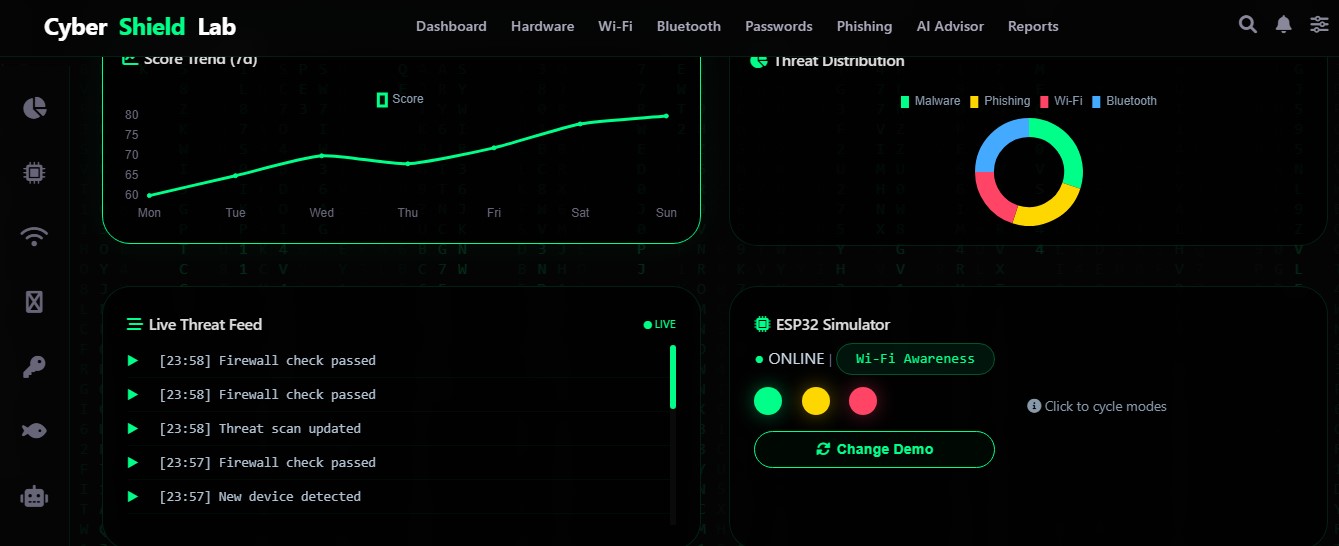
- ESP32 hardware simulation and monitoring
The system helps users understand their cyber hygiene and learn practical ways to improve their digital security.
How We Built It
Hardware
- ESP32 microcontroller
- OLED display
- LEDs for risk indication
- Buzzer for alerts
- Push button for switching demo modes
Software
- HTML
- CSS
- JavaScript
- Interactive dashboard
- Animated charts and data visualizations
- Simulated real-time security data
The website was designed using a cyberpunk-inspired interface to create an immersive cybersecurity experience. The ESP32 acts as the hardware component that represents different security scenarios and communicates system status visually.
Challenges We Ran Into
One of our biggest challenges was creating realistic cybersecurity demonstrations while ensuring the project remained safe, ethical, and educational.
We also faced challenges in:
- Designing an engaging user interface within a short time.
- Integrating hardware concepts with a frontend-only prototype.
- Creating realistic security simulations without requiring a complex backend.
- Building a dashboard that feels like a professional Security Operations Center (SOC).
Another challenge was balancing technical depth with user friendliness so that even non-technical users could understand cybersecurity concepts.
What We Learned
During this project, we learned:
- IoT development with ESP32.
- Frontend application design and animations.
- Cybersecurity awareness principles.
- User experience design for educational platforms.
- Data visualization techniques.
- Team collaboration and rapid prototyping during a hackathon.
Most importantly, we learned that cybersecurity education becomes far more effective when users can interact with and visualize threats instead of simply reading about them.
Accomplishments That We're Proud Of
- Built an interactive cybersecurity awareness platform.
- Combined hardware and software into a single project.
- Created a professional cybersecurity dashboard.
- Designed an engaging and educational user experience.
- Developed a project with real-world social impact and future scalability.
What's Next for CyberShield Lab
Our future plans include:
- Real-time communication between ESP32 and the web dashboard.
- AI-generated personalized security recommendations.
- User accounts and progress tracking.
- Advanced phishing simulations.
- Community leaderboards and cybersecurity challenges.
- Mobile application support.
- Integration with additional IoT security sensors.
We envision CyberShield Lab becoming an accessible cybersecurity learning platform that helps people develop safer digital habits and improve cyber awareness worldwide.


Log in or sign up for Devpost to join the conversation.