Inspiration & Social Impact
In today’s digital era, cybersecurity is no longer just a technical issue—it is a critical social need. Small businesses, hospitals, and educational institutions are continuously targeted by devastating cyberattacks, yet they lack the financial resources to hire elite security teams. Traditional Security Operations Centers (SOCs) fail due to extreme alert fatigue, suffering from up to 60% false-positive rates. CyberAI-Expert v8.0 was built to democratize digital safety. By creating a fully automated, next-generation SOC platform powered by predictive machine learning, we aim to protect vital community infrastructure and keep user data secure without requiring millions in budget.
What it does (Predictive & Proactive Defense)
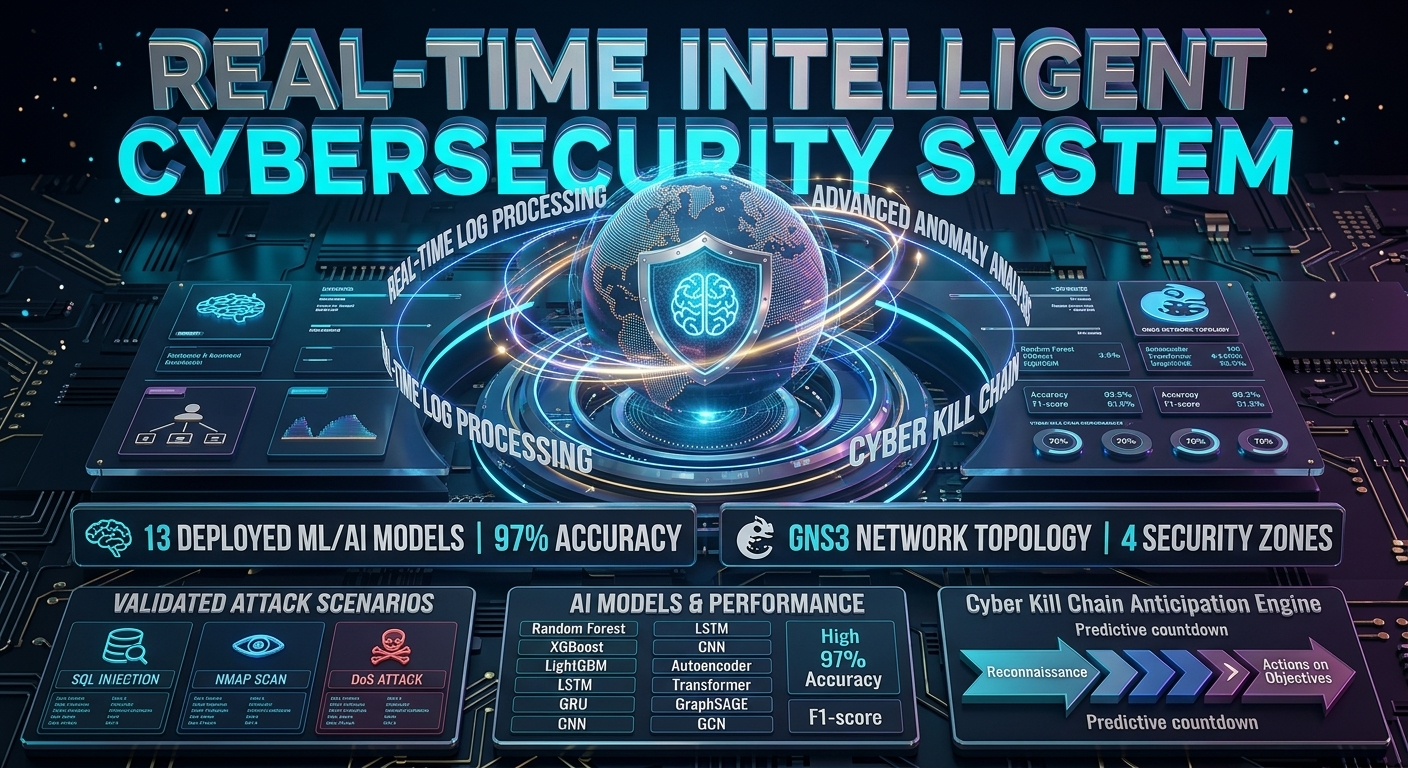
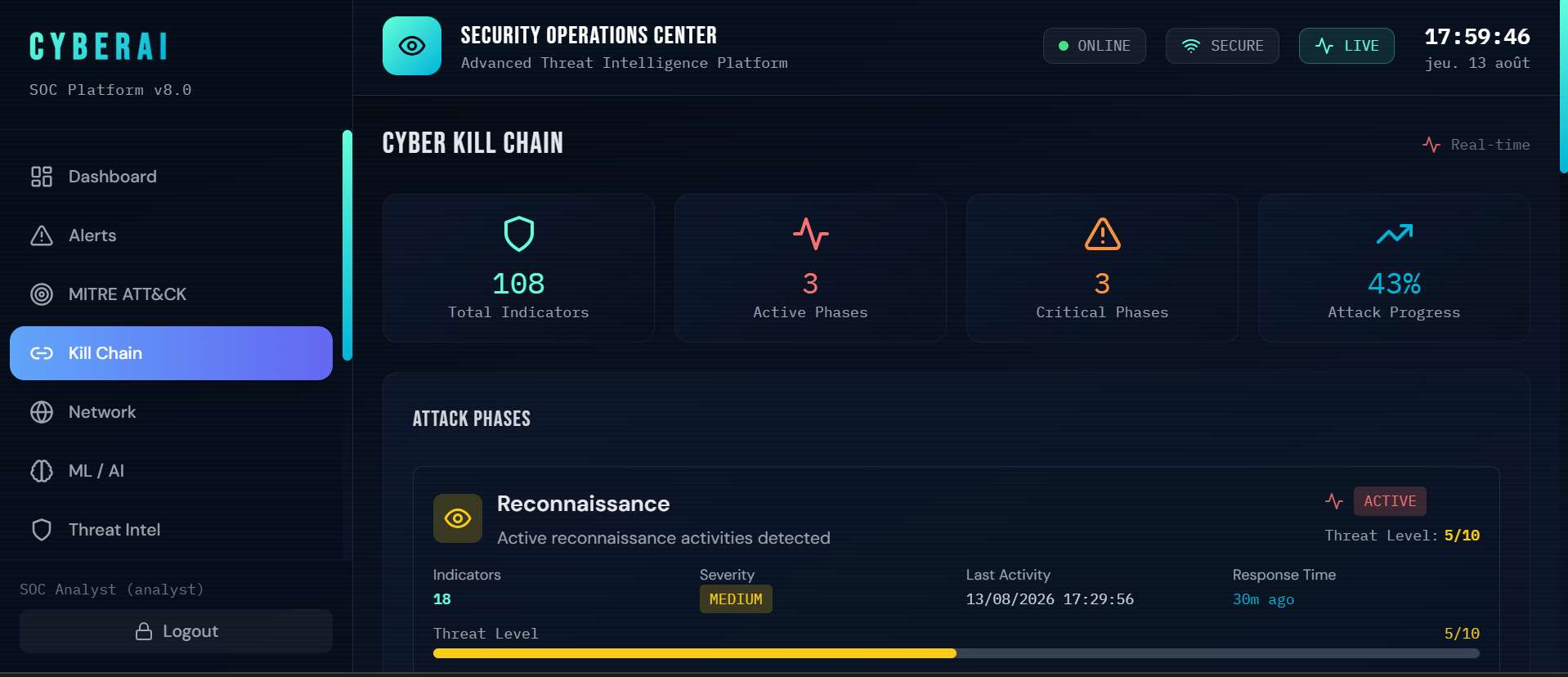
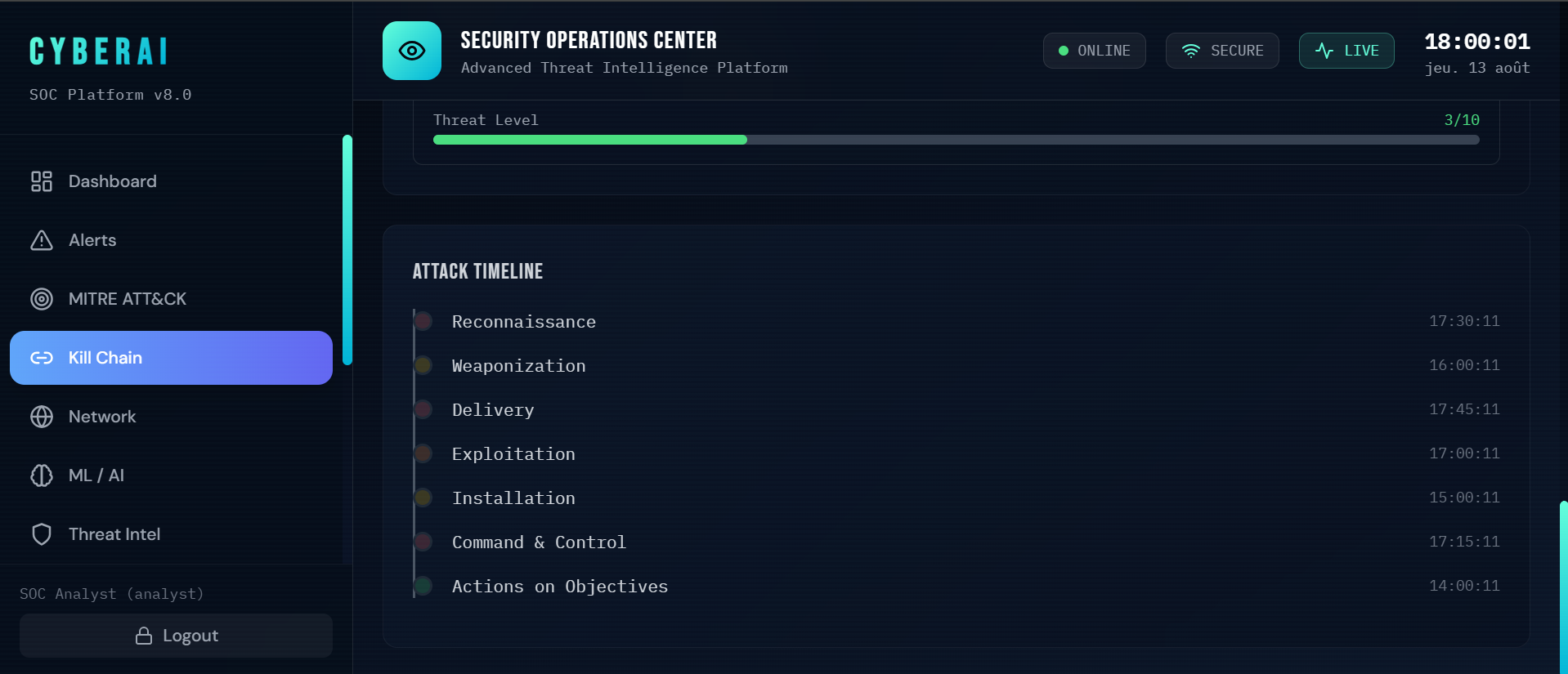
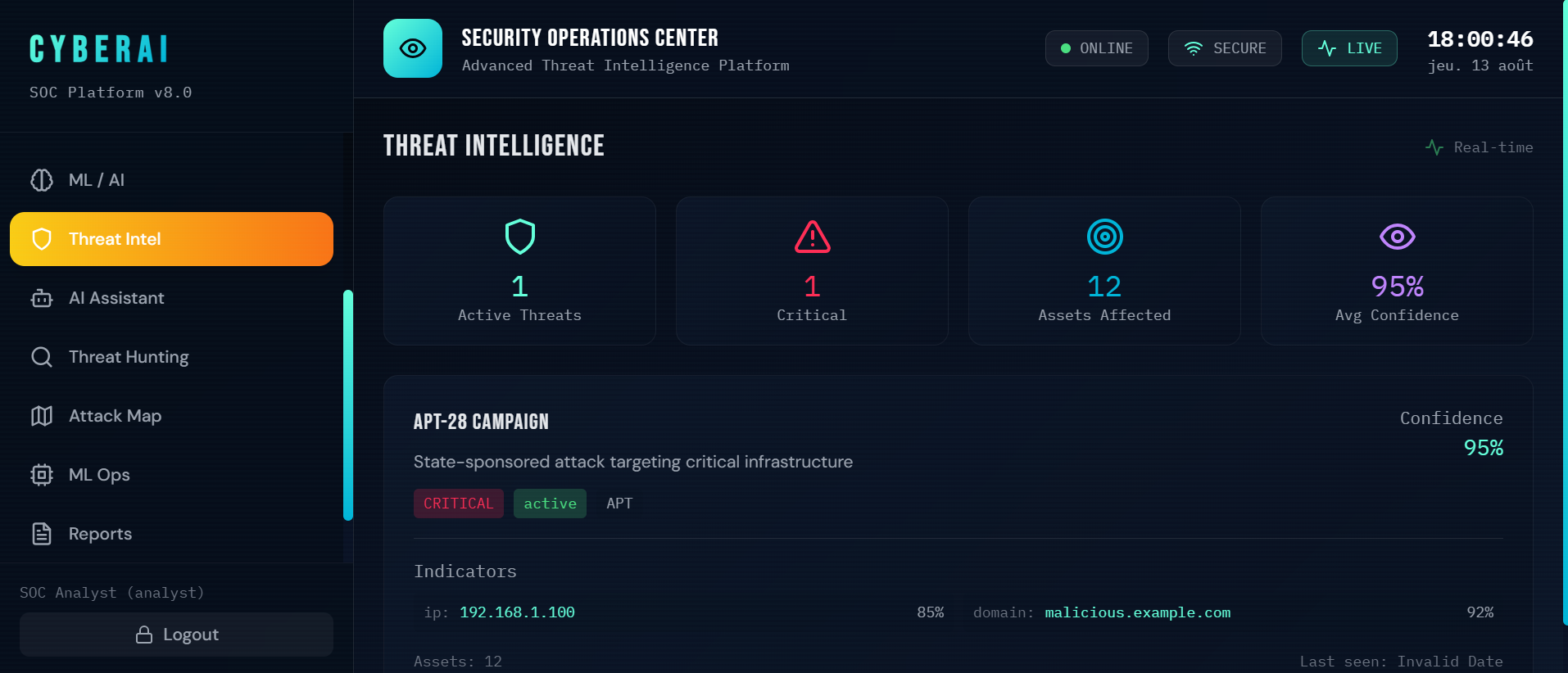
CyberAI-Expert v8.0 acts as a highly predictive digital guardian. In cybersecurity, detecting an attack when it has already started is often too late—data is already encrypted or exfiltrated. Instead of simply reacting to ongoing threats, our platform leverages deep learning sequence models to capture early-stage reconnaissance signs and predict malicious behaviors before they breach the perimeter. When a threat pattern is identified, our custom Kill Chain Engine instantly maps the activity against real-world threat actor profiles, calculates a live Time-to-Impact metric, and executes proactive microservice isolation rules to completely block the attacker before execution.
How we built it
The platform is designed with a production-grade, decoupled full-stack architecture:
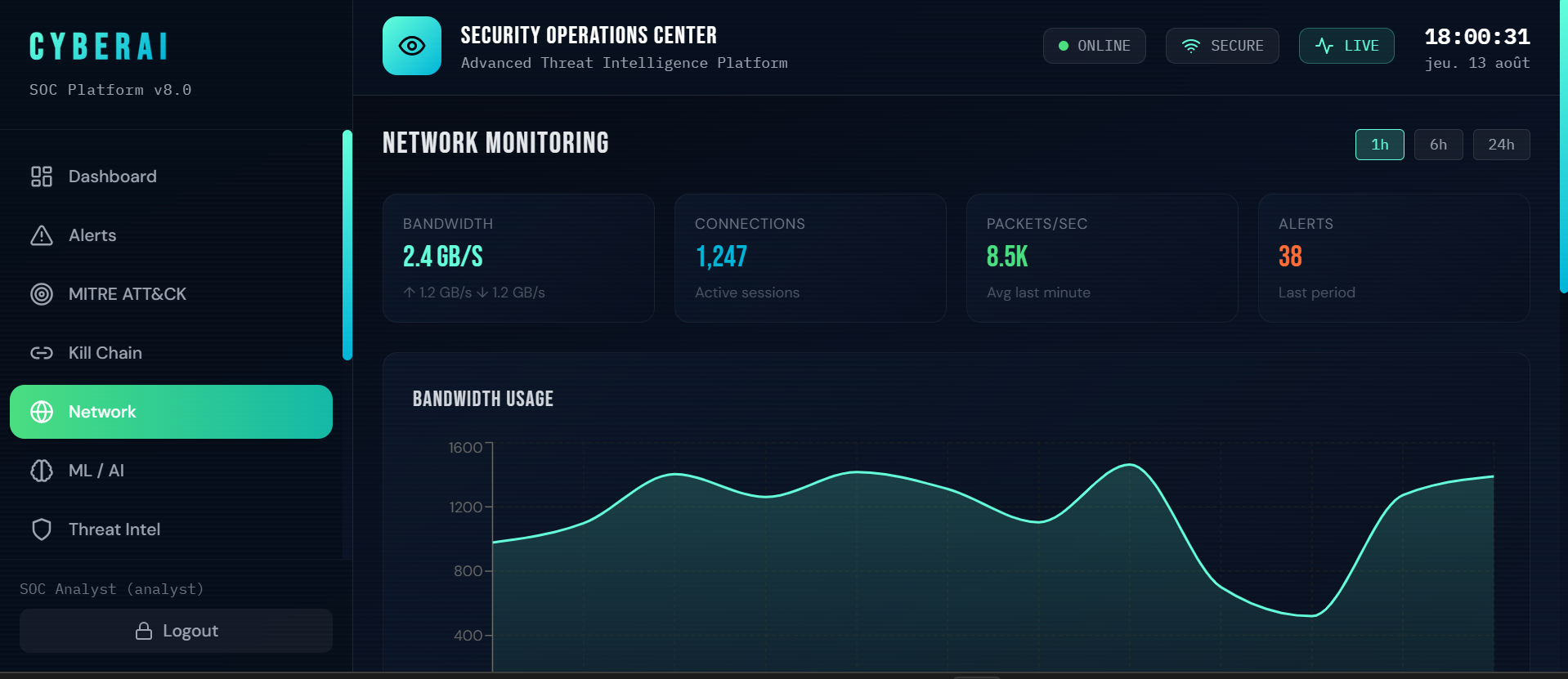
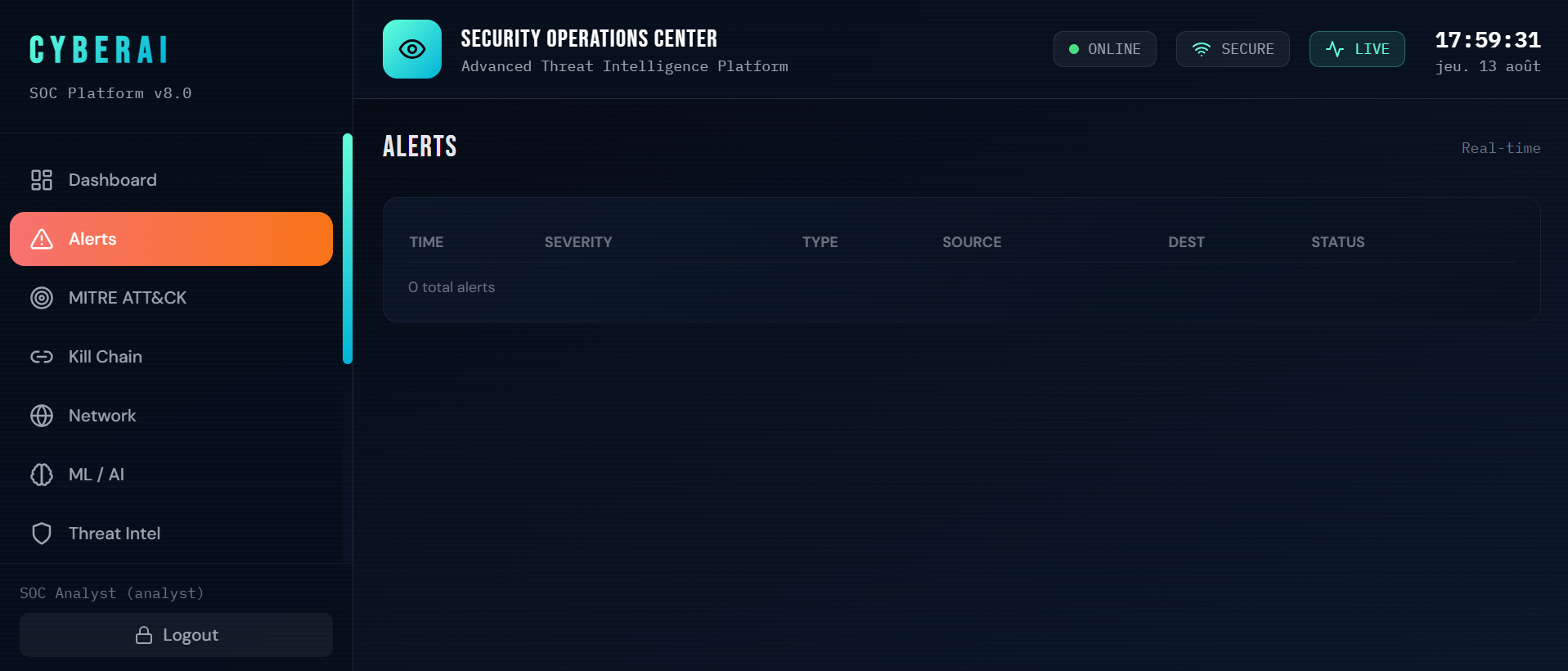
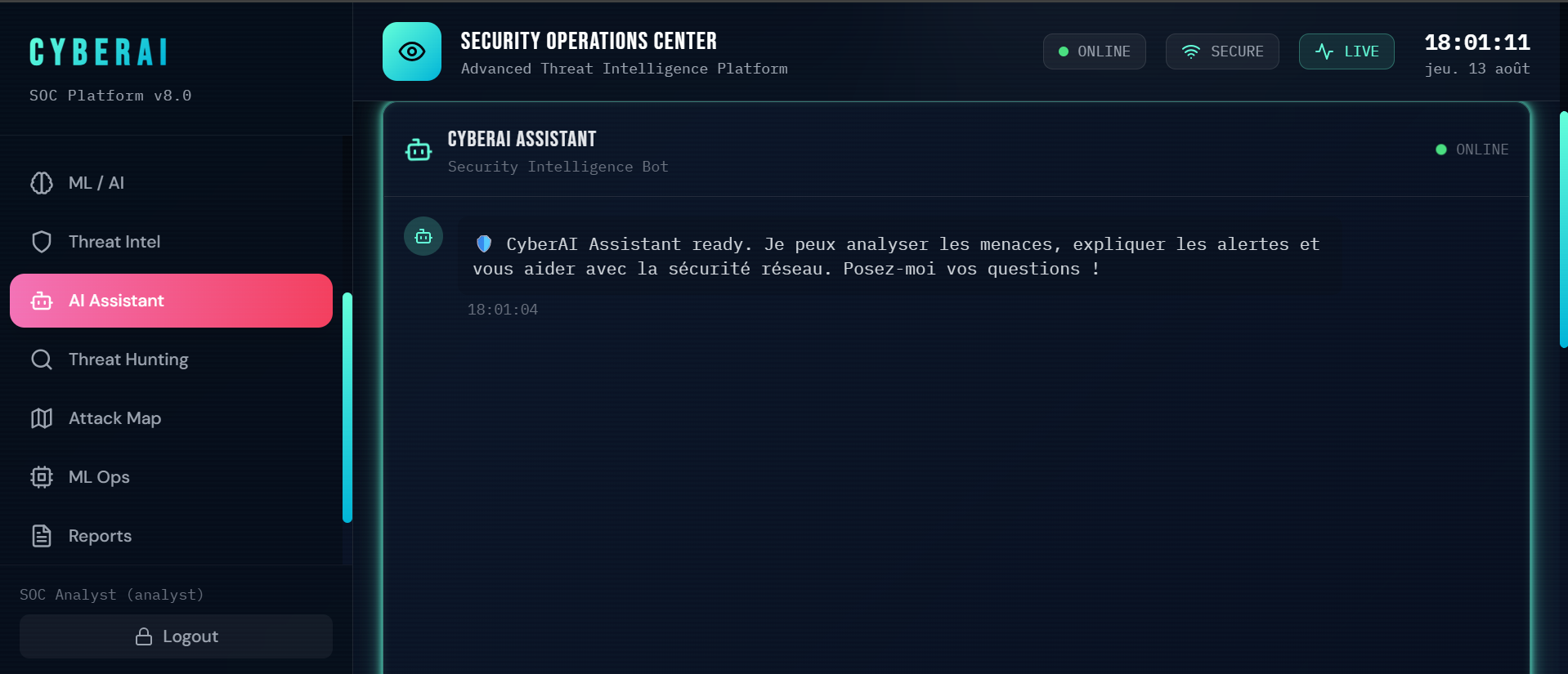
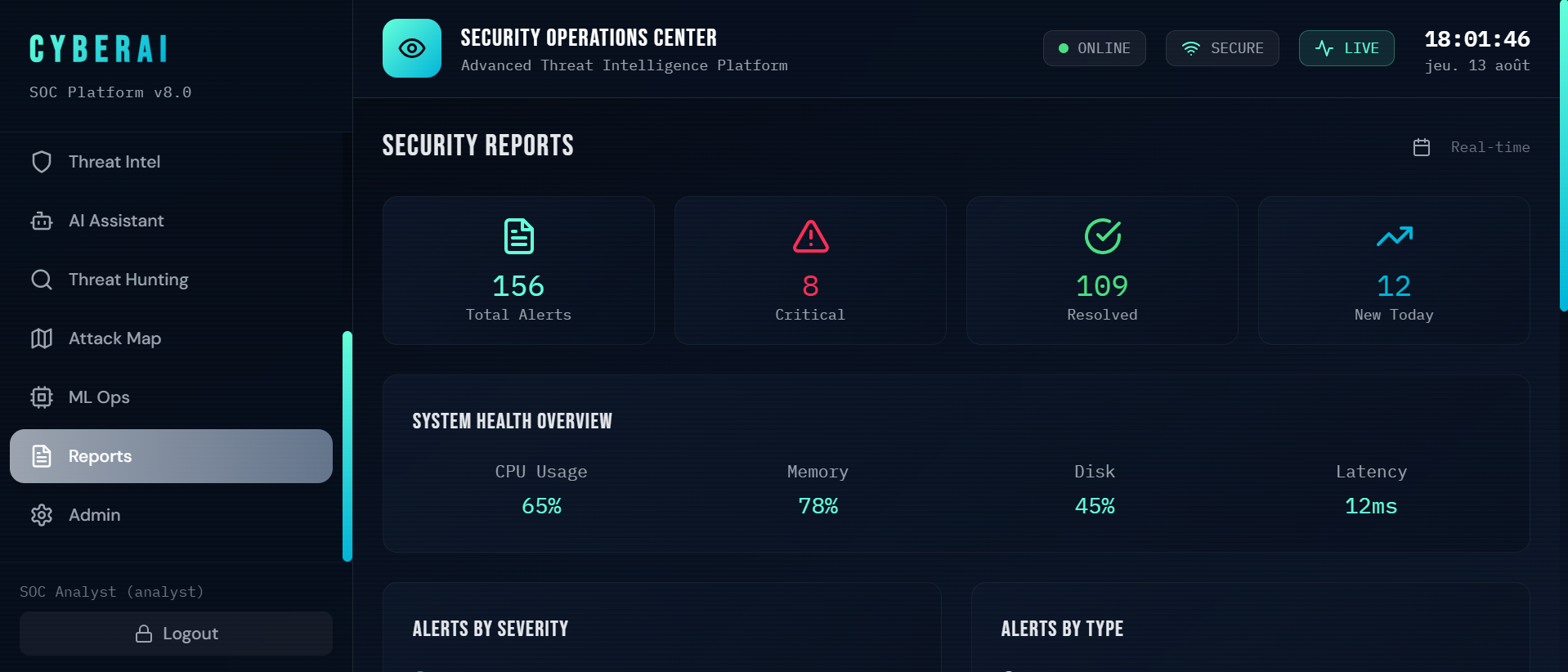
- Frontend: Built with React featuring 16 dynamic pages and immersive, interactive Three.js 3D node network visualizations powered by real-time WebSockets with a sub-100ms latency.
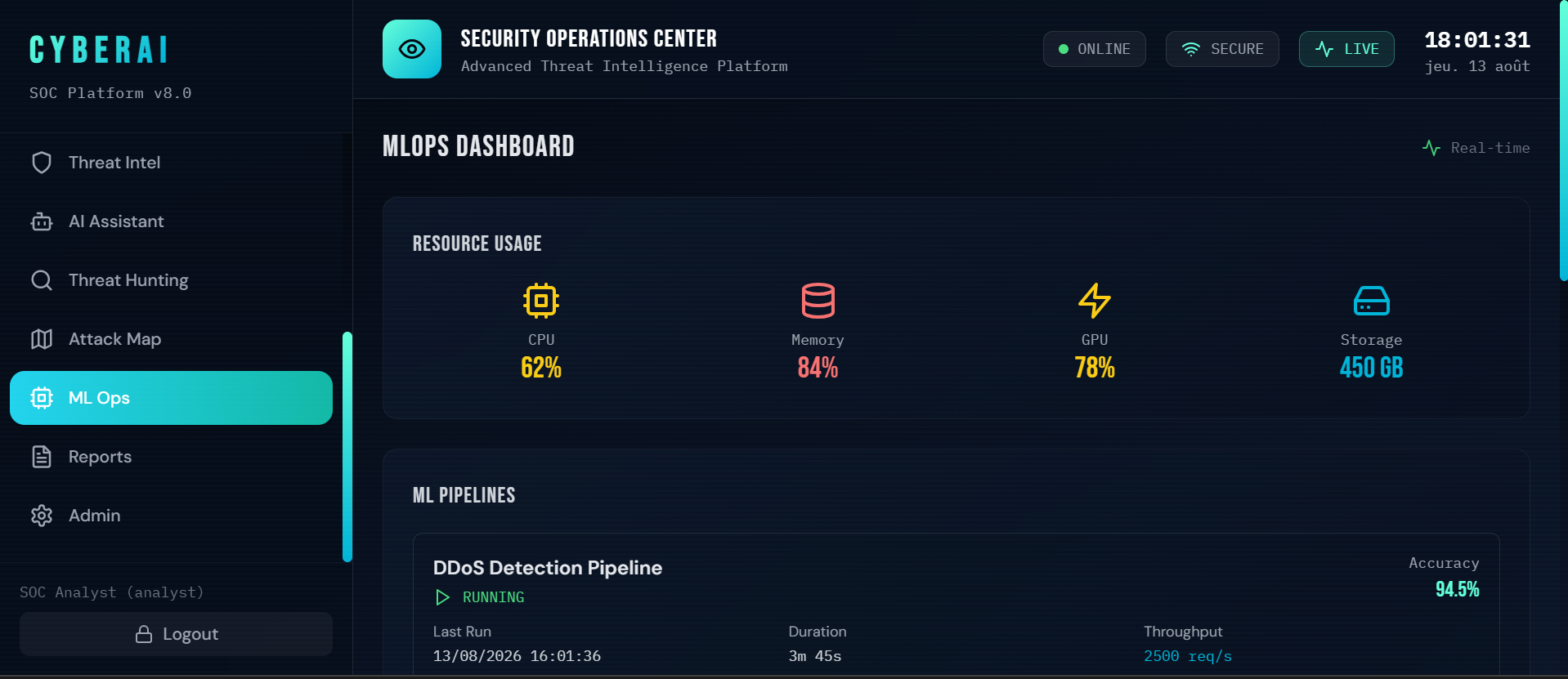
- Backend & MLOps: Powered by FastAPI, utilizing Celery task workers, MLflow for model registry, and Prometheus/Grafana for live performance tracking.
- Data Pipeline: Driven by inline Zeek Core and Suricata IDS sensors streaming raw EVE JSON network events directly into an Apache Kafka cluster optimized with Snappy compression.
- AI Core (Three-Tier Predictive Engine): Deployed a multi-layered intelligent architecture focused on advanced forecasting:
- An Ensemble Voting model (Random Forest + XGBoost + LightGBM) achieving 98.67% accuracy to screen out background noise and flag early anomaly thresholds.
- Bidirectional LSTM & GRU neural networks engineered to analyze long-term temporal network sequences, tracking step-by-step progressions to anticipate the attacker’s next move.
- Deep learning Autoencoders running continuously to predict completely unknown zero-day anomalies by tracking data distribution drift.
- GraphSAGE Graph Neural Networks processing 2-hop neighborhood aggregations every 30 seconds to forecast and isolate internal lateral movements across VLANs in under 8 seconds.
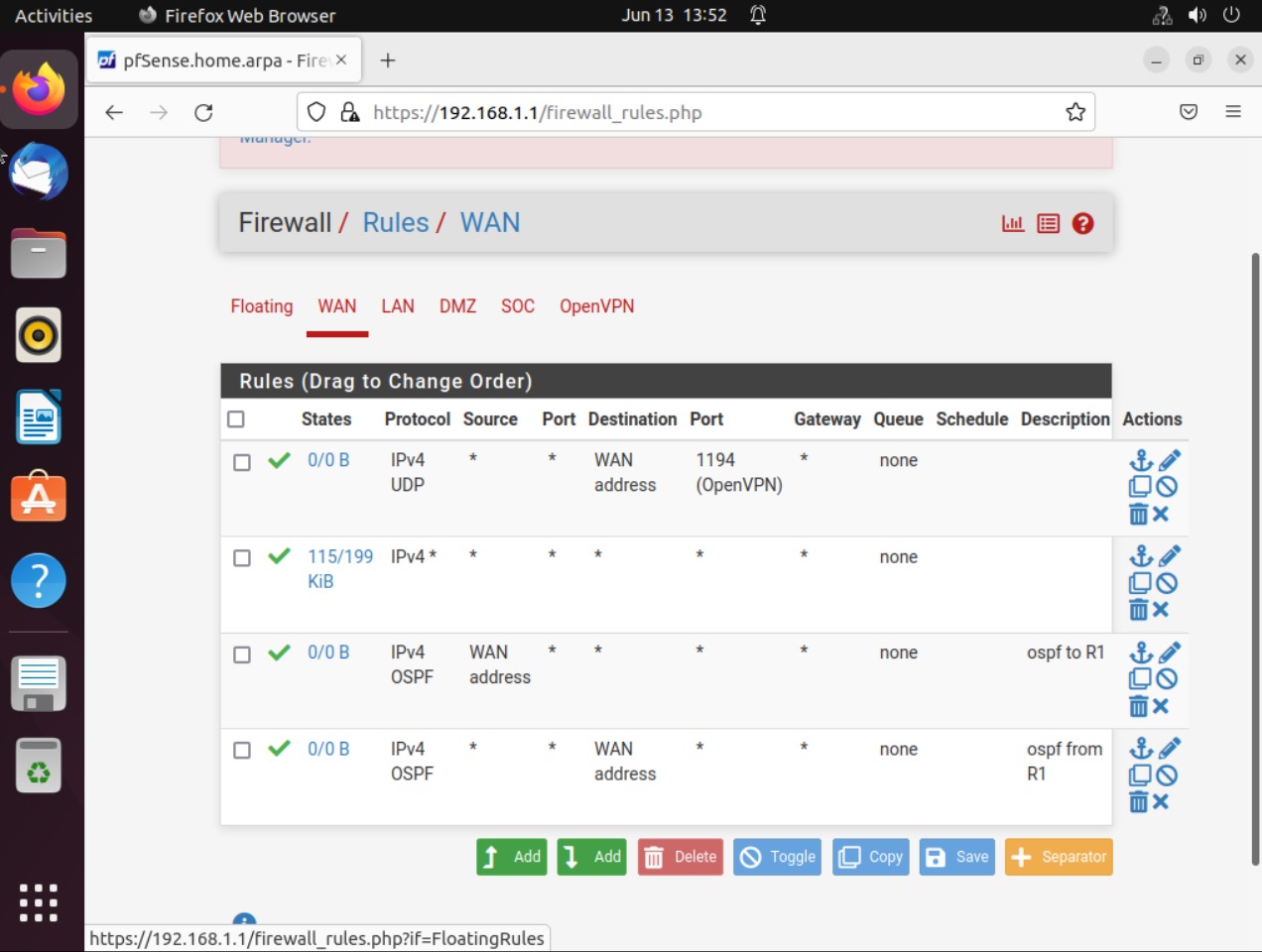
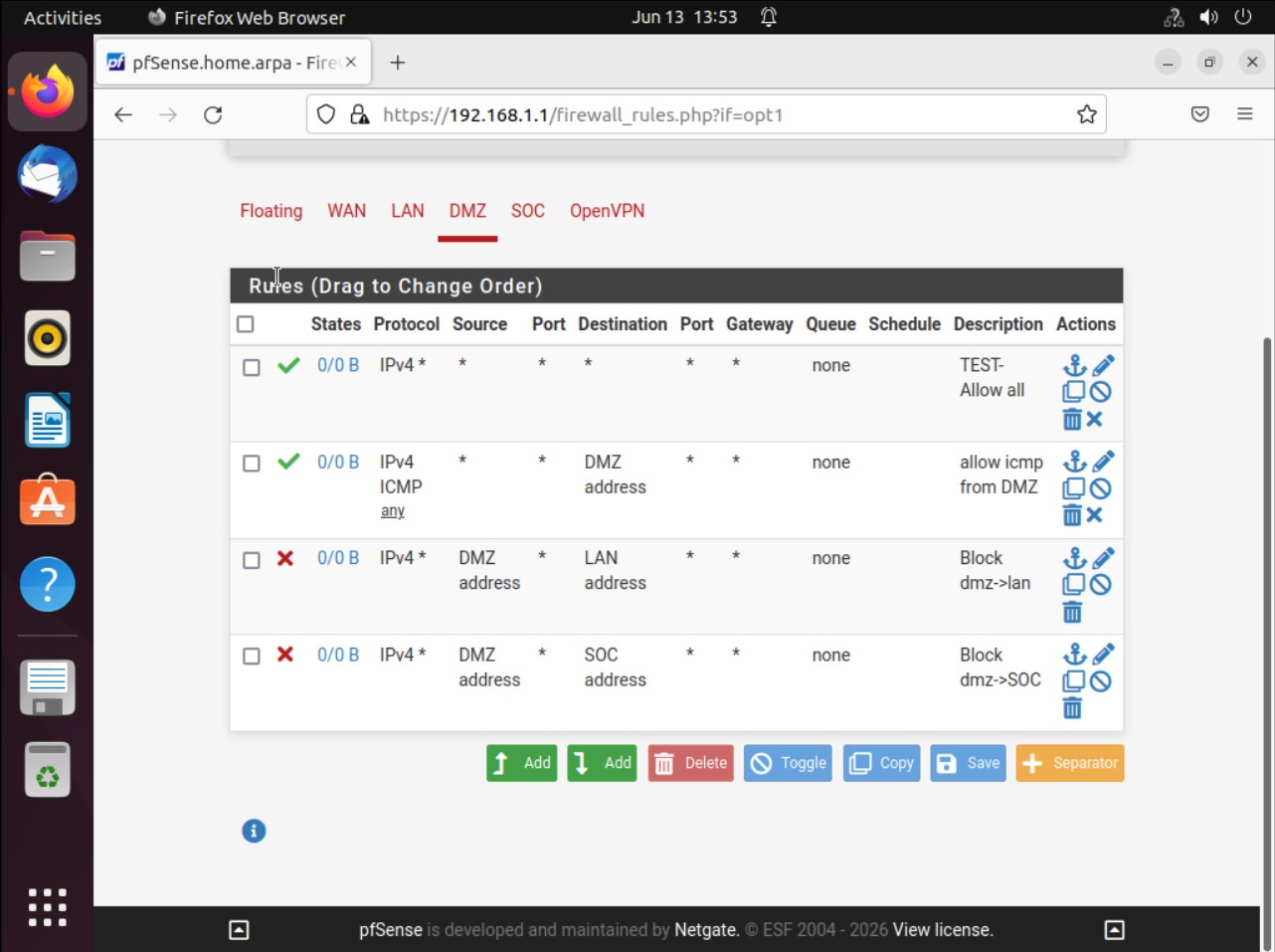
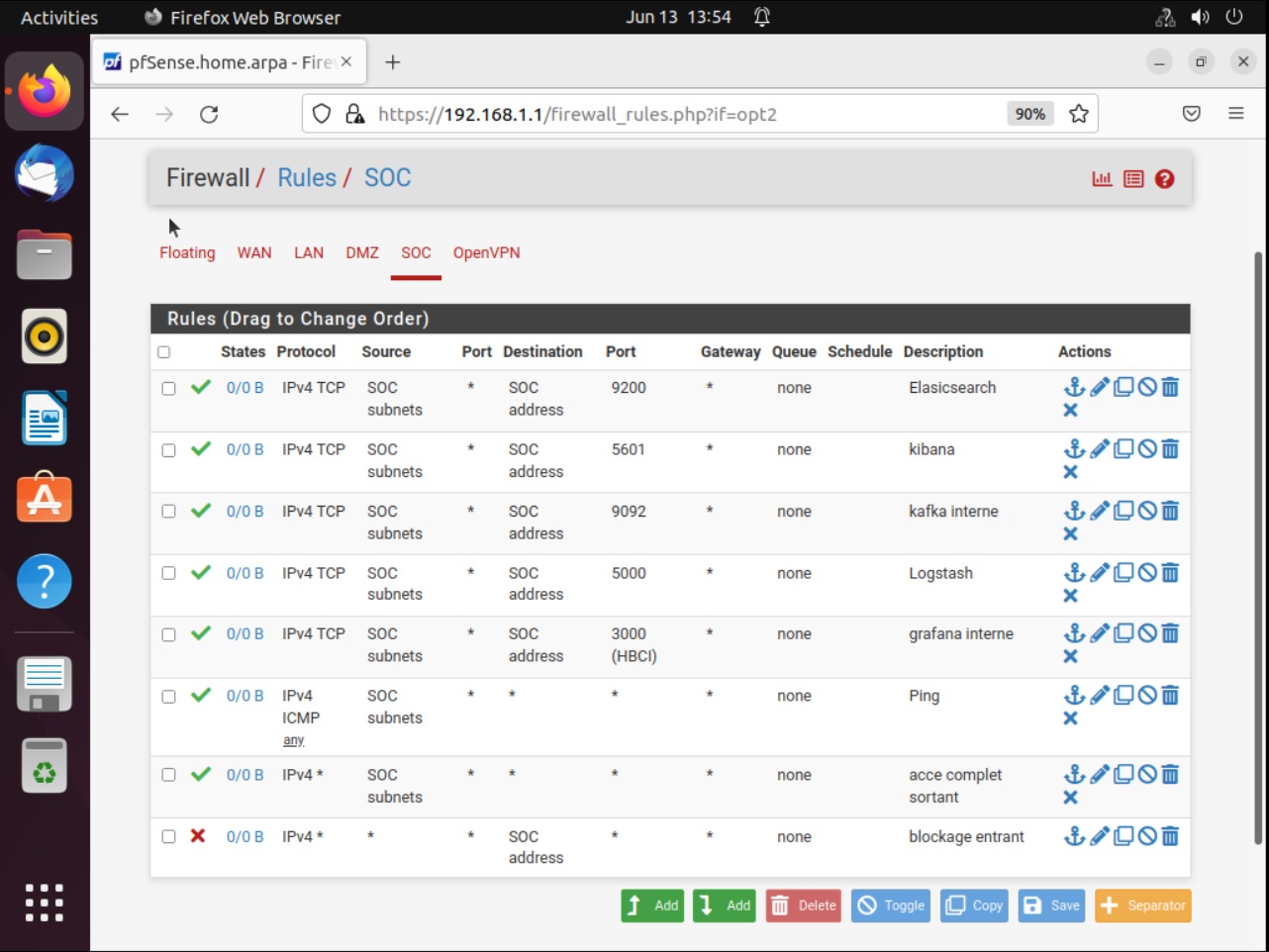
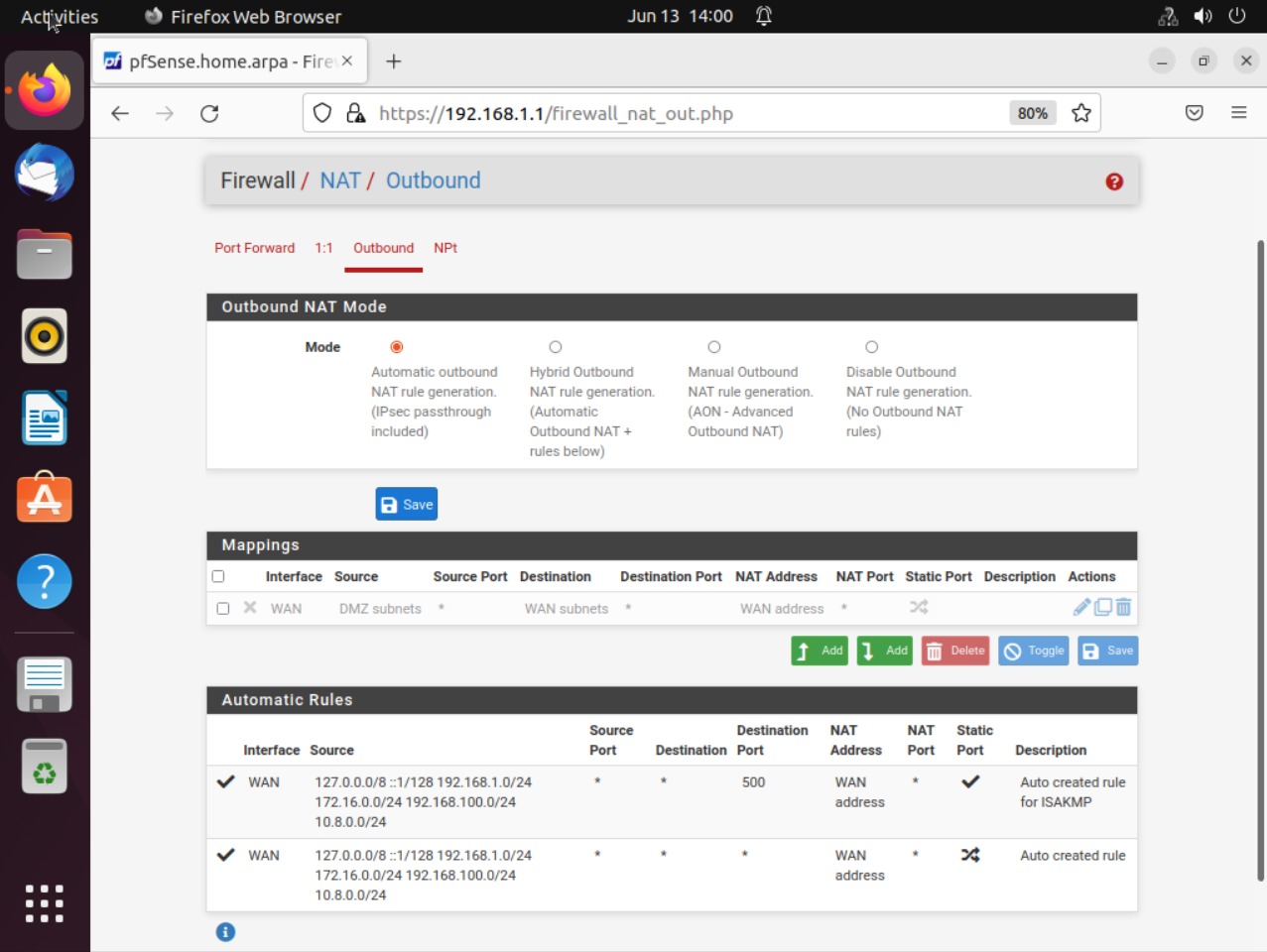
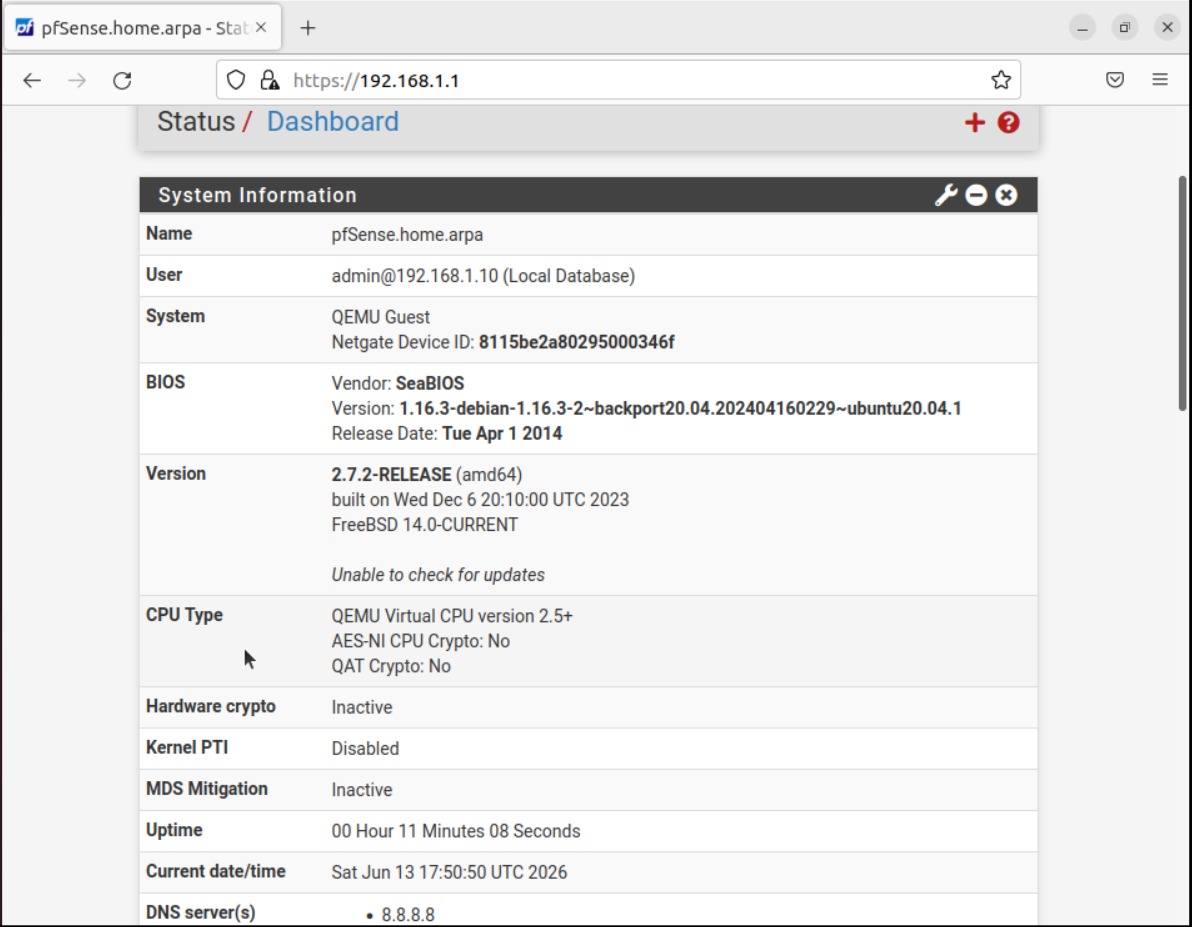
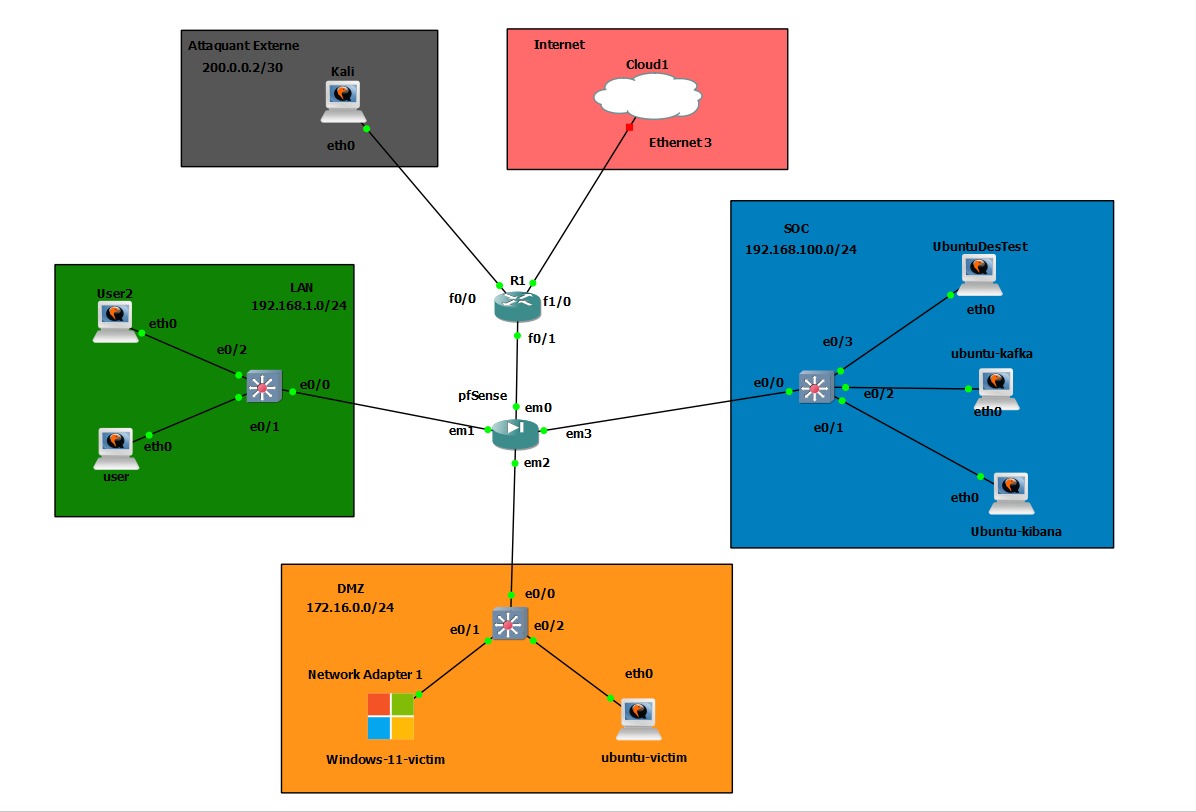
- Infrastructure: Fully simulated within a real-world enterprise GNS3 topology running active BGP and OSPF routing across 4 separate security zones protected by a hardened pfSense firewall. The entire ecosystem is containerized into 25 production-ready Docker microservices.
Challenges we faced
The biggest hurdle was achieving a sub-100ms end-to-end latency while handling over 50,000 security events per second. Running heavy deep learning models (like GraphSAGE and Autoencoders) on live packet captures threatened to crash the system. We solved this roadblock by designing a highly asynchronous architecture in FastAPI, optimizing Kafka partitions, and utilizing Snappy byte-level compression to maintain extreme network throughput without data loss.
Accomplishments that we're proud of
We built a fully functional, production-ready infrastructure rather than a superficial mock-up or a simple wrapper around a generic text API. Integrating live network routing protocols, dedicated firewall filtering, and complex deep learning structures into a seamlessly automated ecosystem proves that accessible, high-tier predictive security is possible.
What we learned
We gained deep insights into the challenges of maintaining MLOps scalability under severe infrastructure stress. We learned how to balance technical complexity with real-world practicality, understanding that the ultimate goal of AI is to create predictive tools that reliably protect people and communities.
What's next for CyberAI-Expert v8.0
- Multi-Cloud Scalability: Ingesting log layers to natively support cloud environments like AWS CloudTrail, Google Cloud, and Microsoft Azure logs.
- Hardware Automation: Upgrading scripts to dynamically push real-time blacklists to physical enterprise firewalls based on predictive threat vectors.
- Speed Optimization: Shifting ingestion layers to Rust-based parsers to cross the threshold of 200,000 network security logs processed per second.
Built With
- ai-agents
- apache-kafka
- automation
- celery
- cybersecurity
- deep-learning
- docker
- fastapi
- gns3
- machine-learning
- mlflow
- network-security
- pfsense
- prometheus
- python
- react
- social-good
- suricata
- three.js
- websockets
- xgboost
- zeek


Log in or sign up for Devpost to join the conversation.