Inspiration & Problem Statement
Modern enterprise Security Operations Centers (SOCs) are fundamentally broken due to extreme alert fatigue, suffering from up to 60% false-positive rates. Traditional systems are entirely reactive—notifying engineers only after network perimeters have been breached and data encryption or exfiltration has already begun. This structural gap results in millions of dollars in financial losses and critical operational downtime. CyberAI-Expert v8.0 was engineered to pivot enterprise defense from a reactive posture to a proactive, highly predictive autonomous guardian.
What it does (Predictive & Proactive Defense)
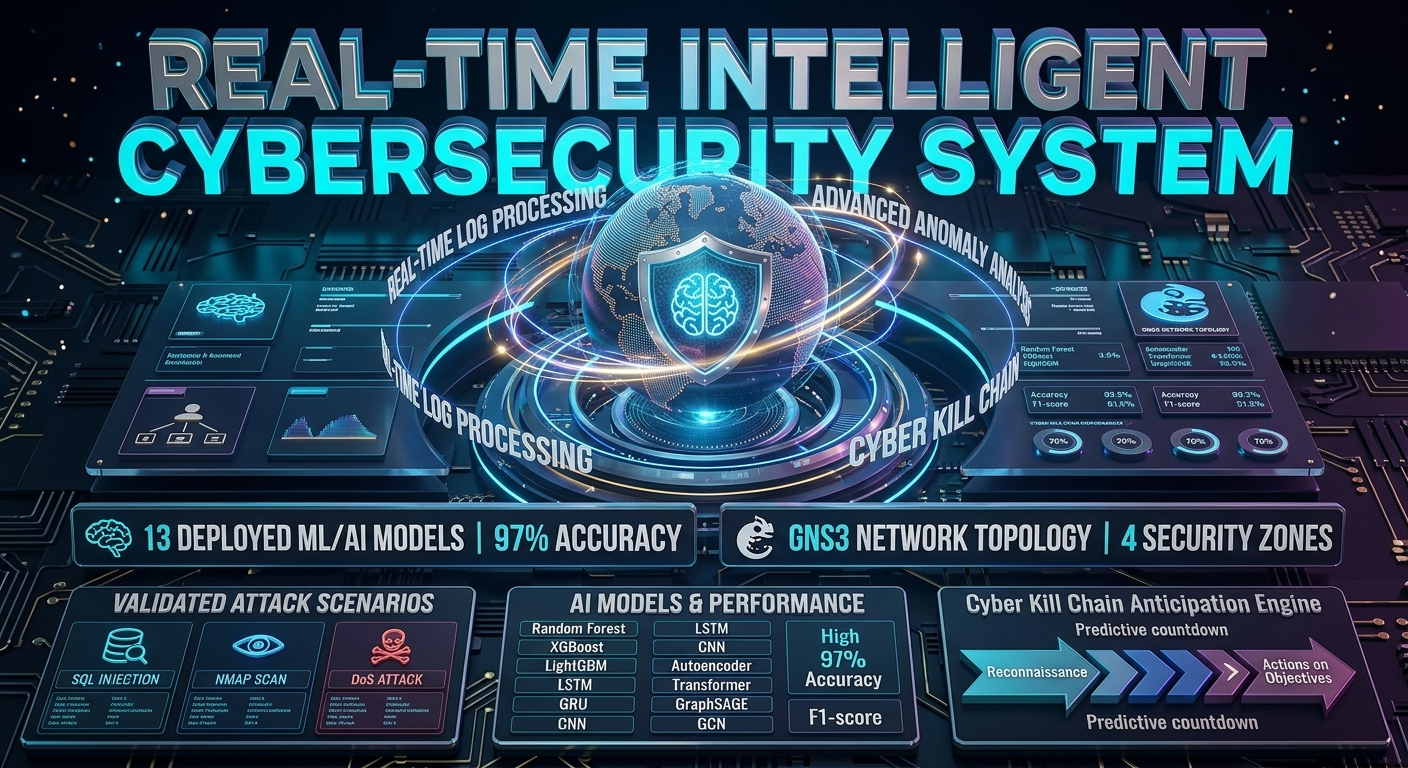
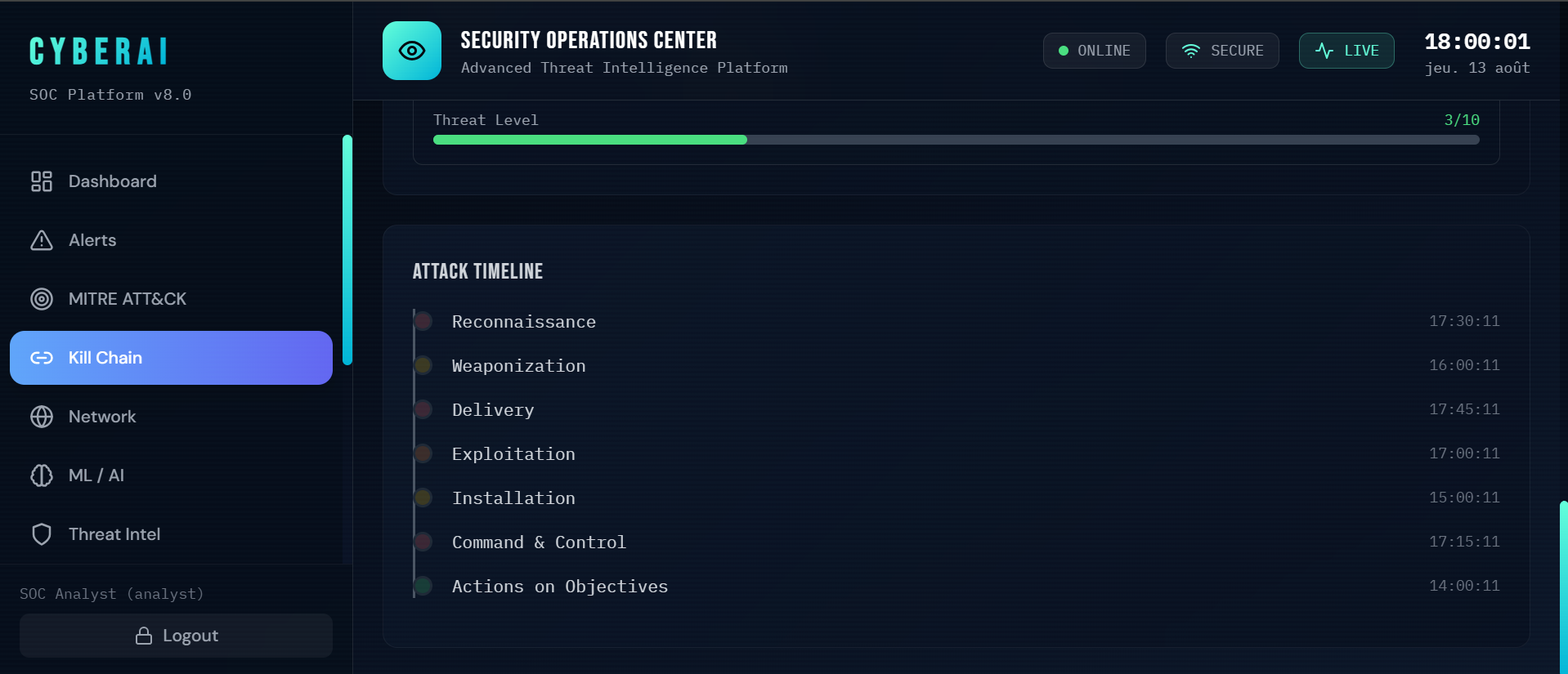
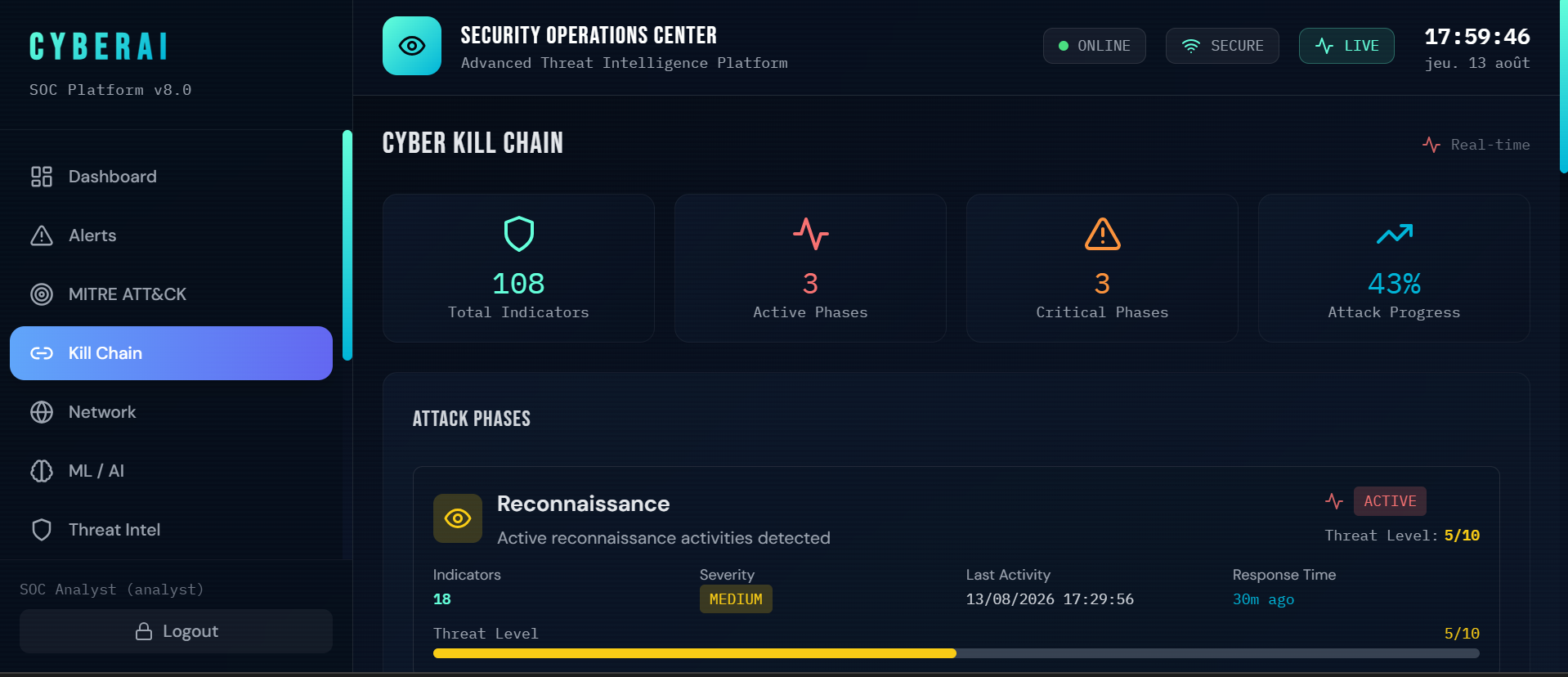
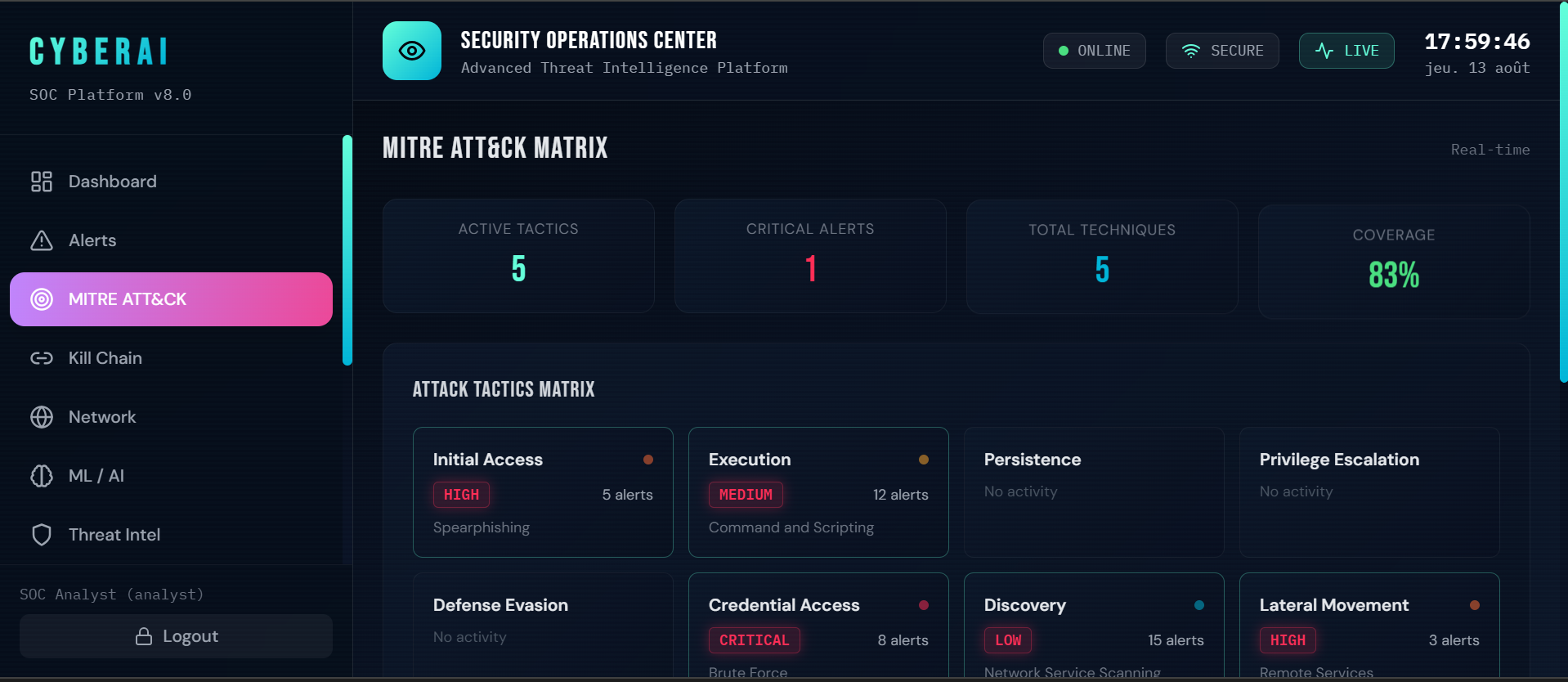
CyberAI-Expert v8.0 is a production-grade, automated cybersecurity defense platform. Instead of waiting for security breaches to execute, our system continuously monitors live network traffic patterns and system logs to forecast upcoming malicious threat sequences. Utilizing an advanced, custom Kill Chain Engine, the platform maps early-stage attacker behavior against known advanced persistent threat (APT) profiles, calculates a dynamic Time-to-Impact (TTI) metric, and instantly orchestrates infrastructure rules to isolate vulnerable microservices and update firewall gateways before execution occurs.
How we built it
The ecosystem is architected with a decoupled, high-throughput microservice layout:
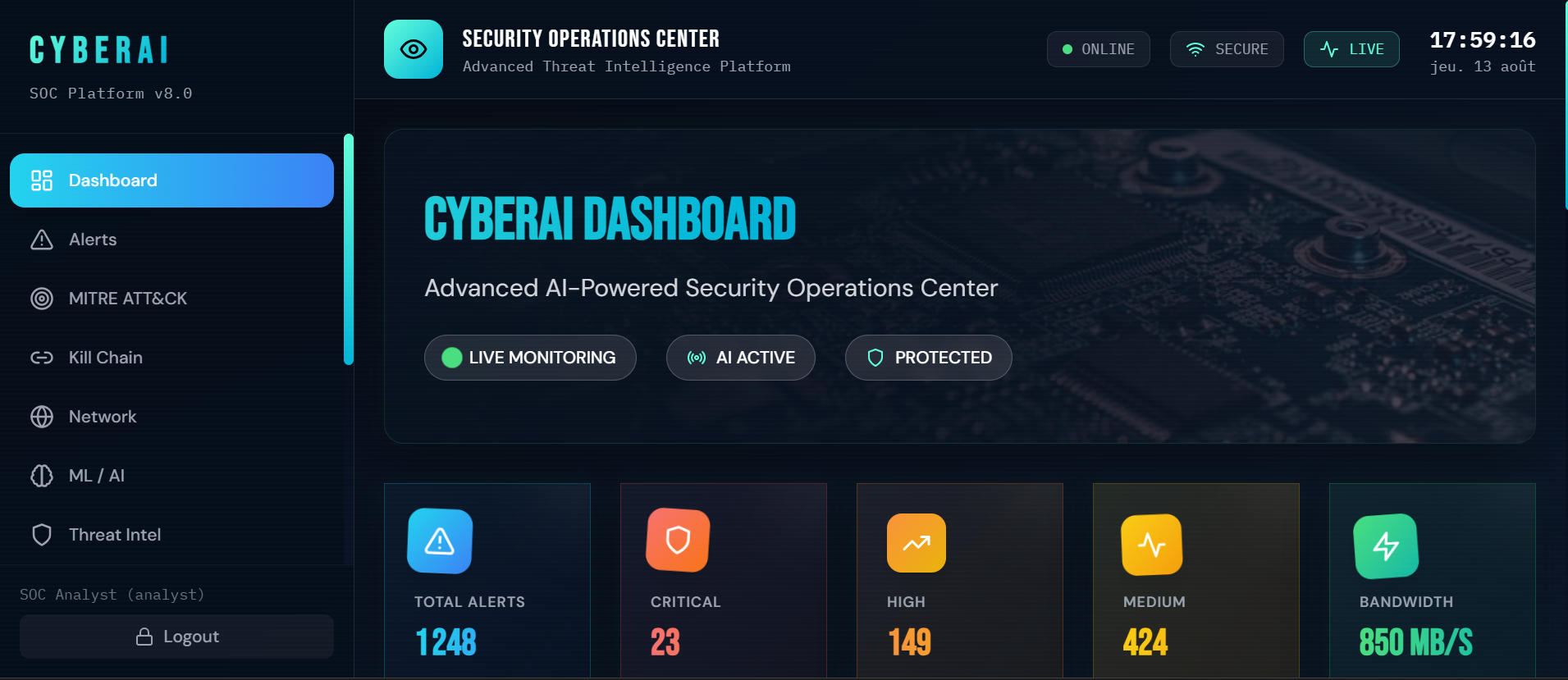
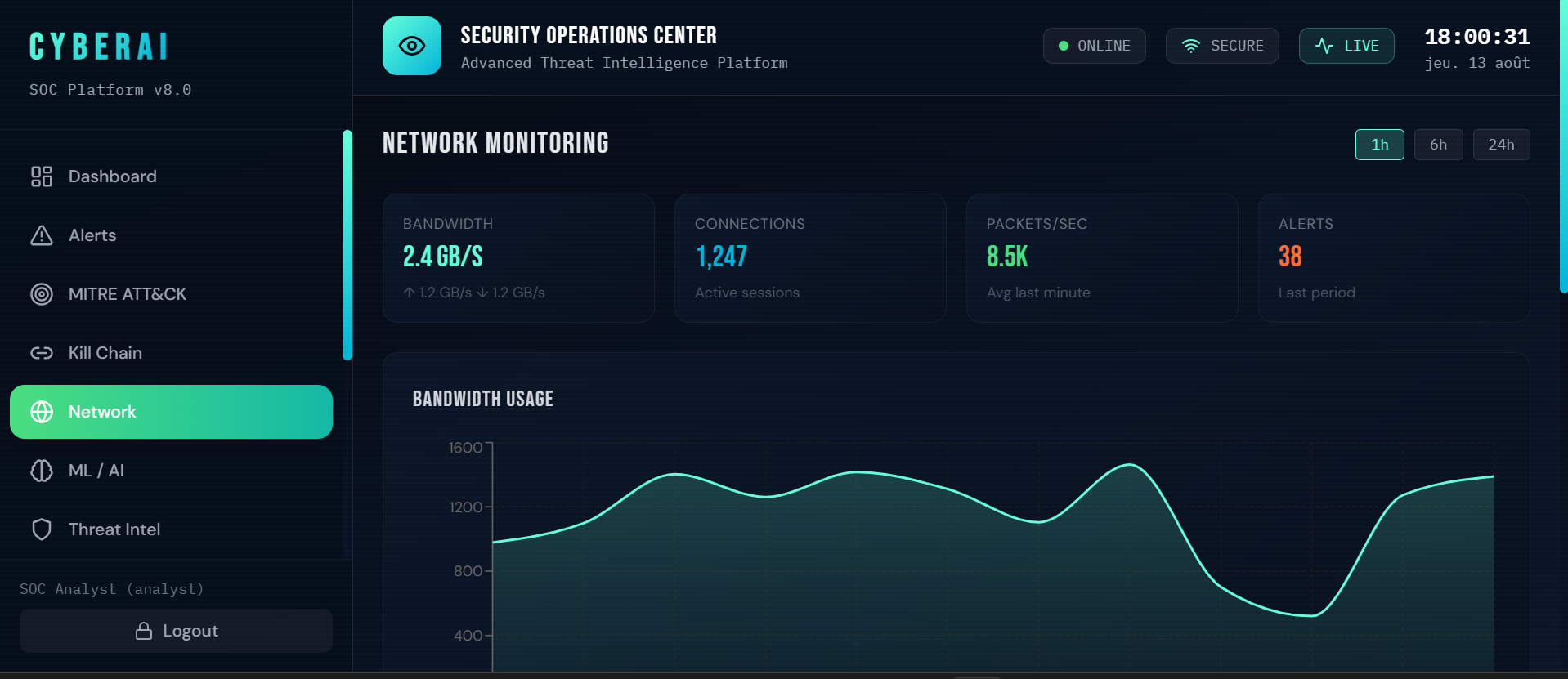
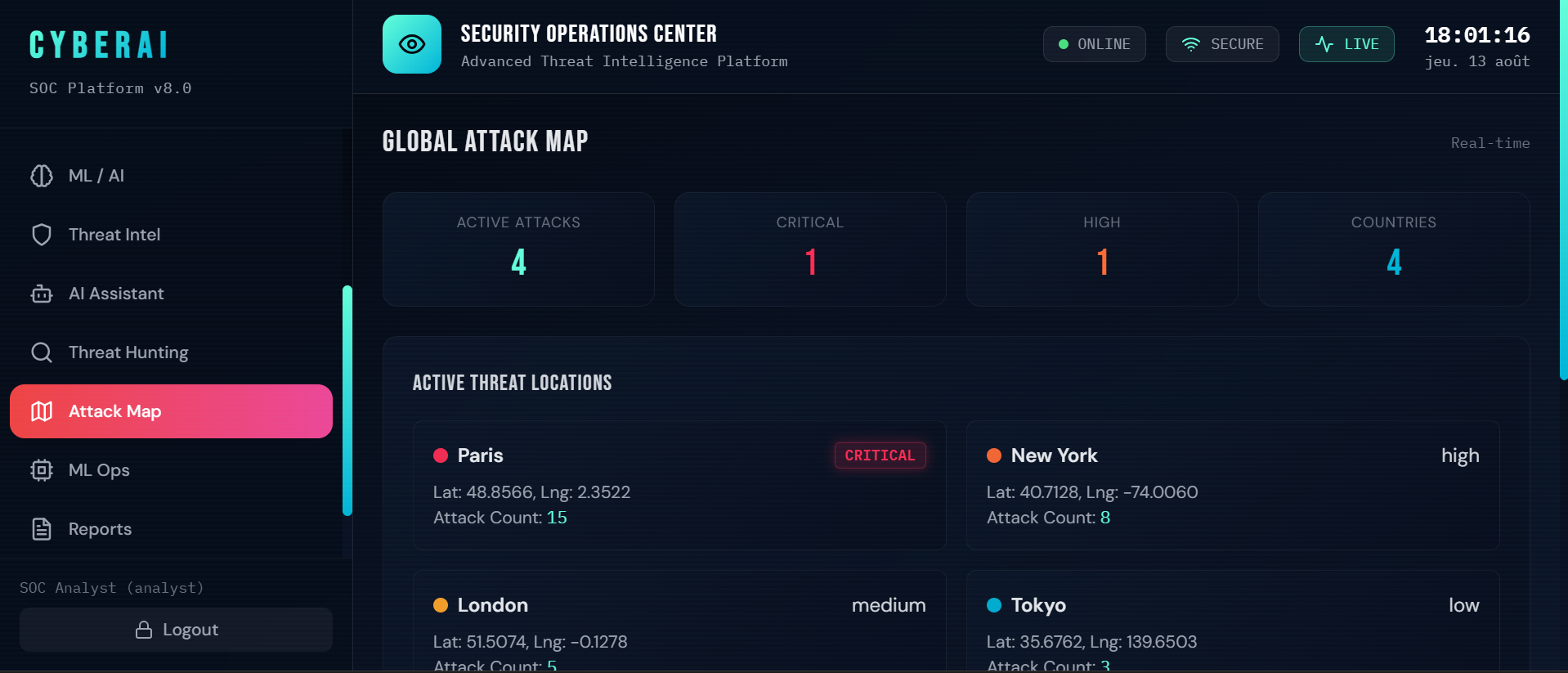
- Frontend & Visualization: Engineered a responsive React interface with 16 dynamic pages. It features an immersive, interactive Three.js 3D network node dashboard streaming live infrastructure states via real-time WebSockets with sub-100ms processing latency.
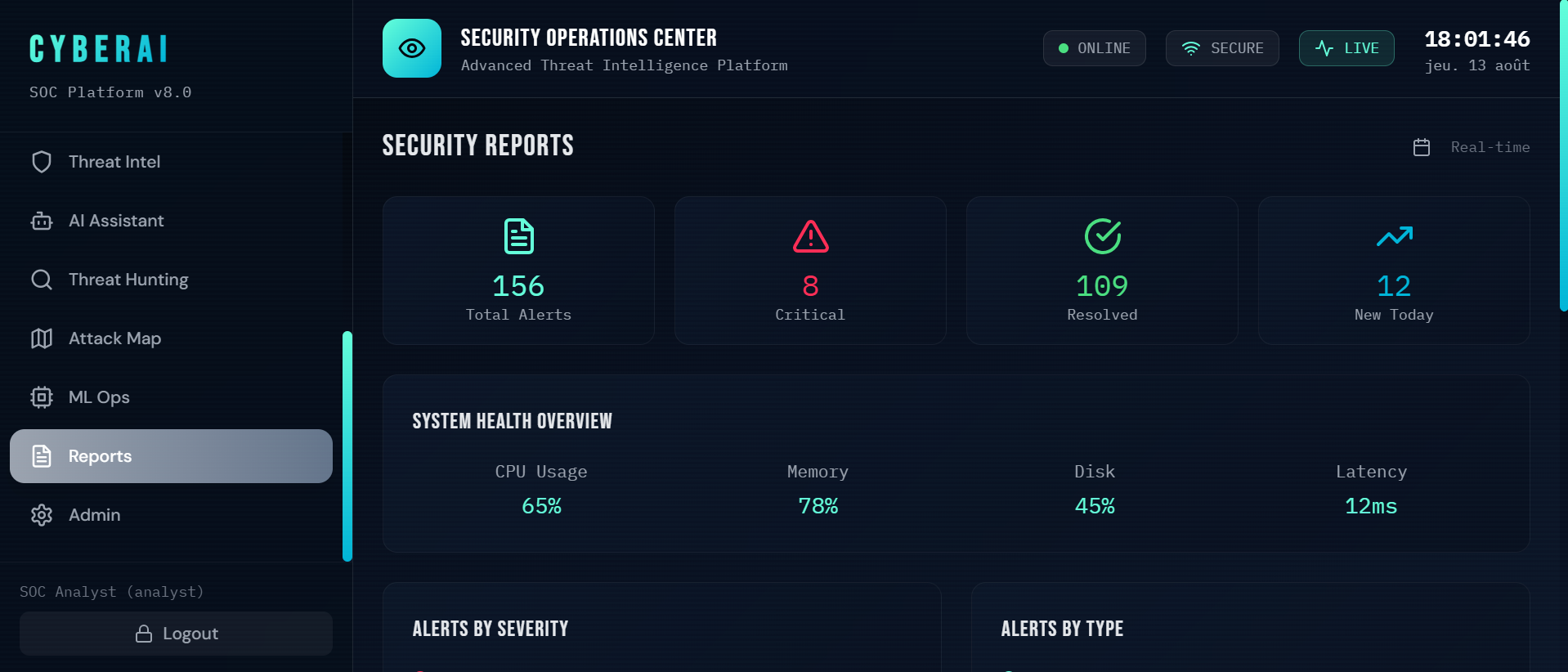
- Backend & MLOps: Built with asynchronous FastAPI, using Celery workers, MLflow for model registry and tracking, and a Prometheus/Grafana stack for live system monitoring.
- Ingestion Pipeline: Deployed inline Zeek Core and Suricata IDS network sensors streaming raw EVE JSON security logs directly into a partitioned Apache Kafka broker cluster optimized with Snappy compression.
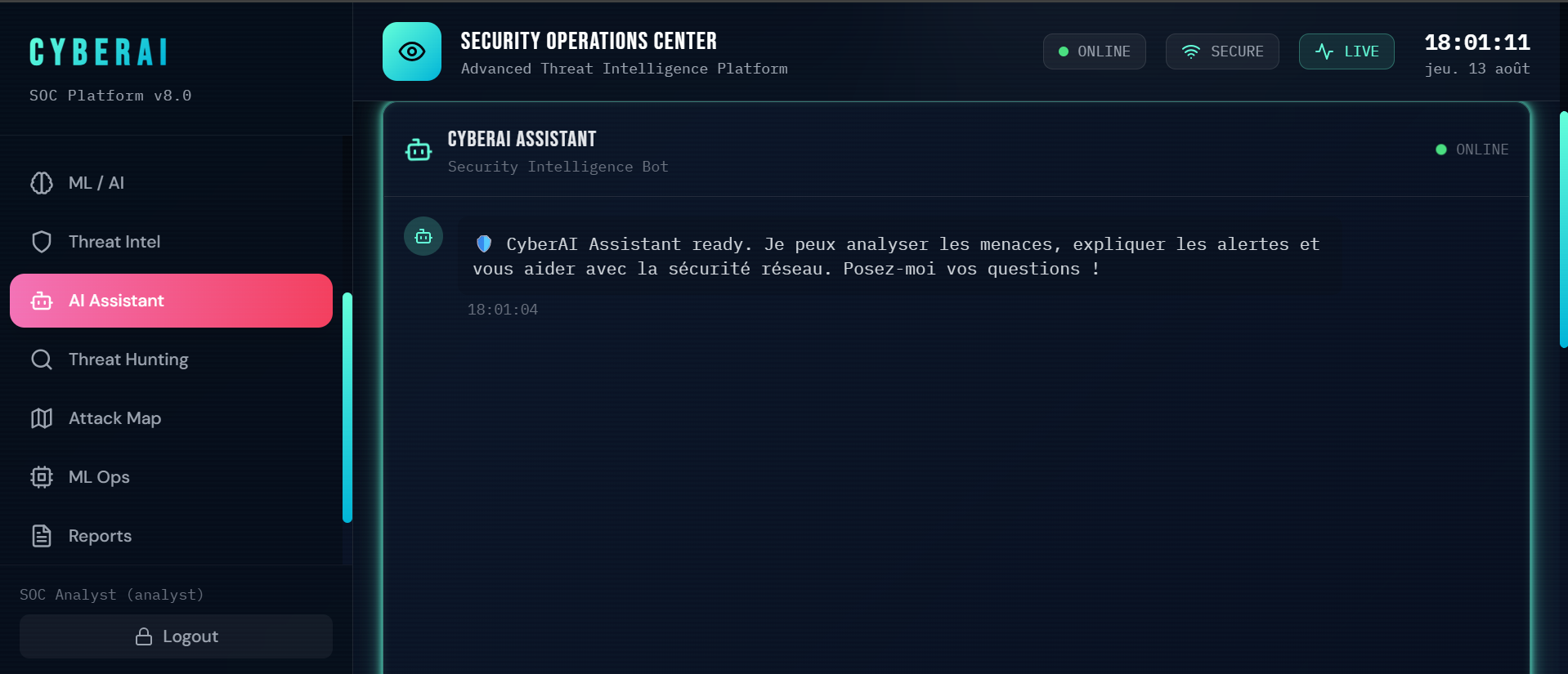
- Three-Tier AI Predictive Engine:
- An Ensemble Voting Model (Random Forest + XGBoost + LightGBM) maintaining a 98.67% accuracy rate to completely filter alert noise.
- Bidirectional LSTM & GRU neural networks tracking deep temporal sequence histories to project upcoming malicious infrastructure steps.
- Deep learning Autoencoders running continuously to anticipate zero-day anomalies by tracking live data distribution drift.
- GraphSAGE Graph Neural Networks computing 2-hop neighborhood aggregations every 30 seconds to forecast and isolate internal lateral movements within 8 seconds.
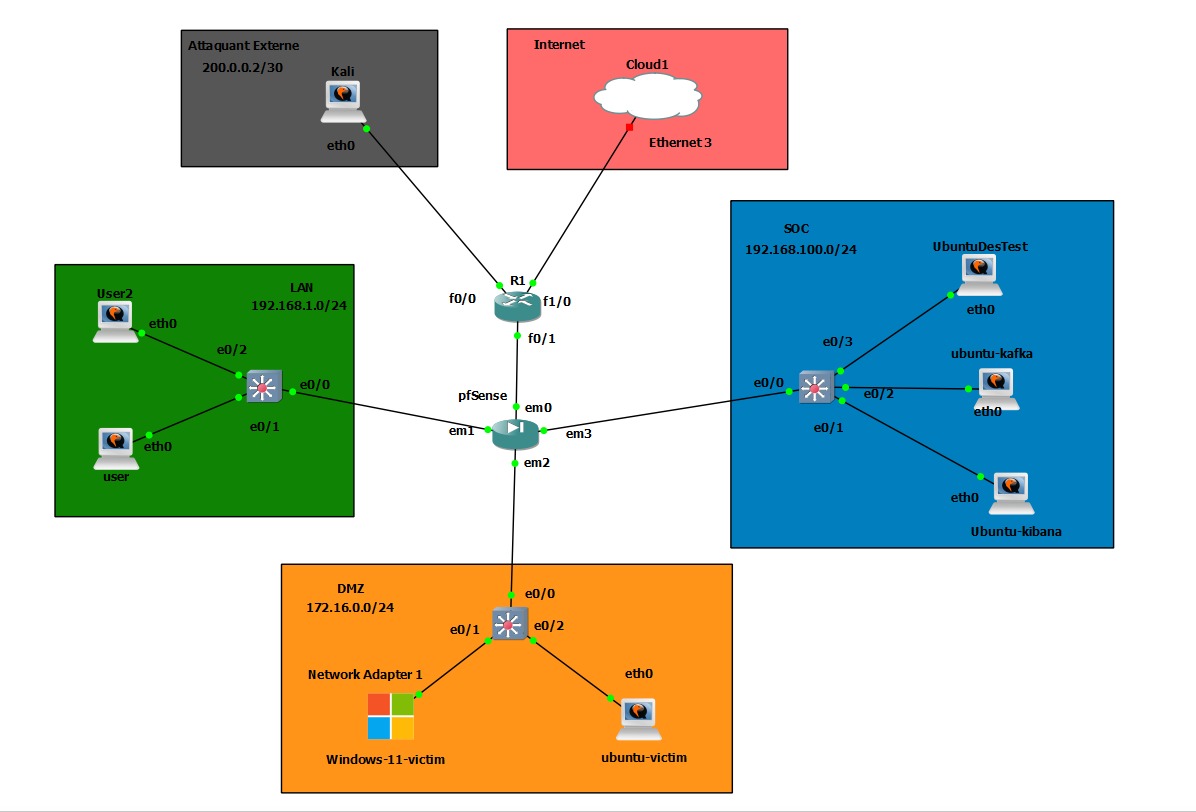
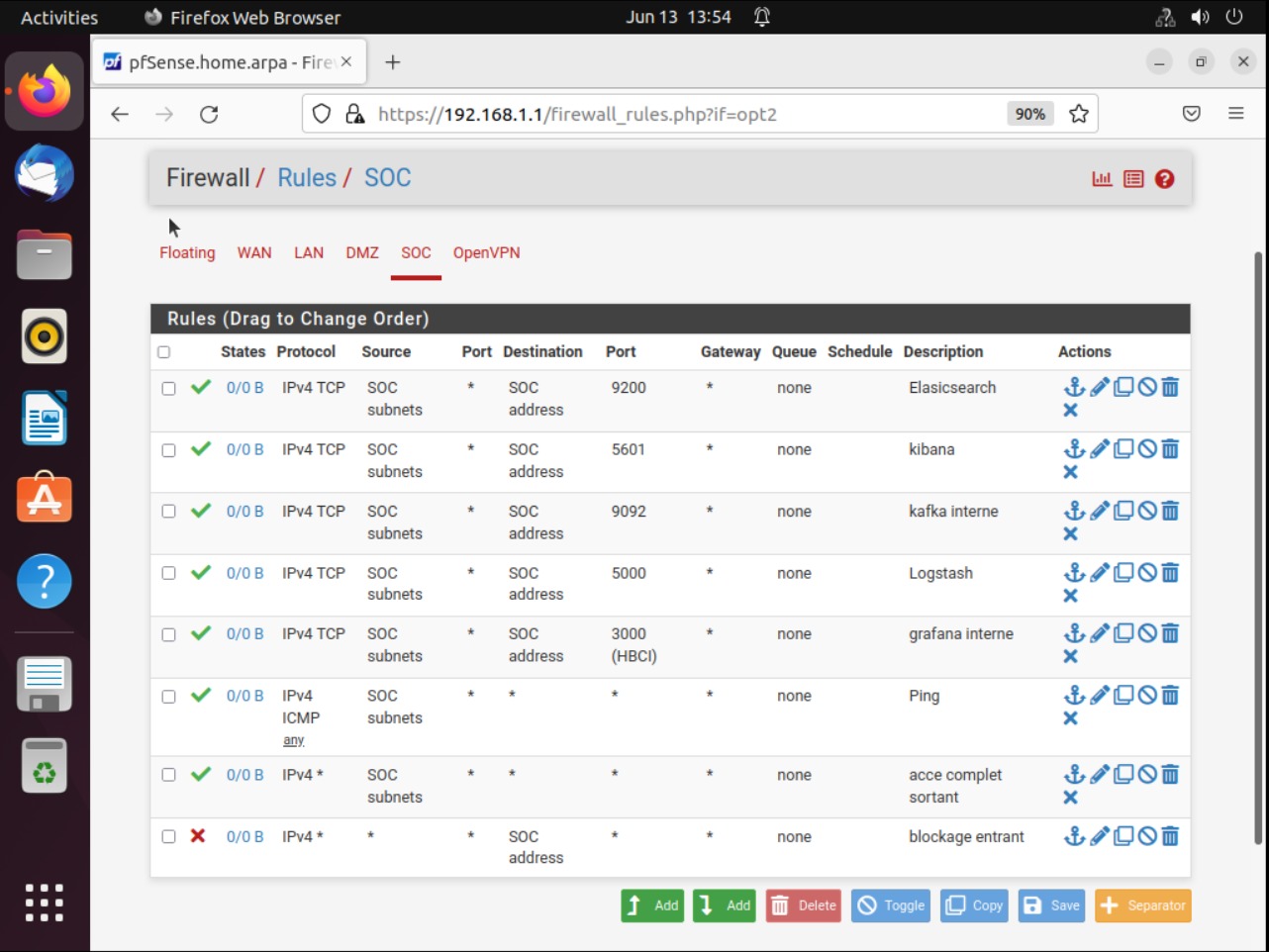
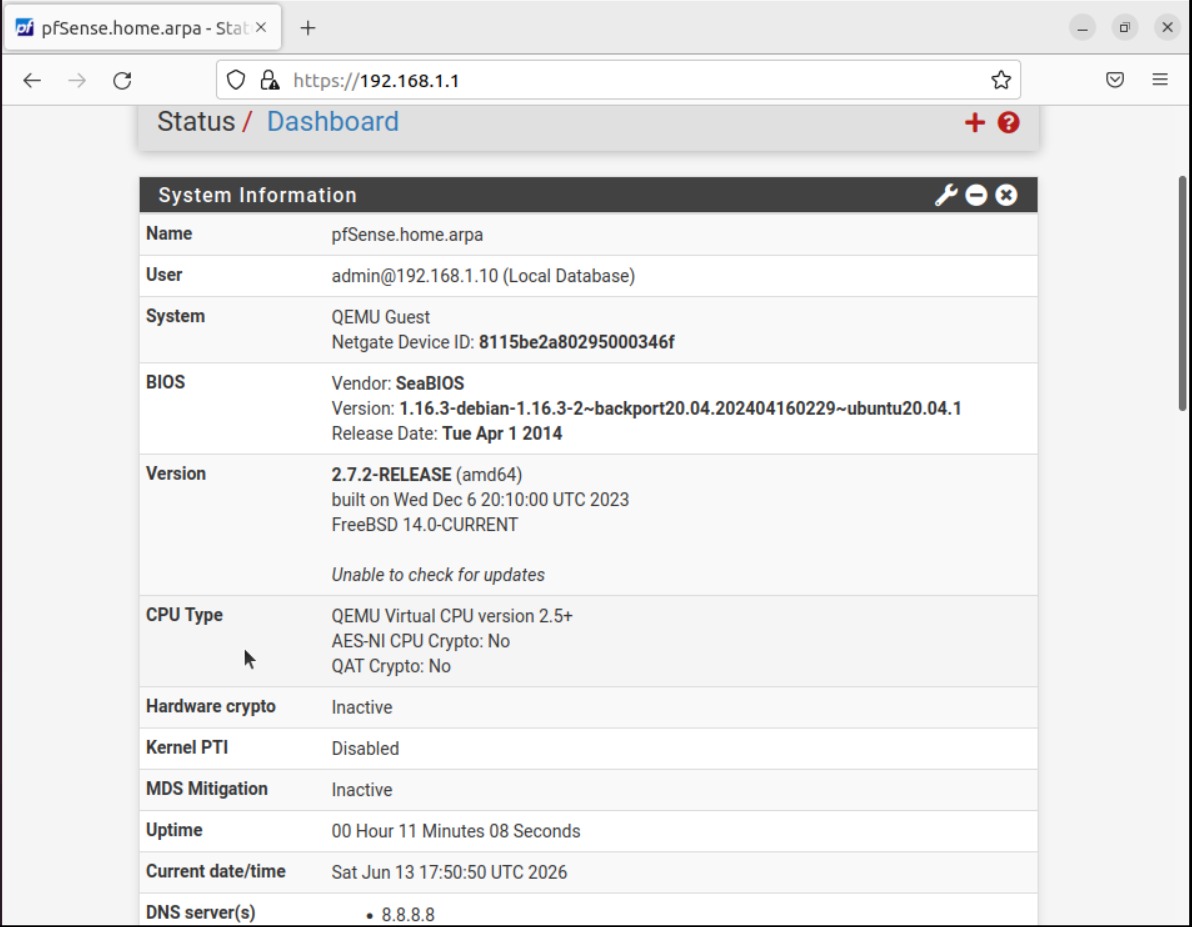
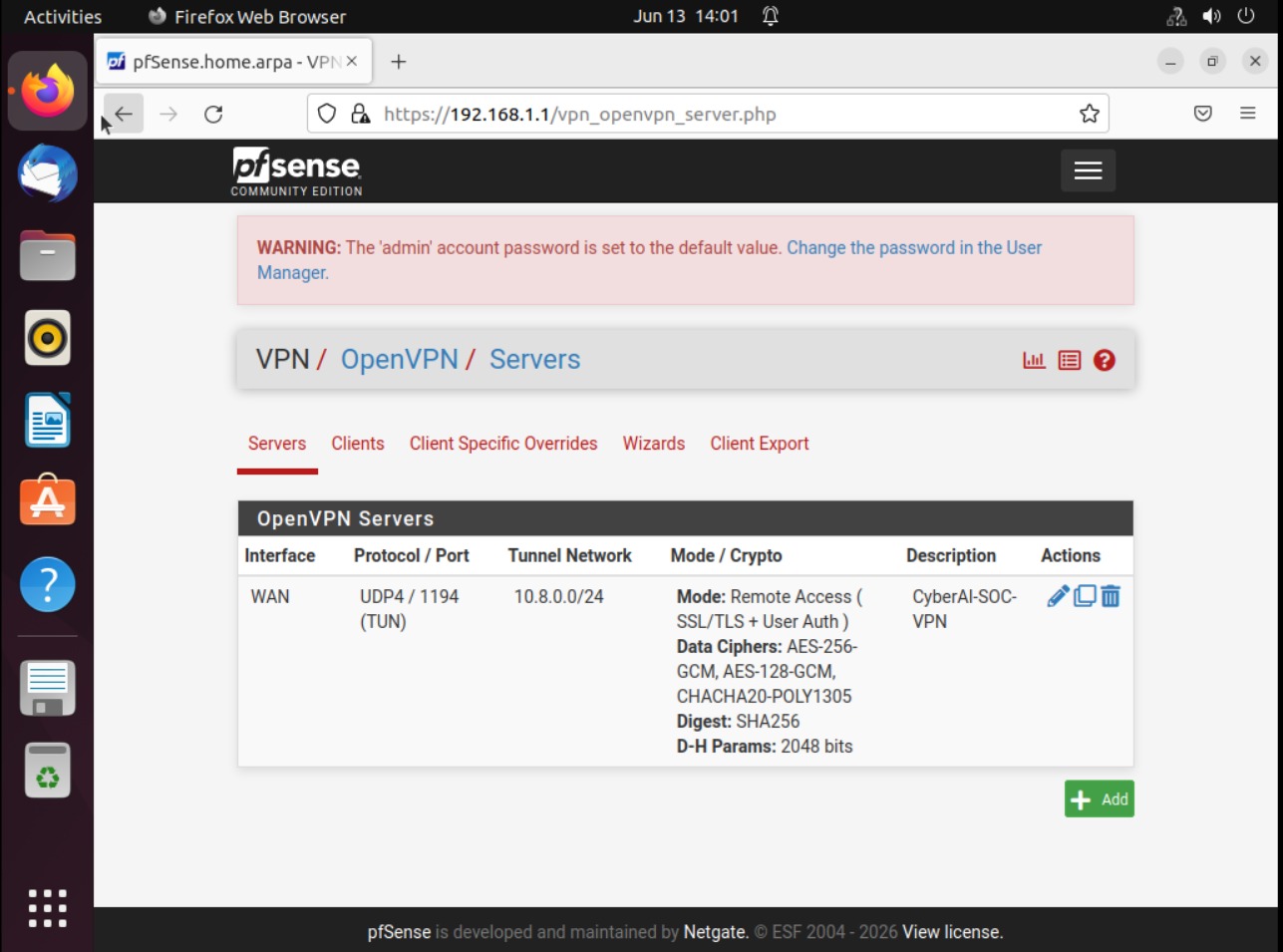
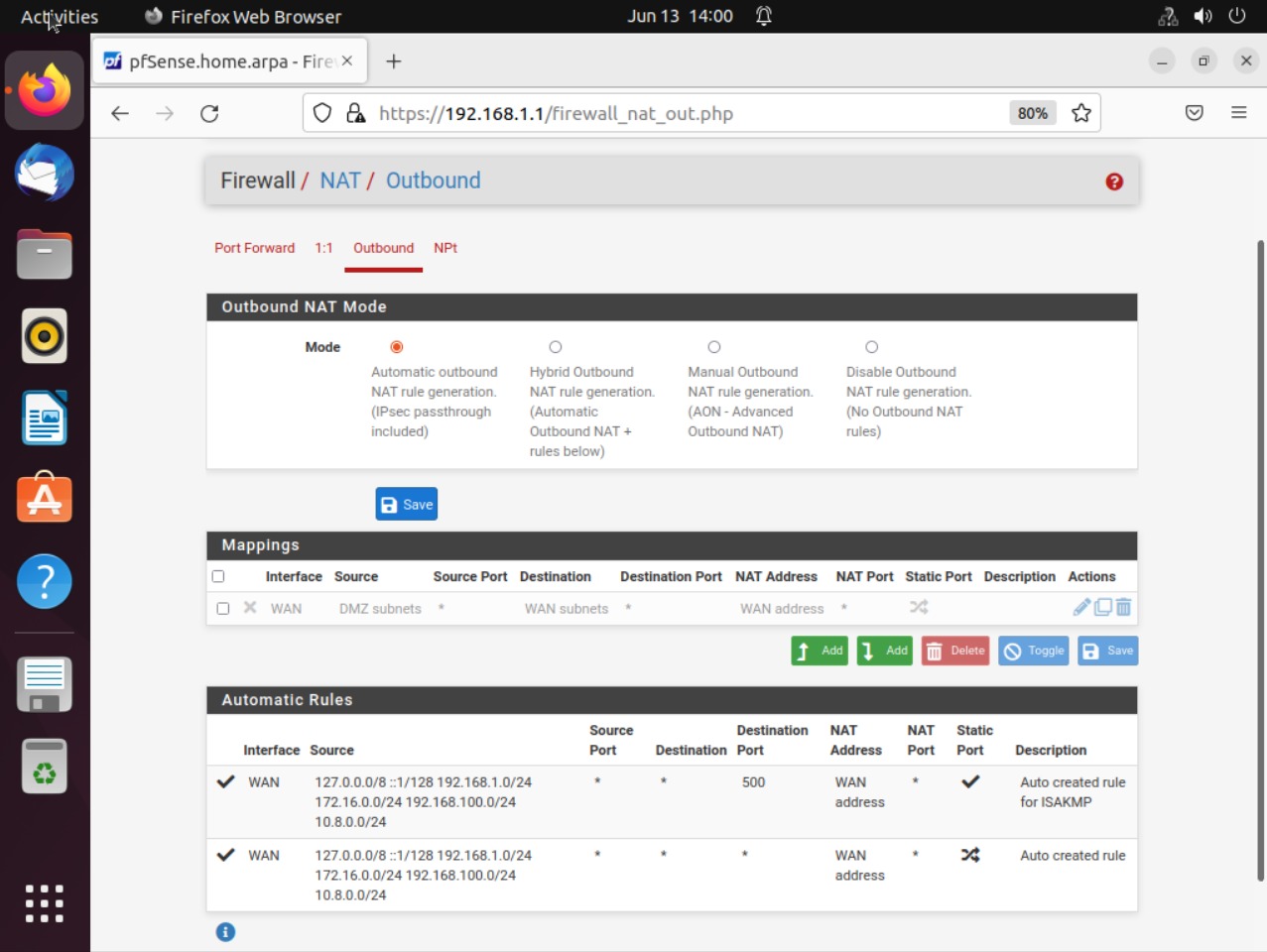
- Simulated Enterprise Network: Embedded a realistic network architecture inside a live GNS3 topology running active OSPF Area 0 and BGP autonomous routing across 4 distinct security zones hardened by a pfSense gateway. The entire stack is completely containerized into 25 independent Docker microservices.
Challenges we faced
Our primary technical roadblock was managing sub-100ms end-to-end processing latency while simultaneously ingesting over 50,000 live packet events per second. Running computationally heavy Graph Neural Networks (GraphSAGE) and Autoencoders threatened to heavily bottleneck our traffic pipeline. We overcame this challenge by constructing an ultra-efficient asynchronous layer in FastAPI, designing parallel Kafka partition structures, and applying Snappy byte-level data compression.
Accomplishments that we're proud of
We successfully moved past superficial hackathon mockups to build a fully deployable, highly complex enterprise software infrastructure. Seamlessly uniting low-level core networking protocols (OSPF/BGP), physical firewalls (pfSense), streaming systems (Kafka), and cutting-edge deep learning models into a self-healing security loop is a massive engineering achievement.
What we learned
We gained extensive experience in maintaining MLOps scalability under severe network strain. We mastered data state transformations required to mirror dynamic network topology maps into graph structures, and highly optimized our skills in containerizing multi-tier virtual networks using advanced Docker configurations and Role-Based Access Control (RBAC).
What's next for CyberAI-Expert v8.0
- Cloud Log Integration: Native log data ingestion to natively support cloud environments including AWS CloudTrail, Google Cloud, and Microsoft Azure logs.
- Multi-Vendor APIs: Updating automation scripts to seamlessly push automated micro-segmentation blacklists to multi-vendor physical firewalls.
- Rust Ingestion Layer: Rewriting the initial parsing layer using Rust-based parsers to safely scale beyond 200,000 security logs processed per second.
Built With
- ai-agents
- apache-kafka
- automation
- cybersecurity
- deep-learning
- docker
- enterprise
- fastapi
- gns3
- machine-learning
- mlflow
- network-security
- pfsense
- predictive-ai
- python
- react
- suricata
- three.js
- websockets
- xgboost
- zeek


Log in or sign up for Devpost to join the conversation.