Inspiration With cyber threats, online financial fraud, malicious Wi-Fi traps, and digital harassment on the rise, traditional awareness lectures often fail to engage students effectively. We wanted to transform vital digital literacy into an immersive, interactive experience. Cyber Safety Quest was built to bridge this gap by combining 16-bit retro RPG exploration with practical, real-world cybersecurity education.
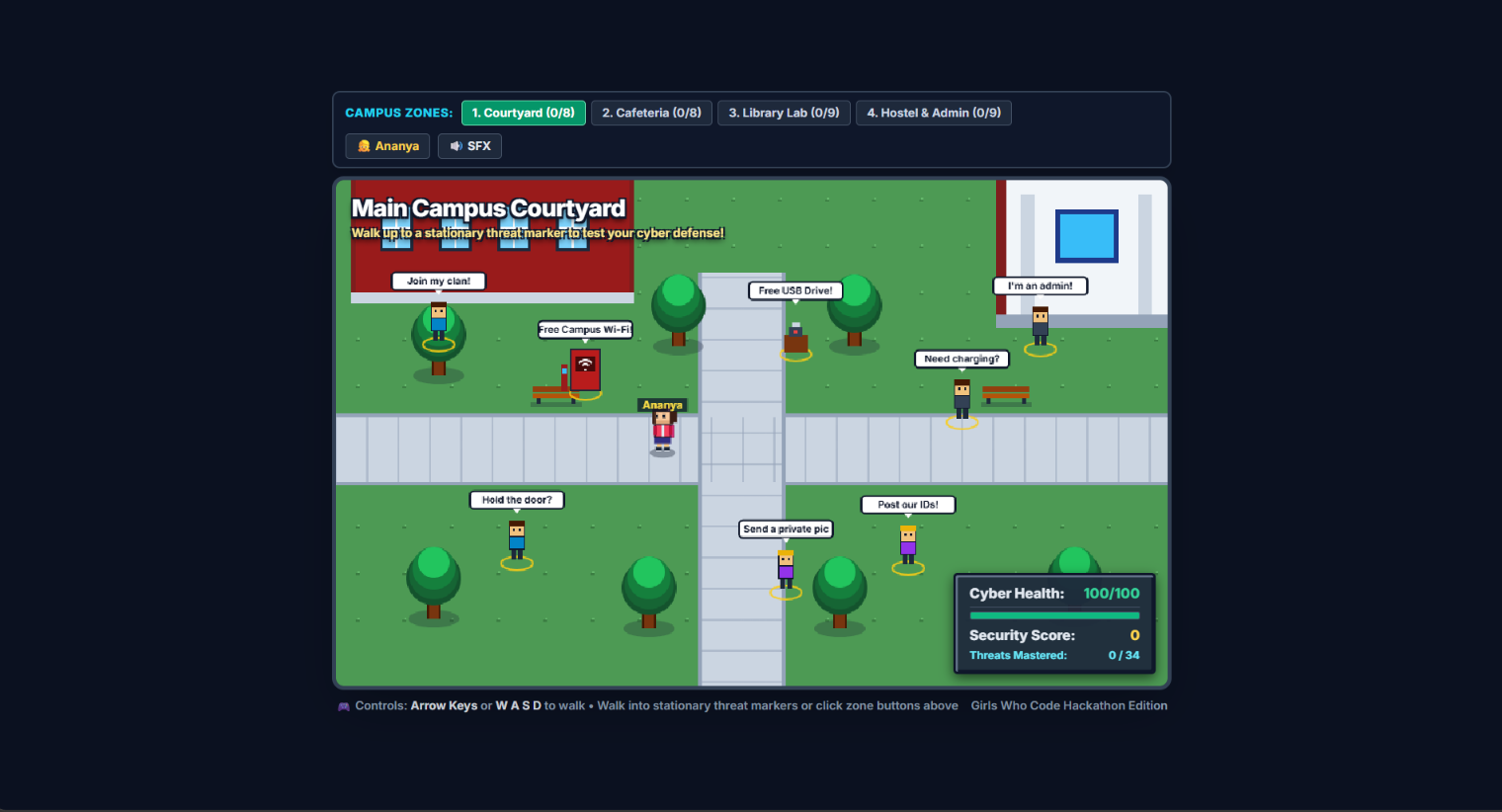
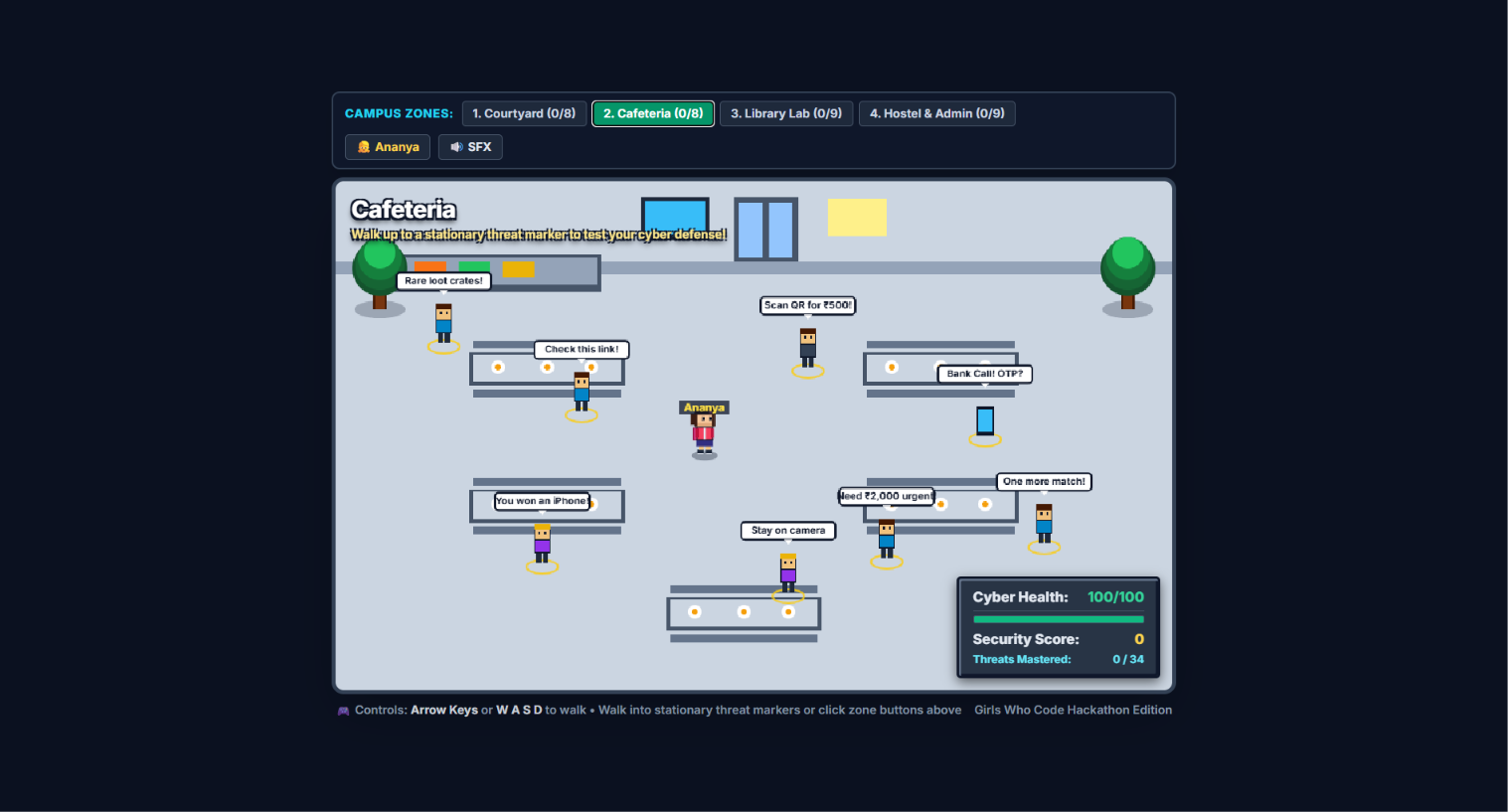
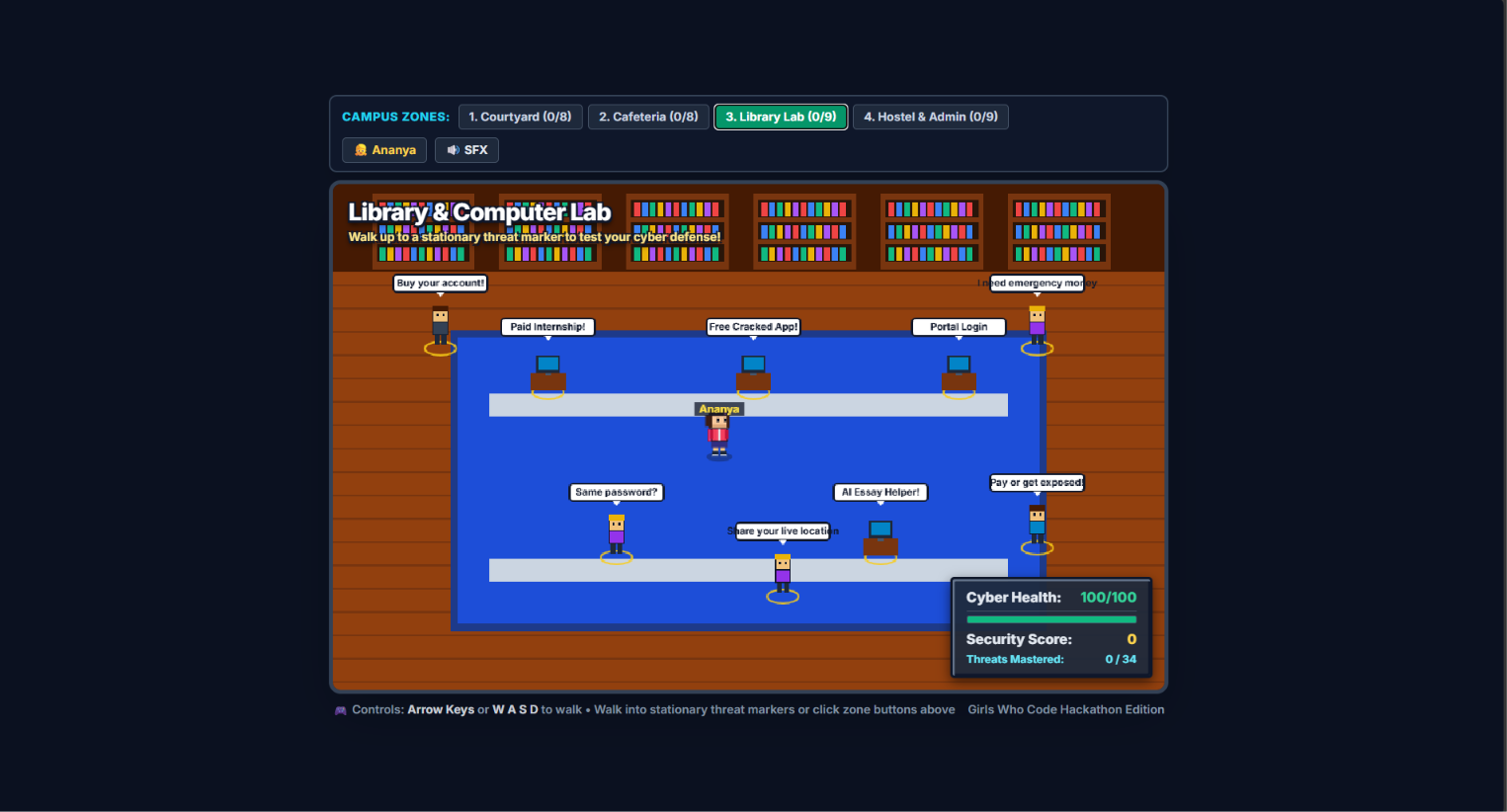
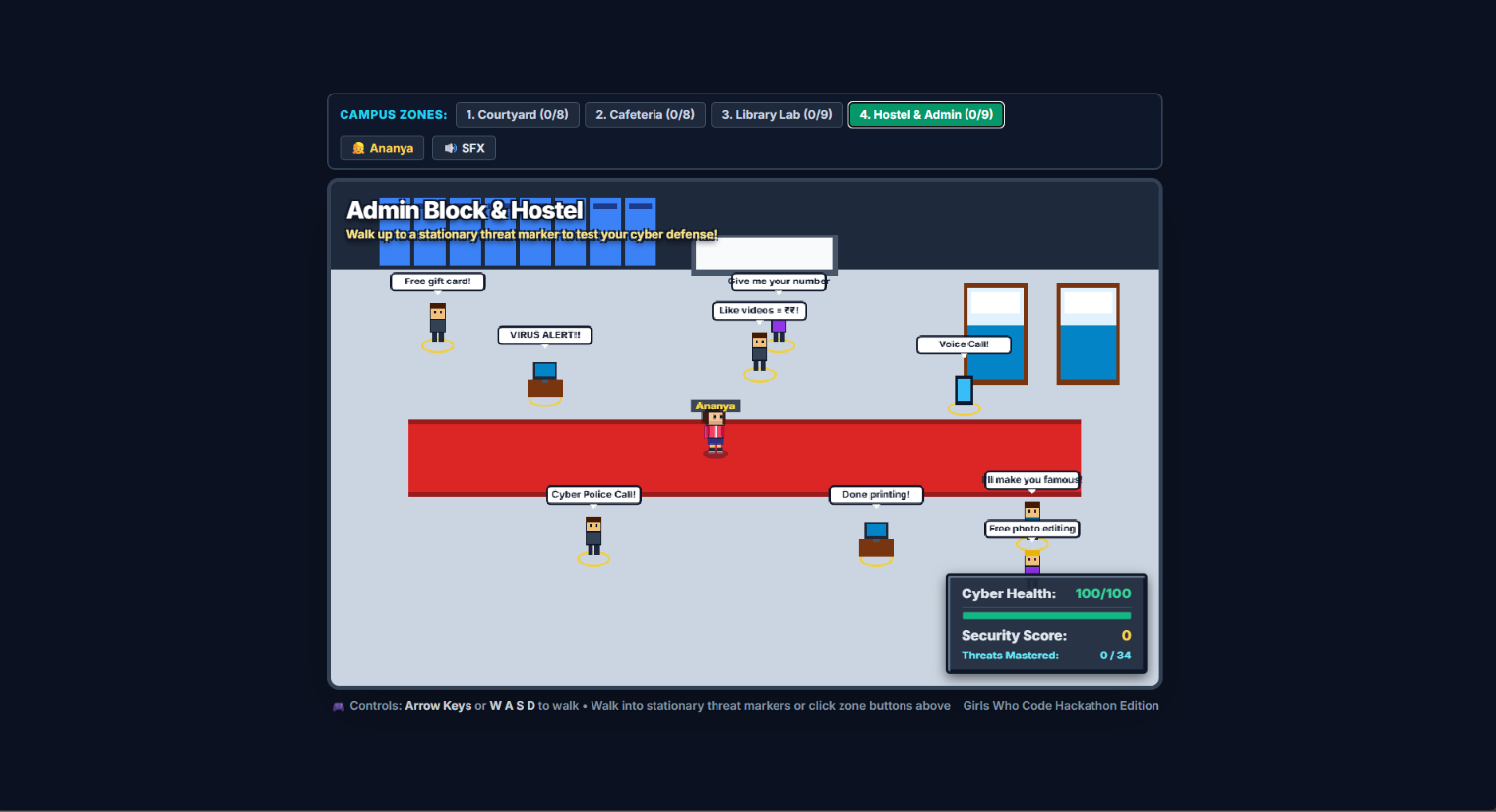
What it does Cyber Safety Quest is an interactive 16-bit pixel-art campus security simulator. Players navigate through four detailed campus zones (Courtyard, Cafeteria, Library Lab, and Hostel/Admin Block) to encounter and solve over 28 realistic security scenarios—ranging from Evil Twin Wi-Fi attacks and UPI QR code scams to gaming extortion and phishing links.
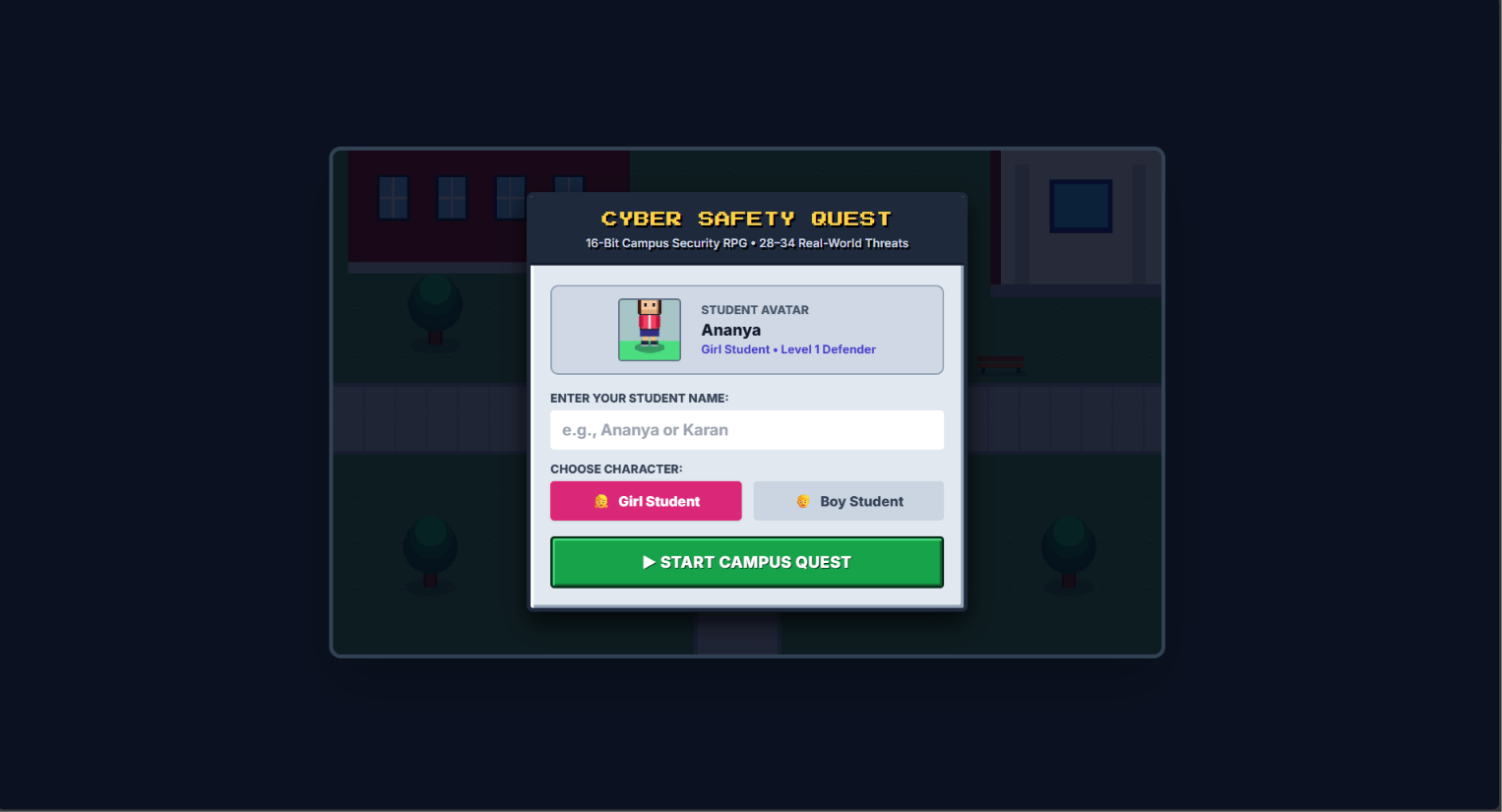
Role-Playing & Customization: Choose your student avatar (girl/boy character options) and enter your name to track your progress.
Interactive Zones: Walk around detailed pixel environments with custom obstacles, animated sprites, and zone-switching navigation.
Instant Feedback & Learning: Choosing an unsafe option costs Cyber Health and triggers an instant breakdown of the threat, while safe choices earn points and reinforce security habits.
Retro Synth Audio: Built-in Web Audio API synthesizers deliver authentic 8-bit sound effects without external audio files.
How we built it Frontend Core: Developed as a single-file, zero-dependency web application using HTML5 Canvas, Tailwind CSS, and vanilla JavaScript (ES6+)
Rendering Engine: Custom 16-bit pixel sprite and tilemap rendering pipeline with depth-sorting, walk-cycle frame animation, and dynamic speech bubble UI.
Audio System: Custom procedural sound engine using the browser's native Web Audio API for retro step sounds, alerts, and success/trap jingles.
Deployment: Hosted seamlessly via GitHub Pages for instant browser-based access.
Challenges we ran into Depth-Sorting Sprites: Ensuring that the student character correctly appeared in front of or behind static environment markers and NPCs depending on their Y-coordinate required custom coordinate sorting loops in the main render loop.
Compact Single-File Architecture: Packing rich map layouts, 34 scenario datasets, sound synthesizers, and UI overlays into a clean, highly responsive layout that works smoothly on both desktop and mobile screens.
Accomplishments that we're proud of Successfully integrating over 28 diverse cyber safety scenarios spanning campus life, financial scams, gaming safety, and personal privacy.
Crafting an authentic 16-bit retro aesthetic complete with customized student sprite animations, retro dialog panels, and expressive reaction portraits.
Making the game instantly playable in any web browser with zero installation or external asset loading required.
What we learned We discovered how powerful gamification is for teaching complex concepts like digital hygiene and threat detection. Designing scenarios for everyday situations highlighted how easily users can fall victim to social engineering unless trained through active decision-making.
What's next for Cyber_Safety_Quest Adding more interactive zones and multiplayer challenge leaderboards.
Expanding language support to reach students across different regions.
Partnering with academic institutions to integrate the game into student orientation programs.

