-
-
Logo
-
Gameplay
-
Gameplay
Cyber Arena
Inspiration
Cybersecurity is becoming ever more important in the digital world and so too is educating ourselves on how to protect against cyberattacks. Training courses on cybersecurity have always struggled with being both educational and fun. However, that doesn’t mean learning about security has to be a grind. We challenged ourselves to create a game for friends/family of all ages that teaches information security in an engaging and fun way. Combining our love for card games and security, we built Cyber Arena!
What it does
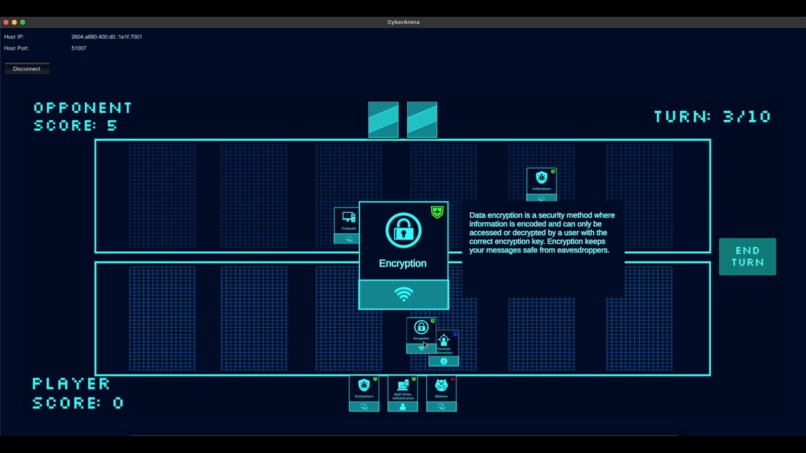
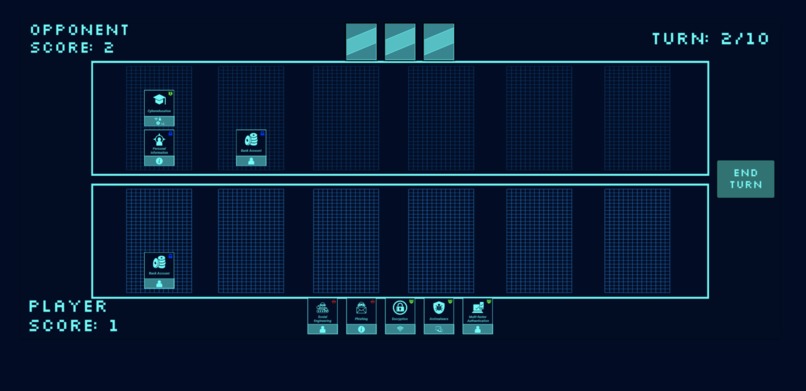
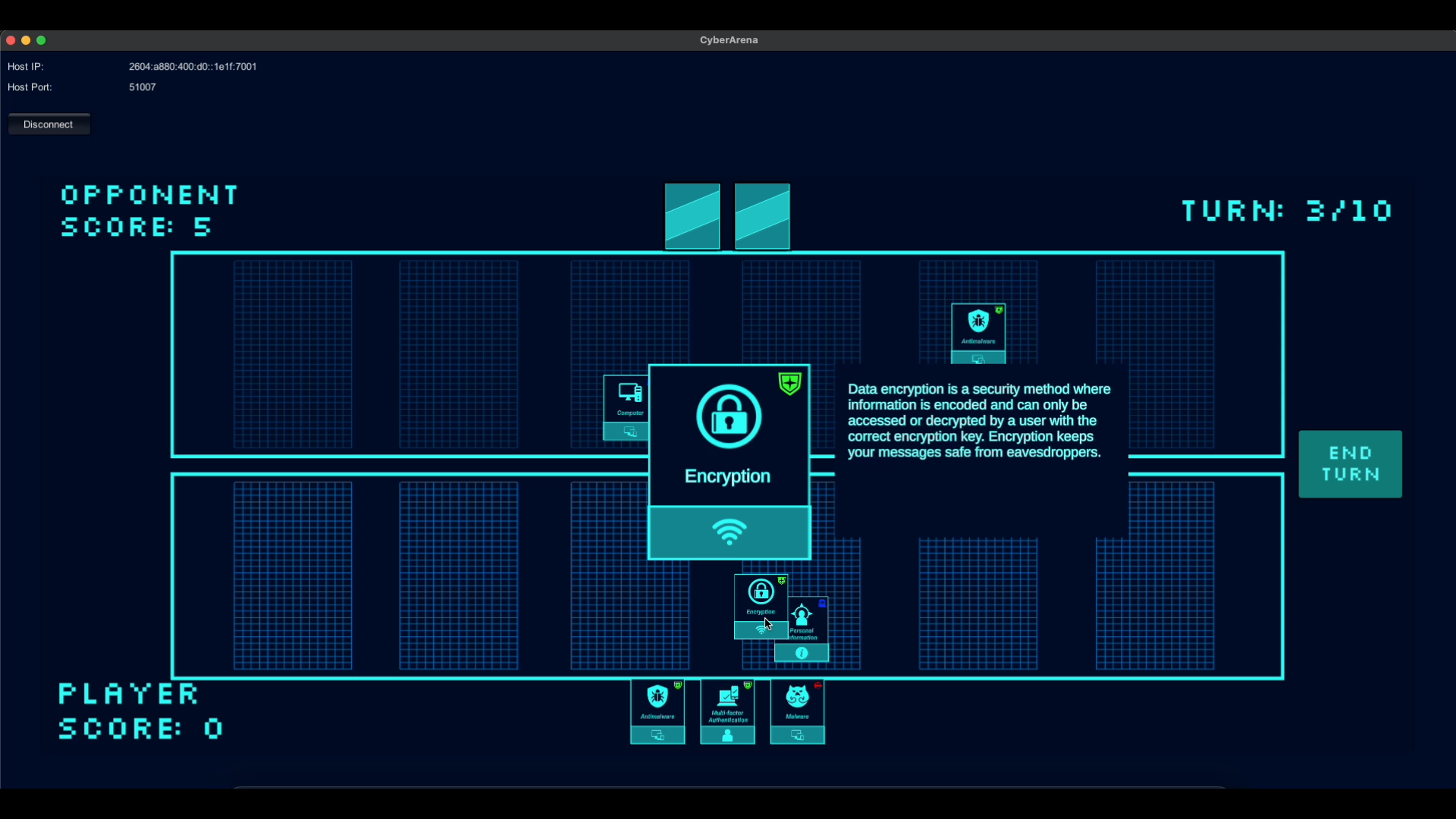
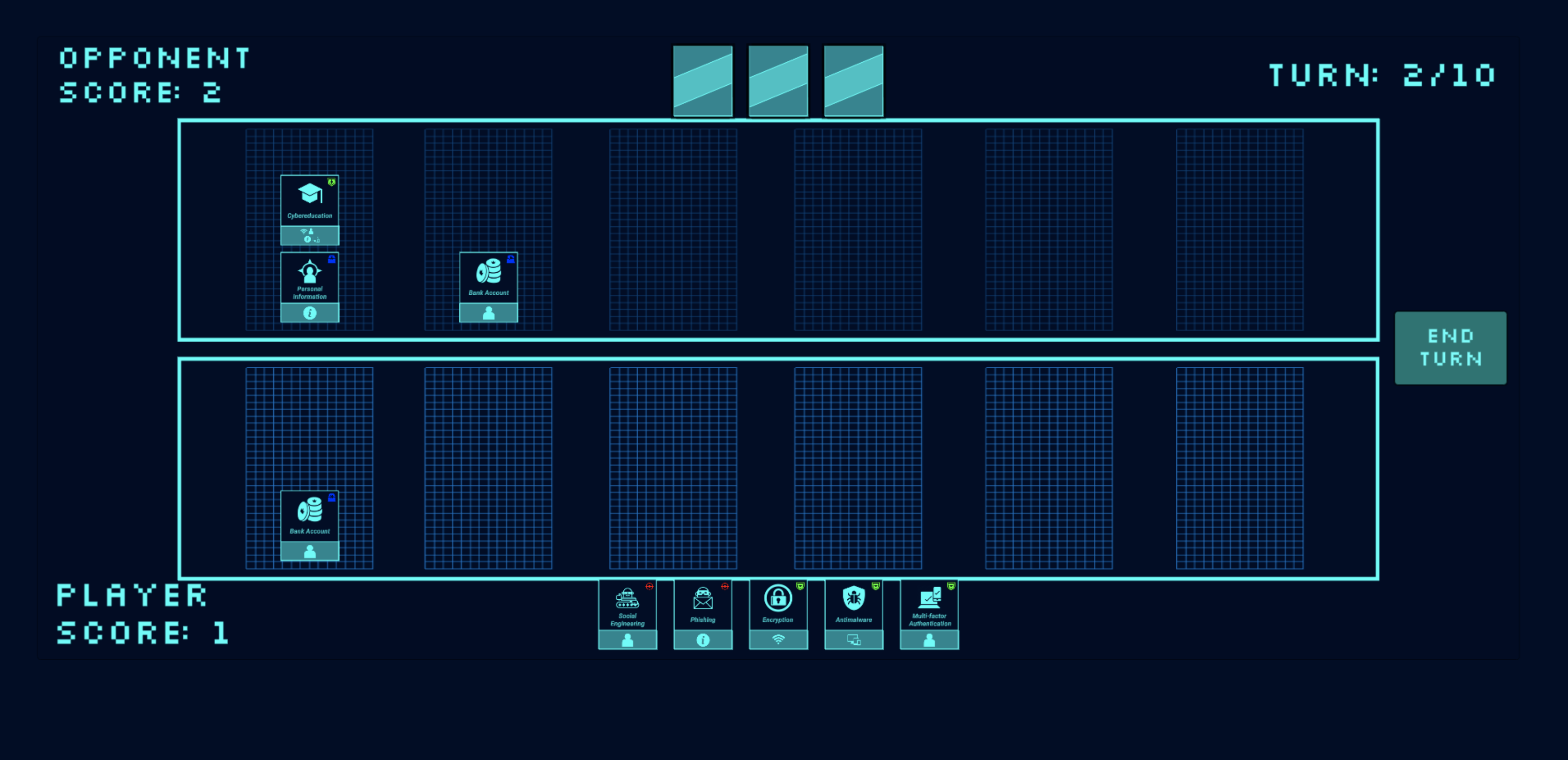
Cyber Arena is a 2 player card game all about staying safe online! Have fun while learning about the cybersecurity risks to your everyday devices and how to protect yourself. Earn points by assembling assets on your board but be aware of enemy cyberattacks! Players must strategically utilize defense cards to protect against cyber attacks and other “phishy” activity from opponents. Do you have what it takes to step in the arena?
How we built it
A lot of effort went into research as well as the design and concept of the game. Ultimately, we chose Unity for development and leveraged its in house library for game object generation and scene creations. We also utilized third party Unity assets Mirror and Noble Connect for networking to support multiplayer gameplay between any two players.
Designing a visually immersive game was also important to us. We wanted Cyber Arena to have a theme that resonated with the user and went through an iterative brainstorming process to determine the best design for our game. We used Figma to keep our designs consistent and manage visual assets.
Challenges we ran into
Because this was our first project in Unity, learning how to interact with assets, scripts, and prefabs was a new experience. While neither of us had worked using C# before, because we had experience with other OOP languages, learning to script in C# was manageable. It was an interesting experience comparing Unity and Visual Studio to Xcode, which we had used many times for previous projects and various internships.
One of the bigger challenges we faced was how to manage networking to support online multiplayer. Because we want the game to be accessible and have high replayability, we set an ambitious goal to implement online multiplayer for Cyber Arena. We initially implemented local multiplayer using Mirror, which took some effort but was manageable. However, we quickly realized that making the leap to online multiplayer would take more effort. Our first attempt was to create a lobby system so players could make and join rooms. However, we realized that we would need to separate our existing logic where one player would be the host (acting as the server) and instead have a standalone server, which would require extensive refactoring.
After a round of research, we thankfully discovered Noble Connect, a platform agnostic solution making use of relay servers and NAT punchthrough to connect users without need of a standalone server or port forwarding. With this, we were able to connect players on Windows and MacOS in Cyber Arena.
Accomplishments that we're proud of
We are incredibly proud of the fact that we were able to design a game that educates users on information security while still incorporating features that make for a creative and engaging card game. At the start we set a goal to create a replayable game that anyone can play no matter the age or knowledge of cybersecurity. We believe we accomplished that through straightforward gameplay, beautiful visuals and detailed security descriptions.
Lastly, as a team we were able to utilize our unique and diverse experiences by giving ownership of specific tasks that would play to each member's strength. Most crucially we were able to synthesize our ideas and bridge the different parts of the game we were working on. We are proud that we were able to successfully combine our skills to create an incredible game experience.
What we learned
Cybersecurity is an ever changing topic and throughout this hackathon we learned about new attack vectors and threats, as well as ways to mitigate, defend and detect against malicious adversaries when designing the game. This being our first experience with Unity it was also a challenging but fun learning experience learning the ins and outs of Unity game design and the networking that supports multiplayer.
What's next for Cyber Arena
Cyber Arena’s design as a card game allows new custom cards to be created to extend the game to teach players about all sorts of cybersecurity topics. In addition, another functionality that would be interesting to add would be to update the gameplay so that players have to match the category when playing defenses and attacks. This would add another layer of strategy to the game to keep players engaged, but may be too complicated for younger players. Therefore it would be ideal to have this as a toggleable feature to support maximum accessibility.
Another expansion that would be more relevant to players who want to keep up to date with the cybersecurity space would be “incident” specific card sets. For example, the Apache Log4j security vulnerability “Log4Shell” was a very prominent threat with potentially millions of attempts to exploit the vulnerability worldwide. Creating asset cards to educate players on the types of programs/devices in danger, attack cards to depict how attackers can exploit the vulnerability (i.e RCE, DOS), and defense cards to explain how to protect oneself. This would help players keep up to date with major developments in the cybersecurity community.


Log in or sign up for Devpost to join the conversation.