-
-
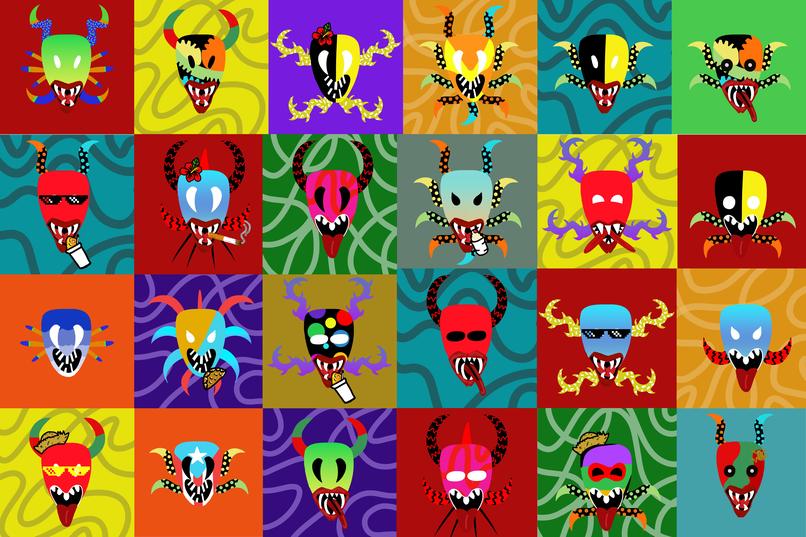
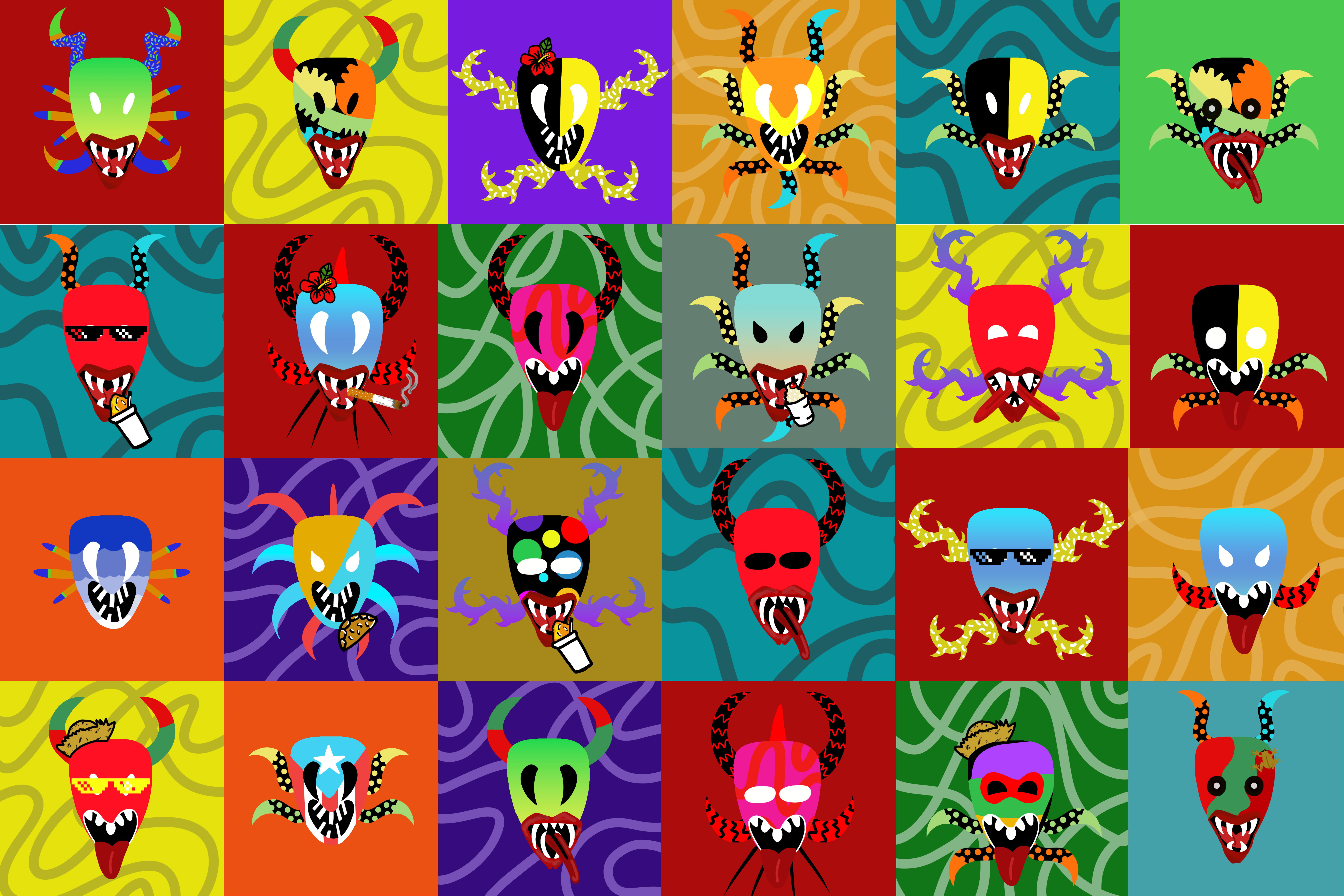
Collage of the Cyber Vejigantes Collection
Inspiration
Our goal is to create the first NFT collection link that helps preserve Puerto Rico's Cultural Heritage, arts and crafts. We chose to create 1,858 programmatically generated Vejigante Masks with the goal that proceeds from royalties generated will be sent to Instituto de Cultura Puertorriqueña, an institution that is tasked with the conservation and promotion of Puerto rican culture.
The origins of Vejigantes go back to 12th century medieval Spain. They represented the evil Moors who were defeated by St. James. People dressed as demons (vejigantes).
Vejigante festivals are celebrated throughout the island in Puerto Rico, but no place has the passion like they do in Ponce, Puerto Rico. The Carnaval de Ponce thus began in 1858 and was started with a traditional masquerade dance. The tradition has continued and the craft of creating a Vejigante Mask is celebrated by many. There are many methods of making the masks, in the town of Loiza the mask is made from coconut or gourds, but the most common are predominantly papier-maché.
What it does
Our NFT collection will be the beginning of a digital community that preserves our cultural heritage and supports local artists.
How we built it
To create the 1,858 Cyber Vejigantes we used the Hashlips Art Engine open source library that is written with NodeJS, the Canvas.js library (wrapper on Cairo 2D graphics).
We created 80 unique traits from 7 properties. You can view the rarity and the probabilities calculated here: link
The original layers can be found in this folder: link
We first generated 1800 Cyber Vejigantes with the following distribution: 50% of the collection without accessories, 30% with one accessory, 10% with accessory and head gear, and 10% with two accessories. After that, we hand-selected 58 masks and ran them through a pixelating algorithm to generate NFTs #1801-#1858.
Then, using Solidty and Remix.Ethereum.org, we published the CyberVejigantes Smart Contract on the Rinkeby Test Network. These were minted, and can be found on the Test OpenSea marketplace.
Challenges we ran into
Creating 80 different traits that all match together in a 48 hour window wasn't easy, but once we managed to create the art the main challenge was to figure out how to stitch them together. We first started using the Pillow library for Python, but quickly switched over to Nodejs. Within the Node community we found a lot of resources and support that allowed us to generate our art.
Then, the biggest challenge we ran into was understanding the process of creating and interacting with the smart contract, and minting the NFTs. We tried to deploy on the Polygon network, but were unable to figure out the setup of our personal wallets, thus ended up minting in the Rinkeby test Ethereum network.
Accomplishments that we're proud of
We have a full fledged NFT collection, with a website link and are ready to launch it to the world.
What we learned
Generative Art techniques, Solidity, and interacting with Smart Contracts.
What's next for Cyber Vejigantes
As our collection is ready for minting, the next step is to prepare for a launch date. We will establish a collaboration with the Instituto de Cultura Puertorriqueña (ICP) as our goal is to donate a percentage of the royalties generated by this collection. With ICP's endorsement, we will reach out to the artist community begin working with them to create our second collection.


Log in or sign up for Devpost to join the conversation.