-
-
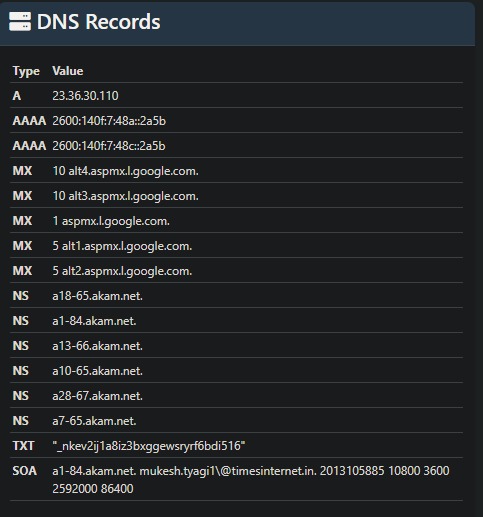
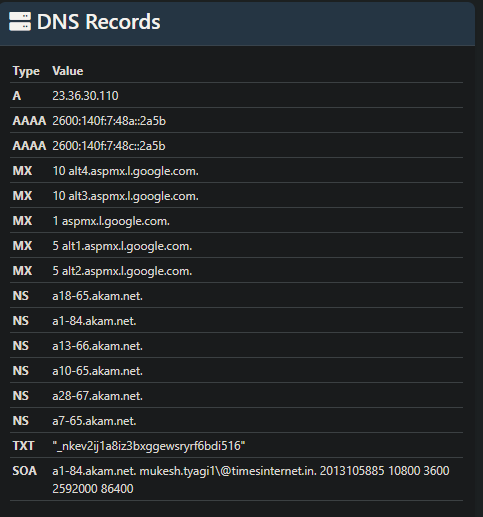
DNS records
-
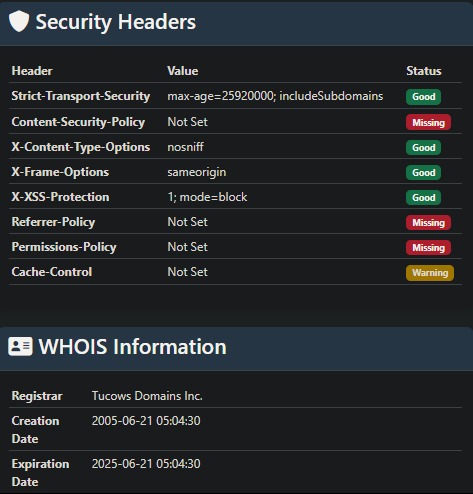
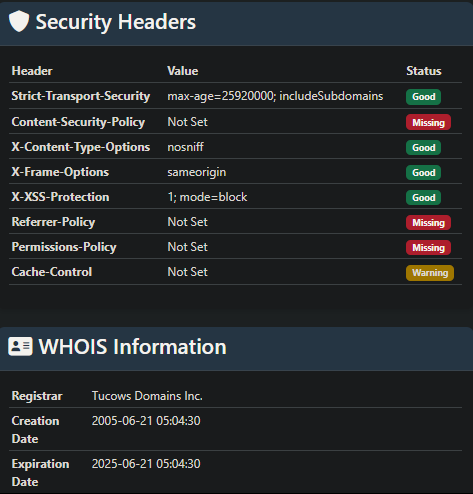
Security headers and WHOIS info.
-
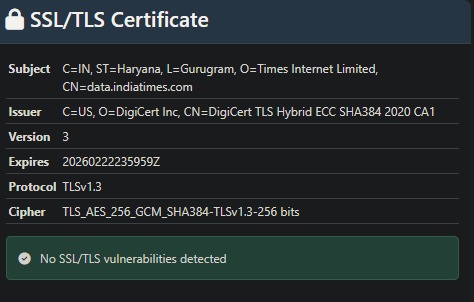
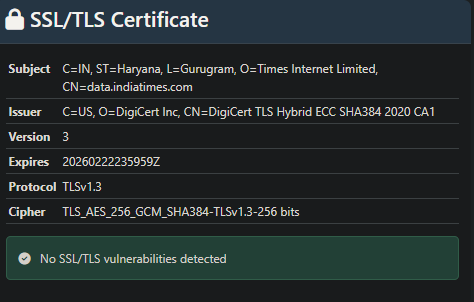
SSL/TLS records
-
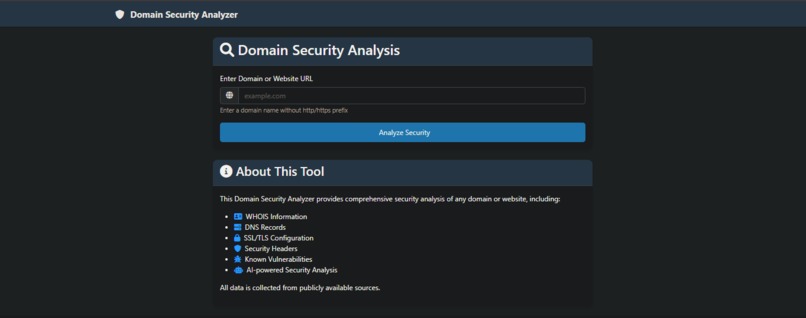
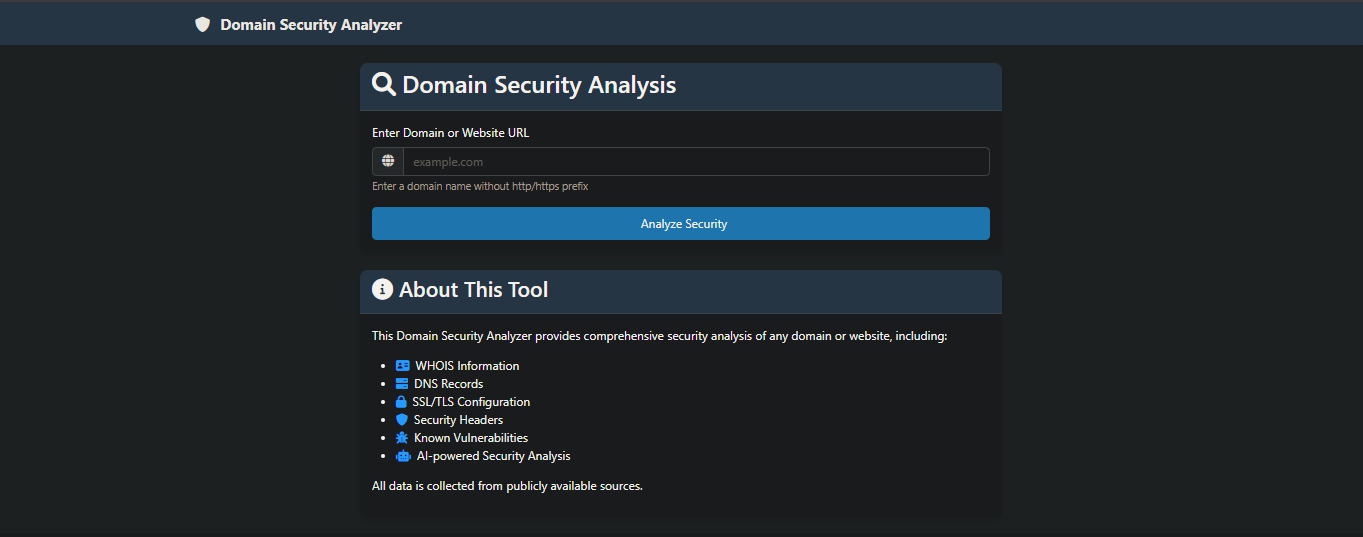
landing page
-
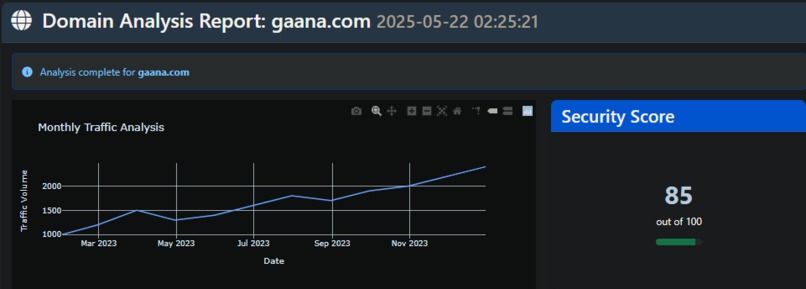
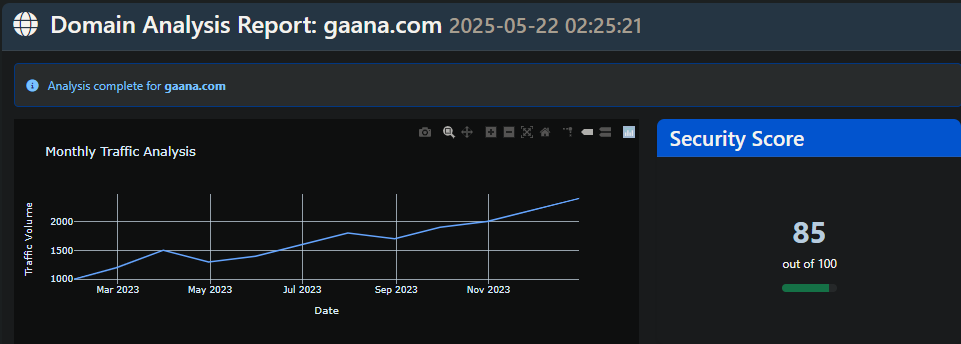
dashboard for traffic analysis
-
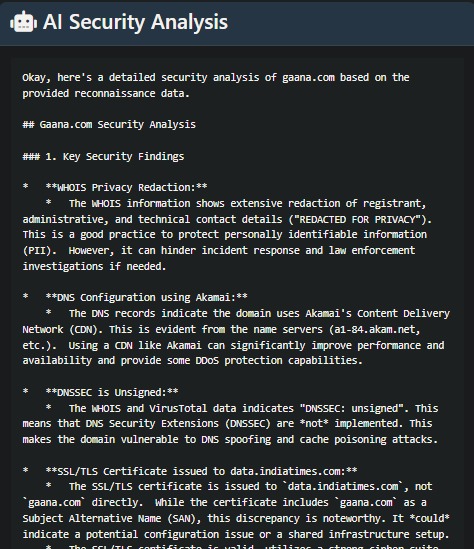
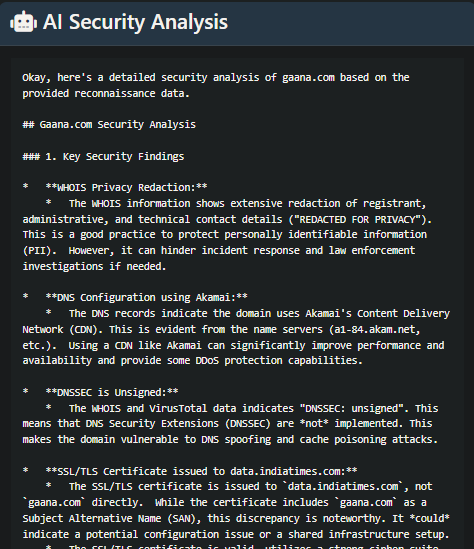
Ai insights
-
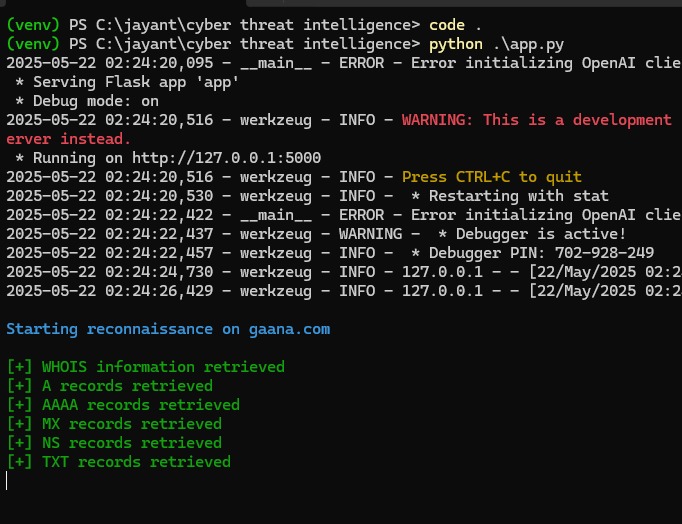
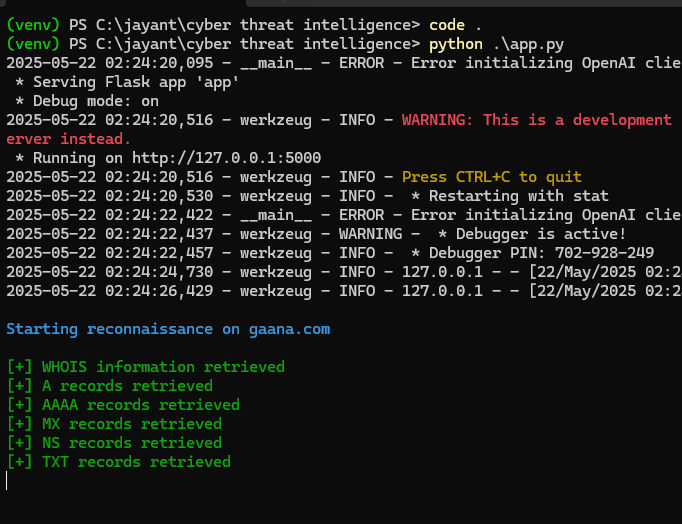
backend logic
Domain Security Analyzer: My Journey
Inspiration
The inspiration for the Domain Security Analyzer came from my interest in cybersecurity and the growing need for tools that can help individuals and organizations assess the security posture of their online presence. As I delved deeper into the world of ethical hacking and bug bounty programs, I realized that having a comprehensive tool for domain reconnaissance could significantly streamline the process of gathering critical information about a target domain.
What I Learned
Throughout the development of this project, I learned several key concepts:
- Web Development with Flask: I gained hands-on experience in building web applications using Flask, a lightweight Python web framework. This included setting up routes, handling forms, and rendering templates.
- API Integration: I learned how to integrate various APIs, such as OpenAI for generating AI-powered insights and Shodan for gathering information about devices connected to the internet.
- Data Visualization: I explored how to visualize data using Plotly, creating interactive charts to represent traffic analysis and other metrics.
- Security Best Practices: I became more aware of security practices, such as validating user input, handling sensitive data, and ensuring secure API calls.
Building the Project
The project was built using the following steps:
- Setting Up the Environment: I created a virtual environment and installed necessary dependencies, including Flask, requests, and various libraries for data processing and visualization.
- Defining the Project Structure: I organized the project into components, including the main application file (
app.py), the domain reconnaissance logic (domain_recon.py), and HTML templates for the user interface. - Implementing Core Features: I developed features to gather WHOIS information, DNS records, SSL/TLS configurations, and security headers. Each feature was modularized into functions for better maintainability.
- Integrating AI Insights: I utilized the OpenAI API to generate insights based on the gathered data, providing users with actionable recommendations.
- Creating the User Interface: I designed a user-friendly web interface using Bootstrap for styling, ensuring that the application was visually appealing and easy to navigate.
Challenges Faced
While building the Domain Security Analyzer, I encountered several challenges:
- API Limitations: I faced issues with API access, particularly with the Shodan API, which resulted in 403 Forbidden errors. I had to adapt the implementation to work with free-tier limitations.
- Debugging: Debugging issues related to data retrieval and rendering in the web interface was challenging. I learned to use logging effectively to trace errors and understand the flow of data.
- Security Concerns: Ensuring that the application handled sensitive data securely was a priority. I had to implement measures to protect API keys and validate user input to prevent injection attacks.
Conclusion
The Domain Security Analyzer project was a rewarding experience that deepened my understanding of web development, cybersecurity, and data analysis. It reinforced my passion for creating tools that can empower users to enhance their online security. I look forward to further improving this tool and exploring additional features that can provide even more value to users.
Built With
- and-virustotal-api
- beautiful-soup
- bootstrap
- dnspython
- flask
- gemini
- github
- openssl
- pandas
- plotly
- requests
- shodan-api
- version-controlled
- visual-studio
- whois
- with-no-database


Log in or sign up for Devpost to join the conversation.