Ins## Inspiration
We created CyberShield to make website security easier to understand for students, beginner developers, and small website owners. Many people build websites without knowing whether important security configurations are missing. We wanted to create a simple tool that helps users understand basic website security and learn how to improve it.
What it does
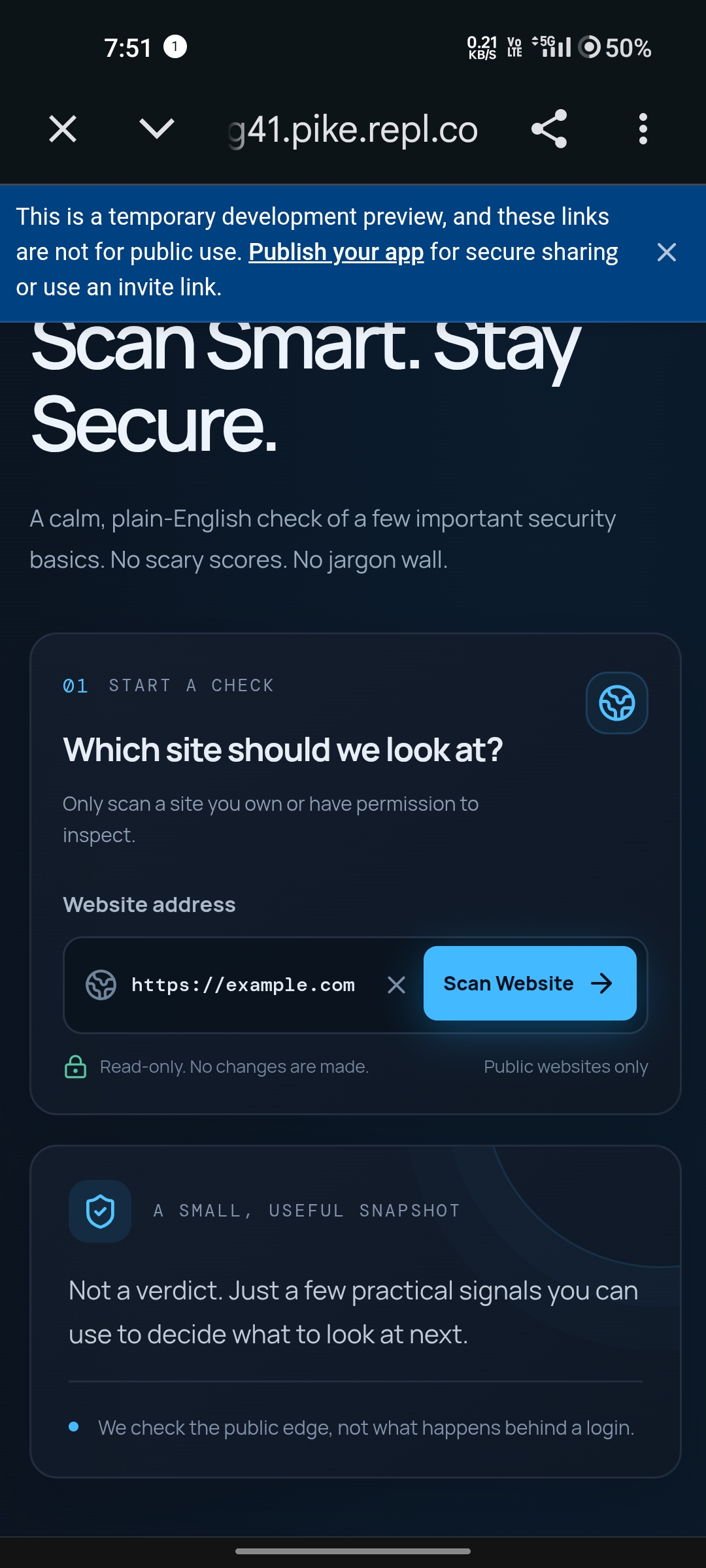
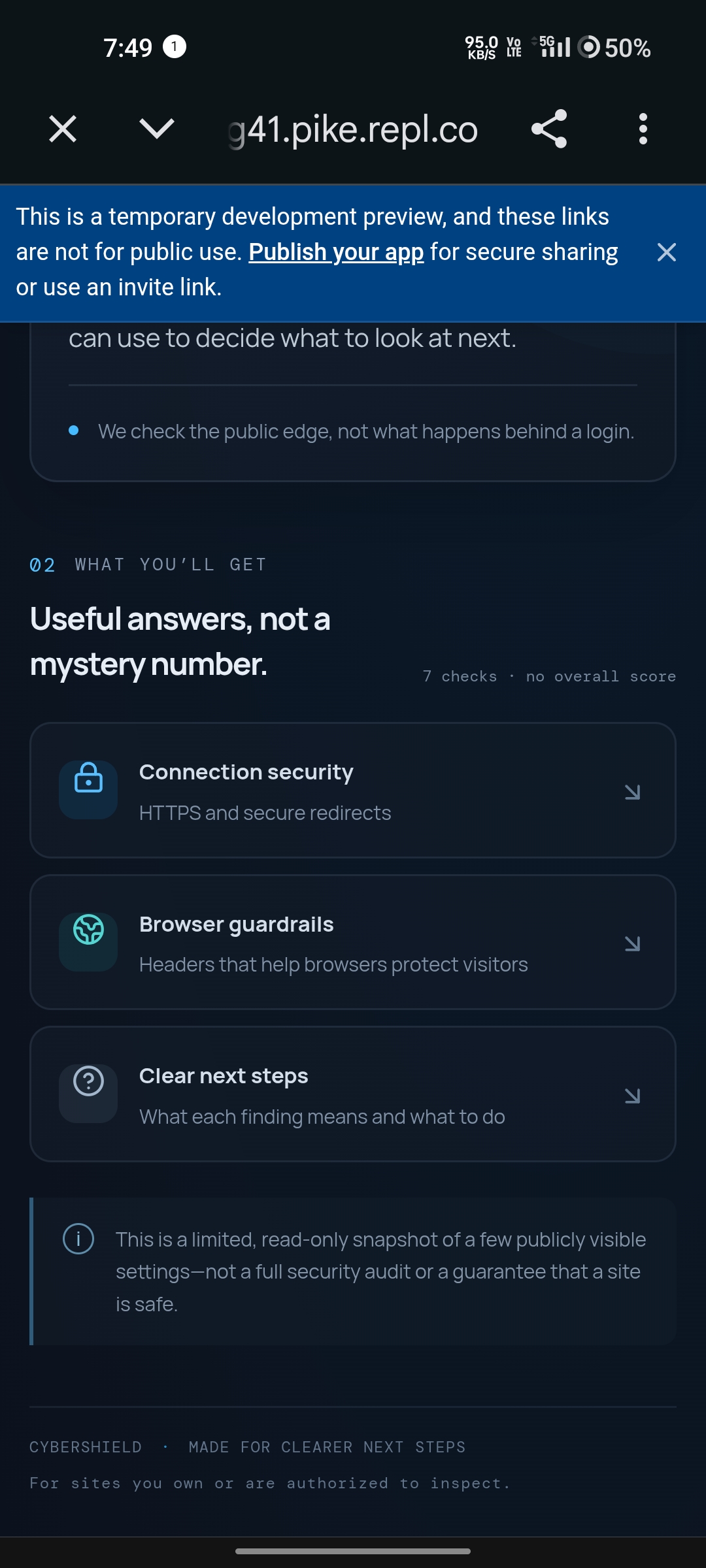
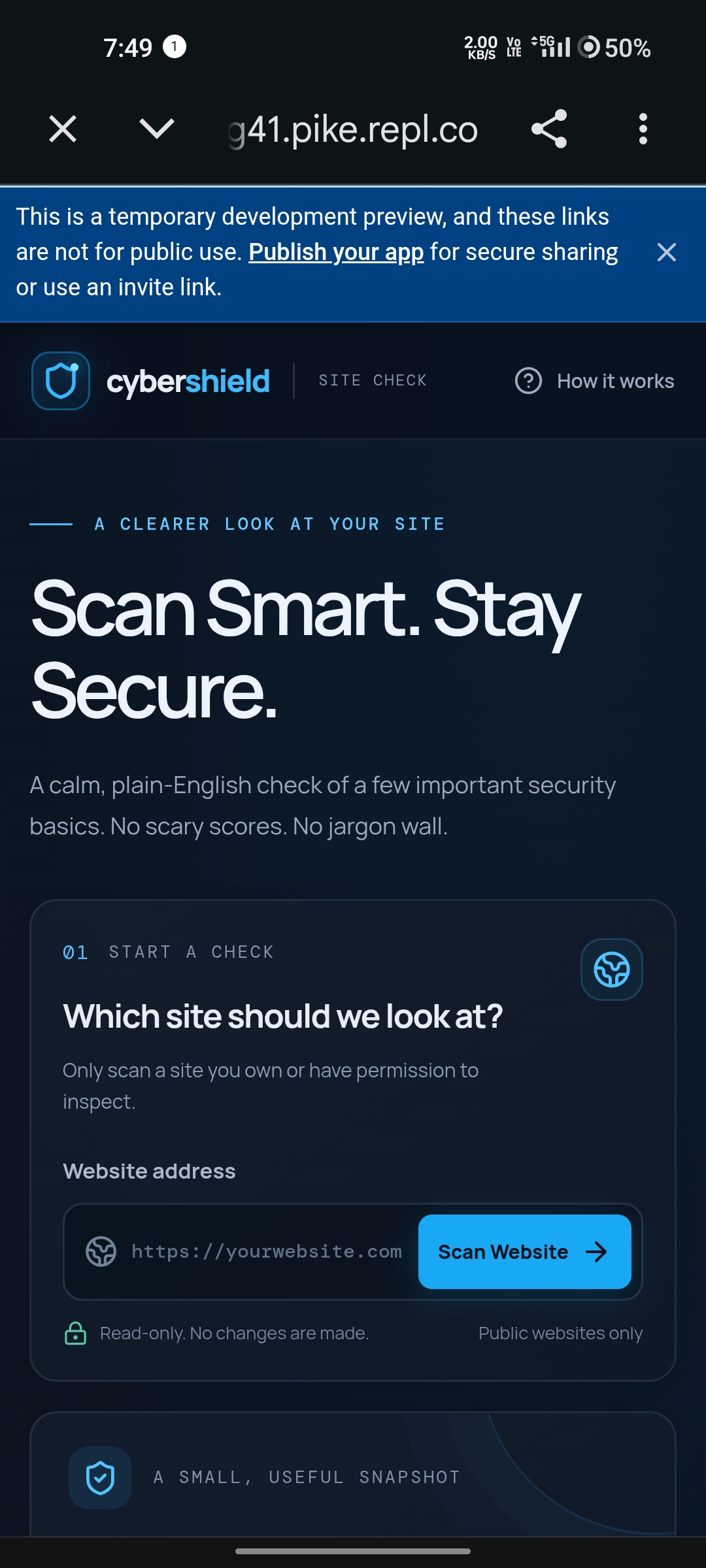
CyberShield is a beginner-friendly website security checker that analyzes basic security configurations of publicly accessible websites.
Its key features include:
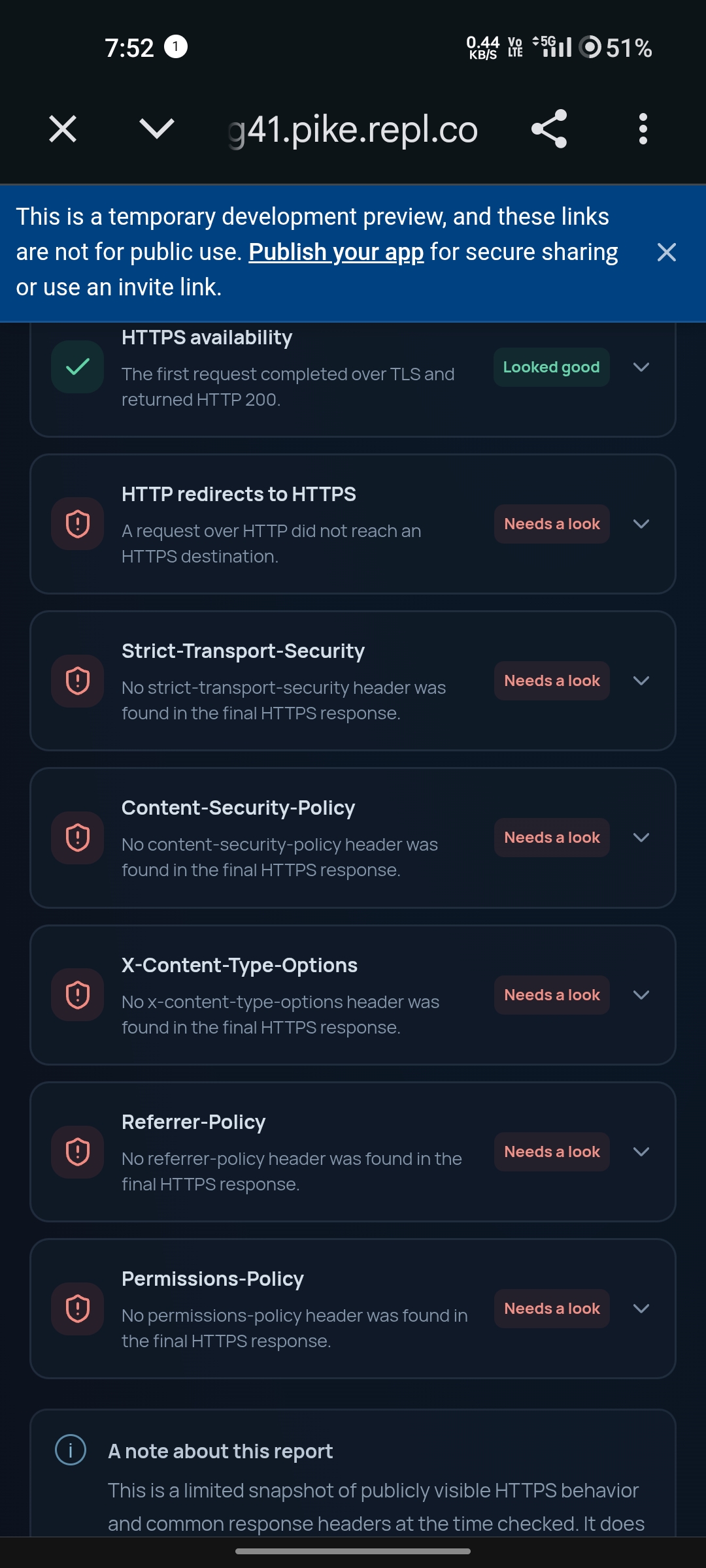
- Checking HTTPS availability and HTTP-to-HTTPS redirects.
- Identifying missing HTTP security headers.
- Displaying security findings in an easy-to-understand dashboard.
- Providing recommendations to improve website security.
- Helping beginners learn about safer web development practices.
How we built it
We designed CyberShield as a responsive web application using HTML, CSS, and JavaScript for the frontend, with Python and Flask for the backend. The backend performs basic website security checks and returns the results to the dashboard.
Challenges we faced
One of the main challenges was making technical security information understandable to beginners. We addressed this by presenting clear explanations and practical recommendations. Handling invalid URLs, connection errors, and incomplete scan results was another important consideration.
What we learned
Through this project, we explored web security fundamentals, HTTP security headers, Python web development, frontend-backend integration, and responsible security testing.
What's next
We plan to improve CyberShield by adding downloadable security reports, scan history, more security configuration checks, and educational resources to help users understand website security.piration

Log in or sign up for Devpost to join the conversation.