-
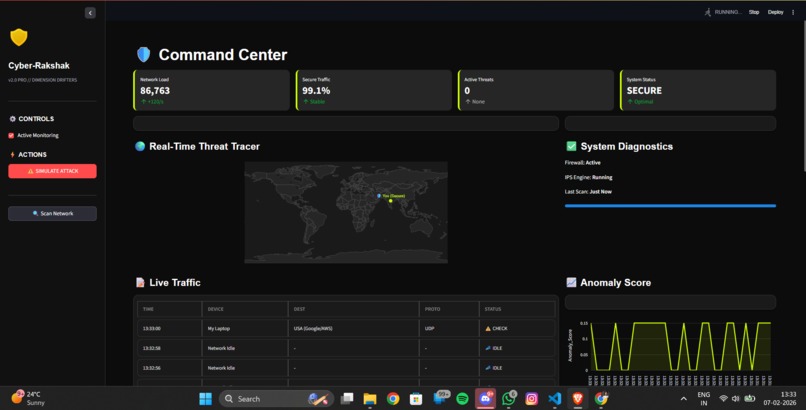
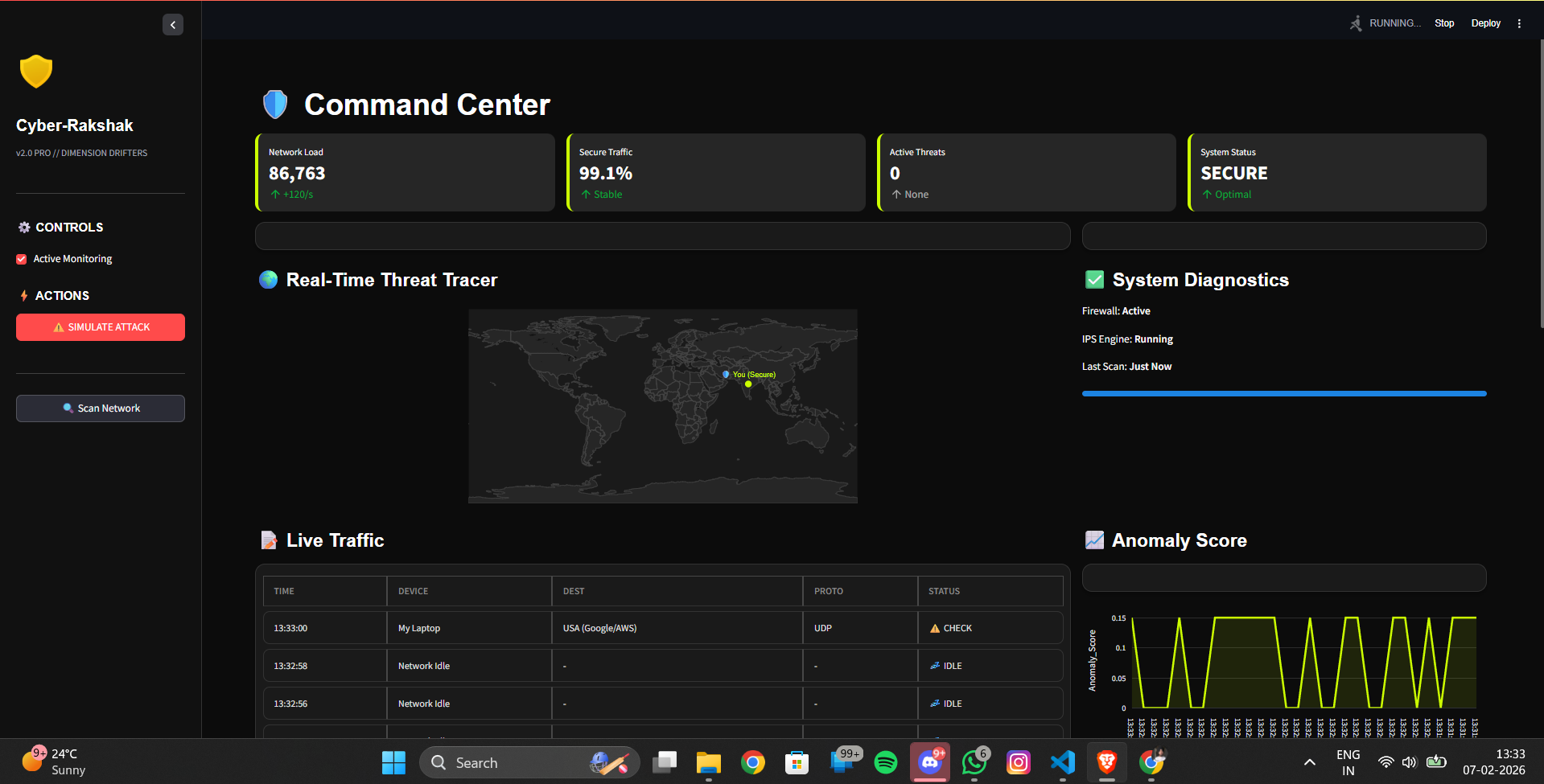
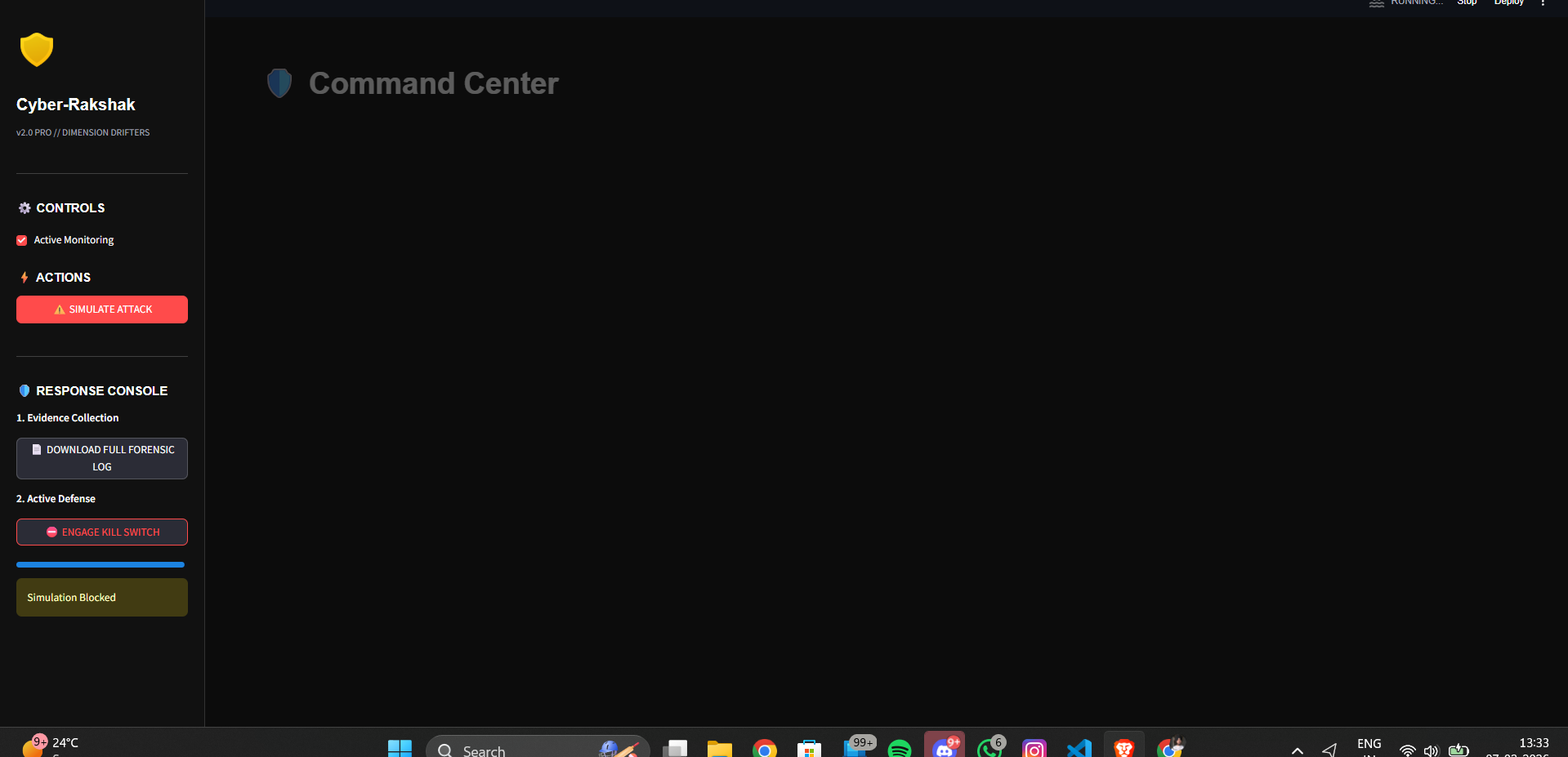
Dashboard
-
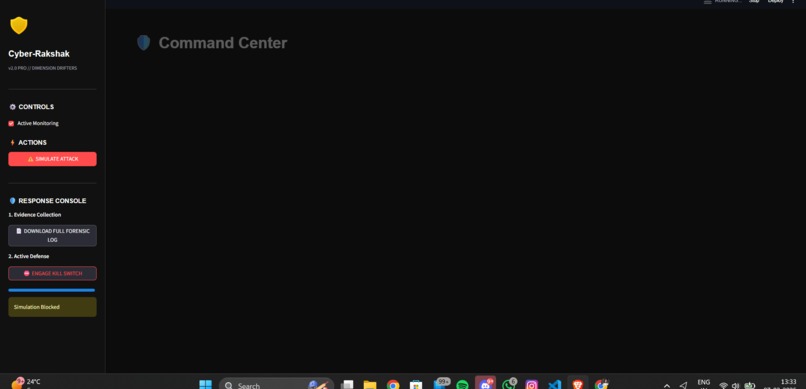
Reloads after 2 seconds again and again (just like human heartbeat)
-
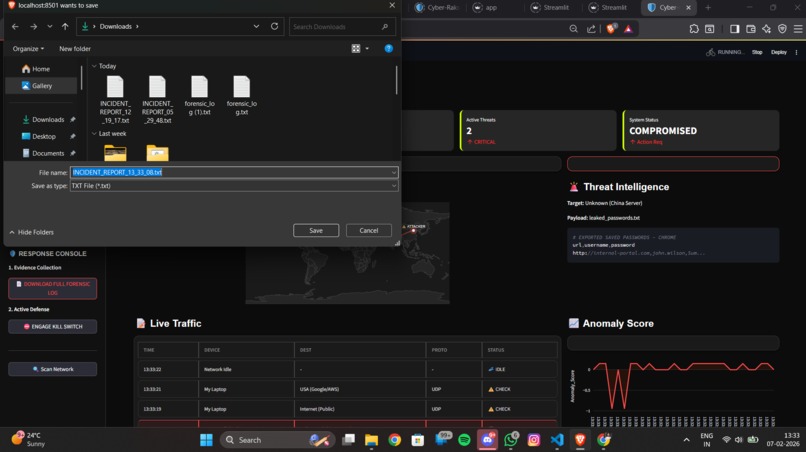
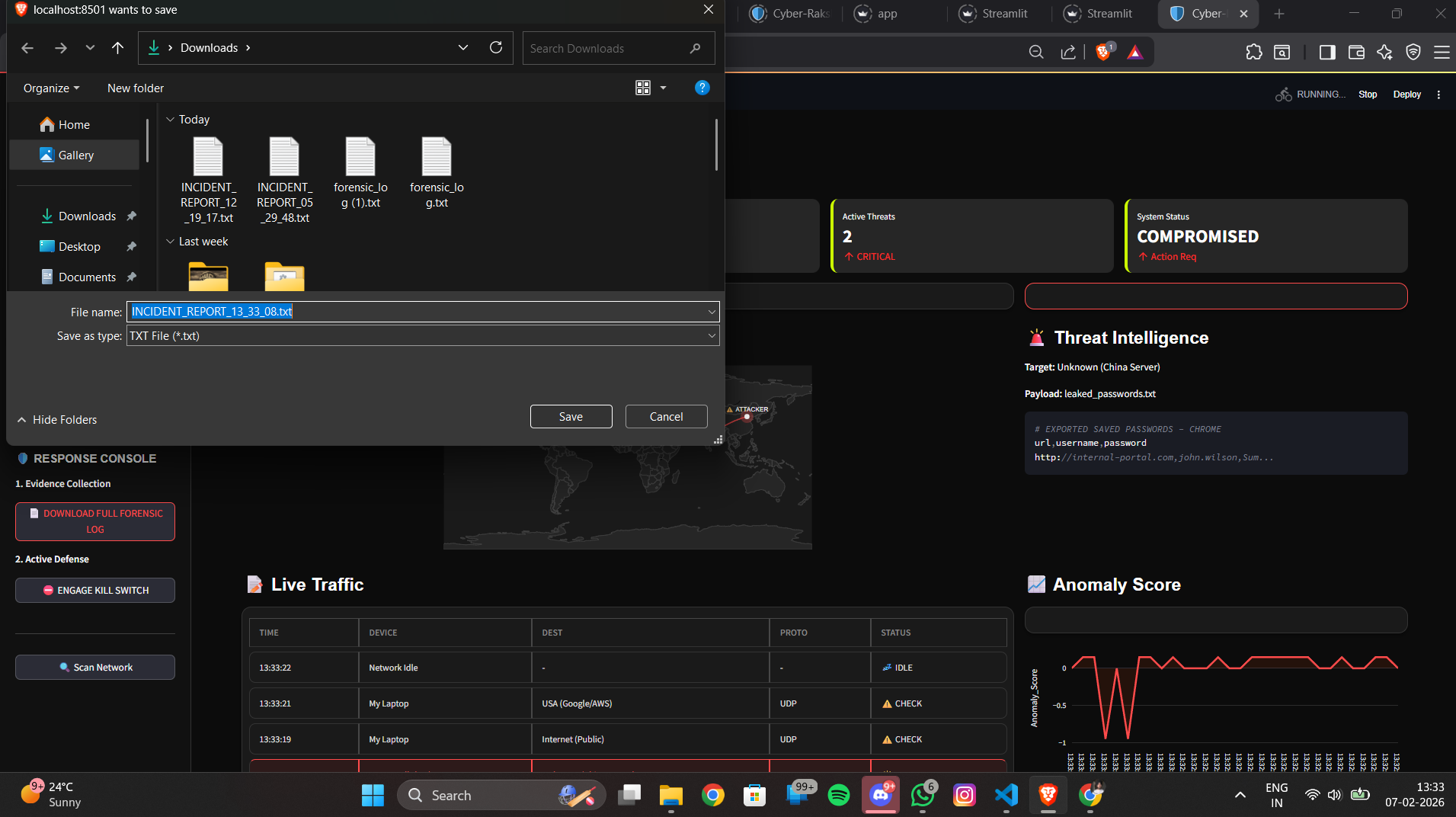
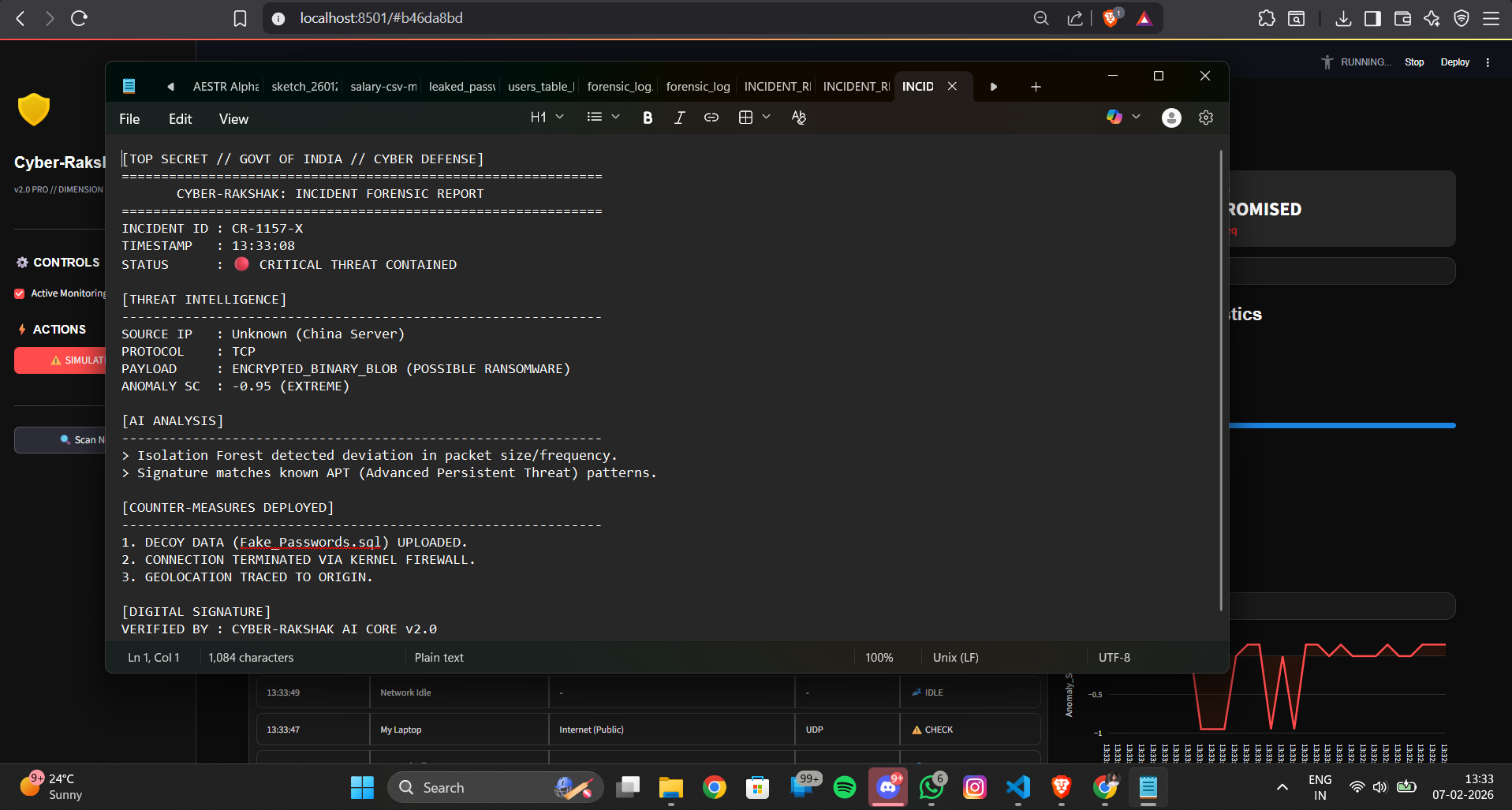
Option available for forensic data report for future lawcase and legal use ( gives information about hacker location and time)
-
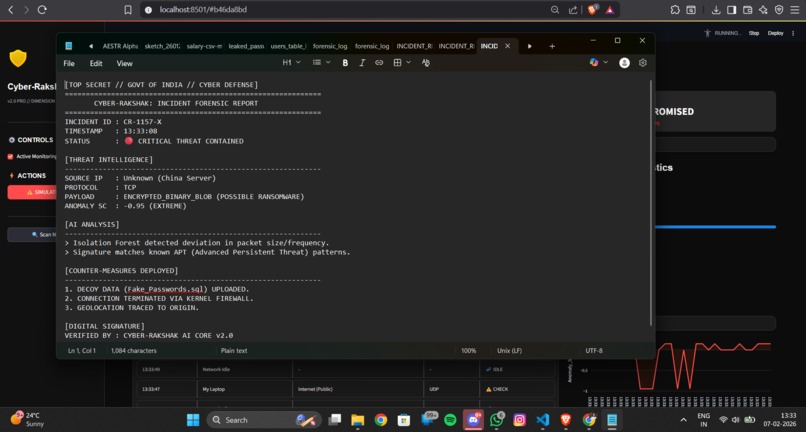
Data report demo (its just for demo cause doing cyberattack is illegal so we cant show live demo)
Inspiration
In the rapidly evolving landscape of Digital India, middle-class households are adopting smart technology at an unprecedented rate. However, most affordable IoT devices—like smart bulbs, fans, and plugs—lack robust built-in security. We realized that modern hackers aren't just attacking laptops; they use these "invisible" electronics as backdoors to compromise entire family networks. We were inspired to build a solution that provides enterprise-grade security without relying on "Black Box" cloud services that risk data privacy.
What it does
Cyber-Rakshak is a sovereign, AI-powered router-level shield. Comparing to traditional antivirus (which are totally different) that sits on a single PC, Cyber-Rakshak acts as a digital "Guard Dog" at the network gateway. It monitors every connected device simultaneously, detects behavioral anomalies in real-time, and triggers a kernel-level kill switch to isolate threats before data is stolen.
How we built it
We focused on an Edge-First Architecture to ensure 100% privacy and offline reliability:
- The Brain (AI Layer): We implemented the Isolation Forest algorithm for unsupervised anomaly detection. We chose this because it is mathematically lightweight, with a computational complexity of This allows the AI to run efficiently on low-power router CPUs.
- The Ingest (Networking): Using Scapy and Socket programming, we built a local packet sniffer that analyzes metadata (size, port, protocol) without ever touching private user data.
- The Enforcement (Kernel-Level): We integrated the backend with the OS Kernel to manipulate local firewall rules (Windows
netsh/ Linuxiptables), enabling a sub-millisecond Kill Switch. - The Interface: A reactive Streamlit dashboard provides real-time visualizations and X-AI (Explainable AI) reasoning so users understand exactly why a device was flagged.
Challenges we ran into
- Hardware Constraints: Moving a complex AI model from the cloud to the "Edge" required significant optimization to ensure it could run on low-power hardware without slowing down internet speeds.
- Kernel Integration: Safely interacting with system-level firewalls required multiple iterations to ensure we could block attackers without disrupting legitimate household traffic.
- The "Black Box" Barrier: We had to overcome the challenge of making a security tool that is 100% offline-ready while still maintaining high detection accuracy.
Accomplishments that we're proud of
- Successfully demonstrated a 100% Sovereign security system where data never leaves the home router.
- Achieved Zero-Cloud Dependency, meaning the defense stays alive even if the hacker cuts the internet connection "which is also our usp comparing to giants"
- Developed a "Glass Box" AI that provides human-readable reasoning for its security decisions.
What we learned
- Privacy is Priority: We learned that for true security in the modern world, the "brain" must stay where the data is ? at the Edge.
- Simplicity Wins: Building a tool for non-technical households taught us how to bridge the gap between complex data science and user-friendly "Plug-and-Play" interfaces.
What's next for Cyber-Rakshak
- ISP-Level Deployment: Partnering with Tier-1 providers like JioFiber or Airtel to embed Cyber-Rakshak directly into router firmware.
- Continuous Learning: Transitioning from a static model to an adaptive feedback loop that learns the unique "Pattern of Life" of every home. Which will lead itself to auto update with time and experience.
- Smart-City Integration: Scaling the technology to protect public infrastructure and government offices.
Built With
- ai
- isolationforest
- machine-learning
- os
- os(kernal/netsh)
- pandas
- plotly
- python
- scapy
- scikit-learn
- sklearn
- socket.io
- streamlit


Log in or sign up for Devpost to join the conversation.