-
-
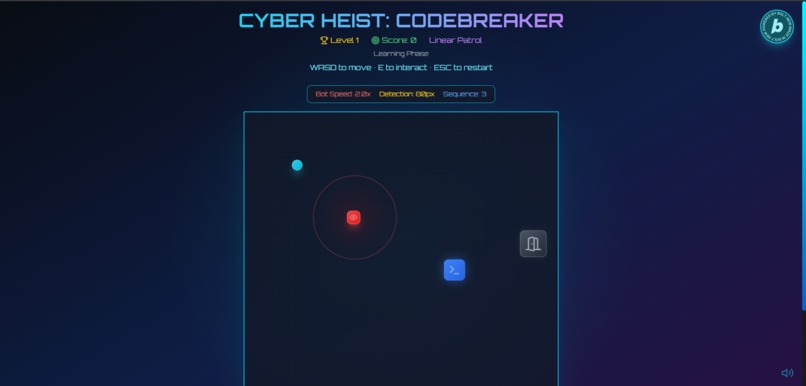
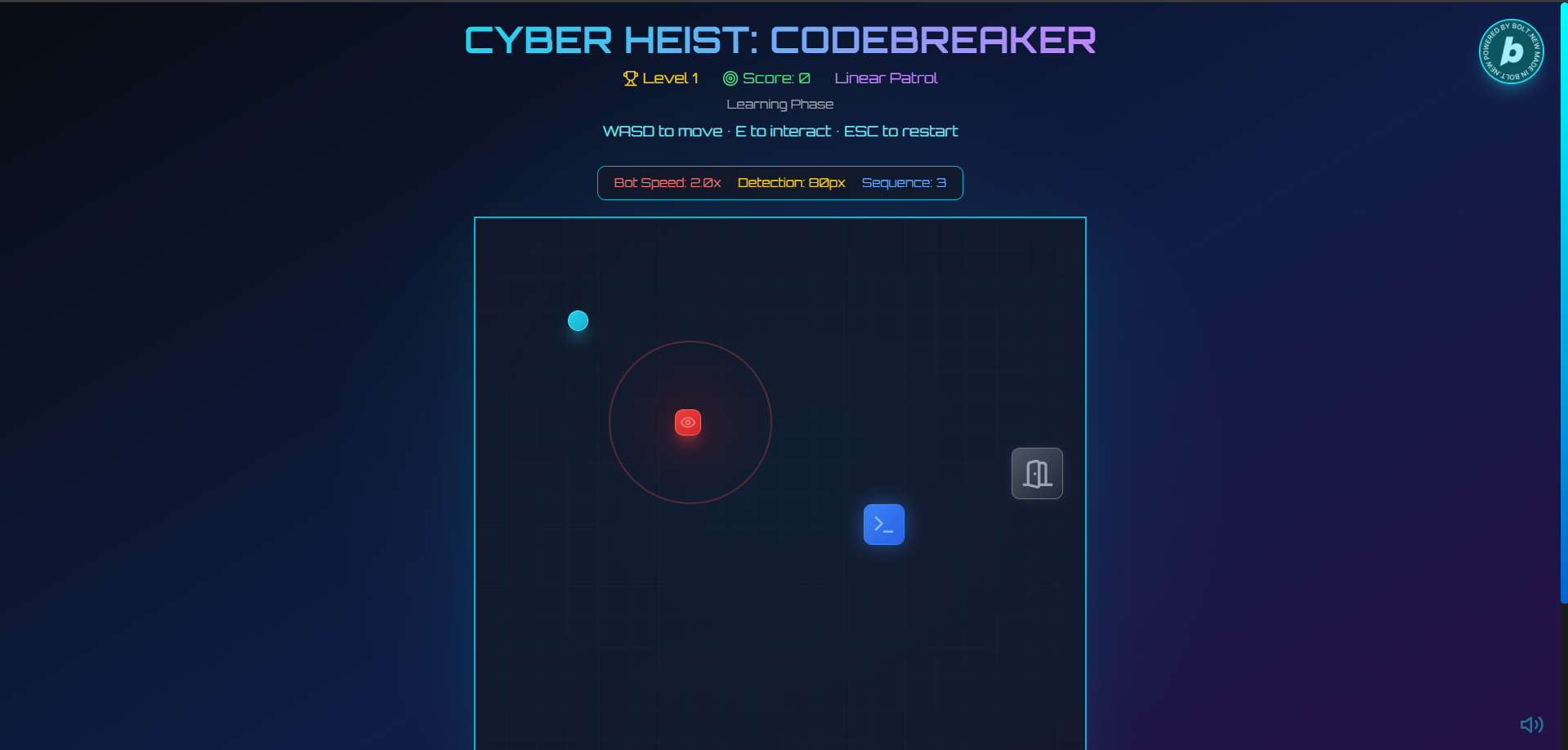
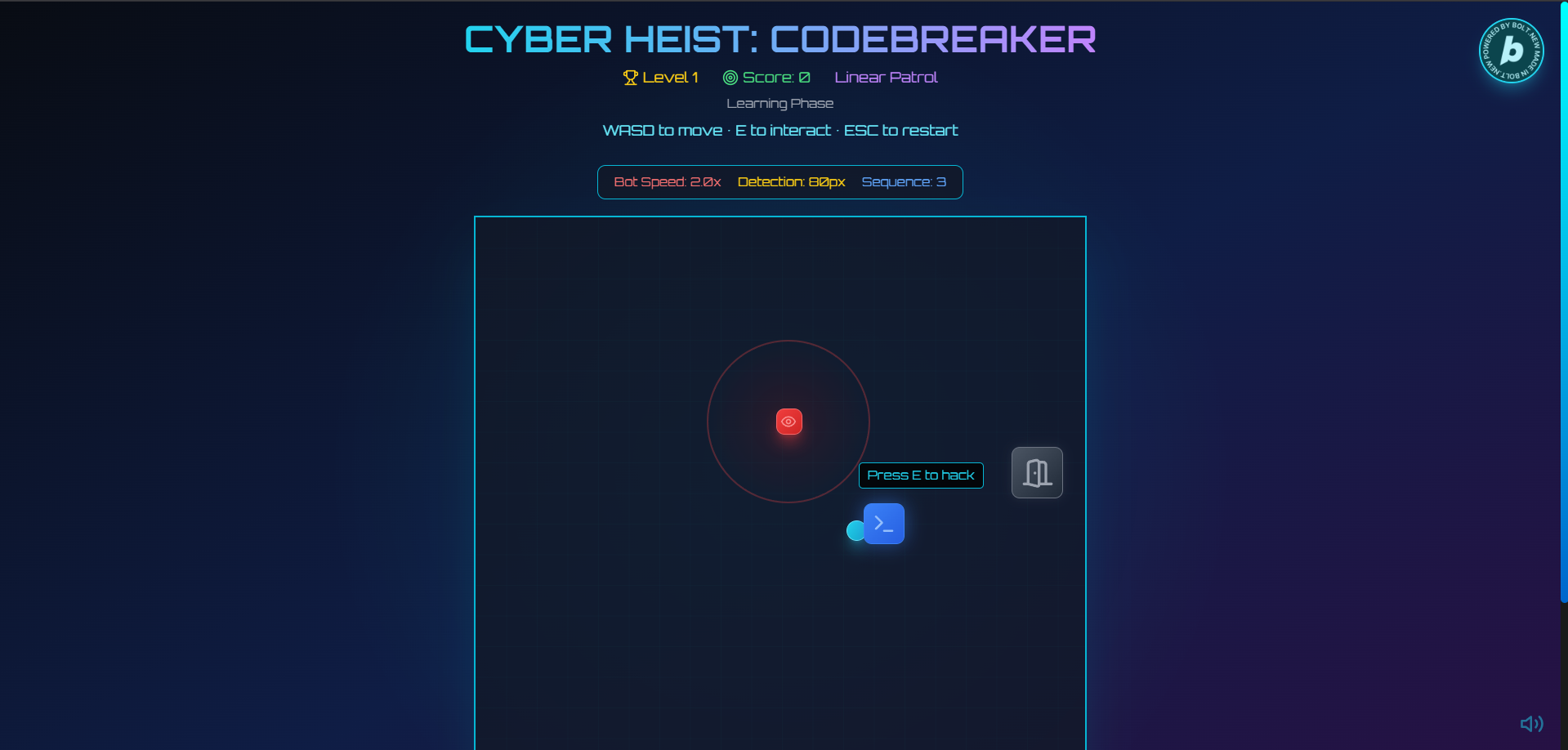
Home Page
-
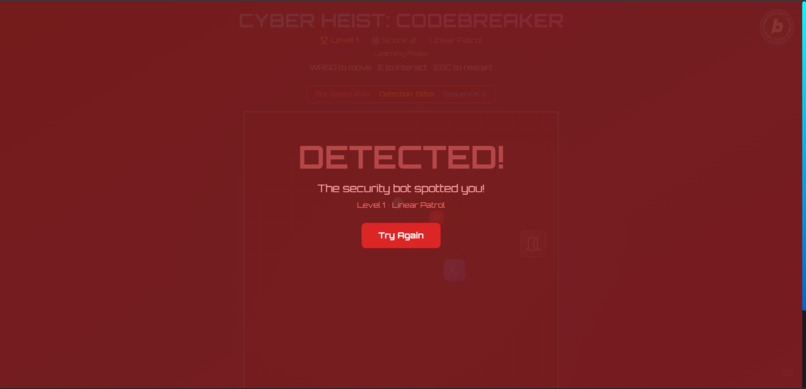
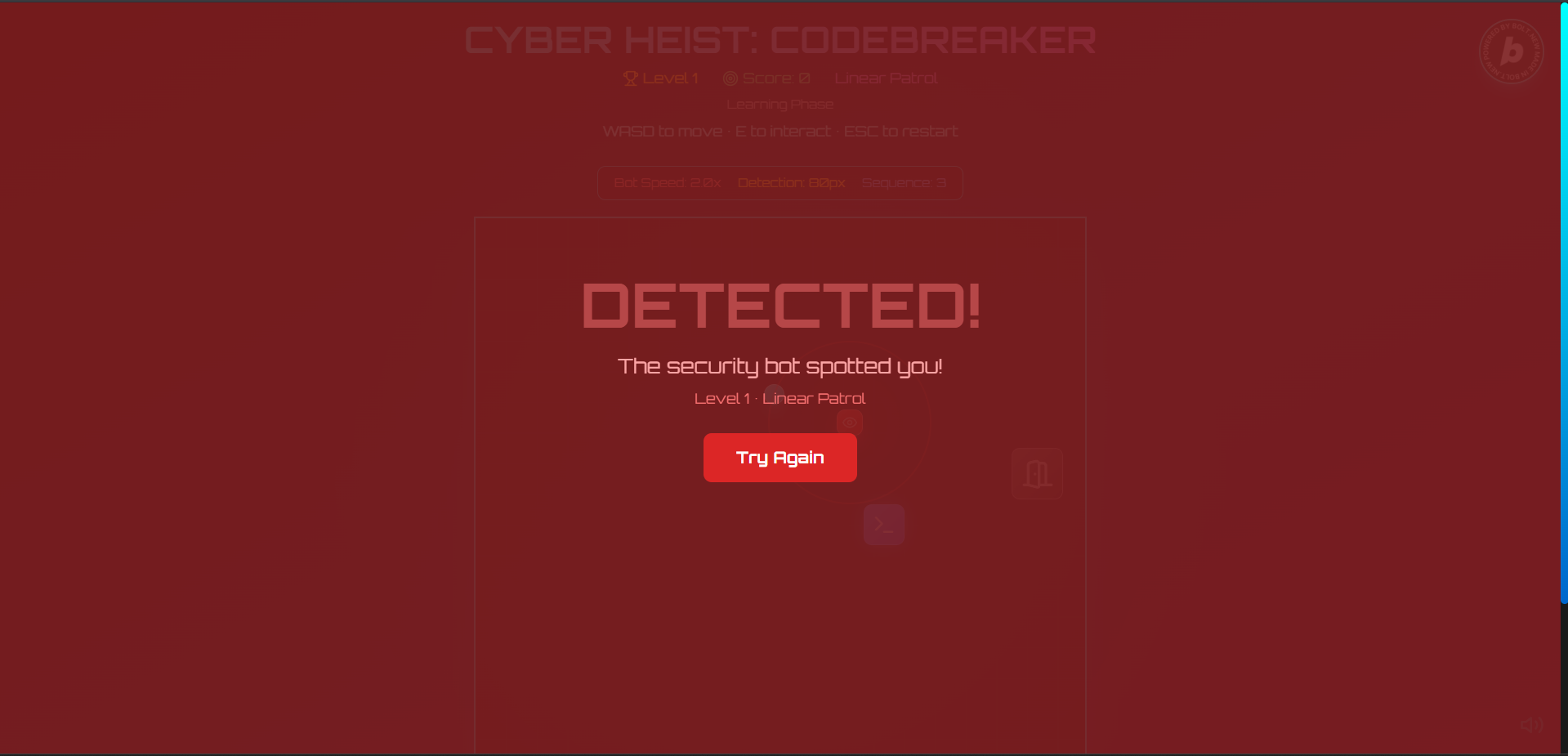
Oops Security Bot caught player
-
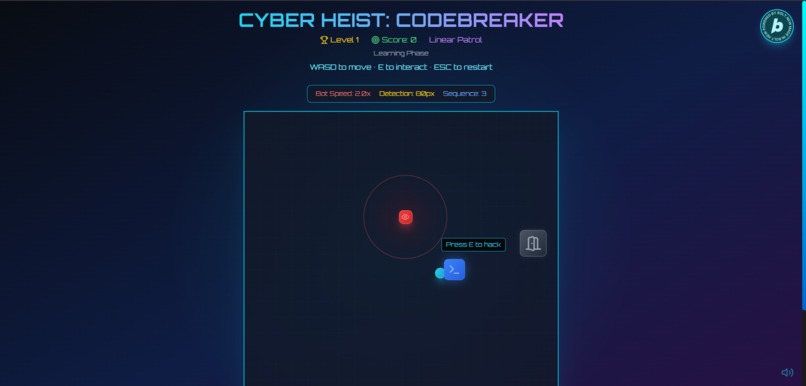
Player reaches Console (Press E)
-
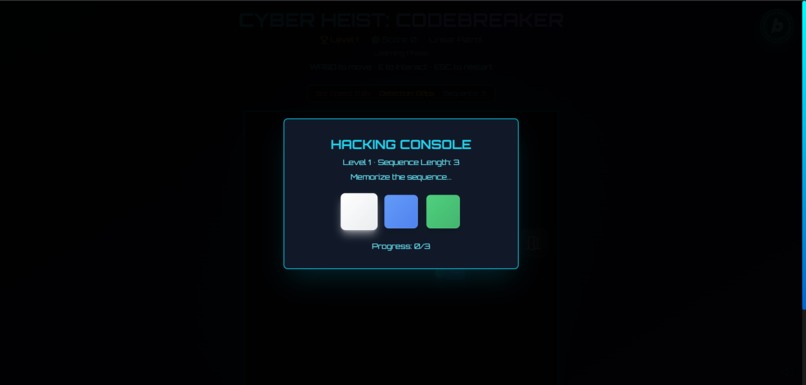
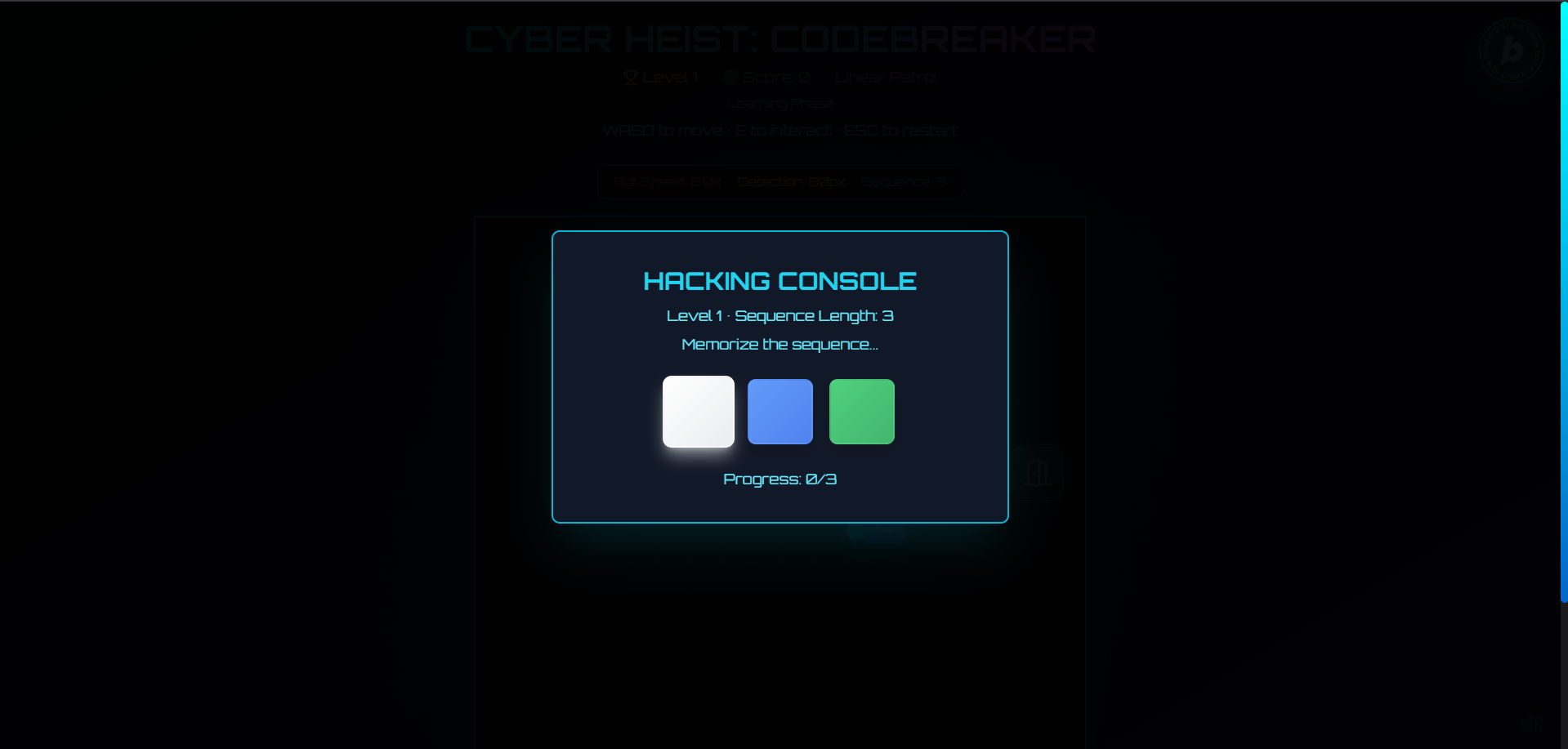
Hack the Console
-
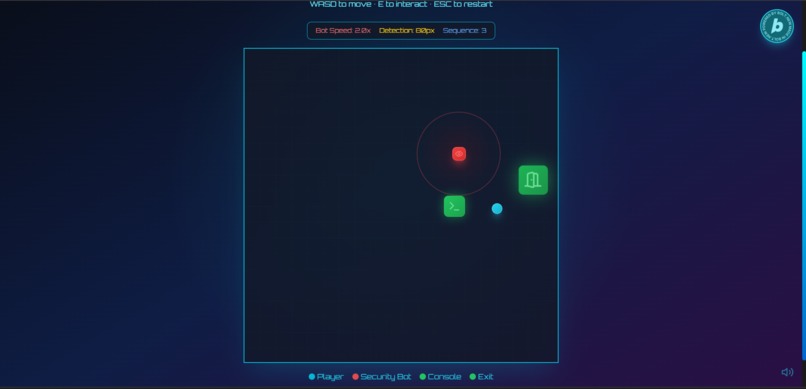
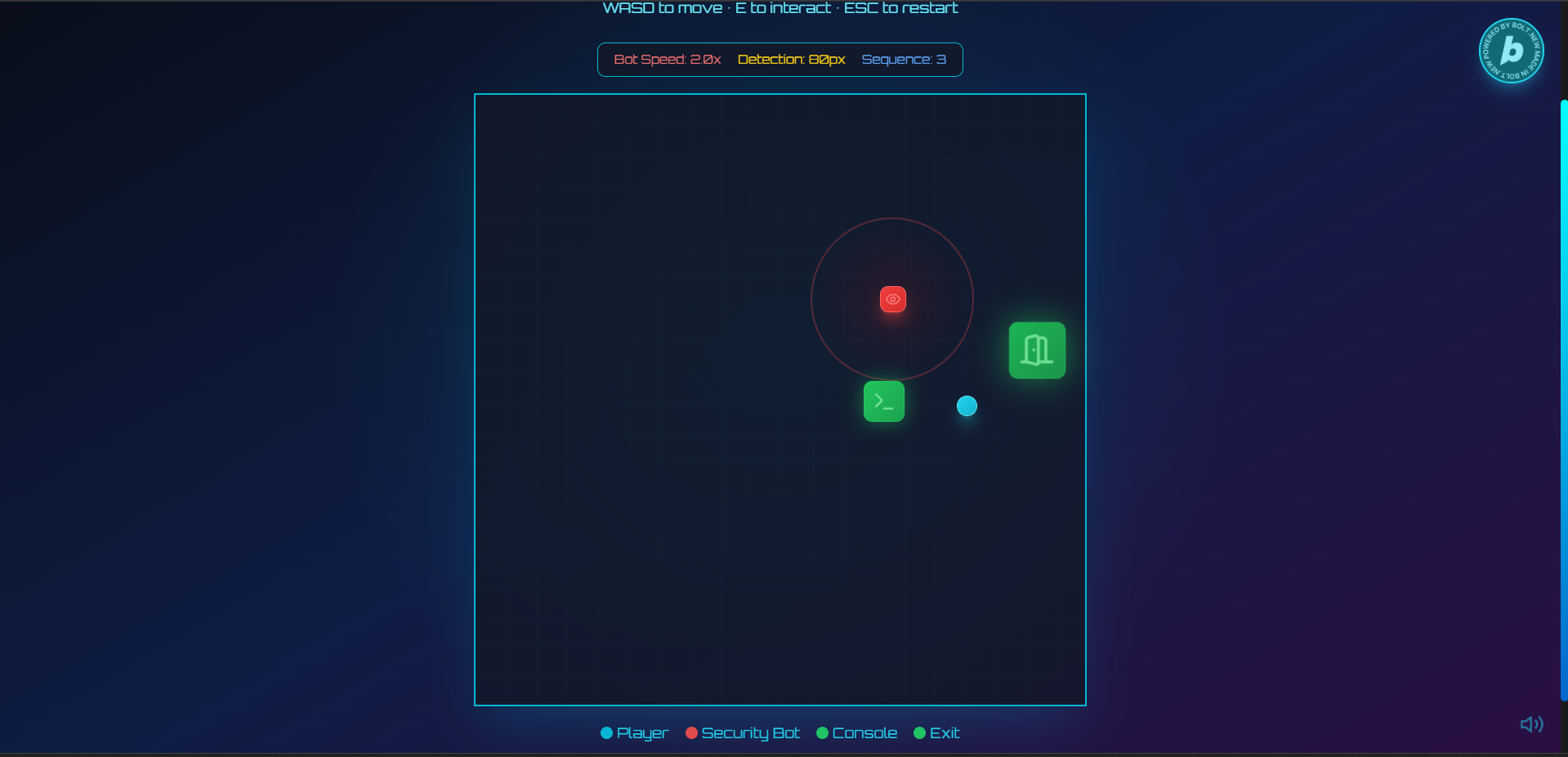
Door lock opens as if player hacks the console
-
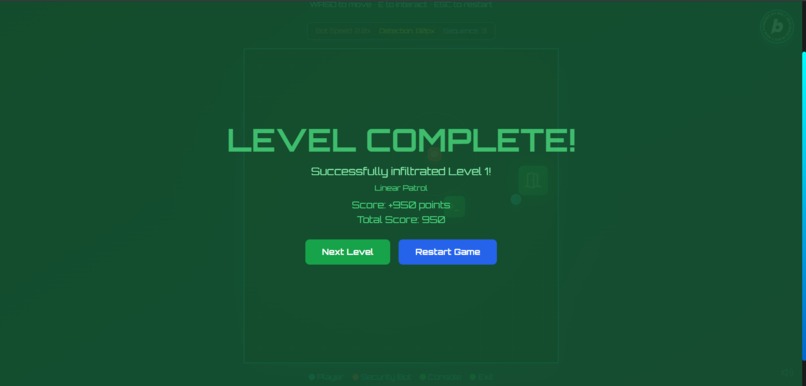
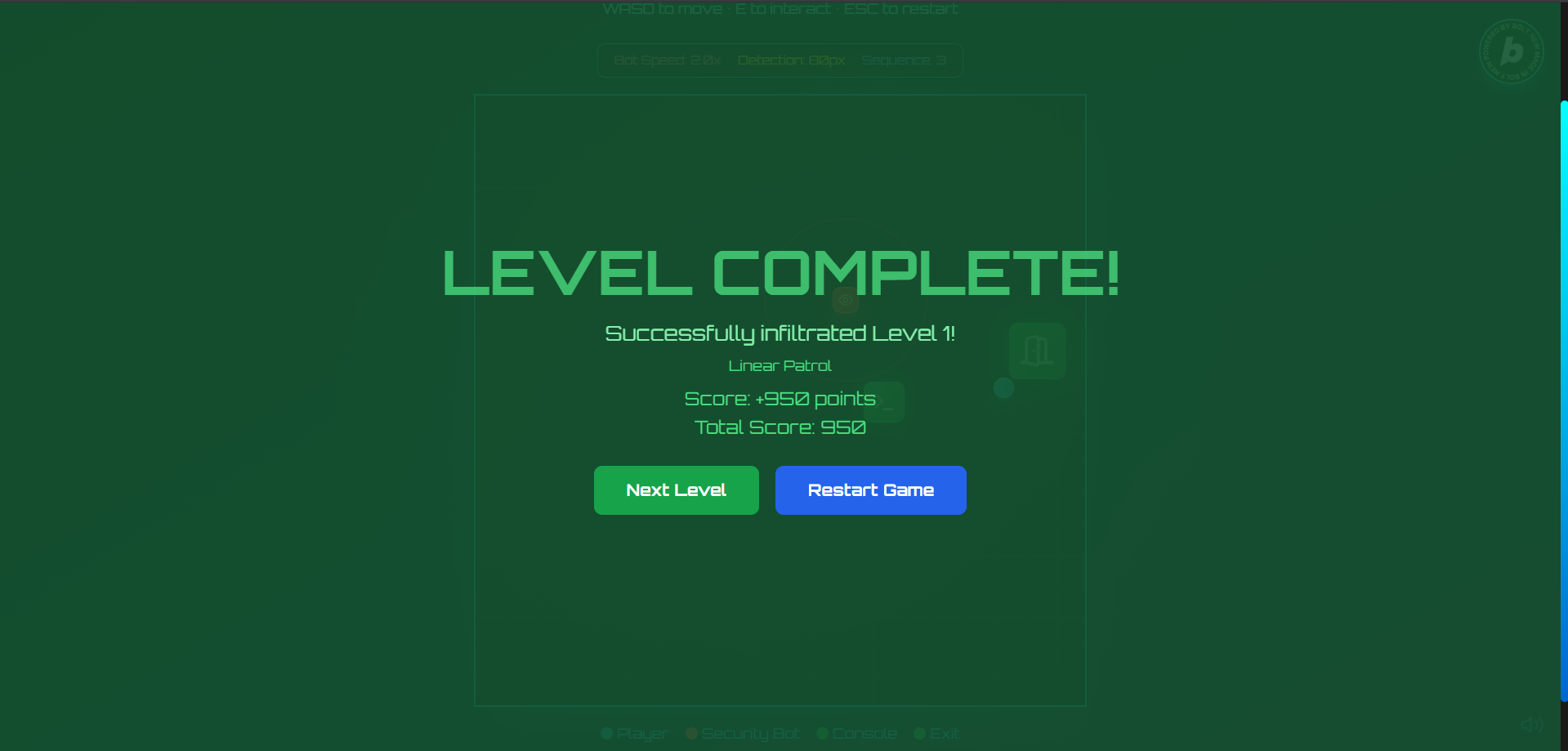
Level complete move to next level with more difficulty
Inspiration
We wanted to create a game that’s more than just fun — something that tests memory, reflexes, and strategic movement. Inspired by stealth-based mechanics in games like Metal Gear Solid and hacking minigames from Watch Dogs, we envisioned Cyber Heist: Codebreaker as a pulse-pounding blend of sneaking past AI, hacking complex systems, and escaping under pressure.
The challenge? Build all this with just frontend tools — no game engine. The result? A fast-paced, stylish stealth-puzzle experience inside a 2D cyberpunk grid.
What it does
Cyber Heist: Codebreaker is a stealth-hacking puzzle game. You play as a cyber operative infiltrating AI-secured zones. Here’s what you do:
- Navigate through a grid-based room using keyboard controls (
WASD). - Avoid detection from patrolling Security Bots with evolving movement patterns.
- Interact with hacking consoles (
Ekey) to complete memory-based sequences. - Unlock exit doors and escape each level while bots are hot on your trail.
- With each level, the game becomes smarter, faster, and harder — adding more tension and fun.
Game states include: playing, hacking, detected, and complete.
How we built it
We built this game using only frontend tools — no game engine. Here’s the stack and approach:
- React + TypeScript: For managing game state, movement, and logic.
- Tailwind CSS: To style components, animations, visual effects, and overlays.
- Lucide Icons: For adding crisp, lightweight SVG-based visual indicators.
- Custom Game Loop: Built using
setInterval,useEffect, and refs to control player/enemy behavior. - Pattern Engine: Enemy movement patterns (e.g., diagonal, circular, random, speed-blitz) change dynamically with levels.
- Hacking Minigame: A Simon Says-style memory sequence that grows in difficulty.
The game was built and tested using Bolt.new and deployed via Netlify.
Challenges we ran into
- Designing enemy movement logic that feels challenging but fair at different speeds and directions.
- Balancing the hacking minigame to start easy but scale difficulty without being overwhelming.
- Managing game state transitions (e.g., from hacking to playing, or detected to restart) smoothly without bugs.
- Creating visually distinct difficulty indicators for regular vs. "SPEED MODE" phases.
- Handling user inputs across states (e.g., movement blocked during hacking or sequence playback).
Accomplishments that we're proud of
- Built a feature-rich stealth-puzzle game using only React and frontend libraries — no game engine.
- Developed a flexible AI pattern engine for enemies with circular, random, and speed-enhanced paths.
- Created a visually polished cyberpunk aesthetic using Tailwind animations and overlays.
- Seamlessly handled four separate game states with smooth transitions.
- Added a level system that dynamically increases difficulty, introducing new behavior every few rounds.
What we learned
- How to simulate real-time gameplay and enemy AI using frontend technologies.
- Designing finite-state machines using React’s
useStateanduseEffect. - Creating engaging visual feedback loops using Tailwind effects and gradients.
- Using
useRef,setInterval, andkey listenersto implement a smooth and responsive game loop. - The power of small design details — like detection zone pulses and animated buttons — in making gameplay intuitive.
What's next for Cyber Heist: CodeBreaker
- 🔊 Add immersive sound effects and background music to enhance tension and immersion.
- 🚨 Introduce new enemy types: laser drones, spotlight guards, or pattern-switching bots.
- 🧩 Expand the hacking puzzles to include code-breaking, rotating wheels, or password logic.
- 📱 Make it mobile-friendly with on-screen controls and responsive scaling.
- 🌐 Add multiplayer speedrun mode — race a friend to crack levels first!
- 🧱 Build a community level editor for custom missions and shared challenges.
Built With
- lucideicons
- netlify
- react
- tailwindcss
- typescript
- vite


Log in or sign up for Devpost to join the conversation.