-
-
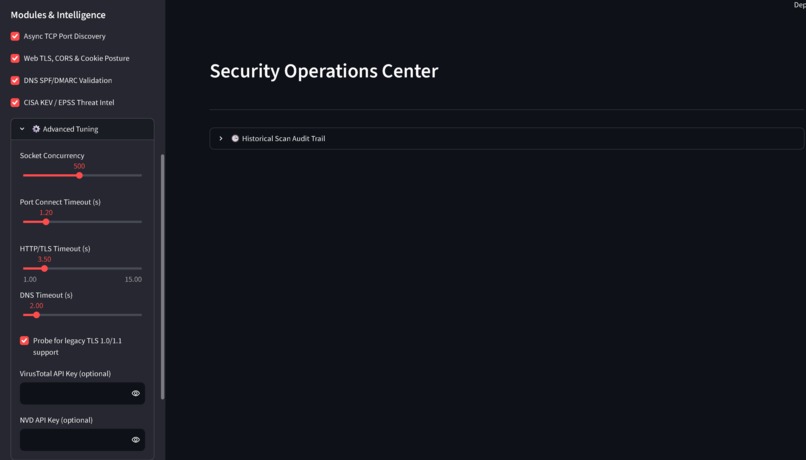
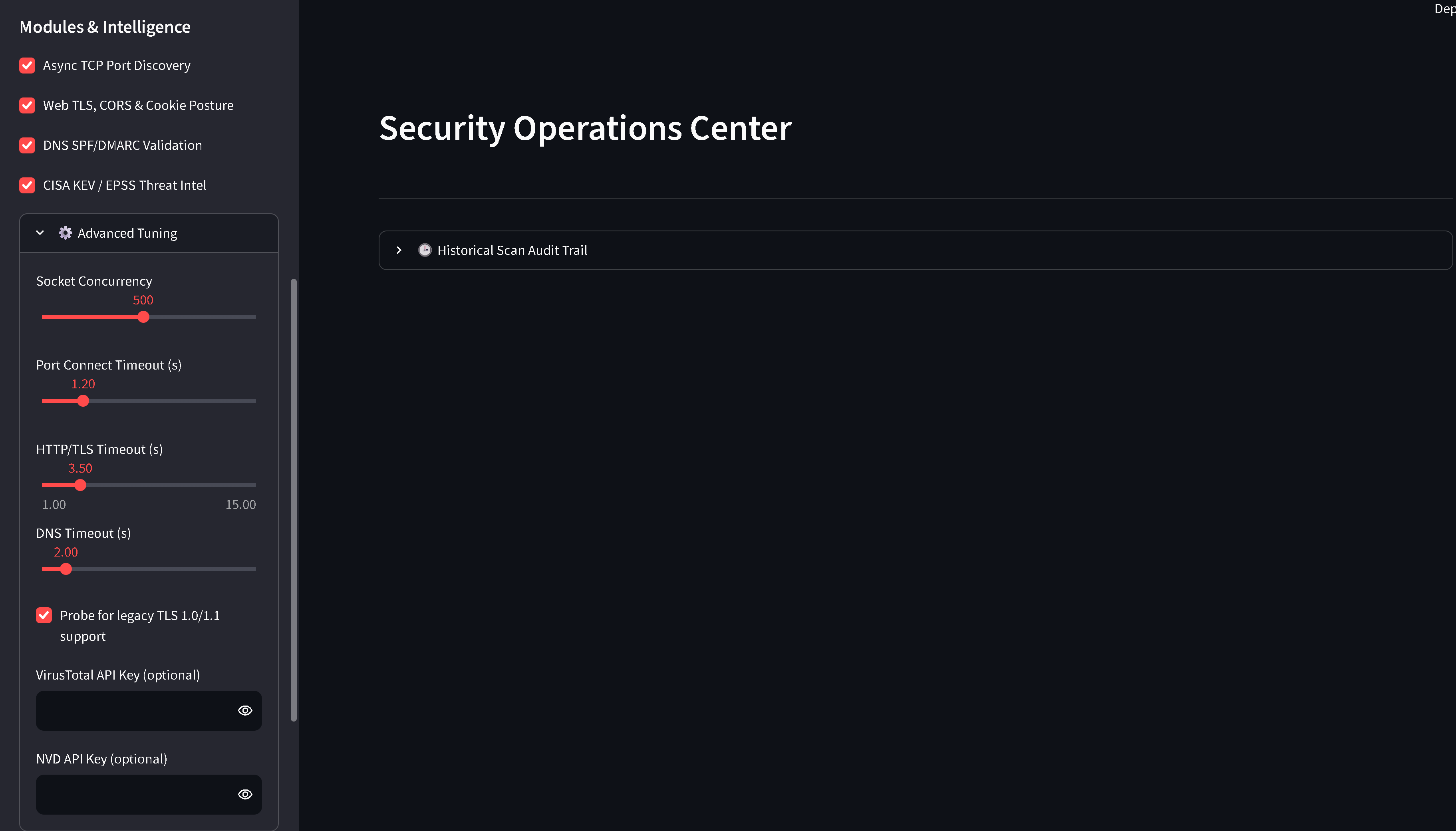
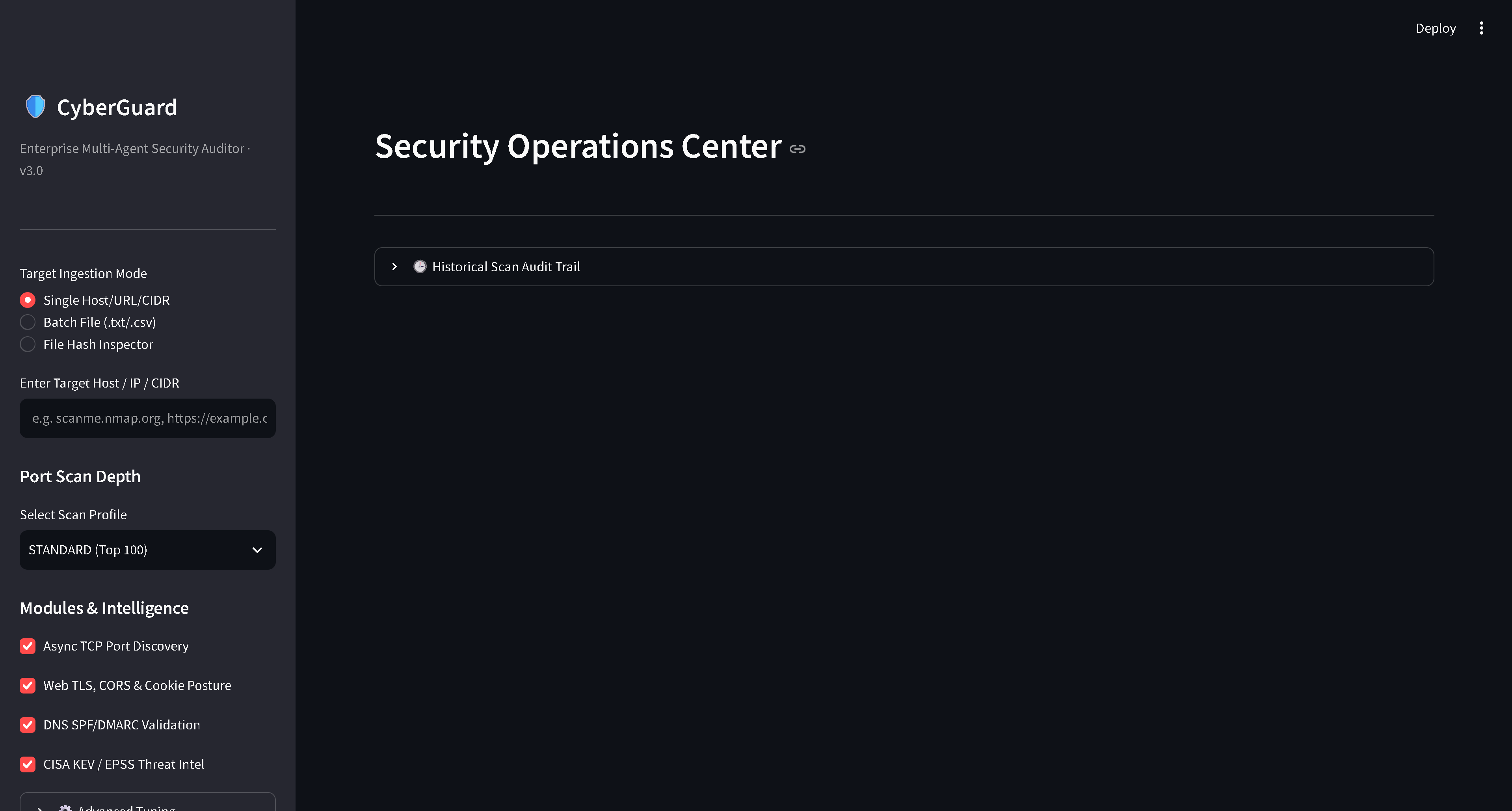
Home Tab
-
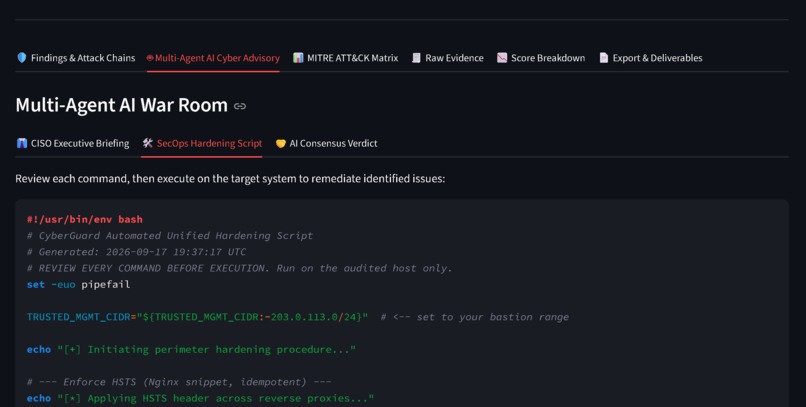
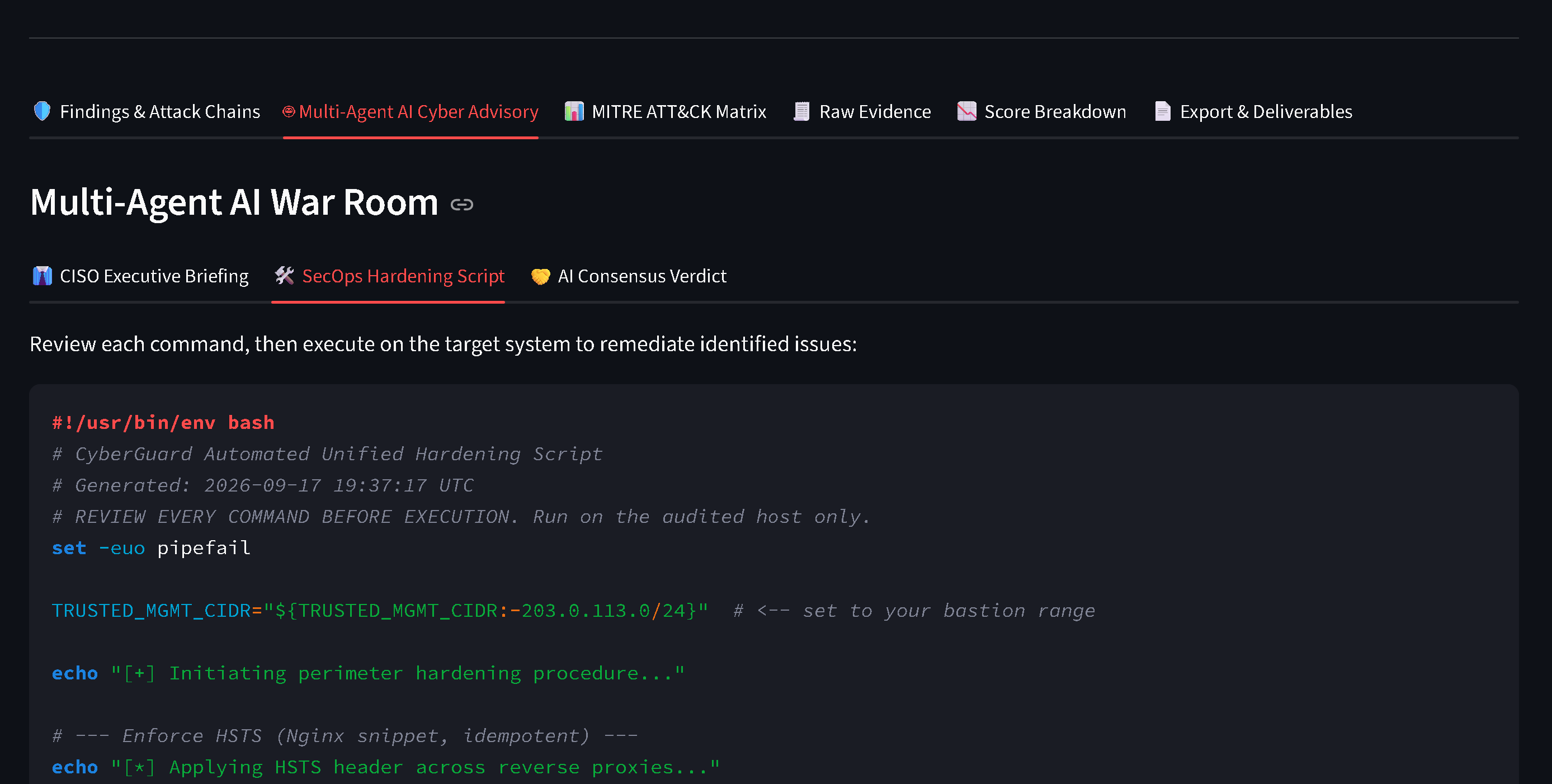
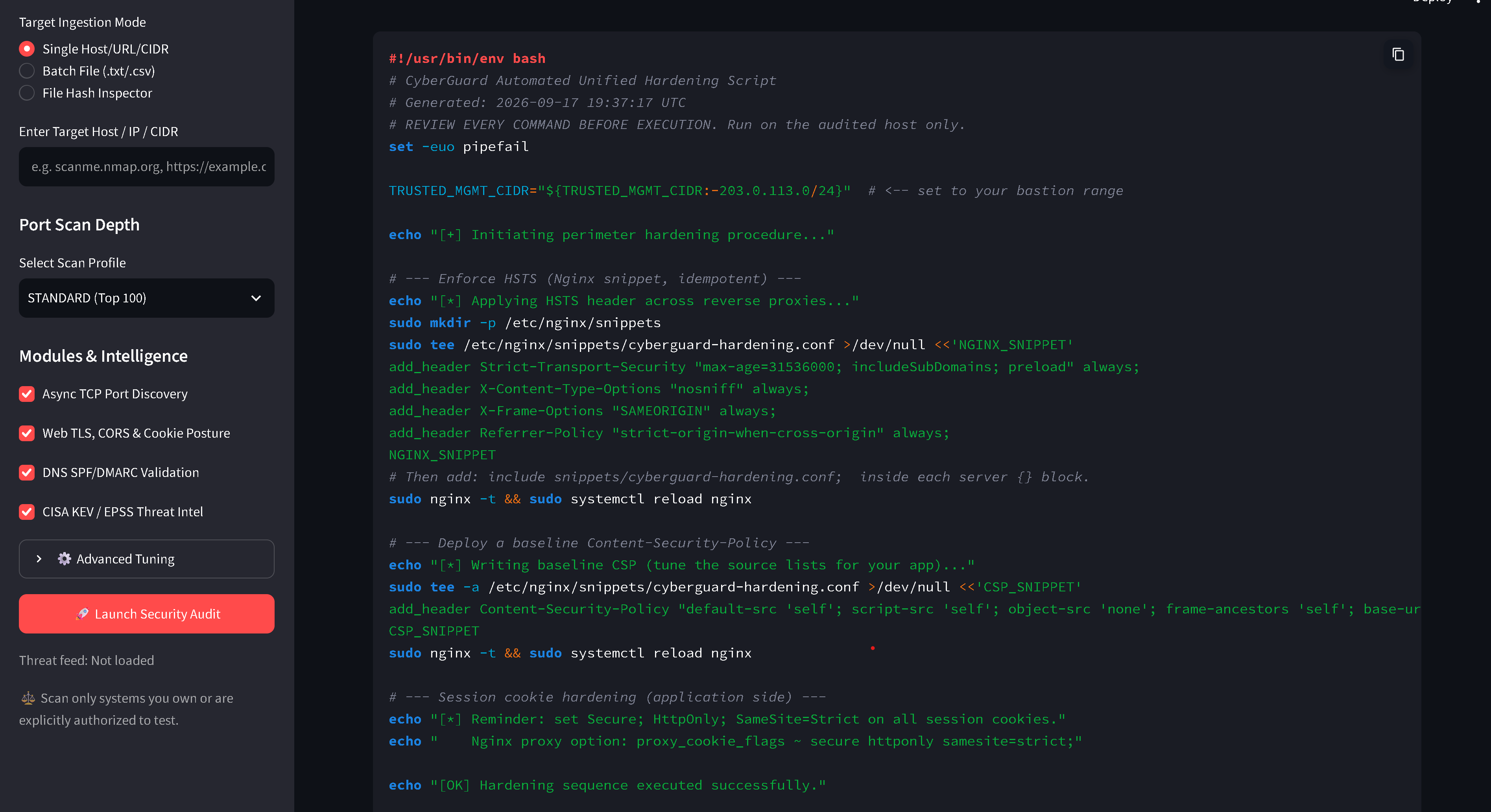
Solution(Fixing kit)
-
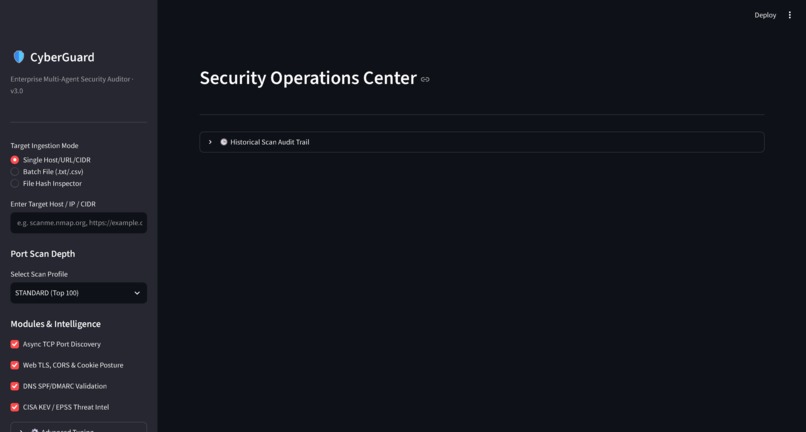
Home Tab
-
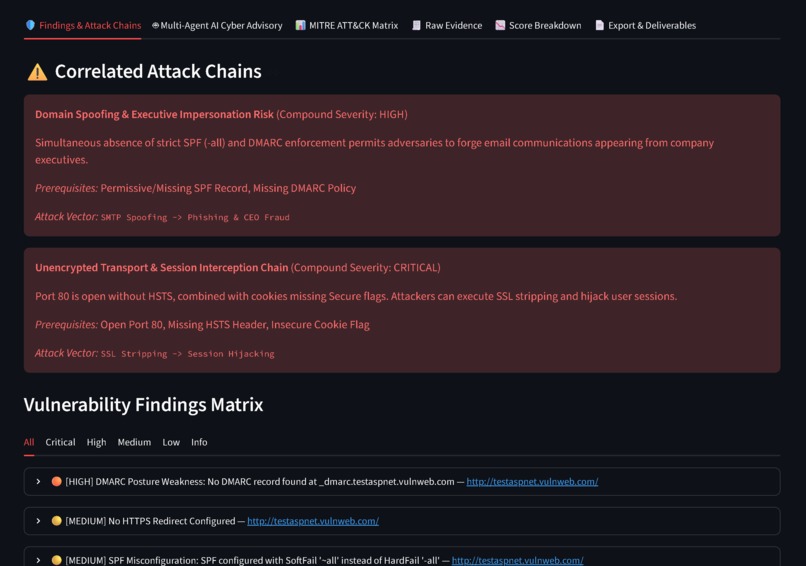
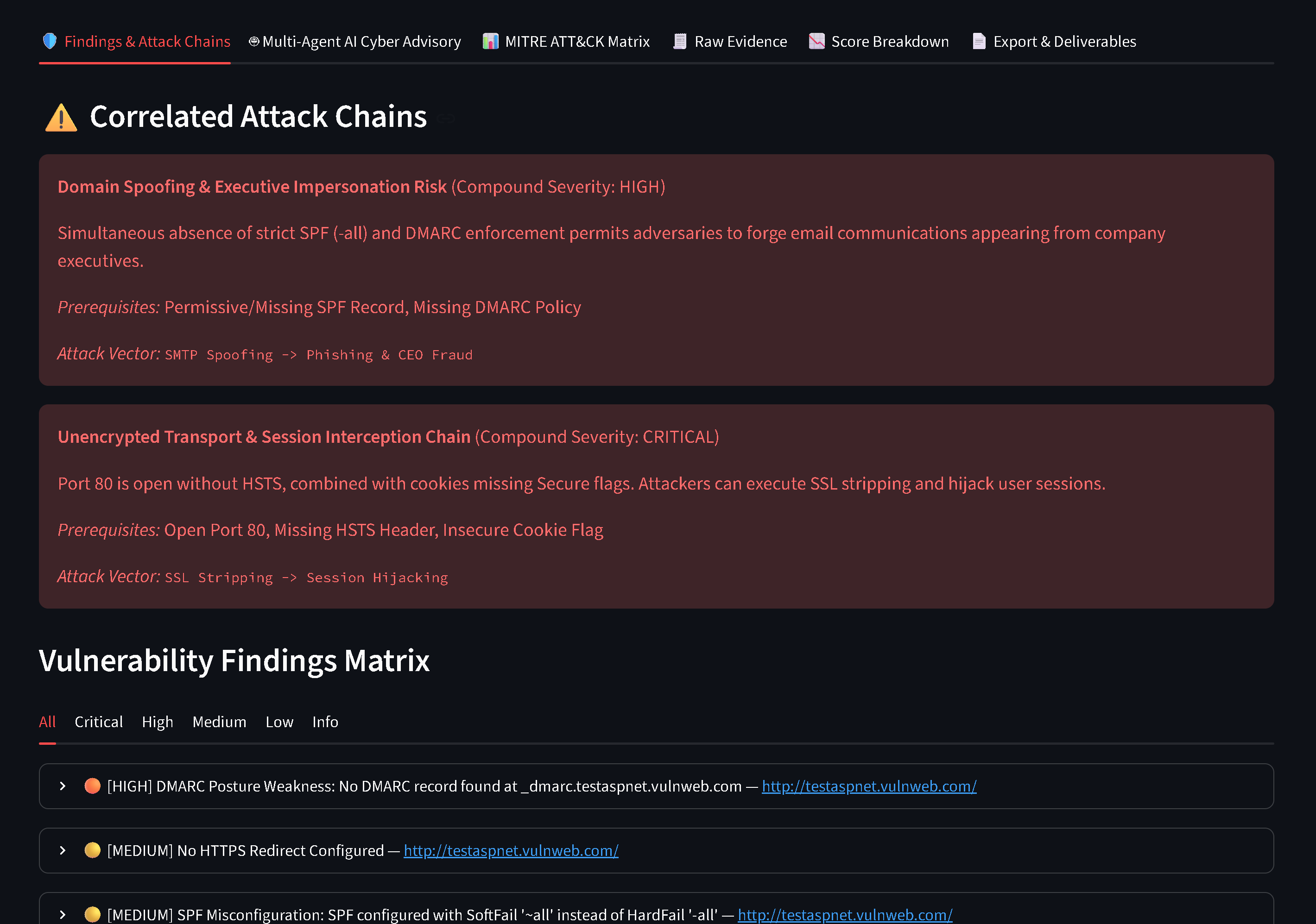
After Scan Results
-
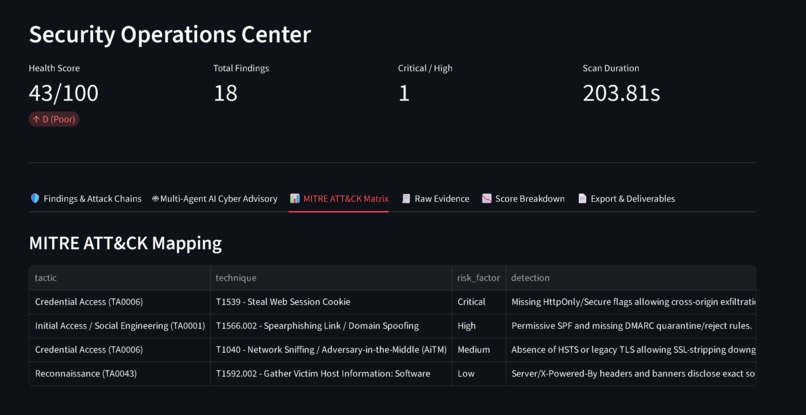
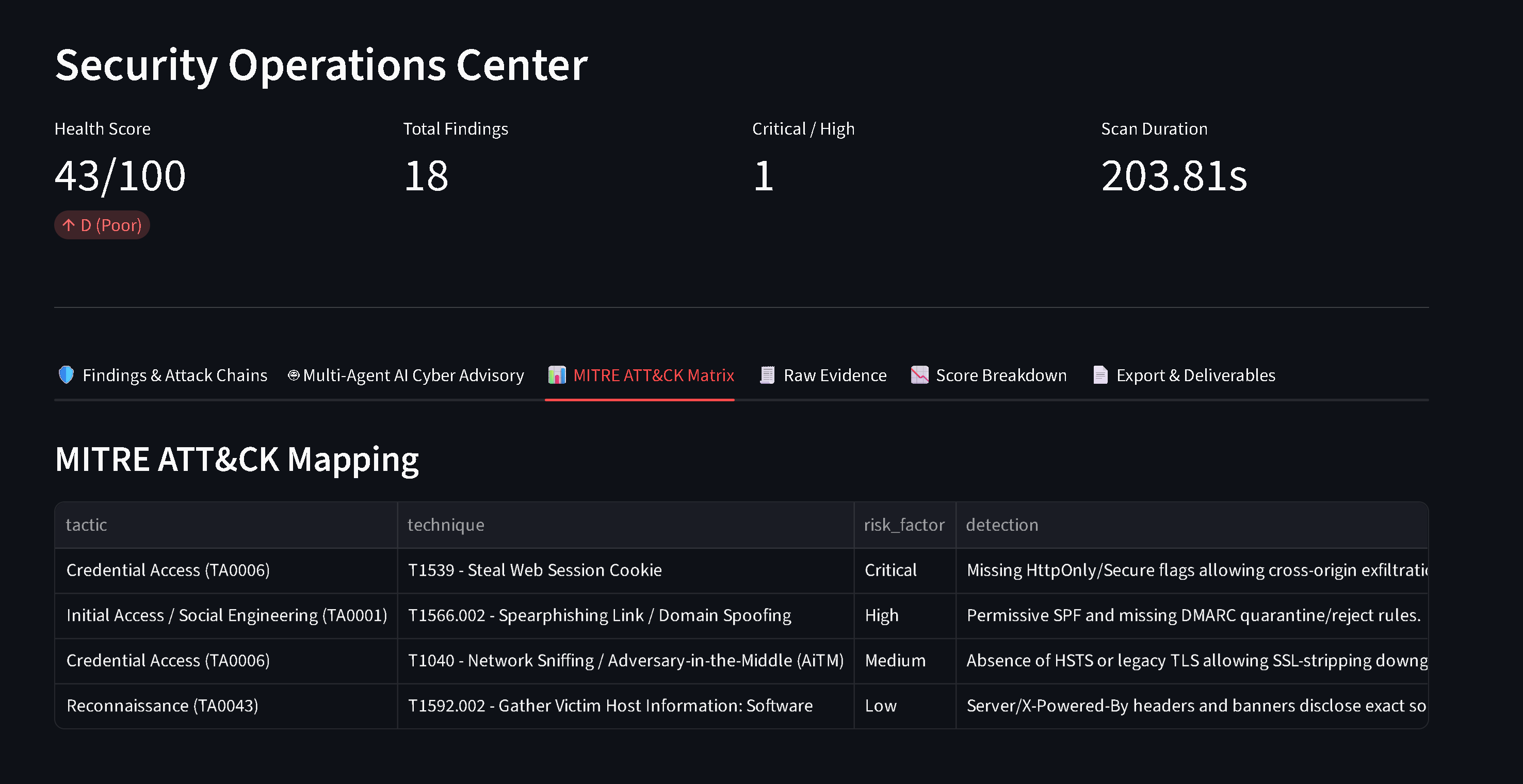
MITRE ATT&CK
-
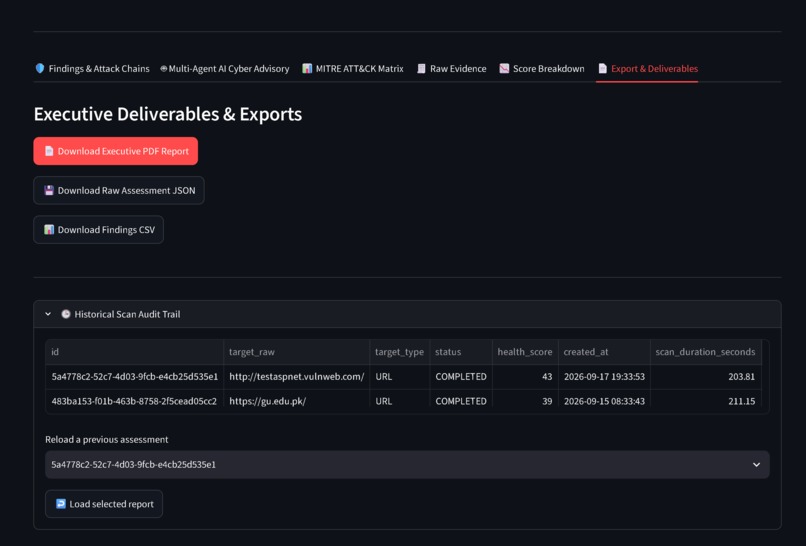
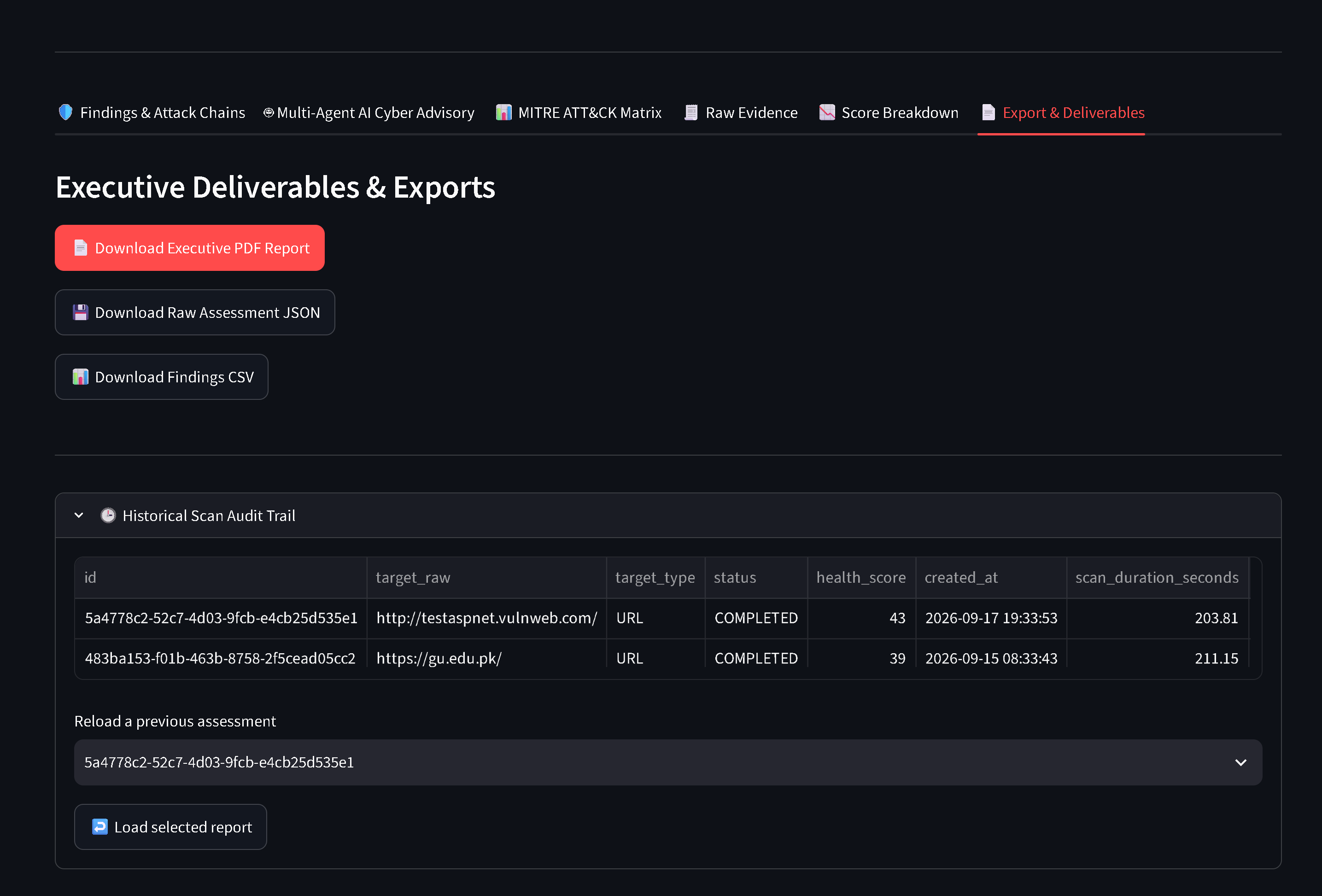
Download Report
-
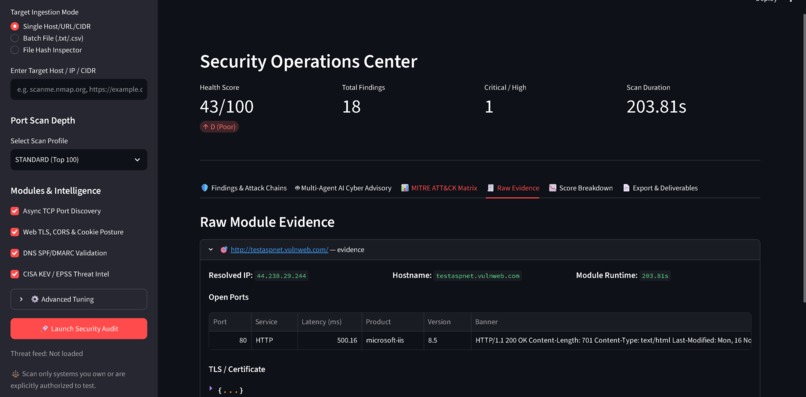
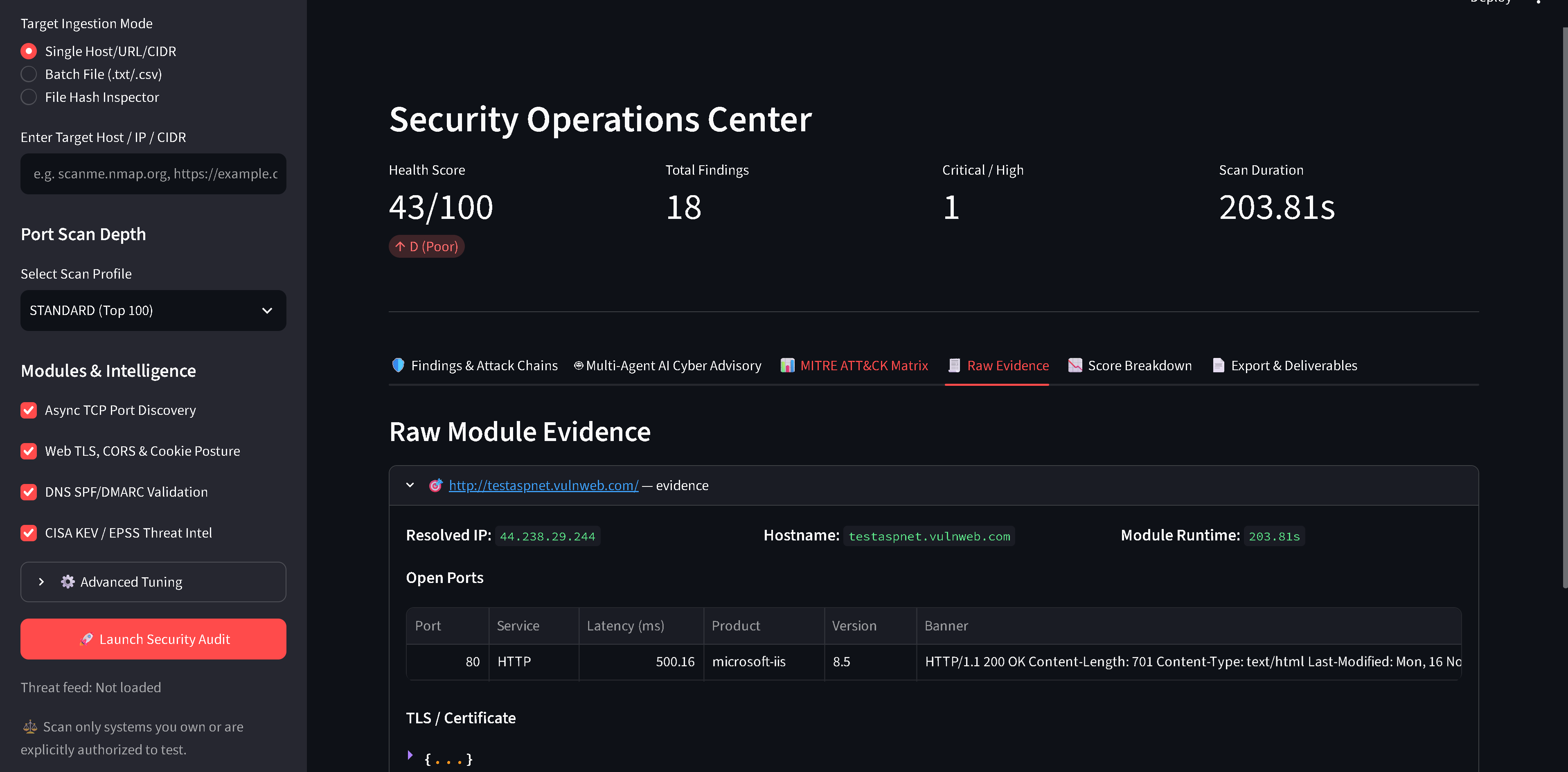
Evidence
-
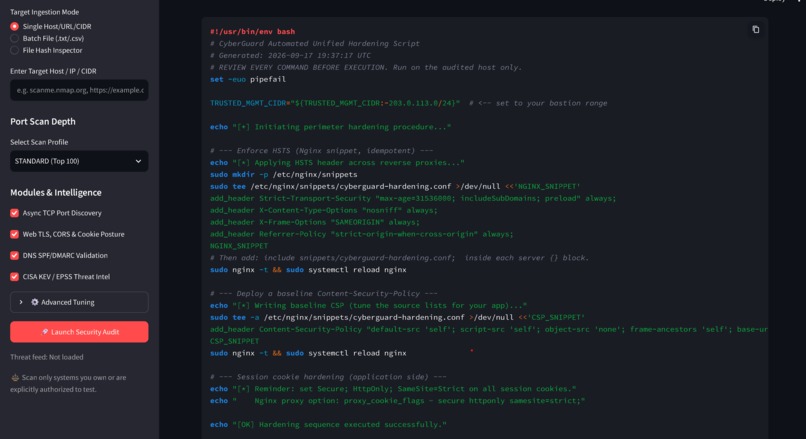
Solution
-
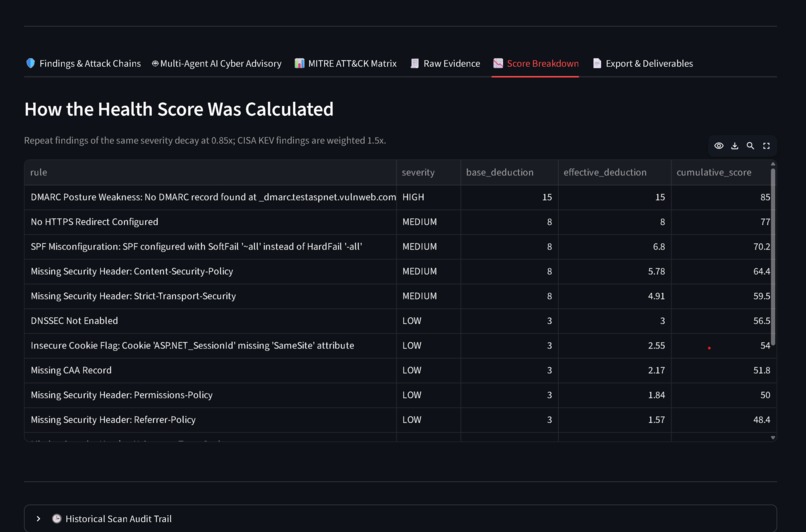
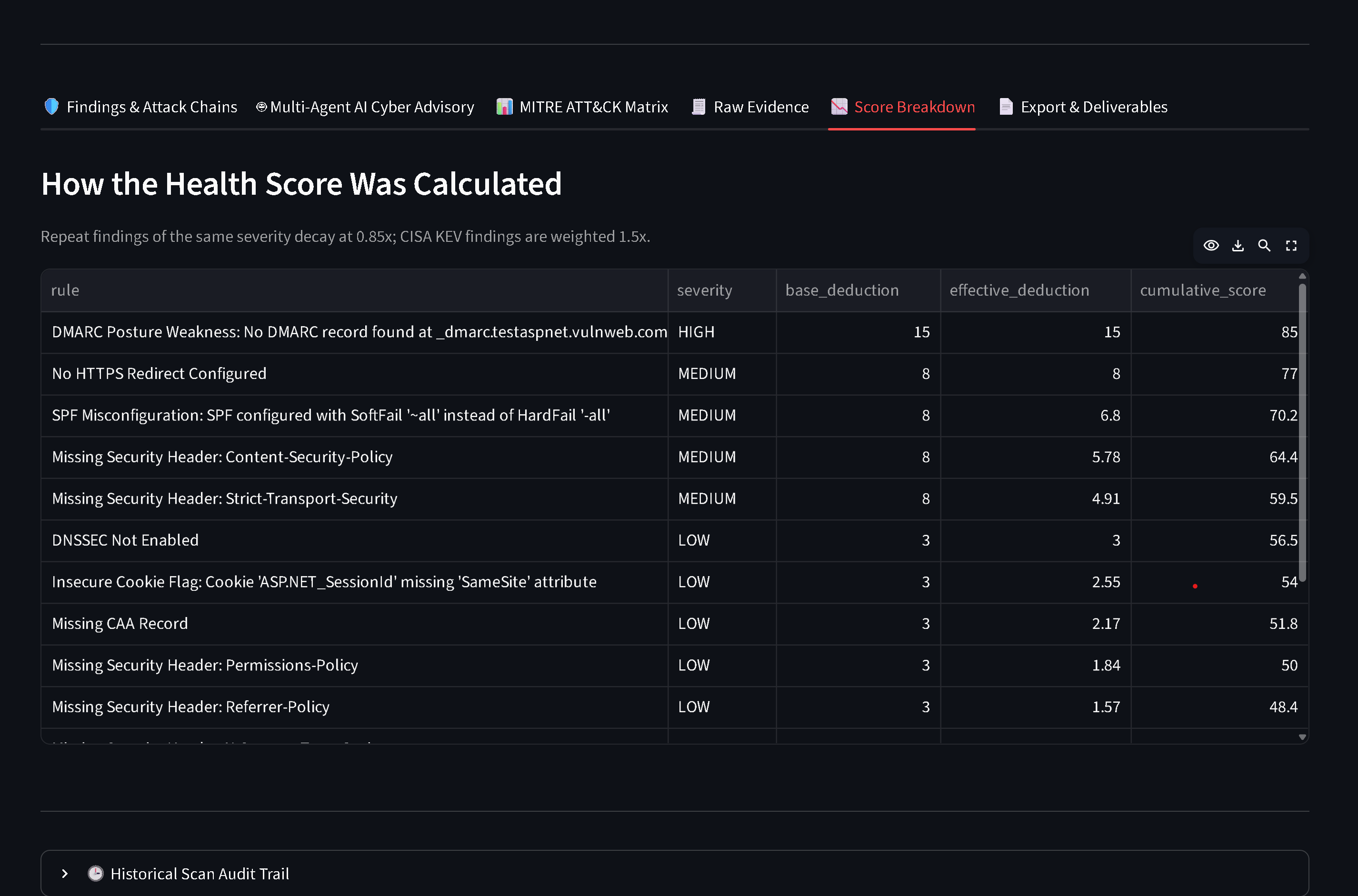
Score Breakdown
-
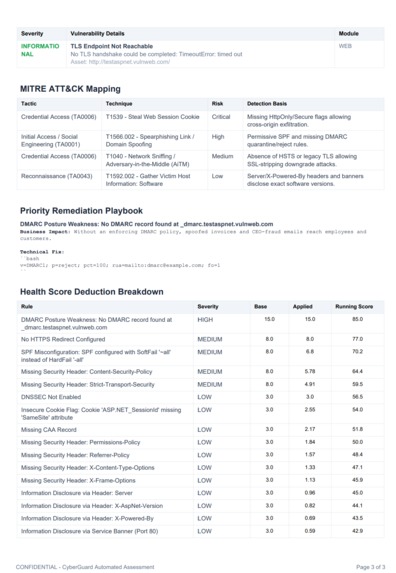
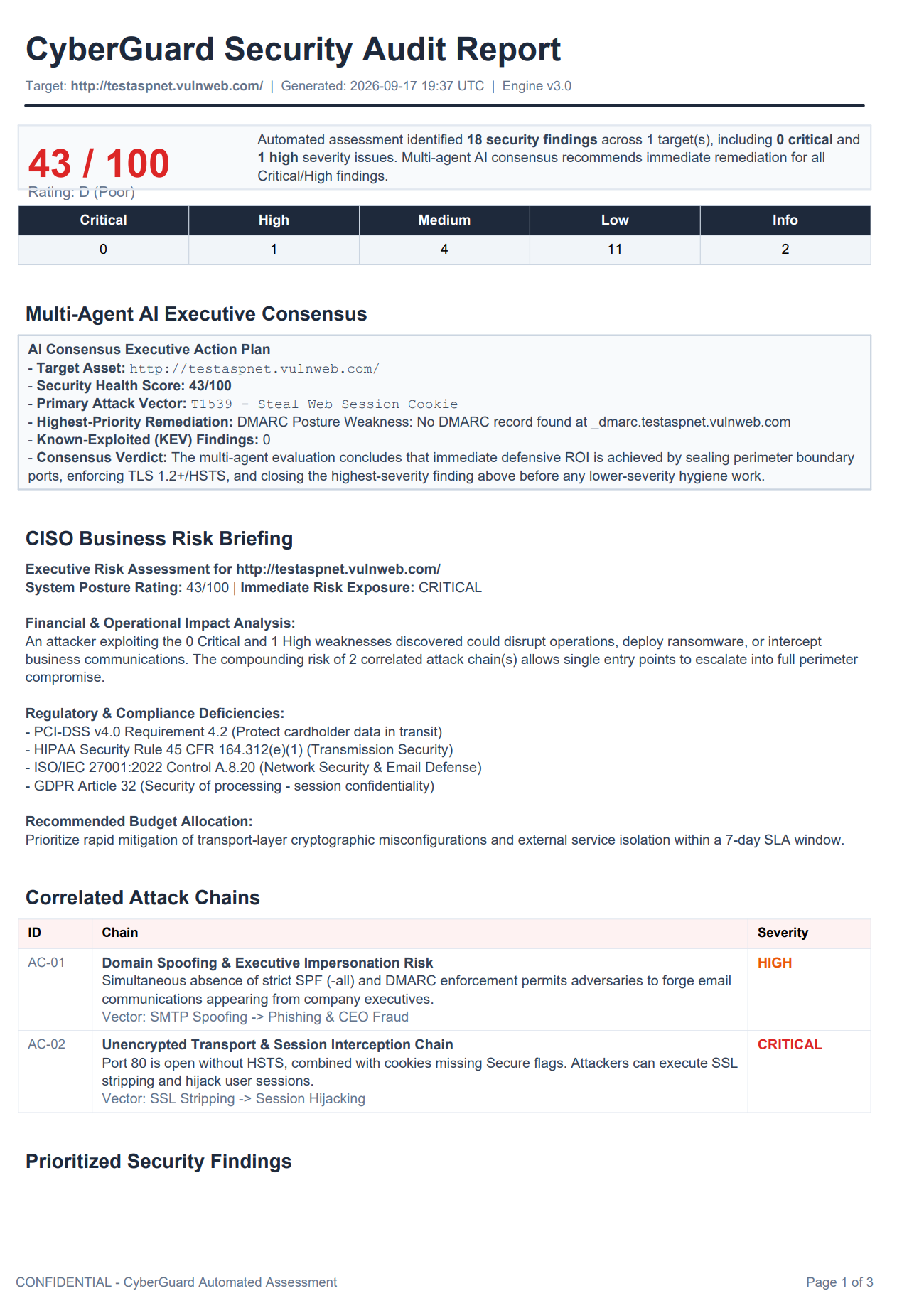
Report
-
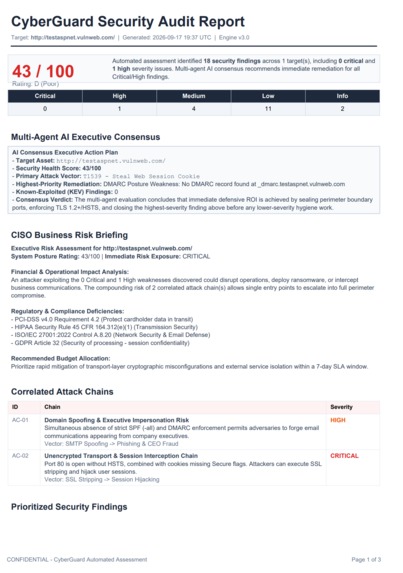
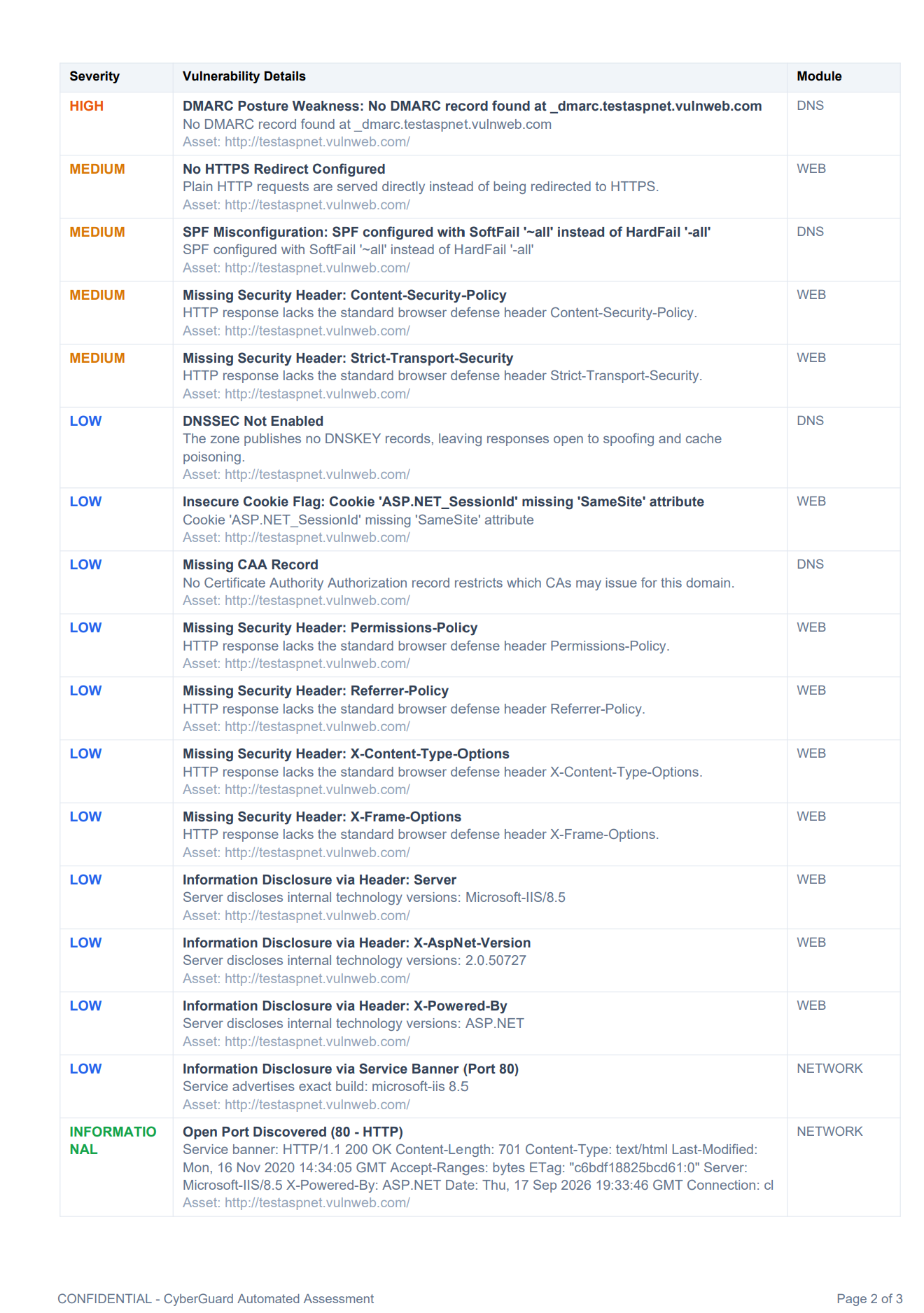
Report
-
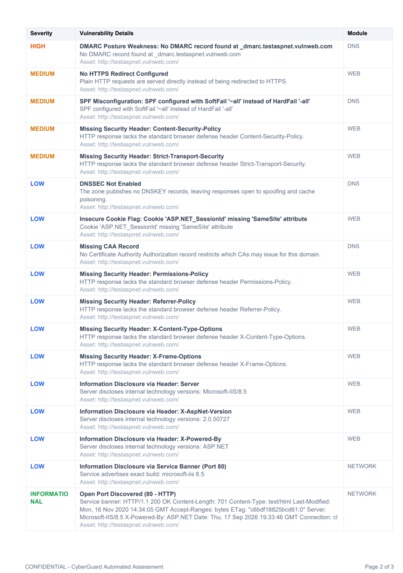
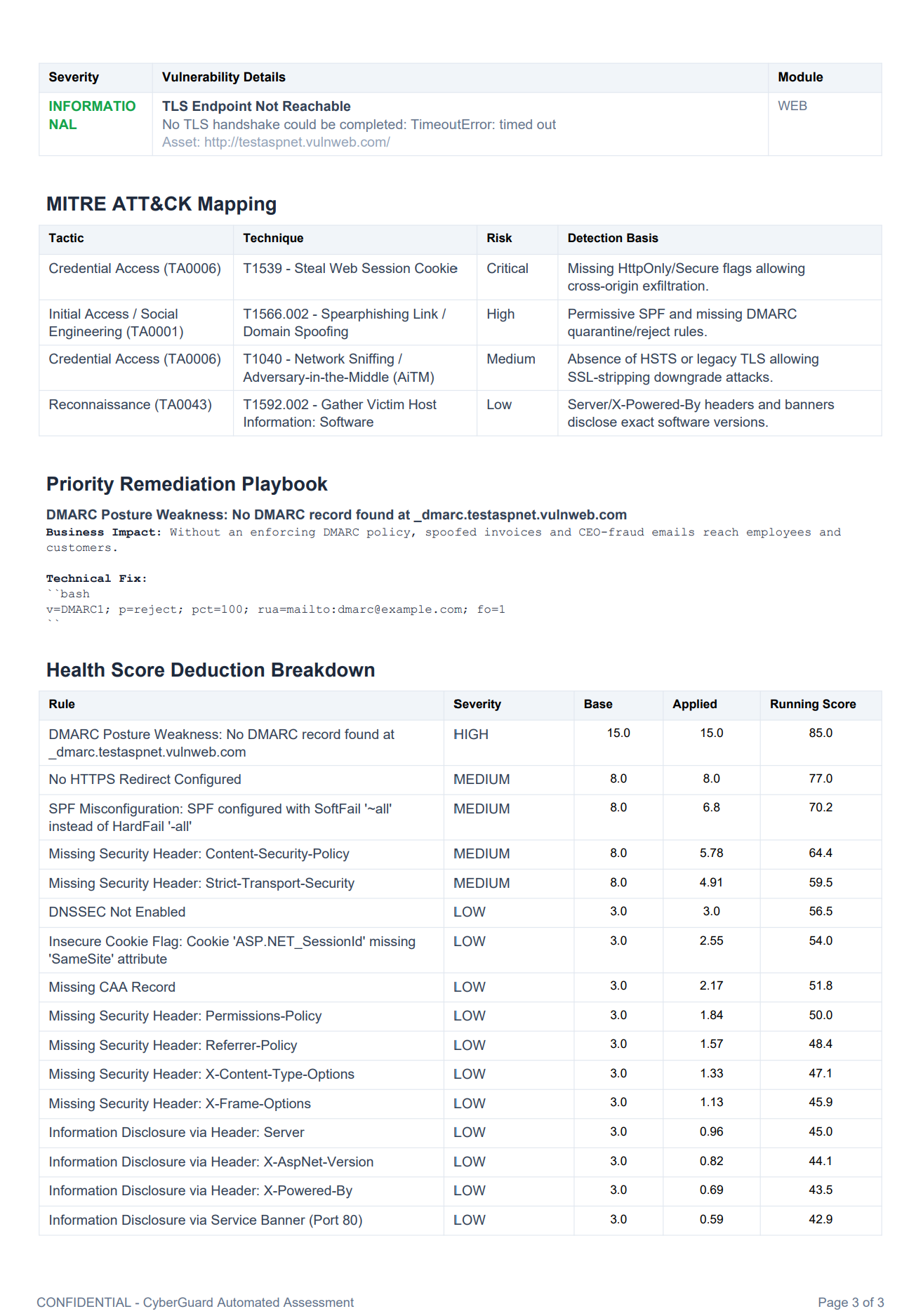
Report
Inspiration
Enterprise security teams are overwhelmed by alert fatigue, disjointed tooling, and slow manual triage. In many organizations, reconnaissance, vulnerability scanning, and incident response exist in isolated silos. We envisioned Cyber-Guard as an all-in-one bridge: a platform that unifies real-time asset discovery, live threat intelligence feeds, and interactive SOC telemetry into a single, high-velocity command center.
What it does
Cyber-Guard automates enterprise security audits and provides a live SOC telemetry dashboard built to identify, contextualize, and prioritize infrastructure vulnerabilities:
- Automated Network & Web Reconnaissance: Probes active targets, open ports, and web application attack surfaces to surface misconfigurations and exposed services.
- Live Threat Intelligence Correlation: Queries active vulnerability feeds and global CVE repositories to map detected risks to verified CVSS severity scores and exploit metrics.
- Centralized SOC Telemetry: Visualizes real-time scan metrics, incident timelines, and severity-weighted threat distributions on an interactive analyst console.
- Executive & Technical Audit Reports: Generates structured, remediation-focused audit summaries tailored for rapid defensive response.
How we built it
- Core Engine & Scanning Pipeline: Engineered modular security auditing pipelines in Python, utilizing specialized network scanning sockets and asynchronous API consumers for threat intelligence retrieval.
- SOC Analyst Interface: Developed an interactive, real-time dashboard using Streamlit to handle dynamic metric visualization, live log streams, and vulnerability categorization.
- Streamlined Data Architecture: Implemented a lightweight, decoupled file-handling system for parsed JSON event logs and scan artifacts—eliminating heavy database overhead while preserving fast state tracking.
Challenges we ran into
- API Bottlenecks & Rate Limiting: Correlating comprehensive network scans with remote vulnerability databases introduced latency. We resolved this by structuring concurrent worker tasks and optimizing request caching.
- Log Schema Normalization: Raw outputs from diverse reconnaissance routines required rigorous transformation. We implemented structured data parsers to harmonize varied outputs into a cohesive security telemetry standard.
- Signal-to-Noise Ratio: Filtering out low-priority benign chatter to ensure security operators only see high-impact, actionable findings.
Accomplishments that we're proud of
- Delivered a functional, intuitive SOC command center capable of handling multi-vector scanning data in real time.
- Seamlessly orchestrated live CVE intelligence lookups alongside direct asset assessment.
- Kept the entire deployment footprint minimal and practical for rapid field auditing.
What we learned
- Effective implementation of CVSS-driven vulnerability prioritization models.
- Practical methods for transforming raw offensive reconnaissance data into proactive defensive security telemetry.
- Architecting responsive data pipelines under constrained execution environments.
What's next for Cyber-Guard
- Automated Remediation Hooks: Adding webhook integrations to automatically generate firewall block rules and isolate compromised endpoints.
- Heuristic Exploit Risk Modeling: Expanding threat correlation with predictive exploitability scoring.
- Distributed Agent Scanning: Supporting multi-node sensor deployments across internal subnets for distributed visibility.
Built With
- api
- assessment
- cve
- intelligence
- network
- python
- rest
- security
- streamlit
- threat
- vulnerability


