-
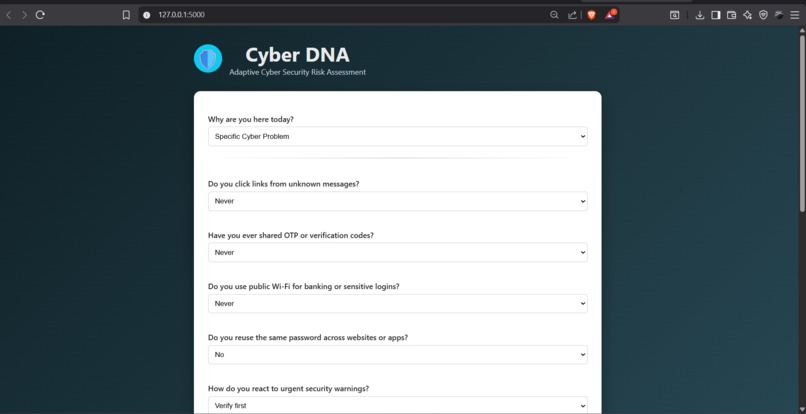
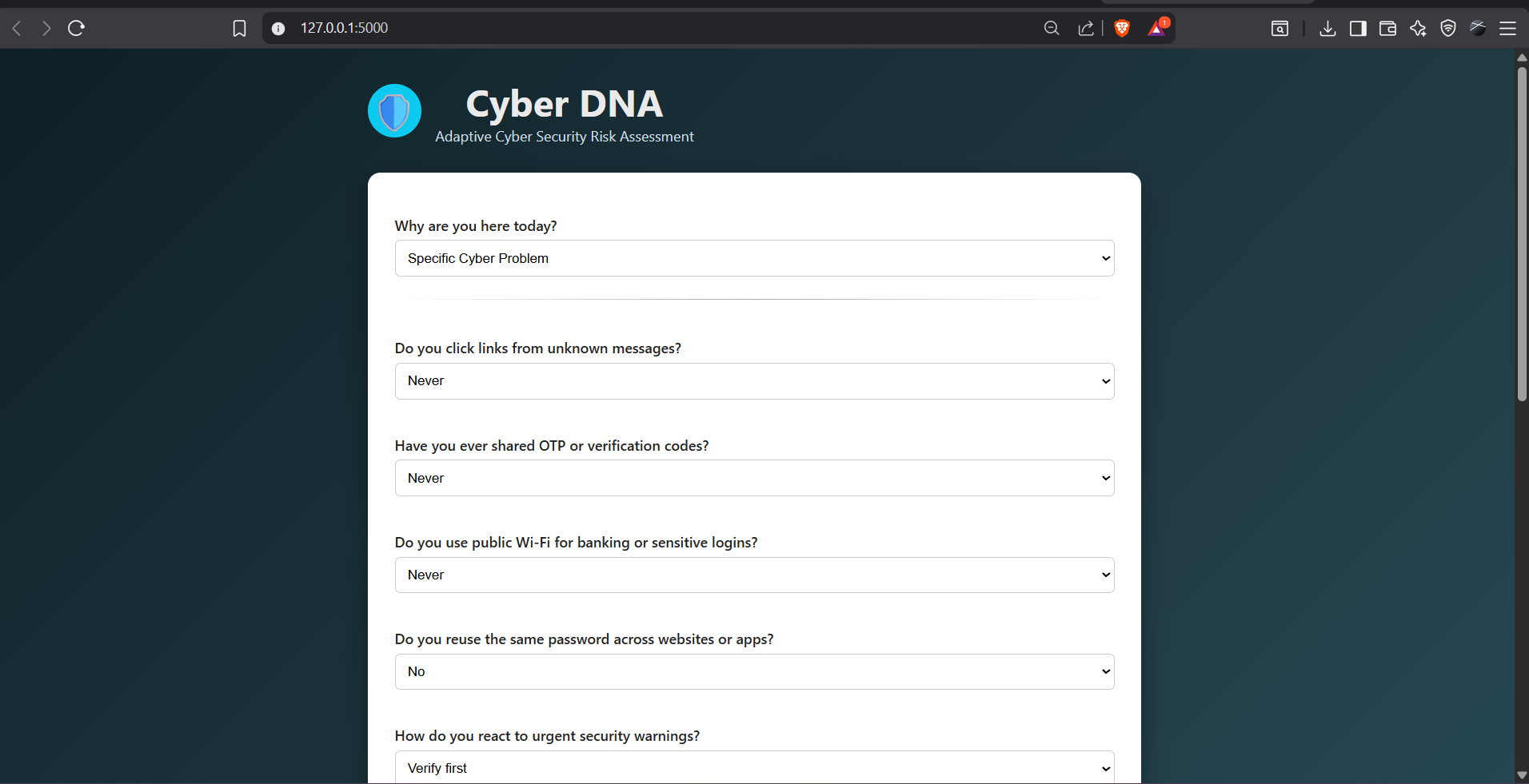
Cyber DNA main interface showing a behavior-based cyber security questionnaire used to assess user risk awareness.
-
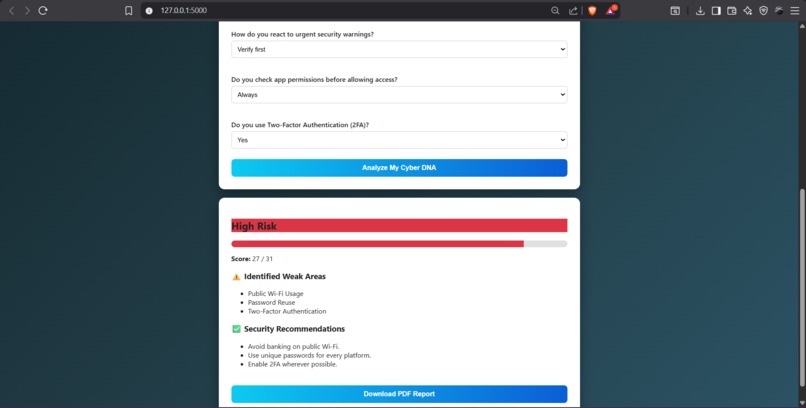
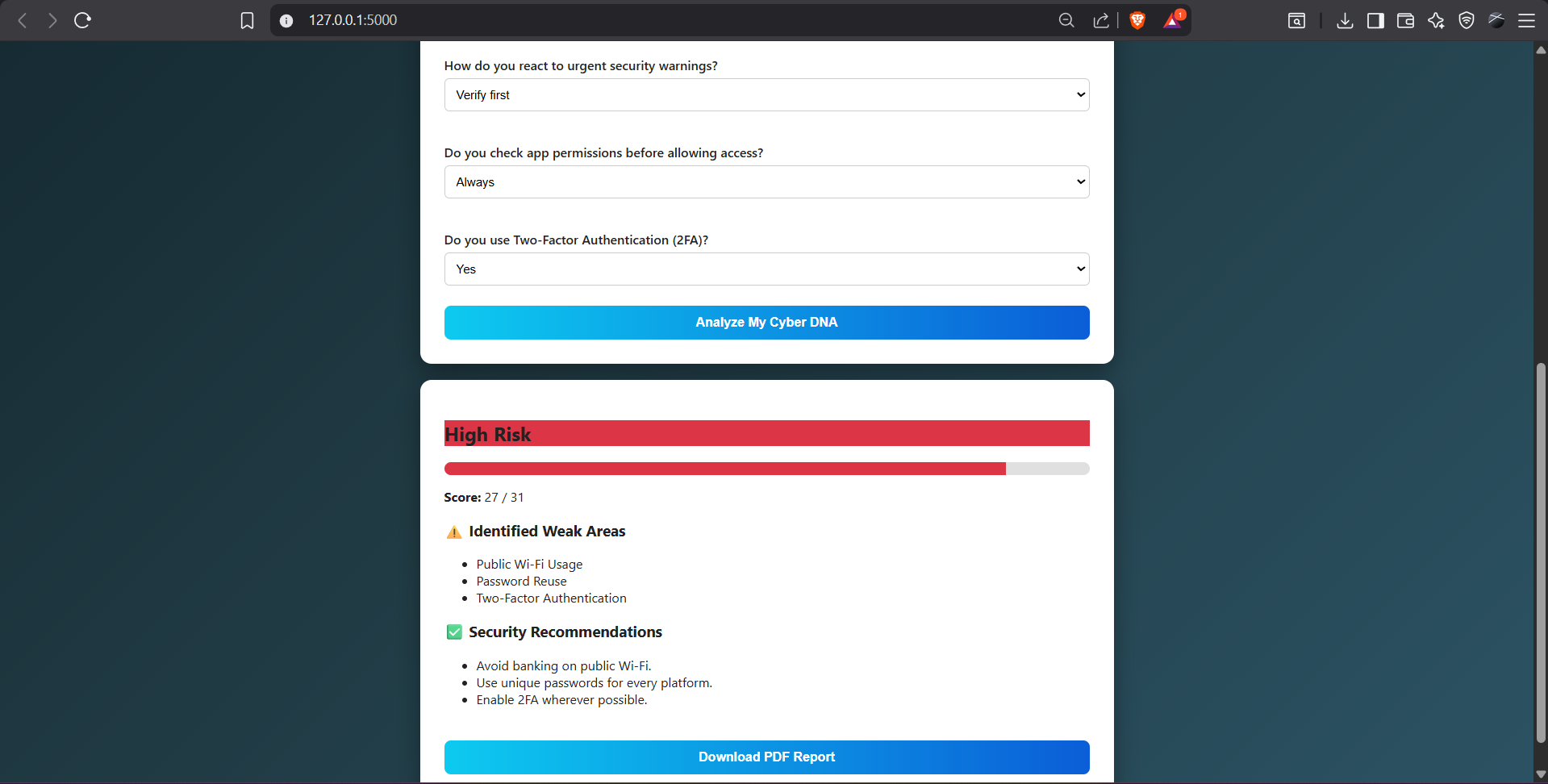
Cyber DNA risk analysis result displaying risk level, score, identified weak areas, and security recommendations.
-
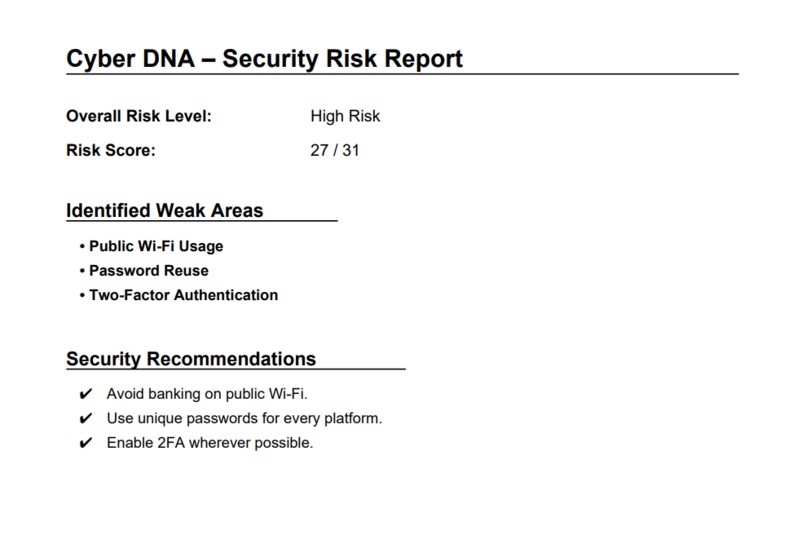
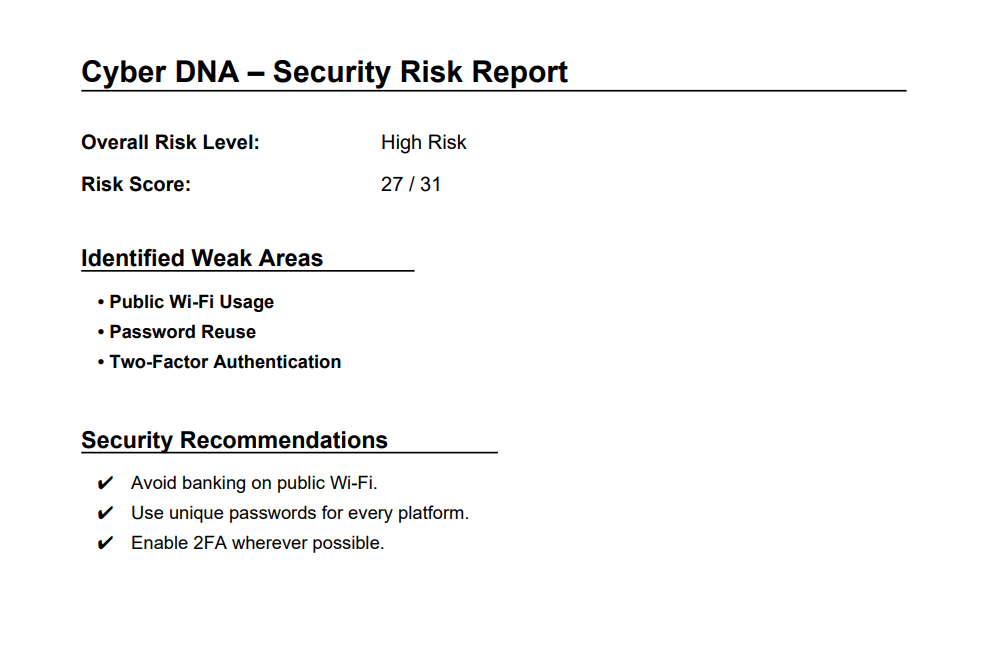
Automatically generated Cyber DNA PDF security report summarizing risk score, weak areas, and actionable recommendations.
-
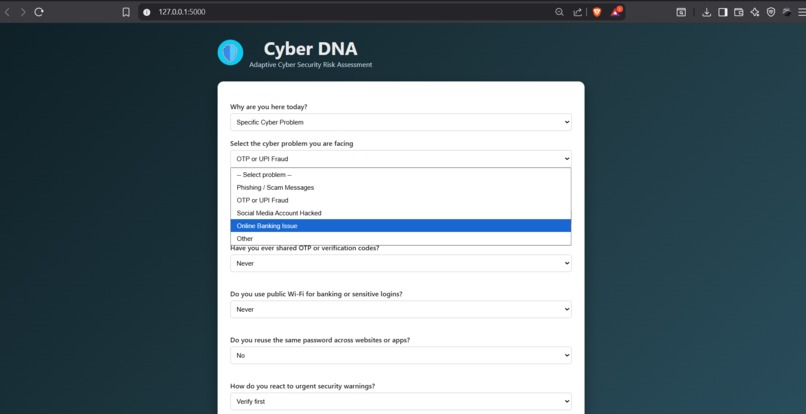
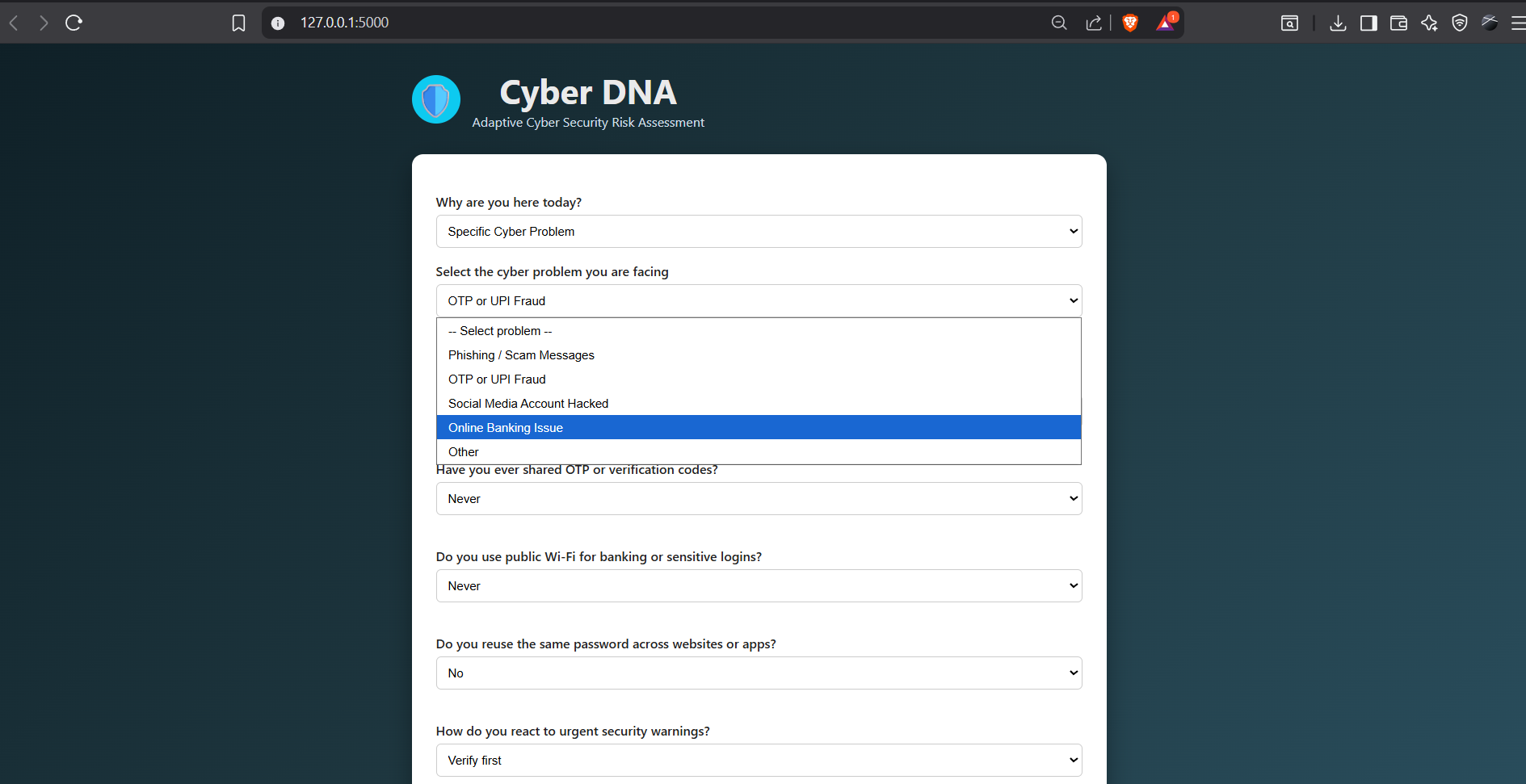
Users can select a specific cyber problem (e.g., OTP/UPI fraud, phishing) before proceeding with the risk assessment.
Inspiration
With the rise of phishing attacks, OTP frauds, and social engineering scams, many users fall victim not due to lack of technology, but due to lack of cyber awareness. I noticed that most cyber security tools are either too technical or reactive, helping users only after an attack has already happened.
Cyber DNA was inspired by the idea of creating a simple, preventive, and awareness-driven tool that helps users understand their cyber risk before scammers exploit them.
What it does
Cyber DNA is a web-based cyber security risk assessment tool that evaluates a user's cyber hygiene through a set of behavior-based questions.
Based on the user's responses, the system:
- Calculates a cyber risk score
- Categorizes users into Low, Medium, or High Risk
- Displays a visual risk meter on the website
- Generates a downloadable PDF security report for awareness and reference
The tool focuses on common real-world threats such as phishing links, OTP sharing, password reuse, unsafe Wi-Fi usage, and poor app permission practices.
How we built it
The project was built using a simple yet effective tech stack:
- The frontend is developed using HTML, CSS, and JavaScript for a clean and beginner-friendly interface
- The backend is powered by Python and Flask
- A rule-based scoring logic evaluates user responses
- ReportLab is used to generate a structured PDF security report
- The project is version-controlled using GitHub
The architecture is modular, making it easy to extend with advanced features in the future.
Challenges we ran into
Some of the key challenges faced during development included:
- Designing a scoring model that is simple yet meaningful
- Maintaining clarity while keeping the interface non-technical
- Handling PDF report generation and formatting
- Balancing feature completeness with hackathon time constraints
Each challenge helped improve both technical and problem-solving skills.
Accomplishments that we're proud of
- Successfully built a complete end-to-end cyber security assessment tool
- Implemented a visual risk meter for better user understanding
- Generated a professional downloadable PDF report
- Created a project focused on prevention and awareness, not just detection
- Maintained clean documentation and project structure
What we learned
Through this project, I learned:
- How to design user-centric cyber security tools
- Flask-based backend development
- Frontend and backend integration
- PDF generation using Python
- Real-world cyber security awareness challenges
What's next for Cyber DNA – Cyber Security Risk Assessment Tool
Future enhancements planned for Cyber DNA include:
- AI/NLP-based threat understanding and personalized recommendations
- User accounts with risk history tracking
- Advanced analytics dashboard
- Mobile-friendly and multilingual support
- Integration with real-time threat intelligence sources


Log in or sign up for Devpost to join the conversation.