-
-
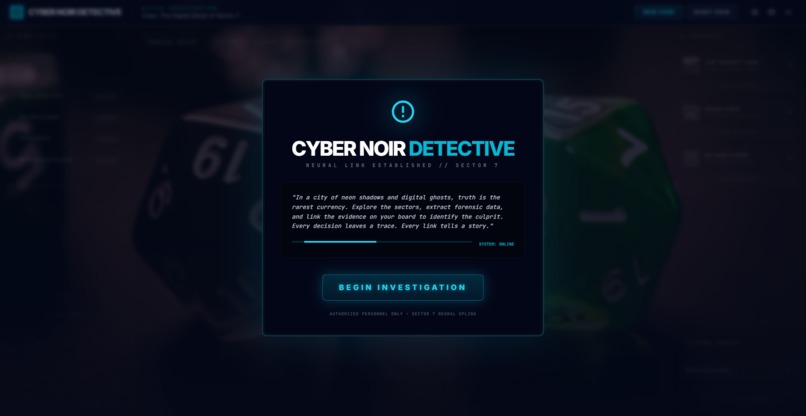
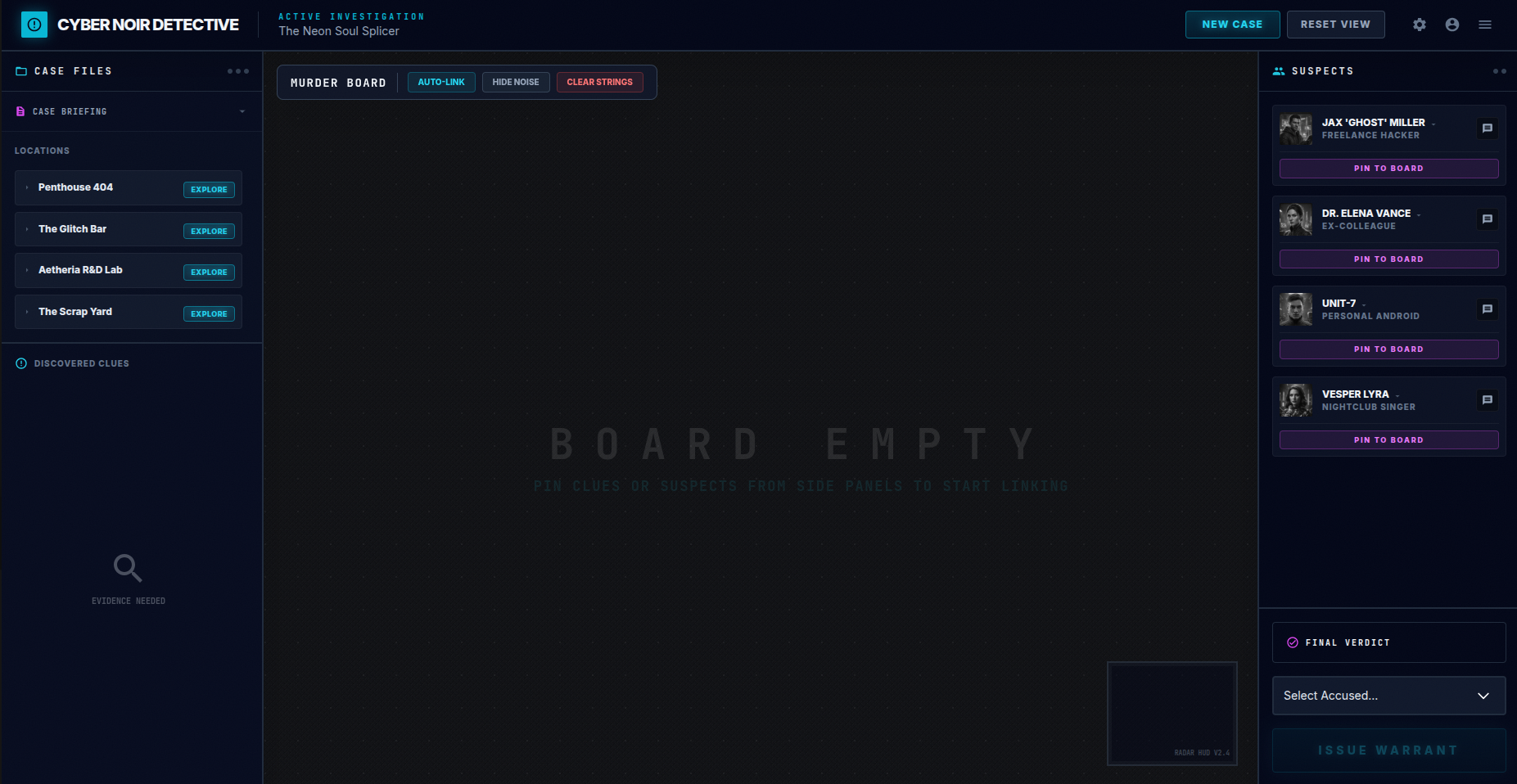
Welcome screen
-
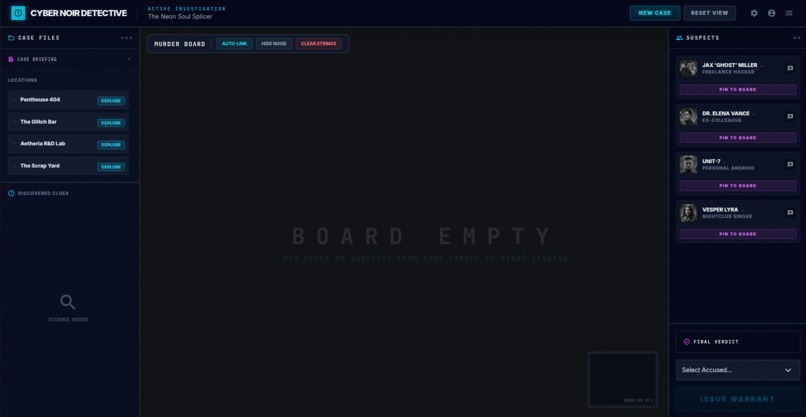
The beginning of the case
-
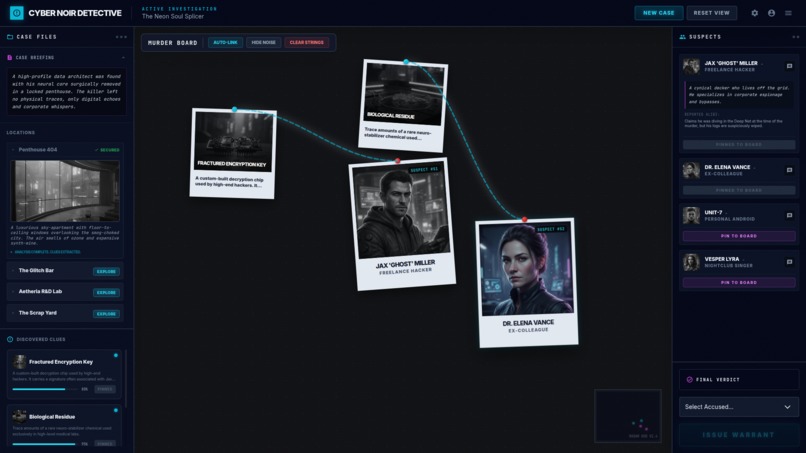
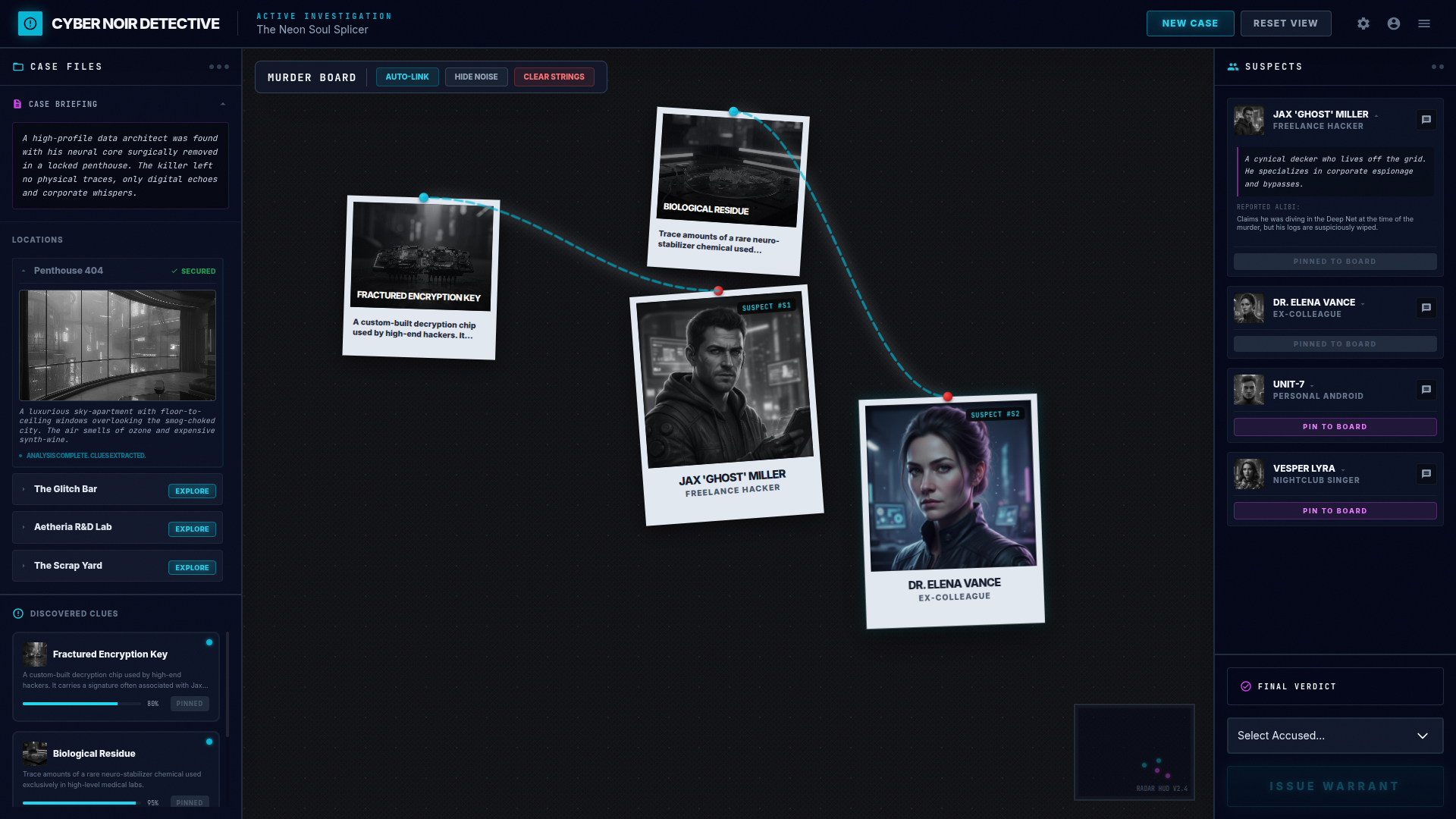
Placing suspects and clues on a board
-
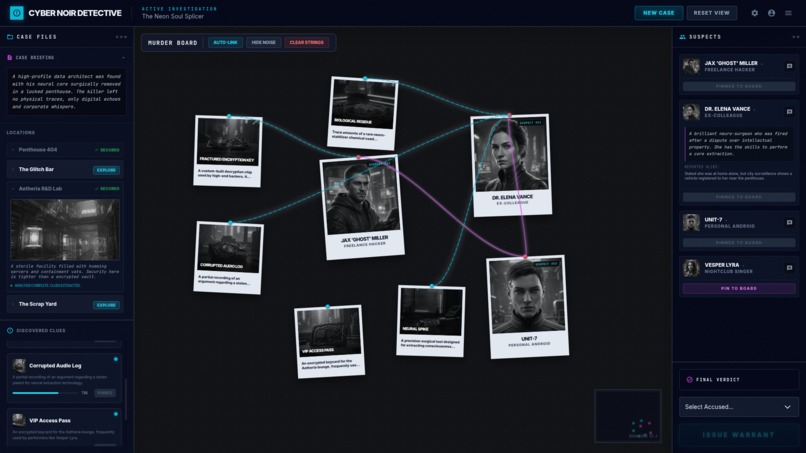
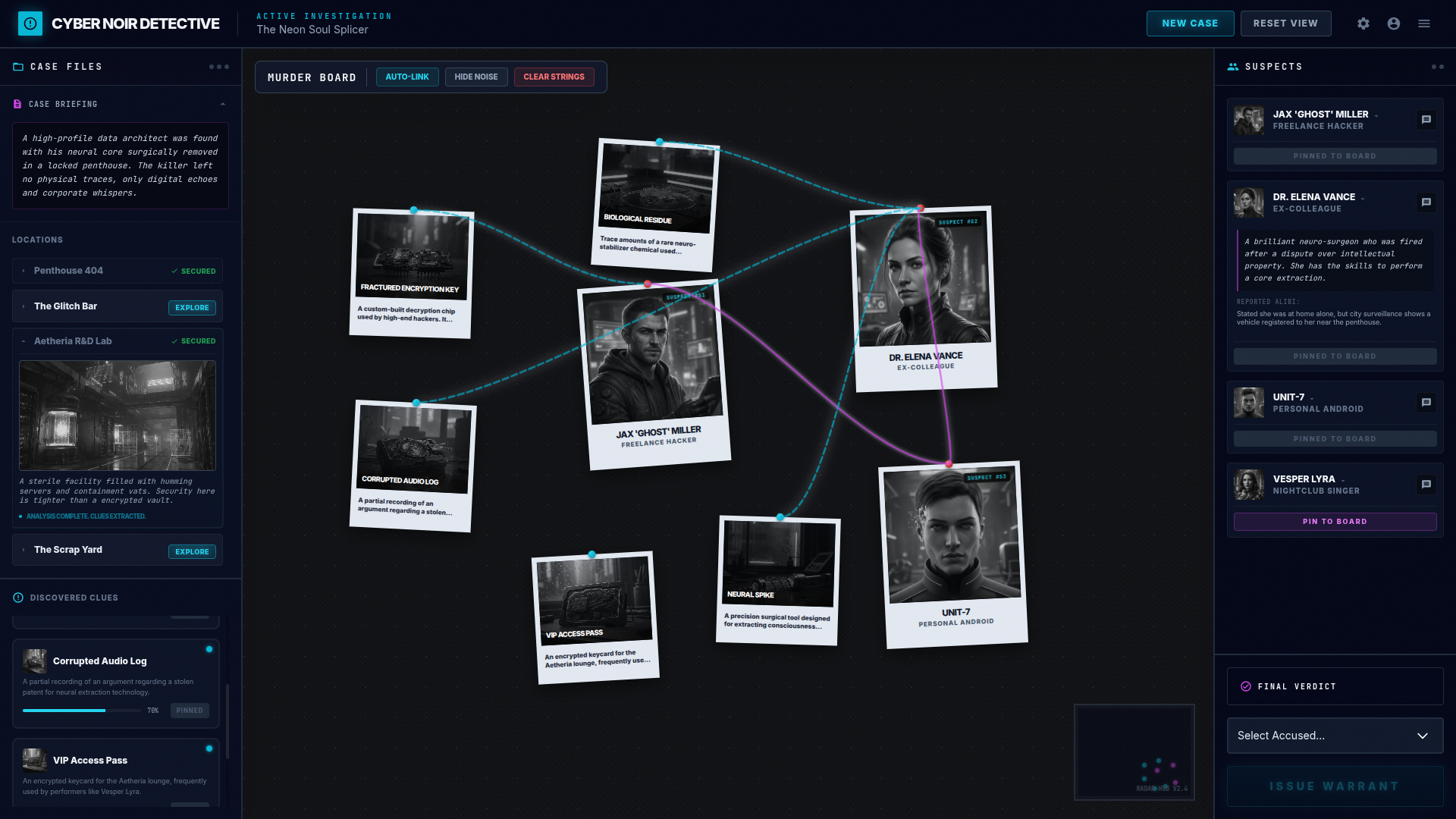
More suspects and clues on board
-
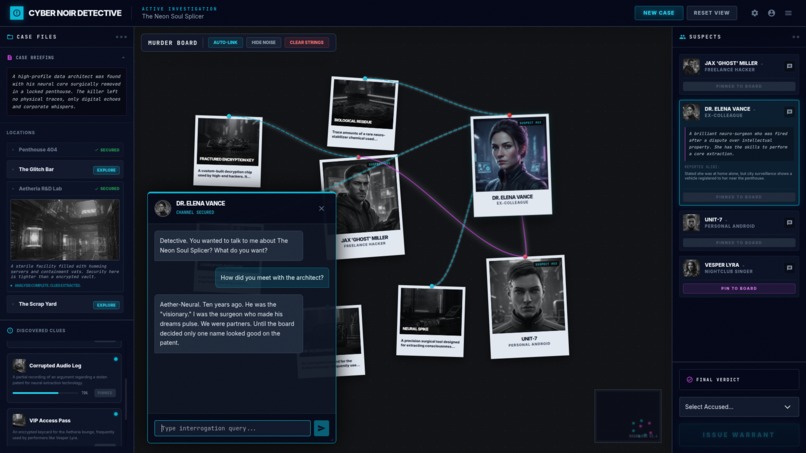
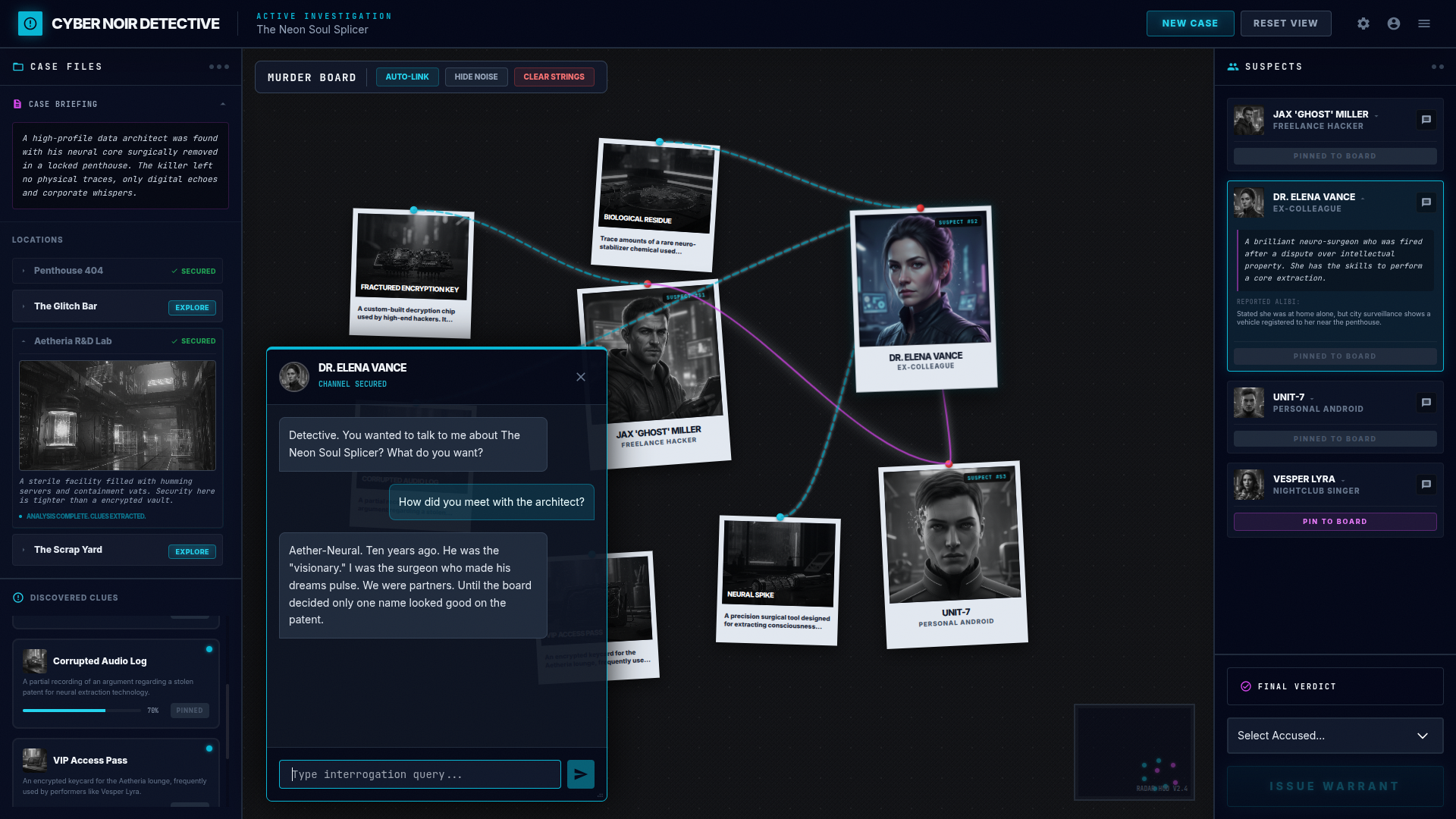
Questioning a suspect via chat
-
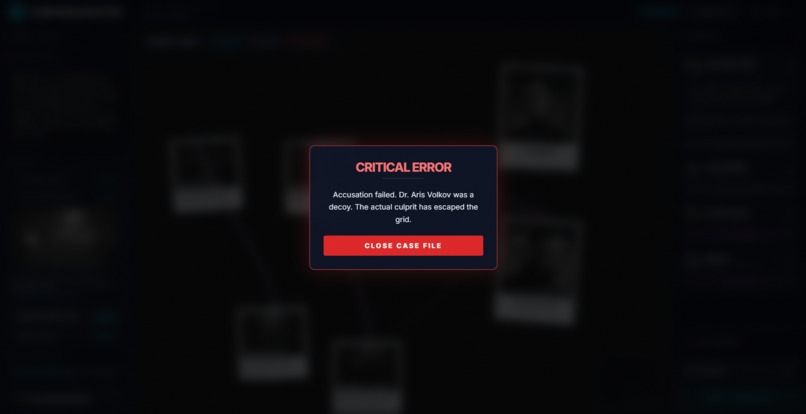
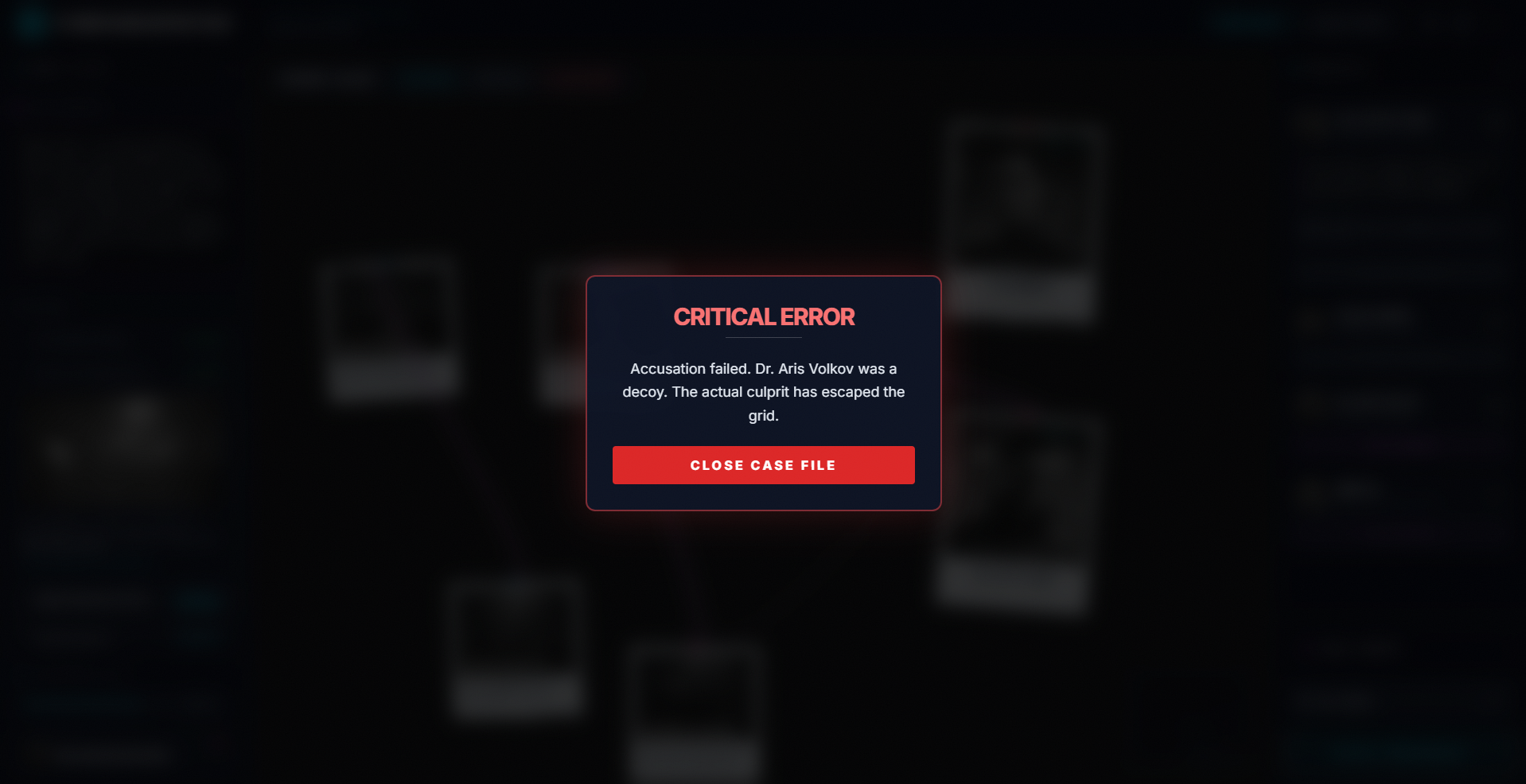
Failed
-
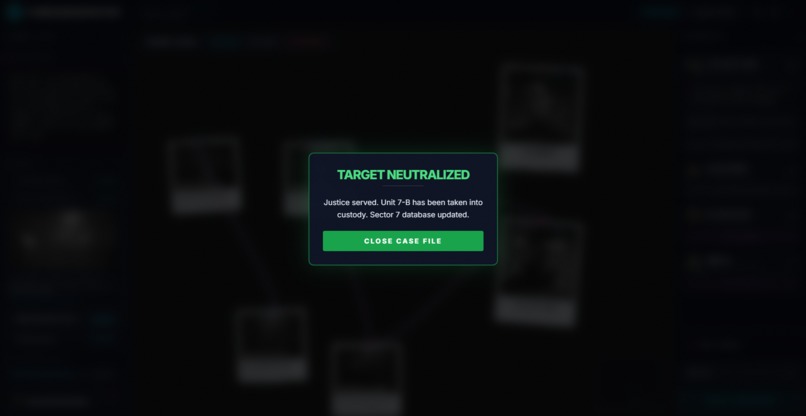
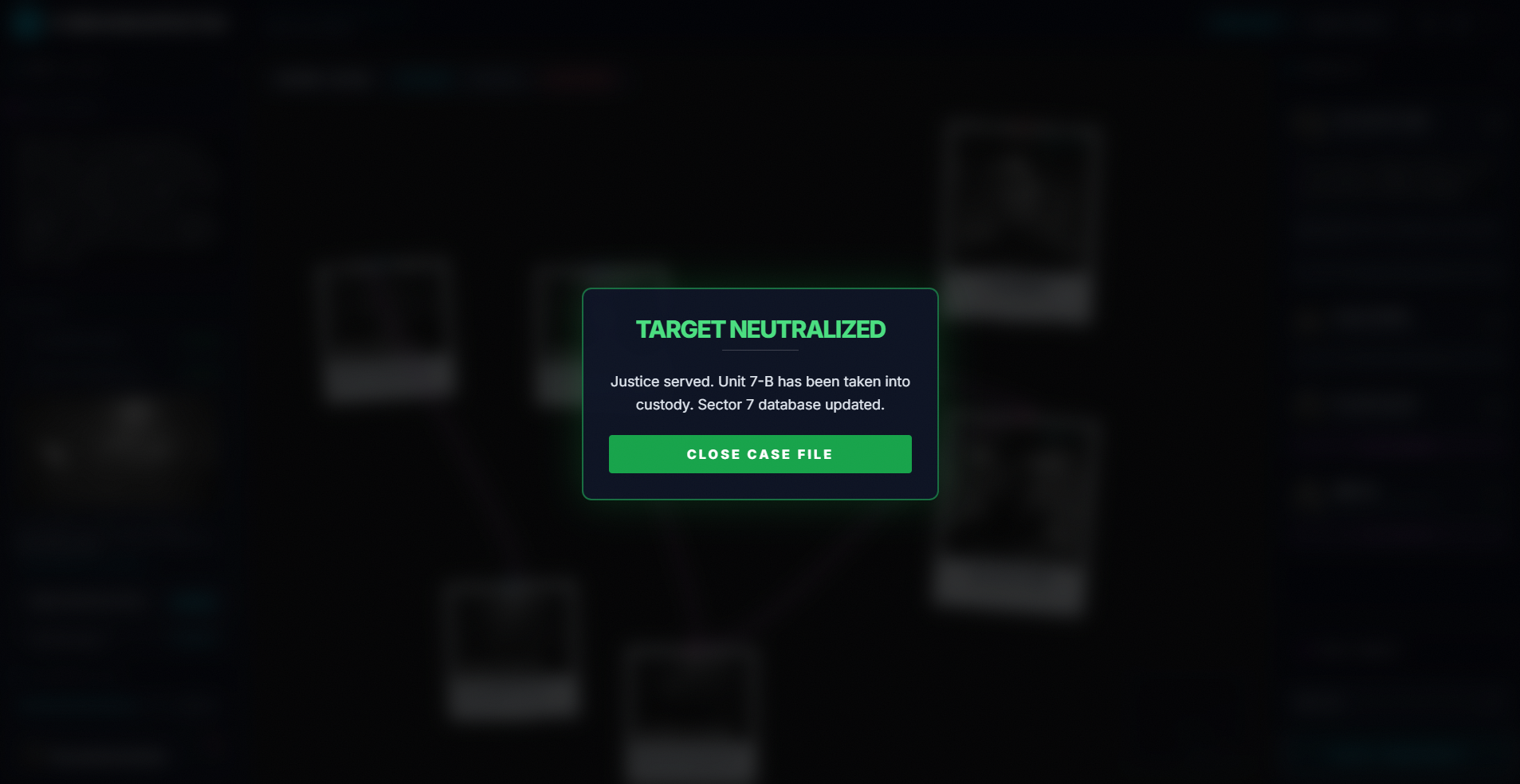
Success
Inspiration
Cyber Detective was inspired by classic noir investigations and modern AI storytelling. we wanted players to feel like real detectives: collecting evidence, testing alibis, and making high-stakes accusations in dynamic, replayable cases.
What it does
Cyber Detective generates playable cyber-noir mystery cases with suspects, locations, timelines, clues, and a hidden truth.
Players investigate locations, uncover evidence, interrogate suspects in dialogue, and decide who to accuse based on logic and connections.
How We Built It
Cyber Noir Detective is a fusion of procedural AI storytelling and interactive UI.
1. Neural Core (AI Logic)
Case Generation:
We usegemini-3-flash-previewwith structured JSON schemas to create logically consistent mysteries, ensuring clues link correctly to the guilty suspect.Dynamic Interrogation:
Every suspect is a stateful chat instance usingai.chats.create, with system instructions defining their guilt, alibi, and personality.
2. Visual Synthesis
On-the-fly Assets:
We leveragegemini-2.5-flash-imageto generate photorealistic character portraits, rainy environments, and macro forensic photography for clues.Consistency:
Prompt engineering ensures a cohesive Cyan/Magenta/Noir aesthetic across all AI-generated images.
3. The Murderboard
SVG Connectivity:
Links are rendered as dynamic SVG Bézier curves. Logic checks trigger visual feedback: Cyan for correct deductions and Magenta for red herrings.Tactile UI:
Built with React and Tailwind CSS, featuring physics-inspired “push-pin” mechanics and draggable Polaroid cards.
4. Immersive Design
Aesthetic:
Glass-morphism, CRT noise filters, and a custom cinematic landing sequence.Performance:
Optimized React state management handles the infinite-canvas board and real-time LLM streaming.
Challenges we ran into
First of all, we haven't worked with a Gemini model before.
- API reliability and quotas: I hit
429(quota exceeded) and503(model overloaded), which made live demo reliability difficult. - Interrogation tuning: getting believable suspect dialogue took multiple prompt and parameter iterations to avoid cut-off or inconsistent responses.
- Time constraints: I prioritized core mechanics and reliability over deep UI polish.
Accomplishments that we're proud of
- Built a complete playable detective loop with dynamic case generation.
- Implemented validation and recovery around LLM outputs.
- Added fallback architecture so the game remains functional even under API instability.
- Delivered interactive suspect interrogation that materially supports investigation gameplay.
- Image generation for every elements like location, clues and suspect portrais.
What we learned
- Reliability features are essential in AI products: retries, validation, and fallback matter as much as model quality.
- Prompting alone is not enough; strong system design is required to make outputs usable.
- Interactive AI experiences need tight structure to stay coherent and fun.
- Building for demos means engineering for failure modes first, not just happy paths.
- The using of AIStudio and Gemini modells
What's next for Cyber Detective
- Improve interrogation depth with stronger memory and evidence-aware responses.
- Expand case complexity with richer relationships and branching evidence chains.
- Add automated tests for generation/parsing/interrogation flows.
- Continue UI and UX refinement while preserving the project’s reliability-first architecture.
- Optimization for mobile screens
- Individual user management, scoring, saving and restoring cases
Built With
- gemini
- node.js
- react
- tailwind-css
- typescript
- vercel
- vite


Log in or sign up for Devpost to join the conversation.