-
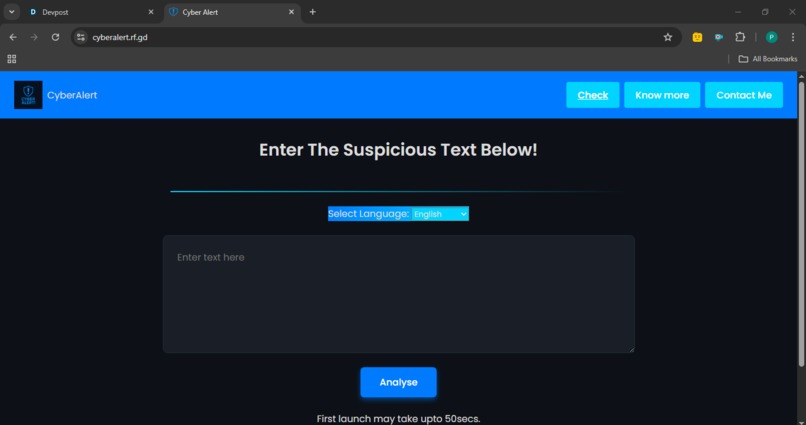
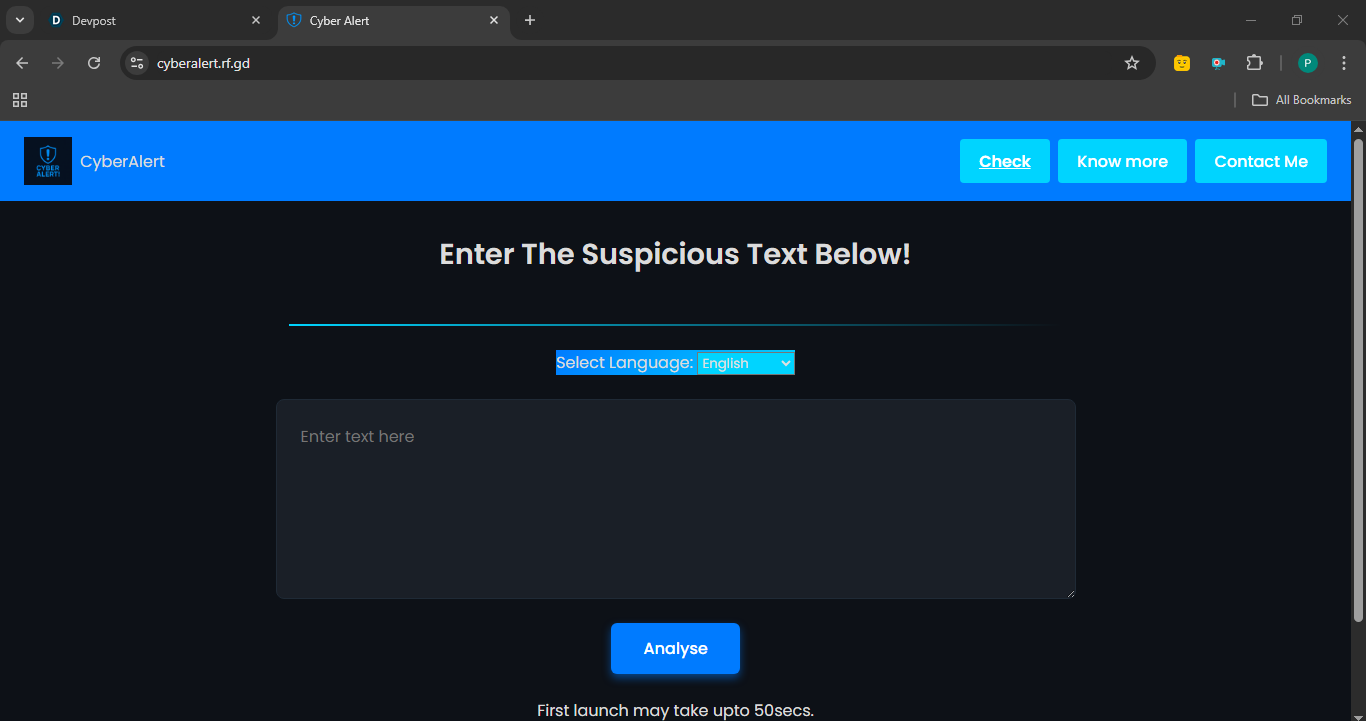
Landing Page
-
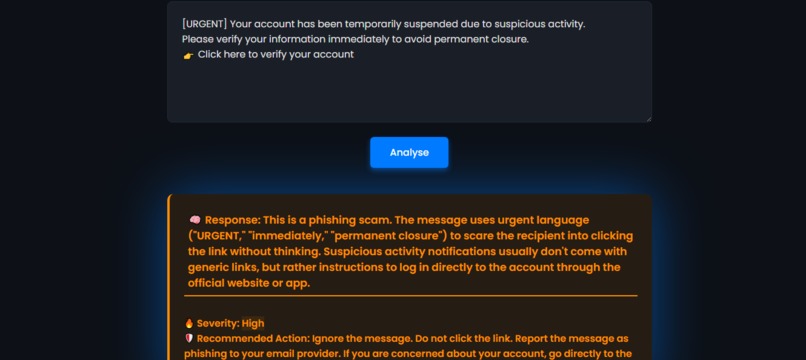
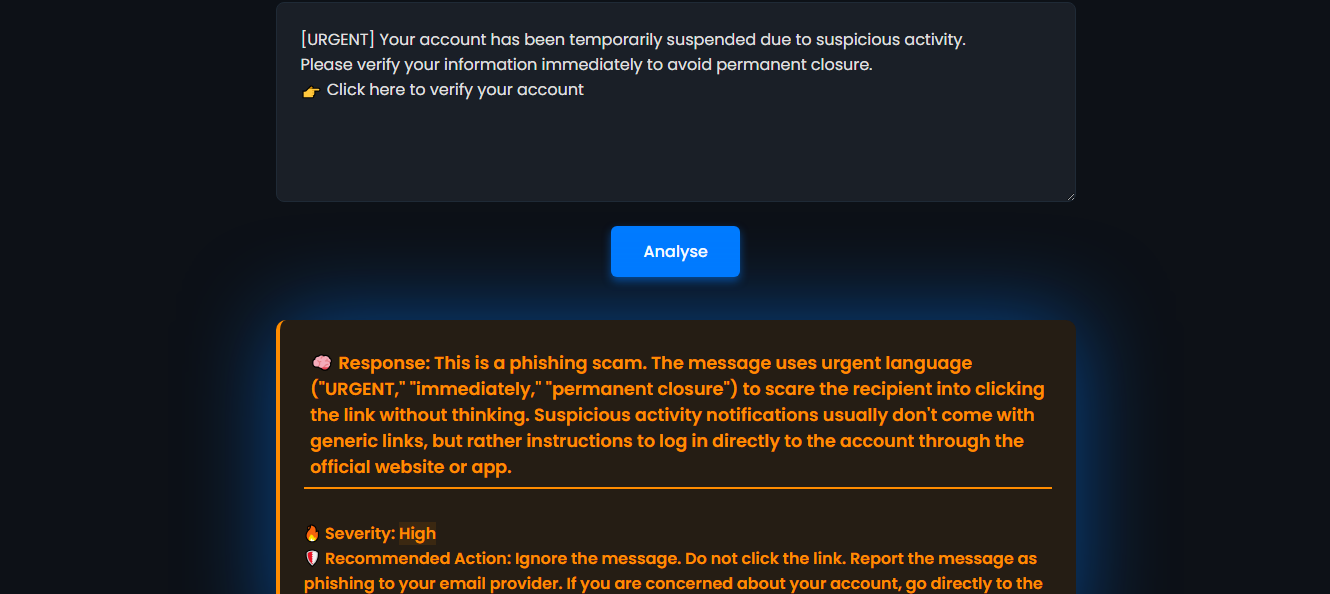
Scam Detection
-
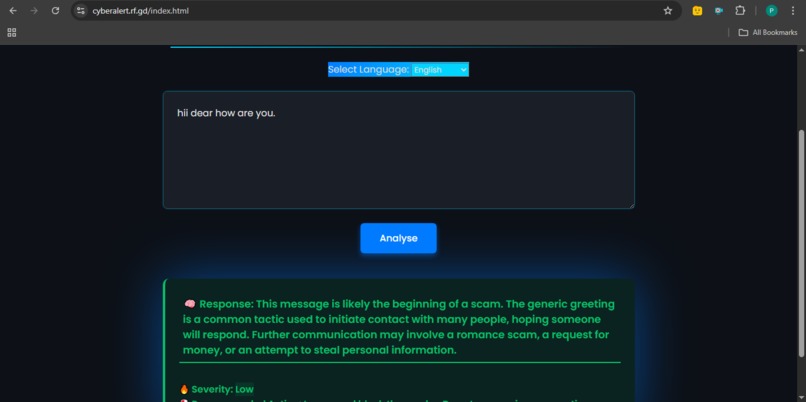
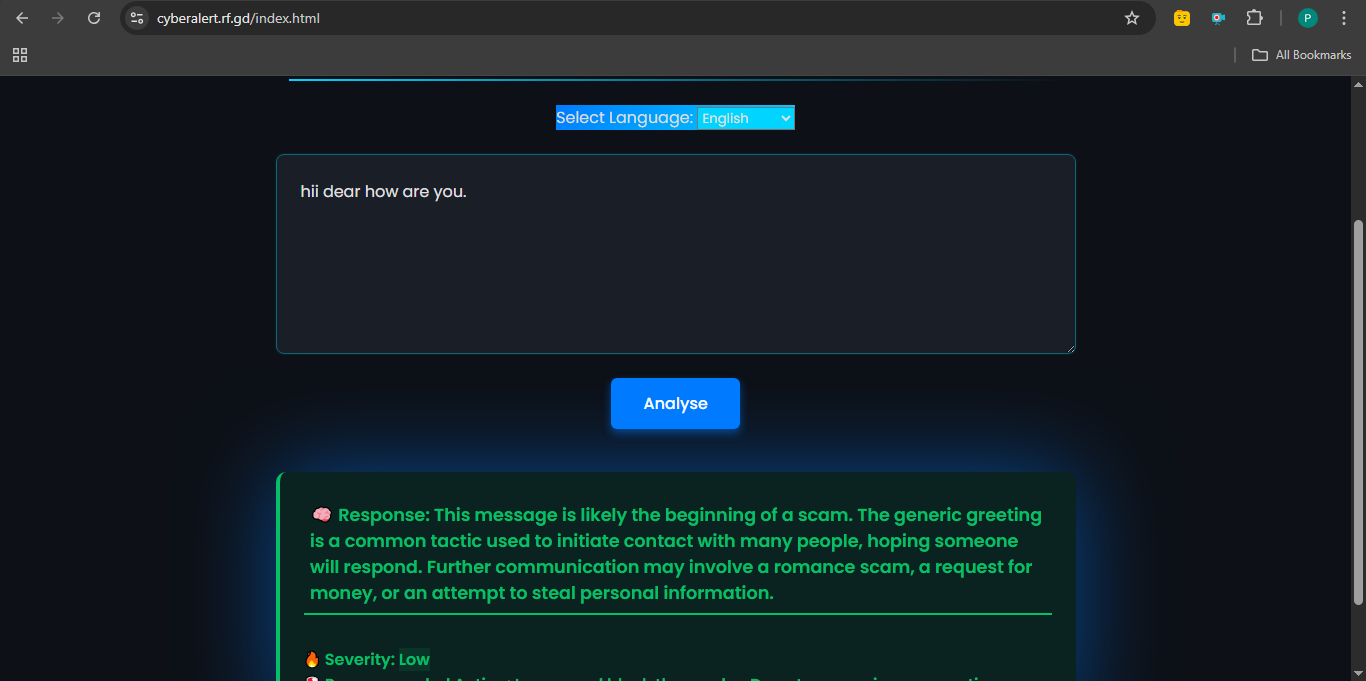
Low severity
-
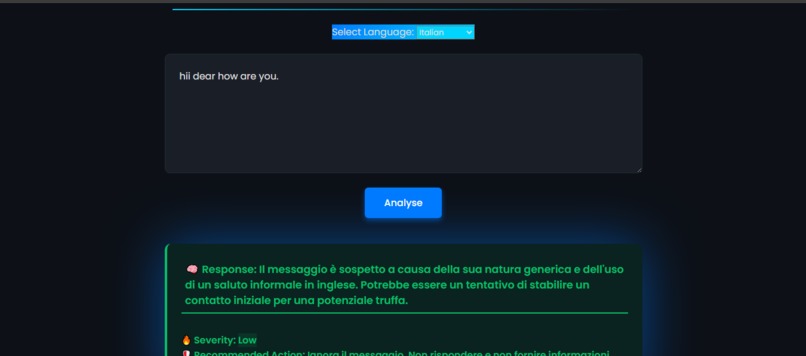
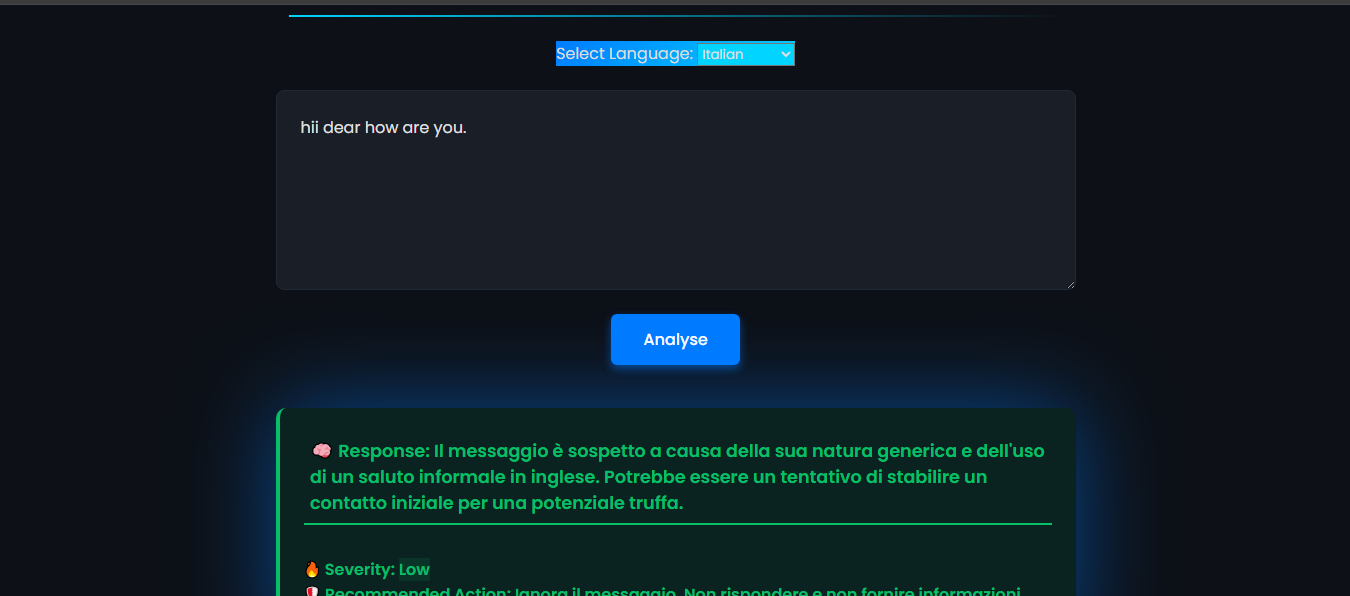
Language Support
-
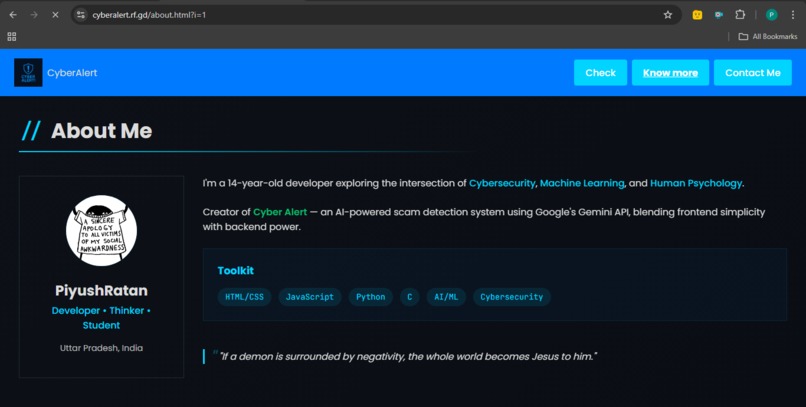
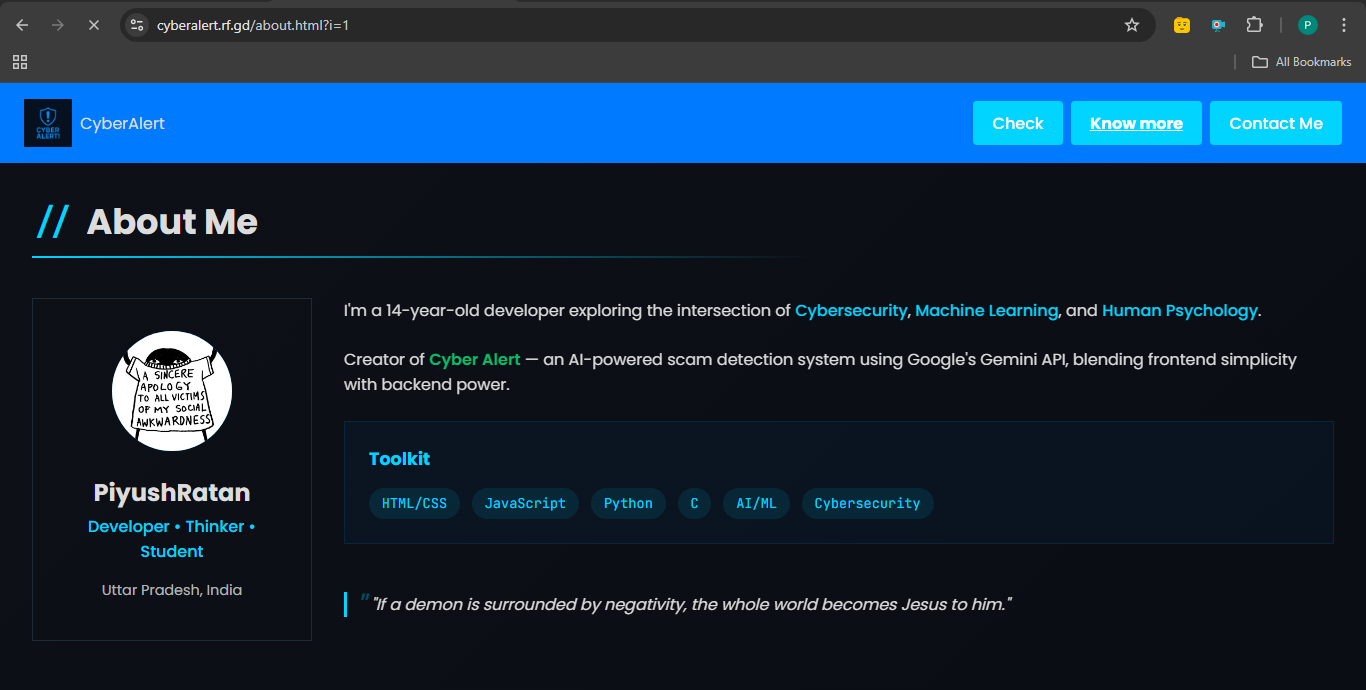
About Page
-
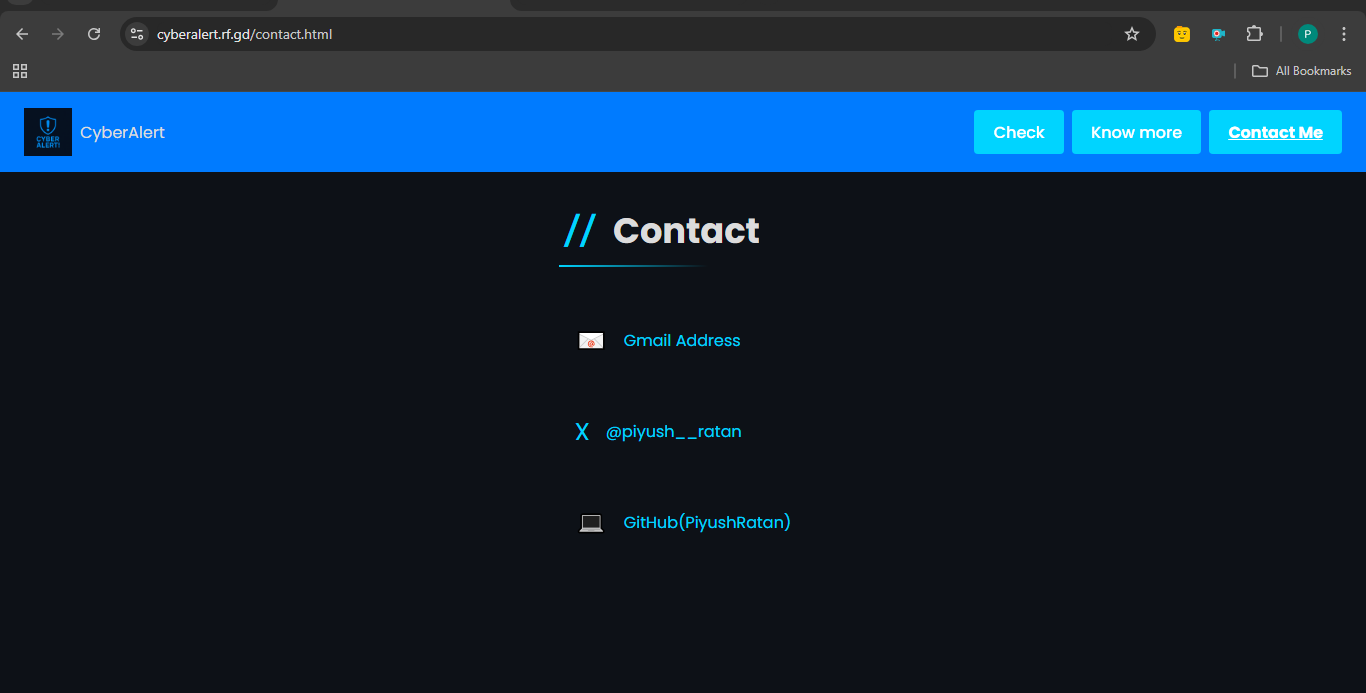
Contact Page
-
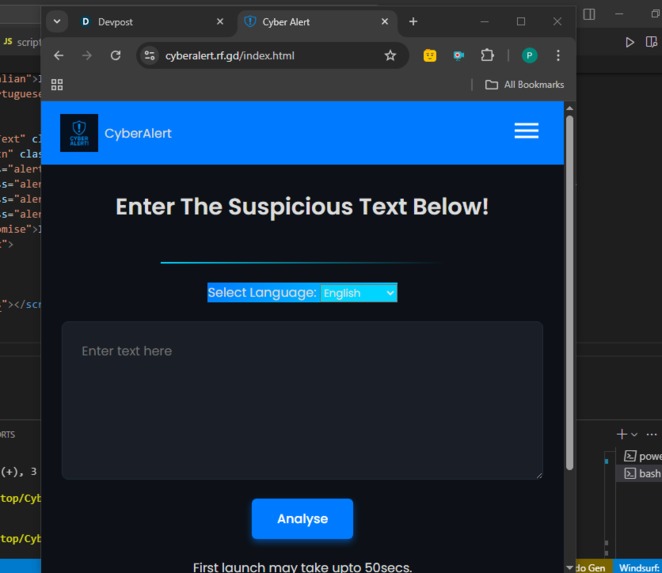
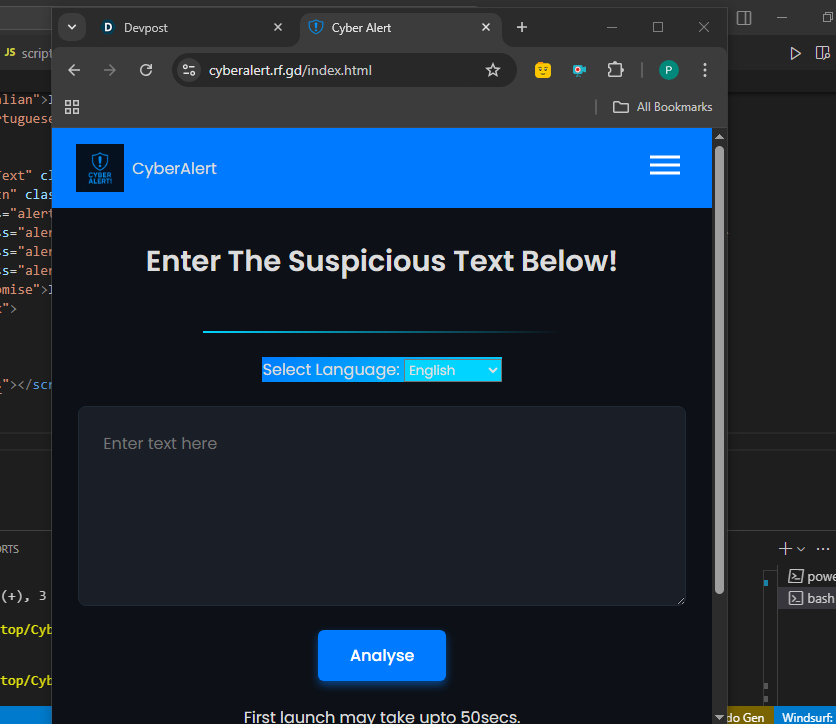
Home Page (Mobile)
-
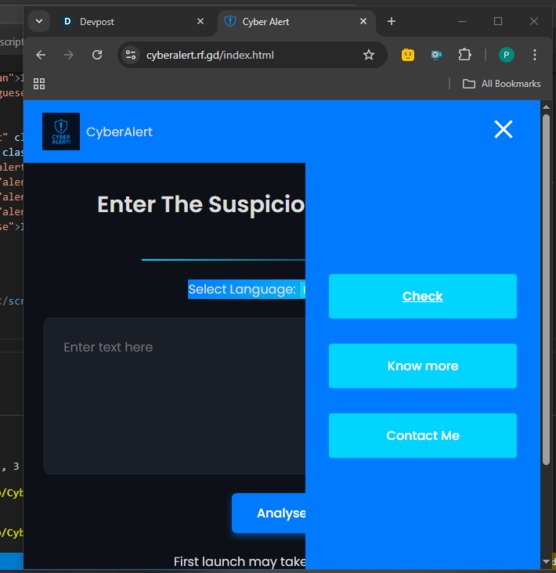
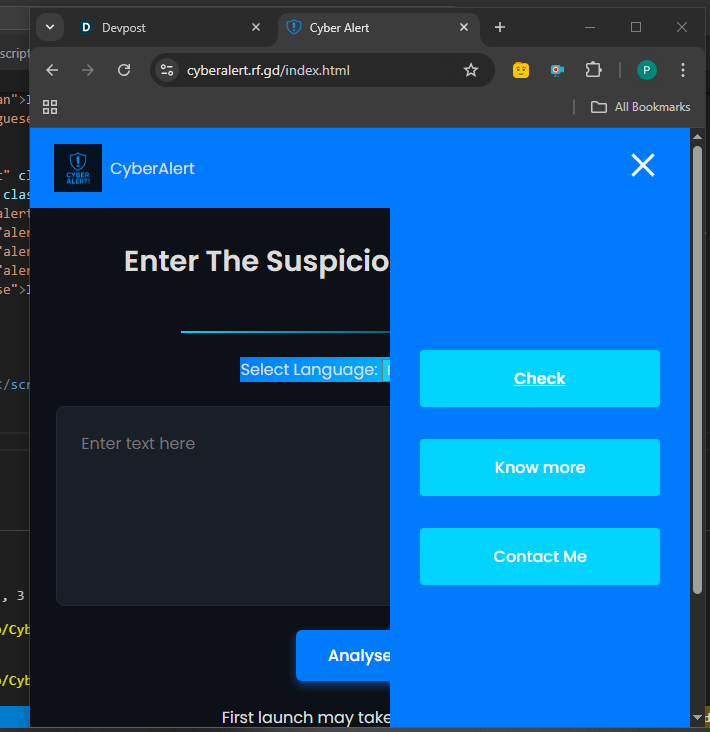
Hamburger Menu
Inspiration
In 2025, I launched my first project — Cyber Alert.
Every day, I saw family members, friends, and even experienced people getting tricked by AI-generated scam messages. Most didn’t realize the danger until it was too late.
That frustration drove me to build something that warns users before they engage. A tool that uses AI for protection — not paranoia.
Cyber Alert is my answer: a web app that brings scam detection into everyone’s hands.
What It Does
Cyber Alert is a web-based, AI-powered scam detection app that:
- Lets users paste or type messages into a clean text box
- Uses the Gemini LLM API to analyze and detect scam threats
Displays color-coded severity results:
- Green – Safe
- Yellow – Suspicious
- Dark Orange – Scam
- Red – Life Threatening
Provides real-time feedback with minimal delay
Trains users over time to recognize risky patterns in language
Your data stays yours — no storage, no logging, no tracking. (Also, I don’t even know how to store data yet)
How I Built It
- Frontend: HTML, CSS, and JavaScript — responsive for desktop and mobile
- Backend: Python with Flask to handle input and interact with the AI
- AI Integration: Gemini LLM API with prompt engineering for scam detection
- Design: Clean, minimal, and fast user interface
- Hosting: Free-tier web hosting for accessibility
- Security: Input validation and safe API communication
Challenges I Faced
- First time combining AI and Flask — had to learn API handling, rate limits, and key protection
- No open scam dataset — created my own realistic test cases
- Designing user-friendly feedback — effective but not overly alarming
- Optimizing performance — ensuring fast response times despite backend checks
Accomplishments I’m Proud Of
- Built a fully working AI scam detector solo — at age 14
- Integrated frontend, backend, and AI into a complete product
- Added language support for wider accessibility
- Created a real-world tool addressing a rising cybercrime issue
- Built a smooth, usable web app — no installations, extensions, or logins
- Gained meaningful feedback: “I actually feel safer using this”
What I Learned
- Flask web development, from routing to error handling
- How to apply LLMs in real use-cases
- The art of prompt tuning for better AI responses
- The importance of good UX in building trust and usability
- That age doesn’t limit impact — ideas and execution do
What’s Next for Cyber Alert
- Add voice-to-text for detecting audio scams
- Provide copy-to-clipboard for safe message replies
- Build a browser extension for real-time message analysis (future plan)
- Enable public scam reporting to grow the dataset
- Collaborate with other young developers to build v2.0 with ML fine-tuning
- Launch on platforms like Product Hunt, Reddit, and forums to get feedback
- Long-term goal: release an Android app with push alerts and scam news
Final Thoughts
Cyber Alert isn’t just a web app — it’s a symbol for scam awareness.
A symbol of how we can use technology to protect, educate, and empower. A tool built not just to detect scams — but to make people think before they click. This is more than a tech demo. It’s a personal promise to keep creating tools that make the internet safer, smarter, and more human.


Log in or sign up for Devpost to join the conversation.