-
-
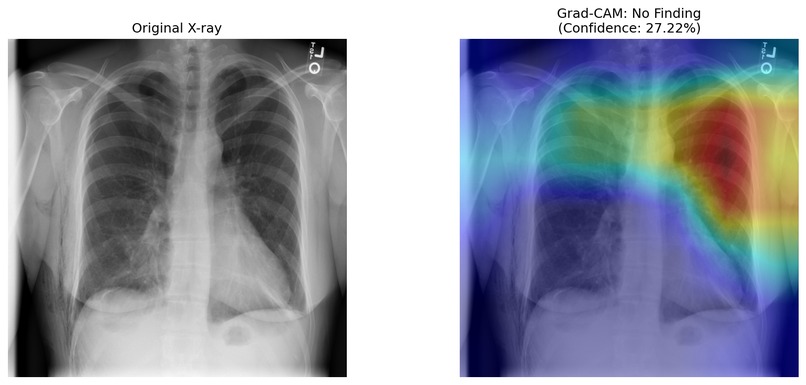
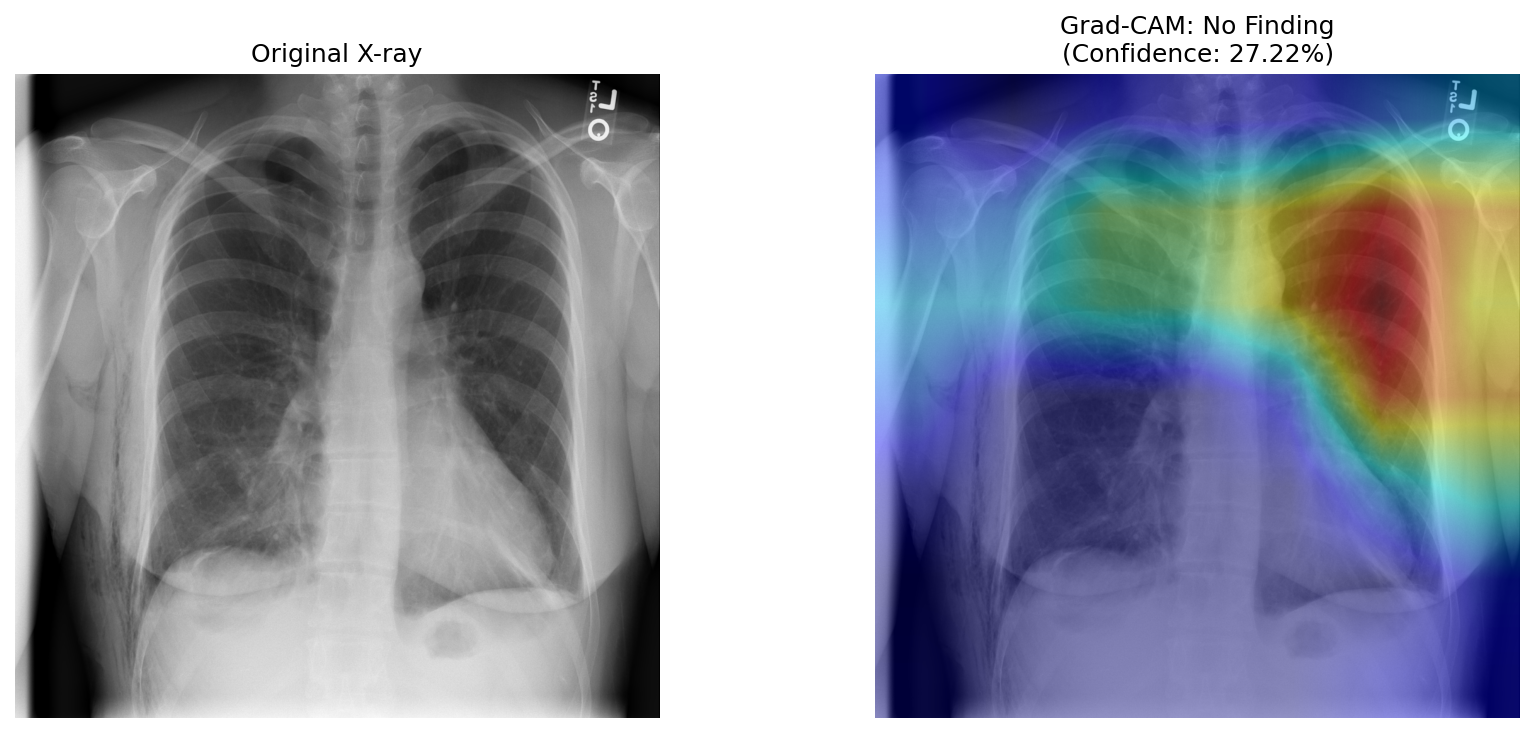
Heat map from our ML model
-
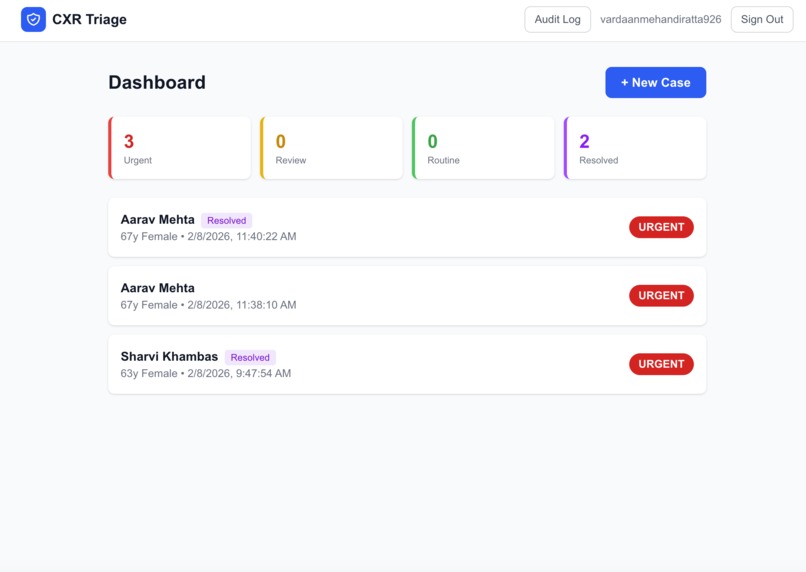
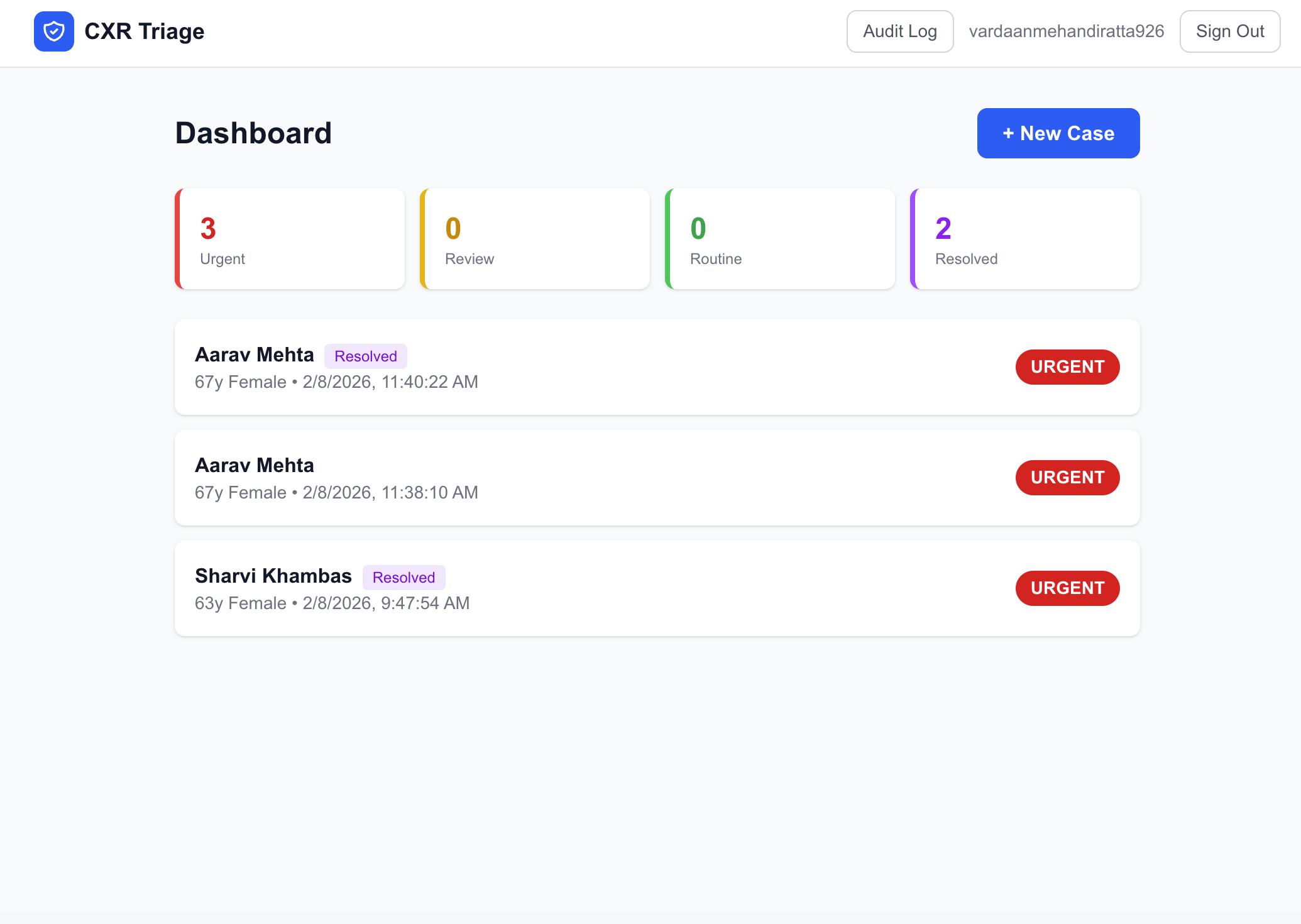
User Dashboard
-
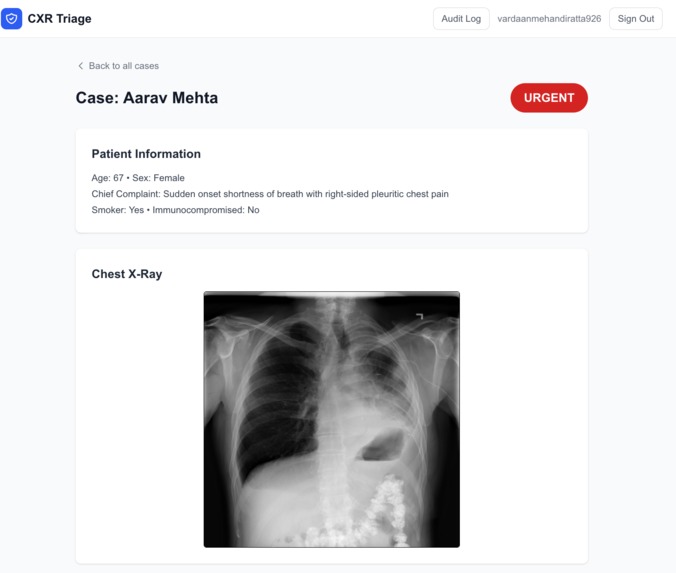
Results
-
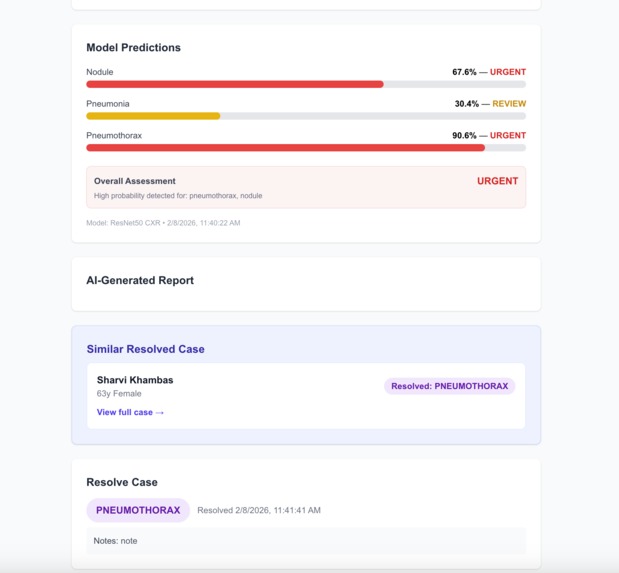
Results
What it does
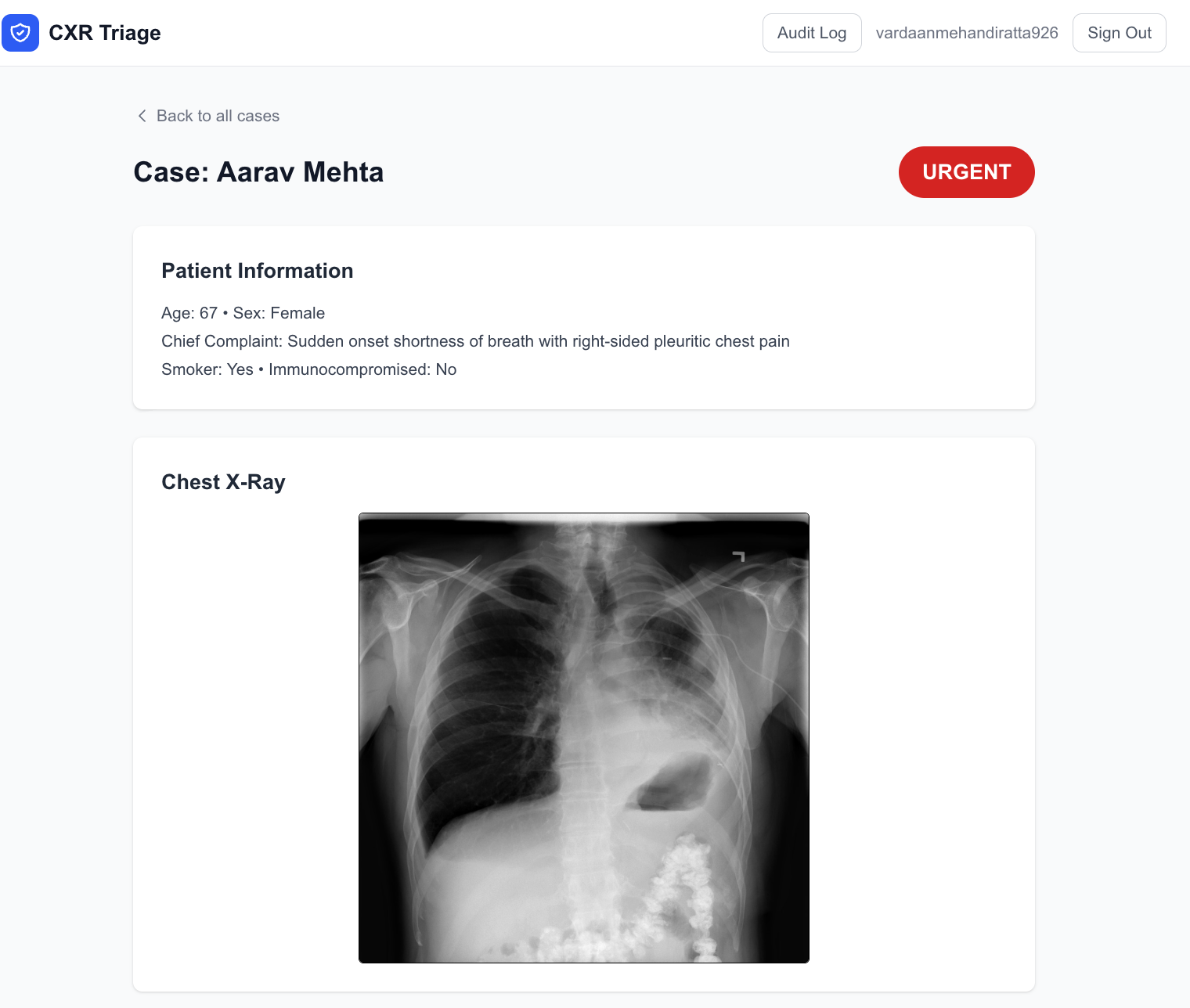
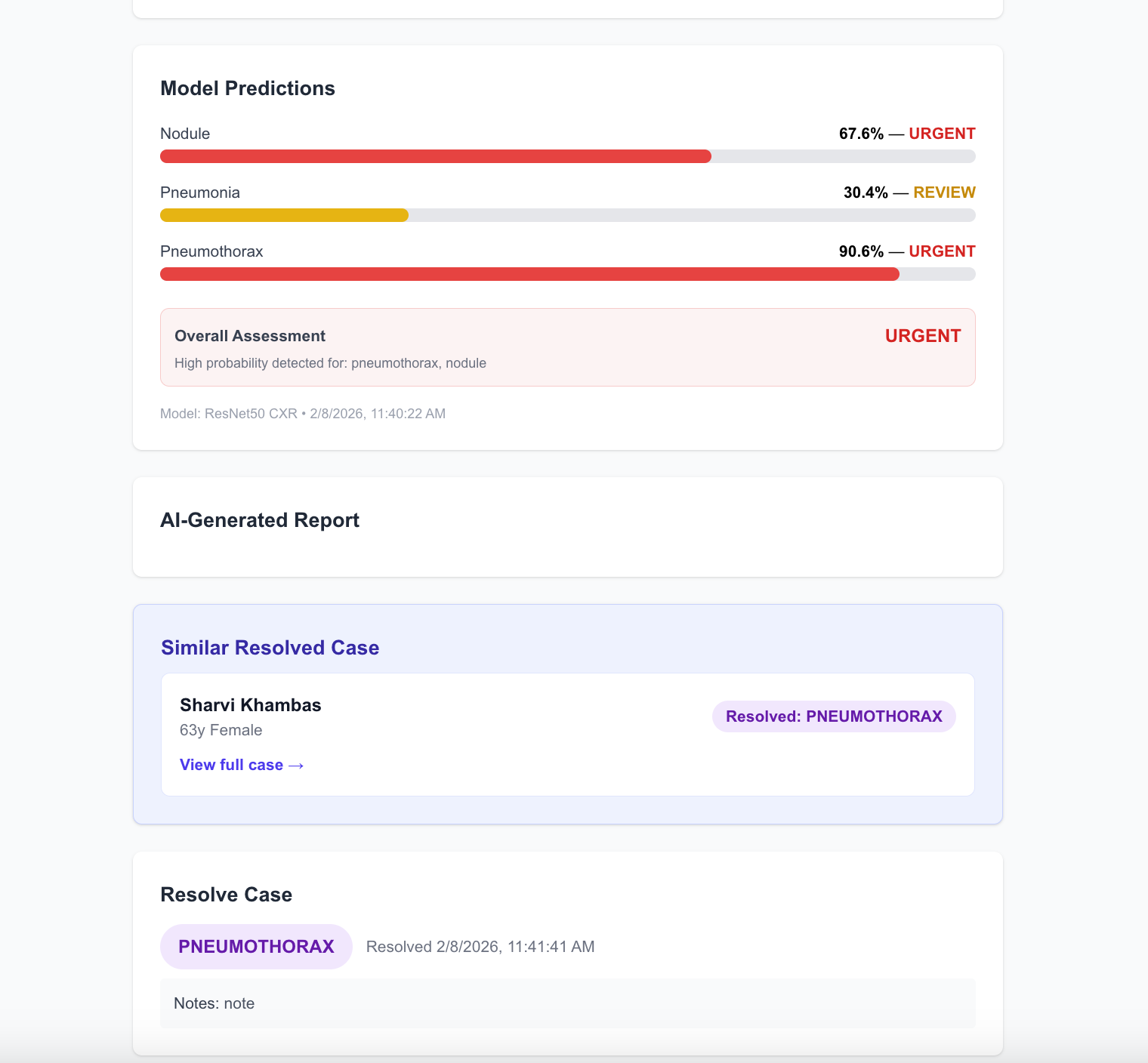
CXR is an AI-powered chest X-ray triage system that screens scans for pneumothorax, pneumonia, and lung nodules, then assigns an urgency level to help radiologists prioritize critical cases faster. It produces structured predictions and clinician-ready reports while acting strictly as a decision-support tool.
How we built it
We built CXR using PyTorch with a fine-tuned ResNet50 trained on ~14,000 medical images, using Focal Loss and a WeightedRandomSampler to address class imbalance. The backend is powered by Supabase, which handles authentication, row-level–secured PostgreSQL storage, and all case, audit, and resolution tables. Model predictions are returned as structured JSON for downstream clinical APIs and LLM-based report generation.
Challenges we ran into
Accessing high-quality medical imaging data was difficult due to licensing and privacy constraints. Severe class imbalance caused early models to miss rare but critical findings, forcing careful precision–recall tradeoffs. Designing a backend that tracked cases, actions, and resolutions securely without slowing clinicians was also nontrivial.
Accomplishments that we're proud of
We achieved 80% recall on critical findings with a validation accuracy of 75% while building a full end-to-end system. Beyond the model, we implemented secure auth, persistent case storage, and audit logging suitable for real clinical workflows.
What we learned
We learned how to train and optimize CNNs in a high-stakes medical setting, including AdamW optimization, learning rate scheduling, and Grad-CAM interpretability. We also gained experience designing a secure, production-style backend using Supabase for authentication, data integrity, and accountability.
What’s next for CXR
Next, we plan to improve model calibration and interpretability, expand to additional chest pathologies, and integrate directly with hospital imaging systems like PACS. The focus is on moving from a strong prototype to a tool clinicians can trust in real emergency settings.
Built With
- gemini
- next.js
- python
- pytorch
- react
- resnet
- supabase
- typescript

Log in or sign up for Devpost to join the conversation.